The Day of Forgiveness: How Oromo Tradition Restores Peace Through Ritual Reconciliation
By Daandii Ragabaa
In a world often torn by endless vengeance and unresolved grievances, the ancient Oromo tradition offers a radical alternative: a structured, ceremonial path to forgiveness, reconciliation, and lasting peace.
This is Guyyaa Araaraa—the Day of Forgiveness.
Rooted deeply in the aadaa fi seera Oromoo (Oromo culture and customary law), this tradition provides a formal mechanism for resolving conflicts of all magnitudes, from minor misunderstandings to the heaviest of trespasses. It is a system that does not simply sweep disputes under the rug. Instead, it confronts them publicly, ritually, and restoratively.
Different Harms, Different Paths to Peace
Oromo customary law recognizes that not all conflicts are the same. Therefore, not all reconciliations follow the same procedure. The Guyyaa Araaraa tradition carefully distinguishes between different types of harm and prescribes specific rituals for each:
For those who have taken a life:
The path to peace passes through Sirna Gumaa—the blood wealth or compensation ceremony. Under this system, the family of the slain person and the family of the killer are brought together by elders. Through negotiation, payment of compensation (usually in cattle), and public ritual, forgiveness is granted, and the cycle of revenge is broken. Peace descends upon both clans.
For those in dispute over various matters:
Not all conflicts involve bloodshed. Land disputes, marital conflicts, inheritance disagreements, and community feuds are resolved through the wisdom of the jaarsummaa (council of elders). The elders do not impose foreign laws. They apply Oromo customary law, listening to both sides, investigating the truth, and issuing a binding decision that restores harmony.
For those who have simply grown weary of each other:
Sometimes, there is no specific crime. Neighbors or relatives simply drift apart, accumulate petty grievances, and stop speaking. The Oromo tradition addresses even this. Through ceremonies of walitti araaramuu (mutual reconciliation), those who have become estranged are brought together. They share coffee, break bread, and publicly declare an end to their cold war.
For those who have slandered or insulted one another:
Words can wound as deeply as weapons. When verbal battles have poisoned a community, the elders require aagii baafannaa—a ritual cleansing of the tongue. The offenders confess their words publicly, ask for forgiveness, and perform symbolic acts of apology. Only then is the air cleared and normal relations resumed.
The Deeper Purpose: Strengthening the Social Fabric
Why does the Oromo tradition place such immense importance on araara (reconciliation)? The answer lies in the Oromo understanding of society.
For the Oromo, a community is not a collection of individuals pursuing their own interests. It is a living web of mutual dependence. When one thread snaps, the whole web weakens. Therefore, restoring broken relationships is not merely a moral good—it is a practical necessity for survival.
“This tradition exists so that social relationships grow stronger,” explains one elder familiar with the custom. “It ensures that mutual help and mutual support (walgargaarsaa fi waldeeggarsaa) continue uninterrupted. A community that does not forgive is a community that will eventually collapse.”
The Conditions of True Reconciliation
But the Guyyaa Araaraa is not naive. It does not demand forgiveness without accountability. For peace to be genuine and lasting, certain conditions must be met:
- The injured party must receive appropriate acknowledgment of the harm done to them. In cases of grave injury, this includes material compensation (beenyaa) as a tangible sign of remorse.
- The one who caused harm must publicly recognize their wrongdoing. They must understand, according to Oromo custom, that they have committed a breach (balleessaa). They must state clearly what they have done wrong and what they will do to make it right.
Only when both accountability and compensation have been fulfilled does the araara (reconciliation) descend. And only then does nagaa (peace) take root.
A Radical Alternative for Today
In an era of social media outrage, cancel culture, and political polarization, the Oromo tradition of Guyyaa Araaraa offers a powerful counter-model. It says: Do not nurse your grievance forever. Do not seek infinite revenge. There is a time for justice, but there is also a time for closure.
The tradition acknowledges that harm has been done. It does not pretend away pain. But it insists that human communities cannot function on perpetual anger. At some point, forgiveness must be extended. At some point, peace must be chosen.
Living Tradition
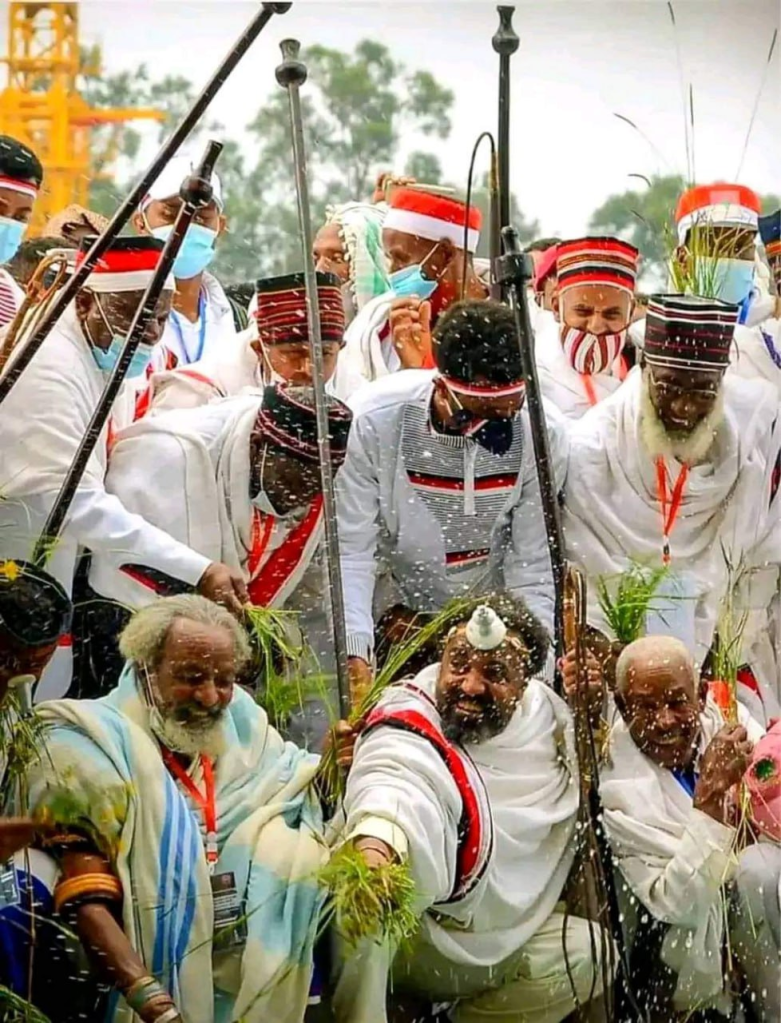
Across Oromia, in villages and towns, in diaspora communities and refugee camps, the Guyyaa Araaraa is still practiced. Elders still sit under trees. Compensation is still counted in cattle or its cash equivalent. Offenders still confess. The injured still—sometimes after long struggle—say the words: I forgive you.
And when they do, the Oromo believe, nagaa (peace) literally descends upon the gathering. It is not just a feeling. It is a tangible presence, a renewed contract, a shared breath.
As one elder put it: “We do not forgive because we are weak. We forgive because we wish to live. And the living must be at peace with their neighbors.”

Posted on May 12, 2026, in Aadaa, Events, Finfinne, Information, News, Oromia, Press Release, Promotion. Bookmark the permalink. Leave a comment.




 Advocacy for Oromia
Leave a comment
Comments 0