Daily Archives: May 14, 2026

The Role of Media in the Oromo Freedom Struggle
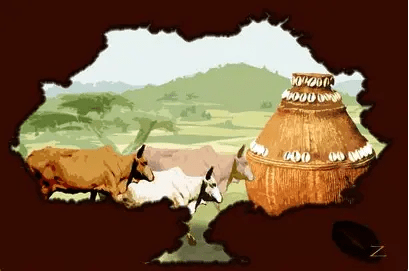
From Clandestine Radio to Digital Resistance – How Communication Became a Weapon
By: Dhabessa Wakjira
PROLOGUE: The Unseen Battlefield
The Oromo freedom struggle has been fought on many fronts: in the forests with weapons, in the streets with protests, in the prisons with endurance, and in the hearts with hope. But there is another battlefield – invisible, yet essential. It is the battlefield of information.
Media – whether printed on paper, broadcast through radio waves, or shared across digital networks – has been the oxygen of the Oromo national movement. Without it, the struggle would have been fragmented, silenced, and easily erased. With it, the Oromo people have informed, organized, and inspired generations of resistance.
This feature examines the role of media in the Oromo freedom struggle – from the early print experiments of the Derg era, to the iconic radio broadcasts of the OLF, to the digital mobilization of the Qeerroo generation, and to the challenges that remain.
PART ONE: The Printed Word – Bariisaa and the Battle for Language
Afaan Oromo as a Site of Resistance
Before the internet, before satellite radio, before social media, there was the newspaper. And for the Oromo struggle, one newspaper stands out: Bariisaa.
Published between 1975 and 1991 under the Derg regime, Bariisaa was an Afaan Oromo newspaper that became, according to scholarly research, “the main forum for issues of social justice, including linguistic rights, economic and cultural values as well as political representation” .
The newspaper was published in a context of extreme repression. The Derg regime, like the Imperial regime before it, had systematically marginalized Afaan Oromo. The language of tens of millions was excluded from education, from government, from official communication. To write in Oromo was itself an act of defiance.
Bariisaa provided a space – however constrained – for Oromo intellectuals, poets, and activists to exchange ideas. The newspaper published arguments about how to deal with the disrespect for Oromo national identity, and about the sabotage made to paralyze the Oromo press .
Crucially, Bariisaa also became a forum for one of the most sensitive issues in Oromo identity politics: orthography. What script should be used to write Afaan Oromo? The government attempted to impose the Geez script, which was ill-suited to represent Oromo sounds. Oromo writers and intellectuals debated alternatives, seeking a writing system that could faithfully represent their language and, by extension, their identity .
The regime knew the power of what they were censoring. According to historical research, Bariisaa‘s contents were “strictly censored and systematic efforts were made to limit the number of copies and centres of distributions” . The government did not merely tolerate the newspaper; they feared it.
Yet Bariisaa survived. And it served as “important sources of information for the contemporary radio broadcasts in Afaan Oromo” . The printed word laid the foundation for the spoken word – broadcast across borders, beyond the reach of Ethiopian censors.
PART TWO: The Voice That Could Not Be Silenced – Sagalee Bilisummaa Oromoo
A Radio Station That Became a Movement
On June 15, 1988, a new voice entered the airwaves of the Horn of Africa. It was not the voice of the Derg, which controlled all media inside Ethiopia. It was the voice of the Oromo Liberation Front (OLF) , broadcasting from outside the country’s borders. Its name was Sagalee Bilisummaa Oromoo (SBO) – the Voice of Oromo Liberation .
For the Oromo people, who had been denied any media in their own language for decades, hearing Afaan Oromo on the radio was not merely informative. It was transformative. It was a confirmation that they existed, that their language was real, that their struggle was heard.
The OLF’s statement, marking the 35th anniversary of SBO in 2023, captured the radio’s significance:
*”Launched on June 15th 1988, SBO/VOL has been contributing a lot in the long journey of Oromo struggle for freedom, despite several relentless attempts of the enemy to quit the media. This quarter-a-century contribution of SBO in informing, organizing and [inspiring] the Oromo nation for the struggle to self-determination”* enabled the OLF media organ to be the first Oromo media launched to serve the Oromo cause .
SBO was not a neutral news source. It was a weapon of the struggle. It reported on Oromo grievances that Ethiopian state media ignored. It called for resistance. It organized the diaspora. It inspired young Oromo to join the liberation front.
The Ethiopian government, of course, tried to stop it. Jamming, threats, diplomatic pressure – all were deployed. But SBO remained on air. And it remains on air today, still broadcasting, still informing, still organizing, still inspiring .
The radio’s contribution is incalculable. For Oromo refugees in camps in Somalia and Kenya, SBO was a connection to home. For Oromo students in Ethiopian universities, it was a secret education in their own history. For Oromo farmers in the countryside, it was proof that someone, somewhere, was fighting for them.
PART THREE: The Predecessors – Early Oromo Broadcasting in Exile
Mogadishu, Nairobi, and the Birth of Oromo Airwaves
While SBO is the most famous Oromo radio, it was not the first. The history of Oromo broadcasting goes back much further – to 1962, to a small radio station in Mogadishu, Somalia .
According to historical research, “Afaan Oromoo broadcasting for which only five minutes allowed was begun by a few exiled Oromoo at Mogadishu in 1962” . Five minutes. That was all. But those five minutes were revolutionary.
The exiled Oromo broadcasters had a clear mission: “to reveal the Oromoo grievances and their rejection, and to call on the Oromoo masses in Ethiopia to rise up against the severe oppression they were subjected to” .
The Somali government, engaged in a border dispute with Ethiopia, soon increased the broadcasting time to one hour daily. They had their own political motives, but the result was the same: Oromo voices were finally being heard internationally.
The Kenyan government, facing its own Oromo-related conflicts in the northern region during the Shifta War, launched its own Afaan Oromo broadcast in 1963, allocating four hours daily . This created a peculiar situation: the Oromo language, which had been suppressed inside Ethiopia, was being broadcast from both Somalia and Kenya.
It was this external pressure that forced the Ethiopian government to act. In 1972, the Imperial regime launched its first radio broadcast in Afaan Oromo from Harar – not out of a sudden commitment to Oromo rights, but to “impress on the large Oromoo masses in Ethiopia” and to counter the propaganda from Mogadishu .
Through this process, Afaan Oromo became “the contested language in the identity politics of the Horn of Africa” . The linguistic politics of radio broadcasting “not only brought Afaan Oromoo to become the language of radio broadcastings but also contributed to the consolidation of Oromoo Nationalism” .
The stage was set for SBO. And SBO took that foundation and built a movement upon it.
PART FOUR: The Digital Revolution – Qeerroo and Social Media
From Radio Waves to Hashtags
If the 1960s through the 1990s were the era of radio, the 2010s became the era of digital media. And the Oromo struggle adapted once again.
The Qeerroo (Oromo youth movement) that emerged in the 2010s was not a traditional political party or armed front. It was a decentralized, digitally native movement – and social media was its nervous system.
The academic literature describes how the Qeerroo movement, which launched mass protests in 2014, exploited “unpopular political decisions and a weakened federal government” and employed “an ethnic discourse, university campuses, and social media to mobilize mass protests” .
The 2015 Oromo protests, in particular, have been studied as a case of “the use of the Internet as an alternative communication platform and a site of political resistance” . When the Ethiopian government blocked websites, shut down internet access, and arrested journalists, the Qeerroo found ways around the censorship.
The protests were not only urban. One of the remarkable features of the Oromo digital mobilization was its ability to create “a shared vision between the urban-digital activists and the rural-offline protesters” . This bridge – between those with smartphones and those without – was crucial to the movement’s success.
Social media platforms like Facebook, Twitter, and Telegram became: bulletin boards for protest coordination, archives of government violence (shared globally), sites of Oromo cultural affirmation, and spaces for diaspora Oromo to contribute financially and politically.
The Qeerroo movement, as the Wikipedia entry notes, “is a movement of the Oromo youth in Ethiopia seeking political changes” . Within traditional Oromo culture, the term means “bachelor” or “unmarried youth,” but within the movement, it symbolizes “the struggle of the Oromo for greater political freedom, greater ethnic representation in the government and the recovery of Ethiopia under the government of the Qeerroo” .
The movement was instrumental in the political changes that led to the resignation of Prime Minister Hailemariam Desalegn in 2018 and the coming to power of Prime Minister Abiy Ahmed . While the ultimate outcomes of those changes remain contested, the power of Oromo digital mobilization had been proven beyond doubt.
PART FIVE: The Diaspora Mediascape – Amplifying the Struggle Abroad
When the World Becomes a Studio
The Oromo media landscape is not confined to Ethiopia. It is global. The diaspora – Oromo communities in the United States, Canada, Europe, Australia, and elsewhere – have created their own mediascape.
Scholarship on Oromo media cultures describes “the translocal dimensions of media and cultural flows among the Oromo” and focuses on “the important interlocutory roles of artists, media and cultural workers in diaspora contexts” . Oromo people, the research indicates, “performatively conjoin with and chaotically produce their own mediascapes – at the various sites called the loci of affirmation – in the process of imagining themselves to be members of a global diaspora” .
This diaspora media includes: satellite television channels broadcasting in Afaan Oromo, online radio stations, YouTube channels dedicated to Oromo history and culture, social media influencers who blend entertainment with political commentary, and digital archives preserving Oromo oral traditions.
Consecutive Ethiopian regimes have tried to curb the influence of these diaspora mediascapes, but with limited success . The internet does not respect borders. And Oromo voices, once silenced, have found global amplification.
PART SIX: The Challenge of State Media – Representation and Distortion
The Ethiopian Broadcasting Corporation and the Politics of Erasure
Not all media has served the Oromo struggle. In fact, state media has historically been a tool of suppression rather than liberation.
A recent study published in the Journal of African Media Studies examined how the Ethiopian Broadcasting Corporation (EBC) represented the Oromo and Amhara protests. The findings are sobering: “despite the existence of foundational national instruments and laws for freedom of the media, the EBC’s representations of political, economic, cultural and social inquiries of the Oromos and Amharas remain largely determined by the Tigre People’s Liberation Front/Ethiopian People’s Revolutionary Democratic Front authorities instead of the media professionals” .
In other words, state media did not report on the Oromo protests objectively. Instead, “media professionals in the EBC were forced to marginalize, ignore and distort the voices of the protesters instead of advancing freedom of expression” .
This is not a minor footnote. It is central to understanding why the Oromo struggle needed its own media. When the state controls the narrative, the oppressed must create alternative platforms. SBO, Bariisaa, and the Qeerroo’s social media networks were not luxuries. They were necessities – the only way for the Oromo story to be told at all.
PART SEVEN: Language as the Core of the Struggle
Why Afaan Oromo Media Is Not Just Communication – It Is Resistance
Underlying all of this – the newspapers, the radio broadcasts, the social media posts – is a single, fundamental issue: language.
The suppression of Afaan Oromo has been a consistent policy of Ethiopian regimes for over a century. As one scholarly article notes, “the suppression of ethnic identities in order to create homogeneous nation-states is an old strategy used by rulers of multi-ethnic and multilingual states. Perceived as salient markers of ethnic identities and as obstacles to the cultivation of the feeling of belonging and loyalty to the state by the policy makers, minority languages become the objects of suppression and replacement by the languages of the dominant groups” .
The Oromo have resisted this suppression. And media has been their primary tool of resistance. Writing in Afaan Oromo, broadcasting in Afaan Oromo, posting in Afaan Oromo – these are not merely technical choices. They are political acts. They assert that Oromo identity matters, that Oromo voices deserve to be heard, that Oromo culture will not be erased.
The same research notes that “ethnic opposition to linguistic homogenization is triggered by objective as well as subjective existential concerns” . The Oromo are not fighting for a privilege. They are fighting for survival. And media is a weapon of survival.
CONCLUSION: The Battle Continues
The role of media in the Oromo freedom struggle has evolved over six decades, but its function has remained constant: to inform, to organize, and to inspire.
- In the 1960s, a few exiled Oromo fought for five minutes of radio time from Mogadishu.
- In the 1970s and 1980s, Bariisaa newspaper provided a forum for Oromo intellectuals to debate their identity under the nose of the Derg.
- In 1988, Sagalee Bilisummaa Oromoo began broadcasting, becoming the voice of the Oromo liberation movement for over three decades.
- In the 2010s, the Qeerroo movement turned social media into a battlefield, organizing mass protests that changed Ethiopian politics.
- And today, diaspora Oromo continue to build a global mediascape that amplifies their struggle beyond the reach of any censor.
Each era has had its own technology. But the purpose has never changed: to ensure that the Oromo story is told, that Oromo suffering is witnessed, that Oromo aspirations are known, and that Oromo heroes are remembered.
The Ethiopian state has tried, repeatedly, to control the narrative. It has censored newspapers, jammed radio signals, shut down the internet, and arrested journalists. But the Oromo have always found a way to speak.
Because the alternative – silence – is death.
EPILOGUE: A Call to Remember and to Continue
As we remember the role of media in the Oromo struggle, we must also recognize that the battle is not over. State media in Ethiopia still distorts Oromo voices. International media still often ignores Oromo issues. And the digital divide means that many Oromo – especially in rural areas – are still cut off from the information they need.
But the foundation has been laid. The infrastructure of Oromo media – from print to radio to digital – exists. It is fragile, often underfunded, and constantly under threat. But it exists.
And as long as it exists, the Oromo struggle will not be silenced.
“Sagalee Bilisummaa Oromoo – the Voice of Oromo Liberation – will remain on air.”
Nagaatti to all the journalists, broadcasters, writers, poets, and social media activists who have risked everything to tell the Oromo story. You are warriors. And your words are weapons.
SIDEBAR: Timeline of Oromo Media in the Struggle

Ibraahim Malkaa – The Forgotten Flame of Oromo Resistance
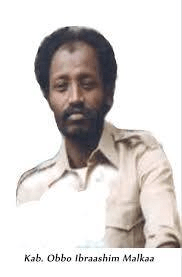
A activist, advocate, and patriot who fought for Oromo rights, language, and self-determination under Empire and Derg
By: Dhabessa Wakjira
Category: History / Oromo Struggle / Biography
He was not a general. He did not command armies. He did not sit on thrones or sign treaties. But Obbo Ibraahim Malkaa was a warrior nonetheless – a warrior of words, of ideas, of relentless advocacy for Oromo rights during the darkest decades of Ethiopian history.
Born and active during the 1970s and 1980s, Ibraahim Malkaa is remembered as one of the key figures connected to the Oromo liberation movement. He was a student, a thinker, an activist, and a man who refused to accept the marginalization of his people – whether under the ancient Imperial regime of Haile Selassie or the revolutionary terror of the Derg.
His story is not written in official archives. It is carried in the oral histories of the Oromo people. And it is time that story was told.
The Era of Darkness
To understand Ibraahim Malkaa, one must understand the world in which he lived.
During the Imperial era and continuing through the Derg regime, the Oromo people suffered systematic marginalization. The Afaan Oromo language – spoken by millions – was banned from education, from government offices, from official communication. Oromo culture, traditions, and religious practices were suppressed. Oromo political expression was criminalized.
In this environment, speaking Afaan Oromo in public could be dangerous. Writing about Oromo rights could mean imprisonment. Organizing for self-determination could mean death.
Yet there were those who did it anyway.
Ibraahim Malkaa was one of them.
The Student Movement and the Rise of Oromo Consciousness
Ibraahim Malkaa emerged from the Oromo student movement – a generation of young intellectuals who, in the 1960s, 1970s, and 1980s, began to question the foundations of Ethiopian imperialism. They read. They debated. They wrote. They organized.
Their goals were clear:
- Recognition of Oromo culture – not as a folkloric relic, but as a living, equal civilization.
- Official status for Afaan Oromo – the right to be educated, judged, and governed in one’s own mother tongue.
- Self-determination – the right of the Oromo people to control their own political destiny.
These were not radical demands. They were basic human rights. But under the Imperial and Derg regimes, they were treated as treason.
Ibraahim Malkaa became part of this wave. He connected with other activists, thinkers, and organizers who shared the vision of an Oromo nation that would no longer be silent, no longer be invisible, no longer be oppressed.
The Nature of the Struggle
The Oromo liberation movement during this period was not a conventional war. It was a hidden struggle – conducted in secret meetings, in underground publications, in whispered conversations behind closed doors.
The risks were immense:
- Imprisonment – often without trial, often for years.
- Exile – forced to flee the country, leaving behind family, home, and identity.
- Death – extrajudicial killings, disappearances, executions.
Many of Ibraahim Malkaa’s generation chose one of these paths. Some were caught and never seen again. Others escaped to build the Oromo cause from abroad. Still others survived inside Ethiopia, carrying the flame of resistance in their hearts while pretending to conform.
Ibraahim Malkaa is remembered as one who participated – not as a bystander, not as a distant sympathizer, but as an active agent in the struggle for Oromo rights.
The Core Issues – Language, Culture, and Self-Determination
What did Ibraahim Malkaa and his generation fight for? Three interconnected causes:
1. Afaan Oromo – The Right to Speak
During the Imperial and Derg periods, Afaan Oromo was excluded from formal education and government business. Oromo children were forced to learn in Amharic – a language many did not speak at home. This was not merely inconvenient. It was educational violence – designed to assimilate Oromo into a dominant culture while erasing their own.
Ibraahim Malkaa and his peers demanded that Afaan Oromo be recognized, respected, and institutionalized. This was not separatism. It was linguistic justice.
2. Oromo Culture – The Right to Exist
Oromo customs, religious practices, and social institutions – including the Gadaa system, one of the world’s most ancient democratic systems – were dismissed as primitive or suppressed altogether. The activists of Ibraahim Malkaa’s generation fought for the right of Oromo culture to be seen, celebrated, and passed down to future generations.
3. Self-Determination – The Right to Choose
The most politically charged demand was for self-determination – the right of the Oromo people to govern themselves, to control their own resources, to decide their own future within or outside the Ethiopian state. This demand was, and remains, the heart of the Oromo struggle.
The Legacy – Remembering a Forgotten Hero
Oral history and community memory tell us that Ibraahim Malkaa was one of the early figures in this struggle. He worked alongside a network of Oromo activists and advocates. He participated in the difficult, dangerous, clandestine work of building a movement.
Many of his contemporaries were imprisoned. Some were killed. Some fled into exile. Some survived to see the fall of the Derg and the opening of political space in the 1990s.
But Ibraahim Malkaa’s name, like so many others, has not been widely recorded. Official histories of Ethiopia – written from the center – ignore him. Academic studies often focus on leaders, not on the foot soldiers of the struggle. And the Oromo themselves, busy with the demands of survival, have not always preserved the names of every hero.
This feature news is a small correction to that neglect.
What the 1970s and 1980s Generation Achieved
It would be a mistake to think that Ibraahim Malkaa and his generation failed. They did not achieve independence. They did not see Afaan Oromo become the language of government overnight. They did not live to see an Oromo head of state.
But they laid the foundation.
The student activists of the 1960s and 1970s created the intellectual framework for the Oromo liberation movement. Their writings, their debates, their clandestine organizing – all of this prepared the ground for the armed struggle that followed and for the political movements that emerged after 1991.
Without Ibraahim Malkaa and his peers, there would have been no Oromo political consciousness. There would have been no Qeerroo. There would have been no international Oromo diaspora advocacy. There would have been no one to demand that Afaan Oromo be written, published, and taught.
They were the roots. We are the branches. And we should not forget who put us in the ground.
A Call to Remember
Ibraahim Malkaa is no longer with us – though the exact date of his passing is not widely recorded. But his legacy lives on in every Oromo child who learns to read and write in Afaan Oromo. In every Oromo cultural festival. In every political demand for self-determination.
He is remembered, in the words of the community:
“Ibraahim Malkaa is considered among those who made a great contribution to history and is one of the remembered figures of the Oromo struggle.”
But memory is not automatic. It requires effort. It requires telling stories like this one. It requires naming the names that regimes tried to erase.
Let this article be one small act of remembrance.
Nagaatti, Ibraahim Malkaa. Your work was not in vain.
| Subject | Detail |
|---|---|
| Name: | Obbo Ibraahim Malkaa |
| Era active: | 1970s – 1980s |
| Role: | Activist, student leader, advocate for Oromo rights |
| Key issues: | Afaan Oromo language rights, Oromo cultural recognition, self-determination |
| Regimes opposed: | Imperial Ethiopia (Haile Selassie) and Derg |
| Methods: | Clandestine organizing, student movement participation, advocacy |
| Legacy: | Remembered in oral history as one of the early figures of the Oromo struggle |
| Status: | Deceased (exact date not widely recorded) |
Dhabessa Wakjira is a social worker dedicated to advocating for the stories of Oromo freedom fighters whose sacrifices have been overlooked or erased from official narratives. Through careful research and a commitment to oral history, he brings to light the lives and legacies of those who fought for Oromo rights, language, and self-determination during the darkest decades of Ethiopian history. This is a feature news article honouring the memory and legacy of Obbo Ibraahim Malkaa, a notable figure in the Oromo liberation movement during the 1970s and 1980s.




 Advocacy for Oromia