Category Archives: Biography

The Pillar of Borana: A Tribute to Abbaa Gadaa Liiban Jaldeessaa (1967-2026)
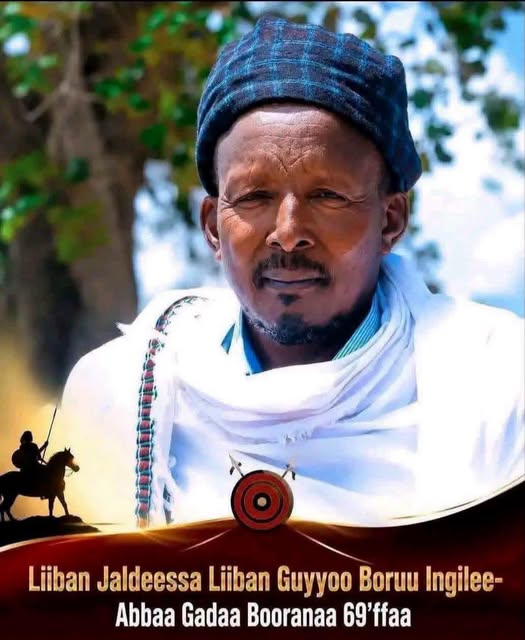
In the vast, sun-scorched plains of Borana, where the acacia trees stand as silent witnesses to centuries of tradition, a giant once walked among the people. He was not a king in the Western sense, nor a politician in the modern mold. He was an Abbaa Gadaa—a father, a judge, a living constitution for the Oromo people. His name was Liiban Jaldeessaa, and his life, from 1968 to 2026, was a testament to the enduring power of indigenous governance.
His story is not merely a biography; it is the history of a people’s resilience, a chronicle of justice, and a powerful reminder that true leadership is often found not in grand palaces, but in the dusty meeting grounds and under the shade of sacred trees.
A Son of the Soil: The Early Years
Born in 1967 to Jaldeessa Liiban and Tarrii Jaldeessa, in the Bur Busa area of Dheeda Booranaa, Liiban was a child of the Gadaa system from his first breath. He was the eldest of six siblings and would grow to be the father of fifty children—a patriarch in every sense of the word. Even in his youth, he was marked by a profound sense of duty. He was a “Tikaa,” a guardian of the cattle camps, learning the sacred responsibility of protecting the community’s lifeblood. He immersed himself in the traditions of his people, taking part in every rite of passage: from the Gammee (councils) to the Kuusa-Raabaa (age-grade gatherings), proving his dedication and worth at every step.
As a young man, Liiban distinguished himself through his unwavering commitment. He excelled in the crucial, often overlooked tasks of community life—the “hard work” that keeps society functioning. He was a man who understood the ancient ways, taking part in night-long vigils and traditional song and dance ceremonies (Olka Sirbuu) held at sacred sites like Dambii Dhedheertuu, Afuuraa, Areeroo, and Haroo Diimtuu. He earned a reputation for being tireless and principled, famously ensuring a great water reservoir (Gooroo) was properly filled, demonstrating his devotion to the community’s well-being even before he took on the highest office.
The Gauntlet of Leadership: A Gadaa in Action
In 1991, at a critical juncture for the Borana people, Liiban Jaldeessaa received the ultimate call to leadership. He took the Gooroo Gadoomaa—the sacred ceremonial staff—from the 68th Abbaa Gadaa, Boruu Madhaa. This was not a time of peace, but a time demanding strength, wisdom, and a firm hand.
His tenure as Abbaa Gadaa was defined by decisive action and a tireless defense of tradition and justice:
· Restoring Tradition: The great Gumii assembly of the Oromo, a cornerstone of democratic governance, had weakened and fractured. Liiban, understanding its vital importance, re-established the Gumii Dibbee Eldalloo, breathing new life into the ancient institution and ensuring the voice of the people could once again be heard.
· Uncompromising Justice: When elders attempted to use their authority to pass a decree without consulting the people, Liiban stood firm. His principle was clear: “An Abbaa Gadaa has no power to create a law by himself; the law is made by the Gumii.” He scrupulously upheld the rule of law, ensuring that power was accountable to the community.
· Protecting the Land: He was a fierce and unyielding defender of Oromo territory. At a time of great fear and uncertainty, he famously declared: “Fear should not cause the heartland of Oromo to be lost; fear should not cause the land of Oromo to be diminished.” He led land border expeditions (Lallaba) to assert territorial claims, confronting regional and federal authorities to protect the integrity of his people’s ancestral lands.
· The Ethiopian Renaissance Dam: When the issue of the Grand Ethiopian Renaissance Dam (GERD) arose, Gadaa Liiban gave a striking directive on how the Borana people should contribute to the national project. He proclaimed, “We will not support it with money from our pockets, but we will contribute with our hands and our labor,” reflecting a pragmatic and dignified approach to national duty.
· Diplomacy and Peacebuilding: He was a bridge-builder, working tirelessly with the Kenyan and Somali governments, and numerous NGOs to maintain peace and security in the volatile borderlands. He believed in the unity of all people, transcending clan, religion, and nation.
The Enduring Legacy: The “Dhaamsa” of a Great Man
On August 29, 2026, at the age of 59, Abbaa Gadaa Liiban Jaldeessaa passed away while receiving treatment in a Korean hospital. His death was a profound loss, a “Rifuu” (sorrow) felt from the savannahs of Ethiopia to the grasslands of Kenya.
But an Abbaa Gadaa does not simply die; he leaves a legacy—a Dhaamsa. This is not just a will, but a final message, a solemn charge to his people.
His legacy is twofold:
1. The Rifuu (The Sorrow and the Shield): He left behind a legacy of protection and strength. His memory is a shield, a “Jabaa Fulaa” (strong face) and a “Waardiyaa” (shield) that guards the community against its enemies and against division. The sorrow for his loss is immense, but it is a sorrow that binds the people together.
2. The Dhaamsa (The Final Charge): His final message is a call to action. It is a warning that the path he paved, the justice he upheld, and the unity he fostered must not be abandoned. His “Dhaamsa” is a reminder that the work of the Gadaa is never finished. It is a call to the community to remain steadfast, to support one another, and to continue the struggle for their rights and identity.
A Star That Still Guides
Abbaa Gadaa Liiban Jaldeessaa was more than a leader; he was the embodiment of the Gadaa system’s greatest ideals: justice, resilience, and unwavering dedication to the people. He was a “Fiixee Seeraa” (the pinnacle of the law), a “Tissaa Gooroo Gadaa” (the guardian of the Gadaa’s sacred staff), a man whose name will forever be etched in the annals of Borana history.
He passed into the next world, but for the Oromo people, he remains a star. His life is a lesson that the most profound leadership is born not of ambition, but of service. His legacy is a testament that a people’s strength lies not in their weapons, but in their traditions, their unity, and their unwavering commitment to justice.
As the Oromo people honor his memory, they are called to embody his final message: to be strong, to be united, and to ensure that the spirit of Gadaa Liiban Jaldeessaa lives on in every generation. He was a son of the soil, a pillar of his community, and a beacon of hope for all who believe in the power of indigenous wisdom.

The Legend of Waacoo Dabaloo: A Hero Who Defied an Empire
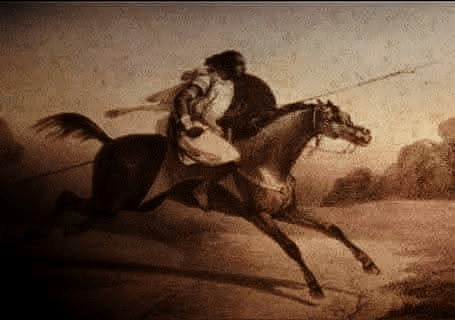
Remembering the Oromo Warrior Who Chose Resistance Over Submission
By Malkaamuu Taarikuu Amoosaa
(Asosa, August 11/2026)-In the oral traditions of western Oromia, few names command the reverence of Waacoo Dabaloo—a warrior whose defiance against the expansion of the Ethiopian Empire has become the stuff of legend. While his story remains largely unrecorded in formal histories, it lives on in the songs, proverbs, and collective memory of the Oromo people, particularly in the Jaarsoo district of East Wallagga.
A Lineage Rooted in Resistance
Waacoo Dabaloo was born in what is now the Jaarsoo district of East Wallagga Zone, a region known historically as “Citaa Akkumaa.” Today, the area lies approximately 525 kilometres west of Finfinne (Addis Ababa) and 103 kilometres west of Gimbi, the zonal capital. The district is bordered by Najjoo to the east, Baabboo Gaambel to the west, Gullisoo to the south, and Lataa Sibu to the north, covering an area of 491.6 square kilometres.
Waacoo Dabaloo belonged to the Sibuu clan of the Oromo people—a lineage that traces its origins to the Maccaa branch of the Oromo nation. The Sibuu are one of the seven sons of Daallee (or Daadhii), who was himself a descendant of the Oboo clan. This deep-rooted lineage gave Waacoo a profound connection to the land and people he would later defend.
The Context of Conflict
Waacoo Dabaloo came of age during the latter half of the 19th century, a period when Emperor Menelik II’s expansionist campaigns were sweeping through southern and western Oromia. This era was marked by brutal subjugation, land dispossession, and the systematic erasure of Oromo identity. While some local leaders chose to submit to the advancing forces, Waacoo Dabaloo stood firm.
The historical record suggests that Waacoo formed alliances with other prominent Oromo resistance figures, most notably Abiishee Garbaa of the Horro Guduru region. Together, they coordinated efforts to resist the encroaching empire, exchanging messengers and supporting each other during times of attack.
The Art of Guerrilla Warfare
What makes Waacoo Dabaloo’s resistance remarkable is that he fought without modern weaponry. Armed only with the traditional spear and shield, he employed guerrilla tactics—using his intimate knowledge of the forests and terrain of Jaarsoo and surrounding areas to launch ambushes and disappear before the enemy could retaliate.
Songs composed in his honour still echo in the region:
“Waacoon daggala galee,
Daggallikoo hin qabiniin.
Inni farda koomfatee,
Mootichi hin dhabamiin!”“Waacoo entered the forest,
He does not lack forest.
He led his horse forward,
The emperor will not find him!”
Another song praises his mount, a horse named Biichee:
“Mee fardaan dhufe jedhaa,
Biicheen Waacoo Dabaloo.
Gootni eeboo luqqisee,
Diinaaf laatu gadoo!”“They say he came on horseback,
Biichee, the horse of Waacoo Dabaloo.
The hero brandished his spear,
Brought death to the enemy!”
A Difference in Strategy
While some Oromo leaders, including a figure named Kuumsaa, chose to negotiate with Menelik’s forces—accepting titles and positions in exchange for submission—Waacoo Dabaloo refused. He saw such compromises as a form of enslavement.
“Paying tribute to the northern empire is servitude,” he is said to have declared. “We must not give away our ancestors’ land to anyone.”
His refusal to submit ultimately led to his capture through betrayal rather than defeat on the battlefield. Like many Oromo heroes, Waacoo Dabaloo was not conquered by force but brought down through deception—a pattern that echoes throughout Oromo history.
A Legacy Etched in the Land
Today, the memory of Waacoo Dabaloo is kept alive not only in song but also in the landscape. A hotel in Jaarsoo town, built by his descendants, bears his name as a testament to his enduring legacy. For the Oromo people, Waacoo Dabaloo represents the spirit of defiance—the refusal to submit to oppression, even at the cost of one’s life.
His story is part of a broader tapestry of Oromo resistance that includes figures like Waaqoo Guutuu, Aliyii Cirrii, and Bakar Waaree. Like them, Waacoo Dabaloo’s sacrifice reminds the current generation that freedom and dignity are worth fighting for.
Injifannoon Ummata Oromoo!
Gootummaa Waacoo Dabaloo haa jabaattu!
This feature article is based on oral histories and the reflections of Malkaamuu Taarikuu Amoosaa, dedicated to preserving the legacy of Oromo heroes.

More Than an Ancient Civilization: The Kingdom of Kush—A Powerful Empire of Land and Sea
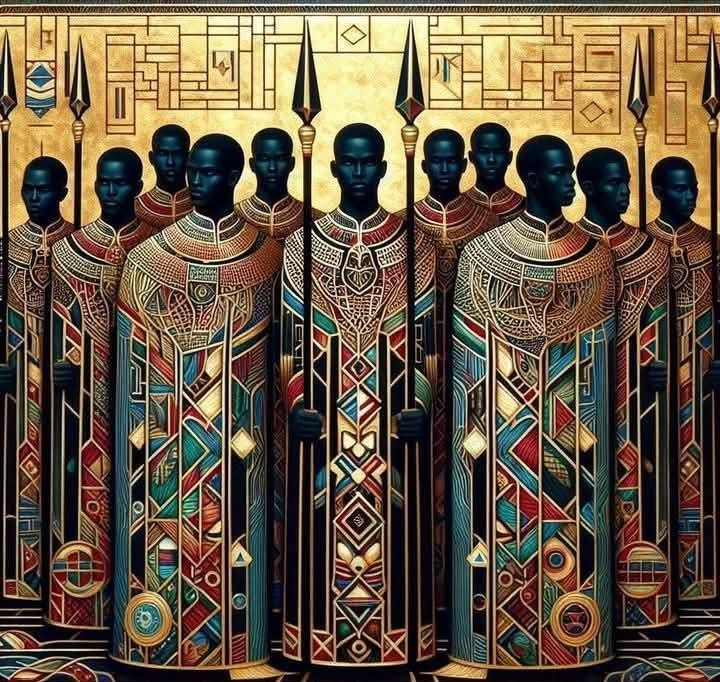
A people whose legacy challenges the very foundations of African history
When we speak of the great civilisations of antiquity, our minds often turn to Egypt, Greece, or Rome. But long before the Persian Empire rose to dominance, there existed in the heart of Africa a kingdom of extraordinary power, wealth, and sophistication—the Kingdom of Kush.
The Kingdom of Kush, with its three major cities of Meroe, Kerma, and Napata, emerged in the Nubian Desert south of Egypt along the Upper Nile River Valley from the 2nd millennium B.C. to the fourth century A.D. . For over a thousand years, Kush was a major power in the Nile valley, controlling an empire that at its height stretched from Central Sudan to the Mediterranean .
The achievements of this ancient civilisation challenge long-held beliefs that Egypt was the sole centre of advancement in the region. As renowned archaeologist Charles Bonnet’s excavations have revealed, Kush was not a mere vassal state of Egypt but a powerful and independent kingdom with its own distinctively indigenous culture . This sophisticated political state organised trade to the Mediterranean basin and built up a military strong enough to resist Egyptian forces .
The Black Pharaohs: A Legacy of Power
The Kushite rulers of Egypt’s 25th Dynasty, often referred to as the “Black Pharaohs,” represent a pivotal moment in the history of the Nile Valley. Emerging from the Kingdom of Kush at Napata in Nubia, these rulers not only unified Egypt after centuries of fragmentation but also reinvigorated pharaonic traditions .
The first major figure of this dynasty, King Piye, launched a campaign into Egypt during a period of political fragmentation known as the Third Intermediate Period. His Victory Stela records the subjugation of Delta rulers and proclaims his role as restorer of order . By 730 BCE, Piye had conquered Lower Egypt, establishing Kushite authority over both Upper and Lower Egypt .
The dynasty reached its zenith under Taharqa (690–664 BCE), whose reign is remembered for monumental building projects and ambitious foreign policy. Taharqa sponsored extensive temple construction at Karnak, Kawa, and Jebel Barkal, reinforcing his devotion to Amun and his claim to pharaonic legitimacy . He intervened in the Levant, supporting coalitions against Assyrian expansion, and is mentioned in both Biblical and Assyrian sources .
One of the most remarkable features of Meroitic civilisation was its powerful queens. The title “Candace,” meaning “sister,” was given to Kushite queens . Queens such as Amanirenas—who signed a peace treaty with the emperor Augustus—and Amanishakheto, whose treasure was looted in 1834, demonstrate the prominent role of women in Kushite society .
Kush: More Than a Footnote
The Kingdom of Kush was more than a civilisation; it was a power that commanded both land and sea. Kushite armies were formidable, and their military prowess allowed them to conquer and control Egypt itself . Kush also boasted a powerful navy, controlling trade routes along the Nile and beyond .
The economy of the ancient Kushites relied on trade in exotic African goods with Egypt and beyond. As middlemen, Kushite traders passed along ivory, ebony, incense, and other exotic goods from the South to the Egyptians, who then traded with other Mediterranean peoples . The city of Kerma, with its strategic location on the Nile River, controlled this crucial trade route .
Kush produced more gold than anywhere in the world at that time . Archaeologists have uncovered massive gold-processing operations at sites like Hosh el-Guruf, revealing the scale of Kush’s wealth . Minerals and high-quality stone were also mined for trade, and the Kushites introduced and developed iron metallurgy to the region .
A Sophisticated Society
The art and architecture of the Kushites reveal a sophisticated society of innovative craftsmen who constantly assimilated new artistic techniques from other lands . Notable architecture includes stone temple complexes such as the Lion Temple at Naqa and the steep-sided, solid pyramids found at Meroe and Jebel Barkal .
In fact, Sudan has more pyramids than all of Egypt—a testament to the grandeur of the Kushite civilisation . These tall, slender, graceful monuments bear witness to the lasting splendour of Kush .
Kushite art includes narrative tomb wall paintings and unique, eggshell-thin pottery with geometric patterns traded all over the Mediterranean . Stoic granite and bronze statues of gods and kings convey the religious beliefs of this ancient people .
The Question of Cush
The name “Kush” has been connected since at least the time of Josephus with the biblical character Cush, son of Ham (Genesis 10:6). Ham had four sons: Cush, Put, Canaan, and Mizraim (Egypt) . According to the Bible, Nimrod, a son of Cush, was the founder and king of Babylon, Erech, Akkad, and Calneh .
The Cushitic-speaking peoples, who are the ethnolinguistic groups speaking Cushitic languages natively, are today found primarily in the Horn of Africa, with minorities in Egypt, Sudan, Kenya, and Tanzania . Proto-Cushitic was spoken on the Ethiopian Highlands by 5000–4000 BC .
A Civilisation Worthy of Recognition
The Kingdom of Kush is not merely a footnote in the history of Africa—it is a testament to the power, ingenuity, and resilience of the peoples of the Nile Valley. As the American Journal of Archaeology notes in its review of The Nubian Pharaohs of Egypt, the term “Black Pharaohs” has sometimes been used to market exhibits, but the historical significance of Kush extends far beyond its interaction with Egypt . Sudanese colleagues and community members rightly resent the idea that the kings of ancient Sudan are only important because they ruled over Egypt . The Kingdom of Kush deserves to be remembered on its own terms.


Honouring the Daughters of Oromia: A Celebration of Strength, Beauty, and Resilience

Recognizing the Pillars of Our Community — Jaal Naarobika Baayisaa, Jaal Giiftii Waaqoo, and Jaal Mergitu Argo
By Dhabessa Wakjira
In the heart of the Oromo nation, there exists a force that is as powerful as it is beautiful—the daughters of Oromia. They are the carriers of culture, the guardians of tradition, and the voices of resilience that echo across generations. Today, we pause to honour three remarkable women who embody the spirit of Oromo womanhood: Jaal Naarobika Baayisaa, Jaal Giiftii Waaqoo, and Jaal Mergitu Argo. ❤️
The Daughters of Oromia: A Legacy of Strength
Oromo women have always been the backbone of their communities. From the ancient traditions of the Gadaa system to the modern struggles for justice and recognition, they have stood firm, unyielding, and courageous. They have raised children, preserved culture, and fought for the dignity of their people.
The phrase “Shamarran Oromiyaa” —the daughters of Oromia—carries within it the weight of history and the promise of the future. It is a title of pride, honour, and responsibility. It speaks of women who refuse to be silenced, who refuse to be erased, and who refuse to accept anything less than justice for their people.
Jaal Naarobika Baayisaa: A Beacon of Courage
Jaal Naarobika Baayisaa is a name that resonates with strength and determination. As a daughter of Oromia, she has exemplified the qualities of leadership, resilience, and unwavering commitment to the Oromo cause. Her story is one of courage in the face of adversity—a testament to the power of a woman who refuses to bow to oppression.
Her contributions to the Oromo community, whether through activism, cultural preservation, or community organizing, have left an indelible mark. She stands as a role model for young Oromo women, showing them that their voices matter and that their dreams are valid.
Jaal Giiftii Waaqoo: A Voice for Justice
Jaal Giiftii Waaqoo is a name that has become synonymous with the fight for Oromo rights and dignity. Her unwavering commitment to justice and her fearless advocacy have inspired countless others to join the struggle. She has spoken truth to power, refusing to be intimidated by those who seek to silence the Oromo voice.
Her work has touched the lives of many, from the villages of Oromia to the diaspora communities around the world. She has reminded us that the struggle for justice is not just a political fight—it is a deeply personal one, rooted in the love for one’s people and one’s land.
Jaal Mergitu Argo: A Pillar of Resilience
Jaal Mergitu Argo represents the resilience that defines Oromo women. In the face of challenges that would break others, she has remained steadfast, drawing strength from her culture, her community, and her faith. Her journey is a reminder that resilience is not just about enduring hardship—it is about rising above it and building a better future.
Her contributions to the Oromo community, whether through education, advocacy, or cultural preservation, have been invaluable. She has shown that Oromo women are not just participants in the struggle—they are leaders, innovators, and the architects of a brighter future.
The Power of Oromo Womanhood
The stories of Jaal Naarobika Baayisaa, Jaal Giiftii Waaqoo, and Jaal Mergitu Argo are not just their own—they are the stories of countless Oromo women who have contributed to the resilience and strength of the Oromo nation. They remind us that Oromo women are not just victims of oppression—they are agents of change, builders of community, and the heart of the struggle.
In Oromo culture, women have always held a special place of honour. The Siiqqee institution, for example, has been a powerful symbol of women’s agency and a mechanism for ensuring gender balance and social justice. This tradition is not just a relic of the past—it is a living practice that continues to inspire Oromo women today.
A Call to Celebrate and Honour
As we honour these three remarkable women, let us also honour all the daughters of Oromia—past, present, and future. Let us celebrate their strength, their beauty, and their resilience. Let us recognize their contributions to the Oromo nation and their role in shaping a future of justice, dignity, and self-determination.
To the daughters of Oromia: You are the heartbeat of the nation. You are the carriers of culture, the guardians of tradition, and the voices of hope. Your strength inspires us, your courage emboldens us, and your love sustains us.
Conclusion: A Legacy That Endures
Jaal Naarobika Baayisaa, Jaal Giiftii Waaqoo, and Jaal Mergitu Argo represent the best of what it means to be a daughter of Oromia. Their contributions to the Oromo cause, their commitment to justice, and their unwavering resilience are a testament to the power of Oromo womanhood.
Shamarran Oromiyaa — The daughters of Oromia — will always be the strength of the nation.
Injifannoon Ummata Oromoo!
Jaal Naarobika Baayisaa, Jaal Giiftii Waaqoo, and Jaal Mergitu Argo — you are honoured!
This feature article is dedicated to all the daughters of Oromia who have contributed to the struggle for justice, dignity, and self-determination. Your legacy will endure for generations to come.

The Spark That Lit a Fire: The Macha-Tulama Association and the Birth of Modern Oromo Consciousness

By Our Senior Correspondent
—
In the early 1960s, Ethiopia was a nation of silence. Political parties were banned. Open dissent was crushed. The empire of Haile Selassie I, with its ancient Amharic-speaking elite, governed through a system of centralized control that left little room for the voices of its largest ethnic group—the Oromo.
Yet, in the cramped offices of Addis Ababa, three small self-help groups began to meet. The Jibat and Macha, the Metta Robii, and the Tulama Shawa associations had been formed to provide modest social relief to Oromo communities. But in 1963, these three organizations merged into something far more significant. They became the Macha-Tulama Self-Help Association—Waldaa Wal-gargaarsa Maccaa fi Tuulamaa—and in doing so, they ignited a fire that would reshape Oromo history forever.
A Name That United a People
The association took its name from two of the major Borana Oromo clans: Machaa and Tulema. But its vision was far broader than any single clan. It was designed to embrace all Oromos, irrespective of religion or region, and even welcomed non-Oromo nationalities who accepted its objectives. Its founders were a remarkable group: Hail Mariam Gamada, a lawyer; Alemu Qixxeesa, a retired colonel; Mamo Mezemer; and others who had been educated in the imperial system but had “subsequently rediscovered their culture”.
The most prominent leader was Tadesse Birru, a former general in the Ethiopian police force and territorial army. A Shewa Oromo who had been fully integrated into Amhara culture, his Oromo origins were not apparent to many until he began to champion the cause of his people. His conversion was a powerful symbol: a man who had risen to the highest ranks of the imperial establishment, turning his back on privilege to fight for his own people.
Two Levels of Purpose
The association operated on two distinct levels. The first was practical and visible: it built schools, health clinics, roads, and water supplies across Oromia. It constructed churches and mosques for believers who had none. It provided financial and legal assistance for the disabled and unemployed.
But the second objective was political—and far more dangerous. In an era when political parties were forbidden, the Macha-Tulama Association became a vehicle for Oromo nationalism. It was the first movement to articulate Oromo grievances in a public, organized manner. It championed “the social, educational, cultural and political rights of the Oromo people”. It politicized the masses and, through its dynamic Youth Wing, produced revolutionary literature that circulated underground. Its very existence marked “the public rise of Oromo nationalism”.
The Threat to Empire
The association’s rapid growth was breathtaking. At its height, it claimed as many as 200,000 members. It expanded “very rapidly all over Oromiyaa as a Pan-Oromo movement”. It was most successful in the south, particularly in Arsi, where Oromos had been relegated to the status of tenants on their own land after being conquered by Menelik’s forces.
For the imperial government, this was an existential threat. The Ethiopian state accused the association of committing “acts of terror” in an effort to suppress the developing Oromo National Movement. The repression was swift and brutal.
The Crackdown
In 1966, the Macha-Tulama Association was banned. Its leaders were arrested, imprisoned, and some were executed. Tadesse Birru, Mamo Mezemir, Alemu Kitessa, and others were imprisoned and killed for their humanitarian and political activities. The association was banned during the imperial regime, again under the Derg, and once more in 2011 under the EPRDF regime. It was accused of “threatening Ethiopia’s unity—an unfounded claim,” according to its current president.
Yet the organization refused to die. It survived underground, and its members continued to organize. The suppression of the Macha-Tulama Association became “an immediate reason for the birth of” a more militant organization. In 1974, the Oromo Liberation Front (OLF) was formed, largely from the underground cells of the Macha-Tulama Association.
A Legacy That Endures
Today, the Macha-Tulama Association—now officially known as the Mecha and Tulema Self-Help Association—continues its work. It regained its legal status in 2019. It celebrated its 60th anniversary in 2024, a testament to its resilience.
Its current president, Diribi Damuse, has outlined the association’s ongoing humanitarian efforts: supporting internally displaced people from Western Oromia, assisting those affected by drought in Borena and Guji, and providing aid to university students and Abba Gada leaders. The association, he emphasized, “has united members from diverse backgrounds, including military, students, intellectuals, and grassroots, including non-Oromo members from Wolayita, Sidama, and other ethnic groups”.
The Unfinished Struggle
The Macha-Tulama Association’s place in Oromo history is secure. It was the first organized, mass-based expression of Oromo identity in the modern era. It bridged the gap between the rural peasantry and the urban intelligentsia. It laid the groundwork for every Oromo political movement that followed.
But its story is also a warning. The association was banned not because it committed violence, but because it united a people. Its leaders were killed not for crimes, but for the crime of demanding dignity. The imperial state, and every regime that followed, understood that a united Oromo people was a threat to centralized power.
As the association continues its work—building schools, feeding the hungry, preserving culture—it carries with it the memory of those who gave their lives. Mamo Mezemir, Tadesse Birru, Alemu Kitessa, and so many others are not just names in a history book. They are the foundation upon which modern Oromo consciousness was built.
The Macha-Tulama Association was the spark. The fire it lit continues to burn.
—
Sources: UNHCR Refugee Review Tribunal; Canada Immigration and Refugee Board; Addis Standard; Wikipedia; AfricaBib; Taylor & Francis; Advocacy for Oromia.

For the Cause of Finfinne: Entering Finfinne Itself Is Better Than Entering the Forest
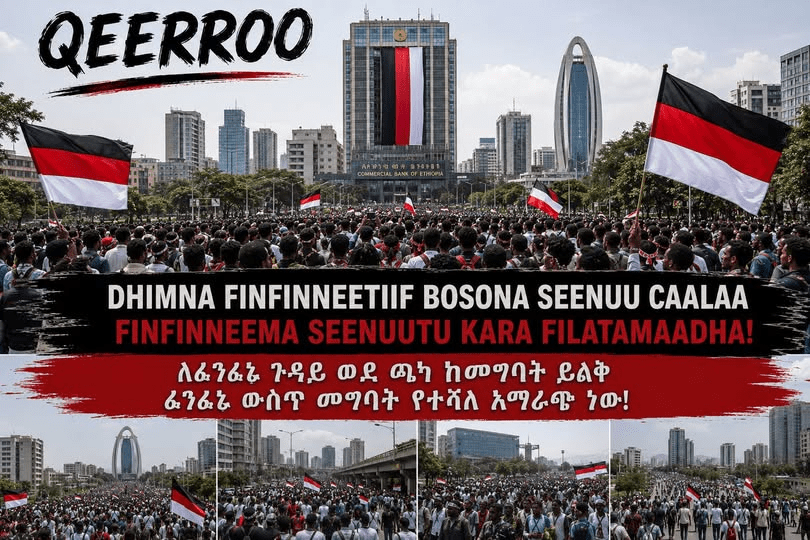
A Reflection on Strategy, Presence, and the Path Forward for Oromo Liberation
By Dhabessa Wakjira
In the long and arduous struggle for Oromo liberation, the question of strategy has always been central. For decades, the Oromo people have employed various methods of resistance—armed struggle in the forests, political advocacy in the diaspora, and mass protests in the streets. Each has its place and its purpose. But there is a principle that deserves careful consideration:
“Dhimma Finfinneetiif bosona seenuu caalaa Finfinneedhuma seenuutu karaa filatamaadha.”
“For the cause of Finfinne, entering Finfinne itself is better than entering the forest.”
This is not a dismissal of armed struggle or the sacrifices made by those who have fought in the forests. It is a strategic reflection on the nature of the struggle for Finfinne and the most effective means of achieving justice for the Oromo people’s ancestral capital.
The Significance of Finfinne
Finfinne—the city known internationally as Addis Ababa—is not just any city. It is the historical and spiritual heart of the Oromo people. It is the place where the Oromo people lived for generations before the expansion of the Ethiopian Empire. It is the site of their cultural heritage, the cradle of their language, and the symbol of their historical presence in the region.
For the Oromo people, Finfinne is not a bargaining chip. It is not a political football to be kicked around by competing interests. It is their ancestral homeland, and their connection to it is inseparable from their identity.
The struggle for Finfinne is therefore not just a political struggle—it is a struggle for the very soul of the Oromo nation. It is a struggle for recognition, for justice, and for the restoration of a people’s connection to their land.
The Forest and the City: Two Strategies
Historically, the Oromo liberation movement has employed two primary strategies: armed struggle in the forests and political organizing in the cities. Both have their strengths and limitations.
The Forest Strategy
Armed struggle has been a vital part of the Oromo resistance. The Oromo Liberation Army (WBO) has fought bravely against successive Ethiopian regimes, and their sacrifices have inspired generations. The forest has been a sanctuary for those who could not operate openly, a place where resistance could be sustained even in the darkest times.
However, the forest strategy has limitations. It is physically demanding, resource-intensive, and often results in heavy casualties. It can also be geographically remote from the centers of political power, limiting its direct impact on urban populations and decision-makers.
The City Strategy
The city strategy—entering Finfinne itself—offers a different approach. It recognizes that the struggle for Finfinne cannot be won solely in the forests. It must be waged in the city itself, among its residents, in its institutions, and in its political life.
Entering Finfinne means:
- Building a presence in the city’s political and civic institutions
- Organizing communities within the city
- Advocating for Oromo rights in the urban space
- Challenging the narrative that denies Oromo history
- Demanding recognition of Finfinne’s Oromo heritage
- Participating in governance to shape the city’s future
This strategy recognizes that Finfinne is not just a piece of land to be claimed from the outside—it is a living city with millions of residents, a complex political landscape, and a role as Ethiopia’s capital. Engaging with the city directly is essential for achieving justice.
Why Entering Finfinne Matters
1. Presence Is Power
In politics, presence is power. If the Oromo people are absent from Finfinne’s political and civic life, their voice will not be heard. Entering Finfinne means being present where decisions are made, where policies are shaped, and where the future of the city is determined.
2. The City Is the Symbol
Finfinne is not just a city—it is a symbol. It is the symbol of Oromo dispossession and the symbol of Oromo resistance. To enter Finfinne is to reclaim that symbol. It is to assert that the Oromo people have a rightful place in their ancestral capital.
3. The City Is the Center of Power
Finfinne is the seat of the Ethiopian government, the African Union, and numerous diplomatic missions. It is the center of political and economic power in Ethiopia. To influence the future of Finfinne, the Oromo people must be present at the center of that power.
4. The City Is a Space for Organizing
Finfinne is home to millions of people, including a significant Oromo population. It is a space for organizing, for building alliances, and for creating a movement that can effect change from within. By entering Finfinne, the Oromo people can build a movement that is rooted in the city itself.
5. The City Is the Future
The future of Finfinne will be shaped by those who are present in the city. If the Oromo people are absent, others will shape that future. Entering Finfinne ensures that the Oromo people have a say in what that future looks like.
The Path Forward
The principle that “entering Finfinne is better than entering the forest” is not a rejection of armed struggle. It is a call to recognize that the struggle for Finfinne must be waged on multiple fronts. It must include:
- Political organizing in the city
- Advocacy for Oromo rights in national and international forums
- Legal action to challenge unjust policies
- Cultural preservation to maintain Oromo heritage in the city
- Economic empowerment to build Oromo prosperity
- Public awareness to educate residents about Finfinne’s history
- Participation in governance to shape the city’s future
This multi-front approach recognizes that the struggle for Finfinne is not just about the past—it is about the present and the future. It is about ensuring that the Oromo people have a rightful place in their ancestral capital and that the city reflects the diversity and history of the Oromo nation.
A Call to Action
The time has come for the Oromo people to enter Finfinne—not as visitors, but as participants. Not as outsiders, but as rightful inhabitants. Not as supplicants, but as citizens with equal rights.
Entering Finfinne means:
- Registering to vote in the city’s elections
- Participating in civic organizations that shape the city’s life
- Advocating for Oromo rights in the city’s institutions
- Building businesses that create jobs and prosperity
- Educating residents about Finfinne’s Oromo history
- Demanding recognition of Oromo heritage in the city’s public spaces
This is not an easy path. It requires patience, persistence, and courage. But it is a path that offers a real chance for lasting change.
Conclusion: A New Chapter in the Struggle
The Oromo people have fought for Finfinne for generations. They have sacrificed their lives, their freedom, and their dreams. They have entered the forests, faced the guns, and endured the prisons. But the struggle is not over.
“Dhimma Finfinneetiif bosona seenuu caalaa Finfinneedhuma seenuutu karaa filatamaadha.”
“For the cause of Finfinne, entering Finfinne itself is better than entering the forest.”
This is a call to a new chapter in the struggle—a chapter of presence, participation, and engagement. A chapter where the Oromo people enter the city they love and claim their rightful place in it.
Let us enter Finfinne. Let us build a future where the Oromo people are recognized, respected, and empowered in their ancestral capital. Let us create a city that reflects the beauty, diversity, and resilience of the Oromo nation.
Finfinne is Oromo.
Entering Finfinne is the path forward.
The struggle continues.
Injifannoon Ummata Oromoo!
Finfinne haa jabaattu!
Finfinnee haa seennu!
This feature article is dedicated to all those who have fought for Finfinne and to those who will continue the struggle in the city itself—the heart of the Oromo nation.

A Vision for the Future: Dereje Mamuye Welcomes Guests at the Grand Opening of Godo Housing and Smart Real Estate
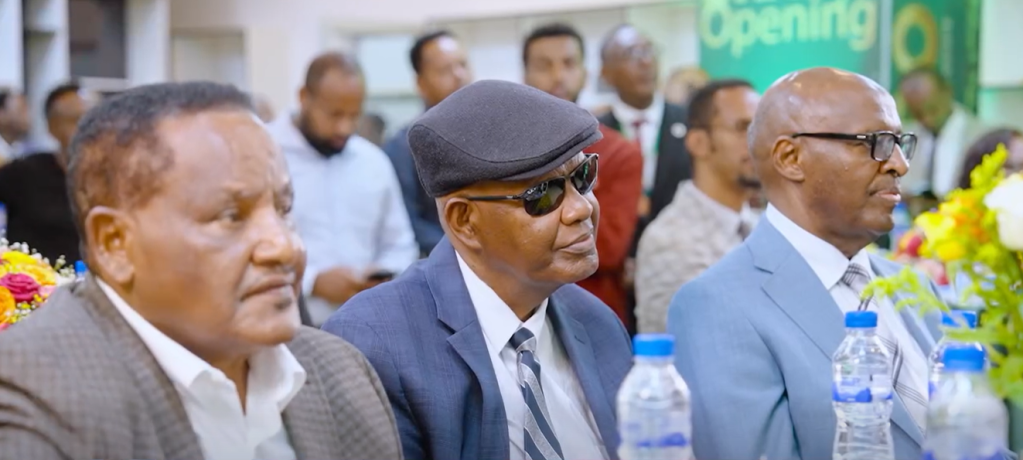
African Holding Group Founder and CEO Celebrates a New Era of Innovation and Development
By Maatii Sabaa
In a moment of celebration and vision, Dereje Mamuye, the Founder and CEO of African Holding Group, delivered a warm welcome message at the special inauguration ceremony of Godo Housing and Smart Real Estate. The event, which marked a significant milestone in the company’s journey, was a testament to the power of vision, innovation, and commitment to building a better future.
The ceremony was not just a celebration of a new development; it was a celebration of the spirit of enterprise that drives progress and transforms communities. As Mamuye addressed the gathered dignitaries, partners, and community members, his message resonated with hope, determination, and a deep sense of purpose.

A Leader’s Vision: Dereje Mamuye and African Holding Group
Dereje Mamuye is a prominent entrepreneur and visionary leader whose work has had a significant impact on the business landscape. As the Founder and CEO of African Holding Group, he has been at the forefront of driving innovation and development across various sectors.
African Holding Group is known for its commitment to excellence and its focus on creating value for communities. Under Mamuye’s leadership, the company has grown to become a major player in the industry, with a reputation for integrity, quality, and innovation. His vision is rooted in the belief that business can be a force for good—a tool for creating jobs, building communities, and empowering individuals.
Mamuye’s journey is an inspiration to many. His rise from humble beginnings to becoming a successful entrepreneur is a testament to the power of hard work, determination, and a clear vision. He is a role model for young people, showing that with dedication and perseverance, anything is possible.
Godo Housing and Smart Real Estate: A Milestone in Development
The inauguration of Godo Housing and Smart Real Estate represents a significant achievement in the field of real estate and housing. The project embodies the principles of innovation, sustainability, and community-centered design.
Godo Housing is not just a development; it is a vision for the future of housing. The project incorporates smart technology, sustainable design, and a focus on creating communities where people can thrive. By combining modern technology with thoughtful design, Godo Housing is setting a new standard for real estate development.
The project was a collaborative effort, reflecting the power of partnerships and the shared commitment to building a better future. The support of partners, investors, and community members was essential in bringing this vision to life.
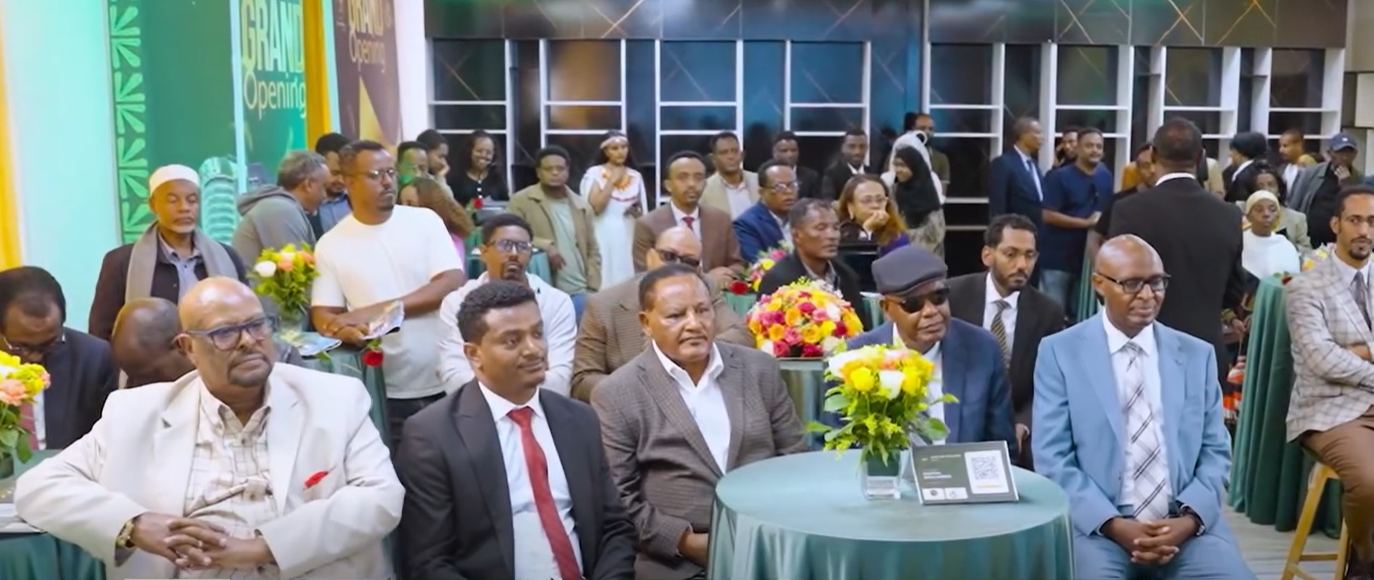
A Message of Welcome and Gratitude
In his welcome address, Dereje Mamuye expressed his heartfelt gratitude to all those who contributed to the success of the project. He welcomed guests with warmth and humility, emphasizing the importance of community and collaboration.
“Today marks a significant milestone in our journey,” Mamuye said. “We are grateful to all those who have supported us along the way. This project is a testament to what can be achieved when we work together with vision and determination.”
Mamuye’s message was one of hope and optimism. He spoke of the potential of the project to transform lives and communities, and he expressed his confidence in the future.
Innovation and Sustainability: The Future of Real Estate
The Godo Housing and Smart Real Estate project is a model for the future of real estate development. It incorporates a range of innovative features, including:
- Smart Technology: The integration of smart technology to enhance convenience, efficiency, and security.
- Sustainability: Environmentally friendly design and construction practices that reduce the environmental impact.
- Community Focus: A focus on creating communities where people can live, work, and thrive.
- Quality Design: Thoughtful design that prioritizes comfort, functionality, and aesthetics.
These features reflect the vision of the project’s creators and their commitment to creating spaces that meet the needs of modern life.
A Greeting of Welcome
In his address, Dereje Mamuye extended a warm welcome to all the guests. He offered his thanks for their presence and support for this important milestone. This welcome message was a true reflection of the spirit of the event.
A Celebration of Partnership
The inauguration ceremony was also a celebration of the partnerships that made the project possible. Mamuye acknowledged the contributions of investors, partners, and community members, emphasizing that the success of the project was a collective achievement.
“We are grateful for the trust and confidence that our partners have placed in us,” Mamuye said. “It is through collaboration and shared vision that we can achieve great things.”
The event was attended by a distinguished group of guests, including business leaders, government officials, and community members. The diverse attendance reflected the broad support for the project and its potential to have a positive impact.
The Legacy of Dereje Mamuye
Dereje Mamuye is not just a businessman; he is a visionary leader who is committed to making a difference. His work has inspired many, and his legacy will continue to grow as he builds on his achievements.
His commitment to giving back to the community is a core part of his philosophy. He believes that true success is measured not only by financial achievement but by the positive impact one has on the lives of others. This philosophy is reflected in the projects he undertakes and the values he upholds.
Conclusion: A Bright Future Ahead
The inauguration of Godo Housing and Smart Real Estate marks the beginning of a new chapter in the story of African Holding Group and its visionary leader, Dereje Mamuye. The project is a testament to what can be achieved when vision, innovation, and commitment come together.
As the company continues to grow and innovate, it will undoubtedly continue to make a positive impact on communities and inspire others to pursue their dreams. The welcome message of Dereje Mamuye is a reminder that the journey of building a better future is one that we must all undertake together.
Injifannoon Ummata Oromoo!
Godo Housing haa jabaattu!
African Holding Group haa jabaattu!
This feature article is dedicated to Dereje Mamuye, the African Holding Group, and all those who are working to build a better future through innovation, vision, and commitment.

Reclaiming Oromo Identity: The First Step in the Struggle
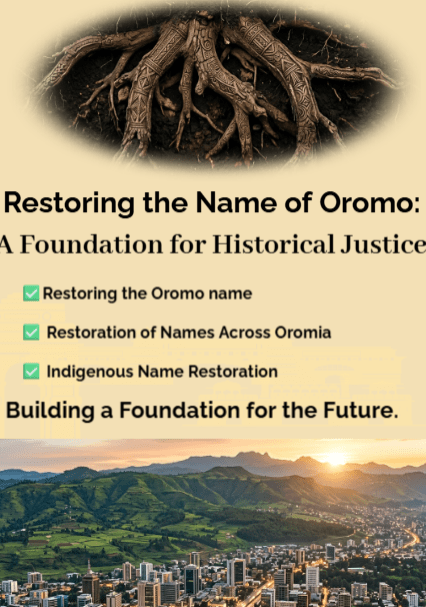
Restoring the Name of Oromo – A Foundation for Historical Justice
By Dhabessa Wakjira
The Oromo struggle for liberation, justice, and self-determination is multifaceted. It encompasses political rights, land rights, economic empowerment, and cultural preservation. But among all the objectives of the struggle, there is a first and foundational task—one that must be addressed before any other can be fully realized:
Restoring the Oromo name wherever it has been distorted, altered, or erased.
For centuries, the Oromo people have endured a systematic campaign of identity erasure. Their names—of people, places, and institutions—have been changed, distorted, and replaced. This is not a coincidence. It is a deliberate strategy of domination, designed to sever the Oromo people from their history, their heritage, and their sense of self.
The first step in the Oromo struggle, therefore, must be the restoration of the Oromo name. Without this, the history of the Oromo people cannot be told truthfully. Without this, the identity of the Oromo people cannot be fully reclaimed. Without this, the future of the Oromo people cannot be built on a foundation of truth.
The Significance of Names: More Than Words
In Oromo culture, names are not merely labels. They carry history, identity, meaning, and connection to the land. A name tells a story—of a person, a place, or a community. It embodies the values, the struggles, and the aspirations of those who bear it.
When names are changed or erased, something profound is lost. The connection to the past is broken. The continuity of culture is interrupted. The identity of a people is called into question.
For the Oromo people, the changing of names has been a tool of colonization and domination. Under successive regimes—from the expansion of the Ethiopian Empire under Menelik II to the Derg and beyond—Oromo names have been systematically replaced with Amharic or other names. This was not an innocent act. It was a deliberate strategy to erase Oromo identity and to impose a new, alien identity on the Oromo people.
Finfinne: A Case Study in Identity Erasure
Perhaps the most powerful example of this phenomenon is the city of Finfinne—the city known internationally as Addis Ababa.
The name “Finfinne” is Oromo. It means “place of hot springs.” This name reflects the history, geography, and culture of the area long before the establishment of the modern city. It is a name that connects the Oromo people to their ancestral land.
However, when Emperor Menelik II established the city in 1886, he gave it a new name: Addis Ababa, meaning “New Flower” in Amharic. This was not a neutral choice. It was a political act—an assertion of imperial power and a denial of Oromo identity.
The renaming of Finfinne to Addis Ababa was part of a broader campaign to erase Oromo presence and history. By changing the name, the empire sought to claim the city as its own and to sever the Oromo people’s connection to their ancestral homeland.
Today, the name “Finfinne” is increasingly being recognized alongside “Addis Ababa.” This is a positive development—a sign that the Oromo people’s historical connection to the city is being acknowledged. But it is not enough. The name “Finfinne” must be fully restored, and the history of the Oromo people in the city must be recognized.
The Broader Pattern: Changing Names Across Oromia
Finfinne is not the only example. Across Oromia, Oromo names have been changed, distorted, or replaced:
- Mountains, rivers, and valleys that once bore Oromo names have been renamed with Amharic or other names.
- Towns and villages have had their names changed to reflect the dominant culture.
- Historical sites have been given new names that obscure their Oromo heritage.
- Institutions and organizations have been named in ways that erase Oromo identity.
This pattern is not accidental. It is a deliberate strategy of cultural erasure—an attempt to make the Oromo people invisible in their own homeland. By changing names, the oppressor seeks to change history. By erasing names, the oppressor seeks to erase identity.
Why the Restoration of Names Matters
The restoration of Oromo names is not a symbolic gesture. It is a fundamental act of justice and a necessary step in the Oromo struggle.
1. Reclaiming History
History is told through names. When names are changed, history is distorted. To restore the Oromo name is to restore the Oromo narrative—to tell the story of the Oromo people in their own words, on their own terms.
2. Affirming Identity
Names are central to identity. To restore the Oromo name is to affirm that the Oromo people exist, that they have a history, and that they have a right to their identity. It is a declaration that the Oromo people will not be erased.
3. Healing Historical Wounds
The changing of Oromo names is a form of violence—a psychological and cultural assault on the Oromo people. Restoring these names is an act of healing. It acknowledges the harm that has been done and begins the process of repair.
4. Building a Foundation for the Future
The Oromo struggle is about building a future of justice, equality, and self-determination. But that future must be built on a foundation of truth. Restoring Oromo names is an essential part of that foundation.
5. Educating Future Generations
If the next generation of Oromo people does not know their own names—the names of their ancestors, their places, and their history—they will be disconnected from their heritage. Restoring names is a way of passing that heritage on.
The Global Context: Indigenous Name Restoration
The Oromo struggle to restore names is part of a global movement. Indigenous peoples around the world are reclaiming their names and their histories.
- In New Zealand, the Māori people have fought to restore Māori names to places that were renamed by European colonizers.
- In Australia, Aboriginal communities have worked to restore traditional names to landmarks and sites.
- In Canada, Indigenous peoples have successfully restored traditional names to places that were renamed during colonization.
- In the United States, Native American tribes have advocated for the restoration of Indigenous names for mountains, rivers, and other landmarks.
These movements are not about nostalgia. They are about justice. They are about recognition. They are about the fundamental right of a people to define themselves on their own terms.
The Oromo struggle for name restoration is part of this global movement. It is a demand for the same recognition and respect that other Indigenous peoples are seeking.
The Role of the Oromo Diaspora
The Oromo diaspora has a critical role to play in the restoration of Oromo names. In communities across the world—in the United States, Canada, Europe, Australia, and beyond—the Oromo diaspora can:
- Use Oromo names in their daily lives, businesses, and organizations.
- Advocate for the recognition of Oromo names in international forums.
- Educate others about the history and significance of Oromo names.
- Support efforts in Oromia to restore names and reclaim history.
- Build institutions that preserve and promote Oromo language and culture.
The diaspora is not separate from the struggle; it is an integral part of it. The restoration of Oromo names is a project that connects Oromo people across borders and generations.
The Challenge and the Hope
The restoration of Oromo names is not without challenges. There are forces that resist this change—those who benefit from the erasure of Oromo identity and who fear the power of a people reclaiming their history.
But there is also hope. The Oromo people are increasingly asserting their identity. The name “Finfinne” is being used alongside “Addis Ababa.” Oromo language and culture are being revitalized. And a new generation of Oromo youth is demanding recognition and justice.
The restoration of Oromo names is not just a demand—it is a movement. It is a declaration that the Oromo people are here, that they have a history, and that they will not be erased.
Conclusion: The First Step in the Struggle
The Oromo struggle is long and complex. It encompasses political, economic, social, and cultural dimensions. But among all these objectives, there is a first and foundational task:
To restore the Oromo name wherever it has been distorted, altered, or erased.
Without this, the Oromo people cannot fully reclaim their history. Without this, the Oromo people cannot fully affirm their identity. Without this, the Oromo people cannot fully build their future.
Finfinne must be called by its Oromo name.
Every place that has been renamed must have its Oromo name restored.
Every person who has been given a foreign name must have the right to reclaim their Oromo identity.
This is not just a cultural project—it is a political project. It is a declaration of self-determination. It is the first step in the struggle for justice.
Finfinne is Oromo.
Oromummaa is not negotiable.
The restoration of Oromo names is the foundation of the struggle.
Injifannoon Ummata Oromoo!
Maqaan Oromoo haa deebi’u!
Finfinne haa jabaattu!
This feature article is dedicated to all those who are working to restore Oromo names and reclaim Oromo history. The struggle continues, and the foundation is being laid.

Finfinne and Dirree Dhawaa: The Macha-Tulama Association Declares That Their Inclusion in National Dialogue Is an Attempt to Weaken the Oromo People
A Historic Statement on the Struggle for Oromo Land, Identity, and Justice
By Daandii Ragabaa
(SBO/VOL — HAGAYYA 10, 2026) In a powerful and uncompromising statement, the Waldaa Maccaa fi Tuulamaa (Macha-Tulama Self-Help and Development Association) has declared that the inclusion of Finfinne and Dirree Dhawaa in the national dialogue agenda is a deliberate attempt to weaken and undermine the Oromo people. The association, which has long been a voice for Oromo rights and historical justice, has issued a clear warning: the Oromo people will not accept the theft of their ancestral land, and the struggle for justice will continue.
The Macha-Tulama Association’s statement comes at a critical moment, as Ethiopia’s national dialogue process unfolds and the status of Finfinne—the city known internationally as Addis Ababa—and its surrounding areas, including Dirree Dhawaa, remain deeply contested.
A Declaration of Historical Truth
The Macha-Tulama Association has issued its statement as a direct response to the agenda items concerning Oromia and Oromo rights being brought before the national dialogue. The association has made its position clear:
“Even today, our ancestral land is being stolen.”
“Finfinne and Dirree Dhawaa are Oromo.”
These declarations are not political slogans; they are assertions of historical truth. The association has reminded the Oromo people and the world of the atrocities committed during the Menelik era, when the Oromo people were systematically dispossessed of their land, their dignity, and their lives.
Remembering the Atrocities of the Menelik Era
The Macha-Tulama Association has brought the dark history of the Menelik era back into the spotlight, reminding the Oromo people of the crimes committed against their ancestors.
“Menelik committed an unforgivable crime against the Oromo people when he separated Finfinne from its Oromo owners,” the association declared.
The association detailed the atrocities of that era, naming specific victims and families who suffered under Menelik’s expansionist campaign:
- Abbaa Gadaa Guraaraa Lataa was executed by hanging.
- His father, mother, and three children were killed in a brutal and inhumane manner.
- Qajeelaa Dooyyoo and Guraaraa Dooyyoo were also executed, along with their mother, in a similarly horrific fashion.
- Shubbuu Ejersoo had his hands and feet severed before being killed.
- Aaxalee Jaatanii was starved to death in detention—denied food until life was extinguished.
These were not random acts of violence. They were part of a systematic campaign to break the spirit of the Oromo people, to erase their presence from Finfinne, and to establish a new political order built on Oromo suffering.
The Suffering Continues: Three Generations of Pain
The Macha-Tulama Association declared that the suffering of the Oromo people over Finfinne has now spanned three generations. From the initial dispossession under Menelik to the brutal repression under the Derg regime and now to the present day—the Oromo people have paid a heavy price.
“During the Derg era, many Oromo paid a great price for Finfinne,” the association stated. “The wound is still not healed.”
The association raised a pointed and urgent question:
“As long as this truth exists on this earth, the question of ‘Whose Finfinne is it?’ will always be asked. What has brought us to this point?”
The answer, according to the association, lies in the persistent refusal of successive Ethiopian regimes to acknowledge Oromo rights.
A Challenge to the Current Regime
The Macha-Tulama Association has posed a direct challenge to the architects of the ongoing injustice:
“Oromo people are struggling to reclaim their land and their rights. How can you govern on someone else’s land? What right do you have to claim authority over people who do not belong to you? It would have been better for you to struggle for your own land rather than occupy ours.”
The association’s statement is a fundamental challenge to the legitimacy of the Ethiopian state as it currently exists. It questions not just the governance of Finfinne but the entire framework of domination that has denied Oromo people their rights for over a century.
The National Dialogue: A Tool of Deception?
The Macha-Tulama Association expressed deep concern about the ongoing national dialogue and how the issues of Finfinne and Dirree Dhawaa are being treated within it.
According to the association, the dialogue is not being used as a genuine mechanism for reconciliation and justice. Instead, it is being manipulated to further marginalize the Oromo people and to legitimize the ongoing dispossession of Oromo land.
“The agenda of Finfinne and Dirree Dhawaa has been brought to the national dialogue to weaken the Oromo people,” the association declared. “The old politics of the Abyssinian elite continues, refusing to step back from the land that rightfully belongs to Oromo.”
The association emphasized that the ongoing process is not just disrespectful—it is a violation of basic rights and dignity. The association described the current situation as “an insult that crosses all boundaries” and declared that “something that did not exist before has now arrived” —a reference to the unprecedented nature of the current assault on Oromo rights.
A Call to Resistance and Unity
In the face of these challenges, the Macha-Tulama Association issued a clear and urgent call to the Oromo people:
“The Oromo people must fight for their land and their rights.”
The association’s call to action is not a call to violence—it is a call to resistance, to unity, and to the defense of Oromo rights through every legitimate means available. It is a call to refuse subjugation, to refuse silence, and to refuse to accept the theft of Oromo land as a settled fact.
The association also addressed the issue of Dirree Dhawaa—the area that has become a symbol of Oromo resistance and a flashpoint of conflict. The association’s declaration that Finfinne and Dirree Dhawaa are inseparable from the broader Oromo struggle serves as a reminder that these are not isolated issues—they are part of a continuous thread of resistance that stretches back over a century.
The Historical Context: Dirree Dhawaa as a Symbol of Resistance
Dirree Dhawaa is more than just a piece of land—it is a symbol of Oromo resilience and a monument to the struggle for justice. It is the site where Oromo people have gathered to demand their rights, where they have faced brutal repression, and where they have continued to return in defiance of all efforts to silence them.
The association’s statement linking Finfinne and Dirree Dhawaa in the same breath is significant. It sends a clear message: the Oromo people will not accept piecemeal solutions. They will not accept partial recognition. They will not accept the suggestion that one part of their historical homeland can be compromised while another is defended.
Both Finfinne and Dirree Dhawaa are Oromo.
A Historical Challenge to the Ethiopian State
The Macha-Tulama Association’s statement is not just a declaration of grievance—it is a fundamental challenge to the legitimacy of the Ethiopian state as it currently exists.
By raising the question “Whose Finfinne is it?” —and by insisting that Oromo people have the right to live on their own land with dignity, self-respect, and self-determination—the association is questioning the foundational narrative upon which the Ethiopian state was built.
The association’s demand is not for charity or concessions. It is for recognition of historical truth, for justice for past crimes, and for a future in which Oromo people are treated as equals in their own homeland.
The Path Forward: Recognition, Justice, and Peace
The Macha-Tulama Association’s statement concludes with a clear vision for what must happen:
The wounds of the past must be acknowledged. The atrocities committed against the Oromo people—from the Menelik era to the present—cannot be ignored or forgotten. They must be named, documented, and taught.
Justice must be pursued. Those who committed crimes against the Oromo people must be held accountable. This is not revenge—it is the foundation of lasting peace.
Oromo rights must be recognized. The Oromo people have the right to their land, their language, their culture, and their self-determination. This is not negotiable.
The national dialogue must be genuine. If the dialogue is to be meaningful, it must include a full and honest discussion of Finfinne, Dirree Dhawaa, and all the historical injustices suffered by the Oromo people.
Conclusion: The Struggle Continues
The statement of the Macha-Tulama Association is a powerful reminder that the struggle for Oromo justice is far from over. The wounds of the past remain open. The injustices of the present continue. And the future remains uncertain.
But one thing is clear: the Oromo people will not give up their land, their rights, or their dignity. They will continue to resist. They will continue to demand justice. And they will continue to remember the sacrifices of those who came before—from Abbaa Gadaa Guraaraa Lataa to the thousands of unnamed Oromo who have given their lives for Finfinne and for Oromia.
As the association stated:
“Oromo people are struggling to reclaim their land. This struggle has not ended—it continues. And it will continue until justice is done.”
Finfinne is Oromo.
Dirree Dhawaa is Oromo.
Oromia is Oromo.
The struggle continues.
For the memory of Abbaa Gadaa Guraaraa Lataa, Qajeelaa Dooyyoo, Guraaraa Dooyyoo, Shubbuu Ejersoo, Aaxalee Jaatanii, and all the Oromo martyrs who gave their lives for the land.
Injifannoon Ummata Oromoo!
Finfinne haa jabaattu!
Dirree Dhawaa haa jabaattu!
This feature article is dedicated to the Macha-Tulama Self-Help and Development Association and all those who continue to speak truth to power in the pursuit of justice for the Oromo people.
Finfinne: The Living Sacrifice of the Oromo People for Identity, Dignity, and Oromummaa

The Land Where Ancestors Poured Their Blood — and Where the Struggle Continues
By Daandii Ragabaa
There are places that are more than geography. There are places that are memory, identity, and the very soul of a people. Finfinne—the city known internationally as Addis Ababa—is such a place for the Oromo people. It is not merely a capital city; it is the historical heart of Oromia, the ancestral homeland of the Oromo nation, and the site of an ongoing struggle for recognition, dignity, and justice.
Throughout history, the Oromo people have paid a heavy price to defend their connection to Finfinne. They have sacrificed their lives, their freedom, and their dreams—all for the sake of their identity, their dignity, and their Oromummaa (Oromo identity). The land itself is soaked with the blood of ancestors who refused to surrender their heritage.
Tufa Aredo, Jara Jarra, and Jara Tuturu —these names are not merely historical figures. They are living witnesses to the sacrifice that the Oromo people have made for Finfinne. Their stories are etched into the memory of the Oromo nation, a testament to the unwavering commitment of a people who refuse to be erased from their own homeland.
Finfinne: Not Just a City, But a Sacred Trust
For the Oromo people, Finfinne is not a piece of real estate to be negotiated or bartered. It is the place where their ancestors lived, loved, prayed, and died. It is the site of their cultural heritage, the cradle of their language, and the symbol of their historical presence in the region.
Long before the expansion of the Ethiopian Empire under Menelik II, the area known as Finfinnee was inhabited by the Oromo people. The city’s very name is Oromo—meaning “place of hot springs.” This is not a coincidence; it is a testament to the Oromo people’s deep and enduring connection to the land.
But this connection has been contested. The establishment of the city and the subsequent displacement of the Oromo people were acts of dispossession that have never been fully acknowledged or addressed. For generations, the Oromo people have been told that they are not the rightful owners of Finfinne, that their history is a myth, and that their claims are illegitimate.
Yet the Oromo people have never accepted this narrative. They have continued to assert their identity, to demand recognition, and to sacrifice for their homeland.
The Sacrifice of Tufa Aredo, Jara Jarra, and Jara Tuturu
Among the countless Oromo martyrs who have given their lives for Finfinne, the names of Tufa Aredo, Jara Jarra, and Jara Tuturu stand out as symbols of resistance, courage, and unwavering commitment to Oromummaa.
These individuals were not merely victims of oppression; they were active participants in the struggle to defend Oromo identity and land. They understood that Finfinne was not just a city—it was the heart of their nation, the embodiment of their history, and the foundation of their future.
Their sacrifices were not in vain. Their memory inspires a new generation of Oromo youth who continue to demand justice and recognition. Their names are spoken with reverence in Oromo homes, in cultural gatherings, and in the stories passed down from elders to children.
They are the living witnesses—even in death—to the truth that Finfinne is Oromo land, and the Oromo people will never abandon it.
The Historical Context: A Legacy of Dispossession
To understand the significance of the Oromo people’s sacrifice for Finfinne, one must understand the history of dispossession that the Oromo people have endured.
In the late 19th century, the expansion of the Ethiopian Empire under Menelik II brought the Oromo people under the control of a new political order. The establishment of Finfinne as the capital of the empire was accompanied by the displacement of Oromo communities, the confiscation of Oromo land, and the systematic erasure of Oromo identity.
This dispossession was not accidental; it was a deliberate policy of the empire to consolidate control over the region and to marginalize the Oromo people. The Oromo people were excluded from political power, denied access to their own resources, and subjected to cultural and linguistic oppression.
Despite these challenges, the Oromo people have never surrendered their identity. They have continued to speak their language, practice their culture, and assert their rights. And they have continued to sacrifice—in ways both great and small—for their connection to Finfinne.
The Struggle Continues: A New Generation Rises
Today, a new generation of Oromo youth is carrying forward the legacy of Tufa Aredo, Jara Jarra, Jara Tuturu, and countless others who came before them.
They are the Qeerroo—the young people who have taken to the streets to demand justice, who have faced tear gas and bullets, who have been imprisoned and tortured, and who have refused to be silenced. They are the cultural activists who are reviving Oromo language, music, and art. They are the intellectuals who are documenting Oromo history and challenging the narratives that have been used to marginalize their people.
They are the ones who remind the world that Finfinne is Oromo, that Oromummaa is not a political slogan but a deep and abiding identity, and that the struggle for justice will continue until the Oromo people are fully recognized and respected.
The Meaning of Sacrifice in Oromo Culture
In Oromo culture, sacrifice is not a burden—it is a sacred duty. The Oromo people understand that freedom and dignity are not given; they are won. They understand that the land is not just a resource—it is a sacred trust passed down from ancestors to future generations.
The sacrifice of Tufa Aredo, Jara Jarra, and Jara Tuturu is a reflection of this cultural value. Their willingness to give their lives for Finfinne is not an act of desperation; it is an act of profound love and commitment to their people, their culture, and their homeland.
It is the same spirit that animated the Oromo resistance against the Derg regime, the same spirit that fueled the Qeerroo movement, and the same spirit that continues to inspire Oromo activism around the world.
A Message to the World
The Oromo people’s connection to Finfinne is not a matter of political convenience; it is a matter of historical truth and moral justice. The Oromo people have lived on this land for generations, and their connection to it is inseparable from their identity.
The world must recognize that the Oromo people’s claim to Finfinne is not an act of aggression or a threat to others. It is a demand for justice, a recognition of historical truth, and an affirmation of a people’s right to their own land.
The world must also recognize that the Oromo people’s struggle for Finfinne is part of a broader struggle for human rights, self-determination, and dignity—a struggle that is shared by indigenous peoples everywhere.
Conclusion: The Land Lives On
The sacrifice of the Oromo people for Finfinne is not a story of defeat; it is a story of resilience, courage, and enduring hope. Though Tufa Aredo, Jara Jarra, and Jara Tuturu have passed from this world, their spirit lives on in the hearts of the Oromo people.
Their sacrifice is a reminder that Finfinne is not just a city—it is a symbol of the Oromo people’s indomitable spirit, their refusal to be erased, and their unwavering commitment to justice.
As the Oromo saying goes: “Biyya abbaa keessaa hin ba’inu” —”One does not abandon the land of one’s father.”
The Oromo people have not abandoned Finfinne, and they never will.
Finfinne is Oromo.
The sacrifice of the ancestors is not forgotten.
The struggle for justice continues.
Oromummaa lives on.
Injifannoon Ummata Oromoo!
Finfinne haa jabaattu!
Tufa Aredo, Jara Jarra, fi Jara Tuturu haa barabaraan jabaatan!
This feature article is dedicated to Tufa Aredo, Jara Jarra, Jara Tuturu, and all the Oromo martyrs who have given their lives for Finfinne and for the dignity and identity of the Oromo people.






