Daily Archives: June 1, 2026

Bonds Beyond Borders: AMES CEO Reflects on Reconciliation, Resilience, and the Welcome to Country
By Dabessa Gemelal
As Australia marks National Reconciliation Week alongside the Islamic festival of Eid al-Adha, the CEO of AMES Australia, Melinda Collinson GAICD, has offered a powerful reflection on a question that has stirred debate across the nation: When, where, and how often should we hold Welcome to Country ceremonies?
“We’ve heard a lot of commentary recently about the appropriateness of welcome to country ceremonies or recognitions,” Collinson said. “The competing narratives talk about when, how often and where these recognitions should take place.”
For Collinson, however, the answer lies not in a calendar or a rulebook, but in the lived experience of the very people her organisation serves. AMES Australia, a leading provider of settlement services for refugees and migrants, works daily with two communities who understand displacement better than most: Indigenous Australians and newly arrived newcomers.
“Recognising bonds to country is particularly important to us at AMES Australia because we work to support both Indigenous and refugee and migrant communities,” she explained. “Many of our colleagues and the people and communities we work with have been forced to leave the lands of their ancestors and so we understand the important connections that exist between land, culture and identity. This ancestry is shared through language, stories, song and dance.”
It is this dual perspective—walking alongside both First Nations peoples and those who have fled conflict or hardship—that gives Collinson’s voice a unique authority during Reconciliation Week. She points to an often-overlooked truth: immigrant and Indigenous people frequently share profound bonds, born from parallel experiences of displacement, cultural marginalisation, and shared barriers to education and employment.
“We’ve learned from hands-on experience working with both communities that immigrant and Indigenous people often share profound bonds around things like parallel experiences of displacement and cultural marginalisation; as well as barriers to their aspirations around education and employment.”
These are not abstract observations. Across regional Australia, Collinson notes, migrant and Indigenous groups have increasingly become natural allies, advocating together for human rights, land sovereignty, and social inclusion. The most impactful collaborations, she says, have emerged not in the major capitals but in the regions—where culture, education, sport, and art have forged unexpected and powerful alliances.
Evidence from the Regions
A recent study led by the University of Wollongong, and supported by AMES Australia, provides compelling data to support this view. The research found that newly arrived refugees and migrant families settling in regional Australia are largely building successful lives, and their host communities are benefitting from their presence.
The numbers are striking: approximately 97 percent of families surveyed said their experience of settling in a regional town had been positive, and 76 percent said they intended to remain long-term.
But beyond satisfaction rates, the study uncovered something deeper. It found strong connections between regionally settled refugees and migrants and First Nations people. Survey respondents identified similarities in cultural orientations toward land, soil, and the significance of place. Many migrants and refugees shared their own place-based traditions—practices rooted in the lands of their birth—and saw clear parallels with Aboriginal and Torres Strait Islander cultures.
“The settlement of migrants and refugees enriches regional cultural life through diverse practices, food and festivals, and this is amplified when there is cultural interaction between migrant and Indigenous communities,” Collinson said.
A Harmony Day in Mildura
To understand what this looks like in practice, Collinson points to Mildura, a regional city on the Murray River. Earlier this year, at a Harmony Day event, she witnessed something remarkable. Migrant, Indigenous, and established communities gathered together to celebrate the city’s vibrant diversity. A local elder conducted the Welcome to Country ceremony, and Collinson describes it as “heartfelt and truly welcoming.”
“It was so great to see a local government that is whole-heartedly invested in its multicultural and Indigenous communities,” she said. “What this tells us is that engagement and understanding of First Nations issues and barriers among Australia’s migrant communities is critical to achieving the goals of reconciliation and everything we have seen so far suggests that our multicultural communities are strong supporters and advocates for First Nations aspirations.”
A Shared Future
Collinson is unequivocal about the responsibility that comes with Australia’s multicultural identity. She believes it is vital that migrant communities understand the history, culture, and contributions of Indigenous Australians, as well as their ongoing struggles. This, she says, is part of AMES Australia’s core mission.
Across the country, evidence of growing solidarity is already visible. Young Asian, Arab, Pasifika, and African Australians have become an increasingly common presence at Indigenous events. Peak migrant organisations have emerged as staunch supporters of reconciliation and of the aspirations of First Nations peoples.
“It’s clear that the lived experience of migrants and refugees is informing their decisions to support and embrace reconciliation and Indigenous aspirations,” Collinson said. “It’s also clear that Indigenous Australians are among the most supportive and welcoming of newly arrived migrants and refugees.”
For Collinson, the final word belongs to a simple but profound truth about belonging.
“A sense of belonging to this country is vitally important and is cherished by our migrant and refugee communities; and it is an integral part of our Indigenous communities’ sense of identity.”
She pauses, then adds:
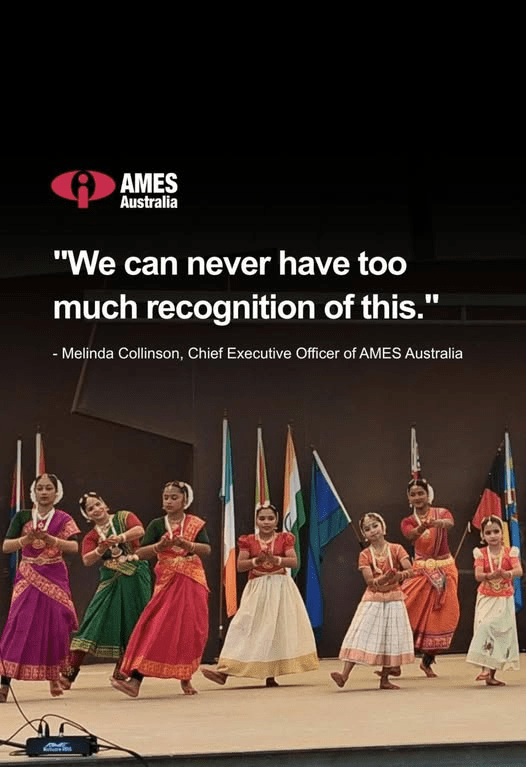
“We can never have too much recognition of this.”
As Reconciliation Week continues and as families gather for Eid al-Adha, the sentiment lingers: that the ceremonies, the welcomes, and the quiet acknowledgments of ancient and new ties to this land are not empty rituals. They are the very fabric of a nation learning, slowly and imperfectly, to recognise itself in all its faces.




 Advocacy for Oromia