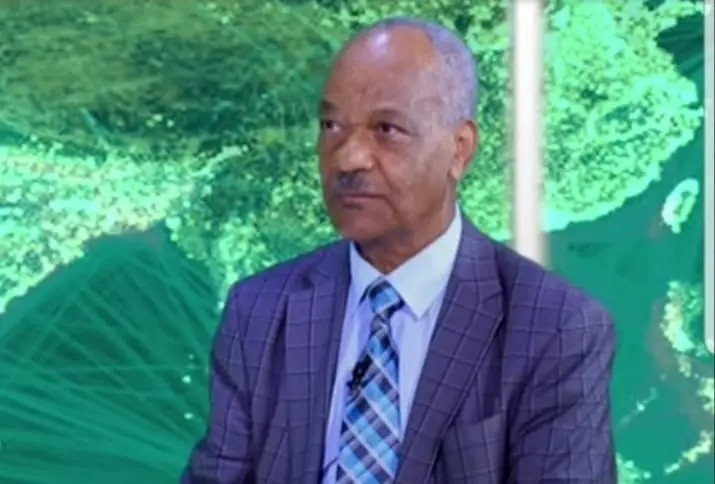
Professor Tesema Ta’a: The Historian Who Gave Voice to the Voiceless
By Dhabessa Wakjira
History, in Ethiopia, was once written from the throne. It was a chronicle of emperors, generals, and conquests—a sweeping narrative that rendered ordinary people invisible, their daily struggles and ancient wisdom reduced to mere footnotes. Then came Professor Tesema Ta’a, a scholar who dared to turn the pyramid upside down.
Born in western Ethiopia, in the former Welega province, Professor Tesema would rise from modest beginnings to become one of the most distinguished historians of his generation. But his greatest contribution was not merely academic. It was revolutionary.
The Making of a Scholar
Professor Tesema’s intellectual journey began in the late 1960s and early 1970s when he entered Addis Ababa University to study history. He completed both his Bachelor of Arts and Master of Arts at that institution, earning recognition as a promising young mind. Upon graduation, he joined the university as an assistant professor, beginning what would become a lifelong commitment to teaching and research.
But his ambitions reached beyond the classroom. Seeking deeper knowledge and methodological rigor, he traveled to the United States, where he enrolled at the prestigious Michigan State University. There, immersed in a vibrant academic environment, he pursued his doctoral studies with singular focus.
In 1986, he completed his PhD dissertation titled “The Political Economy of Western Central Ethiopia: From the Mid-19th Century to World War II.” It was a groundbreaking work that would lay the foundation for his entire career—a deep, multi-layered analysis of a region and its people that had long been marginalized in mainstream Ethiopian historiography.
Returning Home, Transforming a Discipline
Unlike many scholars who complete their doctorates abroad and never return, Professor Tesema came back to Ethiopia. He rejoined the history department at Addis Ababa University, not as the same instructor who had left, but as a transformed intellectual armed with new tools and a clear vision.
His rise through the ranks was steady and well-deserved. Recognizing the exceptional quality of his research and his profound commitment to rigorous scholarship, the university awarded him the rank of full professor. It was a title he wore not as a crown, but as a responsibility.
History from Below: A Radical Approach
Professor Tesema’s most enduring contribution to Ethiopian historiography lies in his methodological shift. He rejected the dominant tradition of writing history “from above”—the long-established practice of focusing exclusively on kings, emperors, and elite political leaders. Instead, he championed what scholars call “history from below.”
What does that mean in practice?
It means centering the everyday lives of ordinary communities. It means studying systems of production, not just systems of power. It means examining cultural institutions—the rituals, the councils, the unwritten laws that governed the lives of millions—not merely the decrees of distant rulers.
In regions where written documents were scarce or nonexistent, Professor Tesema demonstrated something profound: history could still be written. He systematically collected oral sources—the testimonies of elders, the memories of storytellers, the genealogies passed down through generations. He treated these oral traditions not as folklore, but as legitimate, rigorous evidence. He proved that the voices of the elderly, dismissed by colonial and elite historians as unreliable, could be methodically gathered, cross-referenced, and woven into authentic historical narrative.
A Legacy in Print
Professor Tesema’s scholarship is preserved in numerous books, book chapters, and articles published in international journals. Among his most significant works:
“The Western Oromo and the Ethiopian State to 1941” — This landmark book remains an essential reference for anyone seeking to understand the complex political, economic, and social relationships between the western Oromo society and the emerging modern Ethiopian state. It is not a simple story of resistance or accommodation; it is a nuanced, detailed, and deeply humane analysis of a people navigating the pressures of imperial expansion.
The Gadaa System — Professor Tesema published extensively on this ancient Oromo democratic governance structure. He examined its democratic architecture, its institutional mechanisms among the Borana and Mecha Oromo, and the crucial roles of religious and cultural leaders such as the Qaalluu. His work revealed that Africa had developed sophisticated systems of checks and balances long before European colonialism.
Land and Agricultural History — He also turned his analytical gaze to land tenure systems, analyzing the dramatic shifts under different regimes. He studied the impact of resettlement programs during the Derg era and examined state farms, always attentive to how policy changes affected the lives of ordinary farmers.
A Scholar Who Served
Professor Tesema did not confine his contributions to research alone. Within Addis Ababa University, he took on multiple leadership roles, serving as Head of the History Department. In this capacity, he worked to reshape curricula, ensuring that they included not only European and Western historical perspectives but also African and indigenous knowledge systems—a radical inclusion at a time when such knowledge was often dismissed.
He supervised numerous PhD and Master’s students, training a new generation of Ethiopian historians who carry forward his methodological commitments. Many of today’s leading scholars cite him as their intellectual father.
The Elder Statesman of Ethiopian History
Today, Professor Tesema Ta’a is regarded among Ethiopian historians as a great pillar of knowledge and a model of integrity. He represents something increasingly rare: a scholar who has never wavered in his commitment to scientific research, who has refused to bend history for political convenience, and who has consistently insisted that the discipline must serve the people—all the people, not just the powerful.
He demonstrated through decades of painstaking work that history can be written without partisanship, that rigorous methodology and community voices are not opposites but partners, and that indigenous knowledge deserves a place alongside the great intellectual traditions of the world.
He continues to work, even now, leaving his imprint on ongoing research projects. His is not a legacy sealed in a museum. It is a living fire, passed hand to hand, illuminating the path for those who believe that history belongs to everyone—including those who never sat on a throne, but whose labor, culture, and resilience built the nation.
Professor Tesema Ta’a did not simply write history. He gave history back to the people who lived it.






