Category Archives: Press Release

The Poet Who Spoke for a Continent: Remembering Tsegaye Gabre-Medhin (1936-2006)
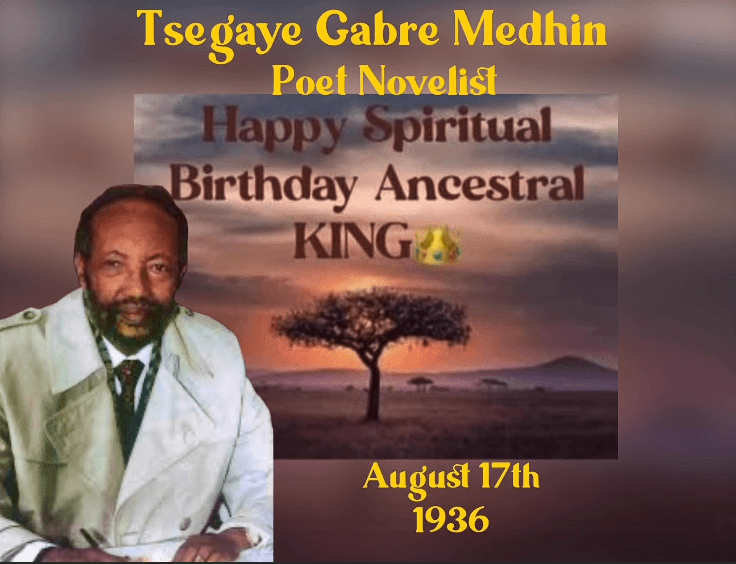
Subtitle: Ethiopia’s towering playwright, poet laureate, and pan-African visionary left a legacy that bridged tradition, revolution, and human dignity.
On a February day in 2006, in a Manhattan hospital room far from the highlands of Boda where he was born, the heart of Ethiopian letters ceased to beat. Tsegaye Gabre-Medhin – playwright, poet, pan-Africanist, and keeper of his nation’s conscience – passed away at 69, physically separated from the land he immortalized but spiritually never departed from it.
Tsegaye’s life was a testament to the power of art to shape national identity and awaken continental consciousness. Educated in the wake of Ethiopia’s liberation from Italian occupation, his genius was recognized early. While still a schoolboy, he wrote a play performed before Emperor Haile Selassie—a prophetic beginning for a writer who would spend a lifetime wrestling with the myths, heroes, and soul of his nation.
The Playwright as Patriot and Teacher
Rejecting careers in law and commerce, which he saw as “soul-destroying,” Tsegaye devoted himself to the stage. As a director of Ethiopia’s National Theatre, he became a deliberate pedagogue. He believed his country needed heroes, and through historical dramas like Tewodros and Petros at the Hour, he taught Ethiopians to respect the martyrdom, reform, and resistance that defined their past. Yet his vision was never parochial. His celebrated play The Oda Oak Oracle, a comedy of Ethiopian country life, was performed across eight nations, proving the universal appeal of locally-rooted storytelling.
The Poet as Pan-African Visionary
Tsegaye’s patriotism was expansive, firmly rooted in an Africanist worldview. A friend of Senegal’s President Léopold Sédar Senghor, he engaged deeply with the Négritude movement. His scholarship led him to trace the linguistic and cultural threads linking the Nile Valley civilizations, asserting Ethiopia’s place within a broader African continuum. This vision culminated in 2002 when his poem, calling to “make Africa the tree of life,” was adopted as the anthem of the newly-formed African Union.
The Advocate as Unyielding Conscience
Beyond the stage and page, Tsegaye was a formidable advocate for justice. He campaigned tirelessly for the return of Ethiopia’s looted heritage—the Aksum Obelisk taken by Mussolini and the priceless manuscripts pillaged from Emperor Tewodros’s fortress at Magdala. For him, these were not mere artifacts but fragments of the national soul.
In his later years, his focus broadened to the universal themes of peace and human dignity, earning him international recognition and a place in the United Poets Laureate International.
A Legacy of Unbroken Spirit
Confined to exile by the medical necessity of dialysis, Tsegaye became a spiritual anchor for the diaspora, affectionately known as Blattengetta—the great scholar. His seminal poem, “Prologue to African Conscience,” remains a piercing critique of post-colonial malaise, warning of “luxury and golden chains that free the body and enslave the mind.”
Tsegaye Gabre-Medhin taught us that to look forward, a people must first learn to look deeply into their own past and see themselves within the grand tapestry of their continent. He was not just Ethiopia’s poet laureate; he was Africa’s scribe, a visionary who understood that true freedom lives in the stories we tell, the history we reclaim, and the conscience we dare to awaken.
Galatoomaa, Blattengetta. Your footprints in time are indelible.

Urgent Action: Halt Ethiopia TPS Termination Now

FOR IMMEDIATE RELEASE
URGENT PETITION: HUMANITARIAN GROUPS PLEA FOR LAST-MINUTE HALT TO ETHIOPIA TPS TERMINATION
With just 48 hours remaining before a critical deportation protection expires, the Oromia Support Group (OSG) is issuing a global call to action. A petition on Change.org, directed at Secretary of Homeland Security Kristi Noem, demands the immediate rescission of the decision to terminate Temporary Protected Status (TPS) for nationals of Ethiopia, including the Oromo people.
The termination, set for February 13, will revoke the legal right of approximately 2,200 Ethiopians to live and work in the United States. The Department of Homeland Security (DHS) decision, announced last year, concludes that conditions in Ethiopia—a country grappling with recent conflict, severe drought, and ongoing human rights concerns—no longer warrant temporary humanitarian protection.
“This decision implies Ethiopia is now a safe place to deport people to, which contradicts the reality on the ground,” said Dr. Trevor Trueman, Chair of the Oromia Support Group. “We are in a race against time to prevent the return of individuals to a situation of extreme peril.”
The petition explicitly holds Secretary Noem, who oversees U.S. Immigration and Customs Enforcement (ICE), accountable. It references controversial ICE actions, alleging the agency has “detained thousands of immigrants, including children, in hostile detention centres many hundreds of miles from their homes, families, and legal representatives.” The petition frames the appeal as a chance for the public to “register disapproval of the actions of the DHS, including ICE.”
Dr. Trueman specifically addressed potential concerns about the petition’s organizer, the Ethiopian American Association. He emphasized it is a young, non-partisan organization with no nationalistic bias within Ethiopia. “Unlike other similarly-named organisations, it does not exhibit an anti-Oromo bias,” he stated, noting that its President, Aga Ambissa Ayana, is a former Oromo refugee himself, whom Trueman met in Nairobi in 2010 prior to his resettlement in the U.S.
Advocates warn that without TPS, beneficiaries will face imminent deportation to a country still recovering from a devastating civil war and facing severe humanitarian crises in several regions, including Oromia. The termination affects those who have built lives, families, and careers in the U.S., often for several years.
The Petition can be found here: https://www.change.org/…/protect-tps-holders-of…
About the Oromia Support Group:
The OSG is a UK-based advocacy organization focused on human rights and political issues concerning the Oromo people of Ethiopia.
Contact: Dr. Trevor Trueman, Chair, Oromia Support Group.
###
Note to Editors: The DHS has stated the termination is based on a thorough assessment of country conditions. Requests for comment from the Department of Homeland Security on this specific petition were not immediately returned.

Gedu Andargachew: To Abiy Ahmed: Regarding Statements Made in Parliament

Press Release
February 5, 2026
To: His Excellency Prime Minister Abiy Ahmed
From: Gedu Andargachew
Subject: Regarding Statements Made in Parliament Referencing My Name Your Excellency,
On February 3, 2026, during the address you delivered before Parliament, you spoke about the causes of the disagreement between Ethiopia and Eritrea and, in doing so, cited my name as a witness. I became aware of this through a video clip that was recorded and shared with me.
As you yourself noted in that speech, such matters should be properly documented for the historical record. For this reason, and without adding to or subtracting from the facts, your remarks compel me, in good conscience, to clarify the truth as I know it.
1. From my side, I had no intention of offering public commentary on matters related to Eritrea–Ethiopia relations. I hold the view that the history between these two sister countries has been marked by deep bitterness and therefore requires exceptional care and responsibility. For this reason, I had decided to remain silent about what I know.
From the outset of the war in Tigray until it was halted by the Pretoria Agreement, there was hardly a moment when the Eritrean army was not fighting alongside the Ethiopian National Defense Forces. Moreover, when Tigrayan forces advanced into the Amhara region in the summer of 2021, the Eritrean army operated as far as the vicinity of Debre Tabor.
The Ethiopian National Defense Forces and the Eritrean army ceased joint military operations only after the ceasefire announced under the Pretoria Agreement. Until then, they functioned effectively as a single force. If any distinction existed, it was that during the lull following the second phase of the war, after Tigrayan forces withdrew from the Amhara region, Eritrean commanders were not included when Ethiopian commanders were highly promoted.
2. After such widespread destruction, I expected that you would seek forgiveness from both the people of Tigray and the people of Ethiopia. Instead, when I observed the issue being presented in a distorted manner, I chose to respond only to the specific matter you raised.
The devastation inflicted during the war in Tigray by all parties involved, was so severe that it has left the people of Tigray struggling to survive. Attempting to absolve oneself by assigning responsibility exclusively to one party does not remove legal, political, or moral accountability. On the contrary, it prevents the country from learning the necessary lessons to avoid similar tragedies in the future.
In truth, during that war, the people of Tigray had no government or political force that stood firmly by their side. The limited support they received came from a small number of Ethiopian political figures, international organizations, and certain foreign governments. This is an uncomfortable but accurate account of our recent national history.
3. Had you sought to repair your severely damaged relationship with the people of Tigray, I would have been among those who welcomed such an effort. Instead, you showed no sign of remorse for past mistakes and attempted to deflect responsibility for the massive loss of life, destruction of property, social fragmentation, and the country’s existential crisis by shifting blame to others.
This deeply alarmed me. It appears that you are attempting to manufacture a new crisis at a time when the country is already overwhelmed by instability. While you and your administration bear primary responsibility for the disasters suffered by our people, you consistently attribute these failures to external conspiracies.
The war in Tigray, the atrocities being committed against the Amhara people, the protracted war in Oromia, the violence in Benishangul, the recent conflict in Gambella, and numerous other crises across the country are, in my view, primarily the result of your weak governance and the mistaken belief that political survival requires perpetual conflict.
4. With this context in mind, I now address the specific claim you made in Parliament concerning my alleged role as your envoy to Eritrea.
Your assertion that I was serving as Minister of Foreign Affairs after the outbreak of the war in Tigray, and that I was sent to Eritrea as your messenger regarding crimes committed against the people of Tigray, is entirely false. It is a complete fabrication. I stepped down from my position as Minister of Foreign Affairs within days of the outbreak of the war, something you could not have forgotten.
Unless this misrepresentation is intended to manufacture justification for future harm to the country and its people, my tenure as Foreign Minister and my later trip to Eritrea are entirely unrelated.
5. You further called upon me to serve as a witness to support your claim that you sent me to Eritrea with a message stating, “Do not harm my people,” in reference to the suffering of civilians in Tigray. In this matter, too, you have committed a serious error.
Because the truth as I know it is fundamentally different, I cannot serve as a credible witness for such a claim. If you seek a witness whose testimony contradicts the facts, you would need to look elsewhere.
If I were to speak honestly about your true attitude toward the people of Tigray, it would differ greatly from what you have stated publicly. One of the issues that most angered you during the war was the mere act of raising concerns about abuses committed against the people of Tigray.
I recall, from my own experience, a meeting of the Executive Committee convened to celebrate what was described as the defeat of the TPLF within three weeks and the capture of Mekelle. An assessment was presented stating that the people of Tigray had largely remained neutral, viewing both the attack on the Northern Command and the military response as equally problematic.
Based on this assessment, I cautioned that efforts must be made to calm the population, prevent lawlessness, restrain victorious forces from abusing civilians, rapidly establish civilian administration, and allow the region to be governed by its own people. Otherwise, I warned, mistreatment would only revive support for the TPLF.
Although you appeared to accept this view during the meeting, you later summoned me privately and expressed a very different perspective. You stated:
“Gedu, do not think the Tigrayans can recover from this defeat and rise again. We have crushed them so they will not rise. People keep saying ‘the people of Tigray, the people of Tigray.’ Who are the people of Tigray above? We have broken them so they will not rise again. We will break them even further. The Tigray we once knew will never return.”
Subsequently, when international pressure mounted to negotiate with the Tigrayan forces, you publicly stated that the strategy was to gradually render Tigray ineffective. In my view, this accurately reflects your true attitude toward the people of Tigray.
6. The only element of your parliamentary remarks that contains a partial truth concerns my trip to Eritrea. Although I cannot recall the exact date, in early January 2021 you sent me, accompanied by a Foreign Ministry official, to deliver a message to President Isaias Afwerki. I arrived in Asmara the following day and returned shortly thereafter.
The message consisted of three points:
1. Conveying congratulations to President Isaias on the joint success of the coordinated military operation against the TPLF.
2. Expressing gratitude to the Eritrean government and people for receiving members of the Northern Command and providing support that enabled their recovery and counteroffensive.
3. Warning that supporters of the TPLF and foreign actors opposed to Eritrea–Ethiopia relations were conducting a widespread campaign accusing both of us of human rights violations, which could expose us to serious accountability, and that we should remain vigilant and take coordinated action.
After receiving these instructions, I raised one question: given that we had publicly declared the war over and the international community was demanding the withdrawal of Eritrean forces from Ethiopia/ Tigray, why not we formally request such a withdrawal?
You explicitly instructed me not to raise this issue under any circumstances. I complied and carried out the mission. No message whatsoever concerning the suffering of the people of Tigray was conveyed. At the time, your sole concern was the potential consequences of human rights allegations, not the suffering of civilians at all.
Upon arrival in Asmara, we met President Isaias and delivered the message. There was no disagreement regarding its contents. When the issue of human rights allegations was raised, President Isaias responded that both sides should exercise caution and issue appropriate instructions, adding that there remained further work to be done based on his prior agreement with you.
I have no knowledge of the details of any such agreement. After concluding the discussion, we returned to Addis Ababa. The following day, I called and reported to you that the meeting had been positive and that President Isaias had emphasized caution regarding human rights allegations. That concluded our exchange.
This is the truth as I know it.
Respectfully,
Gedu Andargachew

A Scholar Immortal: Prof. Asmerom Legesse’s Legacy Lives in the Hearts of a Nation
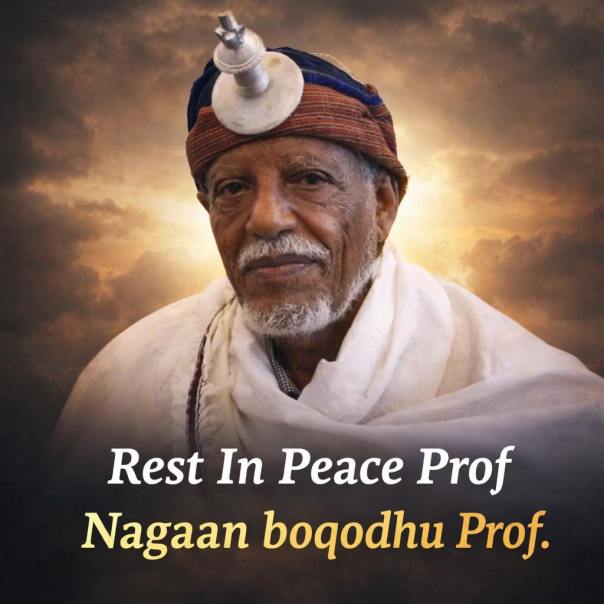
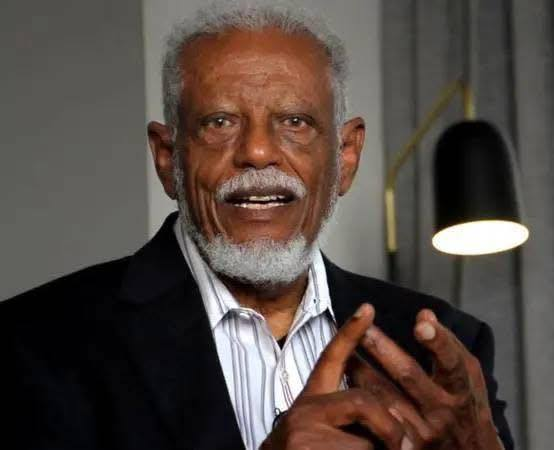
5 February 2026 – Across the globe, from the halls of academia to the living rooms of the diaspora, the Oromo community is united in a chorus of grief and profound gratitude. The passing of Professor Asmerom Legesse at the age of 94 is not merely the loss of a preeminent scholar; it is, as countless tributes attest, the departure of a cherished friend, a fearless intellectual warrior, and an adopted son whose life’s work became the definitive voice for Oromo history and democratic heritage.
The outpouring of personal reflections paints a vivid portrait of a man whose impact was both global and deeply intimate. Olaansaa Waaqumaa recalls a brief conversation seven years ago, where the professor’s conviction was unwavering. “Yes! It is absolutely possible,” he declared when asked if the Gadaa system could serve as a modern administrative framework. “The scholars and new generation must take this mantle, think critically about it, and bridge it with modern governance,” he advised, passing the torch to future generations.
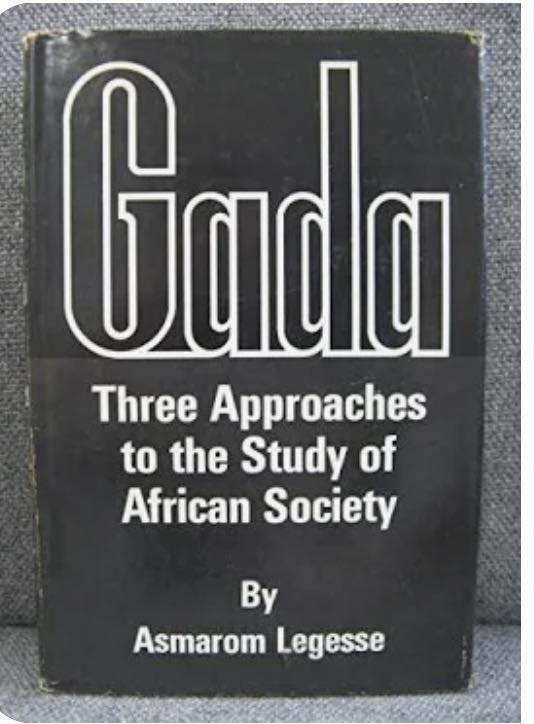
This personal mentorship extended through his work. Scholar Luba Cheru notes how Professor Legesse’s 1973 seminal text, Gada: Three Approaches to the Study of African Society, became an indispensable guide for her own decade-long research on the Irreecha festival. She reflects, “I never met him in person, but his work filled my mind.”
Ituu T. Soorii frames his legacy as an act of courageous resistance against historical erasure. “When the Ethiopian empire tried to erase Oromo existence, Professor Asmarom rose with courage to proclaim the undeniable truth,” they write, adding a poignant vision: “One day, in a free Oromiyaa, his statues will rise—not out of charity, but out of eternal gratitude.” Similarly, Habtamu Tesfaye Gemechu had earlier praised him as the scholar who shattered the conspiracy to obscure Oromo history, “revealing the naked truth of the Oromo to the world.”
Echoing this sentiment, Dejene Bikila calls him a “monumental figure” who served as a “bridge connecting the ancient wisdom of the Oromo people to the modern world.” This notion of the professor as a bridge is powerfully affirmed by Yadesa Bojia, who poses a defining question: “Did you ever meet an anthropologist… whose integrity was so deeply shaped by the culture and heritage he studied that the people he wrote about came to see him as one of their own? That is the story of Professor Asmerom Legesse.”
Formal institutions have also affirmed his unparalleled role. The Oromo Studies Association (OSA), which hosted him as a keynote speaker, stated his work “fundamentally reshaped the global understanding of African democracy.” Advocacy for Oromia and The Oromia Culture and Tourism Bureau hailed him as a “steadfast guardian” of Oromo culture, whose research was vital for UNESCO’s 2016 inscription of the Gadaa system as Intangible Cultural Heritage.
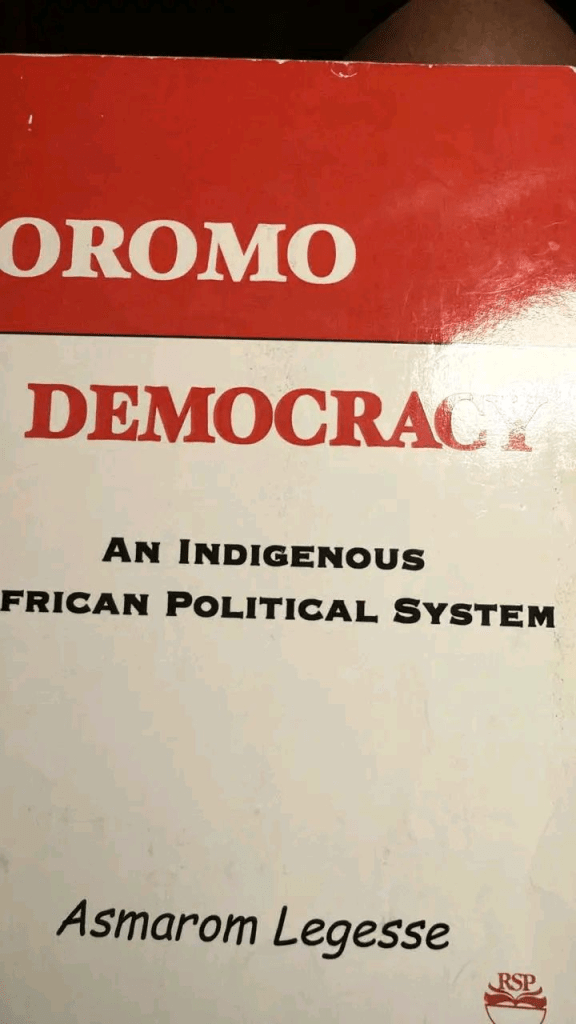
Binimos Shemalis reiterates that his “groundbreaking and foundational work… moved [Oromo studies] beyond colonial-era misrepresentations.” Scholar Tokuma Chala Sarbesa details how his book Oromo Democracy: An Indigenous African Political System proved the Gadaa system was a sophisticated framework of law, power, and public participation, providing a “strong foundation for the Oromo people’s struggle for identity, freedom, and democracy.”
The most recent and significant political tribute came from Shimelis Abdisa, President of the Oromia Regional State, who stated, “The loss of a scholar like Prof. Asmarom Legesse is a great damage to our people. His voice has been a lasting institution among our people.” He affirmed that the professor’s seminal work proved democratic governance originated within the Oromo people long before it was sought from elsewhere.
Amidst the grief, voices like Leencoo Miidhaqsaa Badhaadhaa offer a philosophical perspective, noting the professor lived a full 94 years and achieved greatness in life. “He died a good death,” they write, suggesting the community should honor him not just with sorrow, but by learning from and adopting his teachings.
As Seenaa G-D Jimjimo eloquently summarizes, “His scholarship leaves behind not just a legacy for one community, but a gift to humanity.” While the physical presence of this “real giant,” as Anwar Kelil calls him, is gone, the consensus is clear: the intellectual and moral bridge he built is unshakable. His legacy, as Barii Milkeessaa simply states, ensures that while “the world has lost a great scholar… the Oromo people have lost a great sibling.”

Oromo Liberation Front Honors Professor Asmerom Legesse’s Contributions
Oromo Liberation Front Mourns the Passing of Intellectual Pillar, Professor Asmerom Legesse
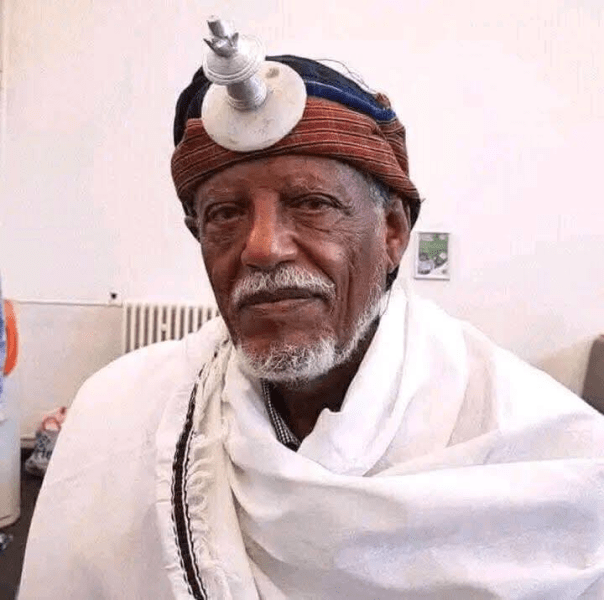
Finfinnee, March 4, 2026 – The Oromo Liberation Front (OLF) has issued a formal statement of profound grief, marking the passing of Professor Asmerom Legesse, whom it hailed as a “great historian” and an “intellectual pillar of the Oromo struggle.” In a detailed tribute released today, the OLF emphasized that the death of the 95-year-old scholar, a global authority on the Oromo Gadaa system, represents not just an academic loss but the departure of a “true sibling” to the Oromo people.
Born in Asmara, Eritrea, in 1931, Professor Legesse was celebrated by the OLF for a lifetime of work that went far beyond scholarship. The statement described his research as an “act of cultural reclamation” that systematically documented and presented the Gadaa system to the world, revealing it as a sophisticated African democratic tradition. His work, the OLF noted, provided irrefutable proof that principles such as “equality, rotational leadership, checks and balances, and the supremacy of law” were not foreign imports but deeply embedded practices of the Oromo people.
The OLF’s tribute positioned Professor Legesse’s academic contributions within the broader context of Oromo political identity and resistance. It credited him with restoring dignity to a history that had been “marginalized and distorted” and for providing the intellectual foundation that allowed the Gadaa system to gain global recognition, including its inscription by UNESCO as an Intangible Cultural Heritage of Humanity.
The statement poignantly noted that the scholar, while Eritrean by birth, became “Oromo by choice,” a sentiment that reflected his deep solidarity and lifelong engagement with the Oromo community. His extensive fieldwork, particularly with the Borana Oromo, was highlighted as a bridge that connected ancestral wisdom to contemporary understanding.
“While his voice is now silent, his work and his history will live on for generations,” the OLF statement read, affirming that Professor Legesse’s legacy is an “indelible part of Oromo history” that will continue to guide future generations toward truth and knowledge.
The OLF extended its deepest condolences to his family, relatives, friends, and the entire Oromo nation. It called upon the global Oromo diaspora and communities everywhere to participate, as circumstances allow, in memorial ceremonies honoring the scholar, stating that such acts of remembrance are a fitting way to “demonstrate gratitude for the great service this scholar rendered to our people’s struggle.”
The funeral service for Professor Asmerom Legesse is scheduled for February 7, 2026.
About the Oromo Liberation Front (OLF):
The Oromo Liberation Front is a political organization founded in 1973, advocating for the right to self-determination of the Oromo people. It has been a central institution in the modern Oromo national movement, seeking to address historical and political grievances through the establishment of an independent or autonomously democratic Oromia.

Advocacy for Oromia Mourns Professor Asmerom Legesse’s Passing

FOR IMMEDIATE RELEASE
Global Oromo Advocacy Group Mourns Scholar Who Championed Indigenous African Democracy
(Melbourne, Australia) – February 5, 2026 – The global advocacy network, Advocacy for Oromia, has announced the passing of Professor Asmerom Legesse, a towering intellectual figure whose work fundamentally reshaped global understanding of the Oromo people and their democratic heritage. Professor Legesse, hailed as a “steadfast guardian” of Oromo culture, died at the age of 89.
In a statement released from its Melbourne headquarters, the organization paid tribute to the scholar’s more than four decades of work dedicated to the Gadaa system, describing it as the “sophisticated democratic and socio-political foundation of Oromo society.” The statement emphasized that Professor Legesse was far more than an academic; he was a “preeminent global ambassador” for an indigenous African system of governance, justice, and social order.
His seminal text, Oromo Democracy: An Indigenous African Political System, was highlighted as a cornerstone of his legacy. Advocacy for Oromia stated that his scholarship performed a “vital act of cultural reclamation and global education,” which restored dignity to a marginalized history and presented the world with a self-originating model of democracy that predated Western constructs.
The condolence message also revealed a poignant historical connection. During a recent visit to Asmara, Eritrea—Professor Legesse’s birthplace—a delegation learned that his family home stood adjacent to the church where Abbaa Gammachis and Aster Ganno, 19th-century icons of faith and linguistic preservation, translated the Bible into the Oromo language. The group framed this “physical proximity” as a powerful metaphor, linking the spiritual resilience of those earlier figures with Professor Legesse’s intellectual fortitude in defending Oromo identity.
Born in Asmara in 1937, Professor Legesse’s academic journey took him from political science at the University of Wisconsin to a doctorate in anthropology from Harvard University, where he later taught. Advocacy for Oromia noted that his rigorous research provided the foundational academic framework for understanding indigenous African political philosophy.
The organization extended its heartfelt condolences to his family, academic colleagues, and the Oromo people worldwide. While mourning the loss, the statement concluded with a commitment to celebrate his “immortal legacy,” asserting that his work will continue to “illuminate the path toward understanding, justice, and self-determination.”
About Advocacy for Oromia:
Advocacy for Oromia is a global network dedicated to promoting awareness, justice, and the rights of the Oromo people. It focuses on upholding principles of democracy, human rights, and cultural preservation central to Oromo identity.

Oromia Culture Bureau Honors Professor Legesse’s Impact
FOR IMMEDIATE RELEASE
Oromia Culture and Tourism Bureau Mourns the Passing of Professor Asmerom Legesse, Pillar of Gadaa Scholarship
(Oromia, Ethiopia) – The Oromia Culture and Tourism Bureau has announced its profound sorrow at the passing of Professor Asmerom Legesse, revered globally as a preeminent scholar, cultural custodian, and an unwavering servant of the Gadaa system.
In an official condolence message, the Bureau described Professor Legesse as an irreplaceable figure who dedicated his life to the preservation, interpretation, and transmission of the Gadaa system. He was hailed for playing an “indispensable role in safeguarding the philosophical foundations and moral values that define Oromo identity and humanity at large.”
Professor Legesse’s work transcended academic study. The Bureau emphasized that his scholarship acted as a vital bridge, “linking ancestral wisdom with contemporary knowledge,” and ensuring the Gadaa system remains a guiding framework for social harmony, equity, and collective responsibility in the modern world.
Beyond his scholarly contributions, Professor Legesse was recognized as a moral compass for his community. The Bureau’s statement noted that he “embodied the principles of truth, justice, service, and integrity,” tirelessly working to nurture unity, dialogue, and cultural continuity. His legacy, they affirmed, has left an “enduring imprint on cultural institutions, academic circles, and community life, both within Oromiyaa and beyond.”
The Oromia Culture and Tourism Bureau extended its deepest condolences to Professor Legesse’s family, relatives, colleagues, students, and the entire Oromo community mourning this immense loss. The statement concluded with a message of resilience, asserting that while his physical presence is gone, “his wisdom, teachings, and exemplary life will continue to live on, inspiring generations to uphold the values of Gada and to serve society with dedication and humility.”
About the Oromia Culture and Tourism Bureau:
The Oromia Culture and Tourism Bureau is the regional government body responsible for the preservation, promotion, and development of Oromia’s rich cultural heritage and tourism potential. It works to safeguard intangible cultural systems like Gadaa, which is recognized as a UNESCO Intangible Cultural Heritage of Humanity.
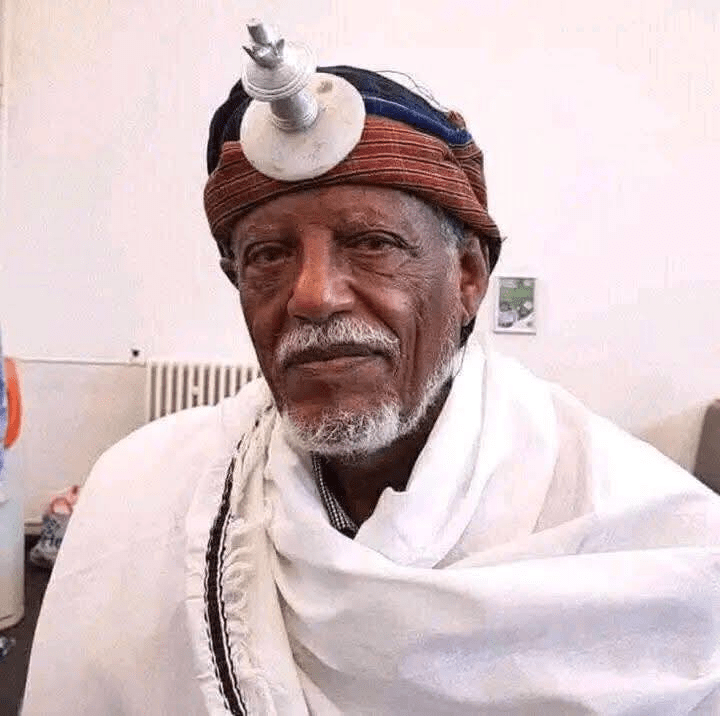
A Guardian of Heritage: Advocacy for Oromia Mourns the Passing of Professor Asmerom Legesse (1931-2026)

FOR IMMEDIATE RELEASE
A Guardian of Heritage: Advocacy for Oromia Mourns the Passing of Professor Asmerom Legesse (1937-2026)
(Melbourne, Victoria) – February 4, 2026 – Advocacy for Oromia, with profound respect and deep sorrow, announces the passing of the world-renowned scholar, Professor Asmerom Legesse. We extend our most heartfelt condolences to his family, his colleagues in academia, and to the entire Oromo people, for whom his work held monumental significance.
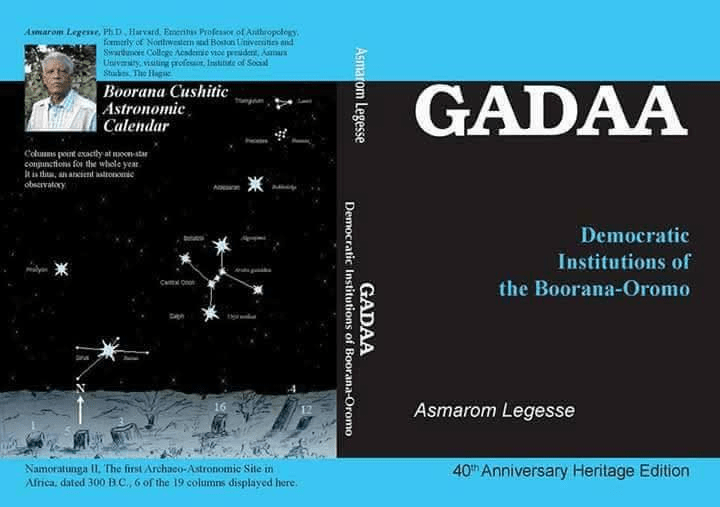
Professor Legesse was not simply an academic; he was a steadfast guardian and a preeminent global ambassador for the ancient Gadaa system, the sophisticated democratic and socio-political foundation of Oromo society. For more than forty years, he dedicated his intellect and passion to meticulously studying, documenting, and advocating for this profound indigenous system of governance, justice, and balanced social order.
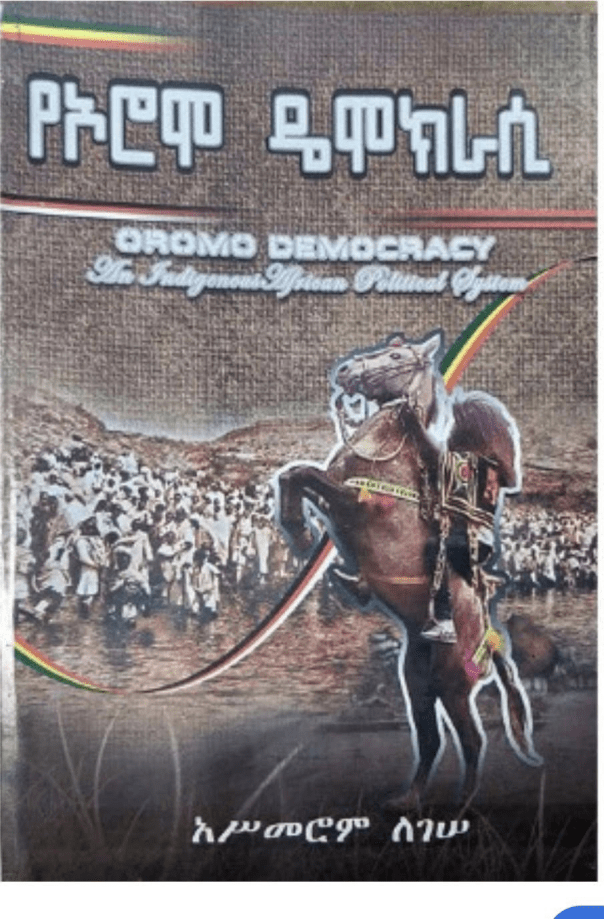
His seminal work, including the definitive text Oromo Democracy: An Indigenous African Political System, transcended mere historical analysis. Professor Legesse’s scholarship performed a vital act of cultural reclamation and global education. It restored dignity to a marginalized history, affirmed the cultural identity of millions, and presented to the international community a powerful, self-originating model of African democracy that predated and paralleled Western constructs.
Born in Asmara in 1931, Professor Legesse’s intellectual journey—from political science at the University of Wisconsin to a doctorate in anthropology from Harvard University, where he later taught—was always directed by a profound sense of purpose. His research provided the rigorous, academic foundation for understanding indigenous African political philosophy.
His passing is felt as a deeply personal loss within our community, reminding us of the interconnected threads of Oromo history and resilience. On a recent visit to Asmara, a delegation from Advocacy for Oromia visited a site of immense historical importance: the church where Abbaa Gammachis and Aster Ganno, giants of faith and resistance, resided while translating the Bible into Afaan Oromo. It was there we learned that the family home of Professor Asmerom Legesse stood adjacent.
This physical proximity stands as a powerful metaphor. It connects the spiritual and linguistic preservation embodied by Abbaa Gammachis with the intellectual and political excavation led by Professor Legesse. They were neighbors not only in geography but in sacred purpose: both dedicated their lives to protecting, promoting, and elucidating the core pillars of Oromo identity against historical forces of erasure.
Professor Legesse’s lifetime of contributions has endowed current and future generations with the intellectual tools to claim their rightful place in global narratives of democracy and governance. For this invaluable and enduring gift, we offer our eternal gratitude.
While we mourn the silence of a towering intellect, we choose to celebrate the immortal legacy he leaves behind—a legacy of knowledge, pride, and empowerment that will continue to guide and inspire.
May his soul rest in eternal peace. May his groundbreaking work continue to illuminate the path toward understanding, justice, and self-determination.
Rest in Power, Professor Asmerom Legesse.
About Advocacy for Oromia:
Advocacy for Oromia is a global network dedicated to promoting awareness, justice, and the rights of the Oromo people. We work to uphold the principles of democracy, human rights, and cultural preservation central to Oromo identity and heritage.
Media Contact:
Advocacy for Oromia
https://advocacy4oromia.org/

Oromia Peace Institute: Bridging Dialogue and Community Action
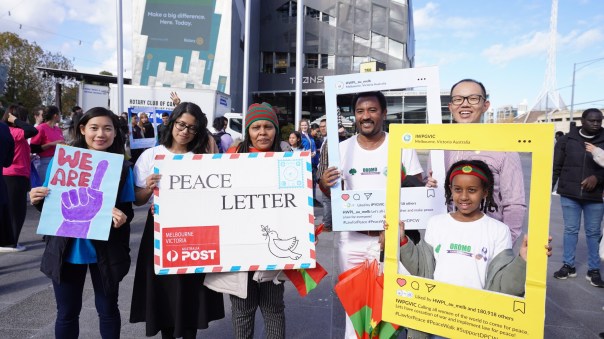
An Oromia Peace Institute is necessary to provide a permanent, professional, Oromo‑centered hub for conflict analysis, dialogue, and peace education that can guide political and community actors out of the current cycles of violence. It would connect Gadaa/Waaqeffannaa-based peace values, community experience, and modern peace-research methods into one institution that serves all of Oromia and contributes to Ethiopia-wide settlement efforts.
Current gaps in Oromia
Studies on Oromia’s security show there is no clear, comprehensive regional peacebuilding framework, and indigenous Oromo mechanisms like Gadaa, Abba Gadaa, and Siinqee are not systematically used in present peace processes. Existing initiatives are often short-term projects run by NGOs or ad‑hoc committees, so lessons are lost, coordination is weak, and there is no single reference body for evidence-based advice on the Oromia conflict.
What such an institute would do
An Oromia Peace Institute could systematically collect data on conflicts across zones and woredas, produce regular trend analyses, and advise government, parties, elders, and civic groups using rigorous and locally grounded research. It could design and support community-led dialogue processes that elevate elders, women, and youth, similar to participatory action research and dialogue models already piloted in Oromia by partner organisations.
Linking tradition and modern peacebuilding
Research highlights the relevance of Gadaa peace principles and Oromo customary institutions for conflict transformation, but these are not yet meaningfully integrated into formal policy and security structures. A dedicated institute could document Gadaa and Siinqee peace norms, train mediators and local officials in their use, and translate them into practical tools for modern governance and inter-ethnic conflict management.
Supporting political dialogue and long-term settlement
Recent calls for inclusive dialogue on Oromia’s crisis by Oromo political forces underline the need for neutral, credible technical support: mapping stakeholders, designing dialogue processes, and monitoring agreements. An Oromia Peace Institute can play this technical and moral support role, helping transform elite bargains into people-driven processes that include displaced communities, victims, women, and youth, and feeding Oromia’s experience into any broader Ethiopian peace architecture.
Position Statement of the Oromo Liberation Front (OLF)
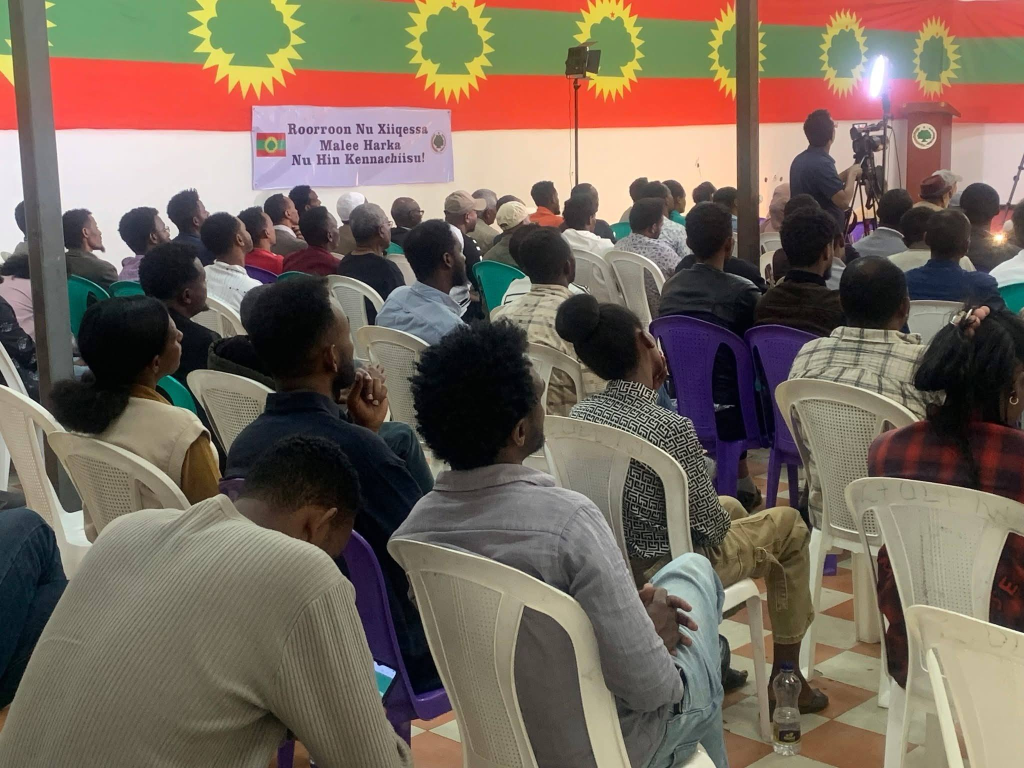
We, the members of the Oromo Liberation Front (OLF), convened in a two-day meeting on October 25 and November 1, 2025, at our headquarters in Gullalle.
Our deliberations have produced this five-point position statement concerning the past, present, and future of our party, the critical situation in Ethiopia, and ongoing developments in the African region and the world at large.
1) The Imperative for Peace and Justice
The pursuit of peace for the Oromo people is paramount. We unequivocally condemn the crimes against humanity perpetrated against the Oromo in recent years. We hold the government responsible for a systematic campaign of torture, employing tactics such as extrajudicial killings, forced displacement—notably through the Somali Special Forces in the East—and persecution under various pretexts across the nation.
The Oromo people possess an inalienable right to human rights and self-determination, equal to all peoples of the world. We therefore demand the establishment of an independent international body to investigate the wave of killings committed against the Oromo people over the past seven years, which continues unabated, including the assassination of our comrade, Jaal Battee Urgeessaa.
2) The Inviolability of Oromia’s Borders
The land of Oromia is the ancestral homeland of the Oromo people, whose presence spans centuries. All violations of Oromia’s established borders must cease immediately. The territorial integrity of Oromia is non-negotiable and must be respected unconditionally.
3) The Demand for Political Freedom
The current regime has deliberately closed the political arena and obstructed the lawful activities of the Oromo Liberation Front. This repression has perpetuated the subjugation of our people and illegally prevented our party from engaging with its constituents.
We demand the immediate and unconditional reopening of all OLF offices nationwide. Our party must be guaranteed the freedom to operate, to communicate its political program openly, and to dialogue directly with the people. OLF leadership must be free to travel, to conduct public forums, and to educate without hindrance. We further call for an end to the arbitrary arrests of our members and supporters, and for the immediate restoration of fundamental freedoms for media and civil society organizations.
4) The Sacred Unity of the Oromo People
We condemn in the strongest terms any and all attempts to fragment the Oromo people for transient political advantage. The unity of the Oromo is sacrosanct, forged by the ultimate sacrifice of our Shinigga heroes. It is a legacy built with their blood and bones, and it will not be weakened, bargained away, or destroyed.
5) A Renewed Vow and Final Resolution
In conclusion, and to fully achieve the aims and objectives of our struggle, we solemnly renew our vows to the Oromo cause. We reaffirm our acceptance of the duty before us and declare this position statement to be our final and resolute decision.
Victory to the Masses!
Members of the Oromo Liberation Front (OLF)
November 1, 2025
Finfinnee




 Advocacy for Oromia