Category Archives: Promotion

Oromo Students in Sweden Celebrate International Mother Language Day with Pride and Purpose
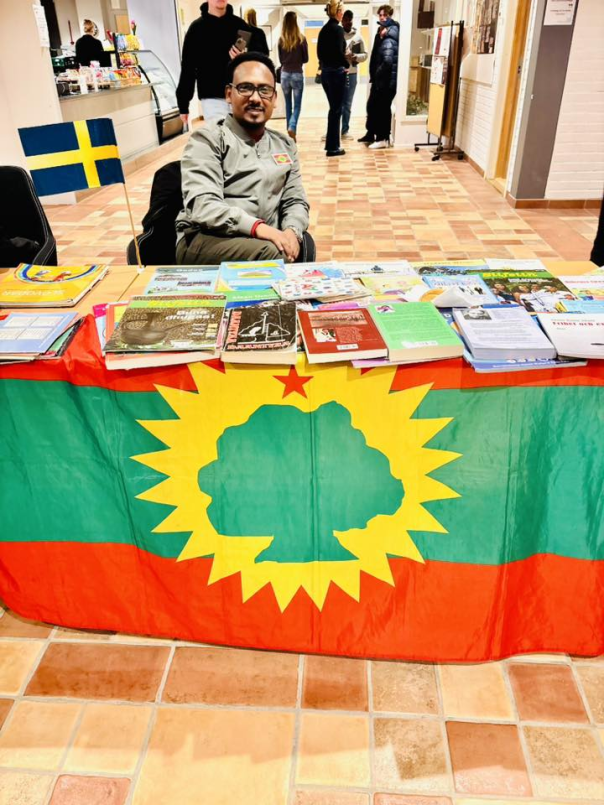
Bromangymnasiet hosts celebration highlighting the importance of preserving and strengthening mother tongues, especially for communities whose linguistic rights have been denied
BRO, Sweden — Students and educators at Bromangymnasiet, a secondary school in Sweden, joined the global community in celebrating International Mother Language Day on February 21, recognizing the vital importance of linguistic diversity and the right to learn, write, and speak in one’s mother tongue .
The day, proclaimed by UNESCO in 1999 and observed annually on February 21, holds particular significance for communities whose languages have been marginalized, suppressed, or denied official recognition. For Oromo students at Bromangymnasiet and across the diaspora, the celebration represents both a affirmation of identity and a reminder of ongoing struggles for linguistic rights .
What Is Mother Language?
Mother language—the language a child first learns from their mother and father at birth, the language of their earliest thoughts and expressions—carries profound significance beyond mere communication. It is the medium through which identity is formed, culture is transmitted, and history is preserved .
For communities whose right to use their mother tongue has been violated—who have been denied education in their language, prohibited from publishing in it, or shamed for speaking it—Mother Language Day carries additional weight. It is both celebration and commemoration: celebration of linguistic diversity, commemoration of struggles to preserve languages against overwhelming pressure .
Language Expresses Identity, Culture, and History
As the students at Bromangymnasiet emphasized during their celebration, language is far more than a tool for communication. It is the vessel that carries a people’s identity, their culture, and their history across generations .
When a language dies, something irreplaceable is lost—not just words and grammar, but ways of seeing the world, relationships with nature, forms of humor, styles of prayer, patterns of storytelling, and connections to ancestors. Each language encodes unique knowledge and perspectives that cannot be fully translated into any other tongue .
For Oromo students celebrating in Sweden, this understanding is particularly acute. Many were born in or have grown up in diaspora, navigating between the Oromo language of their homes and communities and the Swedish language of their education and broader society. Maintaining Oromo language proficiency requires conscious effort, community support, and institutional recognition—none of which can be taken for granted.

The Global Context: Languages Under Threat
International Mother Language Day emerges from recognition of a global crisis in linguistic diversity. According to UNESCO estimates:
- More than 40% of the world’s 7,000 languages are currently at risk of disappearing
- A language dies approximately every two weeks
- 40% of the global population lacks access to education in a language they speak or understand
- Indigenous languages are disappearing at alarming rates, taking with them unique knowledge systems and cultural heritage
February 21 was chosen as International Mother Language Day to commemorate the 1952 Bengali Language Movement in Bangladesh, when students in Dhaka were killed by police while demonstrating for recognition of their mother tongue, Bengali. The day thus carries from its origins a connection to struggle—to the understanding that linguistic rights are not given but demanded, and that people have died defending their right to speak their own languages.
Oromo Language: A History of Suppression and Resilience
For Oromo people, the struggle for linguistic rights has been central to the broader struggle for recognition and self-determination. Under successive Ethiopian regimes, the use of Afaan Oromo was severely restricted:
- Education in Afaan Oromo was prohibited for decades
- Publishing in the language was suppressed
- Public use of Afaan Oromo was discouraged and sometimes punished
- Oromo children were educated in Amharic, a language many did not understand
- The Latin script (Qubee) for writing Afaan Oromo was banned, with the Ethiopic script imposed
Despite these pressures, Oromo language survived and has undergone remarkable revitalization since the 1991 change of government. The adoption of Qubee (Latin script) has facilitated writing and publishing. Afaan Oromo is now used in education, media, and government in Oromia. Oromo literature, music, and journalism have flourished.
Yet challenges remain. Within Ethiopia, the status and development of Afaan Oromo continues to be contested. In diaspora, parents struggle to pass the language to children growing up in English, Swedish, or other dominant languages. The work of strengthening Oromo language is ongoing.
Strengthen Our Language and Our Script!
The celebration at Bromangymnasiet carried a clear and powerful message: “Strengthen our language and our script! May Afaan Oromo grow!”
This call encompasses several dimensions:
For Oromo youth in diaspora: It means actively using Afaan Oromo at home, seeking out Oromo-language media, participating in community events where Oromo is spoken, and taking pride in linguistic heritage.
For parents and families: It means speaking Oromo to children from birth, creating environments where Oromo is valued and used, and transmitting not just language but the culture and history it carries.
For communities: It means establishing and supporting Oromo language programs, creating opportunities for youth to use the language, and celebrating linguistic achievements.
For educators and institutions: It means recognizing Oromo language as worthy of study and support, providing resources for Oromo language learning, and respecting students’ linguistic identities.
For advocates: It means continuing to press for full recognition and development of Afaan Oromo in Ethiopia and supporting Oromo language initiatives globally.
Celebration at Bromangymnasiet
The International Mother Language Day celebration at Bromangymnasiet brought together Oromo students and educators to honor their language and reflect on its significance. Activities likely included:
- Readings of Oromo poetry and literature
- Performances of Oromo music
- Discussions about the history and importance of Afaan Oromo
- Presentations on Oromo culture and traditions
- Reflections on the challenges and joys of maintaining Oromo language in diaspora
For students growing up between cultures, such celebrations serve multiple purposes: they affirm that Oromo language matters, that their heritage is worthy of recognition, and that they are part of a global Oromo community that spans continents.
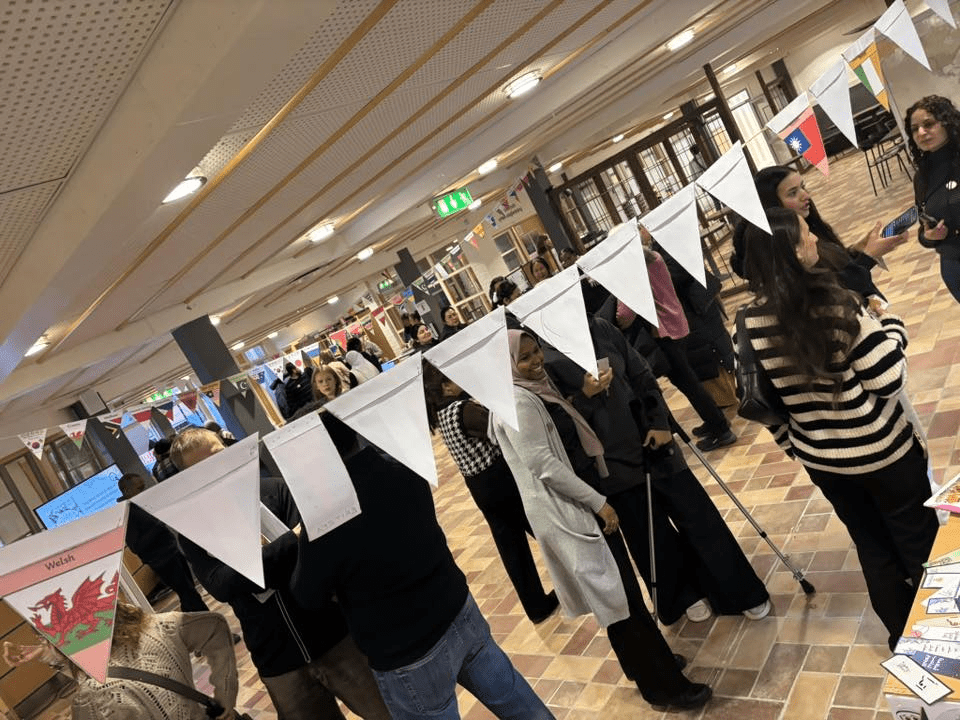
The Universal Message
While the Bromangymnasiet celebration focused particularly on Afaan Oromo, the universal message of International Mother Language Day resonates across all linguistic communities:
- Every language deserves respect and recognition
- Every child deserves education in a language they understand
- Linguistic diversity enriches humanity
- Languages carry knowledge and perspectives that benefit everyone
- The loss of any language diminishes us all
As one student participant reflected: “When we celebrate Mother Language Day, we celebrate not just our own language but the principle that all languages matter. We stand with every community fighting to preserve its mother tongue—whether in Ethiopia, Sweden, or anywhere in the world.”
Looking Forward
The celebration at Bromangymnasiet represents both an ending and a beginning: the end of another year’s observation, and the beginning of renewed commitment to strengthening Afaan Oromo for the year ahead.
For Oromo students in Sweden, the work continues—learning, speaking, reading, and writing in their mother tongue; passing it to younger siblings and future children; advocating for its recognition and support; and ensuring that Afaan Oromo not only survives but thrives in diaspora as well as in the homeland.
As the students themselves declared: “Afaan keenya fi Qubee keenya jabeessaa! Afaan Oromoo haa guddatu!” —”Strengthen our language and our script! May Afaan Oromo grow!”
International Mother Language Day: February 21—celebrating linguistic diversity, honoring struggles for linguistic rights, and committing to strengthen every mother tongue.
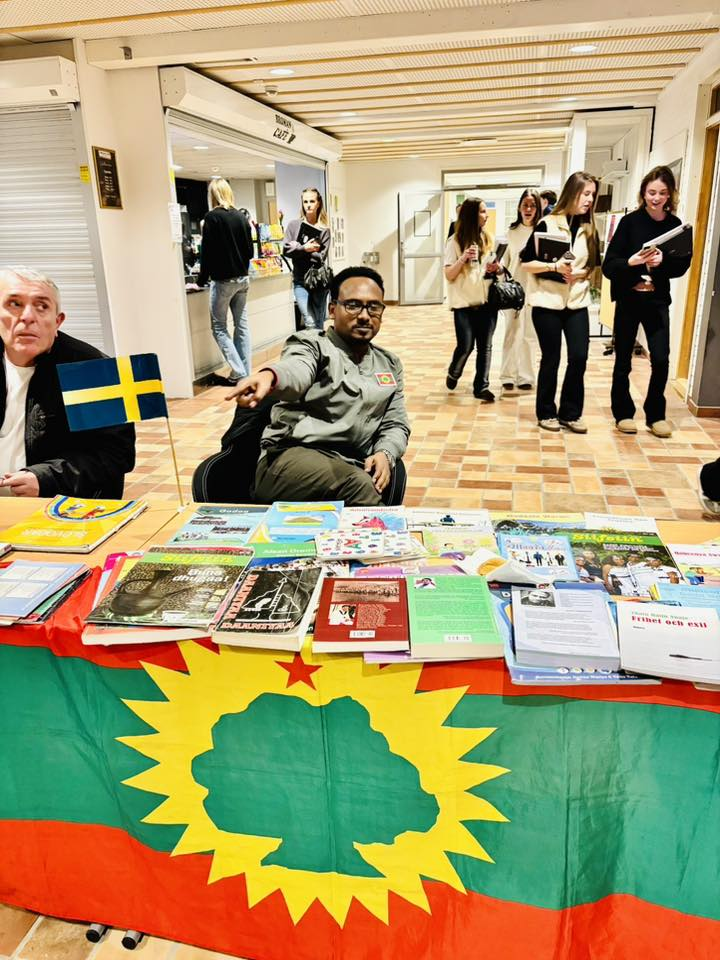

Ethiopia Revokes Addis Standard’s License in Latest Blow to Independent Media
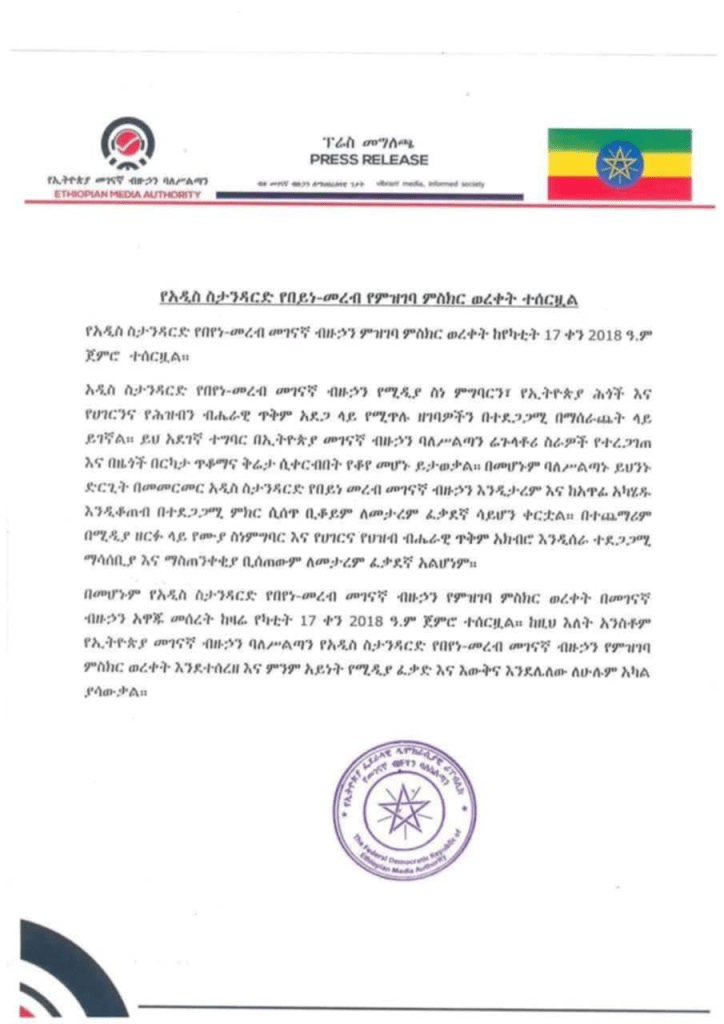
Authorities silence critical voice as crackdown on press freedom intensifies ahead of June elections
ADDIS ABABA — The Ethiopian Media Authority (EMA) has revoked the online media registration certificate of Addis Standard, one of the country’s most respected independent news outlets, effective February 24, 2026, in a move that press freedom advocates condemn as part of a widening crackdown on independent journalism.
The decision strips Addis Standard of its legal recognition to operate in Ethiopia, citing alleged “repeated violations of media ethics, national laws, and the country’s national interests,” though the Authority’s statement did not specify which reports or actions formed the basis of the decision.
A History of Targeting Independent Media
Addis Standard, established in 2011 as a monthly magazine and published in Afaan Oromo, Amharic, and English, has faced repeated government harassment over the years. The outlet discontinued its print edition in October 2016 in response to censorship, continuing online only, before resuming monthly print editions in 2018.
The latest revocation follows a pattern of escalating pressure on independent media:
- April 2025: Ethiopian police raided Addis Standard’s office and the home of a senior staff member, detaining three managers for several hours and confiscating laptops, phones, and data storage equipment. The Committee to Protect Journalists (CPJ) expressed “grave concerns about potential misuse of sensitive data” following the raids.
- June 2021: During the Tigray war, the EMA suspended Addis Standard, accusing it of advancing the agenda of what it described as a “terrorist group”. CPJ condemned the move, noting that Addis Standard “has been an important source of critical reporting and commentary on Ethiopia”.
- November 2020: Police arrested Medihane Ekubamichael, then product editor at Addis Standard, accusing him of attempting to “dismantle the constitution through violence”.
Editor-in-Chief Rejects Allegations
Responding to the EMA’s announcement, Yonas Kedir, Editor-in-Chief of Addis Standard publications, categorically rejected the Authority’s claims, stating the outlet had never received any formal notices of violations.
“The claim that Addis Standard received repeated notices is factually incorrect. At no point has the Ethiopian Media Authority formally notified Addis Standard newsroom of any prior violations or enforcement actions,” he said.
The publisher, JAKENN Publishing PLC, is reviewing legal options to protect its rights and ensure due process is upheld.
Broader Crackdown on Press Freedom
Addis Standard’s license revocation is not an isolated incident but part of a broader pattern of repression against independent media in Ethiopia, particularly as the country approaches national elections scheduled for June 2026.
Recent actions against media outlets include:
- Wazema Radio (January 2026): The EMA compelled Wazema Media to surrender its operating license, accusing the outlet of reporting contrary to “national interest” and lacking balance. The station has continued publishing content from abroad.
- Reuters (February 2026): The government declined to renew accreditation for three Addis Ababa-based Reuters journalists and withdrew the outlet’s accreditation to cover the African Union Summit, days after Reuters published an investigative report alleging Ethiopia hosts a training camp for Sudan’s Rapid Support Forces (RSF).
- Deutsche Welle (October 2025): The EMA suspended several correspondents working for Deutsche Welle. While most were later reinstated in December, two remain permanently suspended.
- Tesfalem Waldyes (June 2025-present): The founder of Ethiopia Insider remains detained despite a court ordering his release and bail being posted, in what CPJ calls “the Ethiopian government’s disregard for judicial processes and press freedom”.
From Hope to Retrenchment
The crackdown represents a dramatic reversal from the promise of Prime Minister Abiy Ahmed’s early years in power. In May 2019, addressing UNESCO’s World Press Freedom Day in Addis Ababa, Abiy declared a decisive break with Ethiopia’s repressive past, stating: “A democratic Ethiopia cannot be materialized if individuals are imprisoned for generating and sharing their ideas responsibly”.
His government opened more than 200 blocked websites, freed imprisoned journalists, allowed exiled media to return, and initiated reforms of laws long criticized for stifling expression.
Nearly seven years later, that horizon has receded. Ethiopia now ranks 145th out of 180 countries in the 2025 Reporters Without Borders World Press Freedom Index, falling for the first time into the “very serious” category. The Committee to Protect Journalists counts 12 journalists behind bars in Ethiopia, putting it among the worst countries in Africa for jailing journalists.

Legal Architecture of Control
The legal framework governing media has shifted away from the reform spirit of 2019. Amendments to the Media Proclamation in 2025 shifted critical oversight powers from the legislature to the executive, weakening the EMA’s independence in practice.
Meanwhile, the Hate Speech and Disinformation Prevention Proclamation (1185/2020) remain dangerously vague, with undefined terms such as “falsehood,” “hate,” and “national interest” deployed to enable selective enforcement. It is within this legal gray zone that outlets like Addis Standard and Wazema become most vulnerable—not through transparent judicial processes, but through administrative decree.
The Ethiopian Human Rights Commission (EHRC), a state-appointed constitutional body, has formally recommended further revisions to media laws, citing persistent structural flaws.
Election Concerns
The crackdown comes at a particularly sensitive time, as Ethiopia prepares for national elections in June 2026. Candidate registration and campaign activities are currently underway, raising concerns among media observers about the operating environment for independent journalism.
The National Election Board of Ethiopia (NEBE) now requires media organizations to sign a mandatory oath as a condition for accreditation, attaching legal liability for alleged “misinformation” directly to editorial leadership. Critics argue this transforms accreditation into a loyalty test, institutionalizing self-censorship and recasting election coverage from a public duty into a controlled privilege.
As one Addis Standard editorial noted: “Journalism ethics cannot be governed through compulsory oaths; they must be safeguarded through independence, due process, and constitutional protection”.
International Condemnation
International press freedom organizations have condemned Ethiopia’s escalating repression of independent media. Muthoki Mumo, CPJ’s Africa Program Coordinator, called the revocation of Reuters’ credentials “the latest in a troubling pattern of repressive regulatory action against international and independent press in Ethiopia”.
On World Press Freedom Day in 2025, 14 diplomatic missions in Addis Ababa issued a joint statement warning of a shrinking media and civic space, stressing that a free, pluralistic press is indispensable to democracy and social cohesion, particularly ahead of national elections.
The Stakes for Oromo Media and Voices
For Oromo media and those covering Oromo issues, the crackdown carries particular significance. Independent media have been essential platforms for amplifying Oromo voices, documenting human rights abuses, and providing counter-narratives to state-controlled discourse.
Addis Standard’s publication in Afaan Oromo, alongside Amharic and English, made it accessible to Oromo readers seeking news and analysis in their mother tongue. Its silencing represents another closure of space for Oromo expression and information access.
Looking Forward
As Addis Standard reviews its legal options and considers next steps, the broader question remains whether Ethiopia will reverse course on press freedom or continue its trajectory toward increasing repression.
The contradiction is stark: international partners, from Germany and the European Union to multiple diplomatic missions, warn that peace, partnership, and credible elections cannot endure without an open media environment. Yet domestically, legal ambiguity, bureaucratic obstruction, and administrative punishment steadily entrench the opposite trajectory.
For independent media operating in Ethiopia, the message from authorities is increasingly clear: critical journalism will not be tolerated. And for the Ethiopian people, access to information—essential for informed citizenship and meaningful democratic participation—grows ever more constrained.
As one Addis Standard editorial concluded: “Press freedom is not ornamental. It is central to transparency, accountability, and democratic legitimacy. Treating it as a privilege to be withdrawn in the name of ‘national interest’ undermines not only journalists, but the credibility of the political order itself” .
Media is independent. It works to bring out the truth of the people that has been suppressed. The Ethiopian government is silencing the voice of the people, especially when the suppressed truth of oppressed nations is heard—this threatens independent media freedom. It is a major problem for the political and media space when the government intensifies its pressure.

Bokkuu Becomes Oromo Liberation Front (ABO) Official Symbol for 7th Round Elections
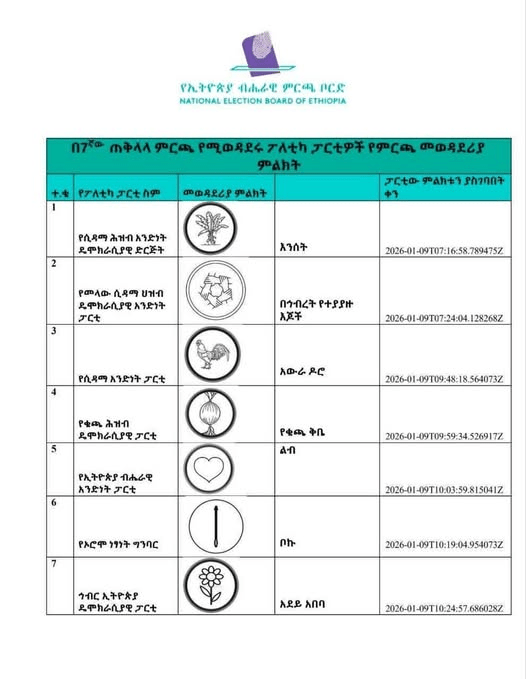
Ancient Gadaa symbol of justice, unity, and Oromo sovereignty to lead ABO’s historic electoral participation
FINFINNE — The Oromo Liberation Front (ABO) has officially adopted the Bokkuu as its electoral symbol for the upcoming 7th round national elections, marking a historic moment in the organization’s decades-long struggle for Oromo rights and self-determination.
On February 21, 2026, the National Election Board of Ethiopia (NEBE) formally approved and announced the Bokkuu as the registered symbol under which ABO will contest the elections.
The Bokkuu is far more than a mere electoral logo—it is a sacred cultural symbol representing the authority, sovereignty, and democratic traditions of the Oromo people. Within the Gadaa system, one of the world’s oldest indigenous democratic governance structures, the Bokkuu serves as the ultimate symbol of justice, legitimate governance, and national unity.
A Symbol Rooted in Thousands of Years of Oromo Democracy
In Oromo culture and the Gadaa system, the Bokkuu holds profound significance:
- Symbol of legitimate authority: The Bokkuu is the scepter carried by elected Gadaa leaders, representing their mandate to govern with justice and wisdom
- Emblem of justice: It signifies fair and impartial rule, reminding leaders that their authority derives from the people’s consent
- Marker of unity: The Bokkuu represents the unity of the Oromo nation, transcending clan, regional, and religious divisions
- Sacred object: It is treated with deep reverence, often consecrated through ceremonies that invoke divine blessing upon the leader and the people
- Democratic mandate: The transfer of the Bokkuu from one Gadaa class to another every eight years symbolizes peaceful, regular leadership transition—a tradition of democratic governance millennia old
By choosing the Bokkuu as its electoral symbol, ABO is not merely selecting a logo—it is grounding its political project in the deepest traditions of Oromo civilization and asserting continuity between ancient Oromo democracy and contemporary struggles for self-determination.

From Armed Struggle to Peaceful Electoral Politics
ABO’s participation in the 2026 elections represents a significant evolution in the organization’s long history. Since its founding, ABO has been at the forefront of the Oromo liberation struggle, employing various methods—including armed resistance—in the face of successive Ethiopian regimes that denied Oromo rights.
Following the political changes of 2018, ABO leadership returned to the country with a commitment to pursuing the Oromo cause through peaceful, legal, and democratic means. However, the organization faced numerous obstacles that prevented its participation in the 6th round elections.
Now, after overcoming these challenges and completing extensive preparations, ABO has announced its readiness to participate in the 2026 elections for the first time in its history. The adoption of the Bokkuu as its electoral symbol formalizes this commitment and signals to Oromo voters the organization’s dedication to achieving their aspirations through the ballot box.
Sacrifice and Commitment: The Foundation of Participation
In announcing the approved symbol, ABO emphasized that its electoral participation is built upon enormous sacrifice—not only from its members and supporters but from the entire Oromo people. This sacrifice, rooted in unwavering commitment and dedication to ABO’s goals, has brought the organization to this historic moment.
The decision to participate electorally does not represent an abandonment of the struggle but rather its continuation through different means. ABO frames its electoral engagement as the peaceful, legal, and democratic dimension of a broader struggle for Oromo rights, dignity, and self-determination.
The Bokkuu: A Symbol for All Oromos
ABO has clarified that the symbol approved for the elections is specifically the Bokkuu—a variation that carries the same profound cultural significance while serving as a recognizable electoral emblem.
For Oromo voters, the Bokkuu on the ballot will represent:
- A connection to their ancestral democratic traditions
- A commitment to justice and fair governance
- The unity of the Oromo nation across all divisions
- The legitimate aspiration for self-determination
- The sacrifices of generations who fought for Oromo rights
As one ABO representative noted: “When Oromo voters see the Bokkuu on their ballot, they will know they are not merely casting a vote—they are reclaiming their heritage, honoring their martyrs, and building their future.”
Historic Context: First Electoral Participation
This election marks ABO’s first formal participation in a national electoral process since its founding. For an organization that has existed for decades, much of that time as an armed liberation movement operating in clandestinity or exile, this transition to electoral politics represents a profound strategic shift.
The decision to participate reflects both changed circumstances within Ethiopia and ABO’s assessment that peaceful, democratic struggle can now advance the Oromo cause in ways that were previously impossible. It also reflects the organization’s confidence that Oromo voters will embrace the Bokkuu as their symbol and ABO as their political home.
Challenges Ahead
Despite the historic nature of this participation, ABO faces significant challenges in the electoral arena. The political landscape remains complex, with multiple actors competing for Oromo votes and various forces potentially opposing ABO’s rise. Questions about electoral fairness, access to media, campaign freedoms, and the treatment of opposition parties remain unresolved.
ABO leaders acknowledge these challenges but express confidence that the Oromo people’s support will carry them forward. As one senior figure stated during recent consultations: “If we are people of truth, our people will never abandon us under any circumstances.”
A Call to the Oromo People
With the Bokkuu now officially registered and approved, ABO calls upon the Oromo people to:
- Recognize the Bokkuu as their symbol of hope and liberation
- Support ABO’s electoral campaign through active participation
- Exercise their democratic rights by voting on election day
- Protect the integrity of the electoral process
- Continue the struggle through peaceful, legal means
The message is clear: the Bokkuu has returned. The symbol of ancient Oromo democracy will now carry the aspirations of the Oromo people into the 21st-century political arena.
Conclusion: History in the Making
The approval of the Bokkuu as ABO’s electoral symbol marks a moment of profound historical significance. For the first time, an organization carrying the banner of Oromo liberation will compete in national elections under a symbol that embodies millennia of Oromo democratic tradition.
As Oromo voters prepare to go to the polls, they will find the Bokkuu waiting for them—a reminder of who they are, where they come from, and what they deserve. In that symbol, they will see not merely a political party’s logo but the face of their ancestors, the voice of their martyrs, and the hope of their children.
Bokkuu ABO — The symbol of Oromo justice, unity, and liberation.
Injifannoon Ummata Oromoo! (Victory to the Oromo People!)

Oromo Liberation Front Consults Members on Current Situation and 7th Round Elections
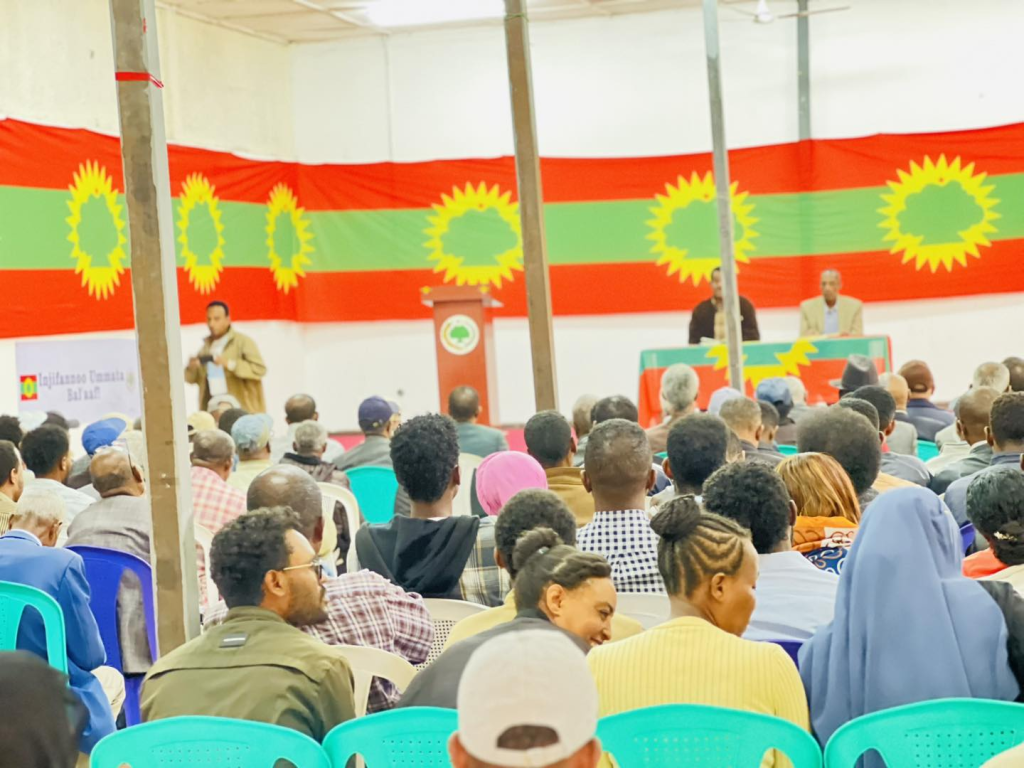
Leadership emphasizes unity, grassroots organizing, and unwavering commitment to the Oromo cause
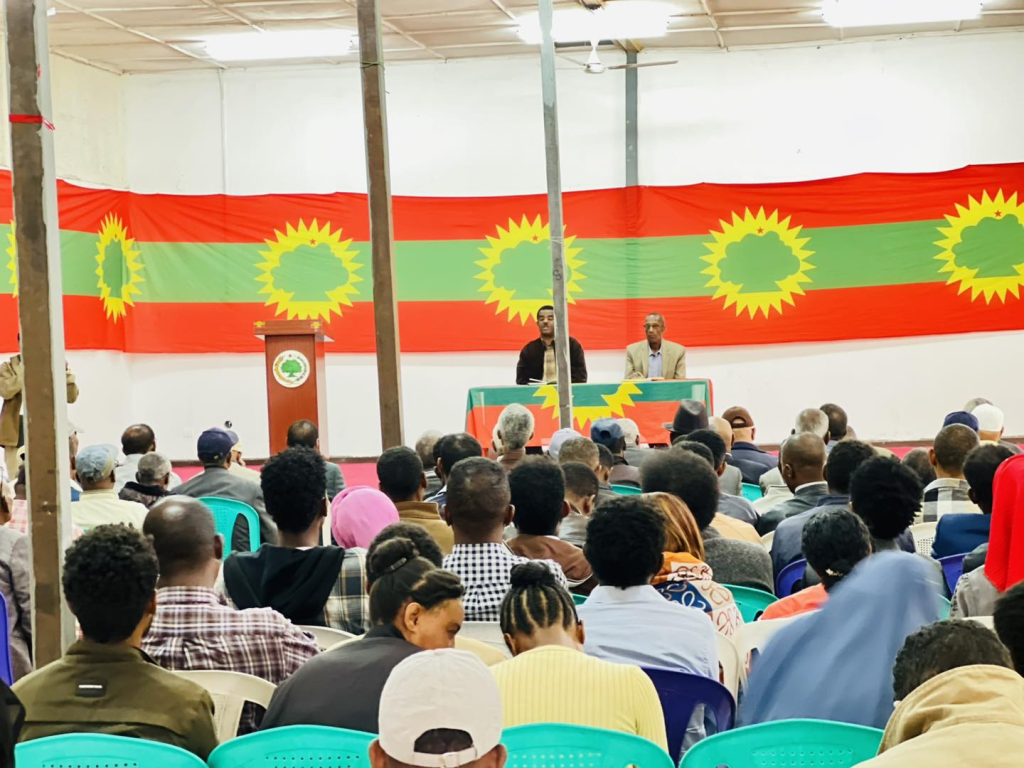
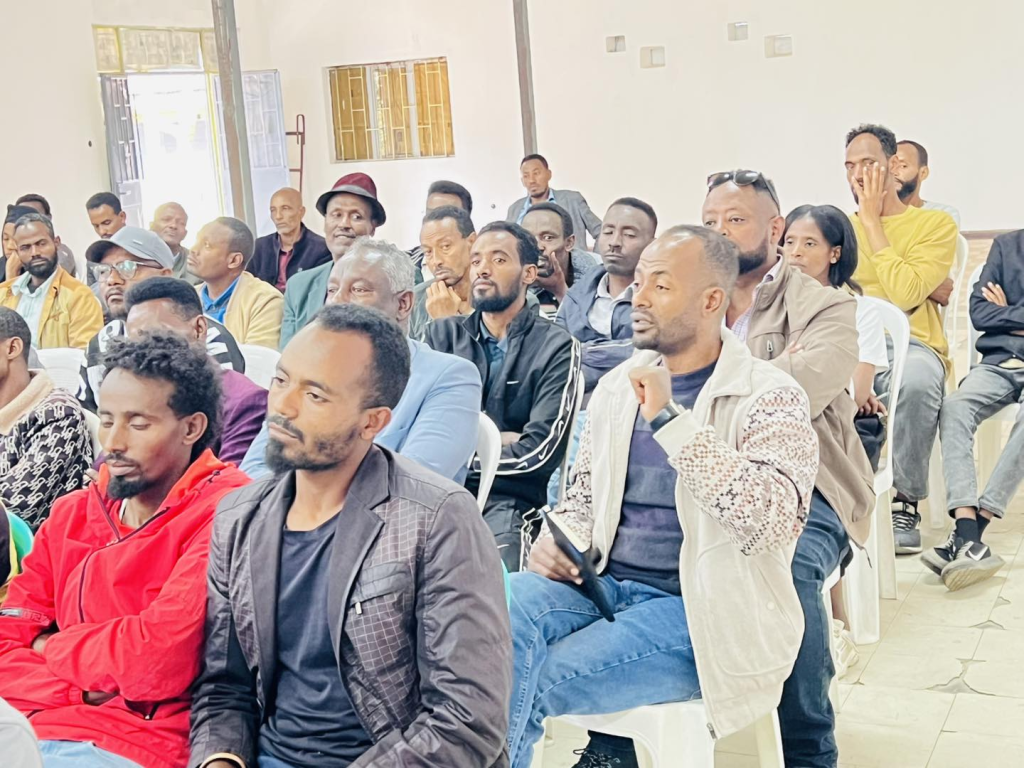
FINFINNE, Gullallee — The Oromo Liberation Front (ABO) convened a significant consultative meeting with its members on February 21, 2026, at its headquarters in Gullallee to discuss the current political situation and the upcoming 7th round elections. The gathering brought together Qondaaltota (junior leaders), Dabballoota (cadres), and general membership for extensive deliberations on the path forward.
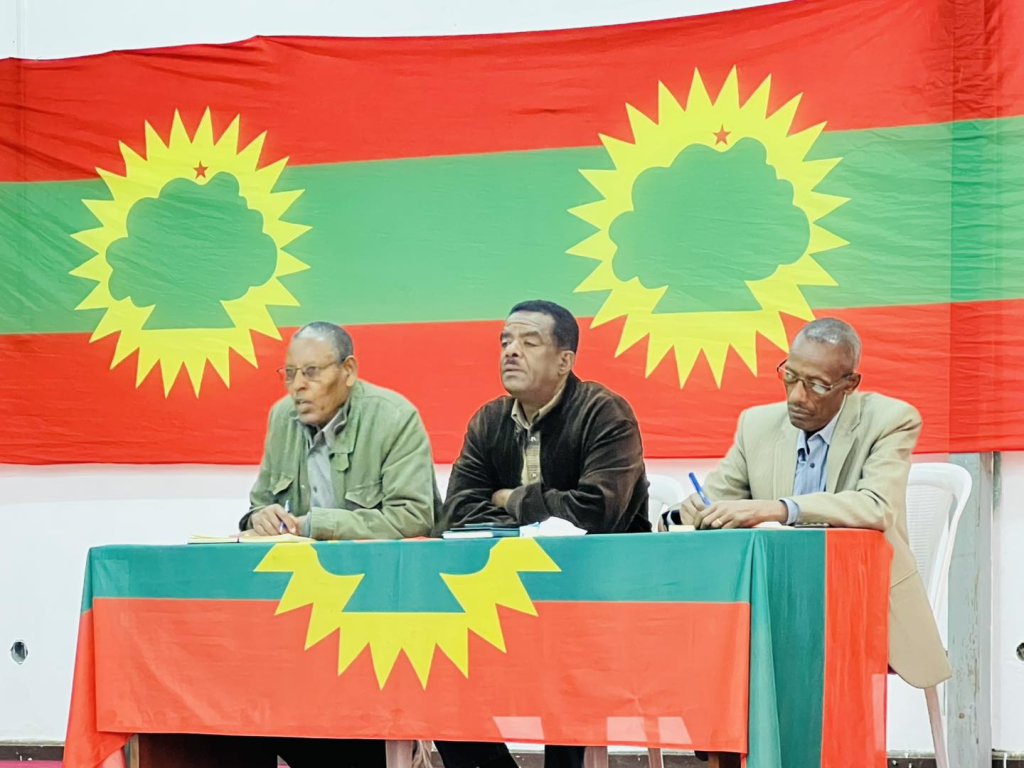
The meeting was led by senior OLF leader Jaal Abdii Raggaasaa and GS-ABO member Jaal Gammachiis Tolasa, who guided discussions on the organization’s electoral strategy, organizational strengthening, and continued commitment to the Oromo people’s aspirations.
Building Oromia: A Task Without Geographic Boundaries
Addressing members, Jaal Abdii Raggaasaa emphasized that the work of building Oromia and the Oromo nation extends beyond Ethiopia’s borders. He noted that OLF has been engaged in building Oromo consciousness and organization both inside Oromia and throughout the diaspora—wherever Oromos reside.
“Our foundational organizing must begin at the grassroots level, starting from the village,” Abdii stated, emphasizing that organic community-based organizing remains essential to lasting political change.
He stressed that the Oromo people, having been organized and mobilized, must now struggle for their rights with even greater unity than before—rallying under the banner of their organization to achieve their aspirations.
The Nature of Struggle: Strength Through Commitment
Reflecting on the inevitable fluctuations of liberation movements, Abdii acknowledged that any organization engaged in struggle experiences periods of strength and periods of weakness. However, he emphasized that these fluctuations are ultimately determined by the commitment and determination of the organization’s members.
“Some individuals enter the organization (Irbuu) but then exploit it—seeking personal benefit rather than serving the people’s cause. When such people exist, it is they themselves who suffer the consequences, not ABO and not others,” he explained.
Abdii further noted that throughout ABO’s history, the organization has built individuals, educated them about its goals and vision, and brought them into the struggle. Even among those who entered the organization and then exploited it, he observed that none have succeeded—only those who remained committed have prevailed.
“For those who adopt ABO’s goals and vision and then exploit the organization—the struggle of ABO is a struggle of blood and bone. Even God will hold them accountable. They will not succeed.”
Integrity and Moral Responsibility
The senior leader emphasized that all members must uphold the moral integrity of the organization, carrying forward its goals and vision in a manner that builds the Oromo people and the nation .
“If we are people of truth, our people will never abandon us under any circumstances,” Abdii declared. “But if we are people of falsehood, even if we hold something, we will lose it. Therefore, if we do not believe in truth, we should abandon the struggle—but we must not build the people with lies.”
He stressed that when ABO struggles with pure truth on its side, its victory will be immense and far-reaching. “When we march with truth, when we struggle for justice, we not only build the people easily—we also build ourselves within the structures of government. Therefore, let us speak only truth to our people.”
Seizing the Moment: The 7th Round Elections
Participants in the meeting shared perspectives on the upcoming elections, emphasizing that this is an opportunity that must be seized. Members stressed that supporting ABO through these challenging times and utilizing available opportunities is not merely a matter of preference but an obligation for all members. Therefore, everyone must work diligently for the upcoming 7th round elections .
OLF: The Center of Oromo Peace
Jaal Yaasoo Kabbabaa Hordofa, another OLF official, emphasized that “OLF is the center of Oromo peace,” and that the Oromo people must strengthen their resolve.
Regarding electoral participation, Yaasoo noted that if any organization has enabled Oromo participation in elections, and if OLF participates this year, it will mark the first and largest chapter in Oromo electoral history. Therefore, the Oromo people must seize this opportunity, exercise their rights, and fulfill their responsibilities.
Reflecting on the nature of the struggle, Yaasoo added: “In the struggle ABO is waging, even if we face extinction—if we are reduced to just one person—we must speak as ABO. We must not hide ourselves. We may face extinction, but we must not retreat into silence.”
A Legacy of Sacrifice, A Future of Commitment
Jaal Keeriyaa Ibraahim echoed these sentiments, emphasizing that an organization that has reached this point through enormous sacrifice cannot now retreat into silence. Regarding the upcoming 7th round elections, she called on members to dedicate themselves fully and work without hesitation .
“OLF’s struggle has always been a struggle of self-reliance,” Keeriyaa emphasized. “As long as the Oromo people exist, our organization need not struggle. Just as it has relied on itself in the past and trusted its people, today it relies on our people. Therefore, we members must work diligently to strengthen it.”
Conclusion: The Work Continues
The consultative meeting at Gullallee reaffirmed OLF’s commitment to the Oromo people’s struggle for self-determination, dignity, and democratic rights. With the 7th round elections approaching, the organization is mobilizing its members and supporters to participate actively while maintaining the integrity and moral clarity that have defined its decades-long struggle.
As members departed the headquarters, the message was clear: OLF remains the center of Oromo peace, the voice of Oromo aspiration, and the organizational home for those committed to the liberation struggle. The work continues—with truth as its foundation, sacrifice as its currency, and victory as its destiny.
ABO haa waaru! (Long live OLF!)
Injifannoon Ummata Oromoo! (Victory to the Oromo people!)

The Backbone of the Struggle: Oromo Women’s Indispensable Role in the Oromo Liberation Front (OLF/ABO)
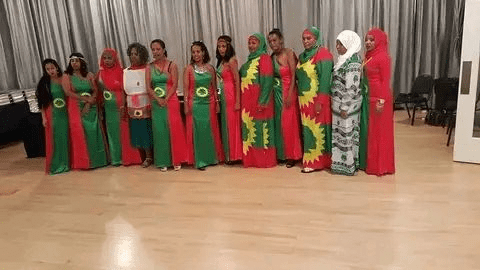
For decades, Oromo women have served as pillars of the liberation movement, from the battlefield to political organizing, paying the ultimate price for freedom
OROMIA/INTERNATIONAL — For generations, the Oromo people’s struggle for self-determination has been sustained by the courage, sacrifice, and unwavering commitment of its women. Within the Oromo Liberation Front (ABO), Oromo women have stood as “utubaa cimaa” —strong pillars—whose contributions have shaped every facet of the liberation movement .
From the armed struggle to political organizing, from those imprisoned and killed to those who preserved culture and identity, Oromo women have paid an enormous sacrifice. Their role has been not merely supportive but foundational—the very backbone upon which the struggle has been built .
Here are the key dimensions of Oromo women’s indispensable role within the Oromo Liberation Front .
1. Logistics and Combat Support: The Hidden Pillars
Long before they were visible as fighters, Oromo women served as the silent infrastructure of the liberation struggle. Operating in conditions of extreme danger, they undertook critical logistics and support roles that made armed resistance possible .
Women served as:
- Providers and nurturers for liberation fighters (WBO), ensuring they were fed, clothed, and cared for while operating in the bush
- Harborers and protectors, hiding freedom fighters in their homes at tremendous personal risk
- Couriers and intelligence operatives, transporting weapons, supplies, and vital information across enemy lines
- Lookouts and early warning systems, alerting fighters to approaching government forces
These roles carried immense danger. Women caught supporting the liberation struggle faced torture, imprisonment, rape, and death. Yet they continued, understanding that their courage sustained the fighters who carried the armed struggle forward .
2. Armed Struggle and Military Leadership
As the liberation movement evolved, Oromo women moved from support roles to direct participation in armed combat. Many women joined the guerrilla forces (WBO), serving as fighters and commanders who stood shoulder to shoulder with their male counterparts .
In the armed struggle, women:
- Received military training and participated in combat operations
- Served as unit leaders and commanders, directing operations
- Endured the same harsh conditions, long marches, and constant danger as male fighters
- Inspired their communities through visible courage and sacrifice
The presence of women fighters challenged not only the oppressive Ethiopian state but also traditional gender norms within Oromo society itself. By taking up arms for their people’s freedom, Oromo women demonstrated that liberation could not be achieved without them—and that their place in the struggle was not peripheral but central .
3. Political Organizing and Unity Building
Beyond the battlefield, Oromo women played crucial roles in building and sustaining the political infrastructure of the liberation movement. They understood that military struggle alone could not achieve liberation—that political consciousness, organization, and unity were equally essential .
Women’s political contributions included:
- Membership organizing, recruiting new supporters and expanding the movement’s reach
- Mass mobilization, inspiring communities to support the liberation cause
- Unity building, bridging divisions and fostering solidarity across clans, regions, and religious communities
- Political education, teaching Oromo history, language, and political consciousness
These organizing efforts often took place under constant surveillance and threat. Women organizers risked arrest, torture, and death simply for gathering people to discuss Oromo rights. Yet they persisted, building the political foundation upon which the armed struggle depended .
4. The Qeerroo and Popular Resistance: Leading the Peaceful Uprising
In more recent years, Oromo women have been at the forefront of the Qeerroo Bilisummaa Oromoo (Oromo Youth Liberation Movement) and the peaceful resistance that shook Ethiopia beginning in 2014. The struggle against land grabbing, political marginalization, and cultural suppression saw Oromo women emerge as visible and courageous leaders .
In this phase, women:
- Led and participated in mass protests demanding equality and justice
- Organized resistance networks using traditional social structures and modern technology
- Faced security forces with extraordinary courage, often at the front lines of demonstrations
- Sustained the movement through years of brutal crackdowns
The 2014-2018 protests that ultimately reshaped Ethiopian politics were sustained in significant part by Oromo women’s courage and determination. They marched, they organized, they documented abuses, and they refused to be silenced—even as bullets flew and tear gas filled the streets .
5. Sacrifice and Resilience: Surviving Imprisonment, Torture, and Loss
The price Oromo women have paid for their commitment to liberation is incalculable. Countless women have endured:
- Imprisonment for their political activities, often under brutal conditions
- Torture designed to break their spirit and force betrayal of comrades
- Rape used systematically as a weapon of war and intimidation
- Displacement from their homes and communities
- Loss of husbands, children, parents, and siblings killed in the struggle
- Witnessing the destruction of their communities and the suffering of their people
Yet remarkably, women emerged from these horrors not broken but strengthened in their resolve. Their resilience—the ability to endure unspeakable suffering and continue the struggle—has inspired generations and demonstrated that the Oromo people cannot be crushed .
As one veteran woman fighter reflected: “They took everything from us—our homes, our families, our bodies. But they could not take our commitment to freedom. That remained. That will always remain.”
6. Guardians of Culture and Identity: The Siinqee Tradition
Perhaps uniquely, Oromo women’s contribution to the liberation struggle has included the preservation and deployment of specifically female cultural traditions. Central to this is the Siinqee system—a traditional institution of women’s solidarity, mutual protection, and collective action that predates the modern liberation movement by centuries .
Through Siinqee, Oromo women have:
- Preserved cultural practices and knowledge passed down through generations
- Created spaces for women’s political organizing outside male-dominated structures
- Deployed traditional forms of protest and pressure that carry deep cultural authority
- Maintained Oromo identity and values even under conditions of extreme repression
- Passed Oromo language, history, and traditions to children when formal education was denied
The Siinqee tradition has proven remarkably adaptable, serving as both a cultural anchor and a tool for contemporary political organizing. It represents the deep roots of Oromo women’s resistance—roots that extend far beyond the modern liberation movement into the very foundations of Oromo society .
The Legacy Continues
Oromo women were the backbone of the Oromo liberation struggle. They remain so today. From the battlefields of the armed struggle to the streets of mass protests, from prison cells to political organizing meetings, from refugee camps to diaspora advocacy networks—Oromo women continue to carry the struggle forward .
Their contributions have not always received the recognition they deserve. Histories written by men sometimes minimize or overlook women’s roles. The sacrifices of women fighters and organizers have been less documented than those of their male counterparts. But the truth remains: without Oromo women, there would be no Oromo liberation movement.
As the Oromo people continue their journey toward self-determination and dignity, they do so standing on the shoulders of the women who came before—women who fed fighters, carried weapons, organized communities, endured torture, preserved culture, and refused to give up hope.
Honoring the Fallen, Supporting the Living
Among the countless Oromo women who have given their lives for freedom, many names are known—and many more are known only to those who loved them. Women fighters killed in combat. Women activists tortured to death in prisons. Women organizers disappeared and never found. Women refugees who died in exile, far from the homeland they loved.
The Oromo Liberation Front affirms its commitment to honoring these fallen heroines and supporting the women who continue the struggle today. Their sacrifices must never be forgotten. Their contributions must never be minimized. Their courage must continue to inspire.
ABO recognizes that without Oromo women, there is no liberation. Without Oromo women, there is no future. Without Oromo women, Oromia cannot be free.
May the struggle continue. May the women who carry it be honored. May Oromia be free.
This feature is dedicated to the countless Oromo women—known and unknown, living and departed—whose courage, sacrifice, and unwavering commitment have sustained the Oromo liberation struggle across generations. You are the backbone. You are the heart. You are the reason freedom remains alive.

Dabballee: The First Grade of the Gadaa System, Where Oromo Leadership Begins
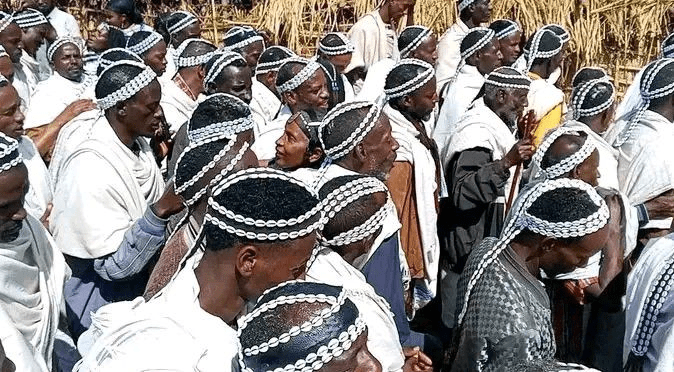
Understanding the foundational stage of one of the world’s oldest democratic governance systems
OROMIA, Ethiopia — In the rich tapestry of Oromo governance and culture, the Gadaa system stands as a remarkable indigenous democratic institution that has regulated the political, social, and religious life of the Oromo people for centuries. Recognized by UNESCO as Intangible Cultural Heritage of Humanity, this sophisticated system operates on an eight-year cycle, with leadership roles rotating among five distinct parties or grades .
At the very foundation of this system lies the first grade: Dabballee. The name itself carries profound meaning—it is the stage at which the journey toward leadership, responsibility, and community service begins .
Understanding Gadaa: A Brief Overview
Before exploring Dabballee, it is essential to understand the broader Gadaa system. This indigenous institution divides society into five age-based classes (known as Gogessa or Shanacha), each progressing through various grades over their lifetime. Leadership positions rotate every eight years between these classes, ensuring no single group holds power permanently and that governance remains participatory and accountable .
The system encompasses not only political leadership but also social organization, legal frameworks, cultural practices, and religious ceremonies. It is, in essence, the comprehensive framework through which Oromo society has traditionally organized itself .
Dabballee: The Foundational Grade
Dabballee represents the first grade in the Gadaa ladder, typically encompassing boys from birth until approximately eight years of age . During this stage, children are initiated into the Gadaa system through ceremonies that mark their formal entry into the Oromo social structure.
Key characteristics of the Dabballee grade:
- Age range: Typically from birth to approximately 8 years of age
- Status: Initiates who have entered the Gadaa system but have not yet assumed responsibilities
- Symbolic significance: Represents purity, potential, and the future of the Oromo nation
- Cultural education: Children in this grade begin learning Oromo traditions, language, and values
Ceremonies and Traditions
The entry into Dabballee is marked by important ceremonies that vary somewhat across different Oromo communities but share core elements. These rituals typically involve:
- The blessing of children by elders (Hayyoota)
- The symbolic marking of the child’s entry into the Gadaa structure
- Community gatherings that reinforce collective responsibility for raising the next generation
- Prayers for the children’s health, wisdom, and future contributions to the Oromo people
Elders play a crucial role in these ceremonies, passing on blessings and wisdom to the youngest members of the community. The involvement of elders underscores the intergenerational nature of the Gadaa system—knowledge and tradition flow from those who have completed the cycle to those just beginning their journey.
The Journey Through Gadaa Grades
From Dabballee, individuals progress through subsequent grades as they age, each with distinct responsibilities and privileges:
| Grade | Approximate Age | Role and Responsibilities |
|---|---|---|
| Dabballee | 0-8 years | Initial entry into system; cultural learning |
| Follee/Gamme | 8-16 years | Continued education; assisting elders |
| Qoondala | 16-24 years | Junior warriors; community service |
| Kuusaa | 24-32 years | Senior warriors; beginning of leadership training |
| Raaba Doorii | 32-40 years | Junior leadership; council participation |
| Gadaa | 40-48 years | Supreme leadership; governing the nation |
| Yuba I-III | 48-72+ years | Advisory roles; blessing and guiding |
Each stage builds upon the one before, with Dabballee providing the essential foundation upon which all later development rests.
Cultural Significance
The Dabballee grade embodies several core Oromo values:
Continuity: By initiating children into the system from birth, Oromo society ensures that each new generation inherits the cultural and political traditions of those who came before. Dabballee represents the unbroken chain linking ancestors to descendants.
Collective responsibility: The community’s role in raising and initiating children reflects the Oromo principle that children belong not only to their biological parents but to the entire community. The proverb “Ijoolleen keenya ijoolluma keenya” (Children are our children) captures this ethos.
Potential and promise: Dabballee children represent the future of the Oromo nation. The community invests in them, blesses them, and hopes that they will grow to lead with wisdom and integrity.
Equality: All Oromo children, regardless of family background, enter the Gadaa system through Dabballee. This foundational equality reflects the democratic principles that characterize the system at all levels.
Contemporary Relevance
While the full Gadaa system operates most comprehensively in certain Oromo communities, particularly among the Borana and Guji, its principles and grades—including Dabballee—continue to shape Oromo identity and values even among those living in urban areas or diaspora .
For Oromos worldwide, understanding grades like Dabballee provides connection to cultural roots and a framework for thinking about human development, leadership, and community responsibility. The system’s emphasis on age-based progression and regular leadership rotation offers insights that remain relevant for contemporary governance discussions.
Dabballee and Oromo Identity
The first grade of the Gadaa system holds special significance for Oromo identity formation. It is at this stage that children first learn who they are as Oromos—their language, their history, their responsibilities to community, and their place within a vast social structure that spans generations.
For Oromo communities in the diaspora, maintaining awareness of the Dabballee grade and its meaning helps preserve cultural continuity across geographic distance. Parents who may never have participated in formal Gadaa ceremonies themselves still invoke its principles and values in raising their children.
A UNESCO-Recognized Heritage
UNESCO’s 2016 inscription of the Gadaa system on the Representative List of the Intangible Cultural Heritage of Humanity brought international attention to this remarkable indigenous institution . The recognition highlighted not only the system’s sophistication but also its continuing relevance for contemporary discussions about democratic governance, intergenerational equity, and cultural preservation.
Within this recognized heritage, Dabballee holds a special place as the entry point—the grade through which every Oromo who participates in the system must pass, and the stage at which the values and traditions of Gadaa are first instilled.
Conclusion
Dabballee, the first grade of the Gadaa system, represents far more than an age category. It embodies the Oromo people’s commitment to raising children with intention, their belief in the potential of each new generation, and their understanding that leadership is not born but developed over time through careful preparation and community support.
As the Oromo people continue to navigate the challenges of the 21st century—in Ethiopia and across the global diaspora—the wisdom embedded in the Gadaa system, beginning with Dabballee, offers guidance. It reminds us that strong communities invest in their youngest members, that leadership requires lifelong preparation, and that the future depends on how we raise and honor our children today.
Dabballee—where the journey begins, and where the future of Oromia takes its first steps.

10 Ways to Support Your Colleagues Experiencing Illness

A workplace guide to compassionate support during health challenges
WORKPLACE — Illness comes for all of us eventually—whether our own or someone we love. For the colleague facing a serious diagnosis, undergoing treatment, or caring for a sick family member, the workplace can feel like an additional burden or a lifeline of normalcy and support .
Serious illness disrupts every aspect of life: physical capacity, emotional stability, financial security, and sense of identity. At work, colleagues may worry about job security, struggle with reduced energy, feel isolated from team activities, or fear being seen as a burden .
Yet the workplace also offers unique opportunities for support. Supportive colleagues can provide practical help, emotional connection, and a sense of belonging that counteracts the isolation illness often brings .
Here are ten ways to support colleagues experiencing illness—whether their own or a family member’s.
1. Acknowledge the Situation Early and Honestly
When you learn a colleague is facing illness, the first and most important step is acknowledgment. Silence, even when motivated by fear of intrusion, can feel like abandonment.
How to acknowledge:
- Reach out as soon as you learn of their situation
- Keep it simple and sincere: “I heard about your diagnosis. I’m so sorry you’re going through this.”
- Express care without demanding details: “I’m thinking of you and here to support however I can.”
- If you don’t know details, that’s fine: “I heard you’ve been dealing with some health challenges. I just want you to know I care.”
What to avoid:
- Waiting so long that they wonder why no one said anything
- Pretending you haven’t noticed changes in their appearance or availability
- Overwhelming them with your own emotions or stories about others with similar illnesses
- Demanding information they may not want to share
Early acknowledgment communicates that they’re seen and valued, and that their struggle doesn’t have to be hidden .
2. Ask What They Need—And Mean It
Well-meaning colleagues often say, “Let me know if you need anything,” and ill colleagues rarely do. Specific, repeated offers are more likely to be accepted.
Better ways to ask:
- “I’m going to the grocery store after work—can I pick up a few things for you?”
- “Would it help if I covered the morning meeting for you next week?”
- “I’d like to bring lunch on Thursday. Are there foods you’re able to eat right now?”
- “What’s the hardest part of your day right now? Maybe I could help with that.”
- “I have some time this weekend—would you like company or help with anything around the house?”
What to keep in mind:
- Needs change as illness progresses—check in regularly
- Some days they’ll need practical help; other days just company
- Be specific about what you’re offering so they don’t have to invent tasks
- Follow through reliably if they do accept help
The goal is to reduce their burden of asking while providing meaningful support .
3. Respect Their Privacy and Boundaries
Illness involves intimate details—diagnoses, treatment side effects, emotional struggles—that colleagues may or may not want to share. Respecting boundaries builds trust.
How to respect boundaries:
- Let them control what they share and with whom
- Don’t pressure for medical details or updates
- If they share something, keep it confidential unless they’ve authorized sharing
- Ask “Is it okay if I let others know how you’re doing?” before updating the team
- Accept gracefully if they decline offers of help or prefer not to discuss their situation
Signs you may be overstepping:
- They seem uncomfortable when you ask about their health
- They give vague answers and change the subject
- They’ve asked others not to discuss their situation
- They’ve stopped sharing updates after previous conversations
Trust their lead. Your role is to follow, not direct .
4. Offer Practical Workplace Accommodations
Illness affects work capacity in countless ways: energy fluctuates, concentration wavers, medical appointments disrupt schedules, side effects interfere with functioning. Practical accommodations can make work possible when it might otherwise be impossible.
Workplace adjustments to advocate for:
- Flexible hours to accommodate treatment schedules and energy levels
- Remote work options when attending the office is difficult
- Reduced workload or temporary reassignment of demanding projects
- Permission to rest during the day if needed
- Extended deadlines for non-urgent work
- Private space for medication, rest, or emotional moments
- Understanding around memory lapses or concentration difficulties
How colleagues can help:
- Offer to cover tasks during treatment periods
- Check in about workload: “Would it help if I took over that report for you?”
- Advocate with managers for reasonable accommodations
- Don’t keep score about who’s doing what—illness is temporary
When workplaces accommodate illness, they retain valuable employees and demonstrate that people matter more than productivity .
5. Maintain Connection and Inclusion
Illness is isolating. Medical appointments replace social activities. Energy for connection dwindles. Colleagues, unsure what to say, may unintentionally withdraw. Maintaining connection—on the ill person’s terms—counters this isolation.
Ways to maintain connection:
- Continue including them in team communications and social invitations
- Send occasional check-ins that require no response: “Thinking of you today.”
- Visit if they’re open to it and it’s safe (ask first, respect if they decline)
- Remember that connection can take many forms—text, call, card, brief visit
- When they’re on leave, keep them loosely connected to workplace news if they want
During treatment absence:
- Send occasional updates about work (only if they want them)
- Share funny stories or positive team news
- Let them know they’re missed
- Don’t pressure them to respond or engage
For caregivers supporting ill family members, similar principles apply—they need connection too, though their situation differs .
6. Be Patient with Fluctuations and Limitations
Illness rarely follows a predictable path. Good days and bad days alternate. Energy that seems fine one day may disappear the next. Patience through these fluctuations is essential.
What patience looks like:
- Not keeping score: “But you seemed fine yesterday.”
- Understanding that visible improvement doesn’t mean full recovery
- Accepting that they may need to cancel plans or step away suddenly
- Trusting they’re doing their best with what they have each day
- Avoiding comments about their appearance or energy level
What to avoid:
- Impatience with cancelled commitments or reduced availability
- Assumptions about what they “should” be able to do based on appearance
- Comparisons to others with similar conditions
- Pressure to “push through” when they need rest
Patience communicates that you value them as a person, not just for their productivity .
7. Support Them Through Different Phases
Illness has phases—diagnosis, treatment, recovery, possible recurrence, and for some, end of life. Each phase brings different needs and challenges.
Diagnosis phase:
- Shock and information overwhelm are common
- Practical help with understanding options and navigating systems may help
- Emotional support without pressure for decisions
Treatment phase:
- Energy is often lowest; side effects may be challenging
- Practical help with daily tasks matters most
- Flexible work accommodations are essential
- Visits may be welcome or overwhelming—ask
Recovery/remission phase:
- “Getting back to normal” is harder than expected
- Fatigue may persist; cognitive effects may linger
- Fear of recurrence is common
- Support adjusting to post-treatment life helps
Caregiver phase (if supporting ill family member):
- Their own health may suffer from stress and neglect
- Practical help with caregiving tasks can relieve burden
- Emotional support and respite matter enormously
- Workplace flexibility is equally essential
Advanced illness phase:
- Priorities may shift toward comfort and connection
- Practical help with legacy projects, financial matters
- Respect for their choices about work involvement
- Compassionate presence without expectation
Understanding where someone is in their illness journey helps you offer appropriate support .
8. Remember the Caregivers
When a colleague is caring for an ill family member—child, partner, parent—they face their own challenges. Caregivers often neglect their own needs while supporting someone they love.
How caregivers may struggle:
- Exhaustion from physical and emotional demands
- Financial stress from medical costs or reduced work
- Isolation as social life contracts
- Anxiety about their loved one’s condition
- Guilt about any attention to their own needs
- Work disruptions from appointments and emergencies
How to support caregivers:
- Acknowledge their situation: “I know caring for your mother must be so demanding. How are you holding up?”
- Offer practical help that gives them respite: “I could sit with your father for a few hours Saturday so you can have a break.”
- Be understanding about work disruptions
- Include them in social invitations without pressure
- Remember that their loved one’s illness affects them too
Caregivers need support as much as those who are ill—sometimes more, because no one thinks to offer it .
9. Respect Their Identity Beyond Illness
Illness can consume identity. Colleagues can help by remembering and honoring the whole person—not just their patient status.
How to honor whole identity:
- Talk about non-illness topics: work, hobbies, family, current events
- Share normal workplace conversations and humor
- Ask about their interests, not just their health
- Remember their professional contributions and expertise
- Include them in decisions and projects (appropriately)
What to avoid:
- Every conversation starting with “How are you feeling?”
- Treating them as fragile or incapable
- Defining them by their diagnosis
- Excluding them from professional opportunities
People with illness are still people—with personalities, expertise, humor, and dreams. Remembering this preserves dignity .
10. Advocate for Systemic Workplace Support
Individual support matters, but systemic change creates environments where ill employees and caregivers can thrive.
Workplace policies that help:
- Adequate sick leave that doesn’t force choice between health and income
- Family and medical leave for those caring for ill relatives
- Flexible work arrangements as standard options
- Return-to-work programs after extended medical leave
- EAP services with adequate counseling sessions
- Disability accommodations that are easy to access
- Health insurance that provides meaningful coverage
Advocacy actions:
- Learn your workplace’s policies and suggest improvements
- Support colleagues in requesting accommodations
- Challenge cultures that equate presenteeism with commitment
- Encourage leadership to model work-life balance
- Share resources and information with affected colleagues
When workplaces support illness well, everyone benefits—because illness touches everyone eventually .
What to Avoid: Well-Intentioned but Harmful Responses
Avoid minimizing: “At least it’s treatable.” (Dismisses their very real fear and struggle.)
Avoid toxic positivity: “Stay positive! Mind over matter!” (Can feel like pressure to perform cheerfulness.)
Avoid comparing: “My aunt had that and she was fine.” (Every case is different; comparisons help no one.)
Avoid advice-giving: “Have you tried this diet/doctor/supplement?” (Unless you’re their doctor, keep advice to yourself.)
Avoid disappearing: Pulling away because you’re uncomfortable. (They notice, and it hurts.)
Avoid making it about you: “I know exactly how you feel.” (You don’t—even similar illnesses are experienced differently.)
Avoid pity: Pity diminishes; compassion connects. Treat them with the same respect you always have.
Supporting Yourself While Supporting Others
Supporting an ill colleague takes emotional energy. You may confront your own fears about illness, mortality, and loss. You may feel helpless or overwhelmed. These feelings are normal.
Take care of yourself by:
- Setting boundaries that protect your own wellbeing
- Seeking support from others when you need it
- Accepting that you can’t fix everything
- Taking breaks when you need them
- Remembering that your colleague has many supporters; you don’t have to be everything
The Gift of Showing Up
Supporting a colleague through illness is not about having the right words or solving their problems. It’s about showing up—consistently, respectfully, and humanly—and staying present through whatever comes.
As one cancer survivor reflected: “The colleagues who helped most weren’t the ones who said profound things or brought elaborate meals. They were the ones who kept treating me like me—who asked about my treatment but also about my kids, who included me in lunch invitations even when I couldn’t come, who said ‘I’m glad you’re here’ on the days I made it in. They couldn’t cure me, but they made sure I wasn’t alone.”
In showing up for ill colleagues, we do more than support individuals—we build workplaces where humanity comes first, where health challenges are met with compassion rather than silence, and where no one has to face illness alone.
If you’re supporting an ill colleague, remember to care for yourself too. Supporting others through illness takes emotional energy. Reach out to your own supports, set boundaries where needed, and seek guidance when you’re unsure. You matter too.

10 Ways to Support Your Colleagues Experiencing Death and Grief
A workplace guide to compassionate presence during life’s most difficult moments
WORKPLACE — Grief is universal, yet it remains one of the most uncomfortable topics in workplace settings. When a colleague loses a loved one, we want to help but often don’t know how. We fear saying the wrong thing, intruding on private pain, or making things worse. So we say nothing—and our silence, however well-intentioned, can feel like abandonment .
The workplace presents unique challenges for grievers. While home may offer space to fall apart, work demands professionalism, productivity, and emotional regulation. Colleagues who were friends may suddenly seem distant. The expectation to “get back to normal” can feel impossible when normal has been permanently altered .
Yet the workplace also offers unique opportunities for support. For many grievers, work provides structure, purpose, and social connection when everything else feels chaotic. Supportive colleagues can make the difference between isolation and feeling held by community during life’s hardest moments .
Here are ten ways to support colleagues experiencing death and grief—from the immediate aftermath through the long journey of mourning.
1. Acknowledge the Loss Immediately and Sincerely
The worst thing you can do is say nothing. Silence, even when motivated by fear of intrusion, communicates that their loss doesn’t matter or that you don’t care.
What to do:
- Reach out as soon as you learn of the loss
- A simple acknowledgment is enough: “I was so sorry to hear about your mother. I’m thinking of you.”
- Send a card, email, or message—written words can be reread when spoken ones are forgotten
- If you didn’t know the person who died, it’s still appropriate to acknowledge their colleague’s loss
What to say:
- “I’m so sorry for your loss.”
- “I can’t imagine what you’re going through, but I’m here for you.”
- “Your [father/sister/friend] meant so much to you—I know this is devastating.”
- No need for lengthy statements. Sincerity matters more than eloquence.
What to avoid:
- Waiting until they return to work to acknowledge the loss (they’ll wonder why no one reached out)
- Pretending nothing happened
- Overly elaborate expressions that draw attention to your discomfort rather than their pain
Acknowledgment is the foundation upon which all other support is built .
2. Show Up, Even When You Feel Helpless
Many people avoid grievers because they don’t know what to say or do. But presence matters more than words. You don’t need to have the perfect response—you just need to show up.
Ways to show up:
- Attend the funeral or memorial service if appropriate and welcomed
- Send flowers or a donation to a cause meaningful to the deceased or griever
- Bring food to their home (check dietary preferences first)
- Offer to help with practical tasks: walking the dog, picking up children, grocery shopping
- Sit with them in silence if they don’t want to talk
- Send periodic texts that require no response: “Thinking of you today.”
Remember:
- Grief is isolating. Your presence—even clumsy, imperfect presence—reminds them they’re not alone.
- Many people disappear after the funeral. Showing up in the weeks and months after matters even more.
- Small, consistent gestures accumulate into a sense of being held by community .
3. Support Practical Workplace Accommodations
Grief affects concentration, energy, memory, and emotional regulation—all essential for most jobs. Practical workplace accommodations can make the difference between barely surviving and having space to mourn.
Workplace adjustments to advocate for:
- Flexible hours to attend appointments, manage estate matters, or simply rest when grief is overwhelming
- Reduced workload or temporary reassignment of demanding projects
- Permission to work from home on particularly difficult days
- Understanding around memory lapses, difficulty concentrating, or emotional moments
- Extended deadlines where possible
- Privacy when they need to step away
How colleagues can help:
- Offer to cover meetings or tasks without being asked
- Check in about workload: “Would it help if I took over the Johnson project for a few weeks?”
- Don’t keep score about who’s doing what—grief is not a permanent state
- Advocate with managers for reasonable accommodations
The goal is not to coddle but to recognize that grief temporarily disables in ways that require accommodation, just as physical illness would .
4. Listen Without Trying to Fix
Grief cannot be fixed. It must be witnessed. Your role is not to solve their pain but to sit beside them in it.
How to listen:
- Ask open questions: “Would you like to talk about [the person who died]?”
- Follow their lead—some days they’ll want to share memories, other days they’ll want distraction
- Allow silence—grievers often need space to gather themselves
- Resist the urge to offer solutions or silver linings
- Accept expressions of anger, despair, or numbness without trying to talk them out of these feelings
What not to say:
- “They’re in a better place.” (You don’t know what the griever believes.)
- “At least they lived a long life.” (Long doesn’t mean long enough.)
- “Everything happens for a reason.” (This can feel cruel to someone drowning in senseless loss.)
- “You’re so strong.” (This can pressure them to hide their struggles.)
- “Let me know if you need anything.” (Vague offers rarely get taken up—specific offers help more.)
Instead, say: “I’m here to listen however you need. Whatever you’re feeling is okay.”
5. Remember and Acknowledge Significant Dates
Grief doesn’t end after the funeral. It resurfaces on anniversaries, holidays, and ordinary days that suddenly become extraordinary in their absence.
Dates to remember:
- The anniversary of the death
- The deceased’s birthday
- Holidays (first ones without the person are especially hard)
- The griever’s own birthday or other personal milestones
- The anniversary of the funeral or memorial
How to acknowledge:
- Mark your calendar and reach out on or before these dates
- Send a simple message: “Thinking of you today. Remembering your father with you.”
- Offer specific support: “Would you like company on that day, or would you prefer space?”
- Don’t assume they want to be distracted—some want to sit with their grief
- Ask if they’d like to share memories or if they’d rather not talk about it
These small recognitions communicate that you remember what they carry, even when the world has moved on .
6. Respect Individual and Cultural Differences in Grieving
Grief is not one-size-fits-all. Cultural background, religious beliefs, family traditions, and individual personality all shape how people mourn. Support means honoring their way, not imposing yours.
Cultural considerations:
- Different cultures have different mourning periods, rituals, and expectations
- Some cultures emphasize public expression of grief; others value private mourning
- Religious beliefs shape views on death, the afterlife, and appropriate mourning practices
- Funeral and memorial customs vary widely—ask about what to expect if you’re attending
Individual differences:
- Some people want to talk about their loss; others need distraction
- Grief duration varies—there’s no “normal” timeline
- Some return to work quickly; others need extended leave
- Grief may resurface unexpectedly, even years later
How to respect differences:
- Ask: “What would be most helpful to you right now?”
- Follow their lead rather than imposing your assumptions
- Don’t judge their grief expression against your expectations
- Educate yourself about cultural practices if you’re supporting someone from a different background
- When in doubt, ask respectfully: “I want to support you in ways that honor your traditions. Can you help me understand what would be appropriate?”
Support that respects individual and cultural differences is support that truly helps .
7. Maintain Connection Over the Long Term
The first weeks after a death bring an outpouring of support. Cards arrive. Meals appear. Calls come. Then gradually, life returns to normal for everyone except the griever, whose normal has been permanently altered.
Long-term support matters:
- Check in months after the death, not just immediately
- Continue mentioning the person who died—grievers often feel others have forgotten
- Acknowledge that grief changes but doesn’t end
- Be patient with ongoing struggles—grief can affect functioning for years
- Don’t expect them to “be over it” by any particular timeline
Ways to stay connected:
- Periodic messages: “Thinking of you and your mom today.”
- Share memories when they occur to you: “I just heard this song and remembered how much your brother loved it.”
- Include them in social invitations while understanding they may decline
- Remember that grief can be isolating—your ongoing presence counters that
Long-term support communicates that their loss—and they themselves—still matter .
8. Be Patient with Grief’s Unpredictability
Grief is not linear. It doesn’t progress neatly through stages toward resolution. It surges and recedes unpredictably, triggered by songs, smells, dates, or nothing at all.
What unpredictability looks like:
- Good days and terrible days with no apparent pattern
- Sudden tears in meetings or over seemingly trivial things
- Difficulty concentrating even on routine tasks
- Anger or irritability that seems disproportionate
- Withdrawal from social interactions they previously enjoyed
- Moments of joy followed by crashes of guilt about feeling joy
How to respond:
- Don’t take emotional reactions personally
- Offer grace without comment: “Take whatever time you need.”
- Create space for them to step away when overwhelmed
- Don’t track their progress or expect steady improvement
- Trust that they’re doing the best they can with what they have
Patience in the face of grief’s unpredictability is a profound form of support .
9. Offer Specific, Practical Help
“Well-meaning people often say, ‘Let me know if you need anything,’ and grieving people often don’t know what they need or can’t bring themselves to ask,” notes grief expert Megan Devine. Specific offers are easier to accept.
Specific offers that help:
- “I’m going to the grocery store—can I pick up a few things for you?”
- “I can cover your shift on Tuesday if you need the day off.”
- “I’d like to bring dinner on Thursday. Are there foods you especially like or need to avoid?”
- “I have time to review that report for you if you’re struggling to focus.”
- “Would it help if I drove you to the cemetery on the anniversary?”
Practical workplace help:
- Offer to take notes in meetings they need to attend
- Help prioritize their workload when everything feels overwhelming
- Remind them of deadlines they might forget
- Protect them from unnecessary workplace demands or gossip
- Advocate with management for continued accommodations
Specific offers remove the burden of asking while providing tangible support .
10. Advocate for Grief-Inclusive Workplace Policies
Individual support matters, but systemic change creates environments where grievers can mourn without fear of professional consequences.
Workplace policies that support grievers:
- Bereavement leave that acknowledges grief extends beyond immediate funeral arrangements
- Flexible return-to-work options (phased returns, temporary reduced hours)
- Clear protocols for notifying colleagues of a death and appropriate responses
- Training for managers on supporting grieving employees
- Access to EAP counseling beyond the standard few sessions
- Accommodation policies that include grief-related needs
- Culture that doesn’t penalize emotional expression or reduced productivity
Advocacy actions:
- Ask HR about bereavement policies and suggest improvements
- Encourage grief literacy training for managers and teams
- Normalize conversations about loss and mourning
- Support colleagues publicly when they need accommodations
- Challenge workplace cultures that demand stoicism or rapid “getting back to normal”
When workplaces take grief seriously, everyone benefits—because everyone eventually grieves .
What Not to Do: Common Mistakes to Avoid
Don’t avoid them. Your discomfort is not a reason to disappear from someone’s life when they need community most.
Don’t compare griefs. “I know exactly how you feel” isn’t true—even similar losses are experienced differently.
Don’t rush them. “You should be feeling better by now” dismisses their unique timeline.
Don’t take over. Making decisions for them or assuming you know what they need undermines their agency.
Don’t expect them to be the same person. Grief changes people profoundly. The colleague who returns may be different from the one who left.
Don’t stop mentioning the person who died. Grievers often feel others have forgotten. Saying their loved one’s name is a gift.
Understanding Your Role
Supporting a grieving colleague involves holding two truths:
You can help. Your presence, practical assistance, and ongoing acknowledgment can buffer the isolation of grief and provide genuine comfort.
You cannot fix it. Grief is not a problem to solve but a reality to be endured. Your role is not to take away the pain but to sit beside them in it.
The Gift of Showing Up
Ultimately, supporting a grieving colleague comes down to one thing: showing up. Showing up with your imperfect words, your awkward silences, your specific offers of help, and your ongoing presence long after others have moved on.
As one grieving person reflected: “The colleagues who helped most weren’t the ones who said the perfect thing. They were the ones who kept showing up—bringing coffee, sitting with me when I cried, mentioning my daughter’s name when everyone else had stopped. They couldn’t fix my broken heart, but they made sure I wasn’t alone with it.”
In showing up for grieving colleagues, we do more than support individuals—we build workplaces where humanity comes first, where life’s hardest moments are met with compassion rather than silence, and where no one has to mourn alone.
If you’re supporting a grieving colleague, remember to care for yourself too. Witnessing others’ pain takes emotional energy. Reach out to your own supports, set boundaries where needed, and seek guidance when you’re unsure. Supporting others doesn’t mean sacrificing yourself.

10 Ways to Support Your Colleagues Experiencing Suicidal Thoughts
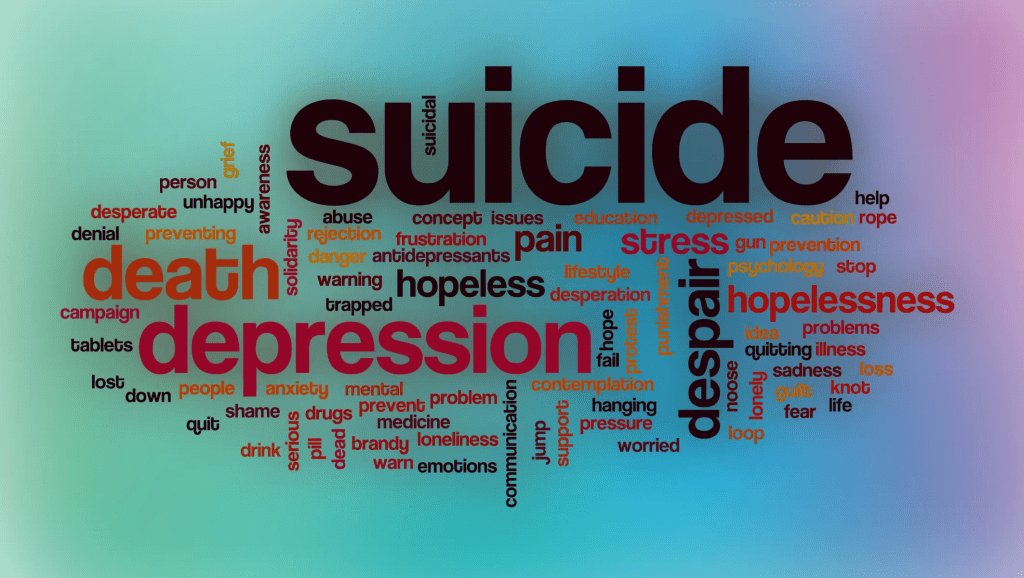
A workplace guide to compassionate intervention, safety, and ongoing support
WORKPLACE — Few conversations feel as daunting as those involving suicide. When a colleague reveals they’re considering ending their life—or when you suspect they might be—fear, uncertainty, and anxiety about saying the wrong thing can paralyze even well-intentioned coworkers. Yet in that moment, your response can make the difference between life and death .
Suicidal thoughts affect people across all demographics, professions, and backgrounds. In any given year, millions of people experience suicidal ideation, and many of them are sitting beside us at work. The workplace, where we spend one-third of our lives, can be either a place of additional isolation or a critical source of connection and support .
Here are ten ways to support colleagues experiencing suicidal thoughts—from recognizing warning signs to providing ongoing support through recovery.
1. Learn to Recognize Warning Signs
Early recognition creates opportunities for early intervention. While not everyone shows warning signs, many people exhibit changes before a suicide attempt. Be attentive to:
Verbal warnings:
- Talking about wanting to die or kill themselves
- Expressing hopelessness about the future
- Saying they have no reason to live
- Talking about being a burden to others
- Mentioning feeling trapped or in unbearable pain
- Saying goodbye to people as if final
Behavioral changes:
- Withdrawal from colleagues and social interactions
- Increased use of alcohol or drugs
- Giving away prized possessions
- Researching suicide methods online
- Sudden calmness after period of depression (may indicate decision made)
- Unexplained anger, irritability, or agitation
Workplace-specific signs:
- Decline in performance or attendance
- Unusual mistakes or difficulty concentrating
- Coming in early/staying late excessively (avoiding home)
- Extreme reactions to criticism or setbacks
These signs don’t definitively indicate suicidal thoughts, but they warrant attention and caring inquiry .
2. Create Safety for Disclosure
People rarely announce suicidal thoughts unprompted. They test waters first—hinting, expressing despair, seeing how others respond. You can create conditions where disclosure feels possible by:
- Building trust through consistent, non-judgmental presence
- Asking directly about wellbeing: “How are you really doing?”
- Normalizing struggles: “Everyone goes through difficult times.”
- Responding calmly when someone shares distress (not panicking or avoiding)
- Maintaining confidentiality scrupulously
- Following up consistently over time
When someone senses you’re safe, they’re more likely to share what they’re actually experiencing .
3. Ask Directly About Suicide
The single most important thing you can do if you’re concerned about someone is ask directly about suicide. This is the most feared question—and the most essential.
How to ask:
- “Sometimes when people feel the way you’re describing, they think about suicide. Are you having thoughts of ending your life?”
- “I care about you, and I’m wondering if you’re having thoughts of suicide.”
- “When you talk about feeling hopeless, I worry. Are you thinking about killing yourself?”
What asking accomplishes:
- It shows you truly see their pain
- It gives permission to speak openly
- It provides relief—carrying suicidal thoughts alone is agonizing
- It helps you understand the level of risk
Common fears addressed:
- “Asking will put the idea in their head.” Research shows asking does not increase suicidal thoughts and often reduces them by demonstrating care.
- “I might be wrong and offend them.” It’s better to risk a moment of awkwardness than to miss an opportunity to save a life.
- “I won’t know what to do if they say yes.” You don’t need all the answers—you just need to stay with them and connect them to help .
4. Listen Without Judgment
If a colleague shares suicidal thoughts with you, how you listen in those first moments matters enormously:
Do:
- Stay calm and present
- Take them seriously—every expression of suicidal thoughts deserves attention
- Thank them for trusting you
- Believe what they’re telling you about their pain
- Allow them to express difficult emotions without trying to fix them
- Validate their feelings: “That sounds unbearably painful. I’m so sorry you’re going through this.”
Don’t:
- Panic, gasp, or show visible shock
- Minimize: “You don’t really mean that.”
- Offer platitudes: “Think of all you have to live for.”
- Argue about whether life is worth living
- Make it about you: “How could you do this to me?”
- Try to solve everything in one conversation
Your presence in this moment—steady, accepting, and caring—is itself powerful intervention .
5. Stay With Them and Ensure Immediate Safety
If a colleague is actively suicidal, their immediate safety is the priority:
Immediate steps:
- Do not leave them alone if they are at imminent risk
- Remove access to means if possible and safe (medications, weapons)
- Stay with them until professional help arrives or they’re connected to support
- Ask: “Do you have a plan? Do you have access to what you would use?”
- Call a crisis line together for guidance
- If risk is imminent, accompany them to emergency services
Escalation resources:
- Call emergency services (000 in Australia, 911 in US, 999 in UK) if life is in immediate danger
- Contact their emergency contact if appropriate and with their knowledge where possible
- Use crisis text lines if speaking feels too hard
Remember: it’s better to overreact to safety than underreact. Brief awkwardness is preferable to funeral arrangements .
6. Connect Them to Professional Help
Your role is not to be the sole support but to bridge them to appropriate professional help:
Workplace resources:
- Employee Assistance Program (EAP) – often provides immediate counseling
- HR – can advise on leave options and accommodations
- Workplace mental health first aiders or wellbeing officers
Community resources:
- Crisis hotlines (available 24/7)
- Mental health services
- Their regular doctor or psychiatrist
- Hospital emergency departments for immediate crisis
How to help:
- Offer to stay with them while they call
- Help research resources if they’re overwhelmed
- Accompany them to appointments if appropriate
- Follow up to ensure they connected with help
Keep crisis numbers accessible:
Australia:
- Lifeline: 13 11 14 (24/7 crisis support)
- Suicide Call Back Service: 1300 659 467
- Beyond Blue: 1300 22 4636
- Emergency: 000
International:
- US National Suicide Prevention Lifeline: 988
- UK Samaritans: 116 123
- International Association for Suicide Prevention: provides global resources
7. Maintain Confidentiality With Clear Boundaries
Confidentiality is crucial—but so is safety. This creates complex territory:
What to keep confidential:
- Personal details they’ve shared
- The content of your conversations
- That they’re struggling (unless safety requires disclosure)
When confidentiality must be breached:
- If they’re at imminent risk of harming themselves
- If they’ve disclosed a specific plan with means and timeline
- If they’re unable or unwilling to keep themselves safe
How to breach respectfully:
- Be transparent: “I’m concerned about your safety, and I need to bring someone else in to help. I won’t keep this secret because I care about you too much to risk your life.”
- Involve them where possible: “Would you prefer we call your therapist together, or would you rather I speak with HR first?”
- Tell them who you’re telling and why
Safety trumps confidentiality when life is at stake .
8. Support Their Return and Ongoing Recovery
Suicidal crises don’t resolve overnight. Recovery takes time, and workplace support through this process matters enormously:
During leave (if they take time off):
- Send occasional, low-pressure check-ins: “Thinking of you. No need to reply.”
- Ensure they know they’re missed and valued
- Respect their need for space while maintaining connection
- Coordinate with HR about appropriate contact during leave
Upon return:
- Welcome them back warmly without making a fuss
- Don’t expect them to be “fixed” or completely recovered
- Allow them to ease back into full responsibilities
- Check in regularly about how they’re managing
- Maintain confidentiality about their absence
Ongoing:
- Continue regular, caring check-ins
- Notice if they seem to be declining again
- Remember significant dates (anniversary of crisis, etc.)
- Maintain the same warmth and inclusion you always have
Long-term support matters as much as crisis intervention .
9. Take Care of Yourself
Supporting someone through suicidal crisis is emotionally demanding. You cannot pour from an empty cup:
What you need:
- Your own support system—people you can talk to (without breaching confidentiality)
- Supervision or guidance if you’re in a support role
- Boundaries—you can support without becoming responsible for someone’s life
- Recognition of your limits—you’re a colleague, not a therapist
- Time to process your own feelings
Signs you need support:
- Difficulty sleeping or intrusive thoughts about the situation
- Feeling responsible for the outcome
- Exhaustion or burnout
- Your own mental health suffering
Resources for supporters:
- StandBy Support After Suicide (for those affected by suicide)
- Your own EAP or counseling
- Peer support groups
- Supervision if in formal support role
Supporting someone through suicidal crisis is noble work—but it takes a toll. Honor that by caring for yourself .
10. Advocate for Systemic Workplace Suicide Prevention
Individual support matters, but systemic change creates environments where fewer people reach crisis:
Workplace prevention strategies:
- Regular mental health training for all staff
- Suicide prevention training for managers and HR
- Clear policies supporting mental health leave and accommodations
- Accessible EAP services with crisis support
- Mental health first aiders in every department
- Cultures where vulnerability is met with support, not punishment
- Workload management that prevents chronic stress
- Leadership modeling of help-seeking behavior
Advocacy actions:
- Ask HR about suicide prevention training
- Suggest including crisis resources in induction materials
- Normalize conversations about mental health
- Support colleague wellbeing initiatives
- Share resources (appropriately) in team communications
When workplaces take suicide prevention seriously, they save lives—often before anyone reaches crisis .
What to Avoid: Potentially Harmful Responses
Even with good intentions, certain responses can cause harm:
- Arguing: “You have so much to live for!” (dismisses their pain)
- Shaming: “How could you even think that?” (increases isolation)
- Bargaining: “Promise me you won’t do anything.” (may drive disclosure underground)
- Over-functioning: Trying to be their only support
- Avoiding: Pulling away because you’re uncomfortable
- Gossiping: Discussing with other colleagues
- Over-spiritualizing: “Just pray about it.” (may feel dismissive)
- Minimizing: “It’s not that bad.” (invalidates their experience)
When unsure, return to presence: “I’m here. I care. We’ll get through this together.”
Understanding Your Role and Limits
Supporting a colleague with suicidal thoughts involves holding two truths simultaneously:
You matter. Your presence, care, and willingness to ask hard questions can save a life. Never underestimate the power of one person who truly sees another.
You are not responsible for their life. You can support, connect, and care—but you cannot control outcomes. If the worst happens despite your best efforts, that is not your failure. Suicide is complex, and even professionals lose people they’ve worked with for years.
The Power of Connection
At its core, suicide is about pain so overwhelming that death seems the only escape. Connection—feeling seen, valued, and not alone—is the most powerful antidote.
By showing up for colleagues in their darkest moments, you offer something irreplaceable: evidence that they matter, that someone sees their pain and isn’t running away, that they’re not alone in a universe that feels unbearably lonely.
One conversation can change everything. One person asking “Are you thinking about suicide?” can open a door to help. One colleague saying “I’m here, I care, let’s get through this together” can tip the balance from despair toward hope.
If you’re supporting someone through suicidal crisis, remember: you don’t need all the answers. You just need to stay present, connect them to help, and remind them—through words and presence—that their life matters.
If you’re reading this and struggling with suicidal thoughts yourself: Please reach out. Call a crisis line, tell someone you trust, go to an emergency room. The pain you’re feeling is real, and so is the possibility of things getting better. You deserve support, and people want to help. You are not alone.

Bariisaa Newspaper Editorial Team Honors Founding Member Mr. Leencoo Lataa
Veteran journalist and founding figure celebrated as Oromo-language publication marks 49th anniversary
FINFINNE — The editorial team of Bariisaa Newspaper has paid tribute to Mr. Leencoo Lataa, one of the founding members of the historic Oromo-language publication, honoring his contributions as the newspaper commemorates 49 years since its establishment .
Mr. Leencoo Lataa stands among the pioneering figures who laid the foundation for what would become one of the most enduring and significant Oromo-language media outlets. Bariisaa Newspaper, which began as a privately initiated publication before transitioning to state ownership and now publishes weekly, has reached this milestone through the dedication of its founders and the generations of journalists who followed .
A Journey Through History
In an interview conducted this past Monday, marking the 49th anniversary of the newspaper’s founding, Mr. Leencoo Lataa shared extensive reflections on the establishment of Bariisaa and the challenges it has overcome to reach its current position .
The veteran journalist provided a comprehensive account of the newspaper’s founding era, detailing the vision that animated its creators and the obstacles they faced in bringing Oromo-language journalism to life. His testimony offers valuable historical insight into a period when establishing a newspaper in Afaan Oromo represented both a cultural assertion and a political statement.
Editorial Team’s Tribute
Following the interview, the Bariisaa Editorial Team honored Mr. Leencoo Lataa with a ceremonial covering of a bullukkoo—a traditional Oromo garment symbolizing respect and honor. The gesture acknowledged his foundational role in creating the newspaper that has served as a vital source of information and cultural preservation for nearly five decades .
The editorial team expressed gratitude for Mr. Leencoo’s lifelong commitment to Oromo journalism and his role in establishing an institution that has educated, informed, and connected Oromo readers across generations.
A Call to Future Generations
In his remarks, Mr. Leencoo Lataa expressed appreciation for the recognition and urged the current generation to further develop the newspaper and pass it on to future generations . His call reflects the intergenerational responsibility that has characterized Bariisaa’s journey—each generation building on the work of those who came before, preserving and advancing the legacy.
The veteran journalist’s appeal resonates particularly as Bariisaa approaches its golden jubilee next year. The challenge of maintaining relevance in a rapidly evolving media landscape, while staying true to the founding vision of serving Oromo readers in their mother tongue, falls to the current editorial team and the journalists who will follow.
Significance of the Recognition
The bullukkoo covering ceremony carries deep cultural significance within Oromo tradition. The garment, traditionally worn by elders and respected figures, symbolizes wisdom, authority, and the honor due to those who have served their community. By bestowing this honor upon Mr. Leencoo Lataa, the editorial team affirmed his place among the elders whose guidance and example continue to illuminate the path forward.
For the journalists and staff of Bariisaa, the ceremony also served as an opportunity to connect with the living history of their institution. In an era when media organizations often struggle to maintain institutional memory, such moments of recognition help preserve the stories and values that define Bariisaa’s identity.
Forty-Nine Years of Service
Bariisaa Newspaper’s 49-year journey spans multiple political eras, technological transformations, and shifts in the media landscape. From its origins as a privately founded publication to its current status as a weekly state-owned newspaper, it has consistently provided Oromo-language content to readers hungry for information in their mother tongue.
Throughout these decades, Bariisaa has chronicled the Oromo experience, documented cultural and political developments, and provided a platform for Oromo voices. It has trained generations of Oromo journalists, contributed to the development of written Afaan Oromo, and maintained a presence in the lives of Oromo readers both within Ethiopia and across the diaspora.
Preserving the Legacy
The interview with Mr. Leencoo Lataa, conducted by journalist Natsaannat Taaddasaa and published in the special edition of Bariisaa Newspaper dated February 7, 2018 (Ethiopian calendar), represents an important contribution to the historical record .
As Ethiopia’s media landscape continues to evolve and as Oromo journalism faces new challenges and opportunities, the testimony of founding figures like Mr. Leencoo Lataa provides essential perspective. Their experiences, insights, and wisdom can help guide current practitioners as they navigate the complexities of contemporary journalism while remaining faithful to the values that animated Bariisaa’s founders.
Looking Forward
With its 50th anniversary on the horizon, Bariisaa Newspaper stands at a threshold. The coming year offers an opportunity for reflection on nearly half a century of service, for celebration of achievements, and for renewed commitment to the mission that has sustained the publication through changing times.
Mr. Leencoo Lataa’s call to “further develop the newspaper and pass it on to future generations” encapsulates the challenge ahead. How can Bariisaa honor its legacy while adapting to new realities? How can it reach younger readers who consume media differently than their parents and grandparents? How can it maintain relevance in an age of social media and instant digital access?
These are the questions that the current editorial team, and those who follow, must answer. But they do so standing on the foundation laid by Mr. Leencoo Lataa and his fellow founders—a foundation strong enough to support nearly five decades of continuous publication and sturdy enough to bear the weight of future aspirations.
Gratitude and Commitment
As Bariisaa Newspaper celebrates its 49th anniversary and honors one of its founding figures, the editorial team expresses both gratitude for the past and commitment to the future. Gratitude for visionaries like Mr. Leencoo Lataa, who believed that Oromo readers deserved a newspaper in their own language and worked to make that belief reality. Commitment to carrying forward that vision, adapting as necessary but never losing sight of the fundamental purpose: serving the Oromo people with information, analysis, and cultural content that affirms their identity and supports their aspirations.
The bullukkoo that now covers Mr. Leencoo Lataa symbolizes not only honor for one man but continuity across generations. It represents the mantle passed from founders to successors, the responsibility to preserve and advance, and the enduring connection between past, present, and future.
As one era of Bariisaa’s history is honored, the next chapter begins.





 Advocacy for Oromia