Daily Archives: April 19, 2026

Five Modern Expressways to Transform Ethiopian Capital
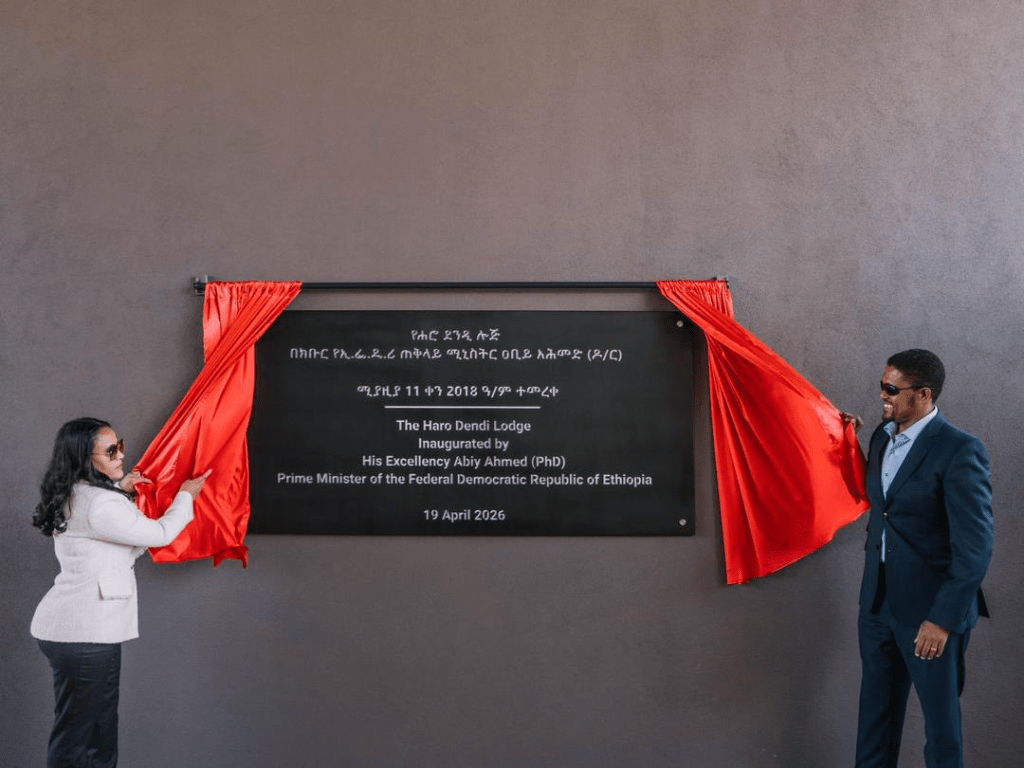
Prime Minister Abiy Ahmed unveils massive twin-road network to tackle capital’s traffic crisis.
By Staff Writer | Published: April 2026
ADDIS ABABA – In a major infrastructure announcement that promises to reshape the capital’s transport landscape, Prime Minister Dr. Abiy Ahmed has revealed that modern expressway projects stretching 100 kilometers each are under construction at all five gates of Addis Ababa.
The announcement was made during the Prime Minister’s message at the inauguration ceremony of the Haro Dendi Lodge, a new tourism development located west of the capital.
“At all five gates of Addis Ababa, expressway projects are being constructed,” the Prime Minister said.
Five Gates, Five Highways
The ambitious plan places Addis Ababa at the center of a modern, high-speed road network radiating outward in five directions. Each corridor will feature approximately 100 kilometers of modern expressway designed to international standards.
| Gateway | Destination | Status |
|---|---|---|
| East | Adama | Existing expressway + new twin road |
| West | Ambo | Existing road + new twin road |
| North | Debre Berhan | Additional twin road under construction |
| Southwest | Fiche | Construction underway |
| South | Woliso | Construction underway |
Solving the Capital’s Traffic Nightmare
Addis Ababa, home to over four million residents and serving as Ethiopia’s economic and political hub, has long struggled with severe traffic congestion. Commuters regularly spend hours in gridlock, and the city’s aging road infrastructure has struggled to keep pace with rapid urbanization and rising vehicle ownership.
The Prime Minister made clear that these new highways are designed to address this crisis directly.
“The highways being built are intended to reduce the severe traffic congestion observed with Addis Ababa at the center, and they are modern roads leading to all five directions of the country,” he said.
The Twin Road Concept
A key feature of the announcement is the twin road (dual carriageway) approach being adopted for several corridors.
Adama Route: While an expressway to Adama already exists, an additional twin road is now under construction.
Ambo Route: “In addition to the existing road leading to Ambo, another twin road is being constructed,” the Prime Minister said. Once completed, the two roads will function as a true highway system – one dedicated to inbound traffic, the other to outbound traffic.
Debre Berhan Route: Similarly, the northern gateway is receiving an additional road, with the same twin configuration planned.
Fiche and Woliso Routes: The Prime Minister confirmed that similar road construction projects are underway at the gates leading to Fiche (southwest) and Woliso (south), completing the five-gate vision.
Economic and Social Impact
The new expressway network is expected to deliver significant benefits across multiple sectors.
For daily commuters, the project promises reduced travel time, less congestion, and safer roads. For logistics and trade, faster movement of goods and lower transportation costs will boost economic efficiency. Regional integration will be strengthened through stronger economic links between Addis Ababa and surrounding zones. Tourism will benefit from easier access to destinations like Haro Dendi, Ambo, and beyond. Additionally, thousands of direct and indirect jobs will be created during the construction phase.
An Ongoing, Expanding Project
The Prime Minister emphasized that this is not a one-time effort but an ongoing, expanding program.
“As the results become visible, hundreds and hundreds of kilometers will continue to be added step by step, and the construction will continue forward,” he said.
This suggests that the initial 100-kilometer corridors may be extended further in the future, creating an even more extensive network connecting Addis Ababa to the regions.
The Occasion: Haro Dendi Lodge
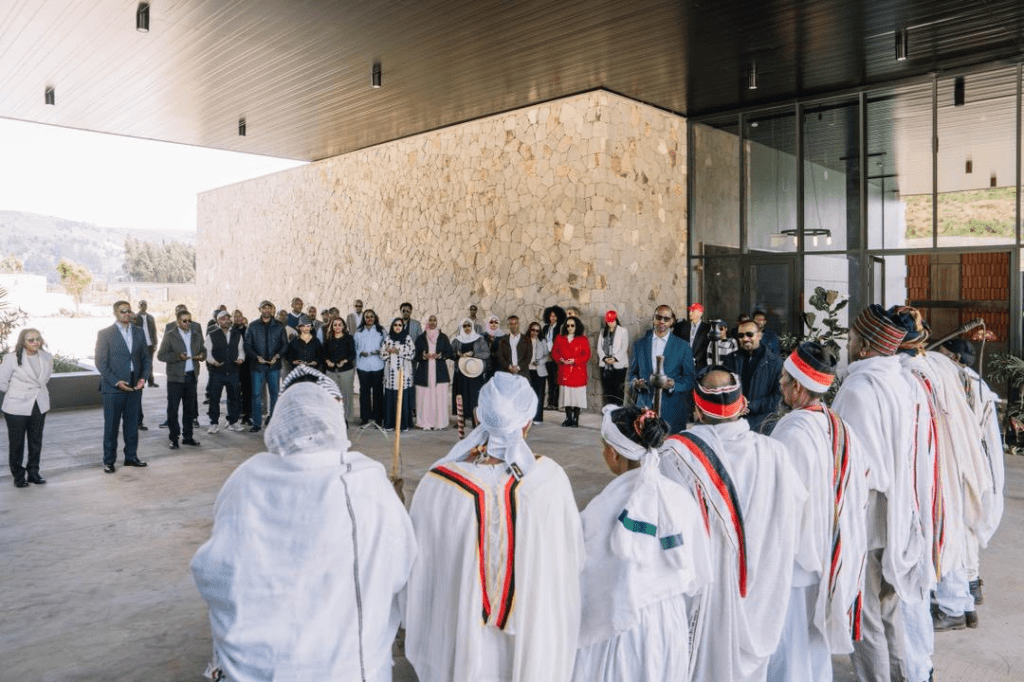
The Prime Minister’s message was delivered during the inauguration of the Haro Dendi Lodge, a new tourism and hospitality development located west of Addis Ababa along the Ambo corridor.
The choice of venue is significant. It highlights the link between infrastructure and tourism development, demonstrates the government’s commitment to unlocking Ethiopia’s natural beauty for visitors, and showcases the Ambo corridor, which will directly benefit from the new twin road.
Part of a Broader Infrastructure Push
The five-gate expressway project is the latest in a series of major infrastructure initiatives under Prime Minister Abiy’s administration.
The Addis Ababa–Adama Expressway is already operational. The Addis Ababa–Ambo Twin Road and the Addis Ababa–Debre Berhan Twin Road are both under construction. The Fiche and Woliso corridors are also under construction. Additionally, the Addis Ababa Corridor Development project, the REST (Riverside) Project, and various inter-city highways are either ongoing or in planning stages.
Challenges Ahead
While the announcement has been welcomed, significant challenges remain.
Building 100-kilometer highways through populated and agriculturally valuable land requires extensive land acquisition – a process that has historically involved disputes over compensation and displacement.
Major infrastructure projects also require enormous financial resources. Questions remain about funding sources, debt sustainability, and budget allocation.
The Prime Minister did not provide specific completion dates. Given the scale of the work, these projects may take years to fully realize.
Furthermore, highways alone cannot solve traffic congestion if not integrated with public transit, land-use planning, and alternative transportation options.
Public Reactions
Early reactions to the announcement have been mixed.
“This is exactly what Addis needs. The traffic is unbearable, and these roads will make a huge difference,” said one Addis Ababa resident.
A transport analyst added, “The twin road concept is smart. Separating inbound and outbound traffic will dramatically improve flow.”
However, some expressed caution. “What about the people who will be displaced? Will they be fairly compensated?” asked a civil society observer.
An urban planner noted, “I hope they also invest in public transit. More highways can mean more cars.”
What Comes Next
Key milestones to watch in the coming months and years include the completion of the Ambo and Debre Berhan twin roads, progress on the Fiche and Woliso corridors, and the ongoing land acquisition and compensation processes. Further announcements regarding additional extensions are expected in future phases.
Conclusion: A Capital Transformed?
If fully realized, the five-gate expressway project will fundamentally reshape Addis Ababa and its relationship with the surrounding regions.
The vision is clear: five modern highways radiating from the capital, twin roads separating inbound and outbound traffic, reduced congestion, faster travel, safer journeys, economic integration between Addis Ababa and its hinterlands, and a foundation for continued infrastructure expansion.
The questions that remain include whether funding will materialize, whether land acquisition will be handled fairly, whether the projects will be completed on time and on budget, and whether they will be integrated with public transit and smart urban planning.
Only time will answer these questions. But for now, the announcement represents one of the most ambitious infrastructure undertakings in Ethiopia’s recent history.
As the Prime Minister himself said, the work is already underway – and it will continue, kilometer by kilometer, gate by gate, road by road.
At a glance:
| Aspect | Summary |
|---|---|
| Scope | Five expressways, each 100 km, at all five gates of Addis Ababa |
| Destinations | Adama, Ambo, Debre Berhan, Fiche, Woliso |
| Design | Twin roads separating inbound and outbound traffic |
| Purpose | Reduce congestion, improve safety, boost regional connectivity |
| Status | Under construction (various stages) |
| Future | Ongoing expansion, hundreds more kilometers planned |
“Five gates. Five highways. One vision: a connected, mobile, prosperous Ethiopia.”
© 2026 – Ethiopia Infrastructure News | Haro Dendi Lodge, Addis Ababa

Oromo Community in St. Paul, Minnesota, Honors Heroes on GGO/Oromo Patriots’ Day 2026
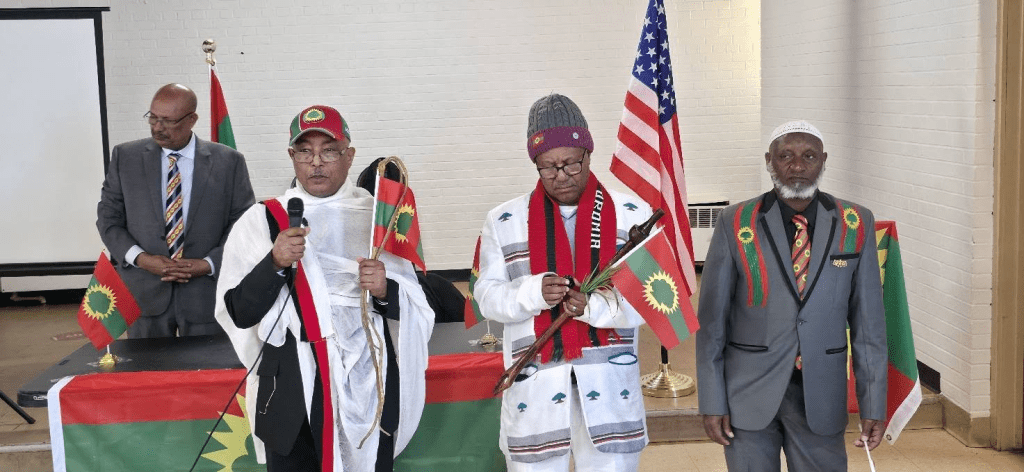
A vibrant ceremony of remembrance, cultural pride, and unwavering commitment to the Oromo liberation struggle.
Special Feature News – St. Paul, Minnesota
DATELINE: ST. PAUL, MINNESOTA – APRIL 2026
The city of St. Paul, home to one of the largest Oromo diaspora communities in the United States, witnessed a powerful and moving celebration this week as the Oromo community gathered to commemorate GGO/Oromo Patriots’ Day 2026.
The event, held under a canopy of red, green, and red – the colors of the Oromo flag – brought together hundreds of Oromos from across Minnesota and beyond. Elders, youth, parents carrying children, and activists who have carried the struggle across oceans stood shoulder to shoulder in a shared act of remembrance and resistance.
It was a day of tears and laughter, of songs and speeches, of prayer and defiance.
It was a day to remember those who fell – and to recommit to the cause for which they gave their lives.
PART ONE: A DAY OF REMEMBRANCE – GGO/OROMO PATRIOTS’ DAY
What Is GGO/Oromo Patriots’ Day?
GGO – an acronym that carries the weight of Oromo history – stands as a solemn reminder of the men and women who sacrificed everything for the liberation of the Oromo people. The day is observed annually by Oromos across the globe to honor:
| Honored | Significance |
|---|---|
| Patriots who fell in armed struggle | Those who took up arms against successive oppressive regimes |
| Political prisoners | Those who languished – and often died – in Ethiopian prisons |
| Martyrs of peaceful protests | Those shot, killed, or disappeared during Oromo demonstrations |
| Exiles and diaspora activists | Those who carried the struggle abroad when it was impossible at home |
The 2026 observance in St. Paul was particularly significant, coming after a year of continued challenges for the Oromo cause in Ethiopia – but also a year of growing international awareness and solidarity.
The Setting
The event was held in a hall decorated with Oromo cultural motifs. The Oromo flag – with its distinctive blue, red, white, and green – was displayed prominently. Attendees dressed in traditional Oromo attire, with many wearing the iconic qooccoo (Oromo scarf) or callaa (traditional Oromo clothing for women).
The atmosphere was described by participants as “beautiful and warm” (haala miidhagaa fi hoo’aa) – not just the weather, but the spirit of the gathering.
PART TWO: THE CEREMONY – HONORING THE FALLEN
The Moment of Remembrance
The centerpiece of the ceremony was the dungoo yaadannoo – a memorial tribute or “pillar of remembrance” – dedicated to the Oromo patriots who have fallen in the struggle for liberation.
Attendees observed a moment of silence, their heads bowed, as the names of known martyrs were read aloud. For many, this was a deeply emotional moment. Some wept openly. Others held their children closer, whispering in Afaan Oromo: “Isaan kun sababiin ati bilisaan jiraattu.” – “They are the reason you live free.”
Prayers and Blessings
“Ayyaana alaabaa Oromoon faayame kana irratti abbootiin Oromoo eebbaan gaggeessan…”
“On this Oromo flag day, the Oromo elders performed blessings…”
Oromo elders – the custodians of tradition and memory – stepped forward to offer blessings. In accordance with Oromo custom, they raised their hands and invoked Waaqa (God) to protect the Oromo people, to grant paradise to the fallen martyrs, and to hasten the day of liberation.
The blessings were not merely religious rituals. They were acts of cultural preservation – a reminder that the Oromo struggle is not only political but spiritual, rooted in generations of resistance and resilience.
Songs of Struggle
“Faaruun Oromoos daa’imman Oromoo alaabaa qabataniin faarfamee jira.”
“Oromo songs were sung by Oromo children holding the flag.”
Perhaps the most moving moment of the day came when Oromo children – some as young as five or six – took the stage. Clutching small Oromo flags, they sang Oromo patriotic songs with voices that were both innocent and powerful.
For the diaspora elders watching, this was the fulfillment of a dream: to see a generation born in exile, far from the land of their ancestors, still singing the songs of their people, still holding the flag high.
The children did not know the prisons, the torture, the blood. But they knew the songs. And in that knowing, the struggle lived on.
PART THREE: THE MESSAGE – PAST, PRESENT, AND FUTURE
Remembering the Patriots
“Seenaan gootota Oromoo fi haala yeroo ammaa qabsoon bilisummaa Oromoo irratti argamus sirna kana irratti dhiyaateera.”
“The history of Oromo patriots and the current situation of the Oromo liberation struggle were presented at this ceremony.”
Speakers took turns recounting the history of Oromo resistance – from the battles of the 19th century, through the armed struggles of the 1970s and 1980s, to the Qeerroo (Oromo youth) protests of 2014-2018, and up to the present day.
| Era | Key Events Mentioned |
|---|---|
| Pre-20th Century | Independent Oromo societies, Gadaa system, resistance to Abyssinian expansion |
| Imperial Era | Conquest, language suppression, land alienation |
| Derg Era (1974-1991) | Armed struggle, Red Terror, Oromo Liberation Front (OLF) resistance |
| EPRDF Era (1991-2018) | Continued marginalization, Qeerroo protests, Hachalu Hundessa’s music and assassination |
| Current Era (2018-present) | Ongoing repression, political arrests, diaspora mobilization |
The message was clear: the struggle is not over. The patriots of the past paved the way. The current generation must continue the march.
The Situation Today
Speakers also addressed the current state of the Oromo struggle in Ethiopia. They spoke of:
- Political prisoners still languishing in Ethiopian jails
- Families displaced by ongoing conflicts
- Activists silenced by arrests, torture, and extrajudicial killings
- International indifference that allows the repression to continue
But they also spoke of hope: growing international solidarity, the power of the diaspora to advocate for Oromo rights, and the unbreakable spirit of the Oromo people.
PART FOUR: THE DIASPORA – CARRYING THE STRUGGLE ABROAD
The St. Paul Oromo community is part of a larger diaspora that has become increasingly influential in advocating for Oromo rights on the international stage.
Why St. Paul?
Minnesota is home to one of the largest Oromo populations in the United States. Thousands of Oromos have settled in the Twin Cities (Minneapolis-St. Paul) over the past three decades, fleeing political persecution, seeking economic opportunity, and building new lives while never forgetting the homeland.
| Fact | Detail |
|---|---|
| Estimated Oromo population in Minnesota | Tens of thousands |
| Key organizations | Oromo Community of Minnesota, Oromo Media Network, various cultural and political associations |
| Annual events | Oromo Flag Day, GGO Patriots’ Day, cultural festivals, protests and rallies |
The diaspora serves multiple roles:
- Advocacy – Lobbying U.S. officials to address human rights abuses in Ethiopia
- Awareness – Educating Americans about the Oromo cause
- Remittances – Sending financial support to families and activists in Oromia
- Cultural preservation – Ensuring Oromo language, music, and traditions survive in exile
- Political organizing – Supporting Oromo political parties and liberation movements
The 2026 GGO event in St. Paul was a powerful demonstration of the diaspora’s continued commitment to the Oromo cause.
PART FIVE: THE FLAG – A SYMBOL OF IDENTITY AND RESISTANCE
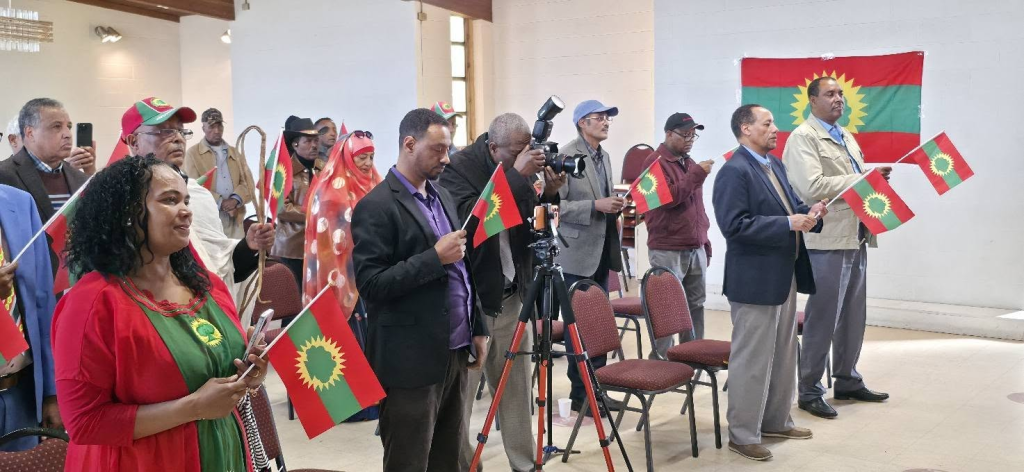
The Oromo flag – with its five colors – was everywhere at the ceremony.
| Color | Symbolism |
|---|---|
| Red | The blood of martyrs shed for liberation |
| Green | The fertile land of Oromia, prosperity, and growth |
| Red | The blood of martyrs shed for liberation |
| Yellow (central emblem) | The sun, representing the Oromo cultural centerpiece – the Bakkalcha (throne) |
| Odaa | Odaa (the sacred sycamore tree / symbol of Oromo democracy, justice, and the Gadaa system |
For decades, the Oromo flag was banned in Ethiopia. Carrying it could lead to arrest, torture, or death. In the diaspora, it flies freely – a powerful symbol of what is possible.
At the St. Paul ceremony, children waved the flag. Elders wrapped themselves in it. Speakers stood beneath it. The flag was not just decoration; it was a declaration.
“We are Oromo. We have a flag. We have a history. We have a future. And we will never abandon any of them.”
PART SIX: THE CHILDREN – HOPE FOR TOMORROW
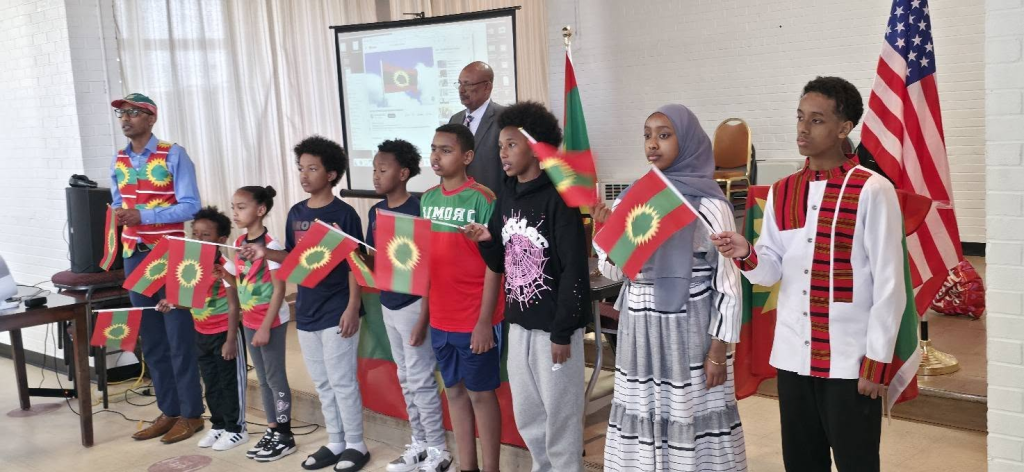
Perhaps the most hopeful image of the day was the children.
Born in America, speaking English as their first language, attending American schools – these children could easily have been completely assimilated, disconnected from the Oromo struggle.
But the community has worked hard to ensure otherwise.
| Effort | Purpose |
|---|---|
| Oromo Saturday schools | Teaching Afaan Oromo to diaspora children |
| Cultural camps | Immersing youth in Oromo music, dance, and traditions |
| Youth organizations | Building leadership and political awareness |
| Family transmission | Parents telling stories of the homeland |
At the GGO ceremony, these efforts bore visible fruit. The children who sang the Oromo patriotic songs, holding the Oromo flag, were not being forced to perform. They were participating willingly, proudly, as Oromo youth.
In their faces, the elders saw the future.
“Daa’imman kunniin boru qabsoo Oromoo fudhatu. Yeroo isaan faarfatan, nu abdii arganna.”
“These children will carry the Oromo struggle tomorrow. When they sing, we see hope.”
PART SEVEN: SPEECHES – ECHOES OF THE STRUGGLE
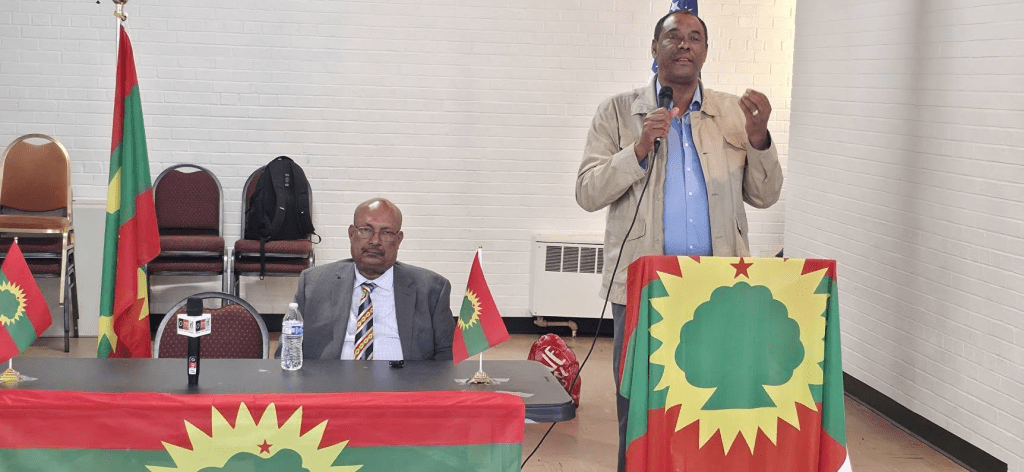
Several speakers addressed the gathering, each bringing a unique perspective.
An Elder’s Lament and Hope
One elder, who had lived through the Derg era and fled Ethiopia in the 1980s, spoke of his memories:
“Ani yeroo ani dargaggeessa ture, nama Oromoo ta’uu kiyyaaf hidhame. Ani waan ani hubadhu: haala ammaan jiru rakkisaa dha. Garuu haala kanaan duraa caalaa fooyya’aa jira. Sababiin isaa? Nu walitti dhufne. Nu yaadannoo goone. Nu ija jabeessinee jirra.”
“When I was a young man, I was imprisoned for being Oromo. What I know is this: the current situation is difficult. But it is better than before. Why? Because we have come together. We have remembered. We have strengthened each other.”
A Youth Activist’s Call
A young Oromo-American activist, born in Minnesota, spoke passionately:
“Ani Oromiyaa hin argine. Garuu onneen koo Oromiyaa keessa jiraata. Ani sababiin ani har’a as jiraadhu? Sababiin warri ana duraan wareegaman. Ani osoo ani hin dhalin dura, dhiigni isaanii dhangala’e. Gaafni amma: maaltu nuu hafe?”
“I have never seen Oromia. But my heart lives in Oromia. Why am I here today? Because those who came before me sacrificed. Their blood was spilled before I was born. The question now is: what remains for us to do?”
The answer came from the crowd: “Qabsoo itti fufuu!” – “To continue the struggle!”
PART EIGHT: THE OROMO CAUSE IN 2026 – A MOMENT OF BOTH CRISIS AND OPPORTUNITY
The St. Paul ceremony took place against a backdrop of ongoing challenges for the Oromo cause in Ethiopia.
The Crisis
| Issue | Current Status (2026) |
|---|---|
| Political repression | Continued arrests of Oromo activists and journalists |
| Armed conflict | Ongoing clashes between Oromo liberation forces and Ethiopian military |
| Displacement | Hundreds of thousands of Oromos internally displaced |
| Economic marginalization | Oromia’s wealth continues to be extracted without fair return |
| International inaction | Limited diplomatic pressure on Ethiopia |
The Opportunities
| Opportunity | Potential |
|---|---|
| Diaspora mobilization | Growing political influence in the U.S. and Europe |
| Global awareness | Increased media coverage of Oromo issues |
| Pan-African solidarity | Connections with other liberation movements |
| Youth leadership | A new generation of educated, connected Oromo activists |
The speakers at the St. Paul ceremony acknowledged both the crisis and the opportunities. The message was not despair, but determination.
PART NINE: THE POWER OF REMEMBRANCE – WHY GGO DAY MATTERS
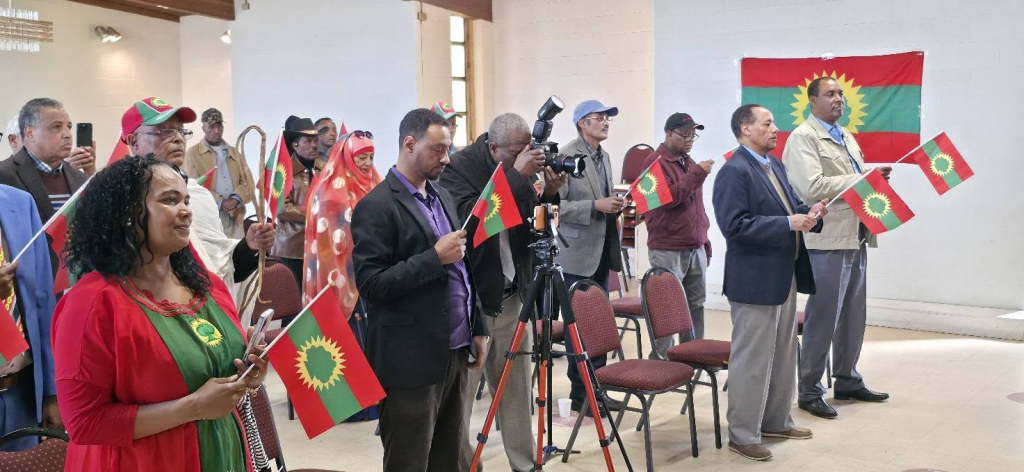
Some might ask: why gather in St. Paul, thousands of miles from Oromia, to remember patriots who died decades ago?
The answer was evident in every moment of the ceremony.
Remembrance Preserves Identity
A people who forget their heroes are a people who lose their way. GGO Day ensures that the names of the fallen are spoken, their stories told, their sacrifices honored.
Remembrance Builds Unity
In the diaspora, Oromos come from different regions, different clans, different political affiliations. But on GGO Day, they stand together. The martyrs belong to no faction – they belong to all Oromos.
Remembrance Inspires Action
Remembering the dead is not an end in itself. It is a call to the living. Every speech, every song, every prayer at the St. Paul ceremony ended with the same message: The struggle is not finished. It is our turn now.
Remembrance Passes the Torch
The children who sang at the ceremony will grow up. They will have children of their own. And one day, they will tell their children about the GGO Day they attended in St. Paul, about the elders who blessed them, about the flag they held.
In that way, the memory of the martyrs lives forever.
PART TEN: A DAY OF BEAUTY AND WARMTH – THE SPIRIT OF THE GATHERING
The original text described the ceremony as “haala miidhagaa fi hoo’aan kabajame” – conducted in a beautiful and warm manner.
| Element | Description |
|---|---|
| Beauty | The visual splendor of Oromo attire, the flag, the decorations, the music |
| Warmth | The emotional atmosphere – tears, embraces, shared grief and joy |
| Respect | The solemnity of the moment of silence, the dignity of the elders’ blessings |
| Joy | The smiles of the children, the pride in the singing, the hope in the speeches |
It was not a protest. It was not a rally. It was a celebration of survival – a declaration that despite everything, the Oromo people are still here, still proud, still fighting.
CONCLUSION: THE FLAG FLIES HIGH IN ST. PAUL
On a day in April 2026, in St. Paul, Minnesota, the Oromo flag flew high.
Children held it. Elders blessed it. Singers praised it. Speakers stood beneath it.
And for a few hours, in that hall far from the hills of Oromia, the Oromo people were not a persecuted minority. They were a nation – remembering its heroes, singing its songs, planning its future.
The martyrs who fell in the struggle could not be present. But they were honored.
The patriots still in Ethiopian prisons could not attend. But they were remembered.
The children who will carry the struggle forward were there – learning, singing, becoming.
“Guyyaa yaadannoo GGO, magaalaa St. Paul Minnesota keessatti, alaabaan Oromoo ol fudhatame. Daa’immani isa qabatan. Abboonni isaan eebbisan. Faaruun isa faarfate. Qabsoon Oromoo – jiraata.”
“On GGO Patriots’ Day in St. Paul, Minnesota, the Oromo flag was raised high. Children held it. Elders blessed it. Songs praised it. The Oromo struggle – lives on.”
“From the hills of Oromia to the streets of St. Paul, the cry is the same: Oromummaa lives. The struggle continues. The flag will never fall.”
May the martyrs rest in peace.
May the prisoners be freed.
May the struggle reach its goal.
May the Oromo flag fly forever – in Oromia, and around the world.
© 2026 – Feature News from the Oromo Diaspora, St. Paul, Minnesota




 Advocacy for Oromia