Author Archives: advocacy4oromia

Message from Australian Oromo Community in Victoria

(A4O, 08 December 2015) The Australian Oromo Community in Victoria held a public forum on Sunday 06 December 2015, decided to join the global rally in solidarity with Oromo students on Friday December 11, 2015.

logoOrganizing committee has been elected; Rally will be held at Spring Street and corner of Treasury Place, next to Victoria Parliament in a bid to express our support to the Oromo students who are protesting to defend the Oromo interest.

The objective of the demonstration is to denounce the brutal action of the Ethiopian government and to stand with the Oromo students who are protesting the expansion of Addis Ababa master plan and supporting Oromo self-determination in Oromia.

The rally is happening in Melbourne on the 11th of December 2015 starting at 10:00 am.

Address:2-18 Spring st, corner of  The Treasury Gardens, next to Victoria Parliament, East Melbourne

Date: Friday, 11 December 2015

Time: 10:00am

Being silence on the face of injustice is like supporting the oppressor!

For more information, please contact Mr Yadata Saba on 0412 795 909

“If you are neutral in situations of injustice, you have chosen the side of the oppressor.” Desmond Tutu

The Making of Addis Ababa and the Alienation of the Oromo

By Teferi Mergo (Prof.)* | December 2015

In a recent interview he gave to the Oromia Broadcasting Service (OBS), artist Sayyoo Daandanaa was asked what motivated him to write his now famous tune Boole. His eloquent response alluded to a poignant encounter he had while on a show-biz related trip to Eerar some years ago — an encounter that suggested to him that the alienation of the Oromo from their own land (Finfinnee) is so complete that they have grown to resent the city. Because of this alienation, the Oromo of Eerar (as he explained it) traveled to Sandaafaa for trading purposes, instead of going to Finfinnee, despite the latter’s clear favourability in terms of geographic proximity.

Eerar (misnamed Yerer by Amharic speakers) is located a few kilometers to the southeast of Bole Airport, and not too long ago, it used to be a rural community where certain members of the Tuulamaa Oromo lived in relative peace and harmony, earning an honest living cultivating their plots. I remember this Eerar, because I had been there, in more ways than one. I grew up in Finfinnee proper – in the so-called Doro Manaqiya Sefer (not very far from the old airport), and had made numerous excursions as a lad with my peers or cousins into the rural villages and communities that used to surround Finfinnee (Furii, Wacacaa, Eerar, Lagatafo etc.) – outings we relished, because it gave us opportunities to engage in boyhood mischief not approved by our parents (e.g. swimming in the areas’ rivers and streams). I still remember with great fondness the Eerar, the Wacacaa, the Furii and the Lagatafo of my younger days, where I felt liberated enough to speak Afaan Oromoo with the local people without “my buddies” making injurious comments about my language, my identity.

But, of course, the Eerer of yesteryear which offered me glimpses of what could be and should be, is no more. Today, it is a space where “white fences and manicured lawns surround the villas of an elegant housing estate … a potent symbol of the emerging elite in a country better known for drought and famine.” (Taste for luxury: Ethiopia’s new elite spur housing boom By AFP PUBLISHED: 07:28 GMT, 2 December 2015 | UPDATED: 07:29 GMT, 2 December 2015) I am well aware that the Ethiopian government is doing its utmost to promote a positive image of the country, trying to sell a narrative that it is overseeing an impressive expansion of the country’s GDP, with a promise of making Ethiopia a middle-income country by the year 2025. It turns out that Eerar and similar other spots in the vicinity of Finfinnee have become ground zero for this number-focused and image-heavy marketing strategy.

I am also aware of arguments some have made about the importance of integrated urban development in a country that aims to climb the development ladder. I currently teach Economics at the University of Waterloo in Canada, and have been making regular trips to Finfinnee to conduct empirical researches on economic development. I have thus a professional opinion of what is taking place around Finfinnee in the name of urban development, but leaving that for another piece (I will present a paper on this topic at the upcoming OSA Mid-year Conference at the London School of Economics), I want to recount a couple of my encounters during some of those research-related trips to the homeland, incidents that speak to the burning issue of our time – the alienation of the Oromo from their ancestral land.

The first one happened in the summer of 2010, when my wife and I went for a spin to one of those now virtually non-existent rural villages, largely out of curiosity to discover what has become of my boyhood stomping grounds. Needless to say, the transformation is devastatingly complete, as captured by the above mentioned article. On this trip, I wandered off the paved path (which is not out of character for me) without much resistance from my lovely wife, past the new developments, into what is left of the Eerar countryside, running into a young Oromo couple who were going about their business. I stopped to have a few words with them, to which they initially reacted with unmistakable agitation – which they couldn’t hide despite their best effort at composure. I don’t blame them, because they had been conditioned to be apprehensive of strangers, particularly the type that shows up at their doorstep, uninvited. Who knows they might have thought that I was one of the would-be “developers” of what are shaping up to be apartheid-like estates adorning their former farmlands.

The reaction I didn’t expect from the young couple, and one that will stay with me, is what happened next. When I greeted them in Afaan Oromoo, they looked at each other first, as if they were questioning what had just transpired, and then managed beautiful smiles that could not have been counterfeited – smiles of recognition, of understanding, and of identification. After the initial awkward moments, we exchanged a few words about mundane matters and parted, but the key story of the young couple of Eerar that I am trying to recount here, was communicated to me through their body language, and mostly with their eyes.

The second anecdote occurred during my most recent trip to Finfinnee in July and August of this year. Largely because we wanted my super-energetic four-year-old son to have convenient access to some facilities that can only be found in the city center, my family chose to stay in the Kazanchis area, in one of the high-rises recently built by one of the newly-minted instant millionaires. The property had a few gate-keepers (zebegnas, they call them in the local lexicon), three of whom are/were Oromo Abbaa Worraas from the local areas, into which Addis is currently expanding with blinding speed – displacing millions of farming families, exposing them to monumental socio-economic crises, with which they have been unfamiliar and ill-equipped to deal.

I was particularly struck by one of the gentlemen – an elderly man hailing from the Sabbata area – who gave me the distinct impression that he had seen better days, and was struggling to make sense of what is (in all likelihood) the last chapter of his life. I enjoyed talking with him whenever I had a chance, but I never pried too much for fear that perhaps overly intimate questions about his past might trigger unpleasant memories. I understood his fragile existence and respected his boundaries, but my daily encounters with him during those months reminded me of my own alienation, not unlike his and the young couple’s I attempted to describe above.

I was enrolled at a local school then known as Menen Asfaw under the name Biiftuu, a name my father gave me to signify that I was his first born. Once I discovered that some of my classmates were butchering my name intentionally, however, I asked my parents to give me a different name, but the request went nowhere, with my father deeming my entreaty a non-starter. Even though I liked school and I was a well-regarded kid among teachers and most of my peers mainly for academic reasons, it did not stop the system from brutalizing me because of my Oromo given name. Thus, without fully understanding the consequences of my actions, and under the worst of circumstances while my father was jailed by the brutal Dergue regime, I traded Bifftuu for Teferi – a name a close family friend (Aboy G/Egziabiher G/Medhin, RIP) gave me at my Christening – just to be able to fit into a system designed to alienate me from my identity.

Here is the moral of this narration: regardless of our stations in life, Finfinnee (Addis Ababa) has been a constant source of anguish for its rightful owners, the Oromo people. The city was founded on the gravesites of our forebears, decimating its original inhabitants – some of the clans of the Tuulamaa Oromo. Its growth and expansion have always come at the expense of Oromo identity, made possible only through diminishing the Oromo in every way – demographically, economically, politically, socially, psychologically, etc. It is demanding much more than we can afford to give, under the pretext of integrated urban development, and we have no option but to say: No, thanks!

I would like to end this piece with a now famous chant that is being heard throughout Oromia, loud and clear. Here is the English translation:

Our land: We were born here

We were raised here

We came of age here

We have raised our families here

Where should we go?

We shall be evicted no more!

—-

* Teferi Mergo (Prof.) – Assistant Professor of Economics at the University of Waterloo.

Two Weeks in Pictures | Oromo Protests Against the Master Plan

Compiled by Gadaa.com

Unveiled by the ethic-Tigrean-dominated Federal government of Ethiopia in April 2014, the Addis Ababa Master Plan intends to expand the borders of Addis Ababa by many folds into the adjacent Federal State of Oromia.

The City of Addis Ababa, known as Finfinne by Oromos – who make up the largest ethno-national group in Ethiopia, is itself part of the State of Oromia, but the Federal government instituted a “Charter City” status (self-governing status) over the city in 1995 without the approval of the State Representative Council of Oromia (known as Caffee Oromiyaa). Through the “Charter City” status, the city has become a self-governing region, but, to fend off the ethnic Oromo opposition to this secession of Addis Ababa from Oromia, the 1995 Constitution, in Article 49, has recognized the “Special Interests” of the Federal State of Oromia over Addis Ababa (Finfinne). However, experts say this Article 49 of the Constitution has never been put into effect, rather, what has happened over the last two decades since 1995, they say, is essentially the opposite. Caffee Oromiyaa and many other vital State institutions of Oromia, which used to be located in Addis Ababa, had been forced out of Addis Ababa and relocated to elsewhere, especially, to Adama, by the Tigrean-dominated Federal government, which has become the governing body of the City of Addis Ababa.

Over the last two decades, Oromo institutions had been cleared off from Addis Ababa: Oromo music bands, Oromo civic societies (such as, the Macha-Tulama Self-Help Association), Oromo newspapers, venues for expression of Oromoness (such as, Hawi Hotel) and so on, were criminalized and banned on fictitious accusations that these institutions of Oromoness had connections with the outlawed Oromo Liberation Front (OLF); today – Addis Ababa has become a ghost town from the Oromo view – a city cleansed of its ethnic Oromo origin and features. Opponents of the Master Plan say, it is this “City of Addis Ababa” that wants to expand into the rest of Oromia by cleansing Oromos and Oromoness along its way.

Finfinnee2014

What the Federal government proposed in April 2014 in its “Addis Ababa Integrated Regional Development Plan,” known in short as the Addis Ababa Master Plan or the Master Plan, was essentially expanding the “Charter City” of Addis Ababa beyond its current limits by taking more land from Oromia. Opponents of the Master Plan say, this is a gradual, but definite, trampling of the Constitution as well as a threat to the existence of the Federal State of Oromia as a region (Addis Ababa sits in Central Oromia; if allowed to expand with a “Charter Status,” it will ultimately cut off the Federal State of Oromia into two: East and West – see the map drawing attached here). Opponents have counter-proposed their own plan, which supports the development of the region without the expansion of the “Charter City” of Addis Ababa and the restoration of Addis Ababa (Finfinne) as an integral part of the Federal State of Oromia. However, the Tigrean-dominated Federal government seems to use the mantra of “development” for its main objective of expanding the “Charter City” in order to decapitate the Federal State of Oromia as a coherent region.

What has become more appalling to the opposition is the way the Master Plan is being put into effect. The Addis Ababa Master Plan of the Tigrean-dominated Federal government intends to expand the “Charter City” by depopulating the region of its ethnic Oromo population and settling non-Oromo ethnic people. Since the ethnic Oromo population of the region lives on farming, the Federal government’s “development” mantra, with a focus on ‘industrialization,’ has meant the eviction and removal of the ethnic Oromo farming population, while those being settled there as an ‘industrial population’ are of non-Oromo ethnic groups, especially from the dominant Tigrean ethnic group. Therefore, by covering the Master Plan with “industrialization” and “development” buzz words, the Federal government has, albeit unsuccessfully, hidden its genocidal agenda against ethnic Oromos in the region. Opponents say the ethnic Oromo farming community itself must be supported to industrialize, instead of be evicted from its land and thrown to become homeless, as a new non-Oromo ethnic community takes over the Oromo land through the Federal government’s apparent militarized implementation of the Master Plan.

In addition to the Addis Ababa Master Plan, the Federal government has recently outlined a new comprehensive Master Plan for all cities and towns in Oromia to be given “Charter City” statuses under the disguise of “development.” With the “Charter City” status comes the project of cleansing these towns and cities of their Oromo residents and Oromoness.

The past weeks’ Oromo protests, which are currently being waged by Oromo students, come with this background of life-and-death for the Oromo people in the Oromian region adjacent to Addis Ababa and other major towns, and Oromia itself as a coherent region. The Oromo protests have been staged all over Oromia; the following are some pictures from the weeks’ Oromo protests against the Master Plan.

Reports say the latest Oromo protests against the Master Plan were triggered when Federal authorities, using the State of Oromia’s officials as vehicles, started an indoctrination campaign to force the Oromo people to accept the Master Plan. Another event that led to the escalation of the Oromo protests was the cutting down of an old-growth (virgin) forest in Ginchi, known as the Chilimo State Forest, for “development;” residents opposed it in light of the drought and famine risks associated with deforestation; the government, as it fails to feed the 15-million people affected by the recent drought, continues its deforestation policy in the name of “development.”

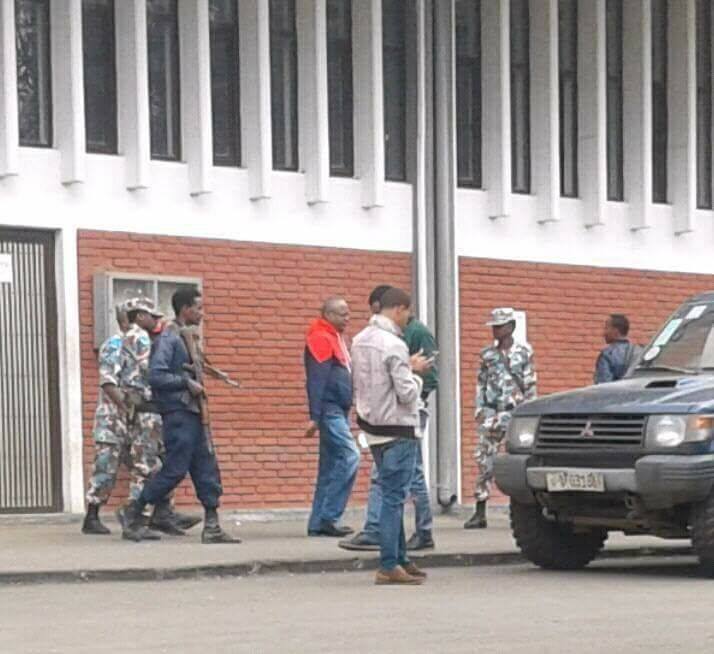
In late November 2015, residents of Mendi in Western Oromia blocked the road to make the town inaccessible for an entourage coming in for the indoctrination. The Federal government, in overreaction, according to observers, sent in its Special Federal Paramilitary-Police force (known as Agazi) to quell the tension …

Reports say the latest Oromo protests against the Master Plan were triggered when Federal authorities, using the State of Oromia's officials as vehicles, started an indoctrination campaign to force the Oromo people to accept the Master Plan. In late November 2015, residents of Mendi in Western Oromia blocked the road to make the town inaccessible for an entourage coming in for the indoctrination.

Reports say the latest Oromo protests against the Master Plan were triggered when Federal authorities, using the State of Oromia’s officials as vehicles, started an indoctrination campaign to force the Oromo people to accept the Master Plan. In late November 2015, residents of Mendi in Western Oromia blocked the road to make the town inaccessible for an entourage coming in for the indoctrination.

The Federal government, in overreaction, according to observers, sent in its Special Federal Paramilitary-Police force (known as Agazi) to quell the tension, but the tension got out of hand when shots were fired - media reports say, two were wounded by police shots in Mendi.

The Federal government, in overreaction, according to observers, sent in its Special Federal Paramilitary-Police force (known as Agazi) to quell the tension.

redline

More Photos of the Oromo Protests from Western Oromia …

OromoProtestsReview2015_5

OromoProtestsReview2015_7

OromoProtestsReview2015_6

OromoProtestsReview2015_8

OromoProtestsReview2015_9

redline

As news of the confrontation spread throughout the town and the region, elementary and high-school students of Mendi – who were in school at the time, started marching. During the march, the students expressed their opposition to the annexation of Oromian land by the Master Plan. According to media reports, two were wounded by the Federal police shots in Mendi …

OromoProtestsReview2015_10

OromoProtestsReview2015_11

redline

By the end of November 2015, the protests spread through the Western Oromian region: students in Ambo, Naqamtee, Jarso, Dirre Inchini, Ayraa/Guliso and other towns joined the Oromo protests against the Master Plan; more Federal police were dispatched from the center (Addis Ababa) to contain the peaceful protests by the schoolchildren …

OromoProtestsReview2015_23

OromoProtestsReview2015_22

OromoProtestsReview2015_2

OromoProtestsReview2015_3

OromoProtestsReview2015_14

OromoProtestsReview2015_13

OromoProtestsReview2015_12

OromoProtestsReview2015_15

OromoProtestsReview2015_25

OromoProtestsReview2015_26

OromoProtestsReview2015_27

redline

By the eve and beginning of December 2015, the Oromo protests spread to Eastern Oromia. Students of Haromaya University joined the Oromo protests; the Federal government, again in overreaction – according to observers, sent in its militarized police force to Haromaya. As this video shows, the Federal force, with a strategy of showing fierce force and terror to put down the Oromo protests in Oromia through fear, unleashed ts massive force on unarmed peacefully-protesting students. At least four students were killed, and many more were wounded by the Federal police at Haromya University …

OromoProtestsReview2015_19

OromoProtestsReview2015_20

OromoProtestsReview2015_21

OromoProtestsReview2015_16

OromoProtestsReview2015_17

OromoProtestsReview2015_18

OromoProtestsReview2015_24

redline

Deceased/Wounded Oromo Students of Haromaya University …

Deceased Oromo Student Gazzahany Oliqaa

Deceased Oromo Student Gazzahany Oliqaa

Deceased Oromo Student Gazzahany Oliqaa

Deceased Oromo Student Gazzahany Oliqaa

Wounded Oromo Student

Wounded Oromo Student

Wounded Oromo Student

Wounded Oromo Student

Wounded Oromo Student

Wounded Oromo Student

Wounded Oromo Student

Wounded Oromo Student

Wounded Oromo Student

Wounded Oromo Student

redline

On December 1, 2015, the Oromo protests spread to Bale, Southeastern Oromia. The government, once again, sent in its elite militarized police, mechanized with maiming and deadly weapons, to contain the unarmed peacefully-protesting students of Madda-Walabu University …

OromoProtestsReview2015_33

OromoProtestsReview2015_34

OromoProtestsReview2015_35

redline

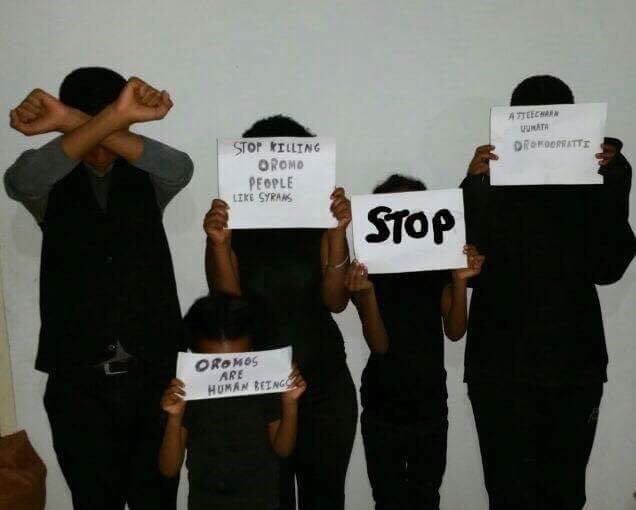
On December 1, 2015, elementary students in Gimbi, Western Oromia, staged a march through the town – holding placards that denounced the Master Plan, which, if implemented, would displace millions of Oromo farmers and make them homeless …

OromoProtestsReview2015_36

redline

On December 2, 2015, students in Tulu-Bolo and Waliso (in Central Oromia) staged their protests against the Master Plan; meanwhile, students in Ayra/Guliso continued their protests for another week. The government sent in its Federal Paramilitary-Police to stop the protests by the schoolchildren in Waliso and Ayra/Guliso. On this day, eyewitnesses say that, at least two Oromo students [one of the victims’ photo shown below] were killed, and others were wounded by shots fired by the police in Ayra/Guliso. In another development, many students were wounded by the police during the peaceful protest in Waliso …

OromoProtestsReview2015_37

OromoProtestsReview2015_38

OromoProtestsReview2015_39

OromoProtestsReview2015_40

Oromo protests by students in Ayra/Guliso (Western Oromia)

Oromo protests by students in Ayra/Guliso (Western Oromia)

OromoProtestsReview2015_41

OromoProtestsReview2015_42

OromoProtestsReview2015_43

OromoProtestsReview2015_44

An Oromo schoolchild killed by the Federal police during a peaceful protest against the Master Plan

An Oromo schoolchild killed by the Federal police during a peaceful protest against the Master Plan (Ayra/Guliso)

Residents of Ayra/Guliso react to the news of the violent suppression of the peaceful protests:

OromoProtestsReview2015_52

OromoProtestsReview2015_53

The Wounded in Waliso:

OromoProtestsReview2015_47

OromoProtestsReview2015_49

OromoProtestsReview2015_48

OromoProtestsReview2015_50
OromoProtestsReview2015_54

OromoProtestsReview2015_51

OromoProtestsReview2015_55

redline

The Oromia-wide protests against the Addis Ababa Master Plan have continued for another week. According to a reliable report, on December 3, 2015, Haromaya town’s residents, in Eastern Oromia, marched through the town denouncing the Addis Ababa Master Plan and the brutal attack of the Ethiopian Federal Police (Agazi, the military-police branch of TPLF) against peacefully-protesting students earlier the week at Haromaya University. Earlier the week, Haromaya University’s Oromo students were protesting against the Addis Ababa Master Plan, whose goal, they say, is to expand the City of Addis Ababa by many folds by evicting Oromo farmers from their land around Addis Ababa, and, consequently, leading to the loss of the Oromo livelihood, and the Oromo cultural and linguistic identity in the region. As shown in this video, they were violently met by the Ethiopian Federal Police, which stormed the campus – killing at least three and wounding many more, according to media reports; a fourth student, named Gazzahany Oliqaa, died a day later from complications of the police beatings.

Here are some photos from Haromaya’s protest march against the Addis Ababa Master Plan.

HaromayaDec3_2015_2

HaromayaDec3_2015

HaromayaDec3_2015_5

HaromayaDec3_2015_4

redline

On the same day, December 3, 2015, an Oromo 10th-grade student named Dejene Serbessa, in Tole (West Shawa), was killed by the Federal police, according to media reports. Other Oromo protest marches against the Master Plan were held in Burayu, Naqamte, Chelenko, Bedeno, Holeta, Mogor, among others. The following are photos of the deceased student Dejene Serbessa, and the marches in Naqamtee, Bedeno and Mogor …

On December 3, 2015, an Oromo 10th-grade student named Dejene Serbessa, in Tole (West Shawa), was killed by the Federal police, according to media reports.

On December 3, 2015, an Oromo 10th-grade student named Dejene Serbessa, in Tole (West Shawa), was killed by the Federal police, according to media reports.

High-School students protesting in Naqamtee (they were not allowed to go out of campus):

OromoProtestsReview2015_58

OromoProtestsReview2015_59

OromoProtestsReview2015_57

Students protesting in Bedeno:

OromoProtestsReview2015_60

OromoProtestsReview2015_61

In Mogor (West Shawa):

OromoProtestsReview2015_62

OromoProtestsReview2015_63

redline

Overnight, Oromo students of the Waliso campus of Ambo University staged a protest rally to denounce the Master Plan and the brutal killings of Oromo students all over Oromia …

OromoProtestsReview2015_64

OromoProtestsReview2015_65

OromoProtestsReview2015_66

redline

On December 4, 2015, the Oromo protests against the Master Plan spread to Southern Oromia – Bule Hora University. During the peaceful protest, the Federal police broke into campus and stormed the rally – wounding many students; some got injured while trying to get away from the Federal police by jumping through windows of their residential building …

OromoProtestsReview2015_67

OromoProtestsReview2015_68

OromoProtestsReview2015_69

OromoProtestsReview2015_71

OromoProtestsReview2015_84

OromoProtestsReview2015_85

OromoProtestsReview2015_86

redline

On this day, December 4, 2015, Oromo protests were held at Welayita Sodo University, in Shashemene, in Holeta, in Goro Dola (Guji zone), in Awaday (East Hararge), in Gasara (Bale zone), at Hawasa University (in the Southern Federal State), among others. According to media reports, the Federal police dispatched to contain some of these peaceful protests wounded many; no deaths had been reported …

OromoProtestsReview2015_70

OromoProtestsReview2015_73

OromoProtestsReview2015_74

OromoProtestsReview2015_75

OromoProtestsReview2015_76

OromoProtestsReview2015_77

OromoProtestsReview2015_78

OromoProtestsReview2015_79

OromoProtestsReview2015_80

OromoProtestsReview2015_81

OromoProtestsReview2015_72

OromoProtestsReview2015_82

OromoProtestsReview2015_88

In Awaday

In Awaday

Widow of the late prime minister warns Oromo protesters on social media

(A4O, 06 December 2015) Widow of the late prime minister, Azeb Mesfin, warns Oromo protesters on December 3, 2015 on social media.

12313770_10207142998325041_3569647271543932169_nAzeb Mesfin, wife of Meles Zenawi tells the Oromo protesters to back off from questioning the implementation of the debatable Finfinnee (Addis Ababa) integrated master plan.

On Thursday, she appeared  on her face book page that she left since the death of her husband  and said the government has the responsibility to take every action to stop the Oromo protesters.

She also explains Oromo farmers could be affected when the master plan is implemented and that is the nature of such project.

“This plan may help you too and should not be against it”, she wrote.

Azeb Mesfin, a silent but a powerful hand in the current government circle is criticized in her reputation because of different business ventures she is involved.

Currently, Oromo students from different universities of the country are opposing the implementation of the master plan and the government still continued taking forceful action.

Miftah Juneydi Bushra

(A4O, 05 December 2015) Miftah Juneydi Bushra, the student who was shot during today’s protest at Furda town, Badanno district ( E Hararge) has passed away. As reported earlier, he was initially taken to Girawa Hospital.
Doctors who realized the severity of injury referred him to Harar.
He passed away on the way to Harar.
May he join our martyrs in heaven. Condolences to his family, friends and his beloved nation whom he gave his life defending.

Former Oromo political prisoner Dabala Tafa Robi has been killed.

(A4O, 05 December 2015) Former Oromo political prisoner Dabala Tafa Robi, who was recently released after 6 years of incarceration in Maekelawi and Kality, has been killed.

According to his relatives Dabala was kidnapped by security from Fiche town on December 2, 2015.

His body was found a day later in a ditch 1 KM away from Chancho town.

His funeral is taking place today in Fiche. May he joins our martyrs in heaven. Our condolences to his family, friends and our nation.

Dispatches: Yet Again, a Bloody Crackdown on Protesters in Ethiopia

Felix Horne
Researcher, Horn of Africa | Human Rights Watch

Student protests are spreading throughout Ethiopia’s Oromia region, as people demonstrate against the possibility that Oromo farmers and residents living near the capital, Addis Ababa, could be evicted from their lands without appropriate – or possibly any – compensation. Social media is filled with images of bloodied protesters; there are credible reports of injuries and arrests in a number of towns; and local police have publicly acknowledged that three students have died so far.

SayNoToMasterPlan2015_2

The current protests echo the bloody events of April and May 2014, when federal forces fired into groups of largely peaceful Oromo protesters, killing dozens. At least hundreds more students were arrested, and many remain behind bars. Both then and today, the demonstrators are ostensibly protesting the expansion of Addis Ababa’s municipal boundary into the surrounding Oromia region, which protesters fear will displace Oromo farmers from their land. But these protests are about much more: Many Oromos have felt marginalized and discriminated against by successive Ethiopian governments and have often felt unable to voice their concerns over government policies.

Of the student protesters detained in 2014, some have been released. Those I spoke with told me about the torture they endured as part of interrogations. But countless others remain in detention. Some have been charged under Ethiopia’s draconian counterterrorism law for their role in the protests; others languish without charge in unknown detention centers and military camps throughout Oromia. This week, five students were convicted of terrorism-related offenses for their role in the protests.

There has been no government investigation into the use of live ammunition and excessive force by security personnel last year.

Ethiopia’s tight restrictions on civil society and media make it difficult to corroborate the current, mounting allegations and the exact details of the ongoing protests emerging from towns like Haramaya, Jarso, Walliso, and Robe. The government may think this strategy of silencing bad news is succeeding. But while the fear of threats and harassment means it is often months before victims and witnesses come forward to reveal what happened in their communities, they eventually do, and the truth will emerge.

The government should ensure that the use of excessive force by its security personnel stops immediately. It should then support an independent and impartial inquiry into the conduct of security forces in the current protests – and last year’s as well. Those responsible for serious abuses should be fairly prosecuted. This would be the best way for the Ethiopian government to show its concern about the deaths and injuries inflicted on the students, that it does not condone the use of live ammunition against peaceful protesters, and that those who break the law are appropriately punished.

https://www.hrw.org/news/2015/12/05/dispatches-yet-again-bloody-crackdown-protesters-ethiopia

Finfinnee and Oromo over the last 15 years

By Birhanu M Lenjiso

1) 1991 – The capital city, Addis Ababa “Finfinne”, is separated from the Shewa province of Oromia and transitioned to a “special administration zone” of the federal Ethiopian government.

2) 1995 – The Federal government of Ethiopian adapts the constitution to re-create Addis Ababa as a “self governing region” without Oromo administration. Senior officials argued to include a clause (article 49) which still recognizes Addis Ababa belonging to Oromo and receiving ‘special interest’ over joint administration, resource sharing and service delivery and the constitution states the coming of subsequent law detailing the interest of the region.

3) 2004 – Federal government amended the constitution to relocate the Oromia regional government capital city away from Addis Ababa to another in city of Adaama. Heavy protests took place. 300 students were demised only from Addis Ababa University and jailed, some were died and some are still in jail.

4) In the same year, thousands of Oromo businessmen and women were imprisoned and their business were expropriated, confiscated and embezzled by the government cadres.

5) 2004 – In Relation this Oromo social organizations like Macha and Tullama association were dismantled

6) 2005 Oromia Regional Parliament (Caffee) restored Addis Ababa as capital of Oromia only because the opposition political party won the entire parliamentary seat in the city

7) 2007/8 – More towns (19) separated from the Shewa province of Oromia are transitioned as “special administration” zones around Addis Ababa/Finfinnee and massive land sales began.

8) 2009 – An “Addis Ababa Area Expansion Master Plan” was developed by Lyon Town Planning Agency for expansion of Addis Ababa (55,000 hectares) and consultation begins, with strong government support from France and China.

9) 2010/11 – The Massive volume of land sales raises concern among Oromo urban planning engineers who protested, resulting in dismissal and imprisonment of several of them.

10) 2014 – The Master Plan was official unveiled to ‘integrate’ the ‘Special Oromia Zone’ to Addis Ababa. The plan revealed some 1.1 million hectares of land would transfer from Oromia region to Addis Ababa with at least expected displacement of 2 million farmers around Addis Ababa.

11) March 2014 – senior officials of Oromia were called in Adama to approve the new plans, without success. 3 day meeting concluded in 1 day due to fierce protest by the Oromia regional government officials. The officials raised violation of constitutional and jurisdictional violation.

12) April 2014 Federal government bypasses formal approval procedure and moved straight to implementation, without Oromo consultation. Mid-level Oromia regional government officials were called for training on how to implements the project. These officials heavily criticize and demand the plan to be tabled for further discussion.

13) April 2014 – Oromo protests spread across universities. Police clash with non-violent protestors, over 50 students were killed, thousands were/are jailed and disappeared.

14) May 2014 – 30 international cities hold rallies to protest killing of students and the incorporation of the “Master Plan”

15) September 2015 – Oromia regional government passed a vague proclamation on urban development in the region

16) November 2015 – top official in the regional government gave a press conference and raised the controversial master plan again.

17) December 2015 – Oromo student protest out break again, beating, killings and imprisonment of students are undergoing right now.

#OromoProtests, #OromoStudents #Oromia, #Ethiopia, #BBC, #VOA, #aljeereza Melody Sundberg #Untoldstories

Three died due to violence in Oromia educational institutions: Police

Three died due to violence in Oromia educational institutions: Police

Addis Ababa, December 3, 2015 (FBC) –Three individuals have died due to the violence that had occurred recently in some educational institutions in Oromia regional state, according to the regional state’s police commission.

Commissioner Ibrahim Haji, in a press conference he gave here today, said that the regional state is now stable and peaceful.

Broad activities are underway to defuse the violence, he said.

The problem was created in few of the 12,000 schools found in the regional state, he added.

Anti peace forces are behind the violence that occurred under the pretext of stopping the draft plan for integrated development of Addis Ababa and Oromia Special Zone, he said.

The information being circulated by mass media and on social media in particular about the accident is fictitious, he stated.

One student sustained serious injuries in Haromaya University after falling from a building, he said.

Moreover, one individual in Tole woreda in south-west Shoa zone and a student in Guliso woreda, west Wellega zone, have died because of the violence, he said.

A total of three individual have so far been confirmed dead, he said.

Police is investigating the cause of the accident, according to the Commissioner.

The violence also inflicted damages to property, he said. The anti-peace elements burnt private and government vehicles, destroyed windows as well as attempted to block road, he said.

The Commissioner further said the violence had occurred only in some woredas of south-west Shoa and west Wellega zones, not in many parts of the regional states as exaggerated on social media, he said.

All universities and schools, except in those existed in the areas where the violence had occurred, are conducting peaceful teaching and learning process, he noted.

Police, in partnership with the society, is working to maintain peace and security in the areas affected by the violence, he said.

Efforts are also underway to bring to justice those who are responsible for the violence, he added.

He also urged individuals to refrain from similar anti-peace activities.

Police didn’t arrest students who participated in the mass violence but detained those who were behind the violence.

The government has carried out discussion on the master plan with the residents at various times and the violence created making the issue as an agenda shows how they are against the interest of the public, he said

He finally said the regional state is currently stable and peaceful. So far the violence is not beyond government’s control.

Source: http://www.fanabc.com/english/index.php/news/item/4594-three-died-due-to-violence-in-oromia-educational-institutions-police

SCHOOL CLOSED AFTER MYSTERIOUS MASS COLLAPSE OF STUDENTS IN CHANCHO TOWN

Scholl collaps

Chancho Elementary School , located in Finfinne surrounding, Oromiya Region Special Zone, Sululta Woreda, Chancho town, remains closed since yesterday after nearly 200 students experienced sudden (and so far mysterious) collapse yesterday afternoon.

Pictures of young and unconscious students being carried away from the school compound yesterday afternoon found its way to the social media; one particular picture (above) of an unconscious young girl sent a shockwave through social media activists who are trying to bring the plight of unarmed Oromo students protesting the Addis Abeba Master Plan but are met with excessive police crackdown.

It was widely reported on Facebook and Twitter that the students in Chancho town were also suffering from police crackdown as was the case in several cities in the Oromiya regional state for the last two weeks.

However, in an interview with this magazine, the school’s Deputy Principal Asnakech Wodajo said that due reasons that are unknown so far students started collapsing in the compound around 2: 30 PM.“First about ten students collapsed and we took them out of their classrooms,” says Asnakech. “Then a lot more students who were outside watching started collapsing as well.”

The collapsed students were taken to St. Pawlos Hospital in the capital. According to the Deputy Principal, among those who collapsed was a teacher. The students were discharged from the hospital and returned home after receiving mainly “counseling and psychological treatments,” according to Asnakech.

As Ashenafi Degifie, a father, whose nine old daughter attends the school recounts the events of the afternoon to Addis Standard, initially a lot of people in the town had assumed there was some sort of violence that had broken out in or around the school. “So I hurriedly drove to the school. And when I arrived there, I saw lots of kids falling. So I took my daughter and eight other kids to Pawlos [hospital].”

Commander Jemal of the local police force maintains that the police were instrumental in helping the students go to the hospital. “We haven’t got the report from the hospital yet. As a result we cannot ascertain what has happened. But there was no violence of any kind,” he told Addis Standard.

The commander estimates the collapsed students to be between the ages of nine and fifteen.

The town’s administration has called a meeting of the parents this afternoon to discuss the issue, according to the Mayor Defere Sime. He says that his administration will investigate “this unprecedented occurrence.”

Chancho elementary school has more than 1000 students.

Source; http://addisstandard.com/school-closed-after-mysterious-mass-collapse-of-students-in-chancho-town/