Category Archives: Promotion

The Role of Media in the Oromo Freedom Struggle
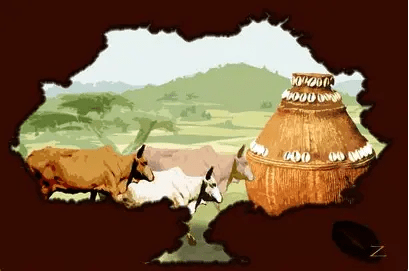
From Clandestine Radio to Digital Resistance – How Communication Became a Weapon
By: Dhabessa Wakjira
PROLOGUE: The Unseen Battlefield
The Oromo freedom struggle has been fought on many fronts: in the forests with weapons, in the streets with protests, in the prisons with endurance, and in the hearts with hope. But there is another battlefield – invisible, yet essential. It is the battlefield of information.
Media – whether printed on paper, broadcast through radio waves, or shared across digital networks – has been the oxygen of the Oromo national movement. Without it, the struggle would have been fragmented, silenced, and easily erased. With it, the Oromo people have informed, organized, and inspired generations of resistance.
This feature examines the role of media in the Oromo freedom struggle – from the early print experiments of the Derg era, to the iconic radio broadcasts of the OLF, to the digital mobilization of the Qeerroo generation, and to the challenges that remain.
PART ONE: The Printed Word – Bariisaa and the Battle for Language
Afaan Oromo as a Site of Resistance
Before the internet, before satellite radio, before social media, there was the newspaper. And for the Oromo struggle, one newspaper stands out: Bariisaa.
Published between 1975 and 1991 under the Derg regime, Bariisaa was an Afaan Oromo newspaper that became, according to scholarly research, “the main forum for issues of social justice, including linguistic rights, economic and cultural values as well as political representation” .
The newspaper was published in a context of extreme repression. The Derg regime, like the Imperial regime before it, had systematically marginalized Afaan Oromo. The language of tens of millions was excluded from education, from government, from official communication. To write in Oromo was itself an act of defiance.
Bariisaa provided a space – however constrained – for Oromo intellectuals, poets, and activists to exchange ideas. The newspaper published arguments about how to deal with the disrespect for Oromo national identity, and about the sabotage made to paralyze the Oromo press .
Crucially, Bariisaa also became a forum for one of the most sensitive issues in Oromo identity politics: orthography. What script should be used to write Afaan Oromo? The government attempted to impose the Geez script, which was ill-suited to represent Oromo sounds. Oromo writers and intellectuals debated alternatives, seeking a writing system that could faithfully represent their language and, by extension, their identity .
The regime knew the power of what they were censoring. According to historical research, Bariisaa‘s contents were “strictly censored and systematic efforts were made to limit the number of copies and centres of distributions” . The government did not merely tolerate the newspaper; they feared it.
Yet Bariisaa survived. And it served as “important sources of information for the contemporary radio broadcasts in Afaan Oromo” . The printed word laid the foundation for the spoken word – broadcast across borders, beyond the reach of Ethiopian censors.
PART TWO: The Voice That Could Not Be Silenced – Sagalee Bilisummaa Oromoo
A Radio Station That Became a Movement
On June 15, 1988, a new voice entered the airwaves of the Horn of Africa. It was not the voice of the Derg, which controlled all media inside Ethiopia. It was the voice of the Oromo Liberation Front (OLF) , broadcasting from outside the country’s borders. Its name was Sagalee Bilisummaa Oromoo (SBO) – the Voice of Oromo Liberation .
For the Oromo people, who had been denied any media in their own language for decades, hearing Afaan Oromo on the radio was not merely informative. It was transformative. It was a confirmation that they existed, that their language was real, that their struggle was heard.
The OLF’s statement, marking the 35th anniversary of SBO in 2023, captured the radio’s significance:
*”Launched on June 15th 1988, SBO/VOL has been contributing a lot in the long journey of Oromo struggle for freedom, despite several relentless attempts of the enemy to quit the media. This quarter-a-century contribution of SBO in informing, organizing and [inspiring] the Oromo nation for the struggle to self-determination”* enabled the OLF media organ to be the first Oromo media launched to serve the Oromo cause .
SBO was not a neutral news source. It was a weapon of the struggle. It reported on Oromo grievances that Ethiopian state media ignored. It called for resistance. It organized the diaspora. It inspired young Oromo to join the liberation front.
The Ethiopian government, of course, tried to stop it. Jamming, threats, diplomatic pressure – all were deployed. But SBO remained on air. And it remains on air today, still broadcasting, still informing, still organizing, still inspiring .
The radio’s contribution is incalculable. For Oromo refugees in camps in Somalia and Kenya, SBO was a connection to home. For Oromo students in Ethiopian universities, it was a secret education in their own history. For Oromo farmers in the countryside, it was proof that someone, somewhere, was fighting for them.
PART THREE: The Predecessors – Early Oromo Broadcasting in Exile
Mogadishu, Nairobi, and the Birth of Oromo Airwaves
While SBO is the most famous Oromo radio, it was not the first. The history of Oromo broadcasting goes back much further – to 1962, to a small radio station in Mogadishu, Somalia .
According to historical research, “Afaan Oromoo broadcasting for which only five minutes allowed was begun by a few exiled Oromoo at Mogadishu in 1962” . Five minutes. That was all. But those five minutes were revolutionary.
The exiled Oromo broadcasters had a clear mission: “to reveal the Oromoo grievances and their rejection, and to call on the Oromoo masses in Ethiopia to rise up against the severe oppression they were subjected to” .
The Somali government, engaged in a border dispute with Ethiopia, soon increased the broadcasting time to one hour daily. They had their own political motives, but the result was the same: Oromo voices were finally being heard internationally.
The Kenyan government, facing its own Oromo-related conflicts in the northern region during the Shifta War, launched its own Afaan Oromo broadcast in 1963, allocating four hours daily . This created a peculiar situation: the Oromo language, which had been suppressed inside Ethiopia, was being broadcast from both Somalia and Kenya.
It was this external pressure that forced the Ethiopian government to act. In 1972, the Imperial regime launched its first radio broadcast in Afaan Oromo from Harar – not out of a sudden commitment to Oromo rights, but to “impress on the large Oromoo masses in Ethiopia” and to counter the propaganda from Mogadishu .
Through this process, Afaan Oromo became “the contested language in the identity politics of the Horn of Africa” . The linguistic politics of radio broadcasting “not only brought Afaan Oromoo to become the language of radio broadcastings but also contributed to the consolidation of Oromoo Nationalism” .
The stage was set for SBO. And SBO took that foundation and built a movement upon it.
PART FOUR: The Digital Revolution – Qeerroo and Social Media
From Radio Waves to Hashtags
If the 1960s through the 1990s were the era of radio, the 2010s became the era of digital media. And the Oromo struggle adapted once again.
The Qeerroo (Oromo youth movement) that emerged in the 2010s was not a traditional political party or armed front. It was a decentralized, digitally native movement – and social media was its nervous system.
The academic literature describes how the Qeerroo movement, which launched mass protests in 2014, exploited “unpopular political decisions and a weakened federal government” and employed “an ethnic discourse, university campuses, and social media to mobilize mass protests” .
The 2015 Oromo protests, in particular, have been studied as a case of “the use of the Internet as an alternative communication platform and a site of political resistance” . When the Ethiopian government blocked websites, shut down internet access, and arrested journalists, the Qeerroo found ways around the censorship.
The protests were not only urban. One of the remarkable features of the Oromo digital mobilization was its ability to create “a shared vision between the urban-digital activists and the rural-offline protesters” . This bridge – between those with smartphones and those without – was crucial to the movement’s success.
Social media platforms like Facebook, Twitter, and Telegram became: bulletin boards for protest coordination, archives of government violence (shared globally), sites of Oromo cultural affirmation, and spaces for diaspora Oromo to contribute financially and politically.
The Qeerroo movement, as the Wikipedia entry notes, “is a movement of the Oromo youth in Ethiopia seeking political changes” . Within traditional Oromo culture, the term means “bachelor” or “unmarried youth,” but within the movement, it symbolizes “the struggle of the Oromo for greater political freedom, greater ethnic representation in the government and the recovery of Ethiopia under the government of the Qeerroo” .
The movement was instrumental in the political changes that led to the resignation of Prime Minister Hailemariam Desalegn in 2018 and the coming to power of Prime Minister Abiy Ahmed . While the ultimate outcomes of those changes remain contested, the power of Oromo digital mobilization had been proven beyond doubt.
PART FIVE: The Diaspora Mediascape – Amplifying the Struggle Abroad
When the World Becomes a Studio
The Oromo media landscape is not confined to Ethiopia. It is global. The diaspora – Oromo communities in the United States, Canada, Europe, Australia, and elsewhere – have created their own mediascape.
Scholarship on Oromo media cultures describes “the translocal dimensions of media and cultural flows among the Oromo” and focuses on “the important interlocutory roles of artists, media and cultural workers in diaspora contexts” . Oromo people, the research indicates, “performatively conjoin with and chaotically produce their own mediascapes – at the various sites called the loci of affirmation – in the process of imagining themselves to be members of a global diaspora” .
This diaspora media includes: satellite television channels broadcasting in Afaan Oromo, online radio stations, YouTube channels dedicated to Oromo history and culture, social media influencers who blend entertainment with political commentary, and digital archives preserving Oromo oral traditions.
Consecutive Ethiopian regimes have tried to curb the influence of these diaspora mediascapes, but with limited success . The internet does not respect borders. And Oromo voices, once silenced, have found global amplification.
PART SIX: The Challenge of State Media – Representation and Distortion
The Ethiopian Broadcasting Corporation and the Politics of Erasure
Not all media has served the Oromo struggle. In fact, state media has historically been a tool of suppression rather than liberation.
A recent study published in the Journal of African Media Studies examined how the Ethiopian Broadcasting Corporation (EBC) represented the Oromo and Amhara protests. The findings are sobering: “despite the existence of foundational national instruments and laws for freedom of the media, the EBC’s representations of political, economic, cultural and social inquiries of the Oromos and Amharas remain largely determined by the Tigre People’s Liberation Front/Ethiopian People’s Revolutionary Democratic Front authorities instead of the media professionals” .
In other words, state media did not report on the Oromo protests objectively. Instead, “media professionals in the EBC were forced to marginalize, ignore and distort the voices of the protesters instead of advancing freedom of expression” .
This is not a minor footnote. It is central to understanding why the Oromo struggle needed its own media. When the state controls the narrative, the oppressed must create alternative platforms. SBO, Bariisaa, and the Qeerroo’s social media networks were not luxuries. They were necessities – the only way for the Oromo story to be told at all.
PART SEVEN: Language as the Core of the Struggle
Why Afaan Oromo Media Is Not Just Communication – It Is Resistance
Underlying all of this – the newspapers, the radio broadcasts, the social media posts – is a single, fundamental issue: language.
The suppression of Afaan Oromo has been a consistent policy of Ethiopian regimes for over a century. As one scholarly article notes, “the suppression of ethnic identities in order to create homogeneous nation-states is an old strategy used by rulers of multi-ethnic and multilingual states. Perceived as salient markers of ethnic identities and as obstacles to the cultivation of the feeling of belonging and loyalty to the state by the policy makers, minority languages become the objects of suppression and replacement by the languages of the dominant groups” .
The Oromo have resisted this suppression. And media has been their primary tool of resistance. Writing in Afaan Oromo, broadcasting in Afaan Oromo, posting in Afaan Oromo – these are not merely technical choices. They are political acts. They assert that Oromo identity matters, that Oromo voices deserve to be heard, that Oromo culture will not be erased.
The same research notes that “ethnic opposition to linguistic homogenization is triggered by objective as well as subjective existential concerns” . The Oromo are not fighting for a privilege. They are fighting for survival. And media is a weapon of survival.
CONCLUSION: The Battle Continues
The role of media in the Oromo freedom struggle has evolved over six decades, but its function has remained constant: to inform, to organize, and to inspire.
- In the 1960s, a few exiled Oromo fought for five minutes of radio time from Mogadishu.
- In the 1970s and 1980s, Bariisaa newspaper provided a forum for Oromo intellectuals to debate their identity under the nose of the Derg.
- In 1988, Sagalee Bilisummaa Oromoo began broadcasting, becoming the voice of the Oromo liberation movement for over three decades.
- In the 2010s, the Qeerroo movement turned social media into a battlefield, organizing mass protests that changed Ethiopian politics.
- And today, diaspora Oromo continue to build a global mediascape that amplifies their struggle beyond the reach of any censor.
Each era has had its own technology. But the purpose has never changed: to ensure that the Oromo story is told, that Oromo suffering is witnessed, that Oromo aspirations are known, and that Oromo heroes are remembered.
The Ethiopian state has tried, repeatedly, to control the narrative. It has censored newspapers, jammed radio signals, shut down the internet, and arrested journalists. But the Oromo have always found a way to speak.
Because the alternative – silence – is death.
EPILOGUE: A Call to Remember and to Continue
As we remember the role of media in the Oromo struggle, we must also recognize that the battle is not over. State media in Ethiopia still distorts Oromo voices. International media still often ignores Oromo issues. And the digital divide means that many Oromo – especially in rural areas – are still cut off from the information they need.
But the foundation has been laid. The infrastructure of Oromo media – from print to radio to digital – exists. It is fragile, often underfunded, and constantly under threat. But it exists.
And as long as it exists, the Oromo struggle will not be silenced.
“Sagalee Bilisummaa Oromoo – the Voice of Oromo Liberation – will remain on air.”
Nagaatti to all the journalists, broadcasters, writers, poets, and social media activists who have risked everything to tell the Oromo story. You are warriors. And your words are weapons.
SIDEBAR: Timeline of Oromo Media in the Struggle

The Day of Forgiveness: How Oromo Tradition Restores Peace Through Ritual Reconciliation
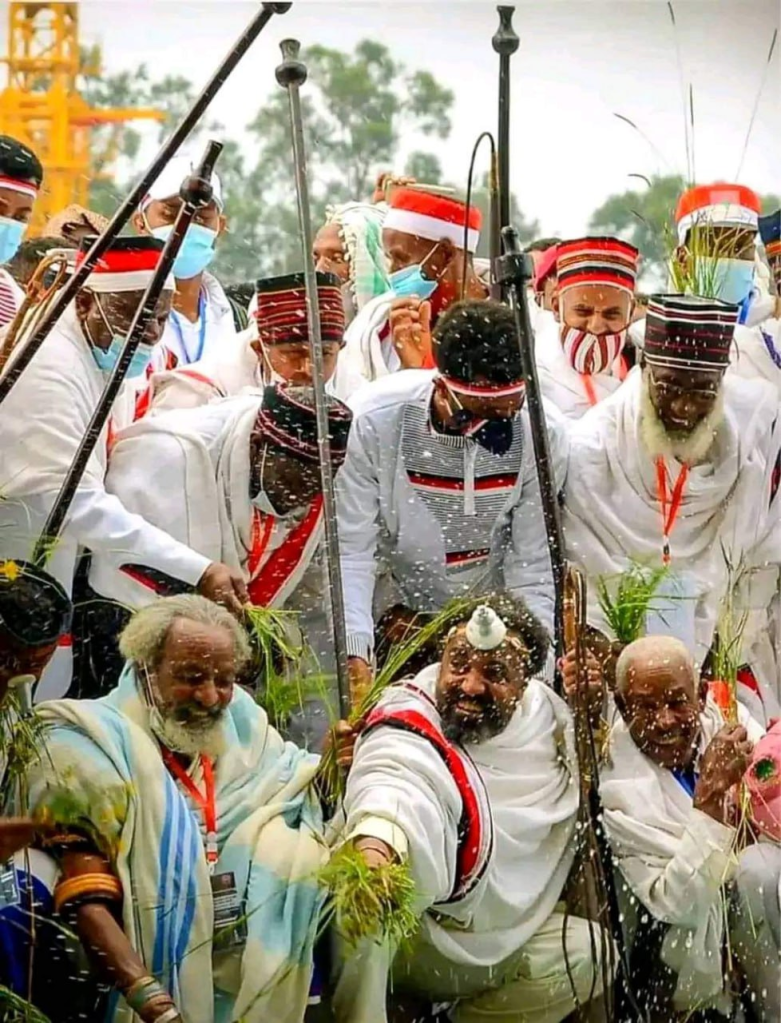
By Daandii Ragabaa
In a world often torn by endless vengeance and unresolved grievances, the ancient Oromo tradition offers a radical alternative: a structured, ceremonial path to forgiveness, reconciliation, and lasting peace.
This is Guyyaa Araaraa—the Day of Forgiveness.
Rooted deeply in the aadaa fi seera Oromoo (Oromo culture and customary law), this tradition provides a formal mechanism for resolving conflicts of all magnitudes, from minor misunderstandings to the heaviest of trespasses. It is a system that does not simply sweep disputes under the rug. Instead, it confronts them publicly, ritually, and restoratively.
Different Harms, Different Paths to Peace
Oromo customary law recognizes that not all conflicts are the same. Therefore, not all reconciliations follow the same procedure. The Guyyaa Araaraa tradition carefully distinguishes between different types of harm and prescribes specific rituals for each:
For those who have taken a life:
The path to peace passes through Sirna Gumaa—the blood wealth or compensation ceremony. Under this system, the family of the slain person and the family of the killer are brought together by elders. Through negotiation, payment of compensation (usually in cattle), and public ritual, forgiveness is granted, and the cycle of revenge is broken. Peace descends upon both clans.
For those in dispute over various matters:
Not all conflicts involve bloodshed. Land disputes, marital conflicts, inheritance disagreements, and community feuds are resolved through the wisdom of the jaarsummaa (council of elders). The elders do not impose foreign laws. They apply Oromo customary law, listening to both sides, investigating the truth, and issuing a binding decision that restores harmony.
For those who have simply grown weary of each other:
Sometimes, there is no specific crime. Neighbors or relatives simply drift apart, accumulate petty grievances, and stop speaking. The Oromo tradition addresses even this. Through ceremonies of walitti araaramuu (mutual reconciliation), those who have become estranged are brought together. They share coffee, break bread, and publicly declare an end to their cold war.
For those who have slandered or insulted one another:
Words can wound as deeply as weapons. When verbal battles have poisoned a community, the elders require aagii baafannaa—a ritual cleansing of the tongue. The offenders confess their words publicly, ask for forgiveness, and perform symbolic acts of apology. Only then is the air cleared and normal relations resumed.
The Deeper Purpose: Strengthening the Social Fabric
Why does the Oromo tradition place such immense importance on araara (reconciliation)? The answer lies in the Oromo understanding of society.
For the Oromo, a community is not a collection of individuals pursuing their own interests. It is a living web of mutual dependence. When one thread snaps, the whole web weakens. Therefore, restoring broken relationships is not merely a moral good—it is a practical necessity for survival.
“This tradition exists so that social relationships grow stronger,” explains one elder familiar with the custom. “It ensures that mutual help and mutual support (walgargaarsaa fi waldeeggarsaa) continue uninterrupted. A community that does not forgive is a community that will eventually collapse.”
The Conditions of True Reconciliation
But the Guyyaa Araaraa is not naive. It does not demand forgiveness without accountability. For peace to be genuine and lasting, certain conditions must be met:
- The injured party must receive appropriate acknowledgment of the harm done to them. In cases of grave injury, this includes material compensation (beenyaa) as a tangible sign of remorse.
- The one who caused harm must publicly recognize their wrongdoing. They must understand, according to Oromo custom, that they have committed a breach (balleessaa). They must state clearly what they have done wrong and what they will do to make it right.
Only when both accountability and compensation have been fulfilled does the araara (reconciliation) descend. And only then does nagaa (peace) take root.
A Radical Alternative for Today
In an era of social media outrage, cancel culture, and political polarization, the Oromo tradition of Guyyaa Araaraa offers a powerful counter-model. It says: Do not nurse your grievance forever. Do not seek infinite revenge. There is a time for justice, but there is also a time for closure.
The tradition acknowledges that harm has been done. It does not pretend away pain. But it insists that human communities cannot function on perpetual anger. At some point, forgiveness must be extended. At some point, peace must be chosen.
Living Tradition
Across Oromia, in villages and towns, in diaspora communities and refugee camps, the Guyyaa Araaraa is still practiced. Elders still sit under trees. Compensation is still counted in cattle or its cash equivalent. Offenders still confess. The injured still—sometimes after long struggle—say the words: I forgive you.
And when they do, the Oromo believe, nagaa (peace) literally descends upon the gathering. It is not just a feeling. It is a tangible presence, a renewed contract, a shared breath.
As one elder put it: “We do not forgive because we are weak. We forgive because we wish to live. And the living must be at peace with their neighbors.”

Gadaa Tradition Comes Alive: Jila Quufii Ceremony Held in Daamaa, Guji Zone
By Daandii Ragabaa
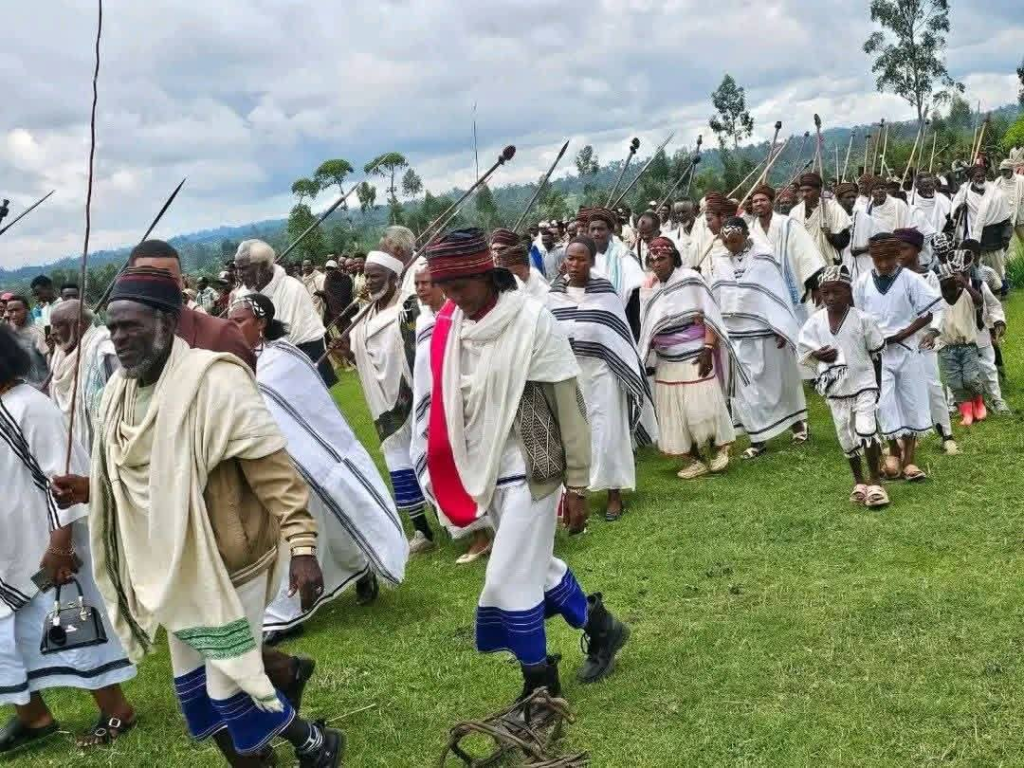
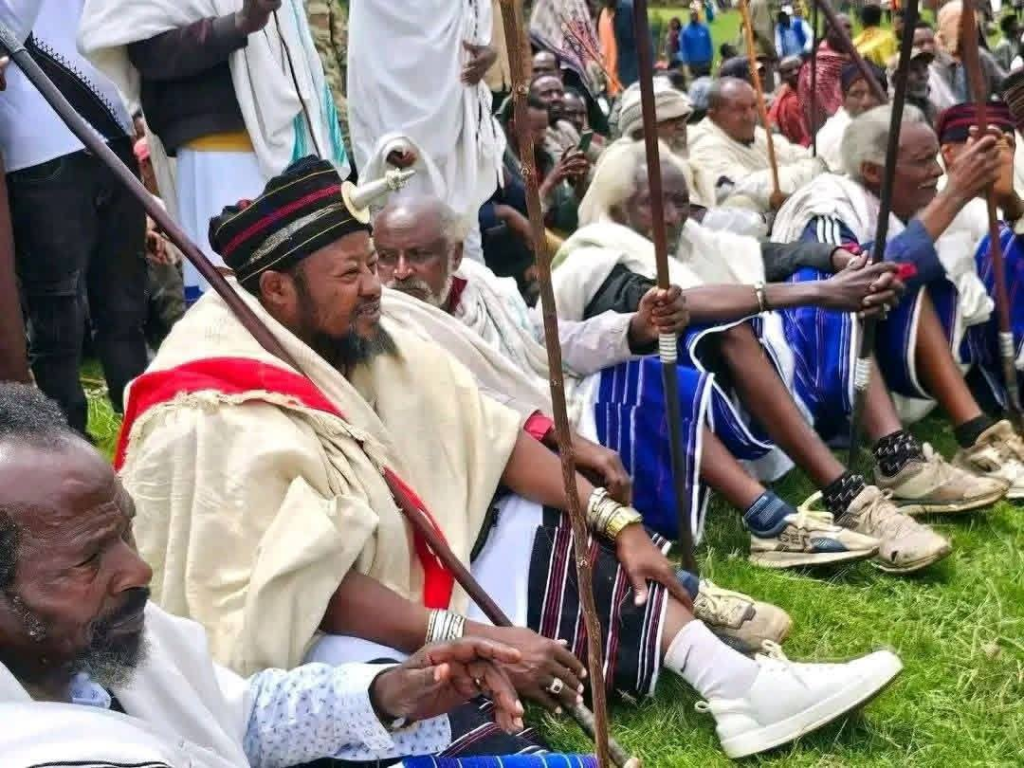
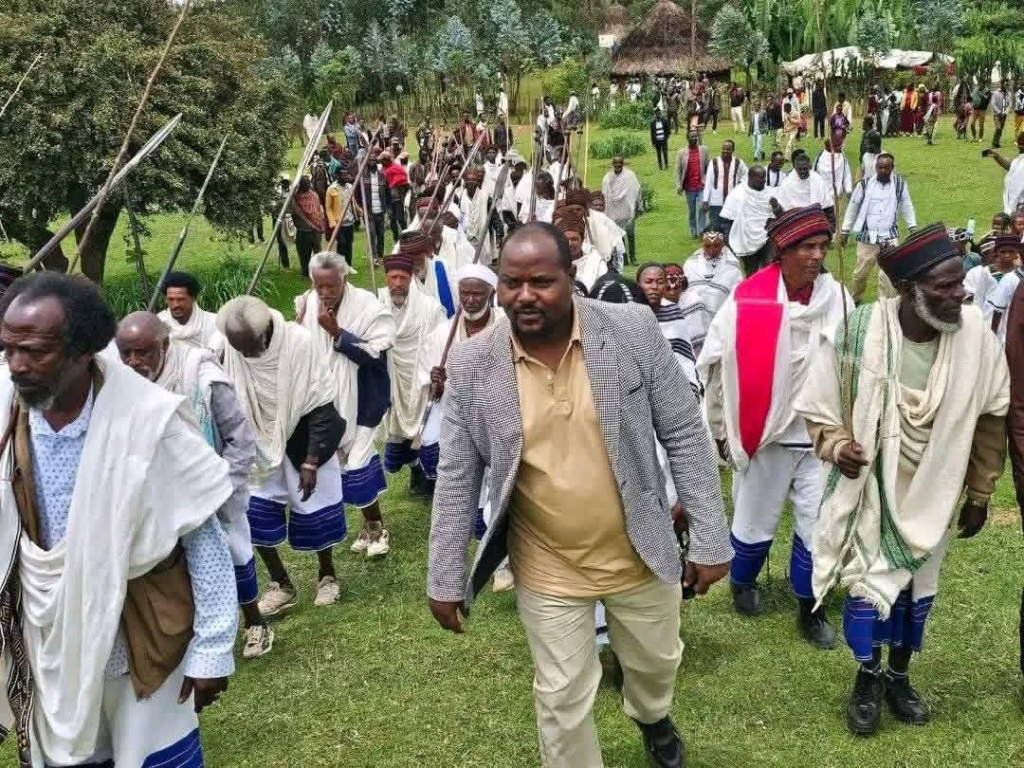
DAAMAA, GUJI ZONE – In the rolling highlands of Guji Zone, where the ancient rhythms of the Oromo Gadaa system continue to pulse through generations, a significant cultural ceremony known as Jila Quufii has been successfully conducted in the Daamaa district.
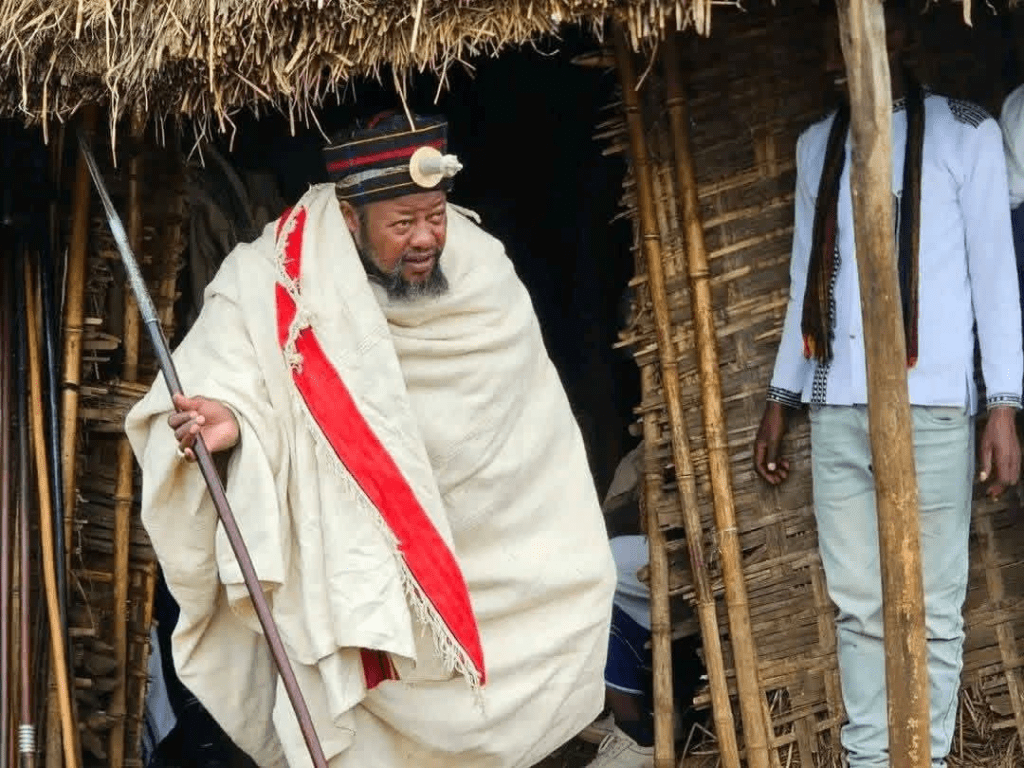
The event, a powerful reaffirmation of Oromo indigenous governance and spiritual practice, was led by the revered Abbaa Gadaa Uraagaa Jaarsoo. Under his guidance, the community gathered to perform the rites and rituals of Jila Quufii—a ceremony deeply embedded in the cyclical transition of Gadaa power.
A Government That Honors Tradition
What makes this year’s Jila Quufii particularly noteworthy is the evolving relationship between the regional government and traditional institutions. Officials from the Oromiya regional government, working within the framework of cultural renewal (Haaromsa Aadaa), have increasingly recognized the importance of respecting and promoting the Gadaa system.
According to sources present at the ceremony, the government has been actively working to ensure that Gadaa institutions (Sirnootni Gadaa) are honored and that the communities (Ardaaleen) that host Jila ceremonies are developed.
“The government’s journey of cultural renaissance is bearing fruit,” one elder observed. “The wealth that lies in our traditions is finally being fulfilled.”
Two Years of Teaching Through Travel
The Jila Quufii ceremony conducted in Daamaa is not a spontaneous event. It follows a deliberate, two-year process. The current Gadaa generation, known as Roobalee Baallii, received its mandate two years ago. Since then, they have not remained in one place.
Instead, the Abbaa Gadaa and his council have been traveling from one community (Ardaa) to another. This peripatetic journey has served a clear purpose: to teach the people. Through motion and encounter, the Gadaa leaders have been instructing the Oromo public in the values, laws, and spiritual principles of the ancient system.
“The mandate of Me’ee Bokkoo was received,” explained a participant, referring to the supreme Gadaa council. “And since then, the Abbaa Gadaa have been conducting Jila ceremonies across different communities. Their goal is to ensure that the coming generations return to the wisdom of culture, dignity (safuu), and mutual respect (safeeffannaa).”
More Than Ritual: A School of Life
The Jila Quufii ceremony in Daamaa was not merely a spectacle of traditional dress and chanting. Those who conducted it focused deliberately on education through action (hojiin barsiisuu).
The key themes of the gathering included:
- Teaching culture (aadaa barsiisuu): Explaining the meanings behind rituals so the youth understand, not just observe.
- Promoting love and unity (jalaalafi tokkummaa dagaagsu): Emphasizing that Gadaa is not a system of division but one of shared identity.
- Standing together (waliin dhaabbachuu): Reinforcing the idea that community survival depends on collective action.
- Struggling together (waliif birmachuu): Acknowledging that the Oromo people face challenges but will face them shoulder to shoulder.
- Sharing experience (muuxannoo qooduu): Ensuring that the wisdom of elders is transferred to the young through direct lived experience, not just oral tales.
A Bridge Across Generations
The ultimate goal of the Daamaa Jila Quufii, as articulated by the Gadaa leaders, was to ensure that the ancient Oromo tradition continues uninterrupted from one generation to the next. In a world of rapid change—where globalization, migration, and state-centric governance often erode indigenous systems—the Gadaa leaders of Roobalee Baallii are making a stand.
They are saying, through their ceremonies and their travels: We will not forget. We will not let our children forget.
As the sun set over the hills of Daamaa, the sounds of chanting, the rhythms of drums, and the sight of elders blessing the youth painted a picture of resilience. The Jila Quufii was not a funeral for an old system. It was a birthday for a living one.
The Road Ahead
The Roobalee Baallii Gadaa generation has several years remaining in its term. According to tradition, the Jila ceremonies will continue, moving from Ardaa to Ardaa, until the entire community has been touched, taught, and transformed.
For the Oromo people, both at home and in the diaspora, the ceremony in Daamaa sends a clear message: The Gadaa is not a museum piece. It is a government. It is a school. It is a family. And it is very much alive.

The Land Shall Belong to the Tiller – A Giant Remembered
FEATURE STORY
Here is a feature story compiled from multiple social media posts and tributes, honoring the life, legacy, and monumental contribution of Obbo Zegeye Asfaw Abdi (1942-2026) – the architect of Ethiopia’s historic land reform.
Voices from across generations unite in grief and gratitude for Zegeye Asfaw Abdi, the mastermind behind Ethiopia’s 1975 Land Proclamation
Compiled By: Dhabessa Wakjira
Date: 12 May 2026
Sources: Multiple social media tributes (Abba Malka-Goota bara dukkanaa, Beyan H. Asoba, Lammi Begna-Qabsoo, Yaadasaa Badhaasaa Kutuu, Alemayehu Diro, Dejene Gutema, Dereje Hawas, and others)
PROLOGUE: A Chorus of Gratitude
When a giant falls, the earth shakes. But when a giant who gave land to the landless falls, the earth does not merely shake – it weeps. Every furrow, every field, every harvest carried out on soil that was once feudal domain and is now free – these are the tears of the land itself.
Zegeye Asfaw Abdi has left this world in 2026. But before he departed, he did something that few in history have accomplished: he changed who owns the earth.
This is his story – told not in one voice, but in many. From Oromo farmers who remember the days of serfdom, to intellectuals who studied his proclamation, to friends who knew him personally, to scholars who analyzed his legacy. Their words, gathered from social media in the days following his passing, form a chorus of grief – and of undying gratitude.
PART ONE: The Argument That Began in Lower Cimaa
From Serf to Owner – The Great Demand
Before the land could be freed, an argument had to be won. And that argument was fought first in the hearts and mouths of the Oromo people.
Abba Malka-Goota bara dukkanaa (a name meaning “Father of Heroes of the Dark Era”) reminds us where the struggle began:
“Oromoo argued from the Lower Cimaa region that they should move from the Adaharii system (client/tenant farming) or Cissanyaa (serfdom) to becoming owners of their own land. From this world, many have mourned the passing of Obbo Zegeye, a guiding rock.”
The Adaharii and Cissanyaa systems were not merely economic arrangements. They were chains. Millions of Oromo farmers tilled land they would never own. They planted seeds they would never fully harvest. They worked, they sweated, they starved – and the fruit of their labor flowed upward to landlords who never touched a plow.
But the people of Lower Cimaa argued. They demanded. They refused to accept that the land beneath their feet could never be theirs.
Zegeye Asfaw heard that argument. And he did not just hear it. He became its champion.
PART TWO: The Proclamation That Changed Ethiopia Forever
1975 – Land to the Tiller
In 1975, one of the most extensive land reform programmes in history was enacted in Ethiopia. The Land Proclamation took land from the centuries-old aristocracy and returned it to the people who actually worked the soil. It was a revolution – not of bullets alone, but of justice.
Beyan H. Asoba places Zegeye exactly where he belongs in this history:
“Brother Zegeye Asfaw will always be remembered as one of the leading architects of the 1975 historic Land Proclamation of Ethiopia.”
Not a bystander. Not a signature on a document someone else wrote. An architect. One of the minds that designed the foundation upon which millions of Ethiopian farmers now stand.
Lammi Begna-Qabsoo (a voice from the 1960s student movement) adds deeper context:
“The student movement of the 1960s campaigned so that the land question – ‘Land to the Tiller’ – would receive a meaningful answer. Zegeye ensured that the 1975 Land Proclamation was issued. By causing the land to be returned to the cultivator, he laid the cornerstone for the transformation of the lives of the Oromo people and the peoples of the south.”
The student movement had demanded. The people had argued. But it was Zegeye – sitting inside the halls of power, bearing the weight of decision – who made it law.
PART THREE: A Personal Encounter with the Giant
The Lawyer, The Prison Visitor, The Respected Man
Not everyone knew Zegeye Asfaw through history books or proclamations. Some knew him through direct, personal encounter – and those stories reveal the man behind the giant.
Yaadasaa Badhaasaa Kutuu shares a memory that cuts through all abstraction:
“I saw this Zegeye Asfaw with my own eyes, on that very day. He came to the prison to visit someone. Even the Tigrayan guards knew him and respected him. He was a great man who served his people with full knowledge. He was a renowned lawyer. He led a great struggle to return land to the tiller. A strong and knowledgeable man.”
Consider this image: a prison yard, armed guards, the tension of a regime that imprisoned its enemies. And walking through that yard, calm and unafraid, is Zegeye Asfaw. Even the guards – from a different ethnic background, serving a different master – knew his name. They respected him.
That is not power given by title. That is authority earned by character.
PART FOUR: The Personal Cost of Principle
What He Sacrificed for the Land
Great deeds are never free. Every proclamation that changes a nation comes with a price. Zegeye Asfaw paid that price – in ways that the history books rarely record.
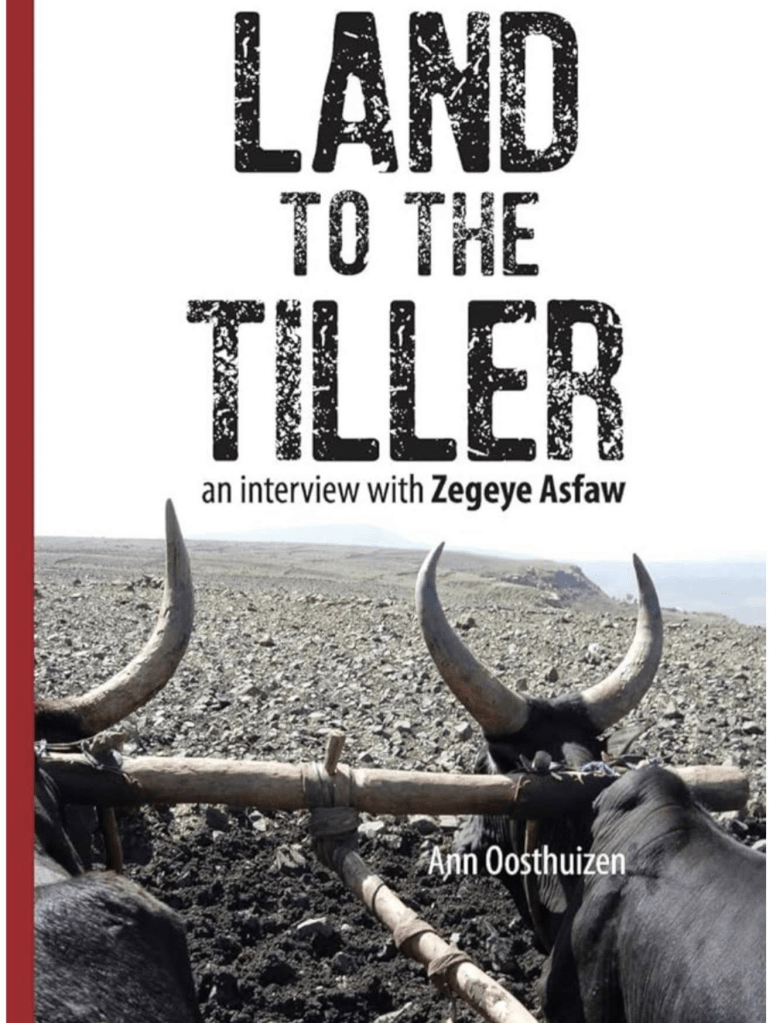
Dereje Hawas, who grew up hearing Zegeye’s name as a “giant of history,” points to a book review by Ann Oosthuizen that captures the personal dimension:
“In this 2012 interview, Zegeye tells the story of his life, of the struggle for land reform, and of the personal cost of that struggle for himself and others. The interview informs our understanding of current issues, and provides a very accessible introduction to recent Ethiopian history. It tackles the tensions between the North and South of Ethiopia; it throws light on the student movements that shaped the politics of the last fifty years; and it provides insights from inside the governments of three very different regimes. Most of all, it is a story of the land itself.”
Three very different regimes. Zegeye served under each of them – not out of political opportunism, but out of a single-minded commitment to the land and its tillers. The personal cost was immense: enemies on all sides, constant threats, nights of sleepless worry, and the loneliness of standing for principle in a world that often rewards compromise.
He bore all of it.
PART FIVE: The Lion’s Share
A Role Worthy of a Lion
Abba Malka-Goota bara dukkanaa describes Zegeye’s role in striking terms:
“Obbo Zegeye prepared the proclamation that said ‘the land shall belong to the tiller.’ He played a role worthy of a lion in freeing the cultivator from serfdom and making him the owner of his own land.”
In Oromo culture, the lion (Leencaa) is not just an animal. It is a symbol of courage, of leadership, of protection. To say someone played the role of a lion is to say they stood between danger and the people – and did not flee.
Zegeye played that role.
The land reform proclamation was not popular with the powerful. It threatened every landlord, every noble, every system that depended on the exploitation of the poor. To champion such a cause was to make enemies of the mighty. But Zegeye did not waver. He prepared the proclamation. He defended it. He implemented it.
That is the lion’s share. Not the share the lion takes – but the share the lion gives.
PART SIX: A Hero and a True Man of the People
The Humanity Behind the Title
Dejene Gutema speaks with direct and powerful simplicity:
“Obbo Zegeye Asfaw was a hero, the true man of the people, who championed, as a cabinet minister, Ethiopia’s historic and defining ‘Land to the Tiller’ proclamation during the Derg era. He was the true man of his people! REST IN POWER.”
Not a hero in a cape. A hero in a suit, sitting in a cabinet meeting, pushing a document across a table. That is where real history is made – not on battlefields, but in rooms where decisions are weighed and signed.
Alemayehu Diro expands on this:
“I was profoundly saddened to hear of the passing of Zegeye Asfaw Abdi. His departure is not only a heartbreaking loss to his beloved family and close friends, but also to the countless people whose lives were touched and transformed by his decades of selfless and devoted service.”
Alemayehu captures the essence of Zegeye’s character:
“Throughout his distinguished life, he served his people in various capacities with extraordinary passion, humility, integrity, and unwavering commitment. He stood as a symbol of dedication and patriotism, tirelessly working for the betterment of his people.”
And then, a line that should be carved somewhere permanent:
“He will be remembered not only for the positions he held, but for the humanity, kindness, and sense of responsibility with which he carried them.”
PART SEVEN: The Silence That Hurts
Gratitude That Came Too Late
One of the most poignant passages from the tributes comes again from Abba Malka-Goota bara dukkanaa:
“If Oromo had ever stood up and thanked him while he was still alive, his death would be a different kind of grief for me. But they did not. His death is another kind of sorrow.”
These words sting because they are true.
How often do we wait until the grave is dug before we speak the words of gratitude? How often do we let our heroes walk among us unrecognized, only to build statues after they are gone?
Zegeye Asfaw was not a man who sought praise. He was humble. He was quiet. He did his work without fanfare. But that does not excuse the silence of those who benefited from his labor.
The mourner continues:
“I wish for patience and strength for his family, relatives, and all friends.”
It is a wish born of grief – and of regret.
PART EIGHT: Rest in Power, Not Just in Peace
A Final Salute to the Architect
Across all the tributes, one phrase recurs: Rest in Power.
Not “Rest in Peace” – though peace he deserves. But “Rest in Power” – because his power was not the power of weapons or wealth. It was the power of principle. And that kind of power does not die.
Dereje Hawas ends his tribute with this:
“Rest in power, Obbo Zegeye!!!”
Dejene Gutema echoes:
“REST IN POWER.”
And Alemayehu Diro, in the Oromo tradition, offers a final blessing:
“Gash Zegeye, Chief, Abbaa Lafaa nagaatti, lubbuun kee jannataan haa qananiitu!”
(Gash Zegeye, Chief, Father of the Land – go in peace. May your soul rest and be refreshed in paradise.)
EPILOGUE: The Land Remains
Zegeye Asfaw Abdi has left this world. But the land he helped liberate remains.
- Every morning, when a farmer in Oromia walks out to his field and knows – truly knows – that the soil beneath his feet is his own, that is Zegeye’s legacy.
- Every harvest, when a family eats from the crop they planted on their own land, that is Zegeye’s legacy.
- Every child born on land that was once feudal domain, now free, that is Zegeye’s legacy.
- Every student of Ethiopian history who reads the 1975 Land Proclamation and asks, “Who wrote this?” – the answer is Zegeye Asfaw.
The giant is gone. But the earth he moved is still shifted.
And that, perhaps, is the only monument he would have wanted.
Compiled from social media tributes by:
- Abba Malka-Goota bara dukkanaa
- Beyan H. Asoba
- Lammi Begna-Qabsoo
- Yaadasaa Badhaasaa Kutuu
- Alemayehu Diro
- Dejene Gutema
- Dereje Hawas (with Ann Oosthuizen’s book review)
Rest in power, Obbo Zegeye Asfaw Abdi (1942-2026).
Nagaatti. Lubbuun kee jannataan haa qananiitu.
This feature story compiled by Dhabessa Wakjira from multiple social media posts and tributes, honoring the life, legacy, and monumental contribution of Obbo Zegeye Asfaw Abdi (1942-2026) – the architect of Ethiopia’s historic land reform.

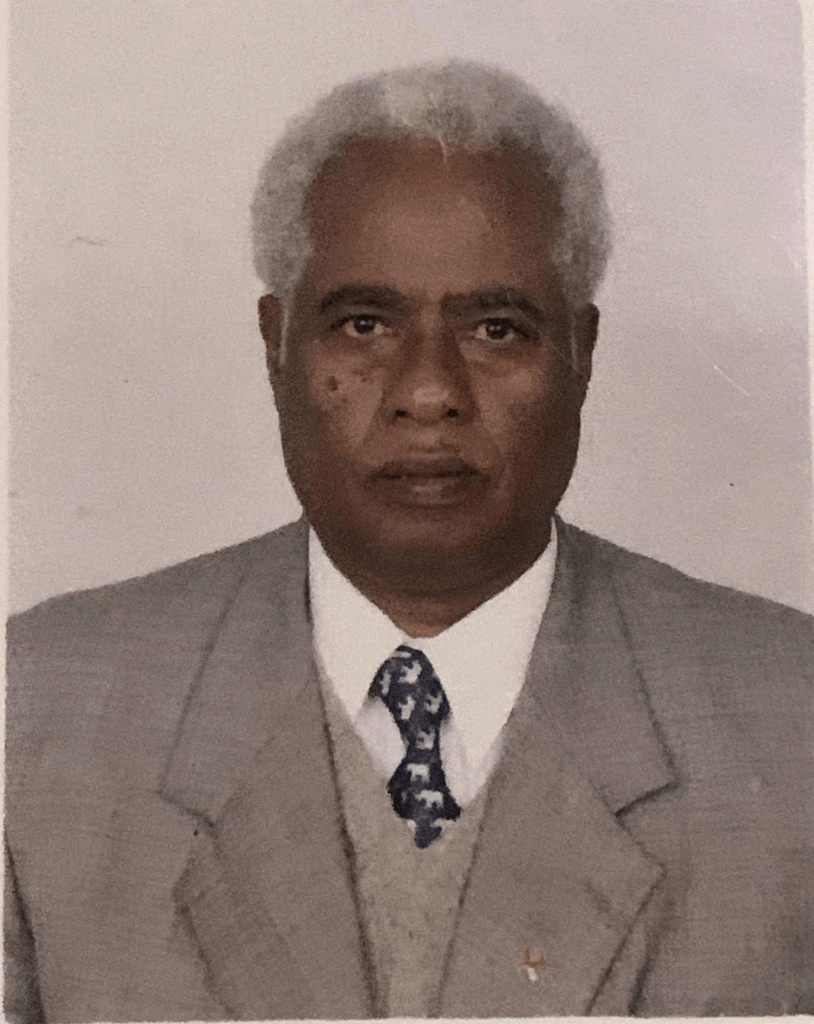
A Life That Touched Generations – Honoring Zegeye Asfaw Abdi (1942-2026)
FEATURE CONDOLENCE STORY
By: Dhabessa Wakjira (Based on the grief post of Alemayehu Diro)
PROLOGUE: When a Giant Falls
(Finfinne, Oromia, 12 May 2026)-There are departures that echo far beyond the walls of a family home. There are losses that are felt not only by blood relatives, but by entire communities, by strangers who were once strangers no more because of a single act of kindness.
The passing of Zegeye Asfaw Abdi is one such departure.
When the news broke, grief swept across families, villages, and offices where this great man once walked. His death is not merely an obituary to be read and forgotten. It is a chapter closing in the book of selfless service – a chapter written not with ink, but with decades of sacrifice, humility, and unwavering love for his people.
Alemayehu Diro, in his heartfelt grief post, captured what so many feel but struggle to put into words: “I was profoundly saddened to hear of the passing of Zegeye Asfaw Abdi.”
And indeed, sadness is the only proper response when a beacon of light is extinguished.
PART ONE: A Life of Distinguished Service
More Than Titles – A Servant of the People
Throughout his distinguished life, Zegeye Asfaw Abdi wore many hats. He served his people in various capacities – from local leadership to broader national roles. But he was never defined by the positions he held. Rather, he defined those positions by the way he held them.
He served with:
- Extraordinary passion – not the passion of ambition, but the passion of purpose.
- Humility – rare in a world where power often inflates the ego.
- Integrity – unwavering, even when compromise would have been easier.
- Unwavering commitment – to the betterment of his people, not to personal gain.
Those who worked alongside him speak of a man who never asked others to do what he would not do himself. Those who were led by him speak of a chief who listened before he decided. Those who were served by him speak of a heart that never closed its door.
PART TWO: The Symbol He Became
A Patriot Without Performance
In an era where patriotism is often performative – worn as a badge for cameras and crowds – Zegeye Asfaw Abdi was a different kind of patriot. He stood as a symbol of dedication not because he sought the spotlight, but because the spotlight found him through his actions.
He worked tirelessly for the betterment of his people. Not for recognition. Not for reward. But because something deep within him demanded it.
His wisdom guided many through difficult times. His leadership steadied ships in stormy waters. His contributions – too numerous to count, too humble to be catalogued – have left an unforgotten mark on the landscape of his community.
That mark will not fade. It will inspire not only this generation, but generations yet unborn.
PART THREE: The Legacy That Time Cannot Erase
Honor, Compassion, and Exemplary Service
What is a legacy? For some, it is a building with their name carved in stone. For others, it is a bank account passed to children.
For Zegeye Asfaw Abdi, legacy is something far more lasting.
He leaves behind:
- Honor – a name that was never stained by corruption or selfishness.
- Compassion – a heart that felt the pain of others as his own.
- Exemplary service – a standard against which other public servants will be measured.
This is a legacy that time will never erase. Not because it is written in history books, but because it is written in the hearts of the countless people whose lives were touched and transformed by his decades of selfless and devoted service.
He will be remembered not for the titles he carried, but for the humanity with which he carried them. Not for the power he wielded, but for the kindness that tempered that power. Not for the authority he commanded, but for the sense of responsibility that commanded him.
PART FOUR: The Hole Left Behind
A Heartbreaking Loss to Family, Friends, and Strangers Alike
When a man like Zegeye Asfaw Abdi departs, the loss is not contained within one household.
His beloved family has lost a father, a husband, a brother, a guide. His close friends have lost a confidant, a counselor, a companion in laughter and in struggle.
But the loss extends further.
The countless people whose lives were touched by his service – some whose names he may never have known, some whose faces he may never have seen – have also lost something precious. They have lost a defender. They have lost an advocate. They have lost proof that leadership can be both powerful and pure.
The hole he leaves behind is shaped like a giant. And giants are not easily replaced.
PART FIVE: A Prayer for Eternal Peace
Gash Zegeye, Chief, Abbaa Lafaa – Rest Among the Righteous
In the Oromo tradition, a chief is called Abbaa Lafaa – Father of the Land. It is a title not given lightly. It is earned through years of service, through nights spent worrying about the welfare of others, through days spent building what will outlast oneself.
Zegeye Asfaw Abdi earned that title many times over.
And now, as he journeys from this world to the next, we offer a prayer:
“May Almighty God grant his noble soul eternal peace and rest among the righteous. May his family, loved ones, colleagues, and all who mourn this great loss find strength, comfort, and solace during this difficult time.”
The prayer is simple. But the hope behind it is immense: that a life so well lived finds a reward so well deserved.
PART SIX: Though He Is Gone, He Remains
A Legacy That Lives On in Hearts
There is an old saying: A person dies twice – once when the breath leaves the body, and again when the last person speaks their name.
By that measure, Zegeye Asfaw Abdi will never truly die.
His name will be spoken around dinner tables. His stories will be told to children who never met him. His values will be passed down like heirlooms more precious than gold.
“Though he may no longer be with us in person, his remarkable legacy, values, and memories will forever live on in the hearts of many.”
His body may return to the earth. But his spirit – that fire of service, that warmth of compassion, that light of integrity – will continue to burn in everyone he ever touched.
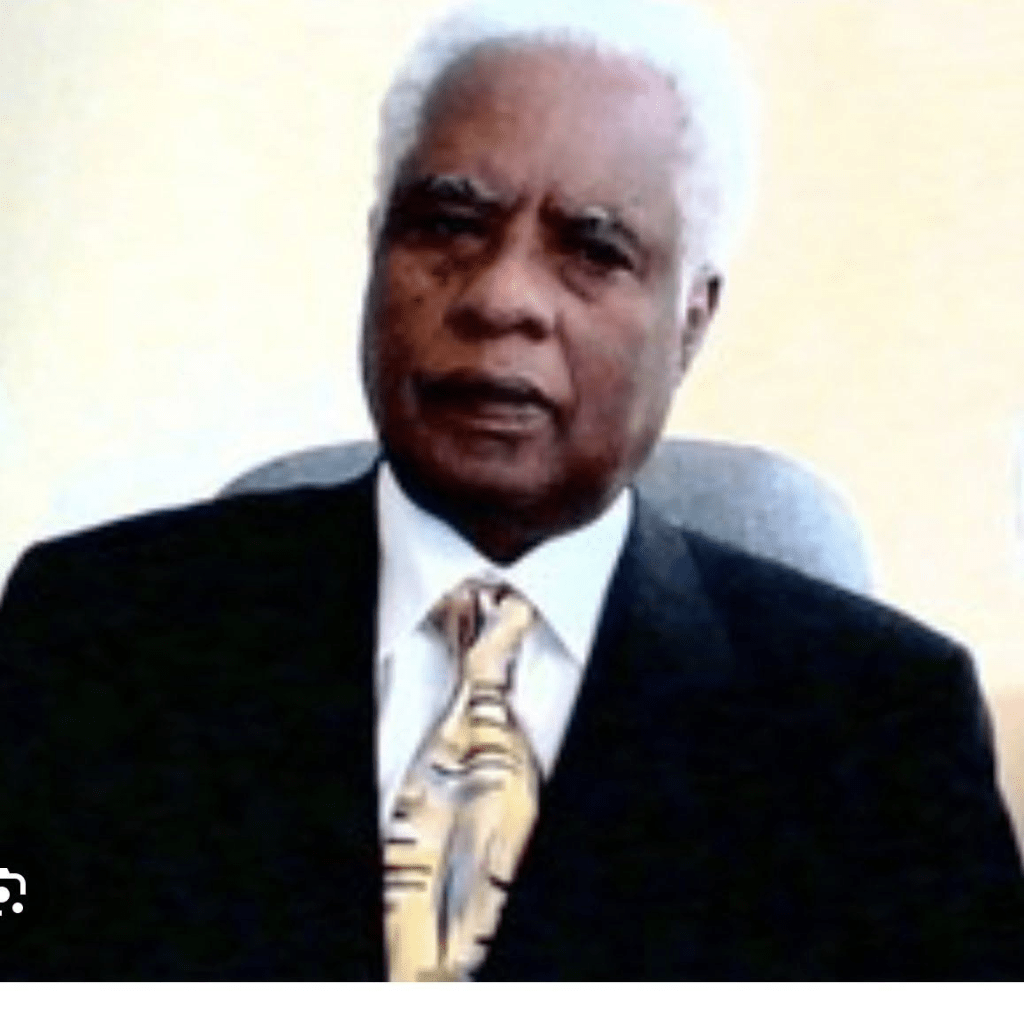
Mr. Zegaye Asfaw was the veteran Oromo leader, champion of the ‘land for tiller” struggle who authored the 1975 Land Act. He was born in April 1942.
EPILOGUE: A Final Salute to the Chief
Nagaatti, Lubbuun Keet Jannataan Ha Qananiitu
In the Oromo language, when a great person departs, we say:
“Gash Zegeye, Chief, Abbaa Lafaa nagaatti, lubbuun kee jannataan haa qananiitu!”
It means: Gash Zegeye, Chief, Father of the Land – go in peace. May your soul find rest and refreshment in paradise.
It is a farewell, yes. But it is also a celebration. A celebration of a life that mattered. A life that served. A life that loved.
To the family: May you find strength in each other and in the knowledge that your loss is shared by many.
To his colleagues: May you honor his memory by continuing his work with the same integrity and passion.
To all who mourn: May the grief you carry be slowly replaced by gratitude – gratitude that such a man walked among us, even if only for a while.
And to Zegeye Asfaw Abdi: Go well, Chief. Your work here is done. Your rest is earned. And your name will not be forgotten.
Nagaatti. Lubbuun kee jannataan haa qananiitu.

The Forgotten Anchor: Obbo Yonaataan’s Sacrifice and the Debt Oromo Owes Its Heroes
By Daandii Ragabaa
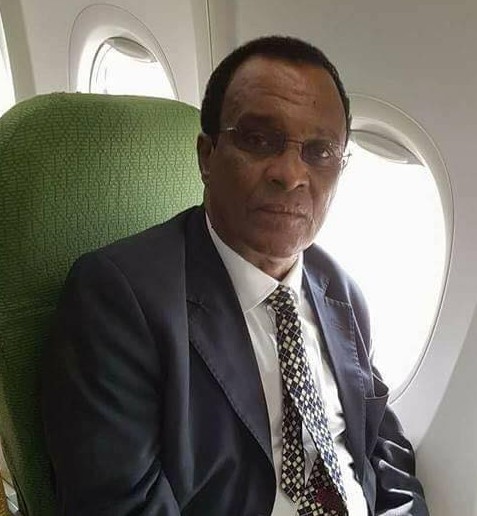
He once held immense power. A high-ranking official within the Oromiya regional state apparatus, he was a man with a comfortable life, a respected position, and a future paved with privilege. But in 2001, Obbo Yonaatoon made a choice that would strip everything away—and make him a legend.
He joined the struggle.
Today, decades later, that same hero lives without a home of his own. Without a car. Without the support his decades of sacrifice deserve. This is his story.
From the Inside to the Underground
Before the rebellion, there was the system. Obbo Yonaataan was no ordinary civil servant. He held a powerful mandate within the Oromiya regional government, serving as the head of the Oromiya Justice Bureau (ittigaafatamaa biiroo haqa Oromiyaa). He was inside the very apparatus that, at the time, was built upon the political architecture of the Woyyee regime (the EPRDF-led government).
But power did not blind him to injustice. In 2001, witnessing the deepening oppression of the Oromo people, he made a decision that few in his position would dare. He abandoned the system. He abandoned his safety. And he crossed over to the armed struggle, joining the Oromo Liberation Front (ABO).
For the Oromo liberation movement, this was more than a recruitment. It was an inspiration. When a man of Obbo Yonaataan’s rank—someone who had seen the inner workings of the regime, who had tasted the comforts of power—voluntarily leaves it all behind to face the wilderness, the bullets, and the exile, it sends a thunderclap through the ranks of ordinary fighters.
“He became a source of energy for many,” recalls one comrade who served alongside him. “If he could leave everything, then the cause must be worth everything.”
The Eritrean Years and the Long Road to Cairo
Obbo Yonaataan’s defection had a ripple effect. Once he joined the ABO’s leadership structure, his example encouraged many other Woyyee-era officials and soldiers to abandon the regime and join the liberation struggle. In the training camps and political offices of Eritrea—where the OLF had a significant presence at the time—his name became synonymous with principled defection.
But exile is never kind. After years in Eritrea, the political winds shifted. Obbo Yonaataan, like many others, was forced to move again, this time to Cairo, Egypt. There, he lived in conditions that were, by any measure, difficult and sorrowful (haalaan gaddisiisaa fi ulfaataa). A man who once directed justice for millions now navigated the precarious life of a political refugee—without status, without resources, and far from home.
And yet, he never broke. Through every danger that befell the Oromo people, he remained a voice of clarity. Through every wave of repression, displacement, and massacre, he documented, he organized, and he bore witness.
The Return: An Unfinished Homecoming
When Dr. Abiy Ahmed came to power and extended a general amnesty to exiled opposition groups, Obbo Yonaataan was among those who chose to return. He believed, perhaps hopefully, that a new Ethiopia had opened its doors. He came back to Oromiya, not as a powerful official, but as a returning soldier who had given his prime years to the cause.
But the homecoming has not been kind.
Today, Obbo Yonaataan lives without adequate support. He does not own a private house. He does not own a car. The very system he once served, and then fought against, has not seen fit to honor his sacrifice. The comrades who still struggle remember him. But material support—the kind that would allow an aging revolutionary to live out his years with dignity—has been slow or nonexistent.
A Call to the Wealthy and the Faithful
The author of this reflection, speaking to Daandii Ragabaa, makes a pointed and urgent appeal.
“People like Obbo Yonaataan need encouragement and support,” the source argues. “They serve as a good example for those who wish to join the struggle in the future. When the younger generation sees that revolutionary heroes are abandoned, what message does that send?”
The message is clear: The Oromo nation, and particularly the wealthy Oromo business class and diaspora elite, must remember.
“When we talk about building a nation, we do not only build roads and offices,” the appeal continues. “We build memory. We build gratitude. The Oromo wealthy (abbootiin qabeenyaa Oromoo) must remember people like Obbo Yonaataan. That is what we demand.”
The Fighter’s Quiet Dignity
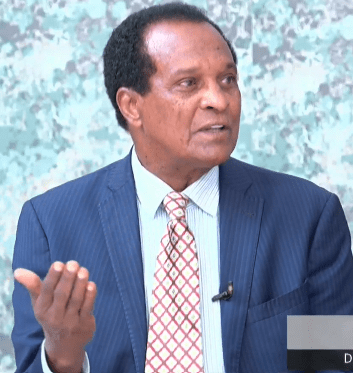
What makes Obbo Yonaataan’s story even more remarkable is his silence. He does not march in protest. He does not give bitter interviews. He lives quietly, having offered his time, his skills, and his experience to the Oromo struggle without demanding a receipt.
But history demands that receipts be kept.
The struggle is not only about the future. It is also about honoring those who mortgaged their present for that future. Obbo Yonaataan gave up a life of power for a life of purpose. Now, in his twilight years, it is the Oromo people’s turn to show that purpose is not ungrateful.
“Qabsaawaan ni kufa, qabsoon itti fufa” – The fighter may fall, but the struggle continues. But before the next fighter falls, let them know that their nation will be there to catch them.

A Life of Struggle: Honoring Jaal Tasfaayee Hordofaa
By Daandii Ragabaa
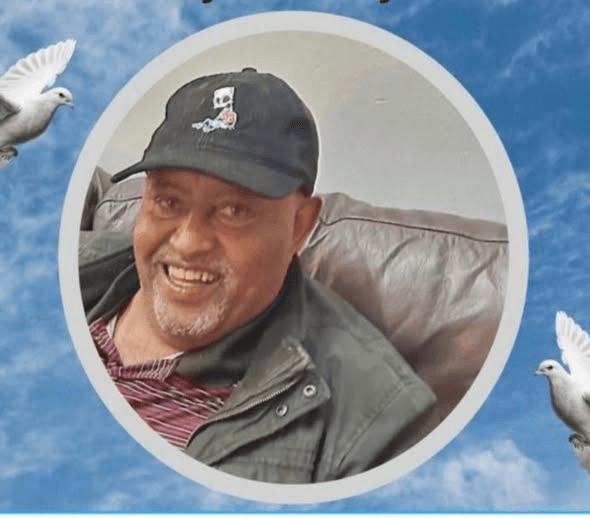
The Oromo liberation movement has lost one of its most steadfast and loyal comrades. Jaal Tasfaayee Hordofaa, a veteran member of the Oromo Liberation Front (ABO) and a tireless advocate for his people, passed away on May 2, 2026, after succumbing to a prolonged illness. He was 70 years old.
Jaal Tasfaayee’s journey from the rural highlands of western Oromia to the diaspora politics of the United States is a story of unwavering commitment. Born in 1956 in the Horro Guduru Zone of western Oromia, he came of age during some of the most repressive decades in modern Ethiopian history. It was a time when speaking the Oromo language openly or asserting Oromo identity could invite severe punishment.
Yet, rather than be silenced, Tasfaayee chose the path of resistance.
Underground Roots and Unbroken Resolve
At the height of the Derg regime and later under the successive Ethiopian governments, Jaal Tasfaayee became an active member of the ABO (Oromo Liberation Front) inside the homeland. He operated within the clandestine underground structure of the movement in Oromia itself—a role that demanded immense courage, absolute secrecy, and a willingness to sacrifice everything.
Comrades who knew him describe a man of cichoomina (an anchor-like steadfastness). He was not a fair-weather revolutionary. Whether in the shadows of the underground or later, in the open political spaces of the diaspora, his loyalty to the cause of Oromo self-determination never wavered.
After relocating to North America, Jaal Tasfaayee did not retire from the struggle. Instead, he channeled his energy into the ABO Washington DC chapter. There, he became a pillar of the Oromo community, organizing, educating, and advocating until the very moment his body was overcome by the illness that eventually claimed him.
A Legacy of Fatherhood and Struggle
Beyond the politics, the family of Jaal Tasfaayee Hordofaa mourns a patriarch. He leaves behind a profound personal legacy: nine children and sixteen grandchildren. For those who knew him not just as a comrade but as a father, grandfather, and brother, the loss is deeply intimate.
His funeral was held on May 9, 2026, in Philadelphia, Pennsylvania. Members of the Oromo community, fellow ABO leaders, friends, and family gathered to pay their final respects, to honor a life lived not for personal gain, but for collective liberation.
“The Fighter Falls, the Struggle Continues”
In the condolence announcement released by the ABO External Branch (Caaasaa ABO Biyya Alaa), the mood is one of solemn mourning mixed with defiant resolve. “For losing such a strong comrade, we express our grief,” the statement reads. “May his soul find eternal rest. We extend strength to his family, relatives, loved ones, and friends.”
And then, the uncompromising closing line that captures the spirit of the man they laid to rest: “Qabsaawaan ni kufa, qabsoon itti fufa!” (“The fighter may fall, but the struggle continues!”)
Jaal Tasfaayee Hordofaa has rested. He has concluded his earthly journey. But for those who carry the flag forward, his quiet courage, his underground years, and his diaspora leadership will remain a flame that refuses to die.
Rest in struggle, Jaal Tasfaayee Hordofaa (1956 – 2026).

A Forgotten Friendship Reclaimed: New Book Illuminates Krapf and the Oromo People
By Daandii Ragabaa (Based on a social media post by Robsan Mako)
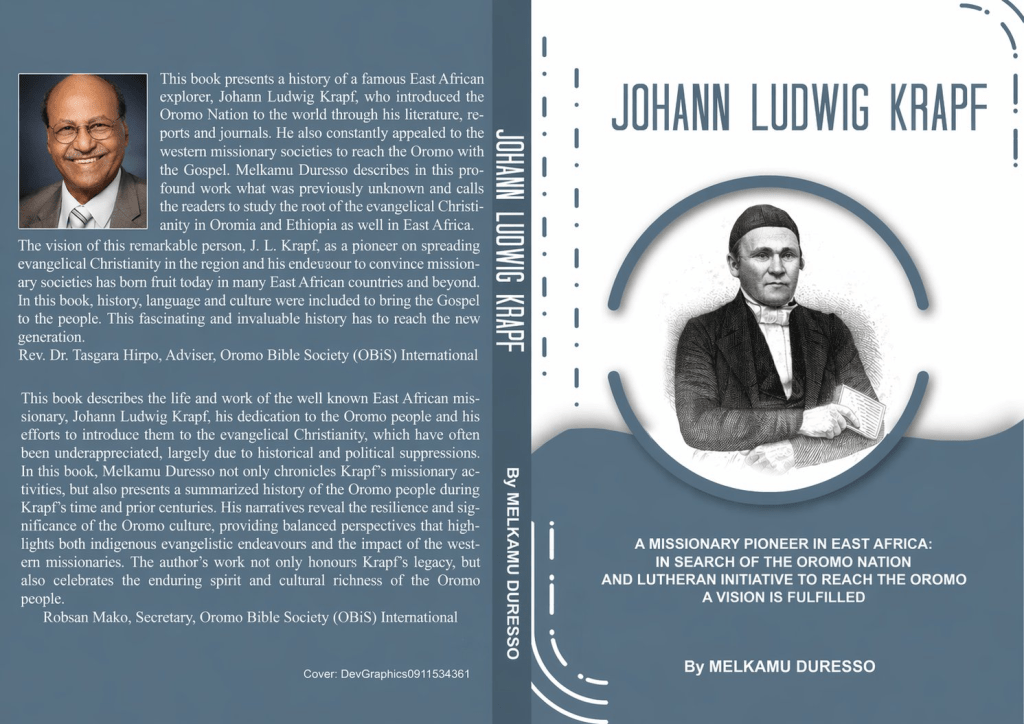
OSLO, Norway – For over a century, a peculiar silence has hung over one of the most fascinating relationships in the annals of Ethiopian history: the profound bond between Johann Ludwig Krapf, the German missionary and explorer, and the Oromo people. That silence, according to a chorus of scholars and advocates, was no accident. But as the saying goes, there is a time for everything. And now, finally, that time has come.
A groundbreaking new book, penned by the esteemed historian, linguist, church leader, and human rights advocate Melkamu Duresso, has officially been released, promising to shatter the historical omerta surrounding Krapf’s work. The announcement was made with palpable excitement by Robsan Mako, who expressed deep honor at having written both the foreword and the back cover blurb for what he calls a “valuable and timely” work.
The Man Who Loved the Oromo
Johann Ludwig Krapf is a name known to many students of Ethiopian history. He arrived in the early 19th century, famed for his travels and his linguistic feats. But according to Melkamu Duresso’s research, the standard narratives have long downplayed a critical dimension of Krapf’s legacy: his profound love and respect for the Oromo people.
Unlike many European travelers of his era who viewed African societies through a colonial lens, Krapf was different. He immersed himself in Oromo history, meticulously studied the Oromo language, celebrated the rich culture, and defended the identity of the nation. He wrote extensively and positively—a rarity for his time.
Yet, for many years, this story was denied proper publicity. Why? The answer, Robsan Mako suggests in his announcement, lies in the corridors of power.
“Certain groups within the Ethiopian power elite during different periods of history were not comfortable with Krapf’s positive writings,” Robsan notes. A missionary who saw the Oromo as a people with a glorious past and a distinct identity did not fit the political narratives of successive regimes that sought to marginalize or assimilate the nation. To publicize Krapf’s work would be to validate a counter-historical truth—that the Oromo have always been a proud, distinct, and historically significant people.
A Scholar’s Life’s Work
Melkamu Duresso is uniquely qualified to resurrect this history. A graduate of Addis Ababa University in History and English, he later pursued advanced studies at the prestigious Hamburg University in Germany, delving into History, Political Science, English Literature, and Culture. It was at Hamburg that he also served as a lecturer of the Oromo language, further cementing his role as a bridge between Oromo culture and European academia. He is already widely respected as the author of a highly authoritative Oromo-German Dictionary.
Drawing from years of research and deep reflection, Melkamu’s new book does more than simply re-tell Krapf’s biography. It weaves together several crucial threads: the life and mission of the explorer himself, critical new insights into Oromo history, and the fascinating story of the spread of Evangelical Christianity among the Oromo people—a movement in which Krapf played an instrumental role.
A Witness to Dedication
For Robsan Mako, the publication is not just an academic achievement; it is a moral victory. “This publication is another witness to his lifelong dedication to scholarship, language, faith, history, and human rights,” he wrote from Oslo, where he shared the news alongside the Oromo Bible Society (OBiS) and others.
The book arrives as a powerful intervention in contemporary Ethiopian debates about identity, history, and national unity. By reclaiming the story of a 19th-century German who saw dignity where others saw savagery, Melkamu Duresso is offering the Oromo people a reflection of themselves as seen through the eyes of an admiring outsider—a validation written in the amber of historical record.
An Urgent Call to the Youth
As the announcement circulates through diaspora communities and back to Ethiopia itself, Robsan Mako has issued a passionate plea, particularly to the younger generation.
“I encourage everybody—especially the younger generation—to read this valuable and timely book,” he urges. In an era of social media snippets and forgotten pasts, the book stands as a monument to deep research and the long struggle for historical truth. It is a reminder that the stories which are silenced are often the most important ones to tell.
While the official sales channels are still being finalized—with announcements expected soon for readers both in Ethiopia and abroad—one thing is already clear: the long wait is over.
Congratulations have poured in for Melkamu Duresso on his remarkable achievement. At last, Johann Ludwig Krapf’s true legacy, and his love for the Oromo people, can step out of the shadows and into the light of a new day.

A Life of Struggle Immortalized: The Launch of “Leencoo Lataa: A Life of Struggle”
By Daandii Ragabaa (Based on the report of Bariisaa Newspaper by Natsaannat Taaddasaa)
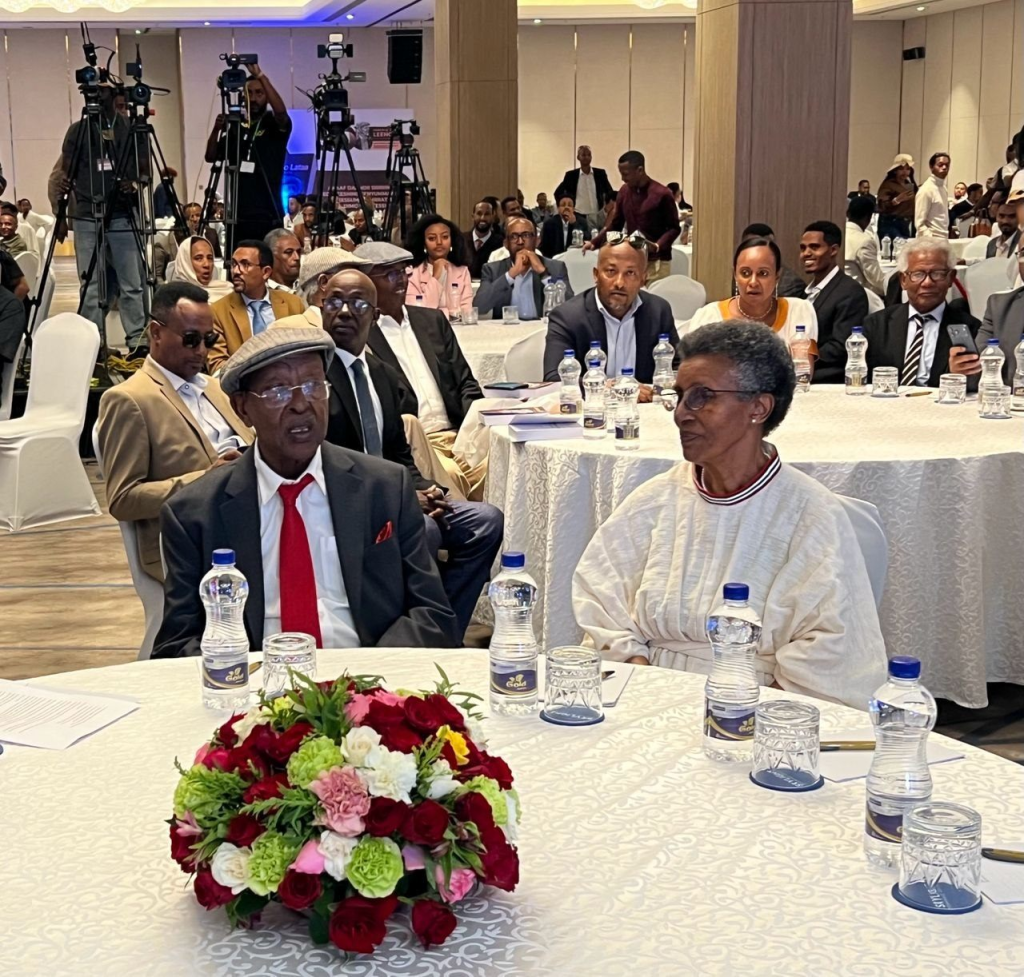
FINFINNEE – In the annals of Ethiopia’s turbulent political history, certain names rise above the fray, etched not just into the memory of a single generation but into the very bedrock of the nation’s long quest for change. Obbo Leencoo Lataa is one such name. A revered intellectual, a seasoned revolutionary, and a witness to nearly a century of upheaval, his life story has now been captured between the covers of a new book.
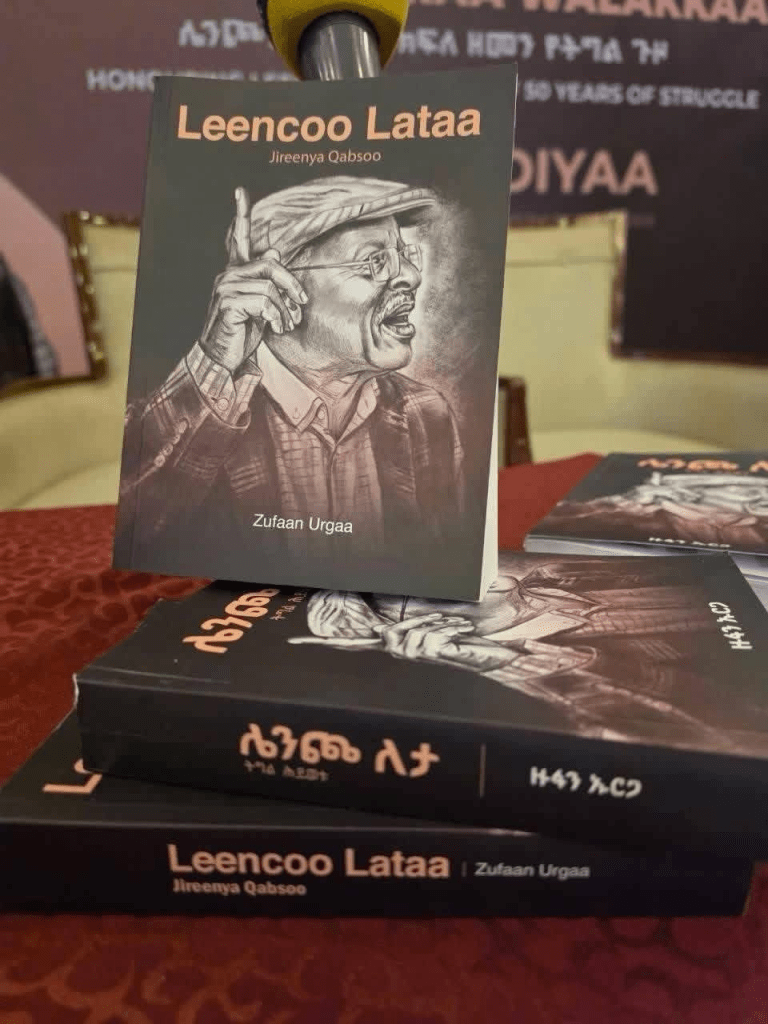
The much-anticipated biography, titled “Leencoo Lataa:Jireenya Qabsoo” (Leencoo Lataa: A Life of Struggle), was officially unveiled this past week in a ceremony held at the Skylight Hotel in Finfinnee. The event was more than a simple book launch; it was a gathering of comrades, historians, and young admirers, all coming together to honor a legacy forged in the crucible of Ethiopia’s most dramatic decades.
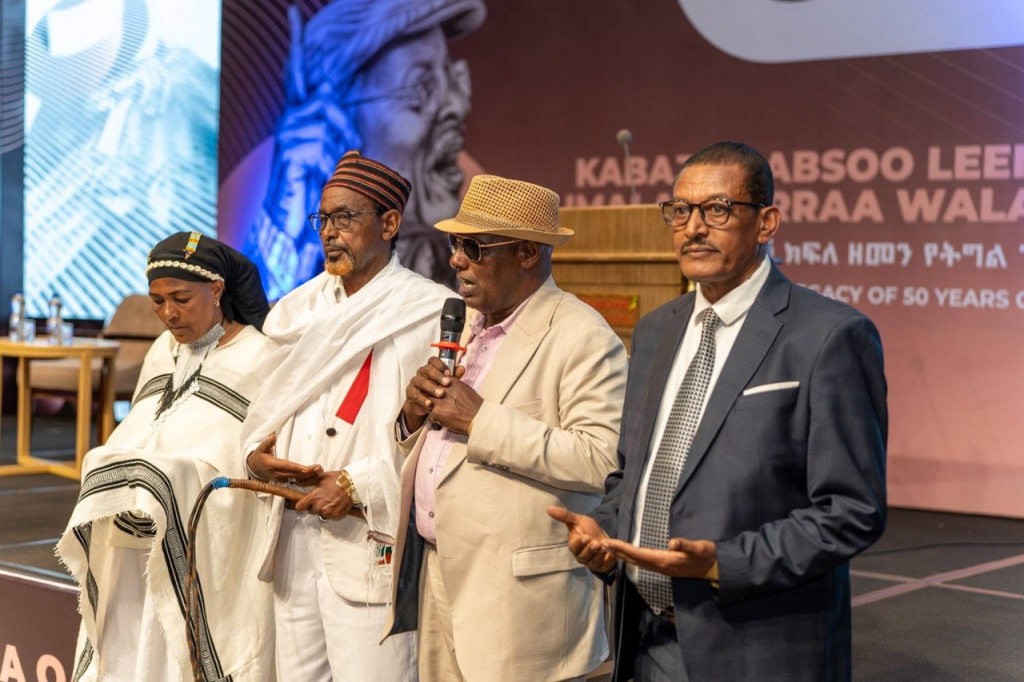
The ceremony began with a powerful and symbolic touch: a traditional blessing performed by Gadaa elders and the Haadha Siinqee (the revered mothers and custodians of Oromo democratic traditions). This invocation set a somber yet celebratory tone, reminding all present that the struggle documented within the book’s pages is rooted in the deep, pre-colonial values of justice and equality.
A Life Through the Lens
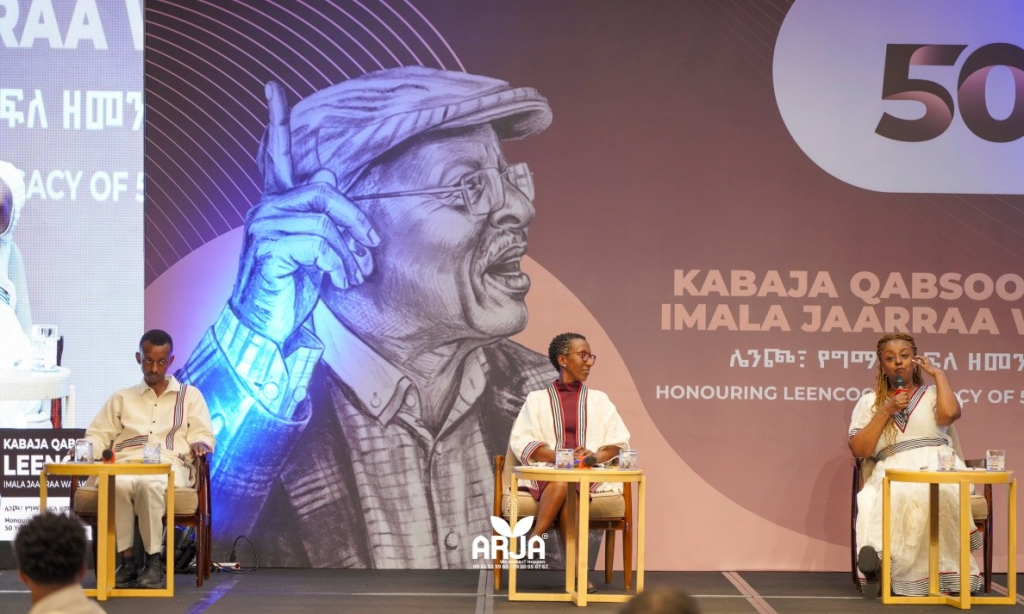
To truly understand the man, the audience was first taken on a visual journey. The launch featured a poignant slideshow of rare photographs and a screening of a short documentary tracing Obbo Leencoo’s footsteps. From his early days as a student activist to his years as a prominent figure in the Oromo Liberation Front (OLF), and later as a leading opposition politician in a changing Ethiopia, the images told a story of resilience, sacrifice, and unwavering conviction.
Following the film, a panel discussion brought together veteran comrades and scholars who have walked alongside Obbo Leencoo. They dissected key moments of his revolutionary journey—the clandestine meetings, the ideological battles, the imprisonments, and the long years in exile. The panel did not shy away from the complexities of his career, instead painting a portrait of a man who has consistently placed the liberation of his people above personal ambition.
Giving a Voice to History
The author of this definitive biography is Zufaan Urgaa, a writer already well-known to those familiar with Ethiopia’s revolutionary literature. Zufaan is the same author who previously chronicled the life of another giant, General Taaddasaa Birru, in a celebrated work. In “Leencoo Lataa: Jireenya Qabsoo,” Zufaan applies his meticulous eye for detail and deep understanding of the period to capture the half-century-long struggle of Obbo Leencoo.
Speaking at the launch, Zufaan explained that the book is not merely a chronological list of events, but an attempt to understand the soul of a revolutionary. “A struggle is not made of ideologies alone; it is made of the sweat, the doubt, the pain, and the hope of human beings,” he said. “I wanted to show Leencoo Lataa—the man behind the history book.”
A Legacy for Tomorrow
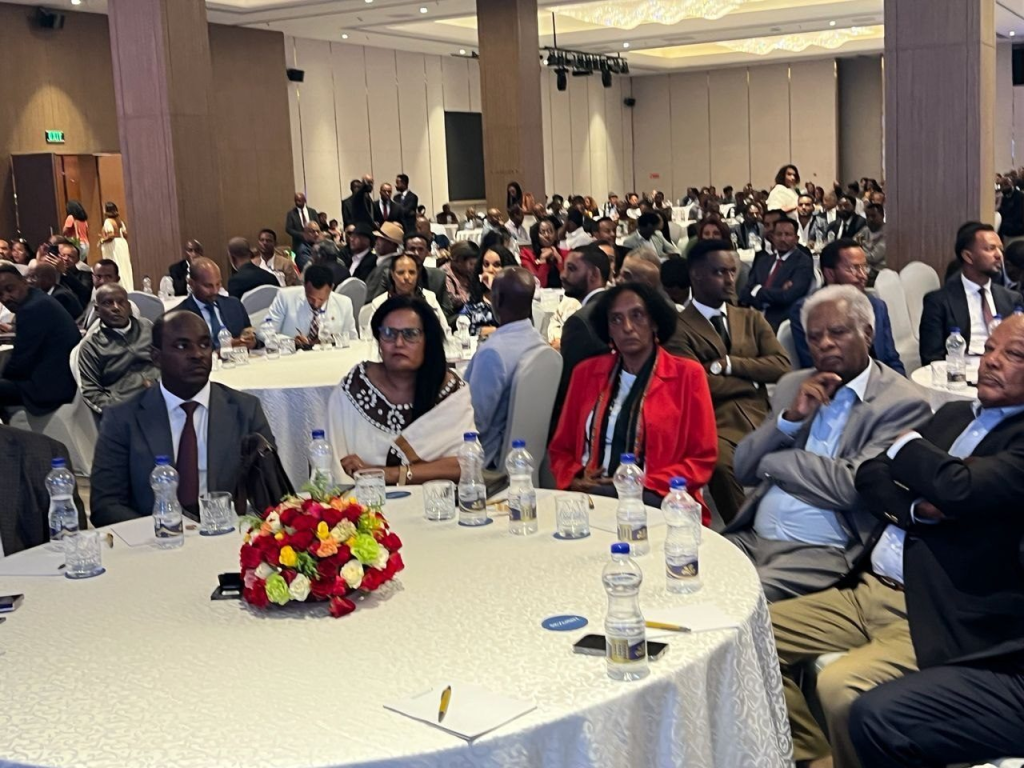
As the formal proceedings drew to a close, the consensus among the attendees was clear: this book arrives at a critical juncture. Ethiopia is still navigating the rapids of political reform and ethnic federalism, often forgetting the hard-won lessons of the past. The younger generation, born into a different Ethiopia, risks losing touch with the sacrifices that made their present reality possible.
“Leencoo Lataa: Jireenya Qabsoo” serves as a vital bridge. It is a reminder that today’s political landscape was watered by the tears and blood of those who came before. It is a call to memory, urging the youth to not only recall yesterday’s struggles but to use that knowledge to build a more just tomorrow.
For Obbo Leencoo Lataa, now in the twilight of his life, the book stands as a testament that his journey—with all its victories and defeats—has not been forgotten. As the guests lined up to receive their signed copies, one young university student summed up the feeling in the room: “This is not just his story. This is our map.”

A Brutal Killing, a Fleeing Suspect, and Finally Justice: The Story of Adanech Kumsa
By Daandii Ragabaa
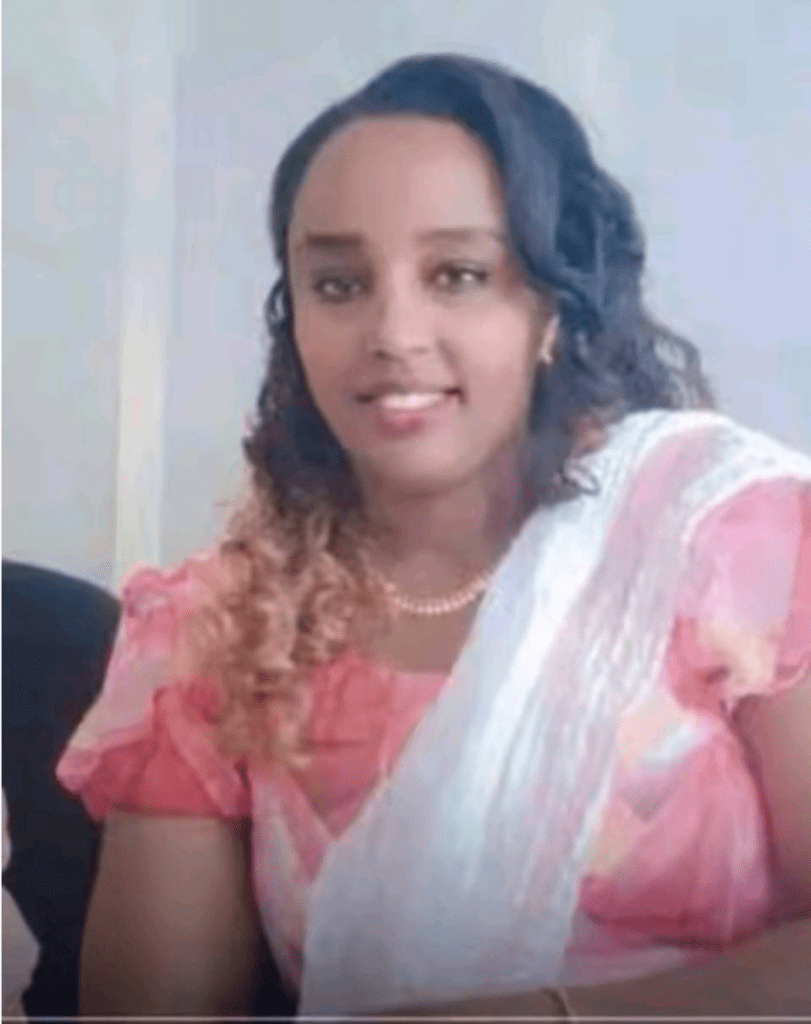
Addis Ababa, May 10, 2026 (ONA) — She was a mother of two. A worker at the Aleltu branch of the Commercial Bank of Ethiopia. A resident of Sendafa Beke town. Her name was Adanech Kumsa.
And on the night of December 14, 2018 (Ethiopian calendar), her life was taken in the most brutal manner imaginable.
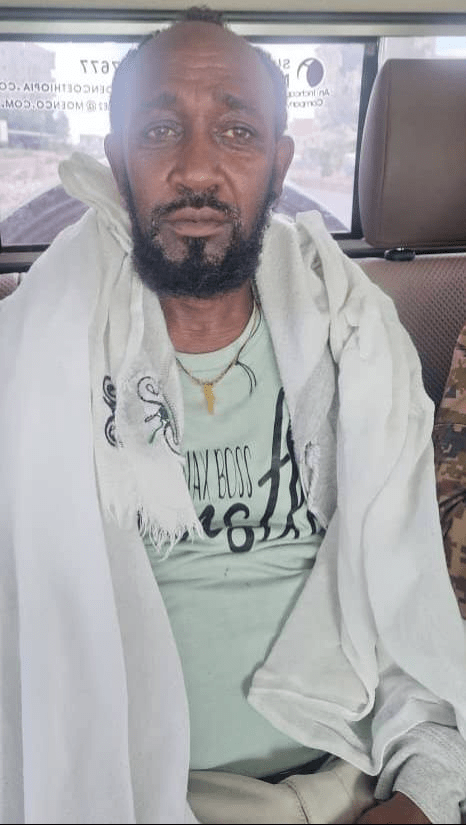
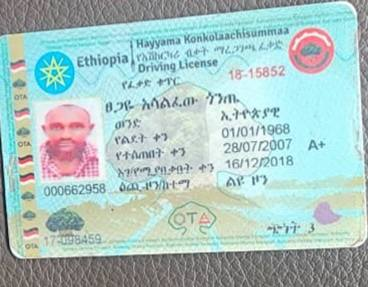
Today, after months of hiding, the man accused of her murder—Tegegaye Asalfew Gonte, also known as “Segaye”—has finally been captured.
The Night of the Killing
According to police investigation records, on the fateful evening, Adanech and Segaye were dining together at a hotel. At some point, an argument erupted between them. Adanech, feeling unsafe or simply unwilling to remain in his presence, left the table and walked away.
But Segaye followed her.
He forced her into a car and drove to an area known locally as “Gomata.” There, in a secluded spot far from help or witness, he pulled out a gun and shot her. Then he fled, leaving her body behind.
A Mother’s Remains, Scattered by Wild Animals
Adanech was not found for some time. By the time police located her remains, wild animals had already devoured much of her body. Only her head was recovered.
The investigation file describes a scene of profound horror—not just for law enforcement, but for a family that had to bury only part of their beloved mother and daughter.
A Trail of Clues
Segaye did not simply vanish. He abandoned the car used in the murder, along with the gun, in the town of Aleltu. Inside the vehicle, police discovered blood traces—critical evidence linking him to the crime.
With the car, the gun, and the blood evidence in hand, federal investigators began a painstaking manhunt. But Segaye had no intention of surrendering easily.
The Hunt: Fake IDs and Hidden Movements
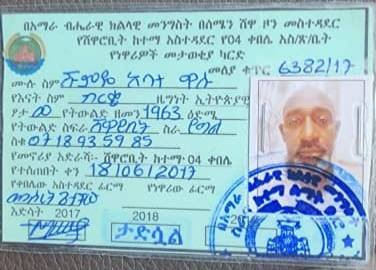
For months, the Ethiopian Federal Police, working in close coordination with the National Intelligence and Security Service (NISS), other security forces, and the Sendafa Beke town administration, tracked Segaye across multiple cities.
He had assumed a quiet, peaceful appearance, mingling with ordinary citizens while carrying fake identification documents. He moved from Debre Berhan to Kemise, from Shewa Robit to Ataye—always one step ahead, always under a new name.
But on Thursday, May 10, 2026, in the city of Debre Berhan, his flight ended. Police placed him under formal arrest.
Justice, but Not Closure
The Ethiopian Federal Police have stated that investigations will continue with renewed intensity. They also issued a firm warning: no criminal who attempts to flee from justice can escape the law forever.
In an official statement, police expressed gratitude to all partner institutions and local administrations whose cooperation made the arrest possible.
For the family of Adanech Kumsa—especially her two young children—the arrest brings a measure of justice, but not healing. No arrest can return a mother. No conviction can undo the horror of December 14.
But as the suspect now faces the full weight of the law, there is at least this: the man who tried to hide from his crime has been found. The long arm of justice has reached him.
And a mother’s memory, however painfully, will not be forgotten.
Reported by Daandii Ragabaa, based on official police statements and investigation records.




 Advocacy for Oromia