
A Life of Struggle Immortalized: The Launch of “Leencoo Lataa: A Life of Struggle”
By Daandii Ragabaa (Based on the report of Bariisaa Newspaper by Natsaannat Taaddasaa)
FINFINNEE – In the annals of Ethiopia’s turbulent political history, certain names rise above the fray, etched not just into the memory of a single generation but into the very bedrock of the nation’s long quest for change. Obbo Leencoo Lataa is one such name. A revered intellectual, a seasoned revolutionary, and a witness to nearly a century of upheaval, his life story has now been captured between the covers of a new book.
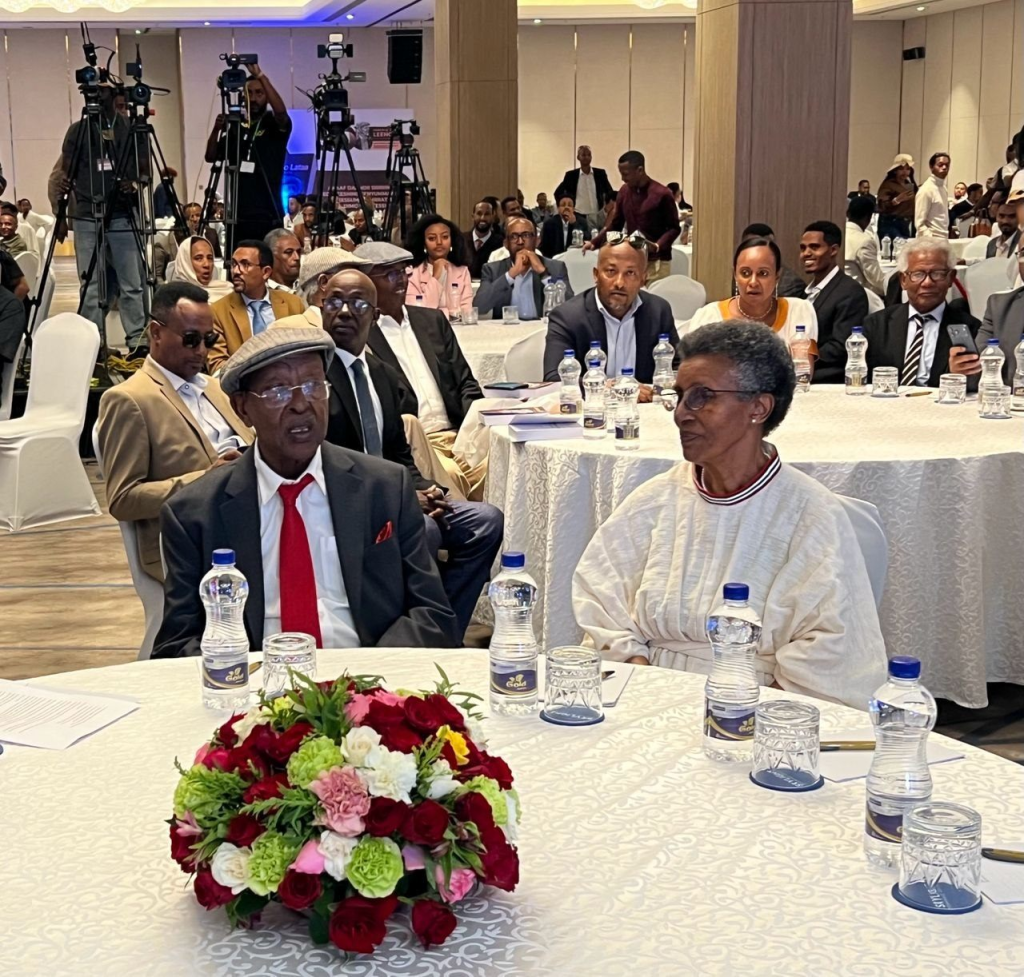
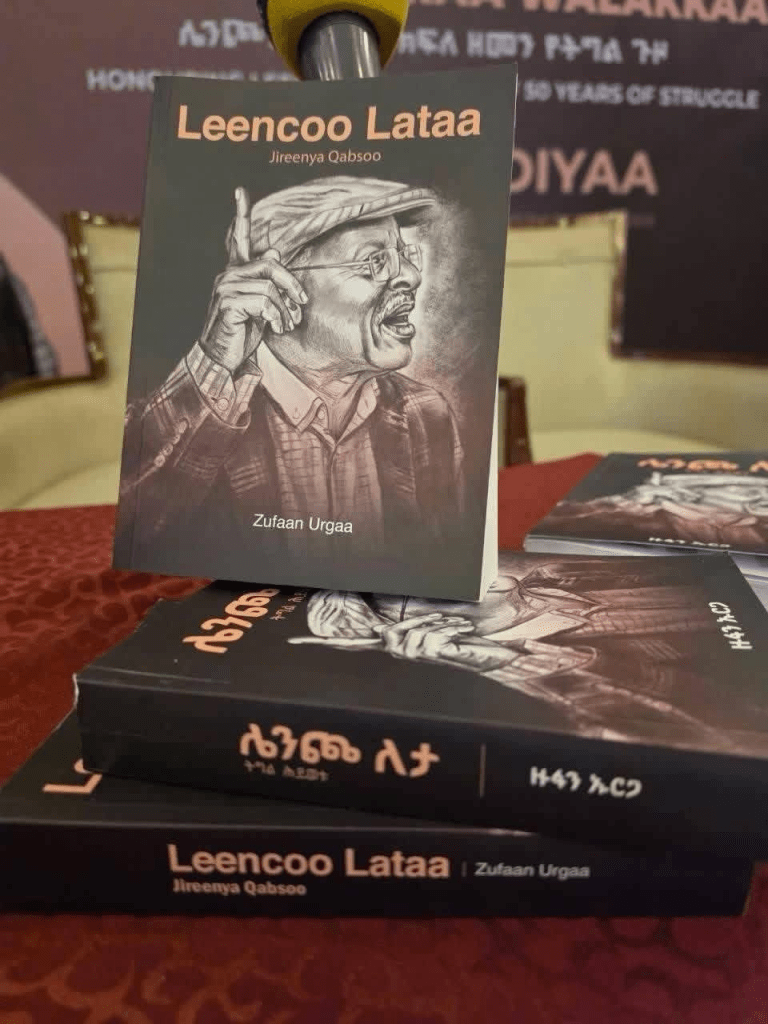
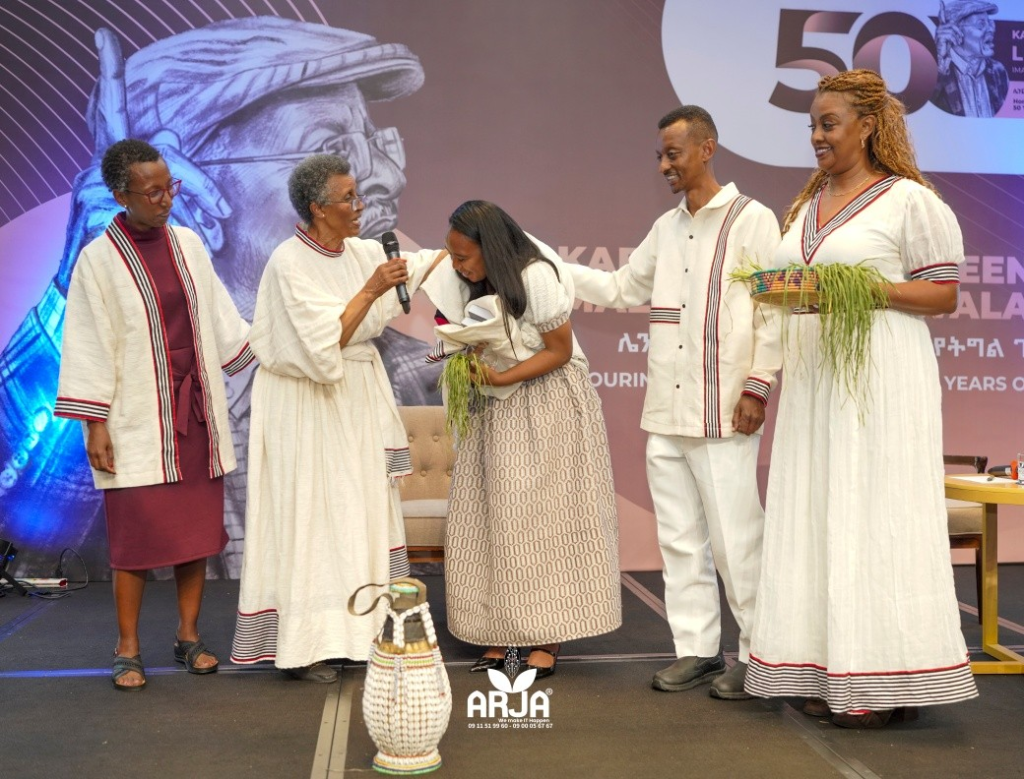
The much-anticipated biography, titled “Leencoo Lataa:Jireenya Qabsoo” (Leencoo Lataa: A Life of Struggle), was officially unveiled this past week in a ceremony held at the Skylight Hotel in Finfinnee. The event was more than a simple book launch; it was a gathering of comrades, historians, and young admirers, all coming together to honor a legacy forged in the crucible of Ethiopia’s most dramatic decades.
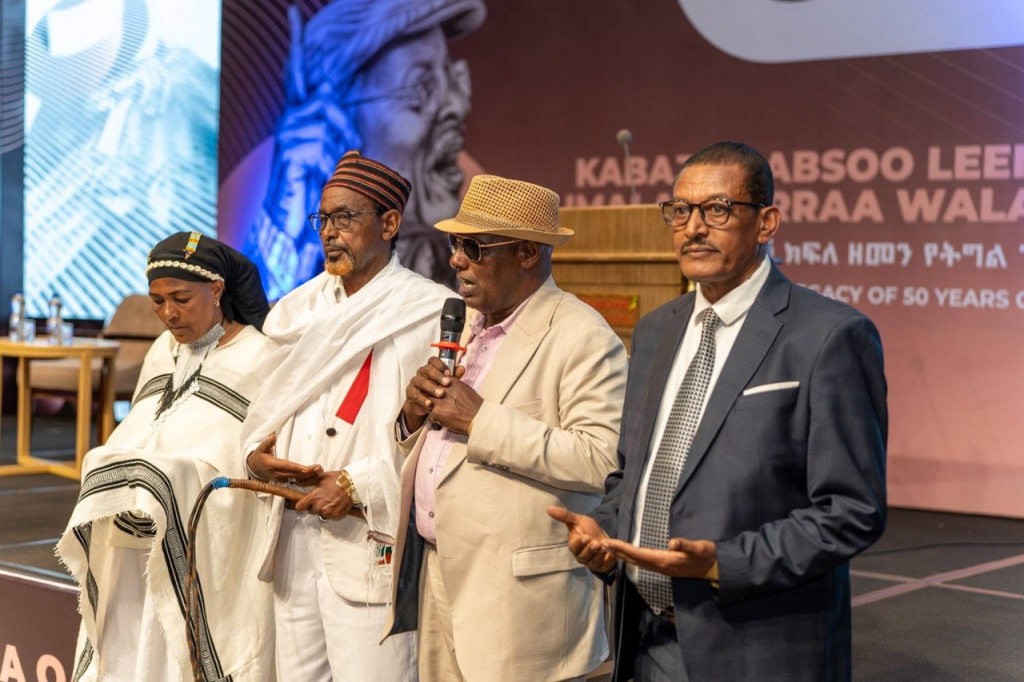
The ceremony began with a powerful and symbolic touch: a traditional blessing performed by Gadaa elders and the Haadha Siinqee (the revered mothers and custodians of Oromo democratic traditions). This invocation set a somber yet celebratory tone, reminding all present that the struggle documented within the book’s pages is rooted in the deep, pre-colonial values of justice and equality.
A Life Through the Lens
To truly understand the man, the audience was first taken on a visual journey. The launch featured a poignant slideshow of rare photographs and a screening of a short documentary tracing Obbo Leencoo’s footsteps. From his early days as a student activist to his years as a prominent figure in the Oromo Liberation Front (OLF), and later as a leading opposition politician in a changing Ethiopia, the images told a story of resilience, sacrifice, and unwavering conviction.
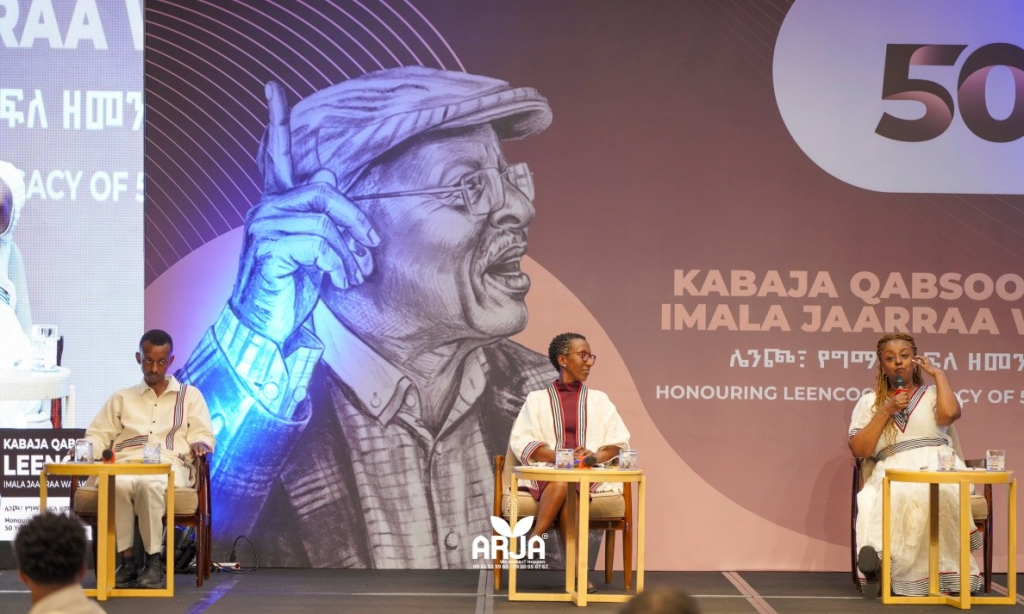
Following the film, a panel discussion brought together veteran comrades and scholars who have walked alongside Obbo Leencoo. They dissected key moments of his revolutionary journey—the clandestine meetings, the ideological battles, the imprisonments, and the long years in exile. The panel did not shy away from the complexities of his career, instead painting a portrait of a man who has consistently placed the liberation of his people above personal ambition.
Giving a Voice to History
The author of this definitive biography is Zufaan Urgaa, a writer already well-known to those familiar with Ethiopia’s revolutionary literature. Zufaan is the same author who previously chronicled the life of another giant, General Taaddasaa Birru, in a celebrated work. In “Leencoo Lataa: Jireenya Qabsoo,” Zufaan applies his meticulous eye for detail and deep understanding of the period to capture the half-century-long struggle of Obbo Leencoo.
Speaking at the launch, Zufaan explained that the book is not merely a chronological list of events, but an attempt to understand the soul of a revolutionary. “A struggle is not made of ideologies alone; it is made of the sweat, the doubt, the pain, and the hope of human beings,” he said. “I wanted to show Leencoo Lataa—the man behind the history book.”
A Legacy for Tomorrow
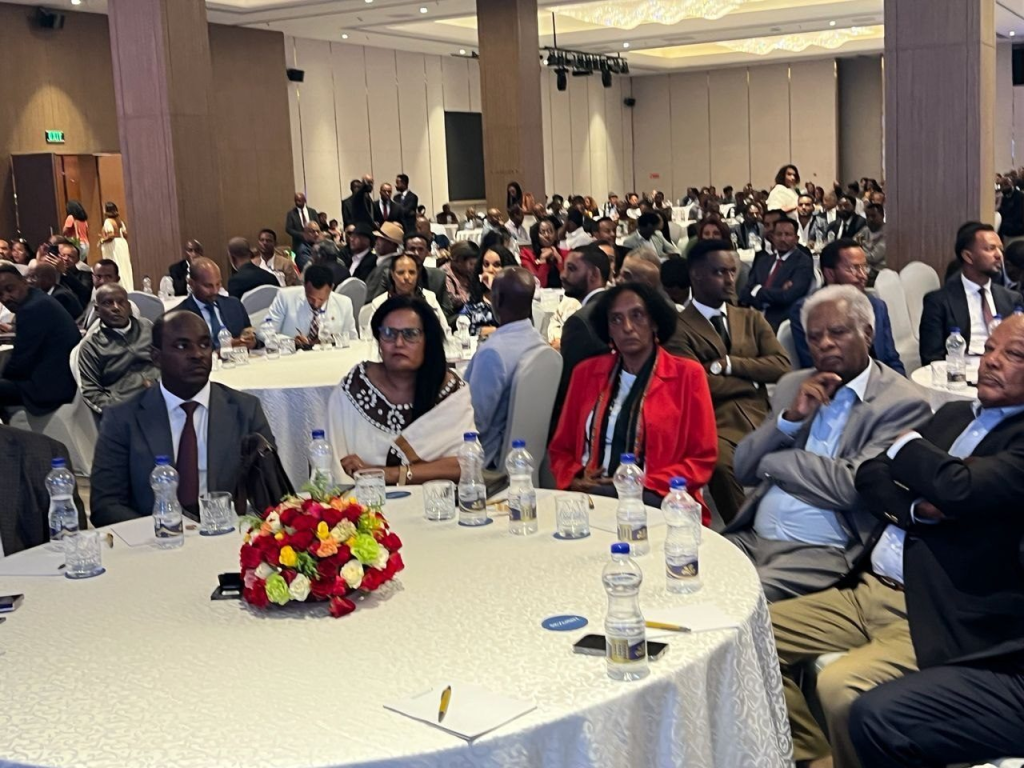
As the formal proceedings drew to a close, the consensus among the attendees was clear: this book arrives at a critical juncture. Ethiopia is still navigating the rapids of political reform and ethnic federalism, often forgetting the hard-won lessons of the past. The younger generation, born into a different Ethiopia, risks losing touch with the sacrifices that made their present reality possible.
“Leencoo Lataa: Jireenya Qabsoo” serves as a vital bridge. It is a reminder that today’s political landscape was watered by the tears and blood of those who came before. It is a call to memory, urging the youth to not only recall yesterday’s struggles but to use that knowledge to build a more just tomorrow.
For Obbo Leencoo Lataa, now in the twilight of his life, the book stands as a testament that his journey—with all its victories and defeats—has not been forgotten. As the guests lined up to receive their signed copies, one young university student summed up the feeling in the room: “This is not just his story. This is our map.”

A Brutal Killing, a Fleeing Suspect, and Finally Justice: The Story of Adanech Kumsa
By Daandii Ragabaa
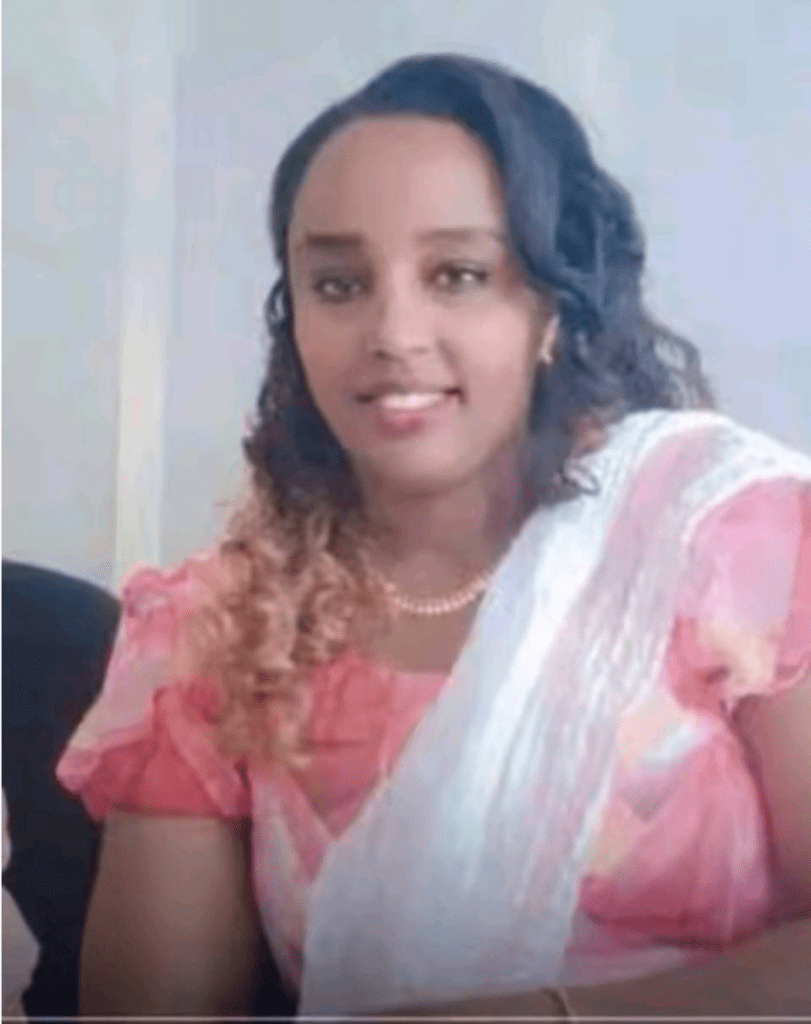
Addis Ababa, May 10, 2026 (ONA) — She was a mother of two. A worker at the Aleltu branch of the Commercial Bank of Ethiopia. A resident of Sendafa Beke town. Her name was Adanech Kumsa.
And on the night of December 14, 2018 (Ethiopian calendar), her life was taken in the most brutal manner imaginable.
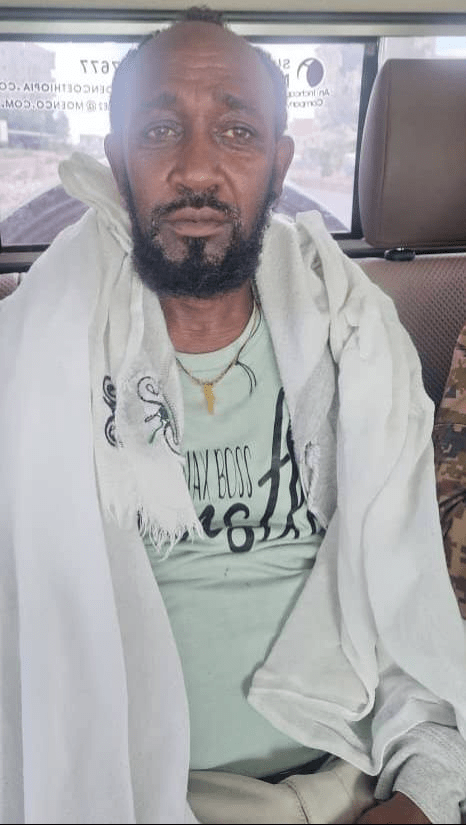
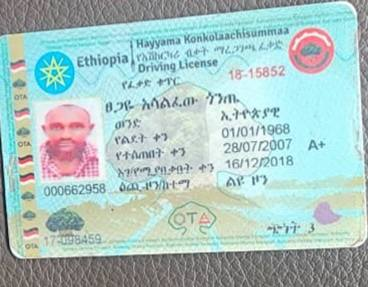
Today, after months of hiding, the man accused of her murder—Tegegaye Asalfew Gonte, also known as “Segaye”—has finally been captured.
The Night of the Killing
According to police investigation records, on the fateful evening, Adanech and Segaye were dining together at a hotel. At some point, an argument erupted between them. Adanech, feeling unsafe or simply unwilling to remain in his presence, left the table and walked away.
But Segaye followed her.
He forced her into a car and drove to an area known locally as “Gomata.” There, in a secluded spot far from help or witness, he pulled out a gun and shot her. Then he fled, leaving her body behind.
A Mother’s Remains, Scattered by Wild Animals
Adanech was not found for some time. By the time police located her remains, wild animals had already devoured much of her body. Only her head was recovered.
The investigation file describes a scene of profound horror—not just for law enforcement, but for a family that had to bury only part of their beloved mother and daughter.
A Trail of Clues
Segaye did not simply vanish. He abandoned the car used in the murder, along with the gun, in the town of Aleltu. Inside the vehicle, police discovered blood traces—critical evidence linking him to the crime.
With the car, the gun, and the blood evidence in hand, federal investigators began a painstaking manhunt. But Segaye had no intention of surrendering easily.
The Hunt: Fake IDs and Hidden Movements
For months, the Ethiopian Federal Police, working in close coordination with the National Intelligence and Security Service (NISS), other security forces, and the Sendafa Beke town administration, tracked Segaye across multiple cities.
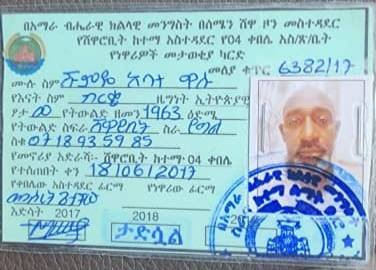
He had assumed a quiet, peaceful appearance, mingling with ordinary citizens while carrying fake identification documents. He moved from Debre Berhan to Kemise, from Shewa Robit to Ataye—always one step ahead, always under a new name.
But on Thursday, May 10, 2026, in the city of Debre Berhan, his flight ended. Police placed him under formal arrest.
Justice, but Not Closure
The Ethiopian Federal Police have stated that investigations will continue with renewed intensity. They also issued a firm warning: no criminal who attempts to flee from justice can escape the law forever.
In an official statement, police expressed gratitude to all partner institutions and local administrations whose cooperation made the arrest possible.
For the family of Adanech Kumsa—especially her two young children—the arrest brings a measure of justice, but not healing. No arrest can return a mother. No conviction can undo the horror of December 14.
But as the suspect now faces the full weight of the law, there is at least this: the man who tried to hide from his crime has been found. The long arm of justice has reached him.
And a mother’s memory, however painfully, will not be forgotten.
Reported by Daandii Ragabaa, based on official police statements and investigation records.

Celebrating Oromo Mothers: Love Across Borders
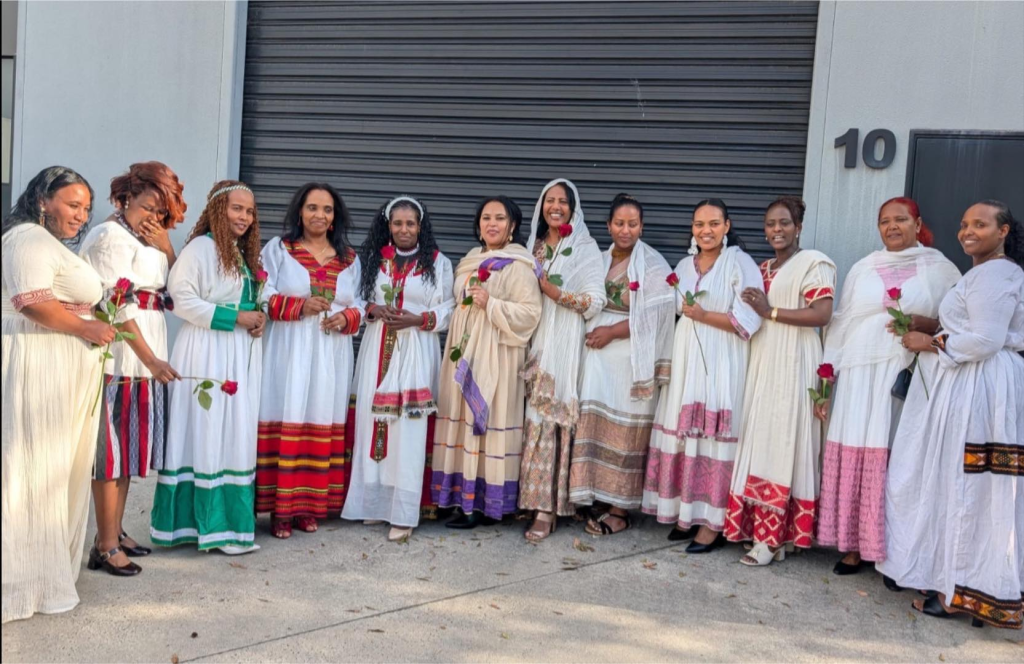
A Global Celebration of Oromo Motherhood: Strength, Sacrifice, and Unbroken Love
By Dhabessa Wakjira
Happy Mother’s Day to you all, beautiful Oromo moms across the globe.
From the highlands of Oromia to the streets of Minneapolis, from the pastoral plains of Borana to the bustling suburbs of Melbourne, from the ancient soils of Jimma to the immigrant neighborhoods of Stockholm and Washington, D.C.—today, the world turns its gaze to you.
Not because the calendar demands it. But because your love demands it.
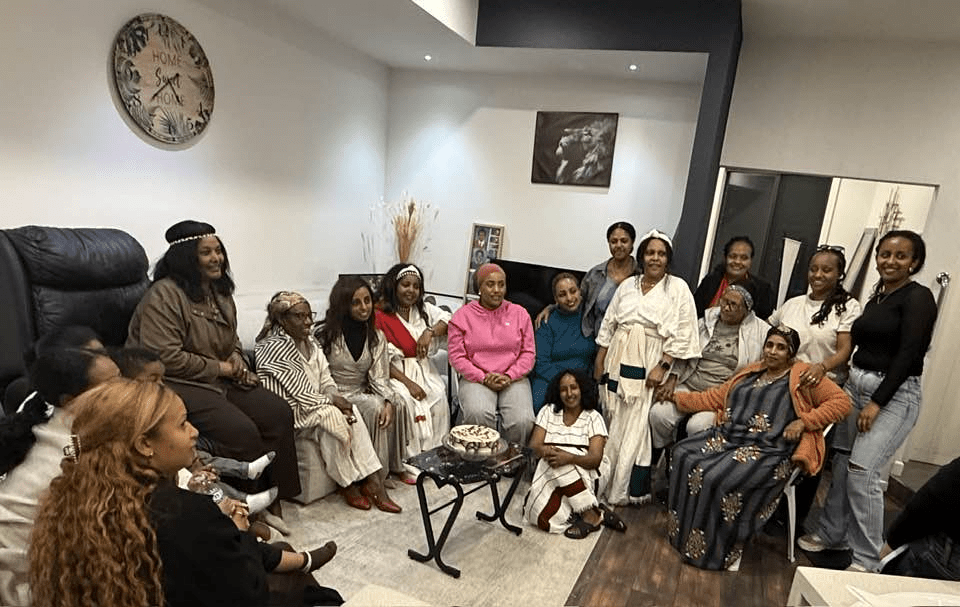
The Hands That Hold the Nation Together
An Oromo mother is not simply a parent. She is a living archive. She is the first teacher of the Afaan Oromo, the keeper of the sirba (traditional songs), the storyteller who whispers the names of heroes like Abdissa Aga, Elemo Qiltu, and Haile Fida into the ears of children who have never seen the homeland.
She is the one who cooks marqaa before the sun rises, who walks miles for water, who sits late into the night sewing uniforms for children whose school fees she can barely afford. She is the one who leaves her own plate empty so that others may eat.
And in the diaspora—far from the eebbisa (blessings) of elders and the shade of odaa trees—she becomes something else entirely: a bridge between two worlds.
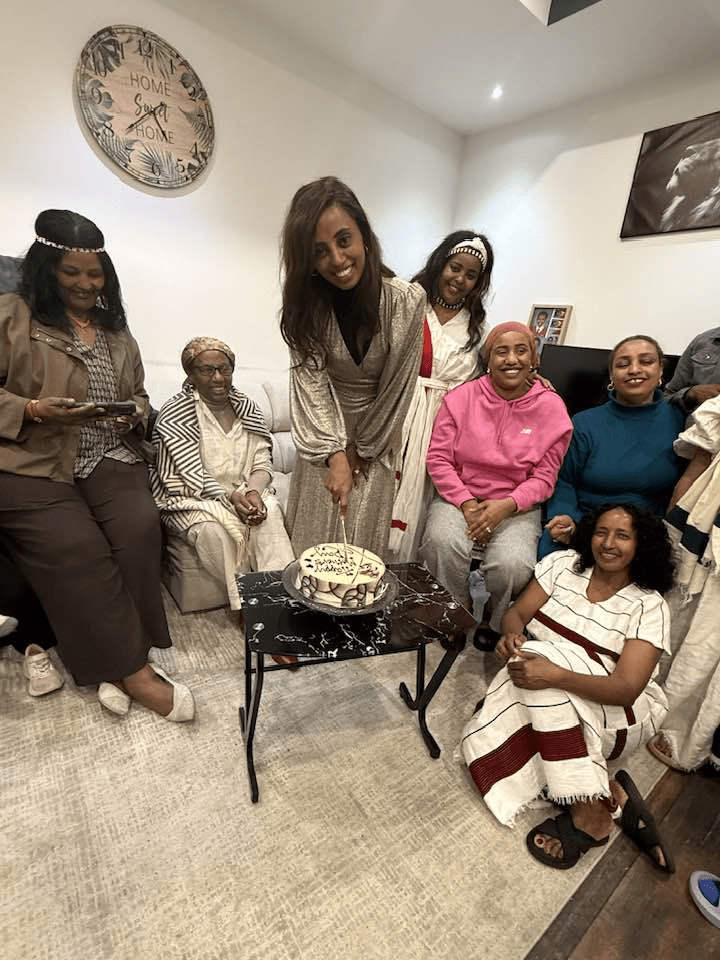
The Diaspora Oromo Mother: A Bridge of Tears and Hope
For Oromo mothers raising children in America, Europe, Australia, and beyond, the journey is different but no less difficult.
She wakes up to speak Afaan Oromo to children who answer back in English. She drives them to school, then drives to her own job—perhaps cleaning offices, caring for the elderly, or working a night shift at a hospital cafeteria, just like the immigrant mother who became Dr. Iftu (Hawi) in yesterday’s story.
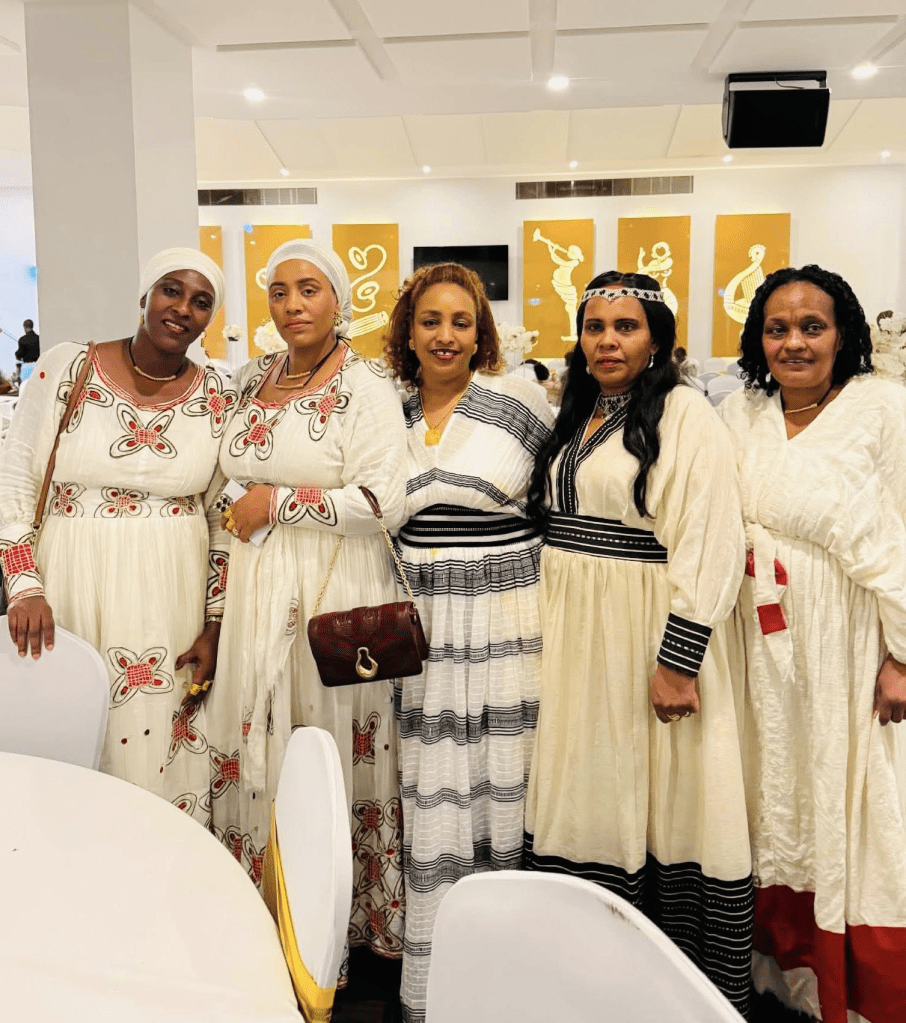
She carries the weight of two cultures. She wants her children to succeed in the West, but she also desperately wants them to know who they are—to understand Oromummaa (Oromo identity), to respect the Gadaa, to never be ashamed of their name or their skin or their language.
Some nights, she cries when no one is watching. The loneliness of being far from her own mother, far from her aadaa (culture), far from the familiar smell of buna (coffee) roasted by hand—it settles into her bones.
But every morning, she rises again. Because that is what Oromo mothers do.
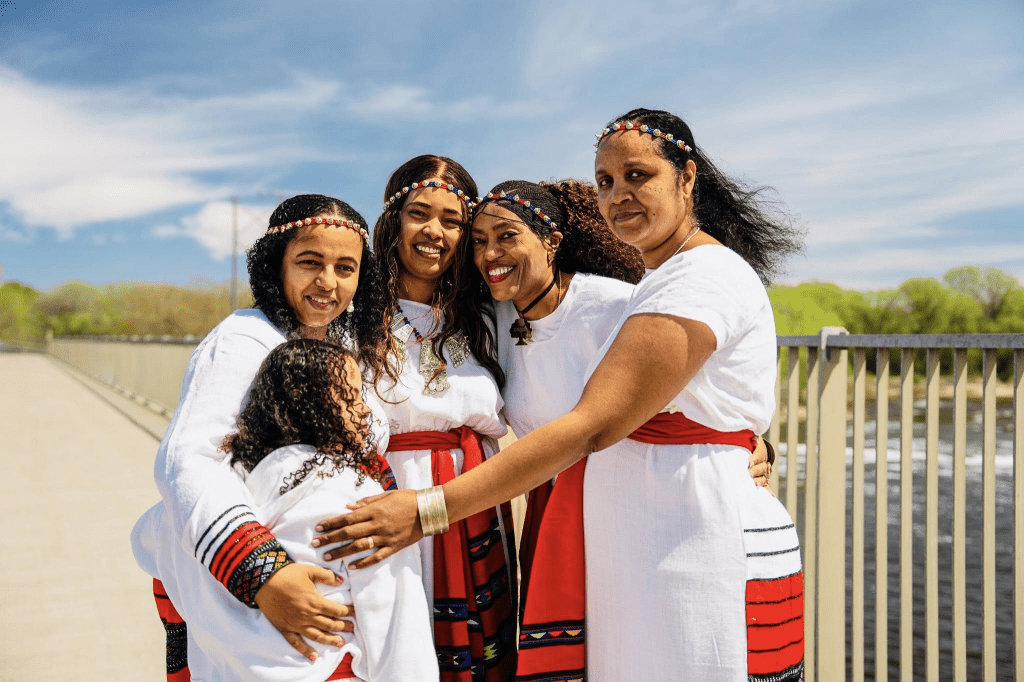
A Legacy of Resilience
History has not been kind to the Oromo people. But Oromo mothers have never surrendered. They have buried sons and daughters in struggles for justice. They have raised revolutionaries on their laps. They have marched, sung, prayed, and persisted through regimes that tried to erase their language and deny their identity.
And still, they teach their children: “Oromo ta’uu kee hin ilaalu. Oromo ta’uu kee eenni hin beeku. Ati Oromo ti. Kunis badhaasa guddaadha.”
(“Do not be ashamed of being Oromo. Let no one make you ashamed. You are Oromo. That is a great gift.”)
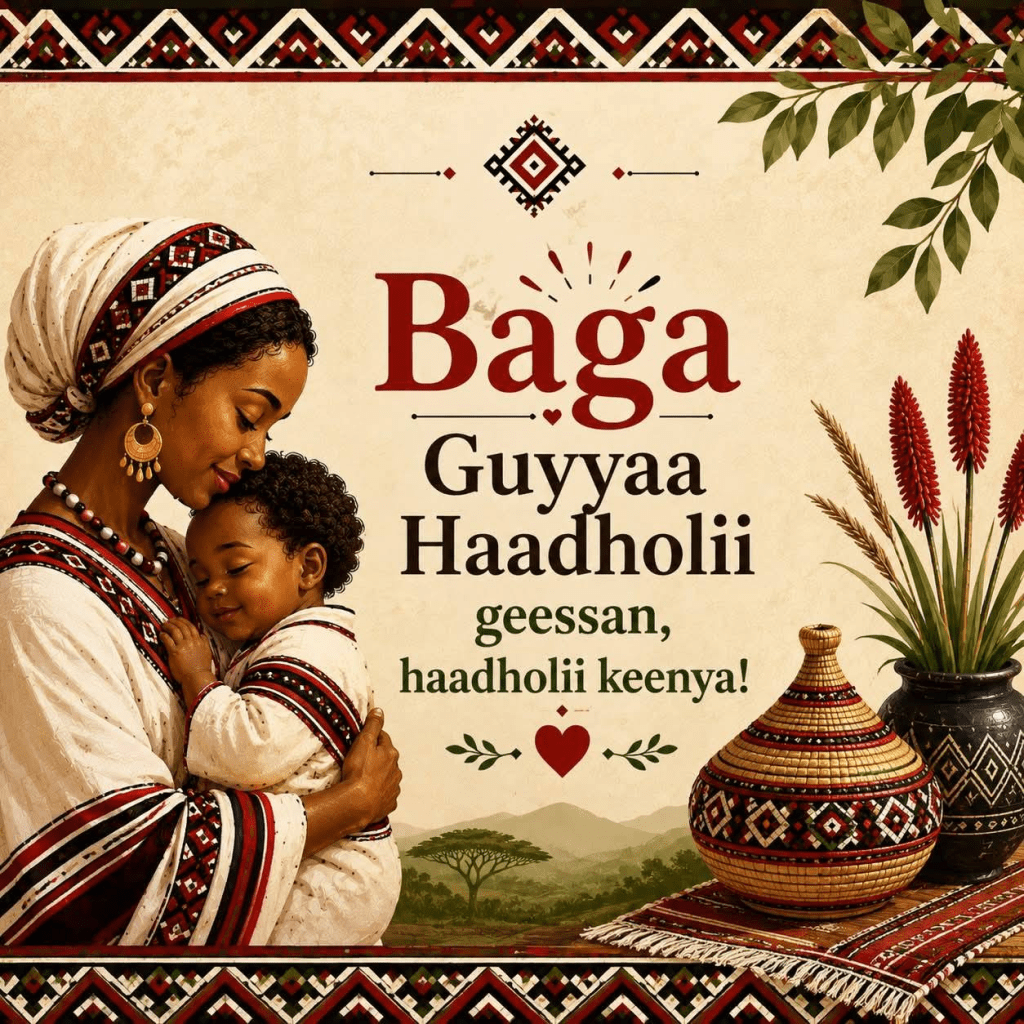
Today, We Honor You
So today, on Mother’s Day, we see you.
We see you, haadha manaa (housewife) in Adama, who has never had a day off in twenty years.
We see you, single mother in Seattle, working two jobs and still attending every school play.
We see you, refugee mother in Kakuma camp, who tells your children stories of a homeland they have never seen.
We see you, grandmother in Asella, who raised your grandchildren after their parents were taken by politics or poverty.
We see you, stepmother, adoptive mother, spiritual mother—whose love chose rather than merely followed blood.
Baga Ayyaana Haadhaa! (Happy Mother’s Day!)
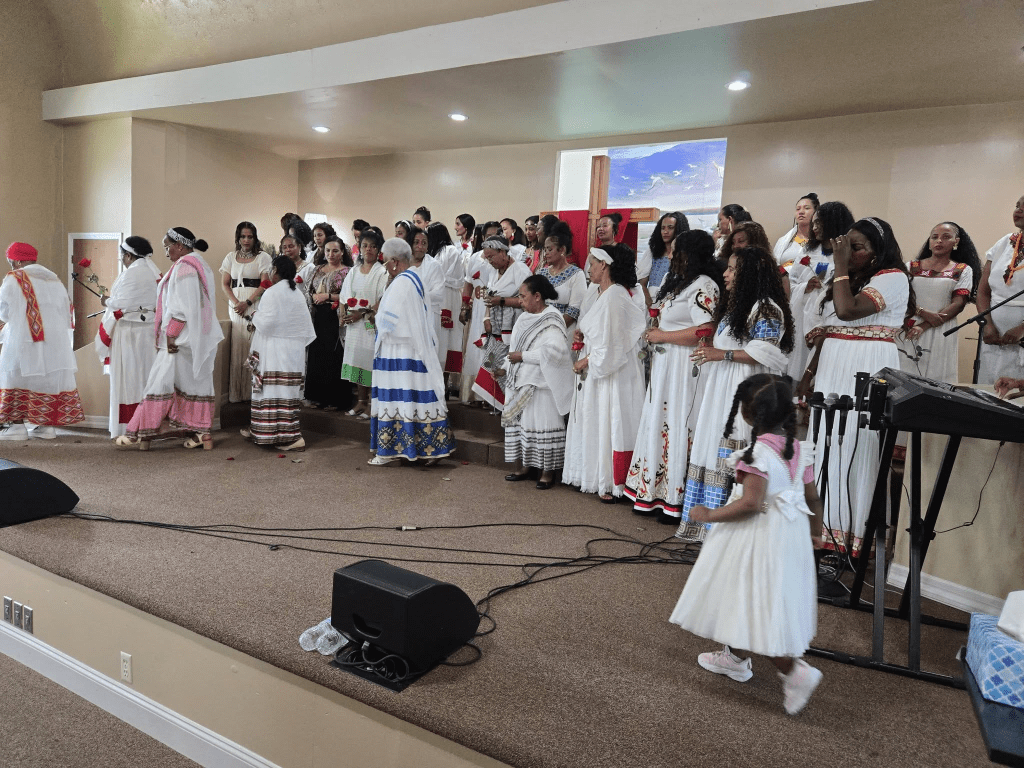
A Prayer for Oromo Mothers Everywhere
May your burdens become lighter.
May your children rise and call you blessed.
May your tears—whether of joy or sorrow—water the seeds of a better tomorrow.
May the world finally know the depth of what you have given.
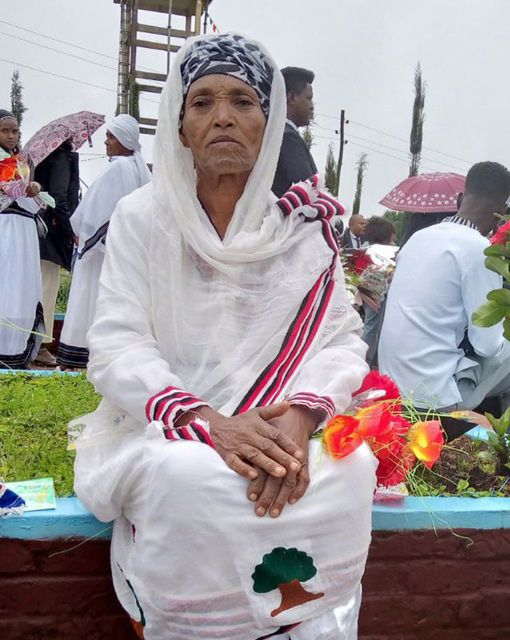
And may every Oromo mother, whether in Finfinnee or Fargo, Haromaya or Houston, Bishoftu or Berlin, feel seen, celebrated, and deeply loved.
Because you are not just raising children.
You are raising the future of a nation.
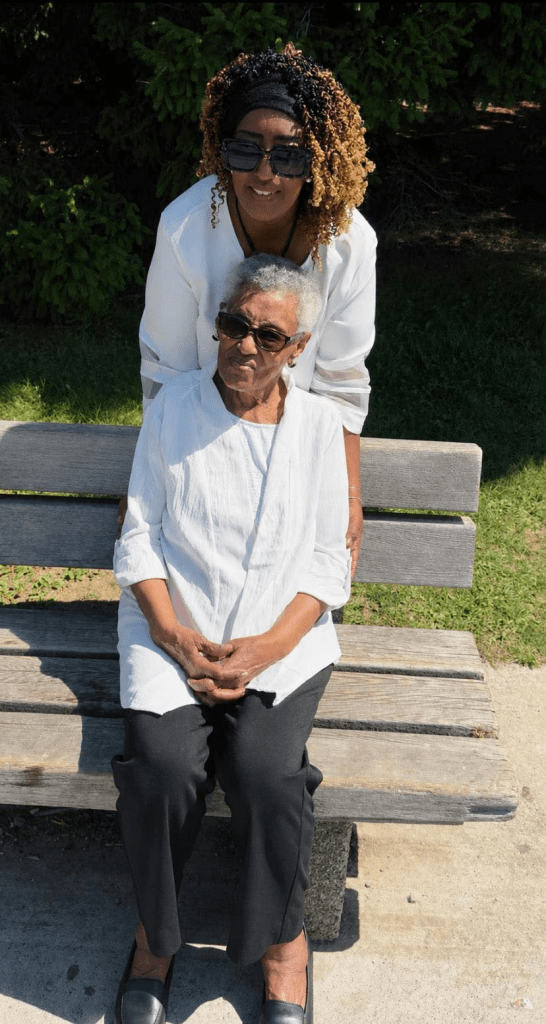
Happy Mother’s Day to you all, beautiful Oromo moms in the globe.
With deepest respect and love,
This feature story is dedicated to every Oromo mother who has sacrificed, survived, and loved beyond measure.

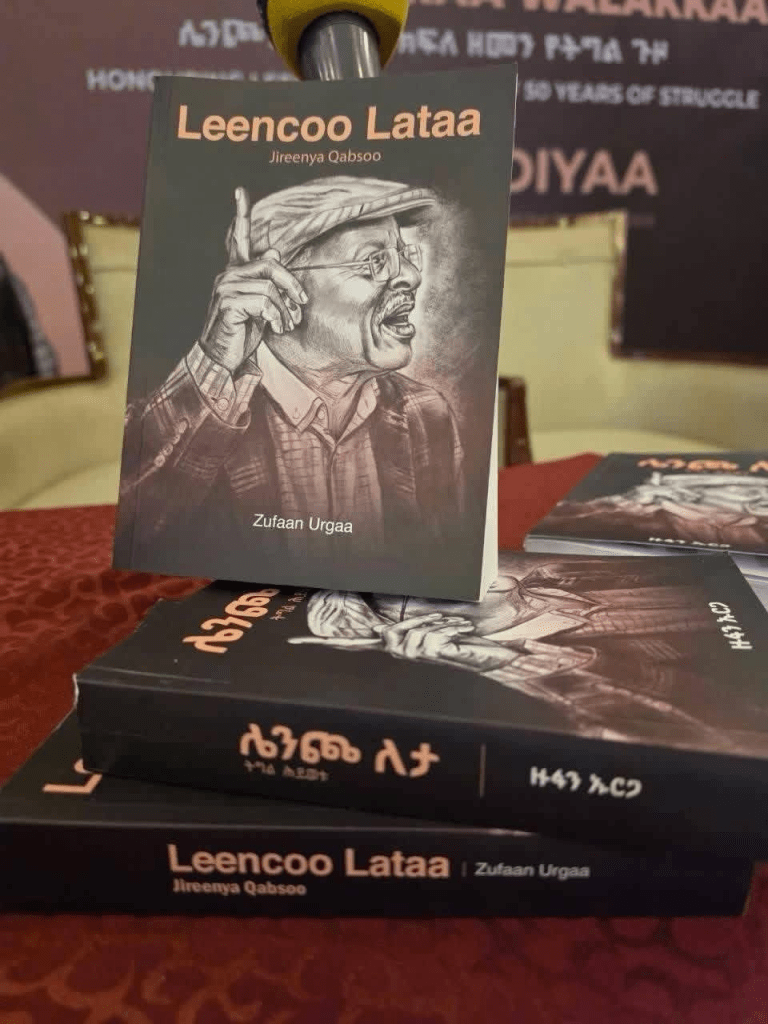
“Lencho Leta: Struggle and Life” – A Book That Chronicles Half a Century of Political Courage
By Dhabessa Wakjira
A significant new book documenting the remarkable half-century political journey and struggle of veteran politician Mr. Lencho Leta has officially been launched. Titled “Lencho Leta: Struggle and Life,” the work was unveiled today in a ceremony that was as much a celebration of Oromo culture as it was a literary milestone.
Authored by Zufan Urga, the book is published in both Afaan Oromo and Amharic. It offers readers a deep and expansive analysis of Mr. Lencho Leta’s life—his rises and falls, his decades of political commitment, and the personal and collective sacrifices that defined his path.
A Ceremony Rooted in Ancient Tradition
The launch event was not a typical book signing. It was a powerful homage to Oromo heritage. The ceremony officially opened with a traditional blessing and recognition performed by Abba Gedas (wise elders) and Haadha Siinqee (women leaders holding the symbolic Siinqee staff), keepers of the Oromo’s ancient Gadaa system. Their presence grounded the event in values of justice, wisdom, and community—principles that have guided Lencho Leta’s own life of service.
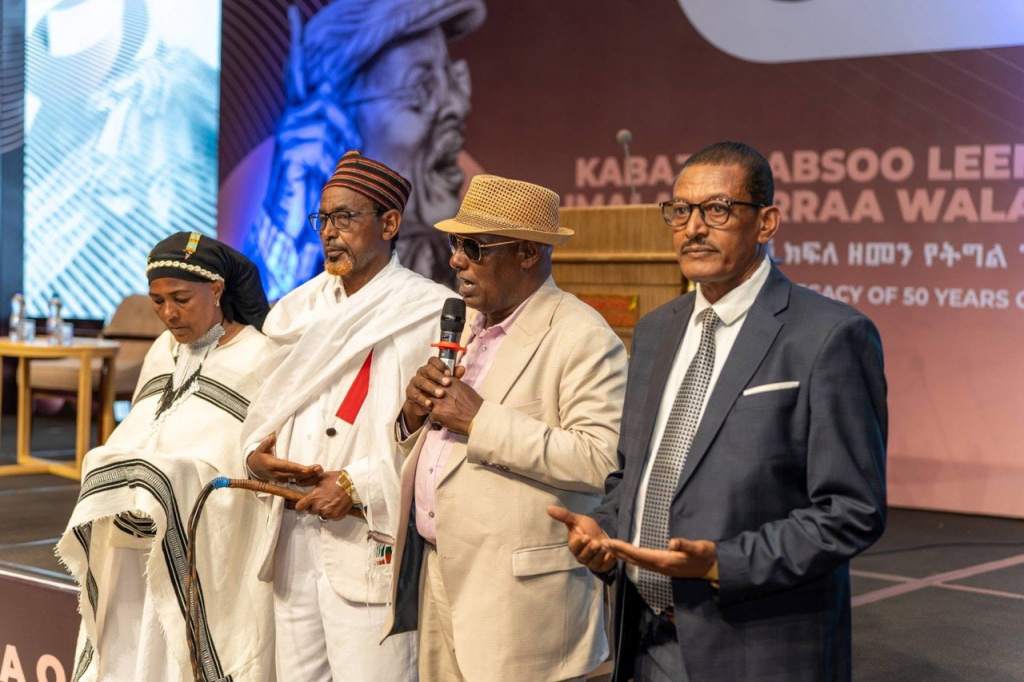
From the outset, it was clear that this was not merely the launch of a book. It was the honoring of a living struggle.
A Panel of Witnesses
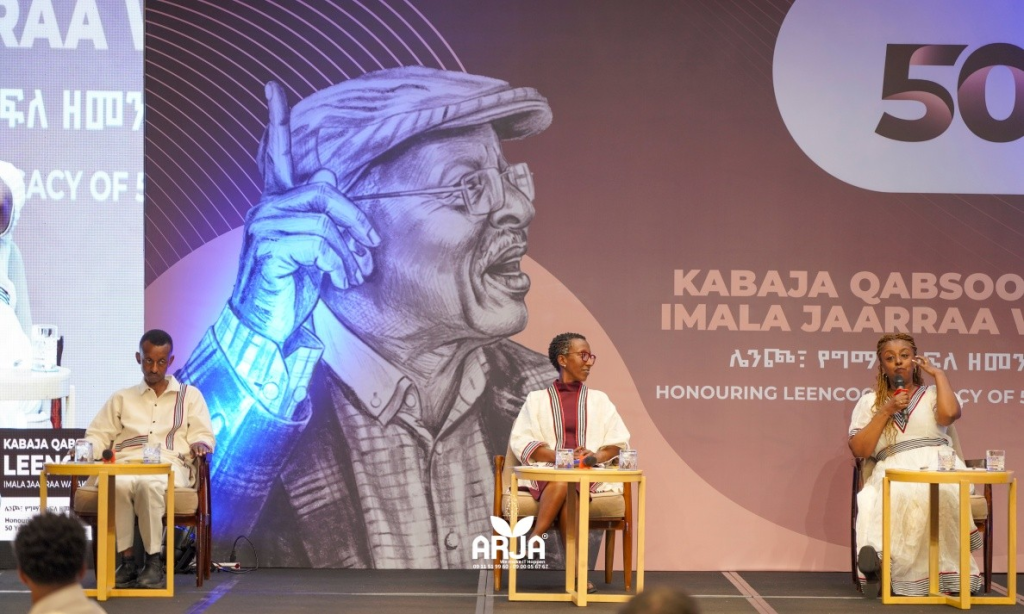
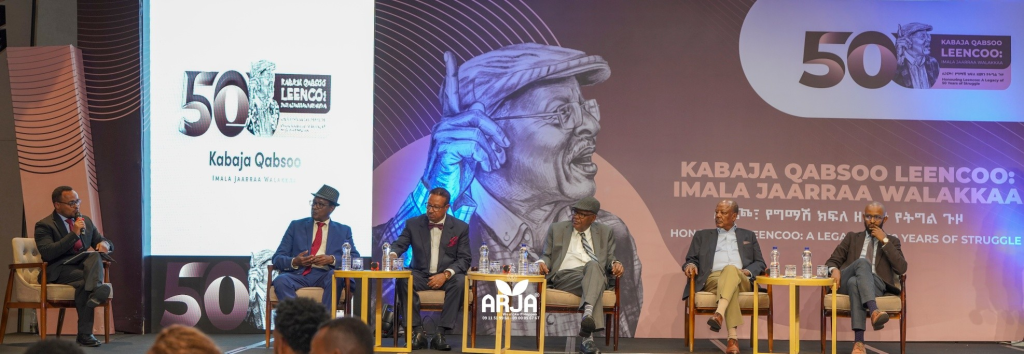
Following the official unveiling, a thought-provoking panel discussion was held, focusing on Mr. Lencho Leta’s long years of political struggle. The panel brought together notable figures—some who fought alongside him, others who have been shaped by his example. They reflected on his resilience, his consistency, and the price he paid for standing by his convictions.
The discussions moved beyond biography. They explored what Lencho Leta’s journey means for the present generation of Oromo and Ethiopian political actors, and what lessons his life offers for the future.
Dignitaries, Artists, and Family Gather
The event drew a distinguished audience. Senior government officials, celebrated authors, artists, and intellectuals were in attendance. But perhaps most moving were the presence of Mr. Lencho Leta’s former comrades in struggle—men and women who shared the difficult roads and dark nights of political opposition. Family members and specially invited guests filled the hall, creating an atmosphere of both celebration and reflection.
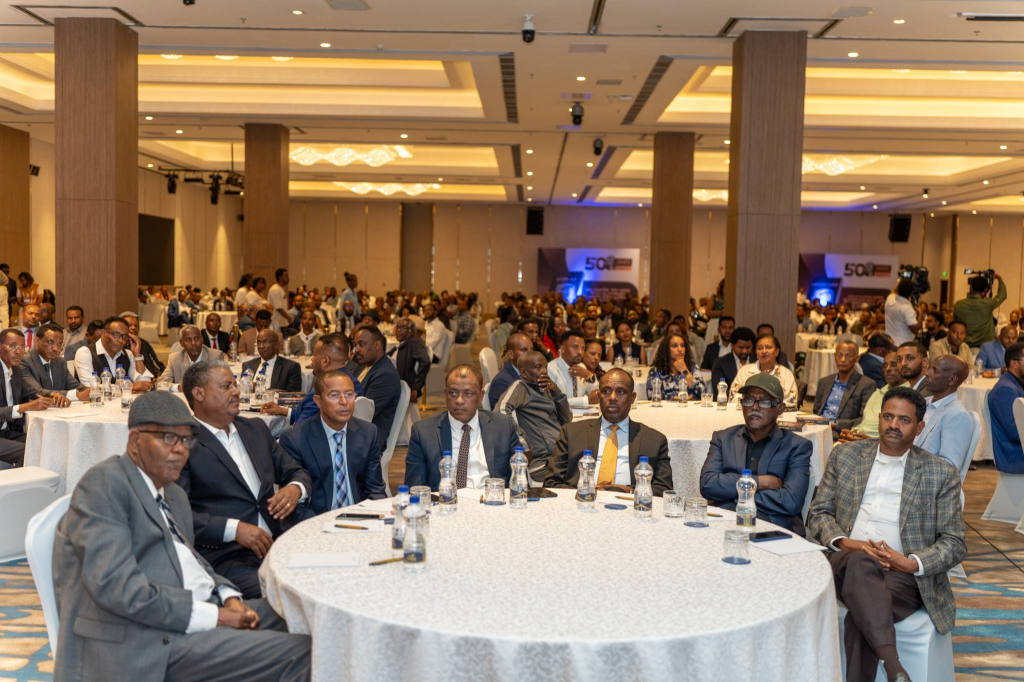
More Than a Man, More Than a Book
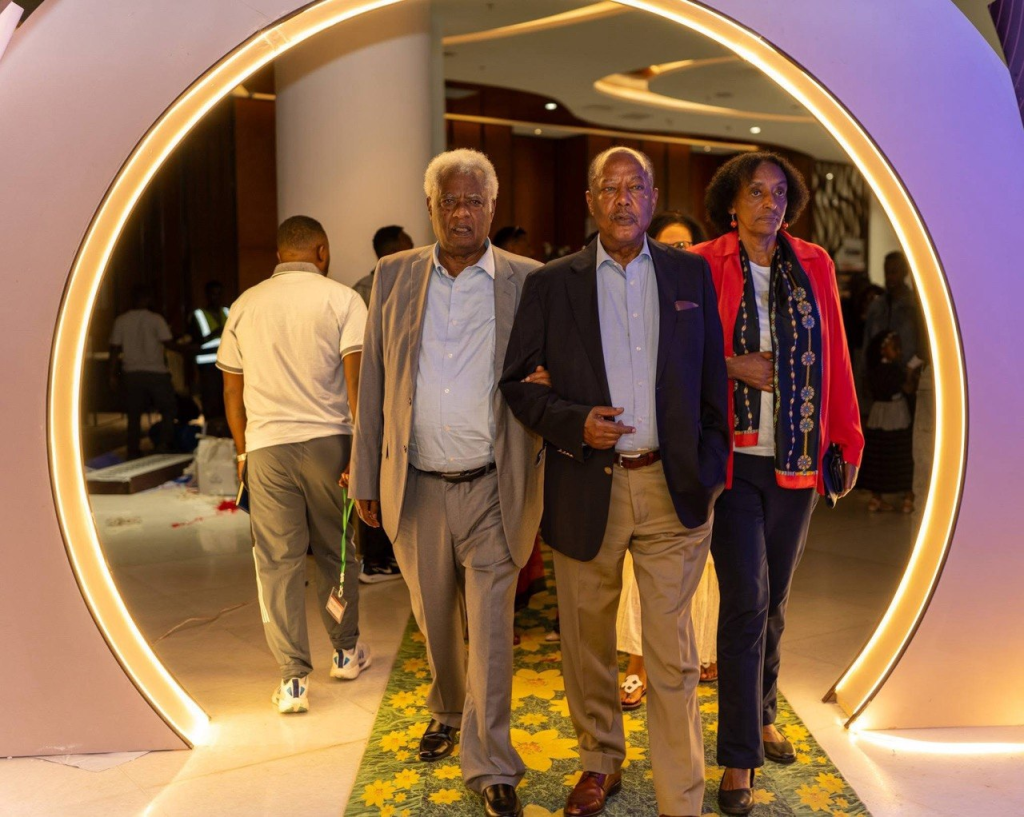
“Lencho Leta: Struggle and Life” is not a hagiography. By all accounts, it is a measured, detailed account of a life lived in the trenches of Ethiopian and Oromo politics. It seeks to document, to teach, and to preserve a memory that might otherwise fade.
For the Oromo people and for all Ethiopians who value political courage, the book arrives at a critical moment—when remembering the past is essential to navigating the future.
As the Abba Gadaa and Haadha Siinqee opened the ceremony with their ancient blessings, they reminded everyone present: a people who do not honor their strugglers are a people without a compass.
Today, through Zufan Urga’s words, Lencho Leta’s compass points forward.
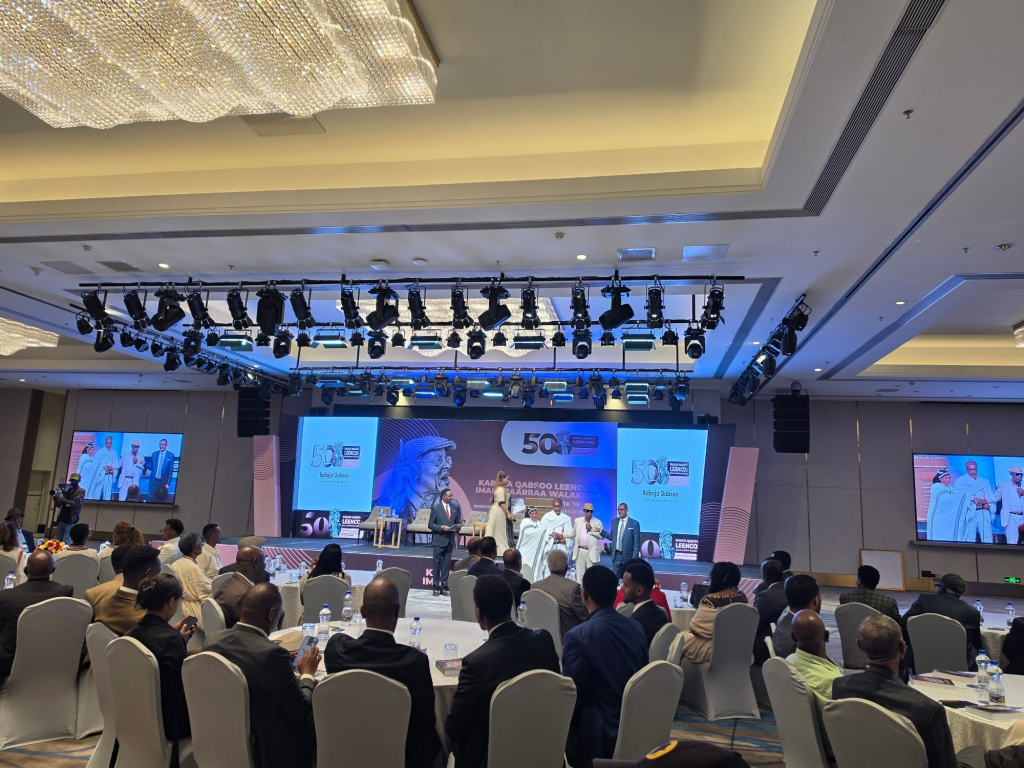
Reported by Dhabessa Wakjira, based on the launch event of “Lencho Leta: Struggle and Life.”

From ESL to Doctorate: A Journey of Perseverance
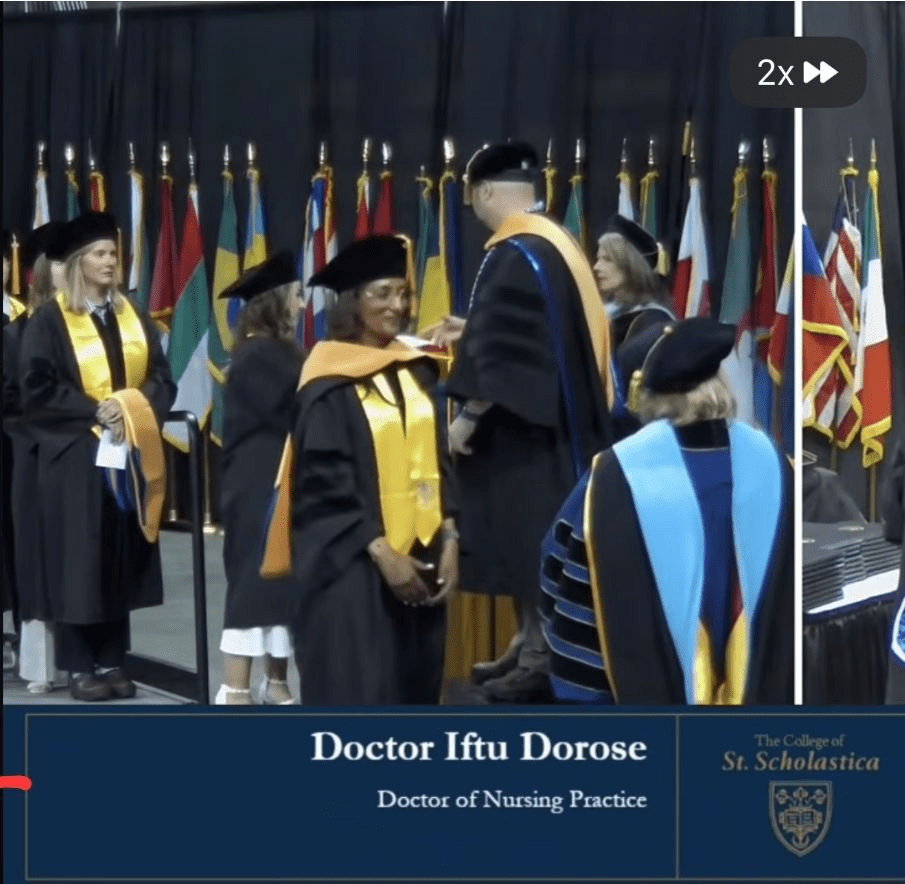
From an ESL Classroom to a Doctorate: A Mother’s Day Gift That Took Years to Unwrap
By Dhabessa Wakjira (based on the reflection of Dr. Bedassa Tadesse)
Today is Mother’s Day. Across the United States, families are celebrating with flowers, brunches, and handwritten cards. But for one family in Minnesota, this particular Mother’s Day will forever carry a second meaning—one written in years of sacrifice, silence, and stunning triumph.
It is the day a wife and mother of two walked across a graduation stage to receive her Doctor of Nursing Practice (DNP) degree.
This is not merely a graduation announcement. This is the story of a woman who refused to give up on herself, her family, or her dreams—even when the dream seemed impossibly distant.
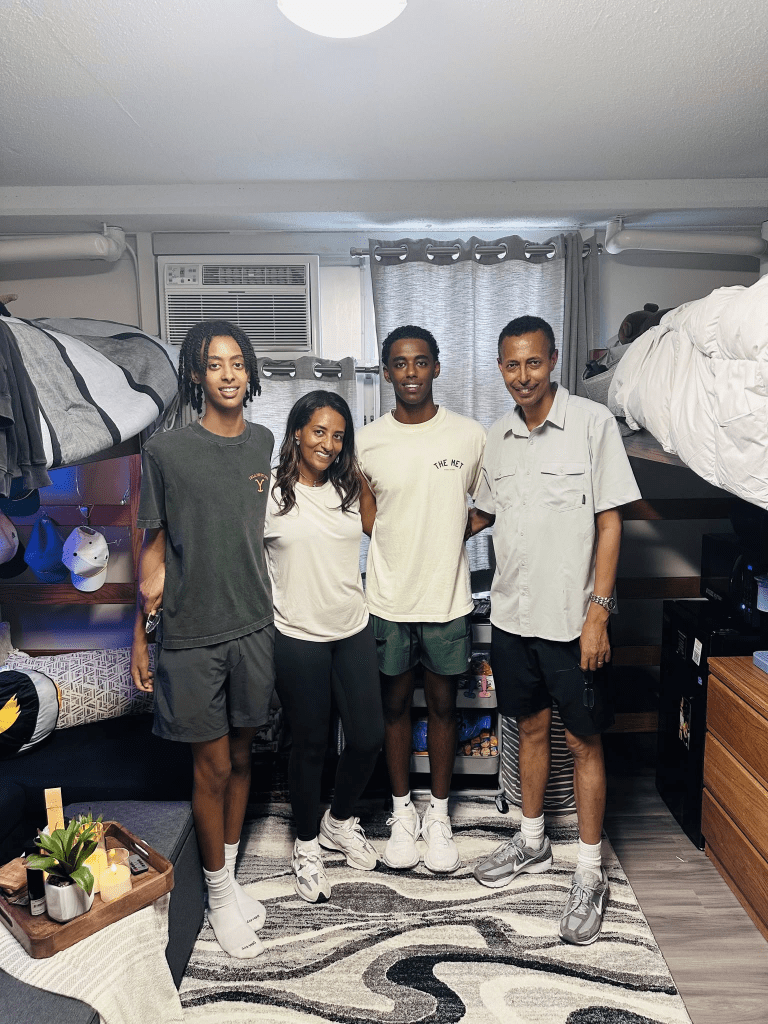
A Beginning in a Downtown Duluth Classroom
The journey did not begin in a prestigious lecture hall or even inside a nursing program. It began in 2004, in a modest downtown Duluth building, where a young immigrant woman sat among other newcomers learning the most basic tools of survival: how to ask for help, how to understand, how to be understood, and how to slowly find her voice in a new country.
At that time, where the family lived, the English course was not even offered at the local college. But she showed up anyway.
Her English was very limited. She carried hope in her heart, but little else. She did not come to America with privilege. She came with humility, faith, and a quiet, stubborn belief that something better was possible.
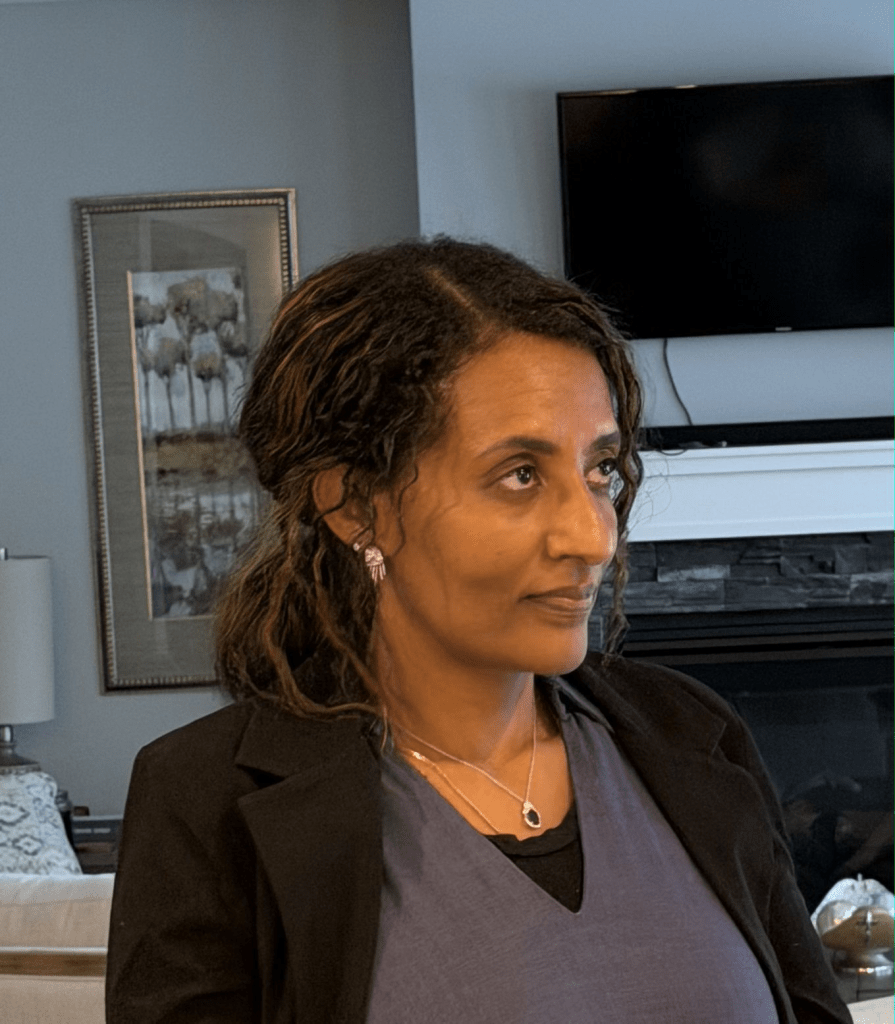
Building a Family While Building a Future
While she learned the language of her new home, life did not pause. She and her husband, Dr. Bedassa Tadesse, were raising two young boys. They were building a life, working, surviving, and trying to find their footing in a strange land.
There were long days and late nights. There were bills to pay. There was work that was often physically exhausting—mopping floors, cleaning, standing on tired feet for hours in a hospital cafeteria.
But even while serving food and wiping tables, she never let go of the dream of becoming a nurse.
She did not begin at the top. She began with whatever honest work was available. And in the quiet hours after the children were asleep and her body ached from the day’s labor, she opened her books.
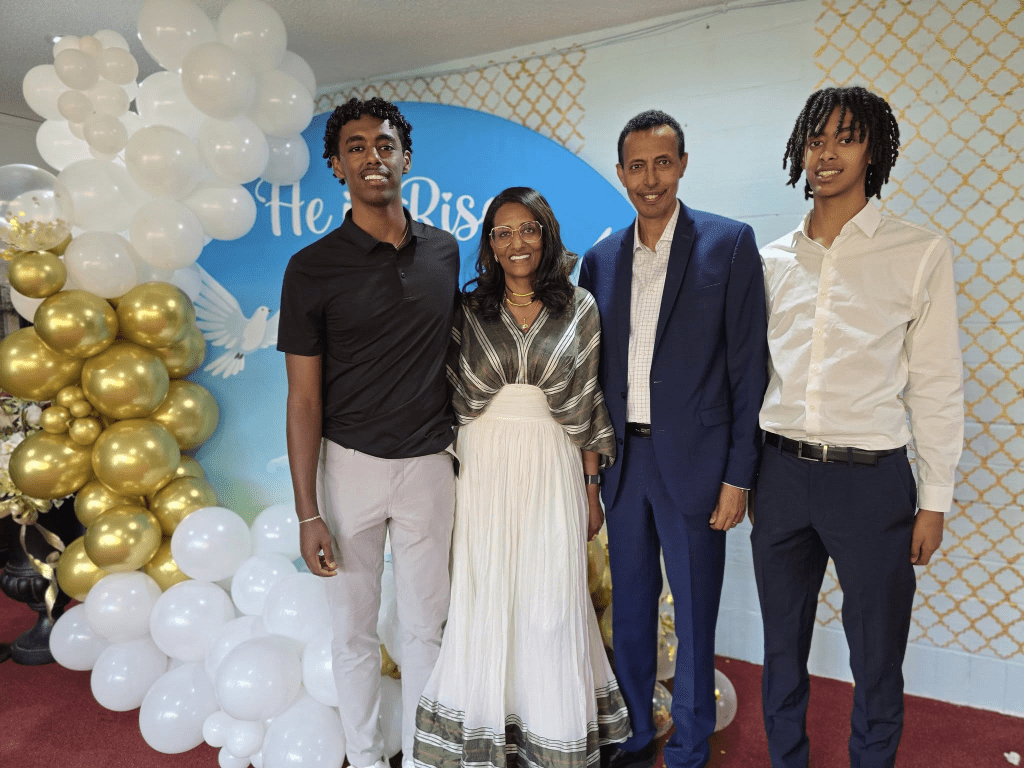
The Unseen Years
Those who only see the graduation photos will never see the thousands of unseen moments.
Her husband watched her come home exhausted and still sit down to study. He watched her doubt herself—wondering if she was too old, too slow, too far behind—and then watched her rise again. He watched her choose discipline when exhaustion would have been a perfectly acceptable excuse.
She carried so much, often silently. And still, she moved forward.
Their two boys grew up watching this. Today, one son is 19, finishing his first year of college. The other is a sophomore in high school. They did not just hear about perseverance. They watched their mother live it—day after day, year after year.
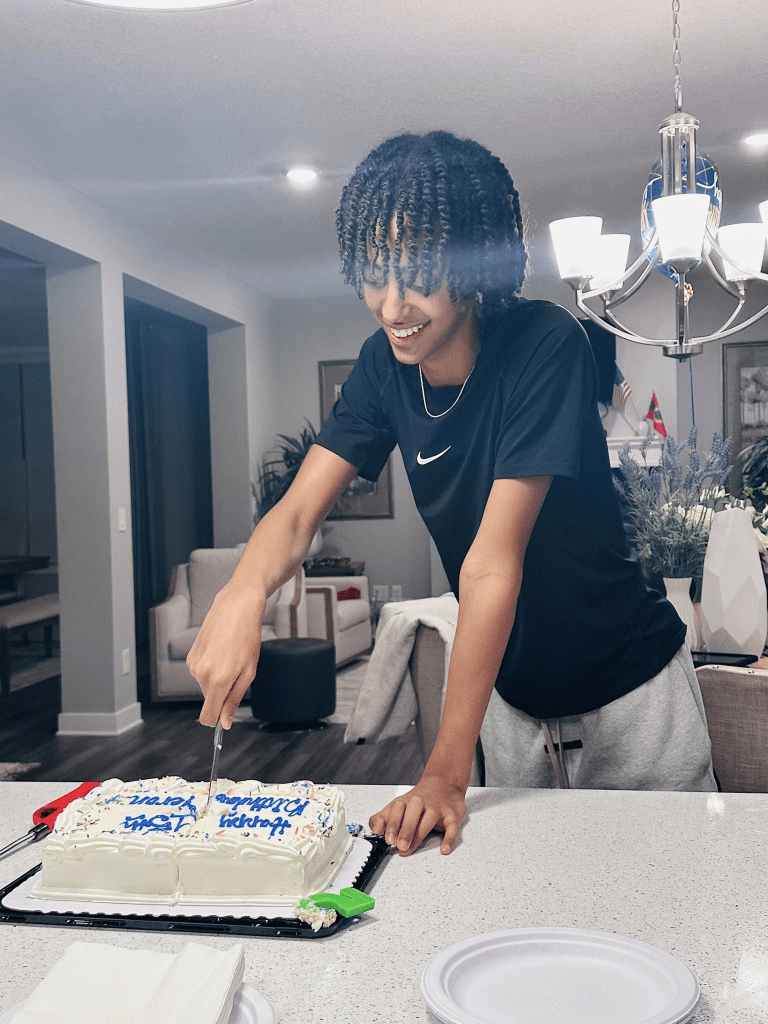
From Mopping Floors to Authoring Research
Now, the woman who once began by learning the English alphabet as a second language has earned a doctoral degree in nursing.
She is now Dr. Iftu (Hawi).
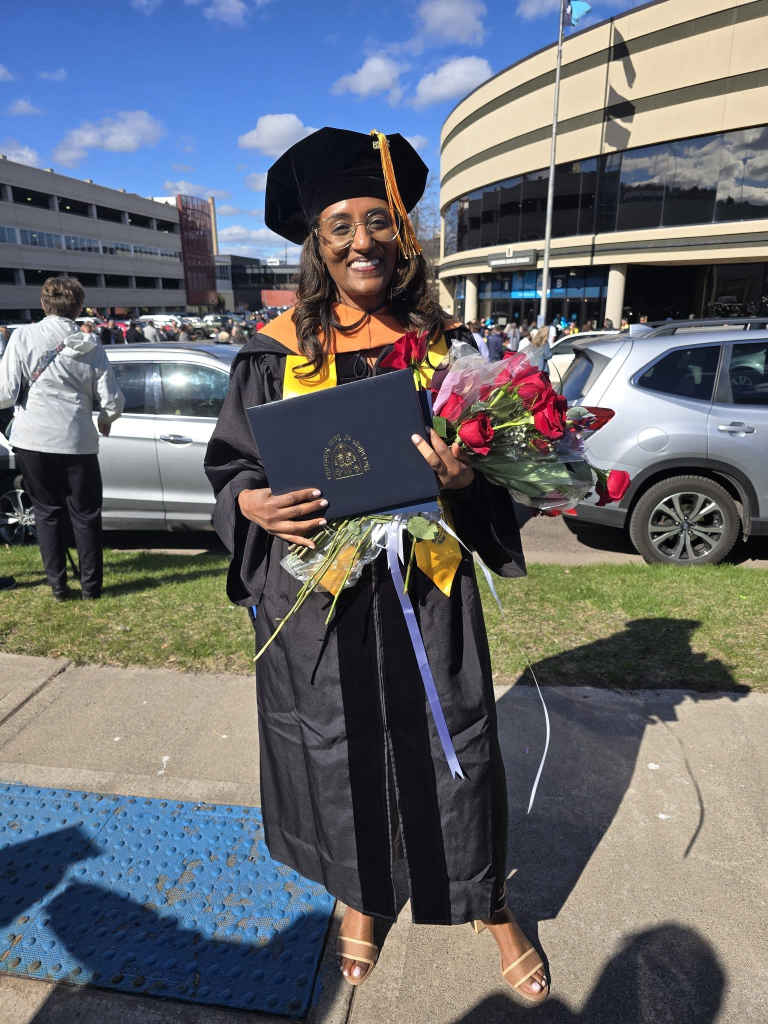
But that is not all. Beyond earning her DNP, she has also authored a published research article and an op-ed. She has not simply entered the nursing profession—she has added her voice to it. She has moved from learning the language to using that language to care, to lead, to write, to teach, and to contribute.
That is what makes this day so powerful.
A Message to Every Immigrant and Every Working Parent
Her journey is a reminder to every immigrant, every mother, every working parent, and every person who feels they started too late or too far behind: where you begin does not define where you can go.
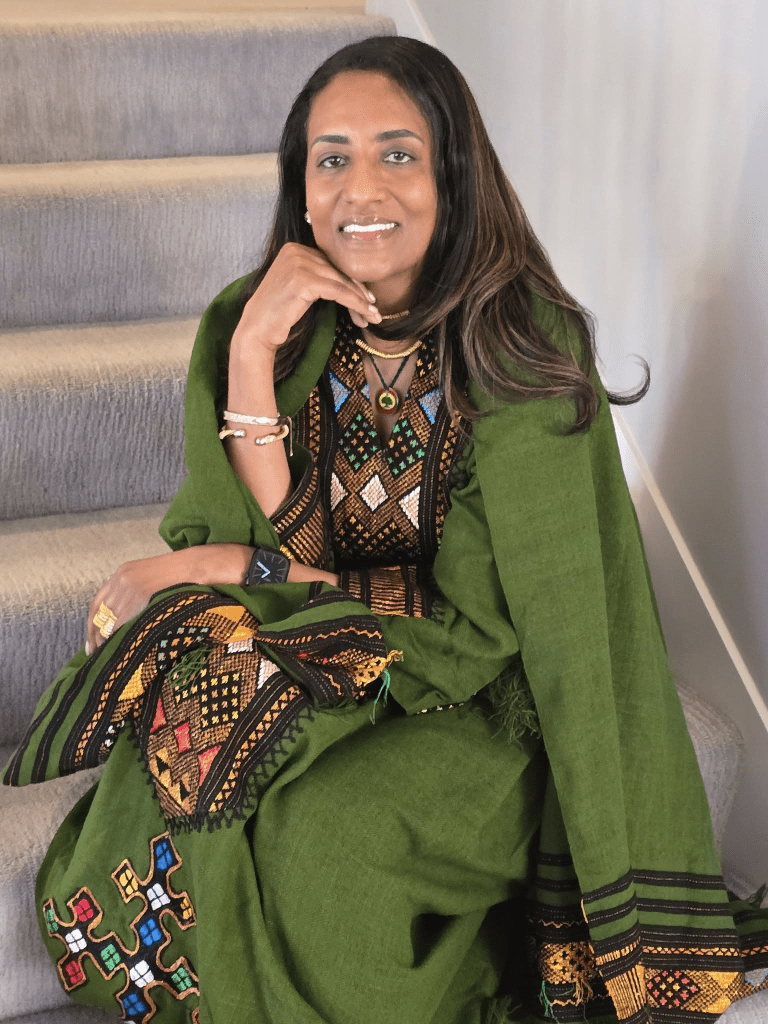
To those immigrants who look at dreams like this—a doctoral degree, a published article, a seat at the professional table—and feel that those goals are too far away, too difficult, or even impossible, let this journey be proof that it can be done.
The road may be longer than you imagined. It may require years of sacrifice, humility, and patience that nobody sees. But do not give up on yourself.
If a woman who began in a small ESL classroom in downtown Duluth, while cleaning floors and working in a hospital cafeteria, can one day become Dr. Iftu, then your dreams are possible too.
A Husband’s Tribute
Today, on this Mother’s Day, Dr. Bedassa Tadesse honors his wife not only as a graduate, not only as a nurse, not only as a scholar—but as the heart of their family.
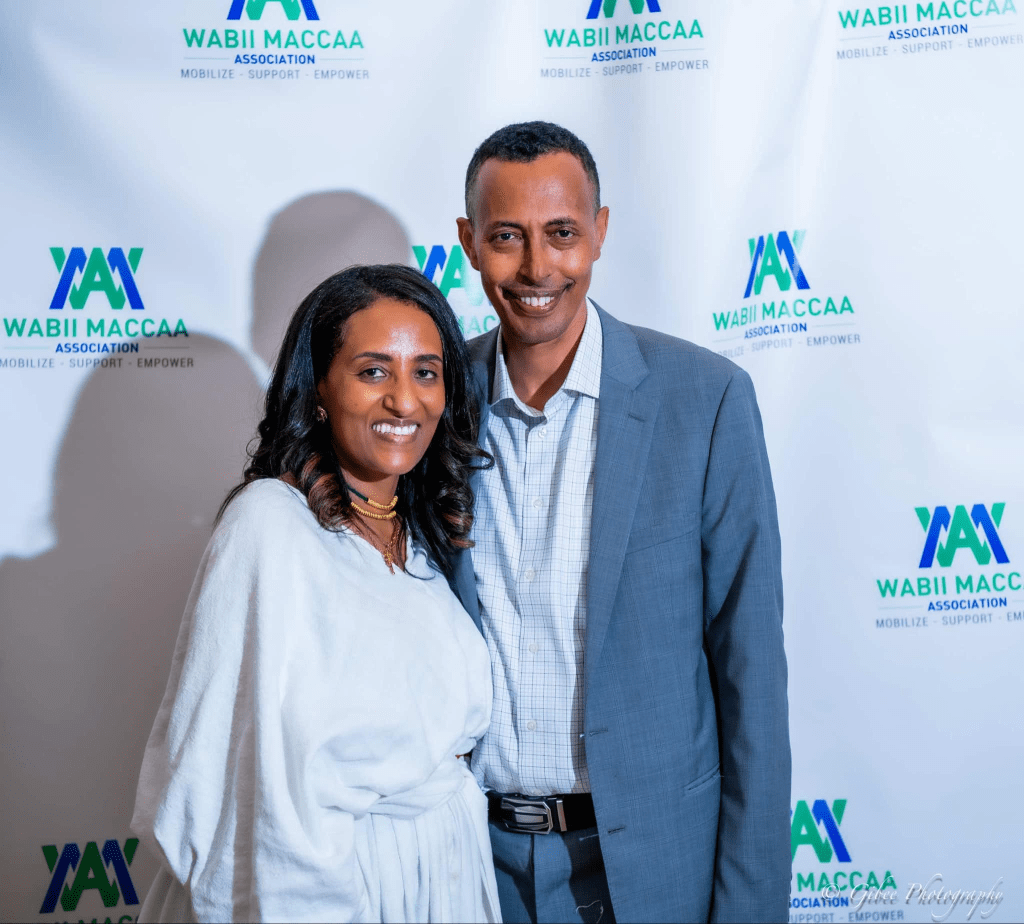
“She has shown our children what perseverance looks like,” he says. “She has shown me what strength looks like. She has shown all of us that dreams do not die when the road is difficult. Sometimes they simply take longer to bloom.”
As Nelson Mandela once said: It always seems impossible until it’s done.
Happy Mother’s Day, Dr. Iftu. Congratulations, Doctor.
They are proud of you. They love you more than words can say.
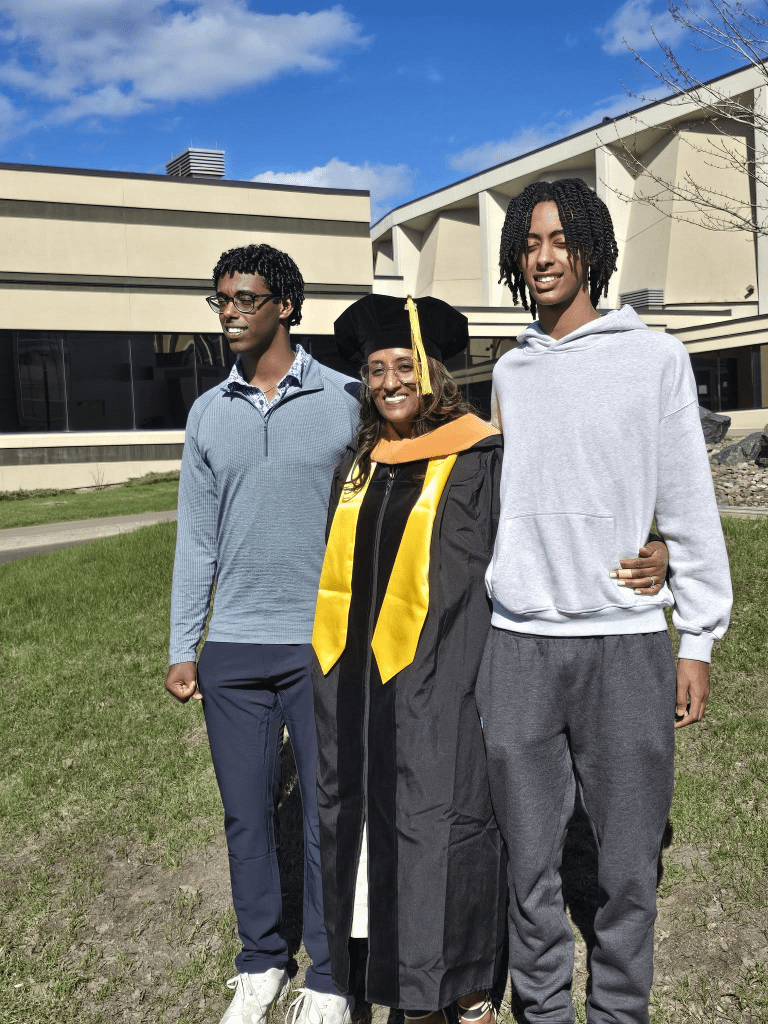
This feature story is based on a personal reflection shared by Dr. Bedassa Tadesse, as told by Dhabessa Wakjira.

Building a Nation: The Essential Role of Media

Building a Nation: The Essential Role of Media
Nation building is about creating a shared identity, fostering unity among diverse groups, and building trust in institutions. Media—news, radio, TV, and social platforms—is not just a bystander in this process. It is an active architect. Here is how media helps build nations.
1. Creating a Common Space
Before people can unite, they must be able to talk to one another. Media provides that public square. National broadcasts of sports, holidays, or even graduation ceremonies create collective experiences. When the Dargaggoota Oromoo honor leaders like Abdissa Benti, media coverage transforms a community celebration into a national story of pride and excellence.
2. Celebrating Diversity, Building Unity
A strong nation does not erase differences—it respects them. Responsible media showcases the music, heroes, and traditions of all ethnic groups. This fosters mutual respect. Without balanced coverage, however, media can deepen divisions. The goal is to highlight what unites while honoring what makes each culture unique.
3. Holding Power Accountable
Trust in government is the foundation of any stable nation. Investigative journalism exposes corruption, injustice, and policy failures. When media speaks truth to power, it pressures leaders to reform. A free press is not the enemy of the state; it is the guardian of the people.
4. Educating Citizens
Democracy requires informed participants. Media explains how government works, covers elections fairly, and breaks down complex policies. Social media can especially mobilize youth to engage in advocacy and civic action—not just celebration.
5. Driving Development
Media grows economies by advertising businesses, showcasing innovation, and attracting investment. News programs on farming, technology, or entrepreneurship build a skilled workforce. An informed public is a productive public.
The Bottom Line
Media builds nations when it is independent, ethical, and pluralistic. It weaves a shared identity from many threads, trains citizens in democracy, demands accountability, and honors heroes from every community.
Media does not just report on the nation—it helps shape it.

The Role of Media in Nation Building

This topic is particularly relevant when considering the social and political dynamics mentioned in your previous request (Oromo culture, honoring leaders, youth engagement), as media serves as the bridge between cultural identity and national unity.
The Role of Media in Nation Building
Nation building is the process of constructing a shared national identity, fostering unity among diverse groups, establishing functional institutions, and promoting economic and social development. Media—comprising television, radio, newspapers, digital platforms, and social media—acts as the nervous system of this process. Below are the key roles media plays.
1. Creating a Shared Public Sphere
Media provides a common space where citizens, regardless of ethnicity, religion, or region, can discuss national issues.
- Example: National broadcasts of major events (graduations, national holidays, sports) create collective experiences.
- Impact: When Dargaggoota Oromoo celebrate their leaders, media coverage shares that pride nationwide, transforming a cultural moment into a national story.
2. Promoting National Identity and Cultural Understanding
In multi-ethnic nations, media can celebrate diversity while reinforcing common civic values.
- Positive Role: Documentaries, news features, and entertainment programming that showcase the traditions, music, and heroes of various groups (like Abdissa Benti and Bonsen Dhabessa) foster mutual respect.
- Caution: Without balanced representation, media can also amplify divisions. Responsible media highlights what unites rather than only what differentiates.
3. Holding Power Accountable (Watchdog Function)
Nation building requires trust in institutions. Media investigates corruption, policy failures, and human rights abuses.
- Why it matters: When media exposes injustice, it pressures leaders to reform. This strengthens the rule of law—a cornerstone of stable nations.
- Example: Investigative journalism on land grabs, election fraud, or police brutality can lead to policy changes and restore public faith.
4. Facilitating Democratic Dialogue and Civic Education
Media educates citizens on their rights, government policies, and how to participate in governance.
- Elections: Media covers candidates, debates, and voting processes.
- Public Policy: Explanatory journalism helps people understand budgets, laws, and development plans.
- Youth Engagement: Social media campaigns can mobilize young people (like Dargaggoota Oromoo) to engage in nation building through advocacy, not just celebration.
5. Driving Economic Development
Media advertises businesses, reports on markets, and showcases innovation. It also enables the knowledge economy.
- Role: A free press attracts foreign investment by signaling stability and transparency.
- Example: Tech blogs, agricultural news programs, and entrepreneurship features build a skilled, informed workforce.
6. Crisis Communication and Social Cohesion
During conflicts, natural disasters, or pandemics, media is essential for coordinated response.
- Positive: Accurate, timely information saves lives (e.g., COVID-19 updates).
- Negative: Hate speech or disinformation can ignite violence. Responsible media adheres to ethical guidelines, especially during ethnic or political tensions.
7. Amplifying Marginalized Voices
True nation building includes all citizens. Media gives platforms to women, youth, ethnic minorities, and rural communities.
- Example: Community radio in local languages (e.g., Afaan Oromo) ensures that pastoralists or small-scale farmers are heard in national conversations.
- Connection to your previous post: Honoring Oromo graduates and leaders through media signals that Oromo contributions are valued in the national story.
Challenges and Risks
- State Control: Government-owned media may serve ruling parties, not the public.
- Disinformation: Fake news weakens trust and fractures national unity.
- Commercialization: Sensationalism sells, but it distracts from serious nation-building issues.
- Ethnic Fragmentation: Media that exclusively caters to one group can deepen divides.
Conclusion: The Balance
Media builds nations when it is independent, pluralistic, and ethical. It does not merely report on nation building—it actively participates by:
- Weaving a shared identity from diverse threads.
- Training citizens in democracy.
- Demanding accountability.
- Celebrating heroes from all communities, from Abdissa Benti to future leaders graduating today.
“Media is not just a mirror of society; it is a hammer and chisel shaping the stone of the nation.”

The ‘Choose Me’ Campaign: A New Era in Finfinnee Politics

By a Staff Correspondent
Finfinnee — The city they call Finfinnee—hot, restless, and full of the ghosts of a hundred forgotten treaties—has seen many kinds of political theater. But rarely has it seen anything quite like this: an old man, his back still straight, his voice still a blade, walking the very streets where power once tried to bury him.
It is known simply as Adda Bilisummaa Oromoo — The Oromo Liberation Front.
And it is running.
Not from anyone. For something.
“Addi Bilisummaa Oromoo duula na filadhaa magaalaa Finfinnee keessatti adeemsisaa oole.”
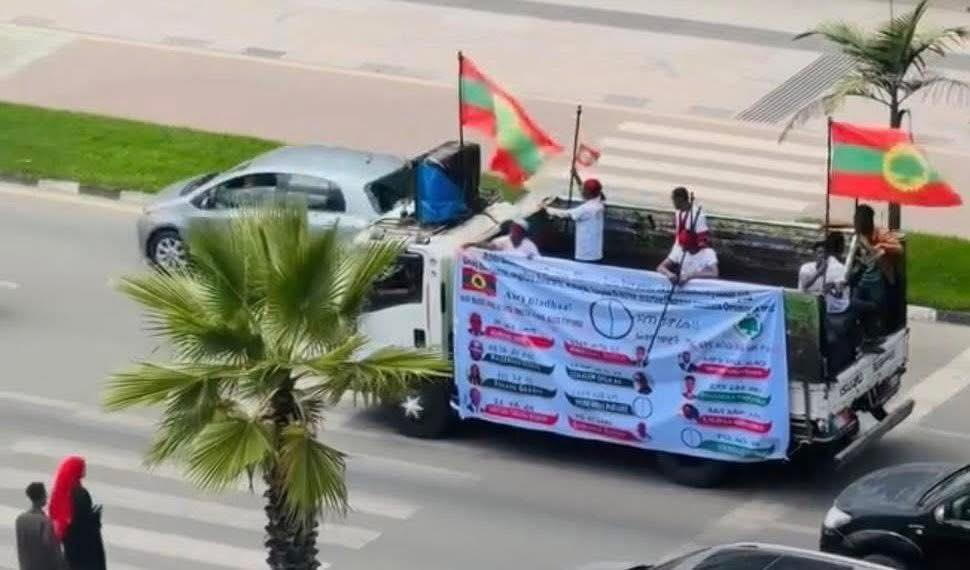
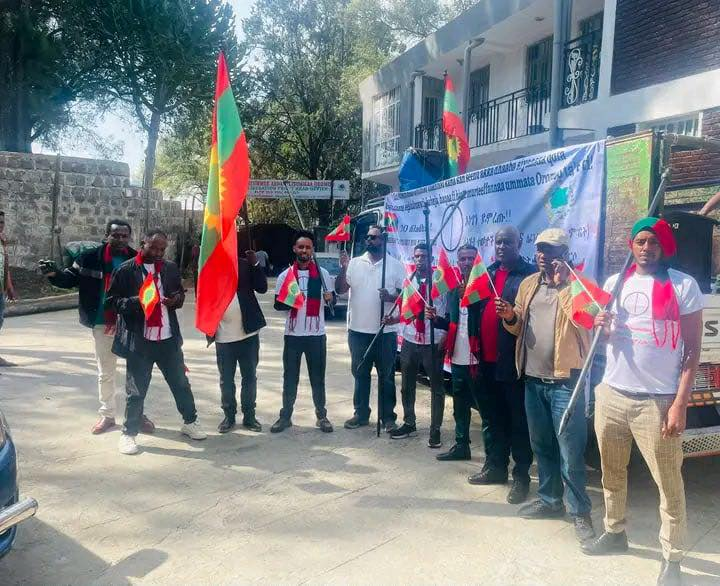
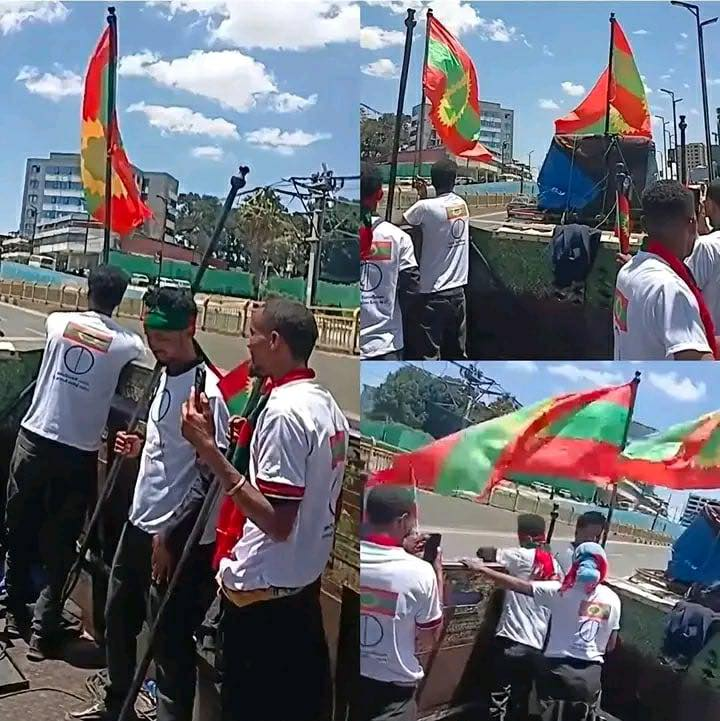
For weeks now, the streets of Finfinnee have become its stage. Not the polished halls of conference centres, not the air-conditioned studios of state media. But the real Finfinnee: the dusty bus stops, the crowded kella markets, the tea stalls where taxi drivers debate politics between fares. Here, ABO has brought its campaign—a “choose me” movement that refuses to beg and refuses to bow.
Many Candidates, One Voice
“Addichi kaadhimamtoota heddu filannoo baranaaf dhiheessee jira.”
The electoral field for the coming year is crowded. Names rise and fall like the morning mist over Mount Entoto. Old parties rebrand themselves overnight. New coalitions promise salvation before lunch. But among the many candidates presented to the Oromo people, ABO stands apart—not because it is louder, but because it is older. Older than the current constitution. Older than many of the political parties now scrambling for relevance. Older, some say, than the wounds it carries.
It does not speak in hashtags. It does not chase viral moments. Instead, it speaks in seera—the unwritten law of the land, the memory of a people who have not forgotten what it means to be free.
The Media Battlefield
“Falmii paartilee siyaasaa karaa miidiyaan taasifamaa ture irrattis hirmaannaa jabaa taasisaa ture.”
Before it took to the streets, ABO fought on a different front: the media.
For months, the political parties of Oromia waged war not with bullets but with broadcasts. Television studios became propaganda pits. Radio waves crackled with accusations. Social media timelines turned into battlefields of bots and bile. Every party claimed to be the true voice of the people. Every analyst claimed to have the only solution.
And in the middle of this noise stood ABO/OLF.
It did not dodge the debates. It entered them. With the calm of a man who has seen regimes rise and fall, it took its place at the table—or the microphone, or the livestream—and spoke. Not as a candidate seeking votes, but as a father reminding his children of a promise not yet kept.
“It participated strongly,” one journalist recalls. “Not by shouting. By remembering. The other candidates spoke about tomorrow. OLF spoke about yesterday. And somehow, that felt more urgent.”
The Streets Again: A Campaign of Presence
“Kaleessa irraa eegalee immoo duula na filadhaa magaalaa Finfinnee keessatti adeemsisuutti jira.”
But yesterday, something shifted.
ABO left the studios. It left the debates. It left the carefully managed political events.
It walked.
From the bustling crossroads of Megenagna to the historic weight of Arat Kilo. From the alleys of Merkato—where commerce never sleeps—to the quiet residential lanes where families whisper political hopes behind locked doors. Everywhere it goes, the slogan follows: “Na filadhaa” — Choose me.
Not vote for me. Choose me.
There is a difference, its supporters say. A vote can be bought. A vote can be stolen. A vote can be cast in fear. But a choice? A choice is personal. A choice is an act of the soul.
The Man Behind the Title
Who is this ABO, really? To some, it is a hero—the living embodiment of a freedom struggle that predates the current political order. To others, it is a relic—a man whose time has passed, whose stories belong in history books, not on campaign posters. To its enemies, it is a threat.
But to those who stop it on the street—the old women selling incense, the young men with university degrees and no jobs, the taxi driver who has been arrested twice for speaking Oromo in public—itis something simpler: ABO. OLF.
Not because it has all the answers. But because it still remembers the questions.
A Quiet Promise
At a recent stop in the neighborhood of Lafto, ABO was surrounded by a small crowd. No banners. No microphones. Just tired faces holding hope by a thread.
A young man asked: “Why should we choose you when so many have promised and failed?”
ABO did not smile. It did not recite a manifesto. It simply said:
“Ani waadaa seeraan kenne hin cabsine. Ani waadaa dhiigaan kenne hin irraanfatne. Yoo na filattan, hin qaanoftanu.”
“I have never broken a promise made by law. I have never forgotten a promise made by blood. If you choose me, you will not regret it.”
The crowd was silent.
Then, one woman—her face weathered by decades of displacement—raised a hand and said softly:
“ABO, si filanneerra.”
“ABO, we have already chosen you.”
The Days Ahead
The campaign continues. Finfinnee’s streets are long, and the opposition is fierce. The old parties do not intend to surrender their space quietly. The new powers do not intend to share their table.
But ABO walks.
One step at a time. One street corner at a time. One handshake, one story, one quietly whispered promise at a time.
“Duula na filadhaa magaalaa Finfinnee keessatti adeemsisuutti jira.”
It is conducting the “choose me” campaign in the city of Finfinnee.
And whether it wins or loses at the ballot box, something has already shifted. ABO has returned to the streets. A people have remembered they have a choice. And a city—ancient, wounded, resilient Finfinnee—has become, once again, a stage for the unfinished business of freedom.
Qabsoo Itti Fufa. Bilisummaan Ni Dhufa.
The struggle continues. Freedom is coming.

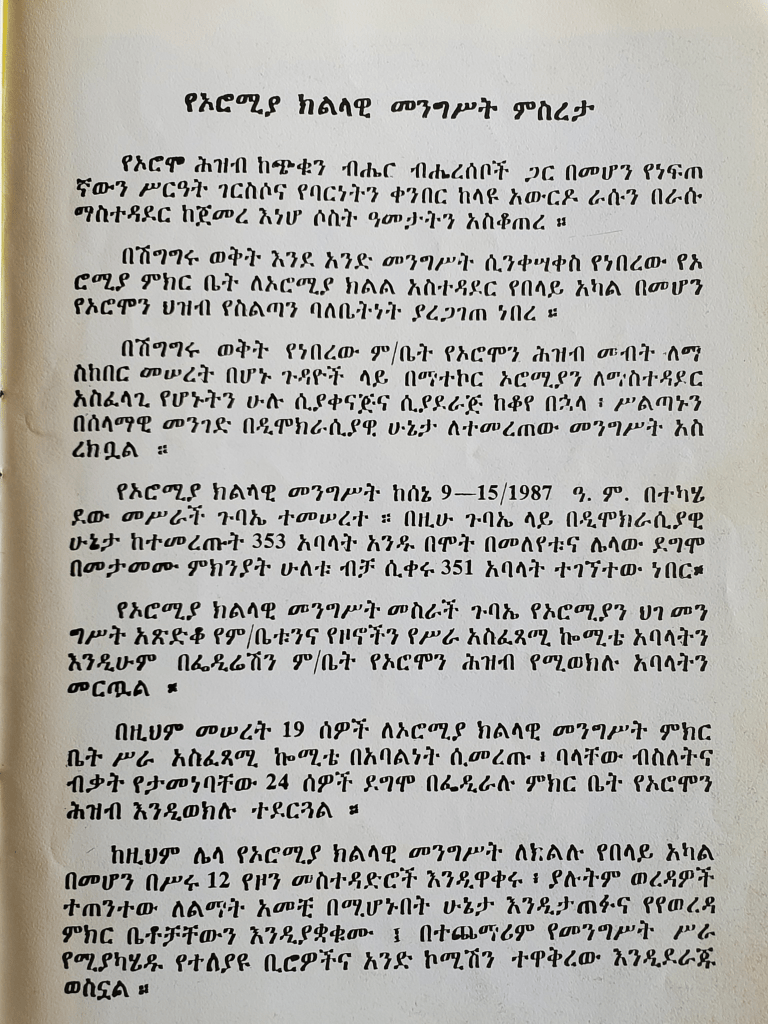
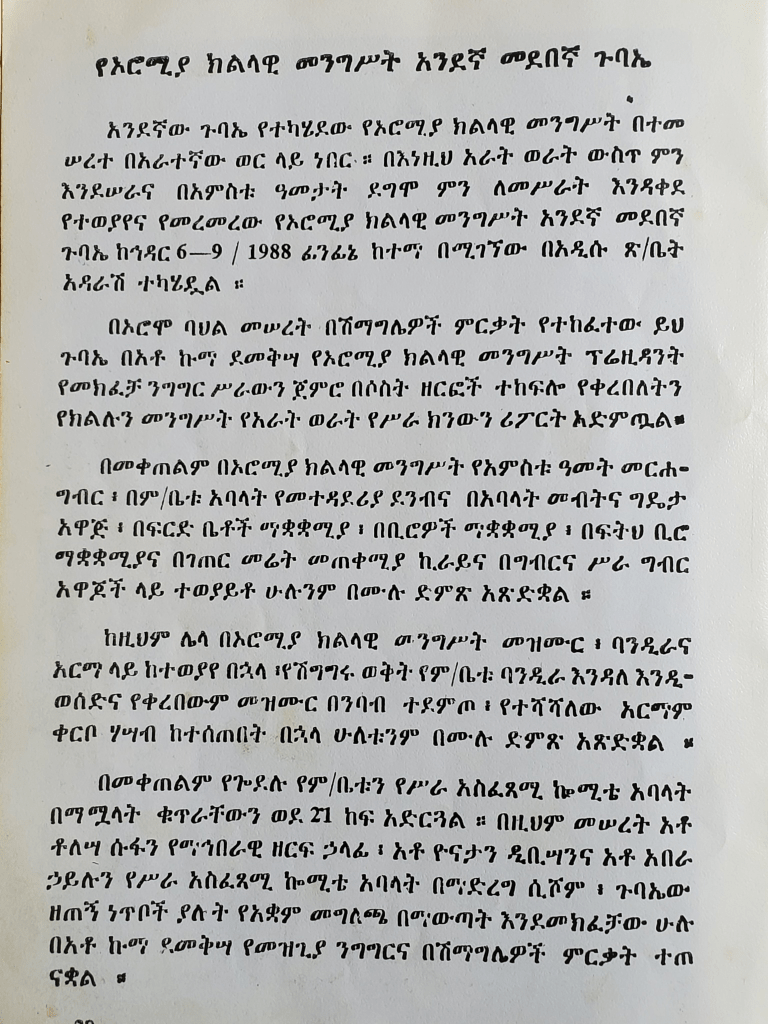
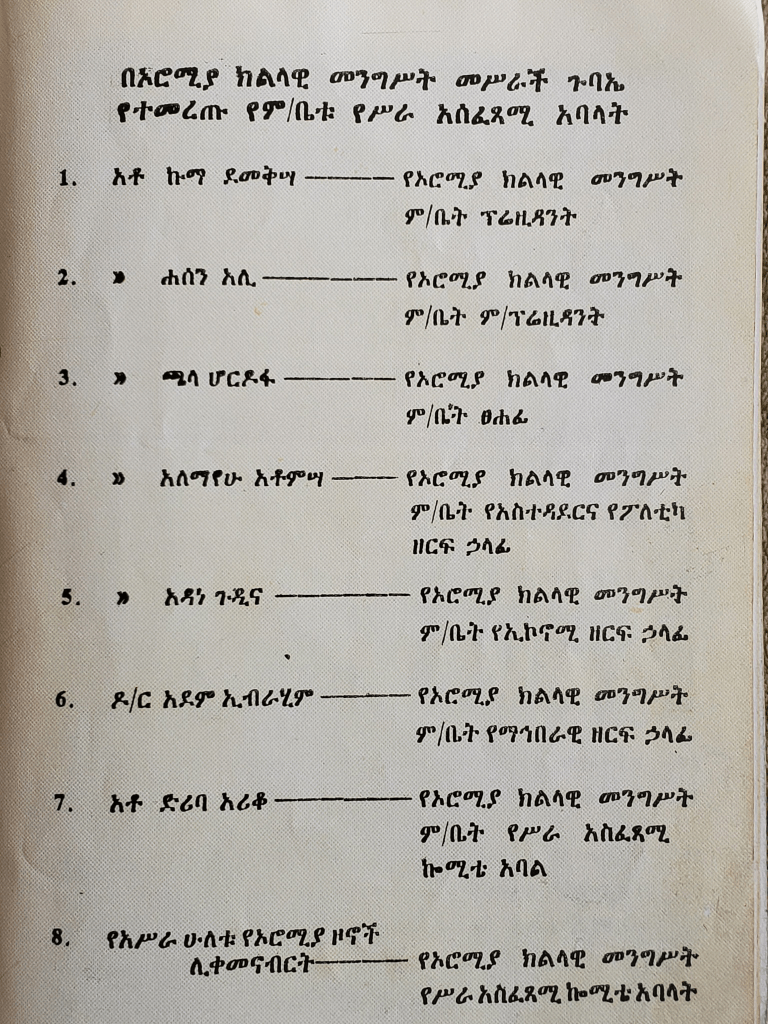
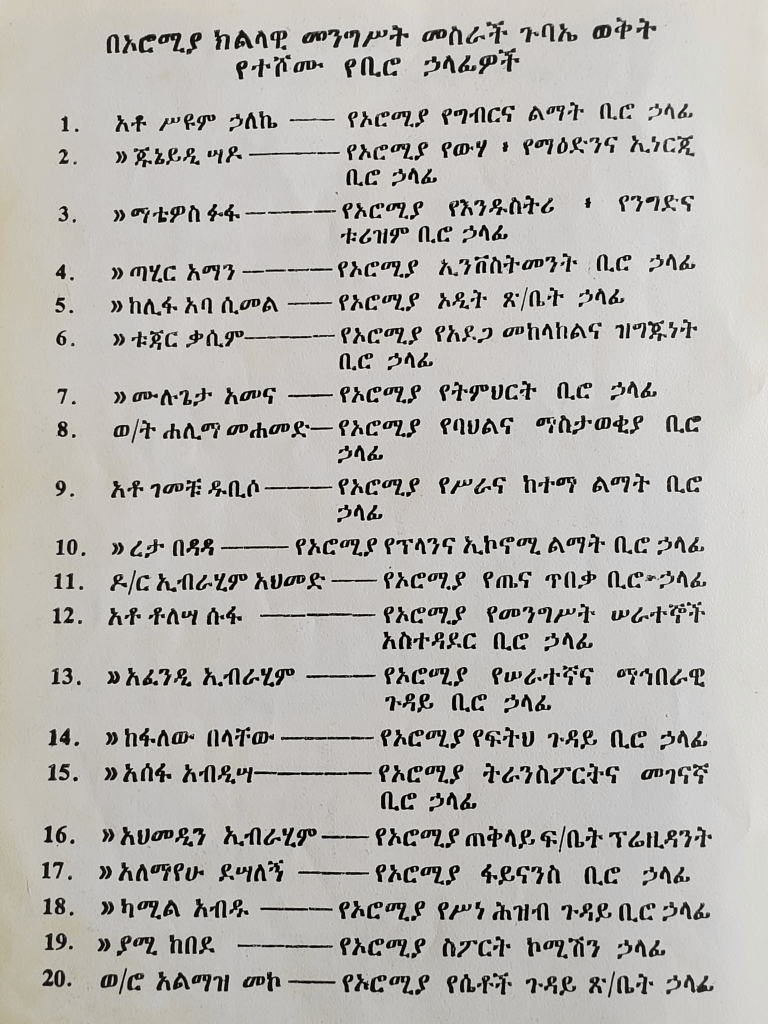
A feature story on the two key conferences that helped establish and launch the Oromia regional government.
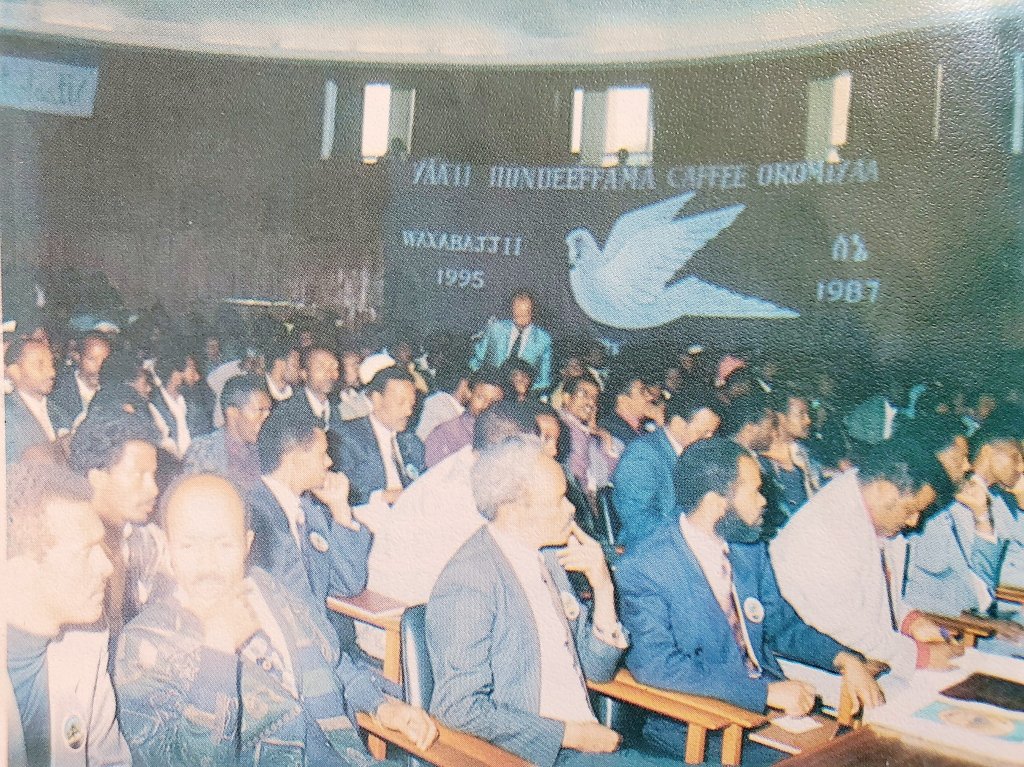
A People’s Assembly is Born: The Conferences That Forged Oromia’s Government
In the mid-1990s, the Oromo people, Ethiopia’s largest ethnic group, took a historic step toward self-governance. Two landmark gatherings—the Oromia Regional State Formation Conference and its first regular session—laid the legislative and political foundation for what would become one of Africa’s largest subnational governments.
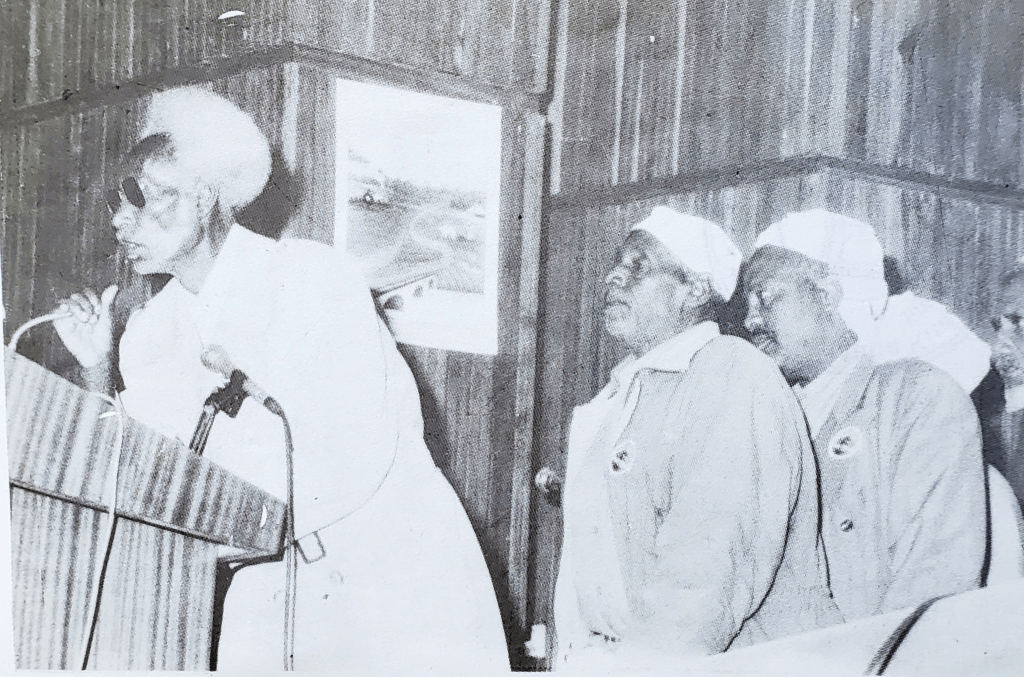
The Formation Conference (June 9-15, 1987 E.C.)
From Sene 9 to 15, 1987, in the Ethiopian calendar (mid-June 1995 in the Gregorian calendar), hundreds of Oromo delegates gathered at Finfinne. This week-long Formation Conference marked the first time Oromo representatives came together to design their regional state, its administrative structure, and its legislative body—the Caffee Oromia. For a people whose culture and language had long been suppressed, this was a moment of historic empowerment, officially establishing Oromia as a federal region within Ethiopia’s new ethnic-based system.
The First Regular Conference (November 6-9, 1988 E.C.)
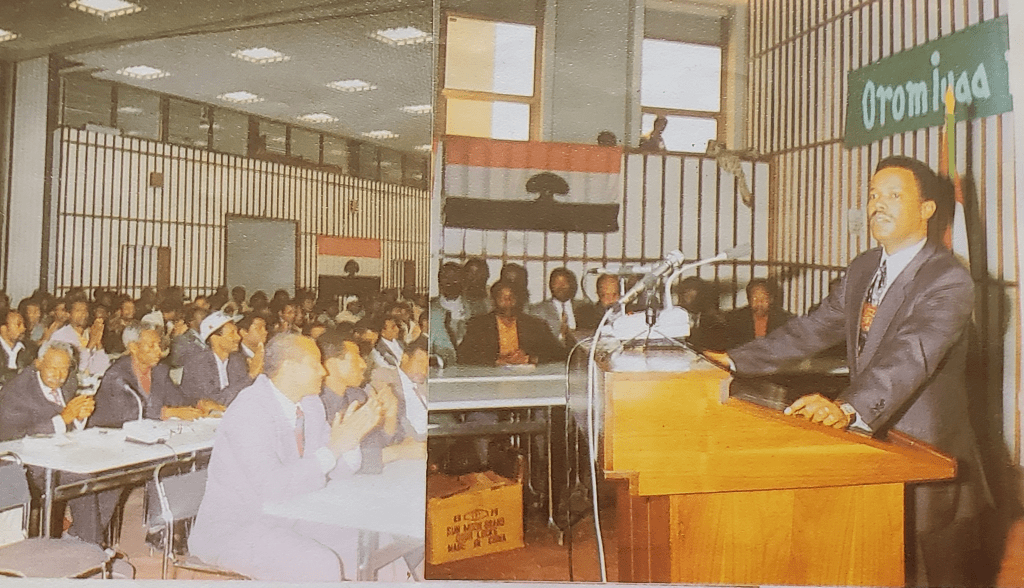
Just over a year later, from Hidar 6 to 9, 1988 (mid-November 1996), the newly formed Caffee Oromia convened in Finfinne for its first regular session. While the formation conference was about creation, this meeting was about governance. Delegates focused on the practical work of drafting regional laws, building administrative capacity, and addressing the needs of Oromia’s growing population.
A Delicate Balance
The timing of these conferences was crucial. The conferences emphasized that the Oromo people’s struggle was for justice within a reformed Ethiopian state, not secession. The Caffee Oromia, established at the formation conference, grew to represent over 30 million Oromo people, making it a key player in Ethiopia’s complex ethnic federal system—a role it continues to navigate to this day.
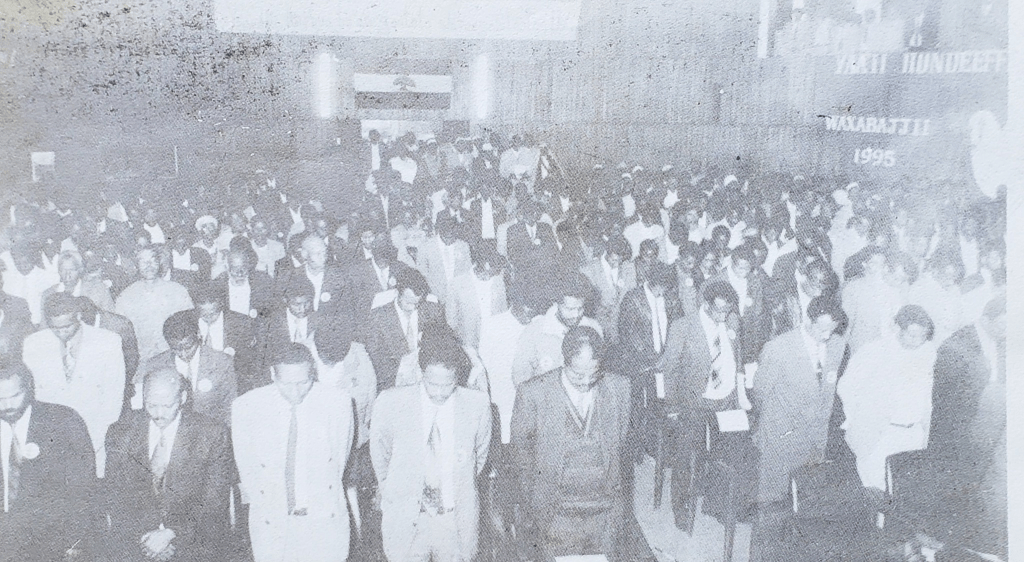
A Note on the Dates
The conference dates are recorded in the Ethiopian calendar (E.C.), which is approximately 7–8 years behind the Gregorian calendar. Thus:
· Formation Conference: Sene 9-15, 1987 E.C. ≈ June 1995 G.C.
· First Regular Conference: Hidar 6-9, 1988 E.C. ≈ November 1996 G.C.
The original post by Negash Qemant states that the Oromia Regional State was formed in 1987 E.C., and notes that the Formation Conference (Sene 9-15, 1987 E.C.) and the First Regular Conference (Hidar 6-9, 1988 E.C.) both took place in Finfinne.

The Mountain of Guardians: Tulluu Eegduu and the Resurgence of Oromo Sacred Tradition
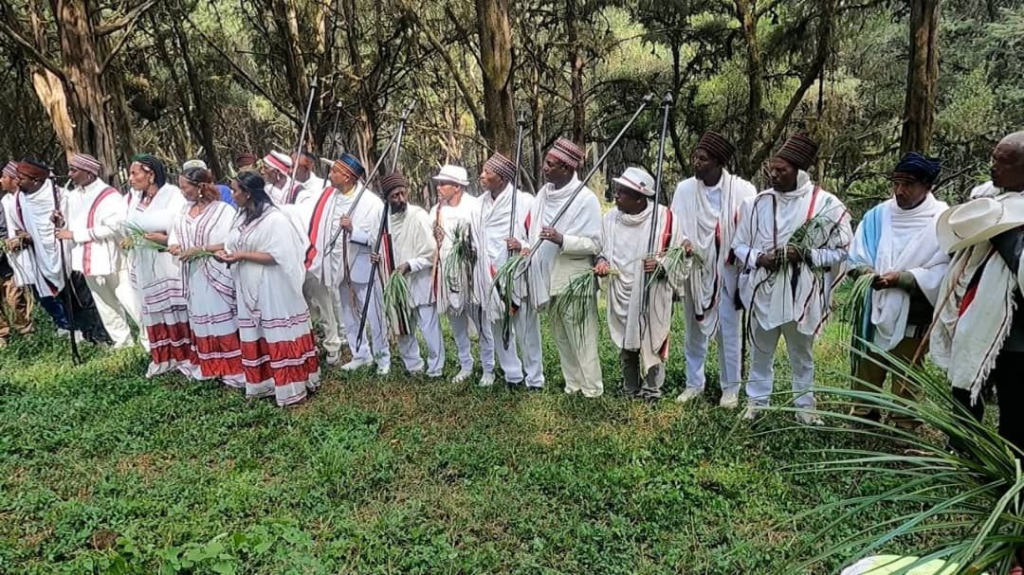
WALMARAA, OROMIA – At dawn, the mountain holds its breath. A thin mist clings to its peculiar flat summit, rising like an earthen vessel turned upside down against the sky. This is Tulluu Eegduu—known to the elders as Tulluu Tuulamaa—and for generations, it has stood as both witness and sanctuary to the spiritual heartbeat of the Oromo people.
To call Tulluu Eegduu merely a mountain would be to call the ocean a puddle. Its shape alone defies expectation. Unlike the conical peaks that punctuate the landscape, this mountain spreads across the horizon with a flattened crown so vast and sheer that no path leads directly to its summit. Only the most determined climbers, equipped with ropes and resolve, can scale its steep flanks.
Those who make the ascent discover a world unto itself. The summit hosts ancient flora—juniper trees bent by centuries of wind, wild olive and eucalyptus standing as silent sentinels—plants so aged that their gnarled branches seem to whisper secrets from another time. Above, the air runs pure and damp, for the sun rarely penetrates this high place. Visitors find themselves standing on a plateau where nothing grows beneath their feet except the earth itself, raw and exposed to the heavens.
The Eight Mountains of Faith
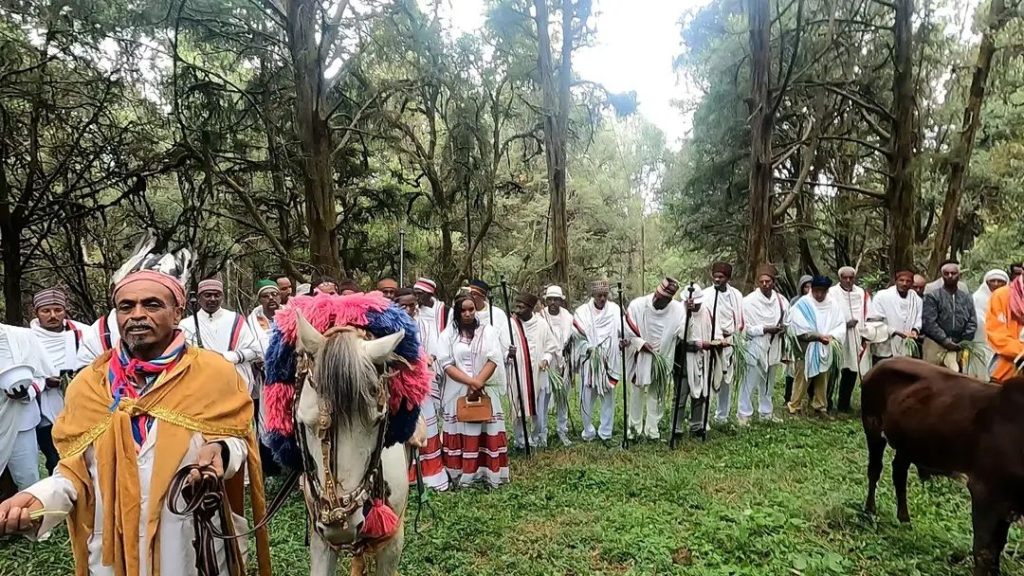
For the Oromo people of Tuulamaa, Tulluu Eegduu belongs to a sacred constellation. Eight mountains—Boosat, Cuqqaalaa, Erar, Barrak, Mogloo (also called Wococaa), Waatoo Dallachaa, Foo’ata Algee, and Eegduu itself—form the spiritual geography of their world. Among these siblings of stone, Eegduu holds a unique position. It is here, during the season of Arfaasaa, that the Tuulamaa Oromo gather for Irreessa—the sacred thanksgiving ceremony—and depart for Muuda, the ritual of anointment that connects the living with the divine and the ancestral.
Yet Tulluu Eegduu is no stranger to turbulent history. Before the expansion of Emperor Menelik in the late 19th century, the mountain’s summit hosted the Qe’ee Ayyaantuu of the Maram clan. According to elders from the Waajuu lineage, this was a place of powerful spiritual authority—a sanctuary where the Ayyaantu, the ritual leaders, communed with Waaqa (God) on behalf of the people. That sanctuary, they say, was destroyed by none other than Empress Zawditu herself, Menelik’s daughter, who brought the mountain’s sacred enclosures crashing down.
Where Roots Run Deep
What truly sets Tulluu Eegduu apart, however, is its claim as the cradle of identity. Elders and Gadaa leaders affirm that within this mountain’s domain—specifically in a place called Malkaa Fuudhaa beneath Eegduu’s slopes—lies the origin point of the Handhuuraa, the foundational root from which both the Maccaa and Tuulamaa Oromo lineages sprouted. This is not merely a mountain. It is a womb of stone, a place where genealogy and geography become one.
This explains its original name: Tulluu Tuulamaa—the Mountain of the Tuulamaa people. Only later did it become known as Tulluu Eegduu, the Mountain of Guardians, for it watched over the very birthplace of a nation.
The Sanctuary That Healed a People
In the cosmology of the eastern Oromo, Tulluu Eegduu served as more than a ritual site. It was a court of last resort, a spiritual emergency room where broken souls came to be mended. When drought scorched the earth and famine followed, when plague swept through villages, when rains failed or children sickened, when the fragile web of safuu—the moral-spiritual order that governs Oromo life—was torn—the people climbed to this mountain.
From Walmaraa they came. From Muloo, Barrak Alaltuu, Aqaaqii Gumbichuu, Sabbataa Awwash, Guullallee, Abbichuu, Galaani, and beyond. They ascended Tulluu Eegduu not for conquest but for healing. They came to make offerings, to beseech Waaqa for mercy, to restore balance to their fractured world. And because the mountain’s summit was flat, they gathered in great numbers, finding not only divine audience but human communion.
The Marketplace in the Sky
In the time of the emperors, this communion evolved. The mountain’s flat crown became a meeting ground for something unexpected: commerce. Traders journeyed from as far as Jimma and Wallaggaa, carrying goods that had traveled from the Arabian Peninsula. They came to exchange Amoole—blocks of salt that served as currency—for other wares. They gathered at a place called Malkaa Fuudhaa, where water flowed and deals were struck.
But these merchants needed shelter, food, drink, and rest. And so the people of the surrounding lands, particularly those from Mana Gasaa—the name given to the temporary dwellings that children or herders occupied during the rainy season—extended their hospitality. “Let us meet at Mana Gasaa,” the traders would say, and the name stuck. Elders still recount that the very word “Mannaagashaa” (መናገሻ), a place of meeting and speech, was born from these gatherings on Tulluu Eegduu’s slopes.
The 22-Year Silence
For twenty-two years, Tulluu Eegduu stood silent.
The Irreessa ceremony, the lifeblood of Oromo spiritual practice, had been suppressed. The mountain that had witnessed countless generations of prayer, healing, and thanksgiving became a place where Oromo voices could no longer rise in collective worship. The flat summit that had once held thousands of worshippers remained empty.
But traditions buried do not die. They wait.
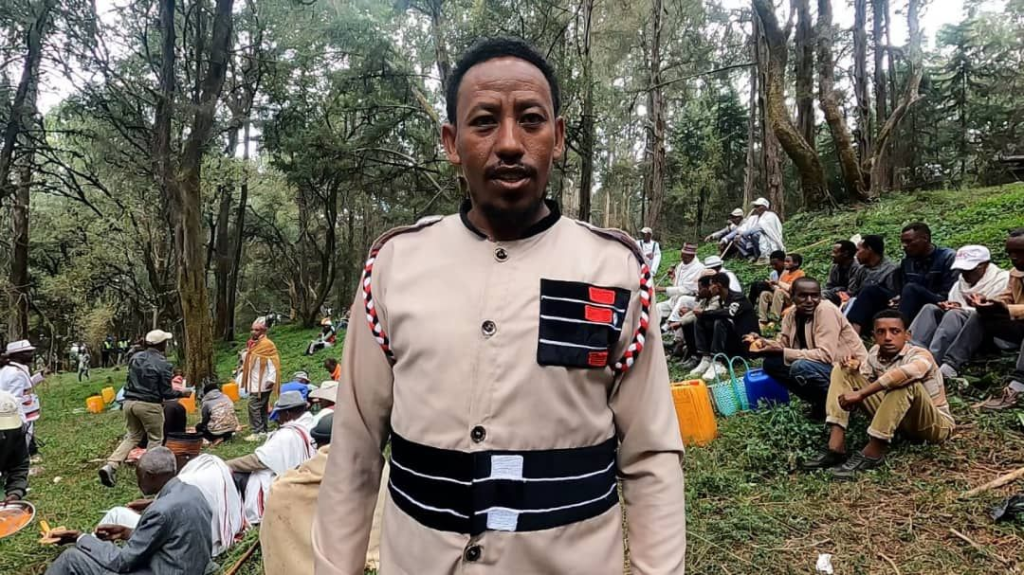
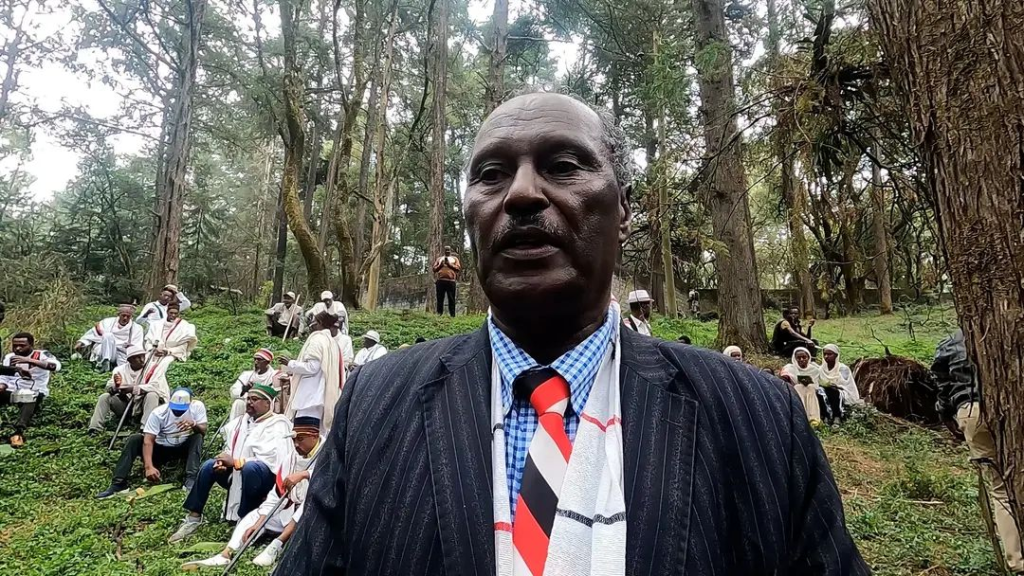
On September 24, 2018 (according to the Ethiopian calendar, though elders mark time differently), the mountain awoke. Under the guidance of Gadaa leaders, local elders, Ayyaantu ritual experts, and the Abbaa Tulluu—the “Father of the Mountain” who serves as its earthly custodian—the Irreessa ceremony returned to Tulluu Eegduu. The Association of Maccaa and Tuulamaa played a crucial role, their members working tirelessly to ensure that the sacred site would reclaim its place in Oromo spiritual life.
On that morning, the sun rose over the mountain’s flat crown for the first time in two decades to find it occupied once again—by worshippers, by drummers, by the faithful who had waited a generation to stand on that summit and lift their voices to Waaqa.
Mysteries Carved in Stone
But Tulluu Eegduu does not give up its secrets easily. Scholars, archivists, and the simply curious who climb its heights return with more questions than answers.
The Empress and the Enclave: How exactly did Zawditu destroy the sanctuary on the summit? And what connects her struggle with Lij Iyasu—the deposed emperor who embraced Islam and challenged the Christian establishment—to the shadow of Tulluu Eegduu? Oral traditions hint at connections, but written records remain elusive.
The Sunken House: After Zawditu demolished the Ayyaantu’s sanctuary, she reportedly built a house for herself on the mountain. That house, elders say, was later swallowed by the earth, dragged down into the mountain itself. Was this allegory, or did a structure truly sink into the volcanic soil? When did this happen? No one can say for certain.
The Birthplace Beneath: Repeatedly, those who know—the argaa-dhageettii, the “seers and hearers” who carry Oromo memory—speak of Malkaa Fuudhaa as the precise location where the Handhuuraa Oromo emerged. Is this the literal birthplace of the Maccaa and Tuulamaa nations? Previous studies have neither confirmed nor denied this claim. The earth beneath the mountain may hold answers that archaeology has yet to uncover.
The Gadaami Plateau and the Governor’s Archives: Upon Tulluu Eegduu’s summit stands a plateau called Gadaami. According to the protocols of the Orthodox Christian faith, only those properly authorized may reside there—yet people do live there, within the very ceremonial spaces that once hosted Oromo rituals. More intriguingly, local tradition holds that the administrative records of Habtagoorgis Diinagdee, a powerful governor from a bygone era, remain somewhere on this mountain. What connects this governor to Tulluu Eegduu? And what of his relationship with Tulluu Waatoo Daalachaa, the mountain’s neighbor in the sacred eight? The archives, if they exist, wait in silence.
A Prayer for Return
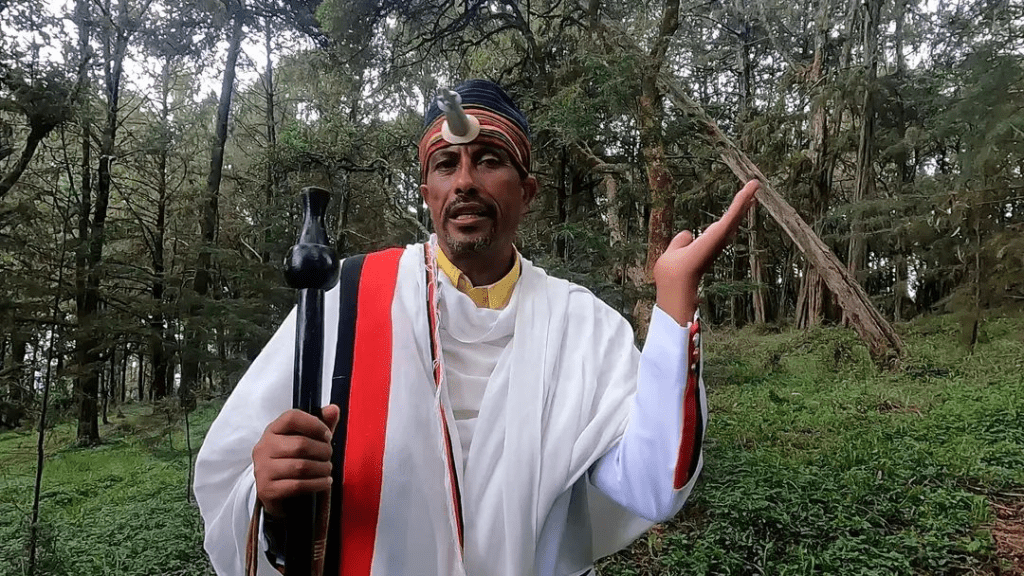
As the sun sets behind Tulluu Eegduu’s flattened crown, casting long shadows across the valleys below, a group of elders gathers at the mountain’s base. They have come to offer evening prayers, to pour libations, to speak the names of ancestors who stood on this same ground centuries ago.
An elder, his white hair catching the last light, raises his hands and speaks a simple blessing: “Nagaa ta’aa. Duudhaan Oromoo bakka isaatti yaa deebi’u.”
Let there be peace. May Oromo tradition return to its rightful place.
The mountain listens. And in the morning, the people will climb again.
For researchers, archivists, and all who preserve the thread of history: Tulluu Eegduu awaits. Its stories are etched not in paper but in stone, in memory, in the wind that moves across its flat summit. The questions are many. The answers lie beneath the surface, waiting for those who would dig—not only into the earth, but into the living tradition that never truly died.




 Advocacy for Oromia