A Cry for Justice, A Prayer for Truth, A People’s Demand for Divine Witness
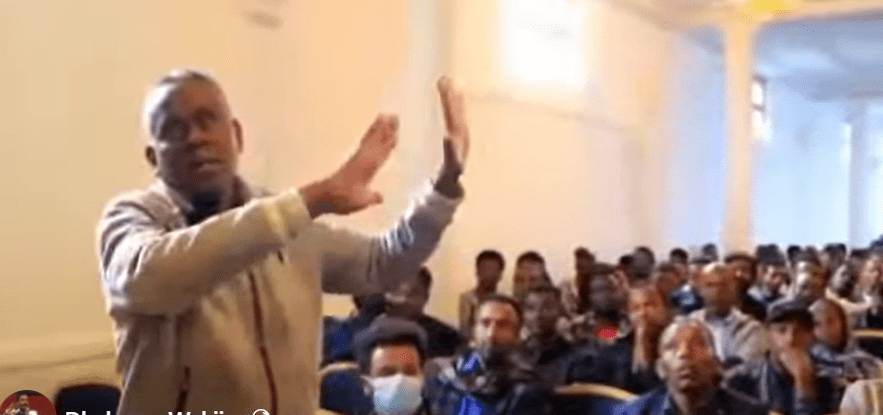
“IMIMMAAN UMMATAA – WAAQNI DHUGAA KEENYAA NUU HAA BARBAADU!”
INTRODUCTION: WORDS THAT CARRY CENTURIES
“Imimmaan ummataa – Waaqni dhugaa keenya nuu haa barbaadu!”
These words are not mere syllables. They are not poetry for the sake of beauty. They are not casual prayers whispered in passing.
They are a cry.
A cry from the depths of a people who have been silenced for too long. A cry from mothers who have buried their children. A cry from young men and women who have seen their dreams crushed by the boot of oppression. A cry from elders who remember a time before the wounds—and who fear that healing may never come.
And at the end of that cry, a plea directed not to any human power, not to any political party, not to any international body—but to the highest authority that any Oromo knows:
Waaqa.
God.
“May God find our truth for us.”
This is not a prayer of the weak. This is a prayer of those who have exhausted every earthly option—and who still refuse to give up.
PART ONE: THE MEANING BEHIND THE WORDS
What Is “Imimmaan Ummataa”?
In Afaan Oromo, imimma carries a weight that English struggles to capture. It is not simply “cry” or “shout” or “lament.” It is the specific sound of a people in collective anguish. It is the wail that rises from a village after a massacre. It is the groan of a farmer watching his harvest burn. It is the sob of a child who has lost both parents to a conflict they never understood.
Imimmaan ummataa = The cry of the people.
Not one person. Not one family. Not one clan.
The people.
The collective. The multitude. The nation.
When an Oromo says “imimmaan ummataa,” they are saying: I am not alone in my suffering. My pain is the pain of millions. And together, our cry rises louder than any gun, any prison, any lie.
What Does “Waaqni Dhugaa Keenya Nuu Haa Barbaadu” Mean?
This second half of the invocation is both a prayer and a challenge.
Waaqni – God (the supreme Creator, the Waaqa of the Oromo traditional religion, the same God known by many names across faiths)
Dhugaa keenya – Our truth (not “the truth” in abstract, but our truth—the specific, lived, historical reality of the Oromo people)
Nuu haa barbaadu – May He find for us (or “may He locate on our behalf”)
Put together: “May God find our truth for us.”
Why “find”? Because truth, for a people who have been systematically erased from history, from textbooks, from political representation, from economic opportunity—that truth has been buried. Hidden. Denied.
The speaker is asking God to dig up that buried truth. To unearth it. To present it to the world in a way that no human power can deny.
PART TWO: THE CONTEXT – WHY THIS PRAYER NOW?
A People Exhausted
The Oromo cause is not new. It stretches back generations:
| Era | Oppression | Oromo Response |
|---|---|---|
| Pre-19th Century | Independent Oromo societies with their own governance (Gadaa system) | Flourishing |
| Menelik’s Expansion (late 1800s) | Conquest, occupation, incorporation into Abyssinian Empire | Armed resistance |
| Haile Selassie Era | Cultural suppression, language ban, land alienation | Continued resistance, marginalization |
| Derg Era (1974-1991) | Mass atrocities, forced resettlement, Red Terror | Emergence of armed liberation fronts |
| EPRDF Era (1991-2018) | Ethnic federalism on paper, continued marginalization in practice | Mass protests (2014-2018) |
| Current Era (2018-present) | New promises, old patterns, renewed repression | Ongoing struggle |
After all of this—after the deaths, after the displacements, after the broken promises—what do the people have left?
Their cry. And their God.
When Earthly Justice Fails
The invocation “Waaqni dhugaa keenya nuu haa barbaadu” is spoken most often when all human systems have failed:
- Courts that refuse to prosecute those who killed Oromo protesters
- Parliaments where Oromo voices are outnumbered and ignored
- International bodies that issue statements but take no action
- Media that either ignores Oromo suffering or distorts it
- Even Oromo leaders who have betrayed the trust of their own people
When every door is closed, when every judge is bought, when every diplomat looks away—where does a people turn?
Upward.
Not out of resignation. Out of faith.
The prayer is not “God, do everything for us.” The prayer is “God, find our truth—and then let that truth do what truth always does: set the captives free.”
PART THREE: THE THEOLOGY OF OROMO RESISTANCE
Waaqa in Oromo Tradition
Long before Christianity or Islam arrived in Oromia, the Oromo people believed in a supreme Creator: Waaqa Tokkicha (the One God). This was not a distant, uninvolved deity. Waaqa was present in the rhythms of nature, in the justice of the Gadaa system, in the blessings of rain and the warning of drought.
The traditional Oromo prayer begins with:
“Waaqa, Waaqa, Waaqa – kan biyya fi samii uume, kan nama uume, kan beeylada uume…”
“God, God, God – who created the earth and the sky, who created humanity, who created animals…”
This Waaqa is a God of dhugaa (truth) and haqa (justice). The Gadaa system, which governed Oromo society for centuries, was built on the belief that leaders must be accountable to Waaqa and to the people. A leader who lied, who stole, who killed innocents—such a leader had lost the favor of Waaqa and could be removed.
The Integration of Faith
Today, most Oromos are either Muslim or Christian. But the deep structure of Oromo spirituality remains: the belief that God is on the side of truth, and that truth will eventually triumph.
When an Oromo Muslim says “Waaqni dhugaa keenya nuu haa barbaadu,” they are calling upon Allah by one of His names (Al-Haqq, The Truth).
When an Oromo Christian says the same, they are echoing the Psalmist: “Vindicate me, O God, and plead my cause against an ungodly nation” (Psalm 43:1).
When an Oromo follower of the traditional religion says it, they are calling upon Waaqa in the oldest way—as the witness to all covenants, the judge of all wrongs, the restorer of all balance.
The prayer unites. The cause unites. The God of truth is one.
PART FOUR: WHAT DOES IT MEAN FOR GOD TO “FIND OUR TRUTH”?
This is the heart of the invocation. Let us break it down.
1. Truth That Has Been Buried
For over a century, the Oromo story has been told by non-Oromos. Oromo history has been erased or rewritten. Oromo heroes have been forgotten or vilified. Oromo language was banned from schools and courts for generations.
“Finding our truth” means excavating history—bringing to light what was deliberately buried.
2. Truth That Has Been Denied
When Oromos say “We are marginalized,” the response from Addis Ababa is often denial. “Look at the constitution,” they say. “Look at the ministries,” they say. “Look at the prime minister’s ethnicity,” they say.
But the lived reality of ordinary Oromos tells a different story: land alienation, political arrests, economic exclusion, cultural contempt.
“Finding our truth” means validating lived experience—declaring that what Oromos have suffered is real, is wrong, and must be addressed.
3. Truth That Has Been Mocked
The world has a long history of laughing at the suffering of the weak. Oromo activists are called “terrorists.” Oromo protests are called “instability.” Oromo deaths are called “collateral damage.”
“Finding our truth” means vindication—proving to a skeptical world that the Oromo cry is not propaganda, not exaggeration, not victimhood theater. It is blood. It is tears. It is real.
4. Truth That Sets Free
Jesus of Nazareth said: “You will know the truth, and the truth will set you free” (John 8:32).
The Qur’an says: “And say, ‘The truth has come, and falsehood has perished. Indeed falsehood is ever bound to perish'” (Surah Al-Isra 17:81).
Oromo tradition says: “Dhugaan du’uu hin danda’u” – Truth cannot die.
“Finding our truth” means liberation—not because truth has magical powers, but because truth, once fully known, demands action. It demands justice. It demands change.
PART FIVE: THE CRY AS A POLITICAL ACT
Is This Prayer an Escape from Politics?
Some might say: “Prayer is fine, but what about organizing? What about protests? What about armed struggle?”
The Oromo invocation does not reject political action. It grounds it.
Throughout history, oppressed peoples have prayed before they fought. The enslaved Africans in America sang spirituals before they escaped. The Jews in Egypt cried out before the Exodus. The early Christians prayed in catacombs before they transformed an empire.
Prayer is not the opposite of action. Prayer is the source of action that is sustainable, ethical, and rooted in something deeper than rage.
When an Oromo says “Waaqni dhugaa keenya nuu haa barbaadu,” they are not sitting passively. They are:
- Naming their suffering as truth, not as fate
- Calling a witness higher than any human court
- Refusing despair – because if God is for us, who can be against us?
- Building community – because the cry is collective, not individual
- Claiming hope – because truth, once found, cannot be hidden again
The Cry That Cannot Be Silenced
Governments can shut down newspapers. They can arrest journalists. They can block websites. They can ban protests.
But they cannot stop a people from crying out to God.
That is why the invocation is so powerful. It operates in a realm that no earthly power can fully control. It is the voice of the voiceless. It is the prayer of the prisoner. It is the last weapon of the unarmed.
And history shows: that weapon works.
PART SIX: RESPONSES TO THE CRY
What Happens When Oromos Cry Out?
| Response | Description |
|---|---|
| From the State | Arrests, violence, denial, propaganda – the state fears the cry because it cannot fully control it. |
| From the World | Mostly silence. Sometimes a statement. Rarely action. But the cry plants seeds that may grow over time. |
| From God | This is not for any human to say. But those who cry out in faith believe that God hears – and that hearing is the first step toward answering. |
| From Within the Oromo Community | Solidarity. Shared grief. Renewed commitment. The cry reminds Oromos that they are not alone. |
A Warning to the Oppressor
To those who have caused the Oromo people to cry out – whether in Addis Ababa, in regional capitals, or in international boardrooms:
The cry has been heard.
Not just by other Oromos. Not just by human rights groups. Not just by journalists.
By Waaqa.
And Waaqa, in the end, is not mocked. Every tear has a witness. Every drop of innocent blood has a voice. Every buried truth has a resurrection day.
The cry of the Oromo people is not a threat you can shoot. It is not a protest you can disperse. It is not a story you can delete.
It is a prayer.
And prayers have a way of being answered.
PART SEVEN: LIVING THE INVOCATION – WHAT OROMOS CAN DO
Saying “Imimmaan ummataa – Waaqni dhugaa keenya nuu haa barbaadu” is not a magical formula. It is a way of life.
1. Tell the Truth
Do not lie about the Oromo cause. Do not exaggerate. Do not spread propaganda. Do not hate. The truth is strong enough on its own. Speak it. Write it. Live it.
2. Bear Witness
When you see injustice, do not look away. Take photos. Write names. Record dates. Build archives. The truth needs evidence. Be a witness.
3. Support the Cry
Financially support Oromo media, Oromo legal aid, Oromo human rights documentation. The cry needs resources to reach the world.
4. Pray – And Act
Pray as if everything depends on God. Act as if everything depends on you. These are not contradictions. They are the two wings of the same bird.
5. Forgive – But Do Not Forget
The cry of the Oromo people is not a cry for revenge. It is a cry for justice. Forgiveness is possible without forgetting. And justice is possible without hatred.
6. Unite
The single greatest obstacle to the Oromo cause is Oromo disunity. The cry is one cry. Let it come from one mouth, one heart, one people.
CONCLUSION: THE ANSWER IS COMING
Imimmaan ummataa – Waaqni dhugaa keenya nuu haa barbaadu.
The cry of the people – may God find our truth for us.
This is not a prayer of desperation. It is a prayer of certainty.
Certainty that truth exists, even when it is buried.
Certainty that God exists, even when He seems silent.
Certainty that justice exists, even when it is delayed.
The Oromo people have cried out for generations. And each generation has added its voice to the cry. Sons and daughters. Mothers and fathers. Farmers and teachers. Fighters and poets.
One day – perhaps not today, perhaps not tomorrow, but one day – that cry will be answered.
The truth will be found.
The buried will be unearthed.
The silenced will speak.
The dead will be remembered.
And Waaqa – the God of truth, the Creator of heavens and earth, the One who hears every cry – will say:
“I have heard. I have seen. I have found your truth. Now – be free.”
Until that day, the Oromo people will not stop crying out.
Because the cry is all they have.
And because the cry is enough.
May God find our truth for us.
Waaqni dhugaa keenya nuu haa barbaadu.
Imimmaan ummataa – hin duunu.
The cry of the people – never dies.
© 2026 – A Prayer for Truth, A Cry for Justice, A People’s Invocation

Posted on April 18, 2026, in Aadaa, Events, Finfinne, Information, News, Oromia, Press Release, Promotion. Bookmark the permalink. Leave a comment.






Leave a comment
Comments 0