“NIMOONAA CAALII” AND THE SHADOW OF AMBO: One Name Among Many in a Growing Crackdown
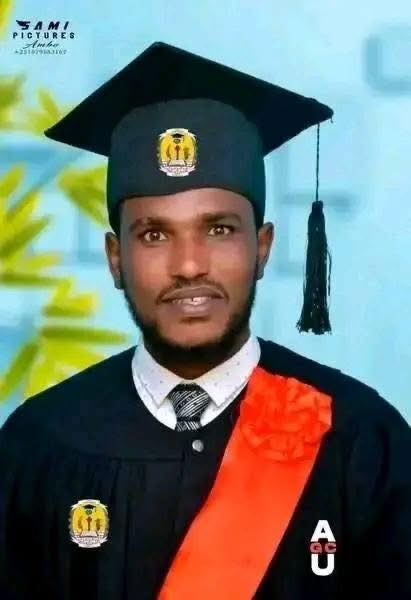
A routine morning arrest at 6:20 AM raises urgent questions about justice, security forces, and the fate of Oromo activists.
INTRODUCTION: A NAME, A TIME, A PLACE
Nimoonaa Caalii jedhama. Jiraataa magaalaa Ambooti.
His name is Nimoonaa Caalii. He is a resident of Ambo city—a town whose very name has become synonymous with Oromo resistance, with political awakening, and with the heavy hand of state security.
On a recent morning, at exactly 6:20 AM, Nimoonaa Caalii was taken.
He was not alone. According to sources, he was arrested alongside “many other people” in an operation that has sent shockwaves through the community. They were detained at Police Station of Kebele 02 in Ambo.
The official reason? Unclear.
The accuser? The city’s security chief, Obboo Hacaaluu Gammachuu—a name that carries a painful irony for anyone familiar with recent Oromo history.
This article investigates what is known about the arrests in Ambo, the pattern of crackdowns targeting Oromo activists and residents, and the deeper questions these events raise about justice, accountability, and the rule of law.
PART ONE: WHO IS NIMOONAA CAALII?
The information available about Nimoonaa Caalii is limited—by design, perhaps, on the part of those who wish to keep his story hidden. What is known:
- Name: Nimoonaa Caalii
- Status: Resident of Ambo city
- Occupation: Not publicly confirmed, but described by community sources as a local activist or involved in community organizing
- Date of Arrest: Recent (exact date not specified in available reporting)
- Time of Arrest: 6:20 AM
- Location of Arrest: Ambo city
- Detention Location: Police station, Kebele 02, Ambo
The early morning hour—6:20 AM—is significant. This is not the time of a spontaneous arrest. This is the time of a coordinated operation: security forces moving before dawn, targeting specific individuals, catching them at home, often before families are awake.
This pattern is familiar across Oromia. It is the signature of a state that prefers to act in darkness.
PART TWO: THE ACCUSER – OBBOO HACAALUU GAMMACHUU
The man reportedly leading or authorizing these arrests is Obboo Hacaaluu Gammachuu, the security chief (kantiibaa) of Ambo city.
The name Hacaaluu carries enormous weight in Oromo memory.
Hachalu Hundessa (also spelled Hacaaluu Hundeessaa) was the beloved Oromo singer, activist, and “voice of the revolution” who was assassinated in Addis Ababa on June 29, 2020 .
Who Was Hachalu Hundessa?
Hachalu’s music gave voice to the pain, hope, and aspirations of the Oromo people. His songs—like “Maalan Jira” (“What Is Mine”)—spoke directly to issues of land alienation, displacement from Addis Ababa, and the struggle for dignity .
His assassination in 2020 sparked massive protests across Ethiopia, leading to dozens of deaths, internet shutdowns, and political instability .
The Irony of the Name
That the security chief of Ambo—the very city that produced Hachalu Hundessa—shares the name Hacaaluu is a bitter irony.
Whether Obboo Hacaaluu Gammachuu is named in honor of the late singer or not is unknown. What is clear is that the man bearing that name is now using state power to arrest residents of the same city—including, reportedly, activists and “sabboontota” (patriots or fighters) who may share the political consciousness that Hachalu Hundessa represented.
It is as if the spirit of resistance that Hachalu embodied is being policed by someone who carries his name.
PART THREE: THE PATTERN – WHAT IS HAPPENING IN AMBO?
The arrest of Nimoonaa Caalii is not an isolated incident. According to the information provided, Obboo Hacaaluu Gammachuu has been “following the mafia group and their actions” and has been sending “many sabboontota and residents” to prison.
Key Questions
| Question | What We Know |
|---|---|
| Who is the “mafia group”? | Unclear. The term could refer to organized criminal networks, political opposition groups, or a label applied by authorities to discredit activists. |
| What are the charges? | Not publicly disclosed. |
| How many arrested? | “Many” – exact number unknown. |
| Legal process? | Unclear if detainees have access to lawyers, family visits, or courts. |
| Status of Nimoonaa Caalii? | Detained at Kebele 02 police station as of last report. |
A Broader Context
Ambo has a long history as a center of Oromo political consciousness. It is the birthplace of Hachalu Hundessa. It is home to Karchale Prison, where generations of Oromo political prisoners have been held and tortured . It is a town that has seen protests, crackdowns, and the heavy presence of security forces for decades.
The current arrests fit a pattern seen across Oromia:
- Early morning raids – Security forces target homes before dawn
- Vague accusations – Detainees are often not told the specific charges against them
- Prolonged detention – Many are held without trial for weeks or months
- Lack of transparency – Families are not notified; lawyers are denied access
- Use of labels – Activists are called “terrorists,” “mafia,” or “saboteurs” to justify arrests
PART FOUR: THE HUMAN COST – BEYOND THE NAMES
Behind every name—Nimoonaa Caalii, and the “many others” arrested alongside him—is a human story.
A Family’s Morning Destroyed
Imagine: 6:20 AM. The sun is just rising over Ambo. A family is asleep. Children are in their beds. Then—banging on the door. Flashlights. Uniformed men. Demands. Confusion. Fear.
A father is taken. A son is handcuffed. A breadwinner disappears.
The family is left behind: a wife who does not know where her husband has been taken; children who do not understand why their father is gone; parents who age overnight from worry.
This is the reality of political arrest in Ethiopia today. It is not abstract. It is not statistics. It is human life interrupted by state power.
The Prison Cell
Kebele 02 police station in Ambo is now holding Nimoonaa Caalii and others. What happens inside?
History suggests: interrogation. Possibly torture. Denial of medical care. Isolation from the outside world. Pressure to confess to crimes that were never committed.
This is not speculation. It is the documented pattern of Ethiopian security forces in Oromia, as reported by human rights organizations and survivor testimonies for decades.
PART FIVE: THE DEEPER QUESTION – WHO IS THE REAL “MAFIA”?
The information provided states that Obboo Hacaaluu Gammachuu has been “following the mafia group and their actions.”
But the term “mafia” is slippery. In the context of Ethiopian state discourse, it has been used to describe:
- Political opposition groups (including Oromo activists)
- Organized criminal networks (actual criminals)
- Anyone the state wishes to discredit
A Question Worth Asking
If security forces arrest people without charge, hold them without trial, and deny them legal representation—who is acting like a “mafia”?
The state has a monopoly on legitimate violence. But when that power is used arbitrarily, without due process, to suppress political dissent—it ceases to be legitimate. It becomes its own form of organized lawlessness.
The real “mafia” may not be the activists being arrested. It may be the system that arrests them.
PART SIX: THE LEGACY OF HACHALU HUNDESSA
It is impossible to write about Ambo, about arrests, about the name “Hacaaluu,” without invoking the memory of the singer who changed everything.
What Hachalu Sang
Hachalu Hundessa did not just sing love songs. He sang about:
- Land rights – The displacement of Oromos from their ancestral lands
- Political freedom – The right to speak, to assemble, to govern oneself
- Dignity – The refusal to be treated as second-class citizens in one’s own homeland
- Resistance – The obligation to fight injustice, even at great personal cost
His music was the soundtrack of the Qeerroo (Oromo youth) movement that shook Ethiopia between 2014 and 2018. His songs were banned from state media. He was harassed, threatened, and ultimately killed .
What Hachalu Said About His Imprisonment
As a teenager, Hachalu was arrested and spent nearly five years in Karchale Prison in Ambo—the same city where Nimoonaa Caalii is now detained .
His father’s advice to him during that imprisonment is worth remembering:
“Jabaadhu gurbaa, hidhaan qoraasuma dhiiraati.”
“Be strong, boy. Prison is the crucible of manhood.”
Hachalu emerged from prison not broken, but determined. He wrote his first album while incarcerated. He turned suffering into art. He turned oppression into anthem.
The Question for Today
Would Hachalu Hundessa be arrested today, if he were still alive?
The answer is almost certainly yes.
The same state that could not tolerate his songs cannot tolerate those who carry his legacy. The arrests in Ambo—including of Nimoonaa Caalii—are part of the same dynamic: the state’s fear of Oromo political consciousness, and its willingness to use force to suppress it.
PART SEVEN: WHAT MUST BE DONE
For the sake of Nimoonaa Caalii, for the “many others” arrested, and for the future of justice in Oromia and Ethiopia, several actions are urgently needed:
1. Immediate Legal Access
- Detainees must be allowed to see lawyers
- Families must be notified of charges and locations
- Medical care must be provided for any detainee who needs it
2. Transparency
- The charges against Nimoonaa Caalii and others must be made public
- The basis for the “mafia” label must be explained
- The number of detainees and their identities must be disclosed
3. Accountability
- If crimes were committed, the accused deserve fair trials
- If no crimes were committed, the accused deserve immediate release
- Security officials who violate the law must face consequences
4. International Attention
- Human rights organizations should investigate the arrests in Ambo
- Diplomatic pressure should be applied to ensure due process
- The Oromo diaspora should document and publicize these cases
5. Community Solidarity
- Families of detainees should not be left alone
- Legal funds should be established
- The stories of the arrested must be told
CONCLUSION: A NAME THAT MUST NOT BE FORGOTTEN
Nimoonaa Caalii jedhama.
His name is Nimoonaa Caalii.
He is a resident of Ambo. He was arrested at 6:20 AM. He is held at Kebele 02 police station. He is one among many.
His name may not be known to the world. It may not trend on social media. It may not be spoken in parliaments or written in human rights reports.
But it is a name. And behind that name is a human being. And behind that human being is a family, a community, a people who have suffered too much and waited too long for justice.
The security chief who shares the name of Hachalu Hundessa—Obboo Hacaaluu Gammachuu—has power over Nimoonaa Caalii’s fate today.
But history has a way of reversing such power.
The name Hachalu is remembered not because of the authority he held, but because of the truth he spoke and the injustice he opposed.
The same will be true of Nimoonaa Caalii—and all the others arrested in the darkness of 6:20 AM.
Their names will be remembered. Their stories will be told. And one day, the system that took them will answer.
May justice come to Ambo.
May the detainees see freedom.
May the cry of the people never be silenced.
“Jabaadhu. Hidhaan qoraasuma dhala namaati.”
—“Be strong. Prison is the crucible of human being.”
This applies to Nimoonaa Caalii as well. And to all who are held for the crime of seeking justice.
© 2026 – A Report on the Arrests in Ambo, Oromia

Posted on April 18, 2026, in Aadaa, Events, Finfinne, Information, News, Oromia, Press Release, Promotion. Bookmark the permalink. Leave a comment.






Leave a comment
Comments 0