Happy Oromo Heroes Day – Ebla 15, April 15
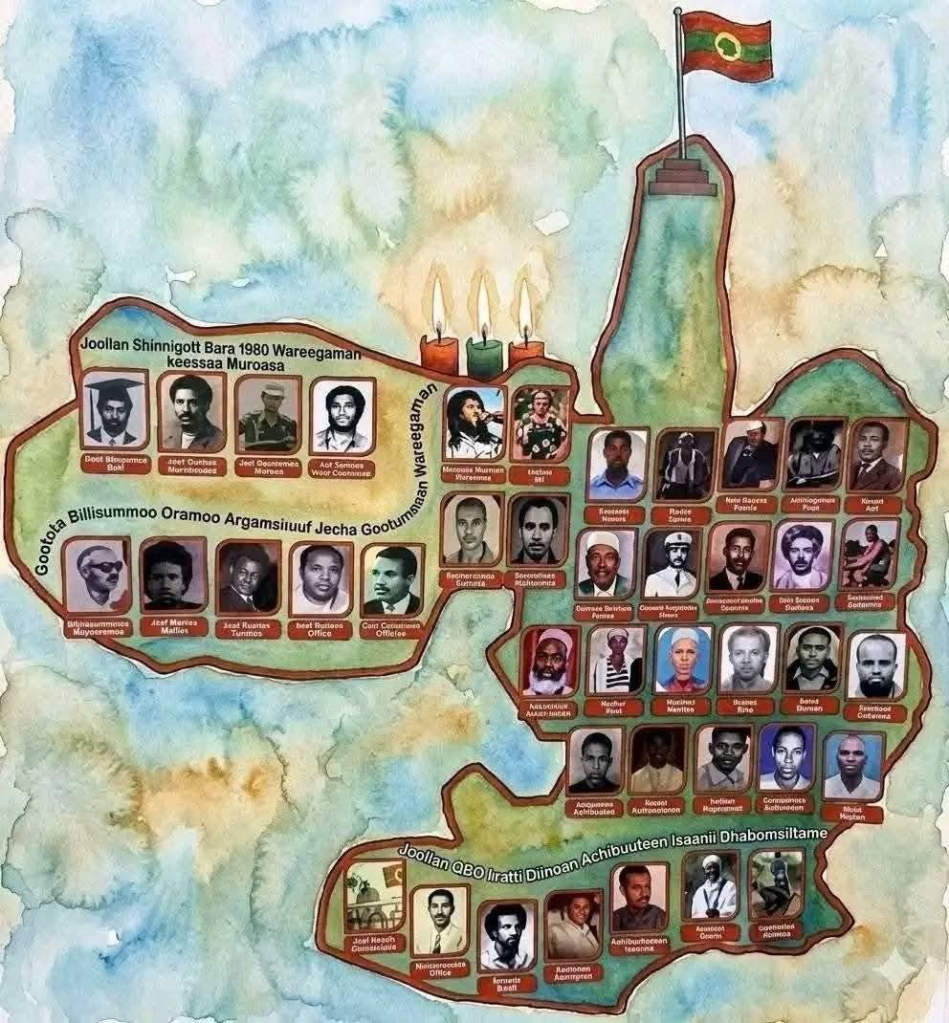
A day to rise, remember, and reaffirm
By: Maatii Sabaa
Date: April 15 – Ebla 15
Location: Oromia & the world
Prologue: A Date Written in Fire
There are dates that pass like any other Tuesday. And then there is Ebla 15 – April 15.
On this day, the Oromo people do not merely turn a page on the calendar. They turn their faces toward history. They straighten their backs. They remember.
Oromo Heroes Day is not a gift from any government. It is not a decree from any palace. It is a day carved from the bone of the people themselves – a day when the sons and daughters of Oromia pause to honor those who bled, those who fell, and those who rose again.
Ebla 15. Remember the date. Because the heroes certainly did.
Who Is an Oromo Hero?
If you walk through the villages of Arsi, the highlands of Bale, the streets of Adama, or the neighborhoods of Minneapolis and Toronto, you will get different answers. But they all sing the same tune.
An Oromo hero is:
- The Qeerroo (youth) who stood in front of bullets so that the elderly could walk behind them.
- The Qarree (young woman) who sang resistance songs while being dragged away.
- The Gadaa father who kept the law of the Oromo alive for 500 years – without an army, without a prison – only with seera (custom) and safuu (moral order).
- The horseback warrior of the 19th century who looked a European cannon in the eye and did not blink.
- The mother who named her child Bilisummaa (Freedom) even when it was illegal.
- The farmer who painted the flag on his barn door with crushed flowers and charcoal.
Heroes are not always the ones who win. Sometimes they are the ones who refuse to lose.
Why Ebla 15? Why April 15?
Every people have a sacred calendar. For the Oromo, time is kept not only in numbers but in spirit. Ebla is a month of transition – from dry to rain, from waiting to planting. It is a month of hope.
April 15 has become, in modern Oromo memory, a touchstone of courage. On various years across the late 20th and early 21st centuries, this date (or its nearby days) witnessed protests, uprisings, and moments when ordinary Oromo did extraordinary things – raising a flag that was forbidden, singing a song that was banned, demanding rights that were denied.
The heroes of April 15 did not have weapons. They had words. They had unity. They had the memory of their ancestors.
And for that, the powers that be feared them.
So Ebla 15 is not a random date. It is the people’s own appointment with history – made without permission, kept without apology.
The Five Gifts the Heroes Left Us
On this Oromo Heroes Day, let us count the inheritance. The heroes did not leave gold or land. They left something more precious: five ideas that cannot be killed.
| Oromo Word | Meaning | What the Hero Demanded |
|---|---|---|
| Nageenya | Justice / Peace / Well-being | A world where the poor are not punished for being poor. |
| Misooma | Development | Not skyscrapers for the rich, but clean water for the village. |
| Badhaadhina | Progress | Moving forward – even one step – and never backward. |
| Dimokiraasii | Democracy | The right to speak, to choose, and to be heard. |
| Nagaa | Peace / Safety / Tranquility | Sleeping without fear. Waking without dread. |
These five words are the true monument to every Oromo hero who ever fell. And they are the unfinished work that falls on our shoulders today.
How to Truly Celebrate Ebla 15
You can post a flag on social media. You can wear the colors. You can share an old photograph of a protest or a warrior. All of that is good.
But here is how to truly make this Oromo Heroes Day worthy of the name:
1. Learn one hero’s name you have never heard before.
Not the famous ones. The unknown one. The woman who fed fugitives. The teenager who wrote poetry in blood. Speak their name aloud today.
2. Forgive a fellow Oromo.
Heroes are not perfect. The struggle has sometimes been divided by clan, by region, by ideology. Today, choose unity. Send a message to an Oromo you have been angry with. Say: “Ebla 15. Let us stand together.”
3. Teach a child the five words.
Nageenya. Misooma. Badhaadhina. Dimokiraasii. Nagaa. If every Oromo child knows these five words by heart, the struggle will never die.
4. Do one brave thing.
It does not have to be big. Speak truth in a room where silence is safer. Wear the flag pin where it is frowned upon. Post the Oromo anthem. Heroes are not special. Heroes are ordinary people who decide: Today, I will not be afraid.
5. Remember the fallen – and fight for the living.
Honoring the dead is sacred. But the dead do not need our tears. They need our action. Ask yourself: What would the hero of Ebla 15 want me to finish today? Then go do it.
A Letter From an Oromo Hero (Imagined)
Dear child of Ebla 15,
I do not know your name. But I know your face. It is the same face I saw in the river when I was young – tired, hopeful, angry, loving.
I died so that you could read these words in your language. I fell so that you could stand. I was silent so that you could speak.
Do not waste my death on grief. Waste it on action.
If you see injustice – speak.
If you see a divided Oromo – unite.
If you see the flag burned – paint another one on your heart.
I did not die to become a statue. I died to become a wind at your back.
Now go. Ebla 15 is yours.
— An Oromo Hero
Closing: Happy Oromo Heroes Day
So today, April 15 – Ebla 15 – we say it loudly and softly, in cities and villages, in freedom and in hiding:
Happy Oromo Heroes Day.
Not happy because everything is finished. But happy because we are still here.
Not happy because the struggle is over. But happy because the struggle has us.
The heroes of Ebla 15 are not in their graves. They are in the straight back of the child who raises the flag. They are in the clenched fist of the protester. They are in the quiet prayer of the mother.
Today, look at your reflection.
You are not just remembering heroes.
You are becoming one.
Bilisummaa!
Nagaa!
Happy Oromo Heroes Day – Ebla 15, April 15!

Posted on April 15, 2026, in Aadaa, Events, Finfinne, Information, News, Oromia, Press Release, Promotion. Bookmark the permalink. Leave a comment.






Leave a comment
Comments 0