Surrounded by Empowerment: The Circle of Success
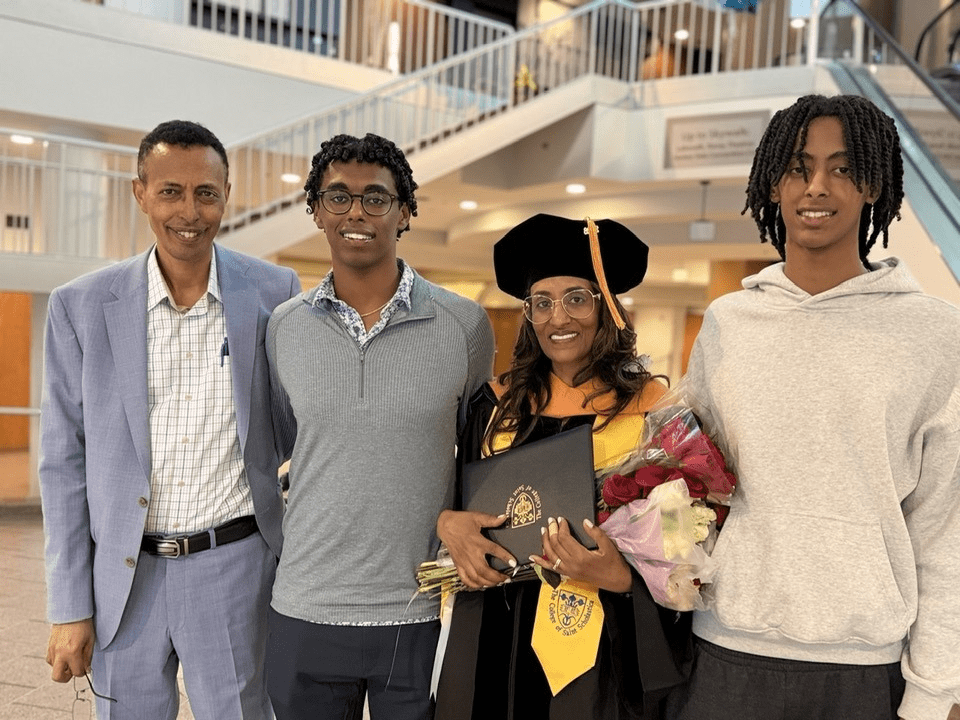
“Yeroo namoota si humneessan, jajjabeessanii fi deeggaraniin marfamtu, akka milkooftu shakkiin hin jiru.”
“When you are surrounded by people who empower you, encourage you, and support you, there is no doubt that you will succeed.”
—
By Dhabessa Wakjira*
The Circle of Success: Why No One Rises Alone
There is a quiet truth that survivors know, that athletes whisper before championships, that artists carry into their studios, and that revolutionaries feel in the dark hours before dawn: success is never a solitary act.
The Oromo people, with their deep wisdom of community, have long understood this. Their proverb rings like a bell across generations: “Yeroo namoota si humneessan, jajjabeessanii fi deeggaraniin marfamtu, akka milkooftu shakkiin hin jiru.”
When you are surrounded by people who empower you, encourage you, and support you, your success is not a matter of hope. It is a matter of certainty.
This feature story explores the anatomy of that circle—what it means to be empowered, what it looks like to be encouraged, and why support is not a luxury but a necessity for any human being daring to achieve something meaningful.
The Three Pillars of the Circle
The proverb names three distinct gifts that others bestow upon us. They are not the same. And each is indispensable.
Humneessan: Those Who Empower You
To empower is not merely to praise. It is to provide the tools, the resources, the access, and the authority that a person needs to act. Empowerment says, “I believe in you—and here is what you need to prove me right.”
Think of the mother who sells her last chicken to buy a notebook for her daughter. Think of the teacher who stays after school to explain a difficult lesson for the third time. Think of the community that pools its meager savings to send one promising student to university. These are acts of empowerment. They are not abstract. They are hands reaching down to lift another up.
Jajjabeessan: Those Who Encourage You
Encouragement is the oxygen of the human spirit. It costs nothing materially, yet it is often the rarest gift of all. The encourager says, “You are not alone. You are not wrong to try. You are not foolish to dream.”
In the long journey of any struggle—whether against political oppression, personal trauma, or professional failure—there are moments when the only thing keeping a person moving forward is a voice saying, “You can do this. I have seen you do hard things before. You will see the other side.”
The Oromo struggle, like all liberation movements, has been sustained not only by weapons and strategies but by songs, by poems, by whispered words of encouragement passed from cell to cell, from village to village, from mother to child.
Deeggaraniin: Those Who Support You
Support is the scaffolding. It is not flashy. It does not seek recognition. But without it, the entire structure collapses. Supporters show up. They cook meals when you are too exhausted to cook. They watch your children when you must attend a meeting. They contribute money when your resources run dry. They defend your name when you are not in the room to defend yourself.
Support is the quiet architecture of every successful life. And it is almost always invisible to the outside world.
The Myth of the Self-Made Person
Western culture, in particular, has elevated the myth of the “self-made” individual—the lone genius, the solitary warrior, the entrepreneur who pulled himself up by his own bootstraps. It is a seductive story. It is also a lie.
No one is self-made. Every successful person stands on a foundation laid by others. Every champion was once a beginner who was coached. Every leader was once a follower who was mentored. Every revolutionary was once a child who was fed, protected, and taught to dream.
The Oromo proverb cuts through this myth with the precision of a blade. It does not say “if you are strong, you will succeed.” It does not say “if you work hard enough, you will succeed.” It says: when you are *surrounded*—by empowerers, encouragers, and supporters—success is inevitable.
The focus is not on the individual. The focus is on the circle.
What Happens in the Absence of the Circle
To understand the power of the circle, one must also understand the devastation of its absence.
What happens to a child who is never empowered? They grow into an adult who does not believe they have the right to act, to speak, to claim space.
What happens to a person who is never encouraged? They become paralyzed by self-doubt, convinced that their efforts are worthless, that their dreams are ridiculous, that failure is the only possible outcome.
What happens to a community that receives no support? It fragments. It turns inward. It cannibalizes its own hope.
The absence of the circle is not merely disappointment. It is a form of slow death. It is the death of potential, the death of possibility, the death of the future.
This is why oppression is so effective. Oppressive systems do not merely take away resources. They isolate. They silence. They ensure that the empowered, the encouraged, and the supportive are removed from your side. They leave you alone—because a person alone is a person easily defeated.
The Circle in the Oromo Struggle
The history of the Oromo people is a history of circles. Under successive regimes that sought to divide, conquer, and erase, the Oromo have survived precisely because they have refused to let each other stand alone.
Think of the Gadaa system—an indigenous democracy built not on individual ambition but on collective responsibility. The Gadaa circle rotates power, shares knowledge, and ensures that no leader governs without the counsel of elders, the wisdom of the Qaalluu, and the consent of the assembly.
Think of the Siinqee institution—women gathering under the sacred staff to demand justice, to halt conflicts, to protect the vulnerable. That is a circle of empowerment, encouragement, and support.
Think of the afooshaa (burial societies) and buusaa gonofaa (savings rotations)—grassroots institutions where ordinary people pool their meager resources to ensure that no family faces death or poverty alone.
These are not charities. These are circles of survival. And they have kept the Oromo people alive through conquest, through famine, through imprisonment, and through exile.
The Modern Circle: Rebuilding What Was Broken
In the contemporary world, the forces that break circles have only grown stronger. Urbanization scatters families. Economic pressure forces migration. Social media creates the illusion of connection while eroding the substance of community.
Many Oromo today find themselves far from the villages of their ancestors, far from the elders who carry the oral histories, far from the physical presence of those who speak their language and share their struggles. The circle has been stretched thin.
But the proverb does not despair. It insists on a truth that cannot be broken: when the circle is present, success is certain. The task, then, is to rebuild the circle. To find new forms of empowerment, new voices of encouragement, new structures of support.
This is happening. In diaspora communities across the globe, Oromos are gathering in living rooms, in community centres, in virtual meeting spaces. They are teaching their children the language that was once forbidden. They are creating media, art, and scholarship that centre Oromo experience. They are sending money home, advocating for justice abroad, and refusing to let distance destroy the bonds of mutual care.
What the Circle Asks of You
If the proverb describes the conditions for success, it also implies a responsibility. To be surrounded by empowering, encouraging, supportive people, you must also be willing to be that person for others.
You cannot demand a circle that you are unwilling to join.
The circle asks: Whom have you empowered today? To whom have you spoken words of encouragement? Whose burdens have you lightened through your quiet, unglamorous support?
Success is not a trophy you receive. It is a current that flows through a network of relationships. You are either part of that current—receiving and giving—or you are standing outside, wondering why the water never reaches you.
Stories from the Circle
Consider the young Oromo woman who wanted to become a doctor. Her family had no money. Her village had no clinic. But her mother empowered her by selling the family’s only cow. Her teacher encouraged her by staying late to tutor her in science. Her community supported her by raising funds for her university application. Today, she is a physician. She did not succeed alone. She succeeded because a circle held her.
Consider the political prisoner who spent seven years in a dark cell. He was tortured. He was isolated. But he later said that the reason he survived was the letters—smuggled, infrequent, but relentless—from his wife. She empowered him by reminding him of his worth. She encouraged him by describing the future they would build together. She supported him by keeping the children alive on the outside. His survival was not his alone. It was hers, too.
Consider the artist whose work was ridiculed by critics. She nearly gave up. But a friend—just one friend—said, “This is important. Do not stop.” That friend spent months helping her find galleries, connecting her with other artists, sitting with her through rejection after rejection. Today, that artist’s work hangs in museums. The friend’s name appears nowhere. But the friend was the circle.
The Certainty of Success
The proverb ends with a bold claim: *shakkiin hin jiru* — there is no doubt.
This is not the language of wishful thinking. It is the language of empirical observation. The proverb is not saying “if you have a circle, you might succeed.” It is saying “if you have a circle, you will succeed.”
Why such certainty? Because human beings are not islands. We are not designed to achieve alone. When the conditions of empowerment, encouragement, and support are present, failure becomes nearly impossible. Not because the path is easy—it never is—but because the circle absorbs the blows that would otherwise destroy the individual.
When you stumble, the circle catches you. When you despair, the circle lifts you. When you are attacked, the circle defends you. With such a structure around you, how could you not eventually reach your goal?
Conclusion: Building the Circle, Securing the Future
The Oromo people are engaged in a long struggle for recognition, justice, and self-determination. There will be setbacks. There will be betrayals. There will be moments when the darkness seems absolute.
But the proverb offers a strategy and a promise.
The strategy: surround yourself—and surround each other—with empowerment, encouragement, and support. Build the institutions that sustain the circle. Be the person who empowers, encourages, and supports, even when you are tired, even when you have received nothing in return.
The promise: when that circle is in place, success is not a question of *if*. It is only a question of *when*.
*Yeroo namoota si humneessan, jajjabeessanii fi deeggaraniin marfamtu, akka milkooftu shakkiin hin jiru.*
When you are surrounded by people who empower you, encourage you, and support you, there is no doubt that you will succeed.
Let the circle hold. And let the success come.
—
No one rises alone. But when we rise together, no power on earth can keep us down.
*Dhabessa Wakjira is a journalist, social worker, community worker, and interpreter who writes commentary, features, analysis, and reflections on issues that build and empower the Oromo people and their affairs. Dhabessa Wakjira can be reached at dabessa@socialworker.net

Posted on May 17, 2026, in Aadaa, Events, Finfinne, gender, Information, Media, News, Oromia, Press Release, Promotion. Bookmark the permalink. Leave a comment.






Leave a comment
Comments 0