Understanding the Gadaa System: Peaceful Power Transfer in Oromo Culture
By Daandii Ragabaa
WAXABAJJII 07, 2018 E.C. (June 2026 G.C.) – The cycle has turned. The baton has passed. A new chapter in the centuries-old democracy of the Oromo people has begun.
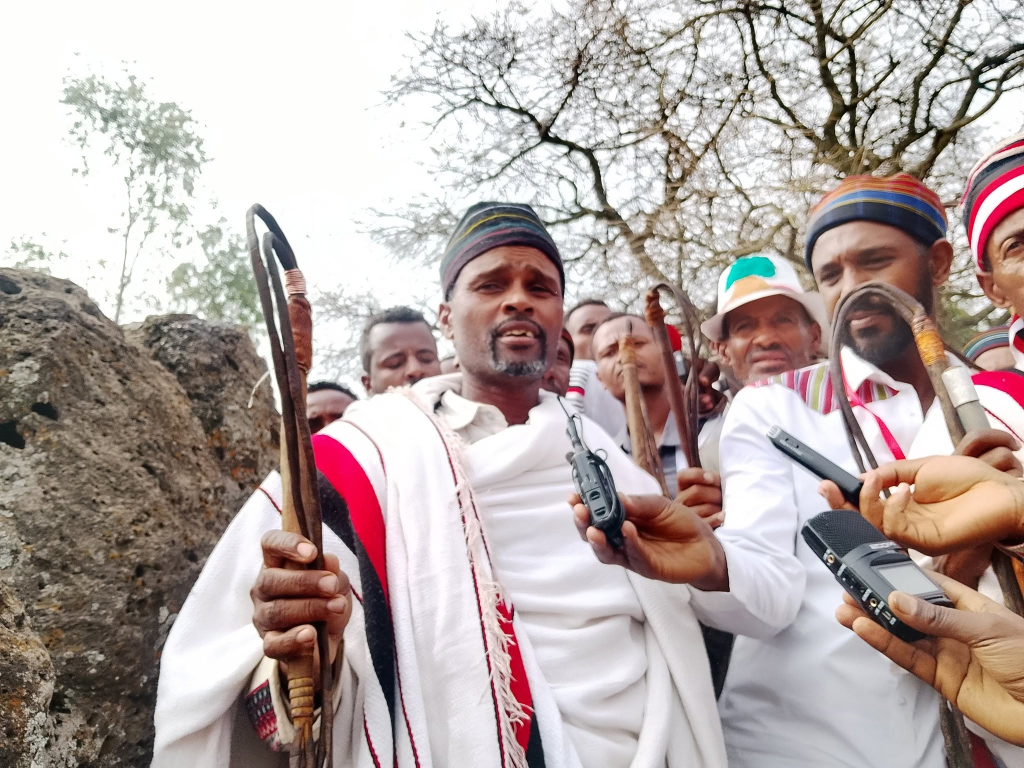
Today, at the sacred site of Ardaa Jilaa Dhaka Koraatti, the Walharkaa Fuudhinsa Alangee – the formal transfer of the Baallii (ceremonial baton of office) – was conducted for the 71st cycle of the Tuulama Gadaa. Power moved peacefully from the Gadaa Meelbaa grade to the Gadaa Muudanaa grade.
And at the heart of this ceremony stood one man: Abbaa Gadaa Geetuu Taliilaa Tufaa, who received the Alangee and was inaugurated as the new Abbaa Gadaa of the Tuulama Oromo.
The Sacred Transfer
The Gadaa system, recognized by UNESCO as an Intangible Cultural Heritage of Humanity, operates on an eight-year cycle. Each cycle has a name, a purpose, and a set of leaders who carry the responsibilities of governance, conflict resolution, ritual observance, and community welfare.
The 70th cycle, Gadaa Meelbaa, has now completed its term. The 71st cycle, Gadaa Muudanaa, has begun. And with this transition, the Alangee – the symbol of legitimate authority – has been placed into the hands of a new leader.
The ceremony at Ardaa Jilaa Dhaka Koraatti was not a political rally. There were no speeches attacking opponents, no promises that would be broken tomorrow, no expensive campaigns or negative advertisements. There was only ritual, tradition, blessing, and the quiet, solemn transfer of a baton that represents the collective will of the Tuulama Oromo.
Elders presided. The community witnessed. The Caffee assembly gave its consent. And Abbaa Gadaa Geetuu Taliilaa Tufaa stepped into his role – not as a conqueror, but as a servant. Not as a king, but as a caretaker.
Who Is Abbaa Gadaa Geetuu Taliilaa Tufaa?
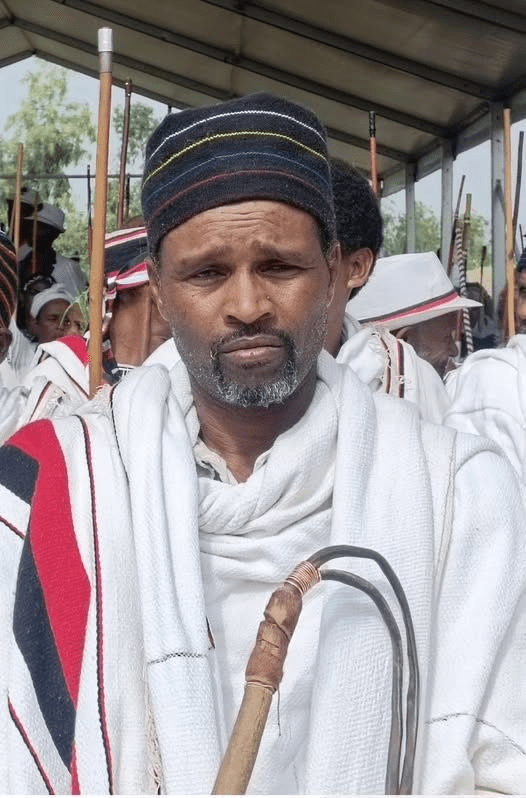
Little is known by the wider public about the new Abbaa Gadaa. This is not unusual. The Gadaa system does not produce celebrities. It produces leaders who are chosen not for their charisma or their wealth but for their wisdom, their integrity, and their commitment to the community.
Abbaa Gadaa Geetuu Taliilaa Tufaa emerges from within the Gadaa Muudanaa grade – a cohort of men who have been preparing for leadership for years, even decades. The Gadaa system does not allow anyone to simply declare themselves a leader. One must be born into a Gadaa grade, grow through its ranks, learn its laws, participate in its rituals, and be recognized by elders and community members as ready to lead.
The new Abbaa Gadaa has now received the Alangee. He has been blessed. He has been installed. And for the next eight years, he will carry the weight of the Tuulama Oromo on his shoulders.
The Significance of the 71st Cycle
Why does the 71st cycle matter? Why should anyone outside the Gadaa system care about the transfer of the Alangee?
The answer is simple: because the Gadaa system represents an alternative – a different way of organizing political life that does not depend on elections, parties, or constitutions. It depends on tradition, consensus, and the moral authority of elders.
In a world where democracy is in crisis – where trust in elections is collapsing, where leaders refuse to leave office, where political violence is normalized – the Gadaa system offers lessons. It shows that it is possible to transfer power peacefully. It shows that term limits can be respected without constitutional debates. It shows that leadership can be a burden to be carried, not a prize to be seized.
The 71st cycle of the Tuulama Gadaa begins at a moment of great challenge for the Oromo people. Displacement continues. Political repression persists. Economic hardships weigh heavily on ordinary families. The youth, the Qeerroo and Qarree, are restless. The diaspora watches from afar, hoping for change.
Abbaa Gadaa Geetuu Taliilaa Tufaa inherits all of this. His Alangee is not just a symbol of authority. It is a symbol of responsibility. He will be expected to mediate disputes, to speak for his people, to preserve the Safuu (moral code), and to ensure that the Gadaa cycle continues when his eight years are complete.
Ardaa Jilaa Dhaka Koraatti: The Sacred Ground
The ceremony took place at Ardaa Jilaa Dhaka Koraatti, a site of profound spiritual and political importance for the Tuulama Oromo. It is here that the Gadaa grades gather, that the Baallii is transferred, and that the community reaffirms its commitment to the Gadaa way of life.
To stand at Dhaka Koraatti is to stand on ground that has witnessed centuries of Oromo democracy. The same rituals performed today were performed by the 1st Abbaa Gadaa, and the 20th, and the 50th. The continuity is not broken. The cycle has never stopped – not during the expansion of the Ethiopian empire, not during the Derg years, not during the periods of greatest repression.
The Gadaa system survived because it is not a building that can be destroyed or a law that can be repealed. It is a living tradition, passed from father to son, from elder to youth, from grade to grade. And today, at Dhaka Koraatti, it survived again.
The Role of the New Abbaa Gadaa
What will Abbaa Gadaa Geetuu Taliilaa Tufaa do with his eight years?
He will preside over the Caffee assembly, where community decisions are made by consensus. He will mediate disputes – between families, between clans, between individuals – using Seera (customary law) and Safuu (moral principle). He will lead rituals, including the annual Irreecha thanksgiving ceremonies. He will represent the Tuulama Oromo in relations with other Gadaa groups – the Borana, the Gujii, the Karrayyuu, the Arsi, and others. He will ensure that the next grade, Gadaa [the following cycle], is properly trained and prepared to receive the Alangee when his term ends.
He will not have a palace. He will not have a salary. He will not have a security detail. He will walk among his people, listen to their concerns, and carry their burdens.
This is what the Gadaa system demands. This is what the Alangee represents.
The Meaning of “Alangee”
The word Alangee refers to the ceremonial baton or sceptre that symbolizes legitimate authority within the Gadaa system. It is not a weapon. It is not a scepter of domination. It is a symbol of responsibility – a reminder that authority is granted by the community and must be exercised for the community’s benefit.
When Abbaa Gadaa Geetuu Taliilaa Tufaa received the Alangee today, he did not receive a license to command. He received a charge to serve. The Alangee will accompany him to Caffee assemblies, to ritual ceremonies, and to community gatherings. And when his eight years are complete, he will pass it – peacefully, ceremonially, joyfully – to the next Abbaa Gadaa.
That is the Gadaa way. That is the Oromo way. That is the way of a people who understood democracy long before the word was invented.
Tagany Bafiqaadu: The Reporter
This report was brought to us by Tagany Bafiqaadu of AMN PLUS. Journalists who cover Gadaa ceremonies occupy a unique position – they are not merely observers but also participants in the preservation of Oromo heritage. Tagany’s presence at Ardaa Jilaa Dhaka Koraatti ensured that this moment was documented, that the names were recorded, and that the story will be told to future generations.
In an era of digital media and instant news, the Gadaa system might seem anachronistic. But as Tagany’s reporting reminds us, there is nothing outdated about peaceful transitions of power, community-based governance, and leaders who serve rather than rule.
Looking Ahead: Eight Years of Gadaa Muudanaa
The Gadaa Muudanaa cycle now begins. For the next eight years, Abbaa Gadaa Geetuu Taliilaa Tufaa will lead the Tuulama Oromo. He will face challenges – some predictable, some unimaginable. He will make decisions that will be debated and discussed. He will be praised by some and criticized by others.
But he will not be overthrown. He will not be assassinated. He will not cling to power when his term ends. When the eight years are complete, he will hand the Alangee to the next Abbaa Gadaa and step back into the community as an elder, watching as the cycle turns without him.
That is the promise of the Gadaa system. That is the guarantee written not in a constitution but in the hearts and minds of the Oromo people.
A Final Reflection
Today, at Ardaa Jilaa Dhaka Koraatti, the Walharkaa Fuudhinsa Alangee was conducted. The 70th cycle, Gadaa Meelbaa, stepped aside. The 71st cycle, Gadaa Muudanaa, stepped forward. And Abbaa Gadaa Geetuu Taliilaa Tufaa received the Alangee and became the new Abbaa Gadaa of the Tuulama Oromo.
It was a quiet ceremony, witnessed by those who understand its meaning. There were no television cameras broadcasting live to the world. There were no world leaders sending congratulations. There was only the community, the elders, the sacred ground, and the Alangee passing from one hand to another.
But sometimes the quietest ceremonies are the most profound. Sometimes the traditions that receive the least attention are the ones that matter most.
The Gadaa cycle has turned. The 71st Abbaa Gadaa has been installed. And the Oromo people, as they have for centuries, continue to govern themselves in their own way, on their own terms, under their own sacred trees.
Gadaatu Fala. The cycle continues. The Alangee is in good hands.
Daandii Ragabaa
Finfinne
Report Source: AMN PLUS, Waxabajjii 07, 2018 E.C.
Reporter: Tagany Bafiqaadu
Location: Ardaa Jilaa Dhaka Koraatti
Event: Walharkaa Fuudhinsa Alangee Gadaa Tuulamaa (71st Gadaa Cycle Transfer from Gadaa Meelbaa to Gadaa Muudanaa)
New Abbaa Gadaa: Abbaa Gadaa Geetuu Taliilaa Tufaa

Posted on June 14, 2026, in Aadaa, Bokkkuu, Election, Events, Finfinne, gadaa, gender, Information, Media, News, Oromia, Press Release, Promotion, Sirna Oromo. Bookmark the permalink. Leave a comment.




 Advocacy for Oromia
Leave a comment
Comments 0