Pilgrimage of the Sadeen Tuulamaa: Honoring Oromo Heritage
By Daandii Ragabaa
Finfinne
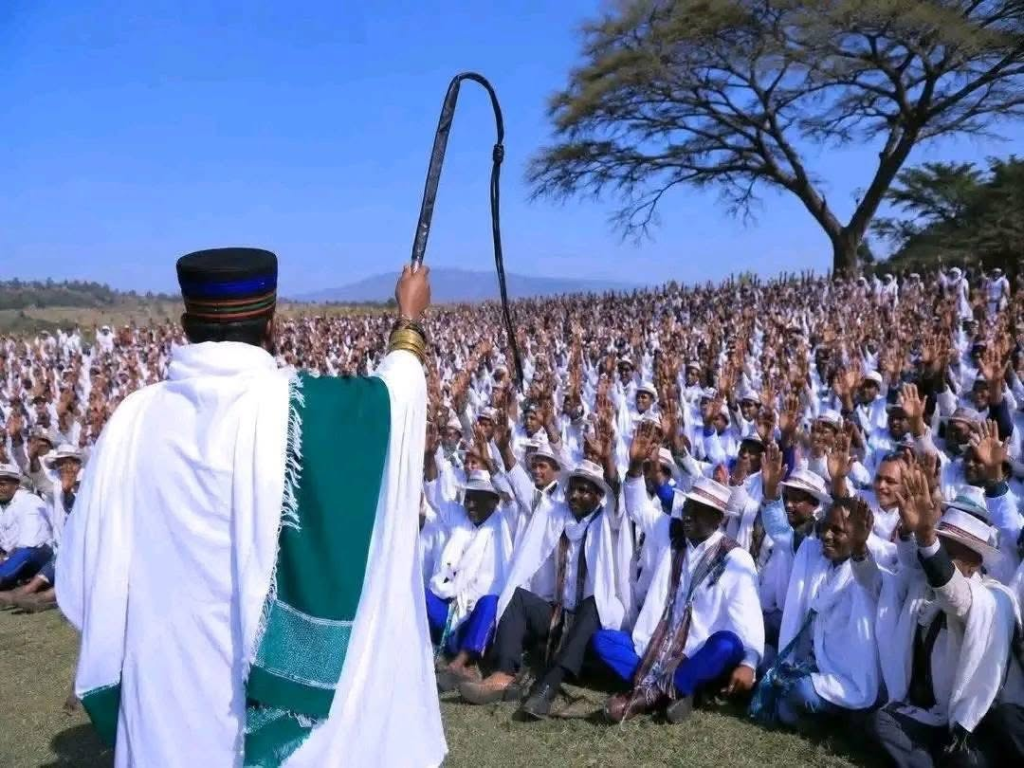
EAST SHEWA ZONE, DUGDA DISTRICT – Under the open sky, across rivers and valleys, through cold nights and burning sun, they walk. They are not tourists. They are not travelers seeking leisure. They are the bearers of a tradition older than most nations — the living embodiment of the Gadaa system.
Members of the Gadaa Meelbaa and Muudanaa Dhaka Koraatti grades have embarked on a pilgrimage to the Gafarsa Korma River. Their mission: to participate in the Wal Harkaa Fuudhiinsa Alangee — the ceremonial transfer of the Baallii (the ritual baton/symbol of office) — a sacred process that marks the continuation of Oromo democracy in its purest form.
Accompanied by blessings and songs that have echoed through generations, the procession moves with purpose. At the riverside, they perform irreecha (thanksgiving prayers), asking for safe passage, for successful completion of their journey, and for the endurance of the Gadaa system itself.
A Journey of Devotion
These are not men traveling on government expense. There are no pre-booked hotels, no catered meals, no paid leave. They walk on foot. They sleep under the stars or in makeshift shelters. They endure the heat of the day and the biting cold of the night. And they do so willingly — joyfully — because the Gadaa calls.
“Those who travel for money or comfort miss the point,” said an elder accompanying the group, his weathered face illuminated by the morning light. “We travel because the Gadaa demands it. We walk because our fathers walked. We endure because our ancestors endured. This is not a journey. This is a covenant.”
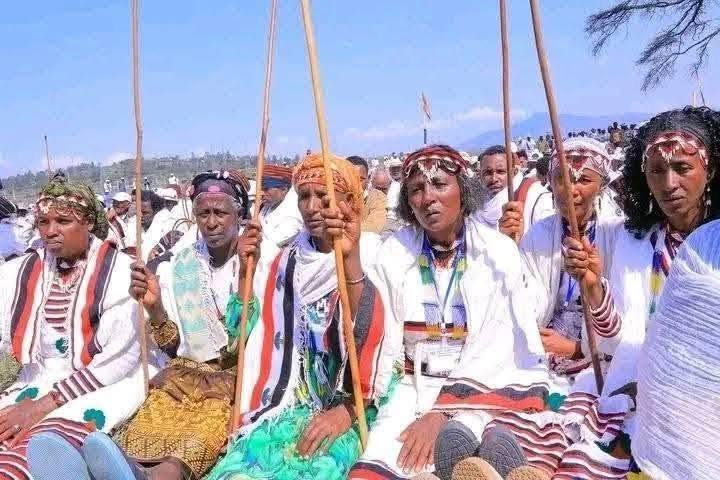
The group, known as the Tuulamni Sadeen (The Three Pillars), has gathered at the Ardaa Jilaa Dhaka Koraatti — a sacred site within the Galaan district of the Shaggar City Administration. Here, under the direction of the Oromia Culture and Tourism Bureau, the Baallii transfer ceremony is being prepared.
What is the Gadaa System?
For those unfamiliar, the Gadaa system is one of the most sophisticated indigenous governance structures ever developed by any civilization on earth. Recognized by UNESCO as an Intangible Cultural Heritage of Humanity, the Gadaa system is not merely a political framework — it is a complete way of life.
Every eight years, power cycles peacefully from one Gadaa grade to the next. There are no coups. There are no civil wars over succession. There are no life presidents. The system ensures that leaders serve their time and then step aside — voluntarily, ceremonially, and peacefully.
The Gadaa system encompasses:
- Political governance (Siyaasa) – How leaders are chosen, how decisions are made, and how power is transferred
- Economic management (Dinagdee) – How resources are distributed and how communities sustain themselves
- Social organization (Hawaasummaa) – How families, clans, and communities interact and resolve conflicts
- Cultural identity (Eenyummaa) – How language, history, and traditions are preserved and transmitted
- Moral code (Safuu) – How individuals relate to each other, to nature, and to the divine
The Baallii Transfer: Democracy in Action
The Wal Harkaa Fuudhiinsa Baallii Gadaa — the formal transfer of the Baallii (often described as a ritual baton, sceptre, or symbol of office) — is the climax of the Gadaa cycle. It represents the peaceful transition of authority from one generation to the next.
The current ceremony, involving the Tuulamni Sadeen (the Three Pillars) at the Ardaa Jilaa Dhaka Koraatti site, follows a tradition that has continued uninterrupted for centuries. The pilgrimage began in the early days of the month of Waxabajjii (roughly corresponding to June/July), with participants traveling from various directions to converge at the sacred site.
“The Baallii is not just a stick,” explained one elder who wished to remain unnamed. “It is the weight of our ancestors. It is the hope of our children. It is the promise that power will not corrupt, because power will not stay. When I hand the Baallii to the next grade, I am not losing anything. I am completing something.”
A Living Heritage
Unlike many ancient traditions that exist only in museums or history books, the Gadaa system remains fully operational among Oromo communities across Ethiopia and beyond. From Borana to Gujii, from Karrayyuu to Arsi, from Wallaga to Hararge — the Gadaa lives.
During the past eight years — the full term of the current Gadaa grade — observers have witnessed the system in action. They have seen disputes resolved not in courts but under Odaa trees. They have seen resources managed not by bureaucrats but by community consensus. They have seen leaders rise, serve, and prepare to step down.
“The Gadaa system is not a relic,” said a cultural officer with the Oromia Culture and Tourism Bureau. “It is a functioning alternative to the top-down governance models that have failed so many societies. The world has much to learn from what the Oromo have practiced for centuries.”
Lessons for Today’s Generation
As the pilgrims continue their journey, they carry with them the words of their teachers. One such teacher is Dagalee Abdiisaa Haamoo Galmoo, an Abbaa Gadaa (Gadaa father/leader), who offers a proverb that captures the essence of the system:
“Wanti ofii ni barra yoo jedhan nama dararti; barre yoo jedhan nama harkaa bararti; ni dhiisa yoo jedhanis nama mararti.”
Translation: “If they say ‘our thing is written,’ you will read it. If they say ‘our thing is drawn,’ you will trace it with your hand. If they say ‘our thing is left behind,’ you will wrap it up and carry it.”
The meaning is clear: Tradition is not something to be observed from a distance. It is something to be learned, to be touched, to be carried. It is not static. It is not decorative. It is alive — and it requires living hands to keep it so.
The Gathering of the Waters
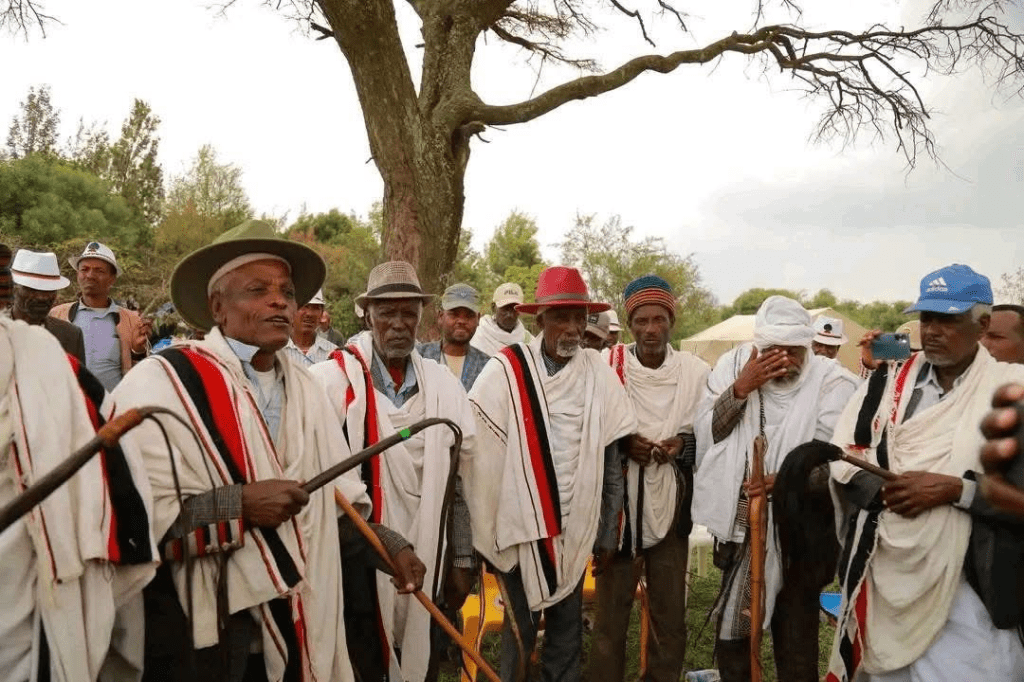
One elder, recalling the words of Haajii Roobalee Hulufee, offered another powerful image:
“Laggeen xixiqqaan walitti yaa’uun laga guddaa uumu.”
“Small streams that come together create a great river.”
The Tuulamni Sadeen — the Three Pillars — represent such a coming together. Different streams of the Gadaa tradition, from different regions and different clans, flowing into one great river. The Borana stream. The Gujii stream. The Karrayyuu stream. The Arsi stream. All of them converging at Dhaka Koraatti to perform the same ceremony, to honor the same ancestors, to ensure the same future.
A Message to the World
As the pilgrims rest by the Gafarsa Korma River, their songs echoing across the water, they send a message beyond Ethiopia’s borders. It is a message carried in the hashtags that accompany their posts: #oromoculture, #gada, #UNESCO.
The message is simple but profound:
“Falli Oromoo Gadaa qofa. Gadaatti deebinee sanaaf wal taliignan hunduu mishoomaa fi damboobina callaa himanna. Gadaatu Fala!”
“The solution for Oromo is only the Gadaa. Returning to the Gadaa, all of us who unite for it will overcome scarcity and the darkness of silence. Gadaa is the cure!”
These are not the words of radicals or separatists. They are the words of elders, of pilgrims, of men and women who believe that the best path forward is sometimes the path that goes backward — back to the Odaa tree, back to the Caffee assembly, back to the wisdom of ancestors who solved problems of governance without prisons, without armies, and without endless political campaigns.
What We Have Seen
Standing at the Ardaa Jilaa Dhaka Koraatti, watching the Tuulamni Sadeen prepare for the Baallii transfer, one cannot help but feel a sense of awe. This is not a performance for tourists. There are no souvenirs. There are no ticket booths. There are only men and women — old and young — moving with a sense of sacred purpose.
They have walked far. They have slept on the ground. They have crossed rivers and climbed hills. They have sung until their voices grew hoarse and prayed until their knees grew sore. And they smile. Not the smile of exhaustion, but the smile of fulfillment.
“We are doing what our fathers did,” said a young participant, barely old enough to be initiated into the lower Gadaa grades. “And one day, my children will do what I am doing. That is not repetition. That is continuity. That is immortality.”
The Road Ahead
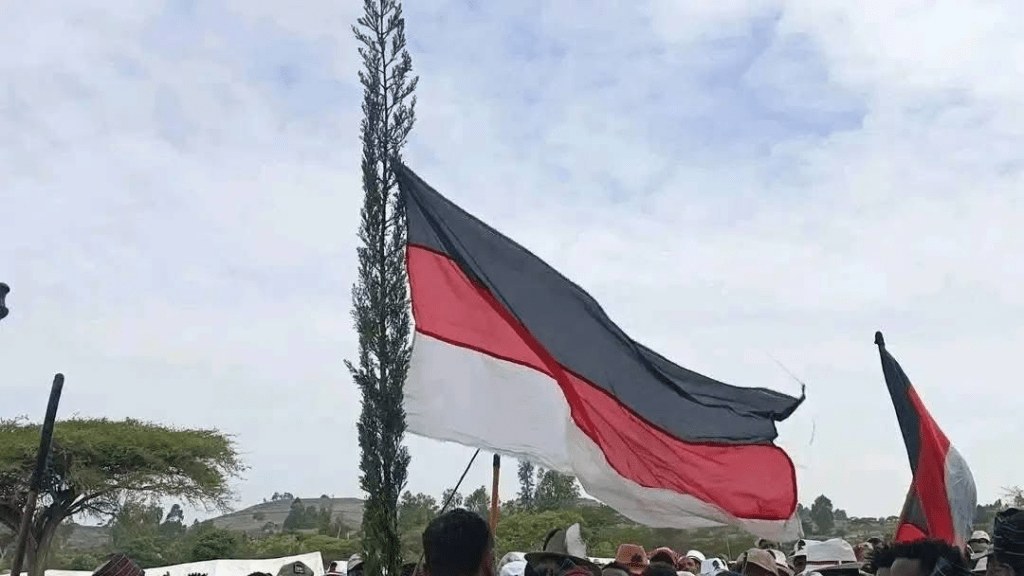
The Baallii transfer ceremony continues. The pilgrims will complete their journey. The ritual baton will pass from one set of hands to the next. And the Gadaa cycle — which has turned for centuries, which survived emperors and colonizers and dictators — will turn again.
For the Oromo people, the Gadaa system is not a museum piece. It is not a cultural festival staged for outsiders. It is governance. It is community. It is identity. It is a living, breathing democracy that has never needed a constitution because it carries its laws in its memory and its values in its heart.
As the sun sets over the Gafarsa Korma River, the pilgrims gather one last time. They raise their hands in prayer. They ask for safe return. They ask for strength. They ask for the Gadaa to endure.
And somewhere, under an Odaa tree that has stood for generations, an elder whispers the words that have closed every Gadaa ceremony since time immemorial:
“Gadaatu Fala.”
Gadaa is the cure.
Daandii Ragabaa is a journalist based in Finfinne covering cultural heritage, indigenous governance systems, and social affairs across Oromia and Ethiopia. Reporting from East Shewa Zone, Dugda District, and the Ardaa Jilaa Dhaka Koraatti sacred site.

Posted on June 9, 2026, in Aadaa, Bokkkuu, Events, Finfinne, Information, Media, News, Oromia, Press Release, Promotion, Sirna Oromo. Bookmark the permalink. Leave a comment.






Leave a comment
Comments 0