Category Archives: Election

Irreechaa Celebrated in Peace and Unity, Advocacy for Oromia Says, Pledging to Nurture the Festival’s Message of Reconciliation
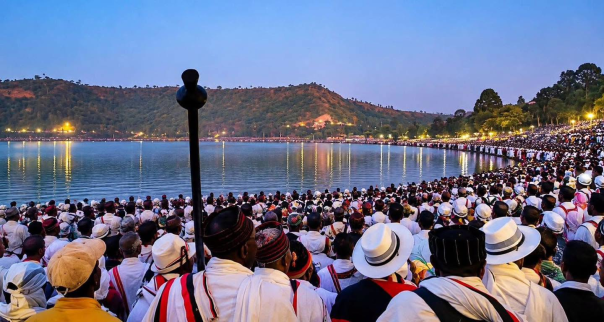
Advocacy group praises security forces, community members, and government structures for ensuring a peaceful celebration of the Oromo thanksgiving festival amid a national climate of conflict and hatred
(October 4, 2026)-Advocacy for Oromia has expressed deep satisfaction with the peaceful and beautiful celebration of Irreechaa, the revered Oromo thanksgiving festival, praising all parties who contributed to its success and vowing to continue nurturing the ancient tradition as a source of peace, reconciliation, and prosperity.
In a statement released on October 4, 2026, the advocacy group said it was “greatly delighted that the Irreechaa festival has been celebrated in a beautiful and peaceful manner,” and extended its gratitude to all those who played a role in ensuring the festival unfolded peacefully.
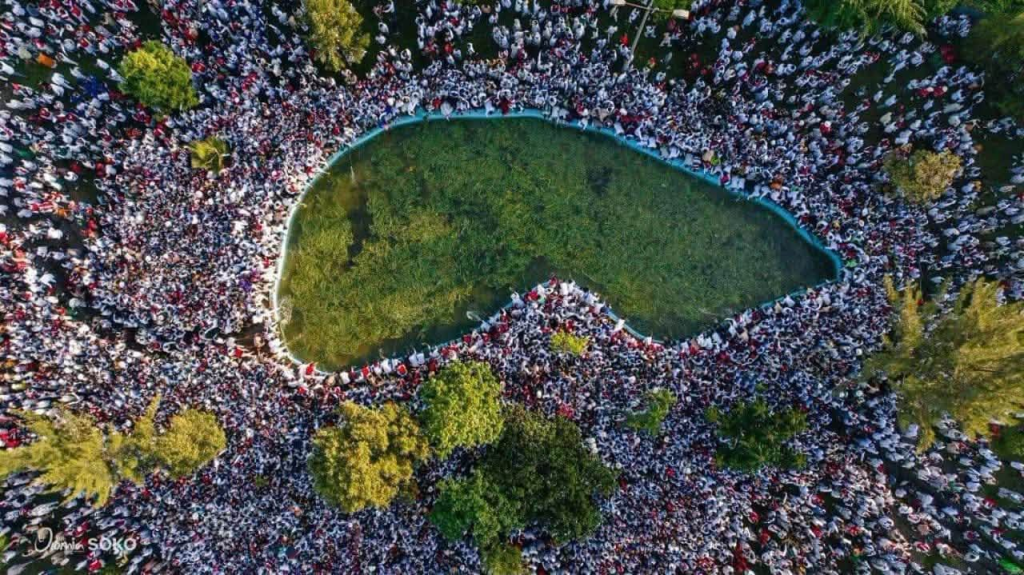
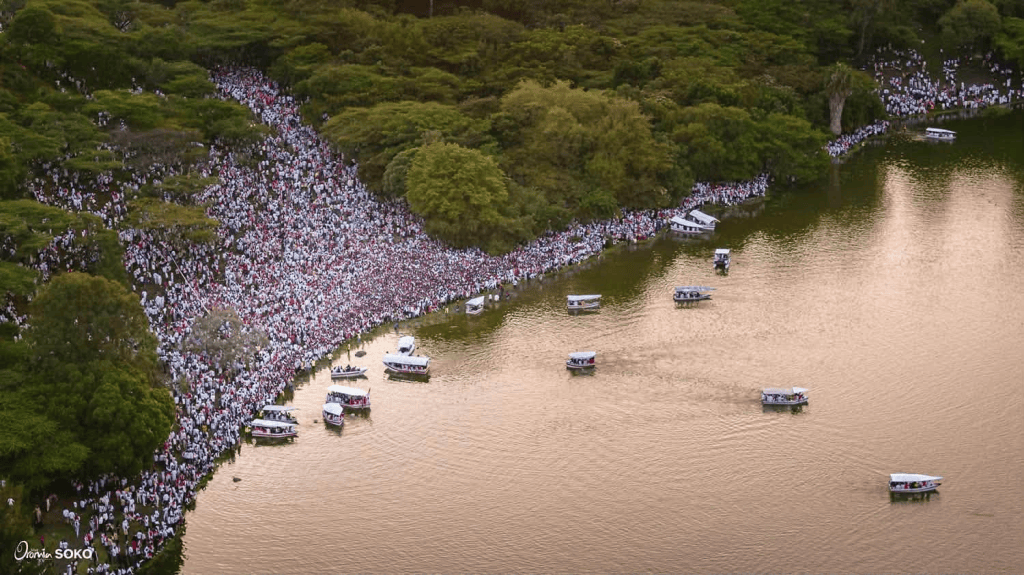
Irreechaa, one of the most significant cultural and spiritual festivals of the Oromo people, is widely recognized as a celebration of thanksgiving, reconciliation, love, peace, and unity. The statement noted that millions of people gathered in unity in Finfinnee (Addis Ababa), Bishoftu, and across the world, reaffirming the festival’s enduring power to bring communities together.
Gratitude Amid a Challenging National Climate
The statement placed particular emphasis on the significance of the peaceful celebration given the current situation in the country. “Above all, at a time when the situation in our country is filled with conflict and hatred, we wish to express our heartfelt gratitude to the security organs and police who participated, and to our community who provided support and assistance, in ensuring that the Irreechaa festival, which began in peace, was also concluded in peace in Oromia,” the group stated.
Advocacy for Oromia also extended its appreciation to government structures, community organizations, and individual community members who played a major role in facilitating the celebration.
A Festival That Has Endured Through Hardship
The statement highlighted the resilience of Irreechaa, noting that the festival has continued over the years “despite oppression and pressure from systems.” The group expressed hope that Irreechaa will continue to proclaim and sustain reconciliation, peace, love, and unity into the future.
“Advocacy for Oromia wishes to declare that it will work in every possible way to nurture and expand this Irreechaa festival, which is a source of peace and reconciliation, and a means of well-being and prosperity,” the statement read.
The group concluded with a prayer for the nation: “May reconciliation, restitution, and peace be upon our country and our people!”
A Continuing Commitment
The statement underscores Advocacy for Oromia’s ongoing commitment to promoting the cultural heritage of the Oromo people and advocating for peace and reconciliation in the region. As Irreechaa continues to draw millions of celebrants each year, the group’s pledge to protect and expand the festival reflects its broader mission of fostering unity and well-being among Oromo communities at home and abroad.
— Advocacy for Oromia, October 4, 2026

The Sacred Rite of Irreechaa: Fresh Grass, Yellow Flowers and the Waters of Blessing
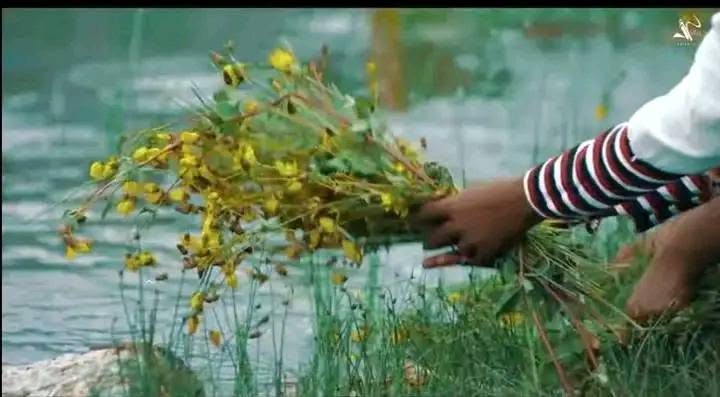
How Oromos carry keelloo and fresh grass to the riverbanks, dip them into the water, and renew their covenant with Waaqa
By Staff Writer
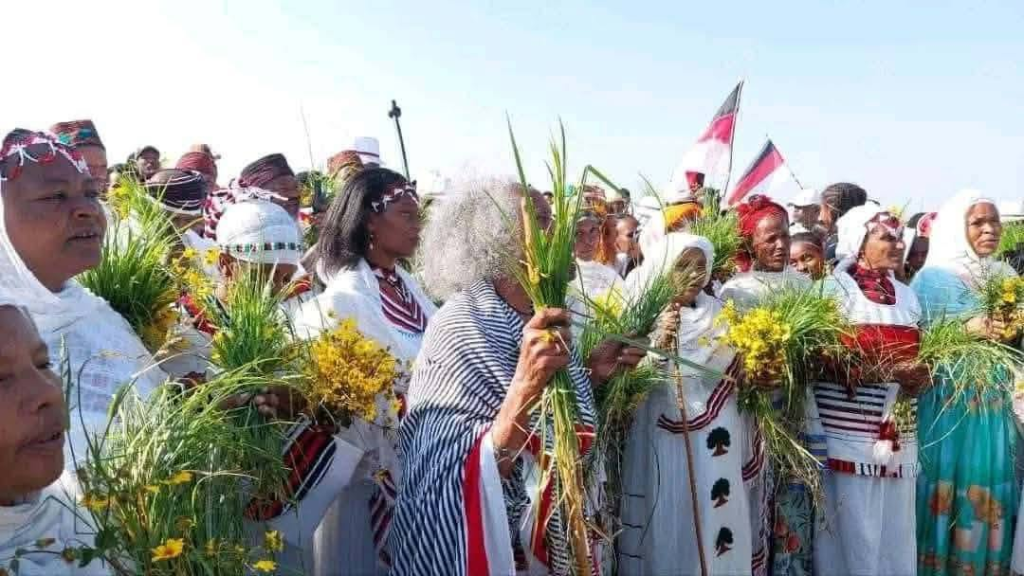
At the heart of the Irreechaa festival lies a ritual of profound simplicity and immense spiritual depth. Long before the songs reach their peak and the crowds swell along the riverbanks, Oromo elders, mothers and youth begin their journey toward the water. In their hands they carry daraaraa keelloo — yellow flowers — and marga jiidhaa — fresh, green grass.
These are not decorative items. They are sacred emblems of life, fertility, peace and gratitude. And when they are dipped into the flowing water as part of the irreeffannaa rite, they become instruments of blessing for the entire community.
Daraaraa Keelloo: The Yellow Flower of Blessing
The keelloo — a bright yellow flower that blooms in the Oromo landscape, particularly in the season surrounding Irreechaa — holds a special place in Oromo spiritual and cultural life. Its yellow color symbolizes light, hope, warmth and the radiance of the sun after the long, dark rainy season. It is the color of ayyaana — blessing and divine favor.
During Irreechaa, the keelloo is gathered with care. Young men and women often collect the flowers in the early morning, singing traditional songs as they go. The flowers are then carried to the riverside, where they will be used in the central act of the celebration. The keelloo is also used in other Oromo rituals and is associated with joy, celebration and the beauty of creation.
For Oromos, the keelloo is more than a flower. It is a visible sign of Waaqa’s goodness — a reminder that after hardship comes renewal, and that the earth itself rejoices with the people.
Marga Jiidhaa: Fresh Grass as the Symbol of Life
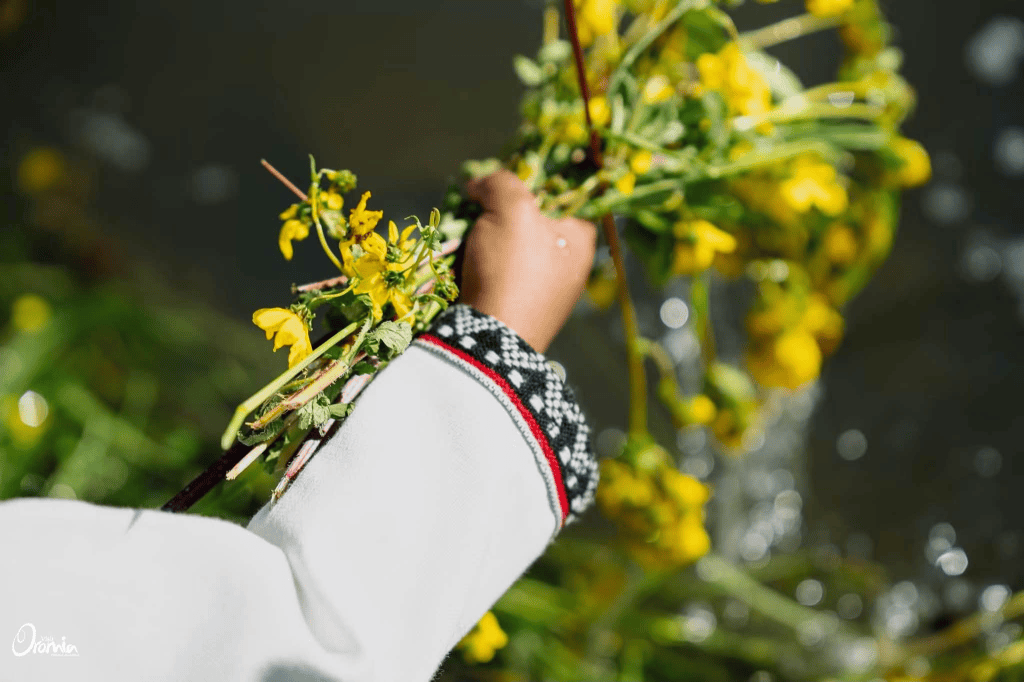
Marga jiidhaa — fresh, moist grass — is equally central to the Irreechaa ritual. In Oromo culture, green grass is the universal symbol of peace, life, fertility and well-being. It is used in ceremonies of reconciliation, in blessings, and in prayers for abundance. When elders wish to bless someone, they may sprinkle fresh grass or hold it as they speak words of peace.
At Irreechaa, the grass is gathered in bundles. It is often mixed with the keelloo flowers, creating a combined emblem of life and blessing. The grass must be fresh and green — a sign that the land has received rain and that the season of abundance has arrived.
The Journey to the Malkaa: Walking Together to the Water
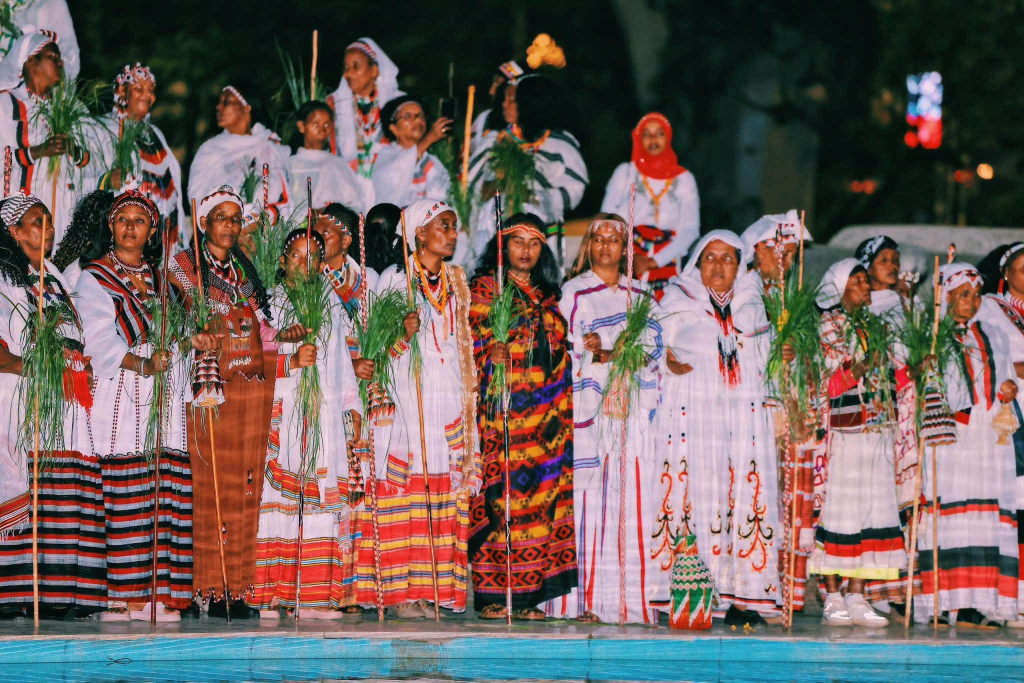
When the time comes, the community moves toward the malkaa — the riverbank, lakeshore or sacred water body. This journey is itself a ritual. People walk together, often dressed in their finest traditional attire, singing songs of praise and gratitude. The movement toward the water is a movement toward purification, renewal and encounter with Waaqa.
The choice of water is significant. In Oromo cosmology, water is the source of life, a symbol of purity and a channel of blessing. Rivers and lakes are understood as sacred spaces where the spiritual and physical worlds meet. To stand by the water during Irreechaa is to stand at the threshold of the divine.
Cuuphaa: Dipping the Grass and Flowers into the Water
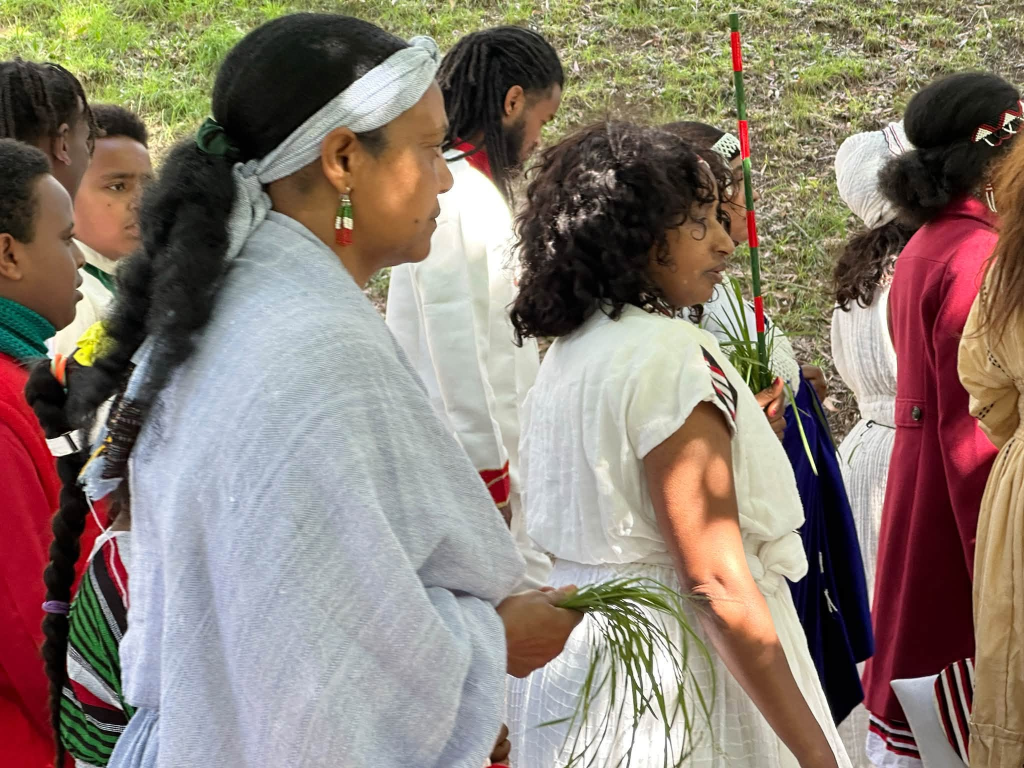
At the water’s edge, the central rite unfolds. The participants — often led by the Haadha Siinqee, Qaalluu figures, elders and the Abbaa Gadaa — approach the water with the keelloo and fresh grass in hand.
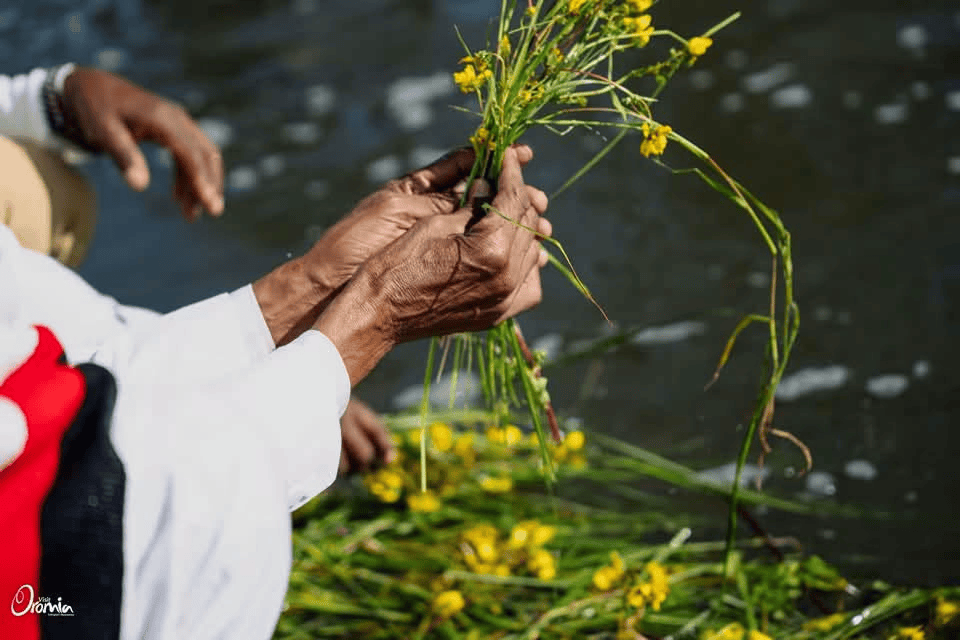
They then dip the grass and flowers into the water (cuuphaa). This act of immersion is rich with meaning:
- Thanksgiving: It is an offering of gratitude to Waaqa for the gift of rain, fertility and life. The water is the visible blessing, and the grass and flowers are the visible response of the people.
- Purification: The dipping represents a cleansing of the community — a washing away of the impurities, grievances and misfortunes of the past year.
- Renewal of Covenant: It symbolizes the renewal of the covenant between Waaqa, the people and the earth. The relationship is restored and made fresh for the coming season.
- Blessing and Sprinkling: After dipping, the participants often sprinkle the water from the grass and flowers upon themselves, upon others, and upon the ground. This sprinkling is a gesture of blessing, conveying peace and fertility to all present.
Some accounts describe the water being sprinkled on the participants’ heads and faces, a ritual act that marks them with divine favor. Others describe the grass being passed through the water and then carried back to the community as a sign of peace.
The Irreeffannaa Prayer: Words Said Over the Water
The dipping is accompanied by prayer and invocation. The irreeffannaa — the act of giving thanks and blessing — is spoken aloud by elders and ritual leaders. Words of gratitude are offered for the rains, for the harvest, for the health of families and livestock, for the peace of the land. Prayers are also lifted for the year ahead: for continued fertility, for protection from disaster, and for harmony among all peoples.
The community responds with “Irreechaa!” — a joyful affirmation and invocation of blessing. The sound of the word itself carries the meaning of “thank you” and “may it be blessed.”
A Ritual That Connects All Creation
The Irreechaa water rite is a profound expression of Oromo cosmology — the understanding that human beings, the earth, the waters, the plants and the divine are all interconnected. By carrying the flowers and grass to the water, dipping them in, and offering them up, the Oromo people enact their belief that gratitude, peace and life itself flow from the sacred relationship between Waaqa and creation.
The daraaraa keelloo and the marga jiidhaa are therefore not merely objects. They are prayers made visible. The water is not merely water; it is the medium of blessing. And the act of dipping is not merely a gesture; it is a covenant renewed — a promise of peace, a plea for abundance, and a song of thanks to the source of all life.
At the riverbank, with flowers in hand and water flowing, the Oromo people stand as they have stood for generations: grateful, humble and connected to the sacred rhythm of the earth. And when they raise their voices and dip the green grass into the water, they declare to the world that life is a gift — and that gratitude is the way to honor it.

Irreechaa: The Festival of Bright Seasons Over the Dark Rainy Seasons
By Dhabessa Wakjira
Irreechaa, known as the Festival of bright seasons over the dark rainy seasons, is a major transition festival celebrated with great joy and enthusiasm. For the Oromo people, it is more than a celebration; it is a spiritual journey from darkness to light, from hardship to hope, and from isolation to unity.
Meaning and Significance
The word “Irreechaa” means fresh grasses. It symbolizes the triumph of good over evil and brightness over darkness. This ancient festival, rooted in the Oromo Gadaa system, is a profound expression of gratitude to Waaqa (God) for the blessings of life, peace, and prosperity. It marks the end of the long, dark rainy season known as Ganna and the beginning of the bright, sunny season called Birraa. During this time, rivers overflow with life, fields turn green, and the land is renewed. The fresh grass carried by celebrants is not merely a symbol; it is a living prayer, a gesture of blessing, and a sign of purification.
Celebrations and Traditions
The celebration of Irreechaa is a vibrant tapestry of culture, faith, and community. People clean and decorate their homes with fresh grasses and daisy flowers, transforming their surroundings into spaces of beauty and welcome. Families wear new traditional clothes, adorned with colorful beads and intricate patterns, reflecting the richness of Oromo heritage.
On the day of the festival, communities gather at riversides and hilltops, the sacred places where Waaqa is believed to be closest to the people. Elders offer blessings for families, nations, and the country, praying for peace, wealth, and prosperity. The air fills with songs of praise, the rhythm of drums, and the joyful ululation of women. People share delicious Oromo foods, including cuukkoo, marqaa, and buna (coffee), strengthening bonds of kinship and friendship.
Children also enjoy the day with their friends and surroundings, running through the green fields, playing games, and learning the traditions of their ancestors. The festival brings love, unity, and happiness to everyone, regardless of age or background. It is a time when differences are set aside, and the community stands together as one, united by a shared identity and a common hope for the future.
A Festival of Transition and Triumph
Irreechaa is not just a seasonal event; it is a celebration of resilience and renewal. It reminds the Oromo people—and all who witness it—that after every dark season comes a season of light, and that gratitude, community, and faith are the pillars of a flourishing life. As the green grass is sprinkled and the blessings are spoken, Irreechaa carries forward an ancient legacy of hope, unity, and the enduring triumph of good over evil.
Irreechaa is celebrated annually by Oromo communities in Ethiopia and around the world, and is recognized as a symbol of cultural identity, peace, and shared humanity.

Irreechaa: The Oromo Thanksgiving Festival as a Living Heritage of Identity, Unity, and Spiritual Renewal
Introduction
Irreechaa stands as one of the most significant and vibrant cultural celebrations not only for the Oromo people but for the entire Horn of Africa region. As an annual thanksgiving festival that marks the end of the rainy season and the beginning of the harvest, Irreechaa embodies a deep spiritual connection between the Oromo people, their Creator, and the natural world that sustains them. This ancient tradition, rooted in the indigenous Oromo belief system known as Waaqeffannaa, has survived centuries of political upheaval, social transformation, and religious change to emerge today as a powerful symbol of cultural identity, social cohesion, and spiritual resilience. With millions of participants gathering at sacred sites across Ethiopia and the global diaspora, Irreechaa represents one of the largest annual human gatherings on the African continent and serves as a living testament to the enduring vitality of Oromo civilization.
This comprehensive essay explores the multifaceted dimensions of Irreechaa, examining its historical origins, spiritual significance, cultural expressions, social functions, and contemporary relevance. By analyzing the festival through multiple lenses—historical, theological, sociological, and political—this essay seeks to illuminate the profound meaning that Irreechaa holds for the Oromo people and its broader significance for understanding indigenous African religious traditions, cultural preservation, and national identity in contemporary Ethiopia.
Historical Origins and Evolution
The historical roots of Irreechaa extend deep into antiquity, with scholars tracing the festival’s origins back thousands of years to the Cushitic civilizations that inhabited the Horn of Africa . According to historical estimates, the Oromo people have celebrated Irreechaa for approximately 12,000 years, making it potentially one of the oldest continuously observed traditions on the African continent . This remarkable continuity speaks to the fundamental importance of the festival in Oromo spiritual and cultural life, as well as the resilience of indigenous religious practices in the face of external pressures and historical transformations.
The festival is intrinsically linked to the Gadaa system, the traditional Oromo socio-political and governance structure that UNESCO recognized as an Intangible Cultural Heritage of Humanity . The Gadaa system, with its age-based hierarchical organization and democratic principles of power rotation, provided the structural framework within which Irreechaa emerged and flourished. As a celebration embedded within this comprehensive system of social organization, Irreechaa served not merely as a religious observance but as a mechanism for reinforcing social cohesion, transmitting cultural values across generations, and maintaining the cosmic order that the Gadaa system sought to uphold .
Throughout its long history, Irreechaa has undergone periods of both flourishing and suppression. During the twentieth century, particularly under previous Ethiopian governments that sought to promote national unity through cultural homogenization, traditional Oromo religious practices including Irreechaa faced significant challenges . Attempts were made to confine the celebration to village levels and to discourage public observance of what was sometimes dismissively characterized as backward superstition. However, these efforts to suppress Irreechaa ultimately failed, as the tradition’s deep roots in Oromo consciousness and its fundamental role in cultural identity proved resistant to external pressures. Instead of disappearing, Irreechaa emerged from periods of suppression strengthened and more widely embraced, particularly by younger generations who increasingly view participation in the festival as an assertion of cultural pride and identity .
The contemporary history of Irreechaa has been marked by both triumph and tragedy. A pivotal moment occurred in 2016 when the festival became the site of political protests that resulted in a deadly stampede, causing the deaths of more than fifty participants . This tragic event became a catalyst for significant political change in Ethiopia, contributing to the emergence of new leadership that included the country’s first Oromo prime minister. Since then, Irreechaa has experienced a remarkable revival, with the festival being celebrated in Addis Ababa for the first time in 150 years and drawing unprecedented numbers of participants . This resurgence reflects broader changes in Ethiopia’s political landscape and the growing recognition of cultural diversity as a source of national strength rather than a threat to unity.
Spiritual and Religious Significance
At its core, Irreechaa is a profoundly spiritual event that expresses the Oromo people’s relationship with the divine through the natural world. The festival is rooted in Waaqeffannaa, the traditional Oromo religion that worships a single supreme Creator known as Waaqa . This monotheistic belief system, which some scholars describe as one of the oldest forms of monotheism, holds that Waaqa is the source of all life, blessing, and abundance . The Oromo people understand themselves as intimately connected to their Creator through a complex system of spiritual intermediaries called ayyaana, who convey human prayers and needs to the divine .
The timing of Irreechaa reflects its deep connection to agricultural cycles and the natural world. The festival is celebrated twice annually: Irreechaa Malkaa (or Irreechaa Hiyyessa) occurs in the spring at the edges of rivers and lakes, while Irreechaa Tulluu (or Irreechaa Guddaa) takes place in autumn on hilltops . The spring celebration marks the end of the dark, rainy season (Ganna) and the beginning of the bright, fertile season (Birraa), while the autumn observance occurs as the harvest season concludes. This dual celebration reflects the Oromo people’s dependence on agriculture and their deep reverence for the natural forces that sustain their way of life.
The spiritual significance of Irreechaa extends beyond simple thanksgiving to encompass themes of purification, renewal, and reconciliation. Water plays a central role in the rituals, with participants dipping green grass and yellow daisies into sacred lakes and rivers, then sprinkling the water upon themselves as a symbol of spiritual cleansing . Green grass represents life and fertility, while the yellow daisies symbolize the joy of survival after the hardship of the rainy season. These symbolic acts express the Oromo people’s understanding of their relationship with nature as one of mutual care and respect, rather than domination or exploitation.
A critical spiritual dimension of Irreechaa is its emphasis on reconciliation and the resolution of conflicts. Traditional Oromo beliefs hold that it is forbidden to participate in the festival while harboring resentment, anger, or unresolved grievances . Before approaching the sacred sites, participants are expected to make peace with those with whom they have disputes, seeking forgiveness and offering compensation where necessary. This requirement reflects the Oromo philosophical principle of safuu, which establishes boundaries and responsibilities governing relations between humans, the natural world, and the divine . The insistence on reconciliation before thanksgiving underscores the Oromo understanding that gratitude and grievance cannot coexist—that one cannot approach the sacred with a heavy heart.
The prayers offered during Irreechaa encompass both gratitude for past blessings and supplication for future needs. Elders and spiritual leaders known as Abbaa Gadaas lead the community in prayer, giving thanks to Waaqa for protection during the difficult rainy season and asking for continued blessings in the coming year . The prayers typically request peace, health, fertility for both people and livestock, abundant harvests, and prosperity for the entire community . These prayers are not merely ritualistic formulas but represent the genuine spiritual aspirations of a people who understand their well-being as dependent on divine favor and the maintenance of cosmic balance.
Cultural Expressions and Ritual Practices
Irreechaa is a vibrant celebration that engages all the senses and encompasses a rich array of cultural expressions. The festival brings together people of all ages, genders, and social statuses in a collective expression of identity and gratitude . The visual splendor of the celebration is striking, with participants adorned in traditional white attire known as wandaboo or uffannaa aadaa, often decorated with colorful embroidery and accessories . Women wear intricately woven dresses and carry baskets of fresh grass and flowers, while men dress in traditional garments that reflect their regional identities.
The ritual practices of Irreechaa are replete with symbolic meaning. The central act involves the sprinkling of water from sacred lakes and rivers, accompanied by prayers and blessings. Participants carry green grass called cuquliisa, which represents the renewal of life and the fertility of the land . The grass is dipped into the water and then sprinkled upon participants as a blessing. This ritual connects the community to the life-giving properties of water and the fertility of the earth, expressing gratitude for the abundance that sustains them.
Music, song, and dance are integral to the Irreechaa celebration, with traditional songs of praise and thanksgiving filling the air. Women sing special melodies such as the Mareehoo, which express themes of gratitude, forgiveness, and hope for the future . The lyrics of these songs often reference the agricultural cycle, the blessings of the Creator, and the shared identity of the Oromo people. Traditional dances performed during the festival serve both as expressions of joy and as markers of cultural identity, with specific dances associated with different regions and communities.
The ceremonial processions of Irreechaa are carefully structured according to traditional social hierarchies and Gadaa principles. Elders and spiritual leaders lead the procession, followed by women, then youth and children . This ordering reflects the Oromo understanding of social organization, in which age and spiritual wisdom confer authority and responsibility. The Abbaa Gadaas, as custodians of tradition, play a particularly important role, leading prayers, offering blessings, and ensuring that the rituals are performed according to ancestral custom .
The festival also features the exchange of greetings and blessings among participants, with the traditional greeting “Happy Irreechaa” exchanged widely . Families and friends who may not have seen each other during the rainy season reunite, sharing meals and stories. The communal aspect of the celebration reinforces social bonds and strengthens the sense of belonging to a larger community. For the Oromo diaspora, Irreechaa celebrations in cities such as Melbourne, Minneapolis, London, and Amsterdam serve as vital connections to their cultural roots, allowing them to maintain their identity and transmit traditions to younger generations born far from the ancestral homeland .
Social Functions and Community Impact
Beyond its spiritual and cultural dimensions, Irreechaa serves crucial social functions that contribute to the cohesion and well-being of Oromo communities. The festival provides an annual opportunity for the Oromo people to come together, transcending regional, religious, and social divisions to celebrate their shared identity . Participants include Oromos from all religious backgrounds—Christians, Muslims, and followers of traditional Waaqeffannaa—demonstrating the festival’s capacity to unite people across religious boundaries . This inclusivity reflects the Oromo cultural value of tolerance and the understanding that Irreechaa belongs to all Oromos, regardless of their individual religious affiliations.
The reconciliation function of Irreechaa is particularly significant in a region that has experienced recurrent conflicts and social tensions. The requirement that participants resolve their disputes before joining the celebration provides a powerful mechanism for conflict resolution and social healing . The presence of arbitration systems within the Gadaa framework, including the Gumi or Coffee assemblies, ensures that disputes can be addressed through dialogue and mutual agreement rather than through violence or permanent estrangement . By mandating reconciliation as a precondition for participation, Irreechaa creates an annual opportunity for communities to heal divisions, forgive grievances, and renew social bonds.
Irreechaa also plays a vital role in preserving and transmitting cultural heritage. The festival serves as a living museum of Oromo culture, where traditional songs, dances, attire, and rituals are performed and passed down to younger generations . In a world of rapid globalization and cultural change, Irreechaa provides a space where ancestral traditions remain vibrant and meaningful. The participation of large numbers of young people in contemporary celebrations is particularly encouraging, suggesting that the festival continues to resonate with new generations and will remain a vital part of Oromo identity for years to come .
The economic dimensions of Irreechaa have become increasingly significant, particularly in recent years. The festival generates substantial economic activity, from the production and sale of traditional clothing and accessories to the provision of food, transportation, and accommodation for millions of participants . For many small businesses and artisans, Irreechaa represents a major economic opportunity, with demand for traditional garments and festival-related goods spiking in the weeks leading up to the celebration. The Ethiopian government has recognized the tourism potential of Irreechaa, promoting it as a major cultural attraction that can draw international visitors and contribute to local economic development .
Political Dimensions and Contemporary Controversies
As Irreechaa has grown in scale and visibility, it has also become entangled in political dynamics that reflect broader tensions in Ethiopian society. The festival has historically been viewed with suspicion by some political actors who see in its celebration a potential vehicle for Oromo nationalism or opposition to central authority . Conversely, Oromo political movements have sometimes sought to harness the symbolism of Irreechaa for their own purposes, using the festival as a platform for articulating grievances and demands . This politicization of Irreechaa has created tensions between those who view it primarily as a religious and cultural observance and those who see it as a vehicle for political mobilization.
The 2016 Irreechaa tragedy, when protests at the festival led to a deadly stampede, marked a watershed moment in Ethiopian politics . The event galvanized opposition to the government and contributed to political changes that ultimately brought Abiy Ahmed, Ethiopia’s first Oromo prime minister, to power. Since then, Irreechaa has been celebrated with greater official recognition and support, including the first celebration in Addis Ababa in 150 years . However, tensions remain, with some Oromo activists arguing that the government’s embrace of Irreechaa is superficial and does not address deeper grievances regarding political representation and economic opportunity.
Contemporary debates about Irreechaa also touch on questions of religious identity and interfaith relations. Some Christian and Muslim leaders have expressed concern about the festival’s association with Waaqeffannaa, the traditional Oromo religion, viewing it as incompatible with their own faith traditions . However, many religious leaders have adopted a more inclusive stance, recognizing Irreechaa as a cultural celebration that can be embraced by Oromos of all faiths . This ongoing dialogue about the relationship between traditional religious practices and revealed religions reflects broader questions about religious pluralism and cultural identity in contemporary Ethiopia.
Global Diaspora and Transnational Dimensions
The Oromo diaspora, numbering in the millions across North America, Europe, the Middle East, and Australia, has played an increasingly important role in the celebration and perpetuation of Irreechaa. In cities around the world, Oromo communities organize annual Irreechaa celebrations that replicate the rituals and traditions of the homeland while adapting to local contexts . These diaspora celebrations serve multiple functions: they maintain cultural identity among dispersed communities, transmit traditions to younger generations born abroad, and raise awareness of Oromo culture and concerns among host populations.
In Melbourne, Australia, for example, the Oromo community gathers annually at local parks to celebrate Irreechaa with traditional songs, prayers, and rituals . Similar celebrations occur in Washington, D.C., Toronto, Berlin, Amsterdam, and Dubai, among other cities . These events often attract participation from non-Oromo Ethiopians and curious locals, providing opportunities for cross-cultural exchange and dialogue. For many diaspora Oromos, Irreechaa represents a vital connection to their ancestral homeland and a reaffirmation of their cultural identity in contexts where they may feel marginalized or invisible.
The globalization of Irreechaa has also contributed to the festival’s growing international recognition. International media coverage of Irreechaa celebrations has increased, and the festival has been featured in tourism promotions and cultural exchange programs . This international visibility has both positive and negative implications. On one hand, it brings attention to Oromo culture and can foster greater understanding and appreciation. On the other hand, there are concerns about the commercialization and decontextualization of the festival, as well as the potential for political exploitation of its symbolism.
Irreechaa and the Politics of Recognition
The recognition of Irreechaa as a significant cultural heritage has been a long-standing goal of Oromo cultural advocates and scholars. The inscription of the Gadaa system on UNESCO’s Representative List of Intangible Cultural Heritage of Humanity in 2016 represented a major milestone in this effort, providing international recognition for the Oromo socio-political system within which Irreechaa is embedded . Scholars and historians have called for Irreechaa itself to receive UNESCO recognition, arguing that the festival merits acknowledgment as a unique and valuable expression of human cultural heritage .
The politics of recognition surrounding Irreechaa reflect broader questions about the place of Oromo culture and history within Ethiopian national identity. For much of the twentieth century, Ethiopian national narratives marginalized or suppressed Oromo contributions, presenting the country’s history through the lens of Solomonic dynasty and Amhara-centric perspectives. The revival of Irreechaa and other Oromo cultural practices represents a challenge to these narratives, asserting the centrality of Oromo civilization to Ethiopian history and identity. This assertion has been met with both support and resistance, reflecting ongoing contests over historical memory and national belonging.
The contemporary Ethiopian government has adopted a more positive stance toward Irreechaa, with officials participating in celebrations and promoting the festival as a symbol of national unity . The theme of recent Irreechaa celebrations, “Irreechaa for National Renaissance,” reflects this official framing of the festival as a contributor to broader national development and unity . However, some Oromo activists view such official embrace with skepticism, seeing it as an attempt to co-opt Oromo cultural expression for political purposes while failing to address fundamental issues of political representation and economic justice.
Conclusion
Irreechaa stands as a remarkable testament to the resilience, vitality, and spiritual depth of Oromo civilization. From its ancient origins in the Cushitic past to its contemporary celebration by millions across Ethiopia and the global diaspora, the festival has maintained its essential character as a thanksgiving to Waaqa while adapting to changing historical circumstances. It embodies the Oromo people’s profound connection to the natural world, their commitment to reconciliation and social harmony, and their determination to preserve and transmit their cultural heritage across generations.
The significance of Irreechaa extends far beyond the Oromo community, offering valuable insights into the nature of indigenous African religious traditions, the dynamics of cultural preservation in the face of globalization, and the role of cultural festivals in building social cohesion and national identity. In a world marked by division, conflict, and the erosion of traditional cultures, Irreechaa provides a powerful example of how ancient traditions can remain vibrant and meaningful, connecting communities to their ancestors while addressing the challenges of contemporary life.
As Irreechaa continues to grow in scale and visibility, it faces both opportunities and challenges. The festival’s increasing international recognition brings potential for greater understanding and appreciation of Oromo culture but also risks of commercialization and political exploitation. The ongoing debates about the relationship between Irreechaa and religious identity, its political dimensions, and its place in Ethiopian national life reflect the complexity of navigating cultural diversity in contemporary societies. Yet through all these challenges, the essential spirit of Irreechaa—gratitude, renewal, and unity—remains intact, offering hope and inspiration to all who participate in its celebration.
Ultimately, Irreechaa is more than a festival; it is a living philosophy, a way of understanding and relating to the world that has sustained the Oromo people for millennia. It teaches that gratitude and generosity are fundamental to human flourishing, that reconciliation and forgiveness are necessary for social harmony, and that respect for the natural world is essential for survival. As the Oromo people continue their journey through history, Irreechaa will remain a guiding light, illuminating the path forward while connecting them to the wisdom of their ancestors. In its celebration, we witness not merely the preservation of tradition but the ongoing creation of culture—a dynamic process through which the Oromo people affirm their identity, express their values, and envision their future.

High Leadership Committee for the Newly Established Oromia Zones Assigned
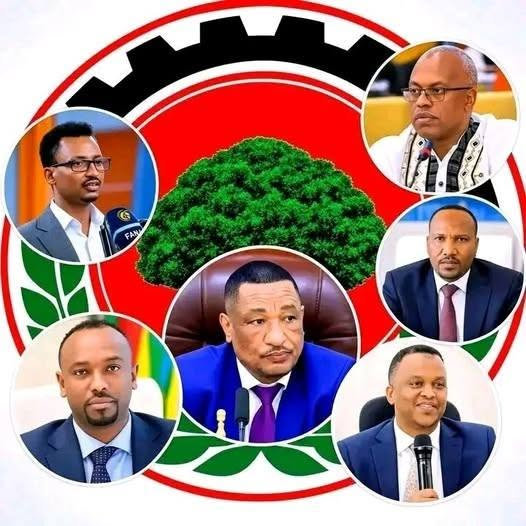
Finfinnee — The Oromia Regional Government has established a new reform by restructuring the administrative structure of Oromia from 21 zones to 6 zones, with the aim of building a strong system and government that can ensure the historic decision of people’s ownership. Accordingly, the high leadership committee for these newly established zones has been assigned.
The Oromia Communication Service has announced this information. The reform is said to be prepared to improve the administrative system and expedite services delivered to the people.
East Oromia Zone
For East Oromia Zone, whose seat is Harar, Obbo Abdurrahmaan Abdallaa has been assigned as Chief Administrator of East Oromia Zone at the rank of Deputy President.
Aadde Miski Muhammad has been assigned as Deputy Head of Development Affairs for East Oromia Zone at the rank of Bureau Head, with her seat at Ciroo. Obbo Anas Aliyyii has been assigned as Deputy Head of Peace and Justice Affairs for East Oromia Zone at the rank of Bureau Head, with his seat at Galamsoo.
Obbo Jaarsoo Boruu has been assigned as Senior Advisor to the Administrator of East Oromia Zone at the rank of Bureau Head, with his seat at Gurawaa. Obbo Fiqaaduu Miiliyoon and Aadde Saamiyaa Abdallaa have been assigned as Advisors to the Administrator of East Oromia Zone at the rank of Bureau Head.
Central Oromia Zone
For Central Oromia Zone, whose seat is Shaggar and Adaamaa, Dr. Mangistuu Baqqalaa has been assigned as Chief Administrator of Central Oromia Zone at the rank of Deputy President.
Obbo Abbaabbuu Waaqoo has been assigned as Deputy Head of Development Affairs for Central Oromia Zone at the rank of Bureau Head, with his seat at Waliso. Obbo Kifalaw Adaree has been assigned as Deputy Head of Peace and Justice Affairs for Central Oromia Zone at the rank of Bureau Head, with his seat at Fiichee.
Obbo Makkonnin Baay’isaa has been assigned as Senior Advisor to the Administrator of Central Oromia Zone at the rank of Bureau Head, with his seat at Ambo. Obbo Ashannaafii Ajjamaa and Obbo Taaddalaa Diriirsaa have been assigned as Advisors to the Administrator of Central Oromia Zone at the rank of Bureau Head.
South West Oromia Zone
For South West Oromia Zone, whose seat is Jimma, Dr. Rashaad Kamaal has been assigned as Chief Administrator of South West Oromia Zone at the rank of Deputy President.
Obbo Indaalkaachaw Tafarii has been assigned as Deputy Head of Development Affairs for South West Oromia Zone at the rank of Bureau Head, with his seat at Beddellee. Obbo Amaan Danuu has been assigned as Deputy Head of Peace and Justice Affairs for South West Oromia Zone at the rank of Bureau Head, with his seat at Limmuu Gannat.
Obbo Didhaa Guddataa has been assigned as Senior Advisor to the Administrator of South West Oromia Zone at the rank of Bureau Head, with his seat at Mattuu. Obbo Muhaammadxaahaa Abbaa Fiixaa and Obbo Moosisaa Lammeessaa have been assigned as Advisors to the Administrator of South West Oromia Zone at the rank of Bureau Head.
South Oromia Zone
For South Oromia Zone, whose seat is Yaabeelloo, Obbo Ahmad Haajii has been assigned as Chief Administrator of South Oromia Zone at the rank of Deputy President.
Obbo Adulaa Hirbaayyee has been assigned as Deputy Head of Development Affairs for South Oromia Zone at the rank of Bureau Head, with his seat at Adoolaa. Obbo Liiban Areeroo has been assigned as Deputy Head of Peace and Justice Affairs for South Oromia Zone at the rank of Bureau Head, with his seat at Nageellee Booranaa.
Obbo Wandimmuu Roobee has been assigned as Senior Advisor to the Administrator of South Oromia Zone at the rank of Bureau Head, with his seat at Bulee Horaa. Obbo Ibraahim Abdii and Obbo Isaaq Xaachoo have been assigned as Advisors to the Administrator of South Oromia Zone at the rank of Bureau Head.
West Oromia Zone
For West Oromia Zone, whose seat is Naqamte, Obbo Masfin Malaakuu has been assigned as Chief Administrator of West Oromia Zone at the rank of Deputy President.
Obbo Mirreessaa Fiixee has been assigned as Deputy Head of Development Affairs for West Oromia Zone at the rank of Bureau Head, with his seat at Gimbii. Obbo Gammachuu Gurmeessaa has been assigned as Deputy Head of Peace and Justice Affairs for West Oromia Zone at the rank of Bureau Head, with his seat at Shaambuu.
Obbo Taliilaa Tarrafaa has been assigned as Senior Advisor to the Administrator of West Oromia Zone at the rank of Bureau Head, with his seat at Dambii Doolloo. Obbo Badhaasaa Dhaabaa and Obbo Dassuu Lammii have been assigned as Advisors to the Administrator of West Oromia Zone at the rank of Bureau Head.
South East Oromia Zone
For South East Oromia Zone, whose seat is Roobee, Obbo Ahimad Idriis has been assigned as Chief Administrator of South East Oromia Zone at the rank of Deputy President.
Obbo Asaffaa Tolasaa has been assigned as Deputy Head of Development Affairs for South East Oromia Zone at the rank of Bureau Head, with his seat at Gindhiir. Obbo Abdurrazaaq Huseen has been assigned as Deputy Head of Peace and Justice Affairs for South East Oromia Zone at the rank of Bureau Head, with his seat at Asallaa.
Obbo Ibraahim Kadiir has been assigned as Senior Advisor to the Administrator of South East Oromia Zone at the rank of Bureau Head, with his seat at Shaashamannee. Obbo Izzaddiin Abuubakar and Obbo Birhaanuu Arfaasaa have been assigned as Advisors to the Administrator of South East Oromia Zone at the rank of Bureau Head.
The reform restructuring Oromia’s zones from 21 to 6 has been described by the Oromia Communication Service as being prepared to improve the administrative system and expedite services delivered to the people. The high leadership committee for these newly established zones has now been assigned.

Adanech Abiebie Appointed Mayor of Addis Ababa: A New Chapter for Ethiopia’s Capital

Congratulations pour in as a seasoned leader takes the helm of Africa’s diplomatic hub
(Addis Ababa, 30 September 2026)-In a moment that has captured the attention and hopes of millions, Mrs. Adanech Abiebie has been appointed Mayor of Addis Ababa — a city that stands as both the political heart of Ethiopia and the diplomatic capital of Africa.
The announcement has sparked an outpouring of congratulations and goodwill from citizens, colleagues, and observers across the nation and beyond.
A Leader for a Rising City
Addis Ababa is not just any city. It is home to the African Union headquarters, a growing hub for international diplomacy, and a metropolis undergoing rapid transformation. Its mayor carries a responsibility that extends far beyond municipal boundaries — shaping the experience of residents, visitors, and the global community alike.
With her appointment, Adanech Abiebie steps into a role that demands vision, resilience, and an unwavering commitment to public service. Those who have followed her career describe her as a leader who understands the complexities of urban governance and the aspirations of everyday Ethiopians.
A Wave of Congratulations
The response to her appointment has been swift and heartfelt.
“Congratulations! May you have a blessed term of service, outstanding success, and a fruitful journey ahead!”
These words, echoed across social media and community gatherings, reflect a deep well of hope. For many, this is not simply a political appointment — it is an opportunity to see leadership that listens, delivers, and inspires.
The Weight of the Moment
Addis Ababa faces no shortage of challenges: rapid urbanization, infrastructure demands, housing needs, and the task of ensuring that development benefits all residents, not just a few. Yet within these challenges lie extraordinary opportunities.
The city is emerging as a center of innovation, commerce, and culture. Its streets pulse with the energy of a young population eager for progress. Its markets, universities, and cultural institutions tell a story of a city on the move.
The question that now rests before the new mayor is simple yet profound: How can Addis Ababa become a city that works for everyone?
A Prayer and a Promise
For those who offered their congratulations, the sentiment was clear: this is a moment for prayer as much as celebration.
“May God guide your steps, grant you wisdom, and bless your service to our beloved city and nation.”
Such words carry the weight of a community that understands the gravity of leadership. They are not merely formalities but genuine expressions of hope — that this new chapter will bring not only progress but also fairness, compassion, and lasting change.
Looking Ahead
As Adanech Abiebie takes office, the eyes of the nation — and indeed the continent — are upon her. The road ahead is long, and the expectations are high. But if the enthusiasm surrounding her appointment is any indication, she does not walk it alone.
A city is not built by one leader. It is built by a people united in purpose. And in this moment, there is a palpable sense that Addis Ababa is ready to rise — together.
Congratulations, Mayor Adanech Abiebie. May your term be marked by achievement, may your leadership be a blessing to all, and may the city you serve flourish in the years to come.

What is the significance of Irreechaa Celebrations in Diaspora?
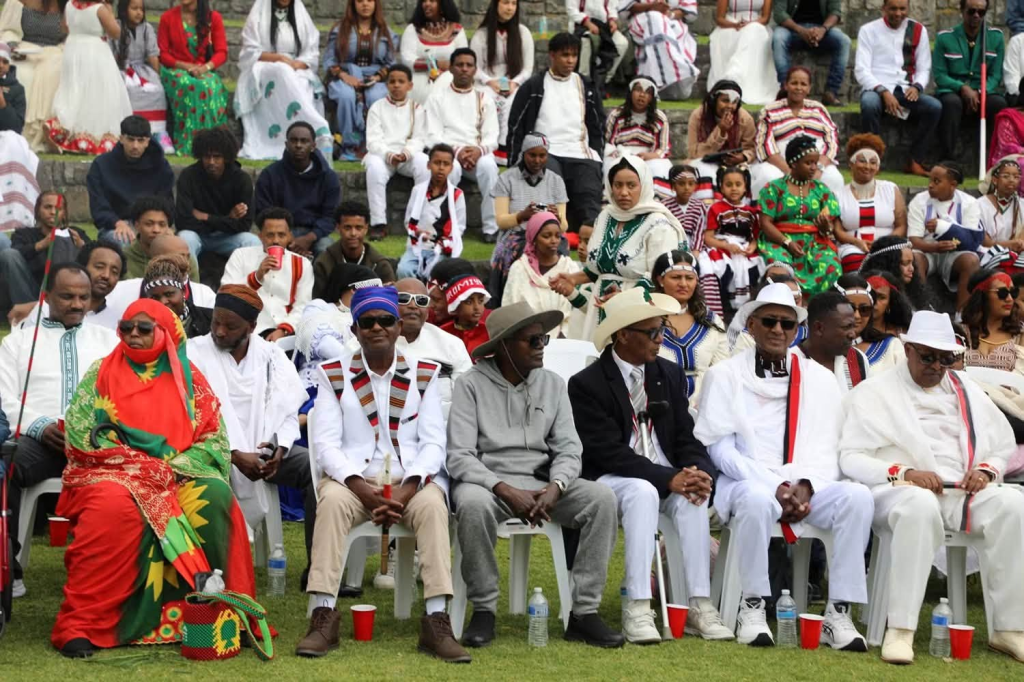
For the Oromo diaspora, Irreechaa serves as a vital cultural anchor—far more than a festival, it is an act of identity preservation, a bridge across generations, and a powerful statement of resilience. It connects Oromos living far from their ancestral homeland to their ancestors, their language, and one another, ensuring that a tradition preserved through centuries of suppression continues to thrive on foreign soil.
🌍 A Home Away from Home
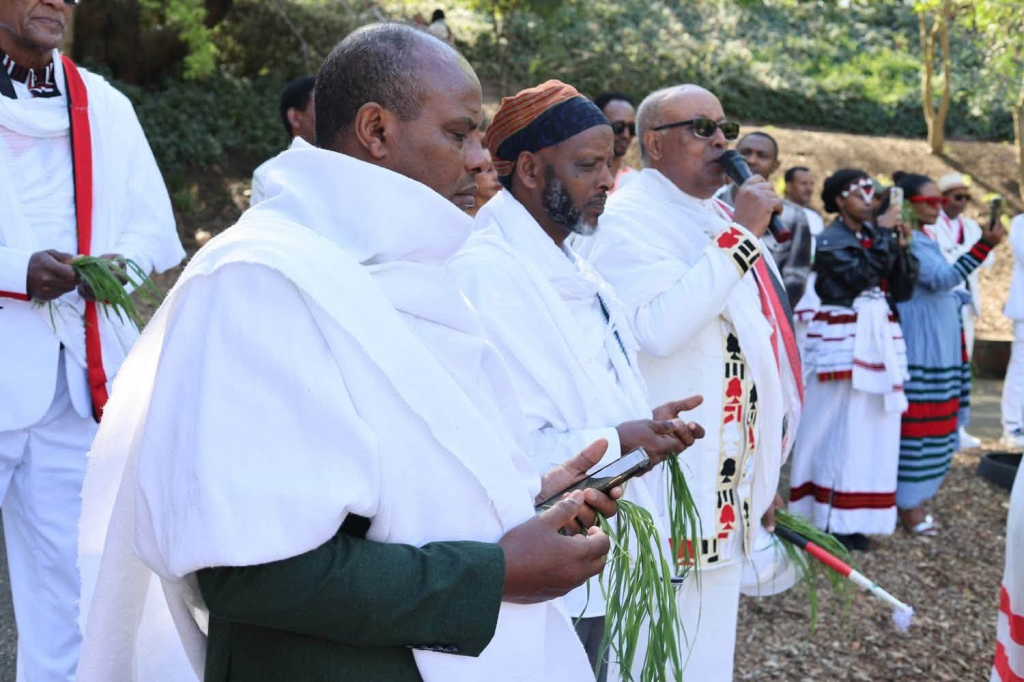
Irreechaa provides a sacred space where the diaspora can recreate the spiritual and communal essence of the homeland. In cities like Melbourne, Toronto, and Minneapolis, the ritual structure remains remarkably intact:
- Traditional Rituals: Participants carry fresh green grass and yellow daisies to the water’s edge, dipping them in as an offering of gratitude—the same act performed by millions at Hora Arsadi and Hora Finfinnee.
- Spiritual Continuity: Elders lead blessings and prayers to Waaqa (God), maintaining the spiritual essence of the festival even in a foreign landscape.
- Processions and Songs: Communities walk together toward water bodies or parks, singing traditional faaruu (songs of praise), with women often walking in front—a practice rooted in the Siinqee institution symbolizing women as sacred agents of peace.
🔗 Forging Unity and Identity
Irreechaa transcends religious and political divisions, functioning as a transreligious symbol of Oromummaa (Oromo identity). As one analysis notes, attendees include Christians, Muslims, non-believers, and Waaqeffatas alike—all united by a shared cultural heritage. This unity is particularly significant for a diaspora that fled political marginalization, as it allows diverse Oromo communities to come together under a single, proud identity.
🛡️ Resilience Through Remembrance
The diaspora celebration carries a profound weight of survival. Irreechaa was historically suppressed and forced underground, making its public, joyful observance abroad an act of cultural resistance. In Minnesota, for instance, the festival is explicitly framed as a symbol of resilience—a tradition that was “looked down upon” for about a century but is now celebrated openly and proudly. For the Melbourne community, it is a “living prayer” that refuses to become a mere memory.
🌱 Passing the Torch to the Next Generation
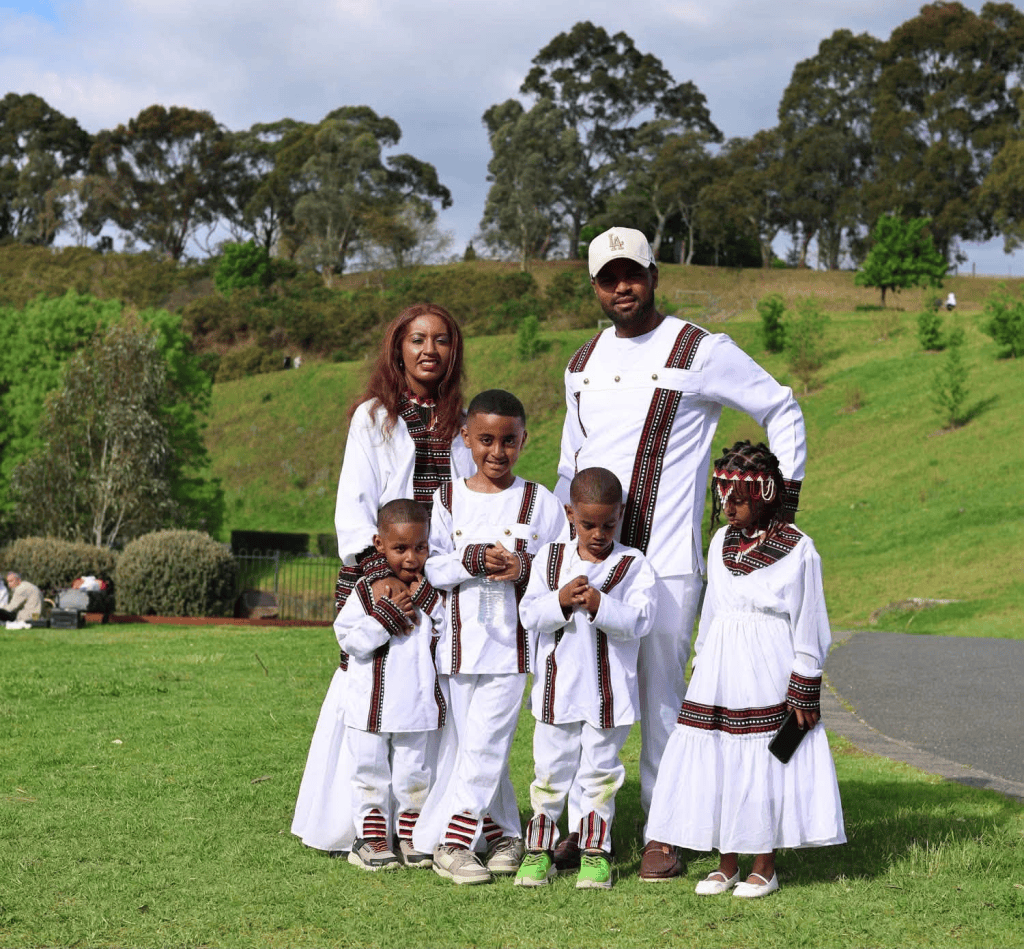
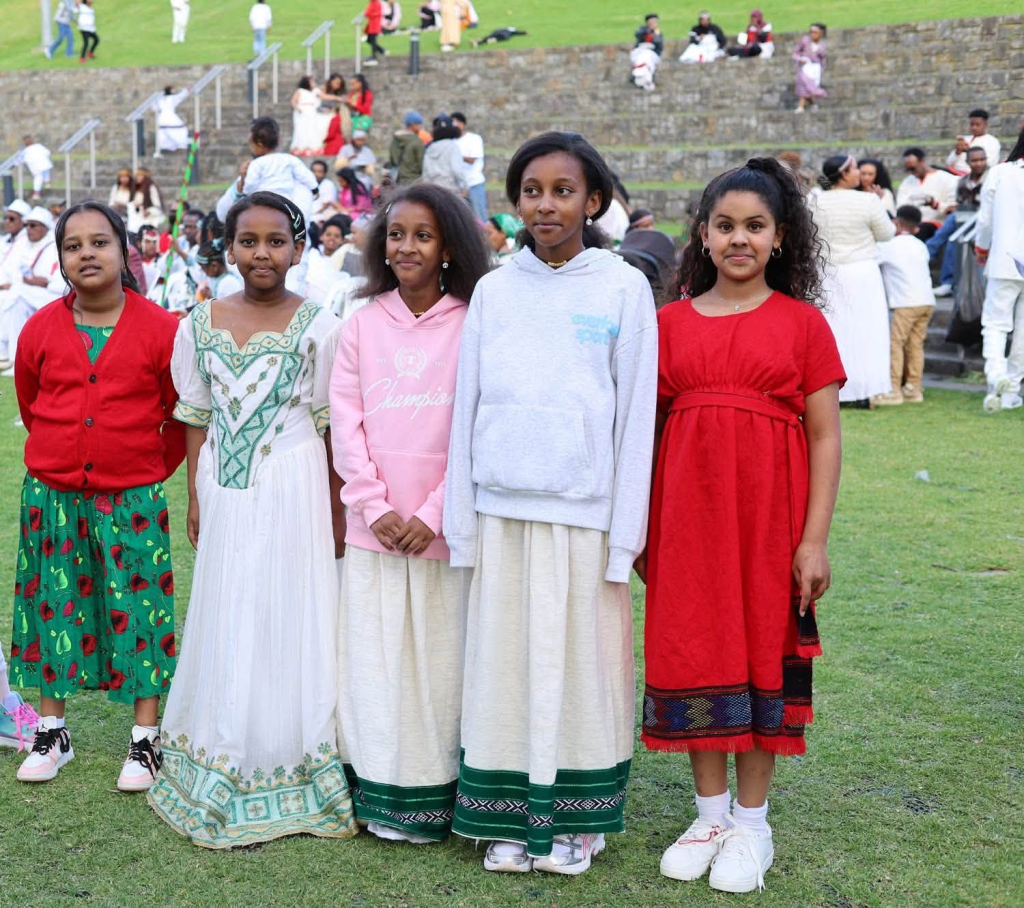
A central mission of diaspora Irreechaa organizations is youth engagement and cultural transmission. In Melbourne, “Irrecha Australia” emphasizes empowering young people to carry traditions forward with pride. In Minnesota, youth are described as a driving force behind the festival’s growing popularity, even teaching non-Oromos about its meaning. By involving children in rituals—from dressing in traditional wandaboo to learning the steps of cultural dances—the diaspora ensures that Irreechaa remains a living tradition, not a distant memory.
🤝 A Bridge to the Wider World
Beyond the Oromo community, diaspora Irreechaa celebrations serve as an open invitation for intercultural exchange. In Toronto, the festival has attracted visitors from Germany and the United States. In Dubai, celebrations have included local Emiratis and other Ethiopian ethnic groups. These events showcase Oromo values of peace, gratitude, and harmony with nature, fostering understanding within the broader multicultural societies where Oromos now live.
In essence, Irreechaa in the diaspora is not a diminished version of the homeland celebration—it is an amplified testament to a people’s unbreakable connection to their roots. It is where identity is renewed, community is strengthened, and the flame of Oromummaa is passed on, undimmed, to the next generation.

Ethiopia Launches E-Passport Service at Its Embassy in Canberra
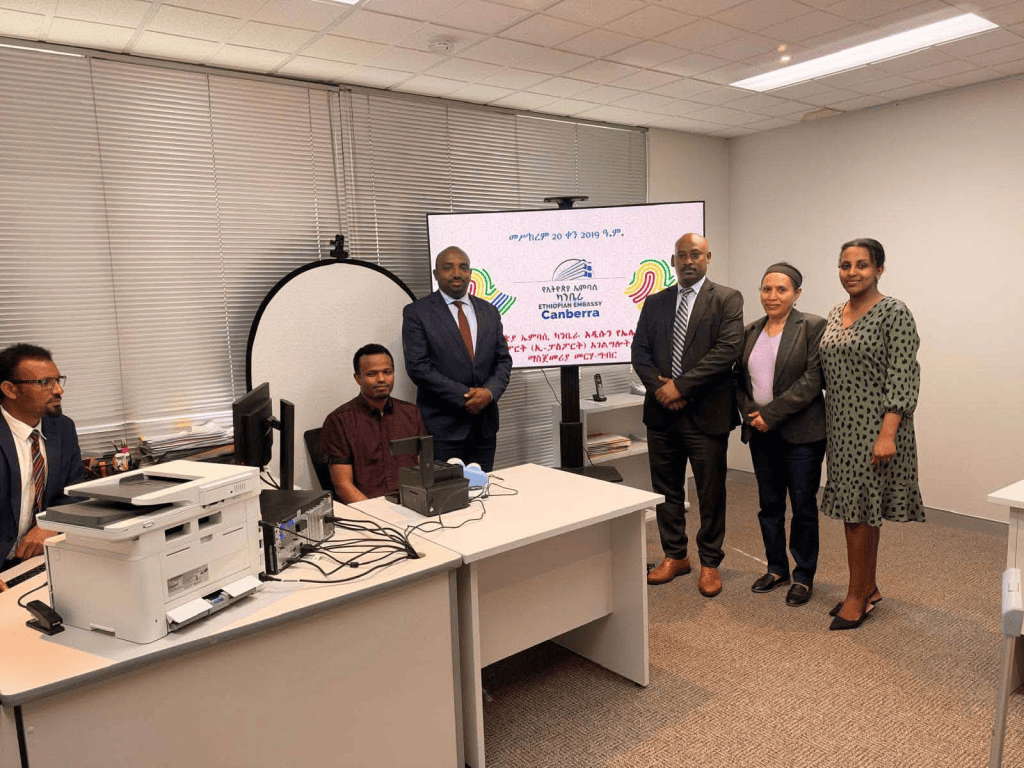
A new era of consular service begins as Ethiopian citizens in Australia gain access to biometric passport processing closer to home.
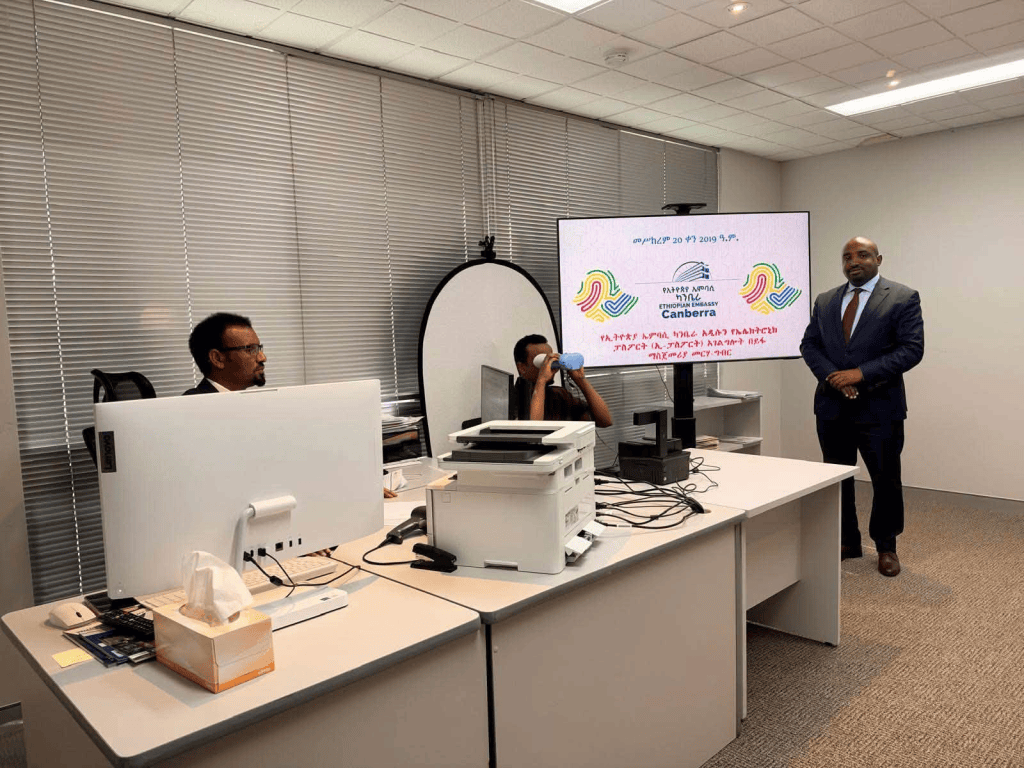
(CANBERRA, 30 September 2026)-The Embassy of the Federal Democratic Republic of Ethiopia in Canberra has officially launched its E-Passport service, marking a significant milestone in the country’s efforts to modernize consular services and better serve its citizens abroad.
The inauguration ceremony took place today, September 20, 2019 E.C. (Ethiopian Calendar), with Mr. Yalalet Getachew, the mission’s Chargé d’Affaires, officially opening the service to the public.
Meeting International Standards
The new electronic passport is designed to comply with the standards set by the International Civil Aviation Organization (ICAO). This compliance ensures that Ethiopian travelers benefit from enhanced service at international airports worldwide, reducing the inconveniences that have long plagued citizens traveling with older document formats.
The E-Passport represents a leap forward in both security and efficiency, aligning Ethiopia with global best practices in travel documentation.
A Breakthrough for Citizens Abroad
Perhaps the most transformative aspect of this development is what it means for Ethiopians living in Australia and the surrounding region. Previously, the biometric data collection service — a mandatory step in the passport application process — was only available at the headquarters of the Immigration and Citizenship Service in Addis Ababa.
This meant that citizens abroad faced the burdensome prospect of traveling back to Ethiopia simply to complete a procedural requirement.
Now, with the service available at the embassy level, citizens can:
- Submit their passport applications online from the comfort of their current location
- Provide their biometric data at the embassy in Canberra
- Avoid the expense and hardship of international travel solely for administrative purposes
This shift represents a fundamental change in how the Ethiopian government approaches diaspora services — moving from a centralized model to one that meets citizens where they are.
Expanding Access Across Australia
The embassy has indicated that this is only the beginning. In its announcement, the mission stated that additional information regarding the service will be shared in due course, and that preparations are already underway to extend the service to other cities where Ethiopian citizens reside.
This commitment to reaching communities beyond the capital signals a broader strategy to make consular services more accessible and responsive to the needs of the Ethiopian diaspora across the continent.
A Step Forward in Diplomacy
The launch of the E-Passport service in Canberra is more than an administrative upgrade — it is a statement about the relationship between Ethiopia and its citizens abroad. By investing in accessible, modern consular services, the government is acknowledging the importance of its diaspora and the role they play in the nation’s global presence.
For Ethiopians in Australia, this development brings not only practical benefits but also a sense of connection and recognition. The distance between home and abroad just became a little shorter.
For more information about the E-Passport service, citizens are encouraged to follow the embassy’s official channels for updates.
#Ethiopia #EPassport #Canberra #Diplomacy #EthiopianDiaspora #ConsularServices
Inside Oromia’s New Map: The Six Clusters and the Leaders Who Will Run Them
From Hararghe to Jimma, from Borana to Wollega, Oromia’s historic restructuring has redrawn the administrative landscape. Here is who leads each cluster — and which zones fall under their command
FINFINNE — Oromia has redrawn its map. In one of the most consequential administrative reforms in the region’s modern history, Ethiopia’s largest regional state has collapsed its 21 zonal administrations into six powerful clusters, each led by a chief holding the rank of deputy president.
The reform, approved by the Oromia Regional State Council during its first regular session of the seventh term, is designed to consolidate functions, eliminate duplication, and bring government closer to the people. But beyond the policy language lies a simple question every citizen wants answered: Who is in charge, and of what?
Here is the full breakdown of the six clusters, their leaders, and the zones under their authority.
1. East Oromia Cluster — Two Zones
Chief: Obbo Abdurrahman Abdalla
- Hararghe West (West Hararghe)
- Hararghe East (East Hararghe)
This eastern cluster brings together the two Hararghe zones, a region historically defined by trade routes, Islamic scholarship, and the rugged beauty of the Chercher Mountains. Its headquarters sit in the ancient walled city of Harar, with deputy offices in Chiro, Galamso, and Gurawa.
2. Southeast Oromia Cluster — Four Zones
Chief: Obbo Ahimad Haji
- Arsi
- Bale
- Arsi West (West Arsi)
- Bale East (East Bale)
Spanning the Rift Valley and the towering Bale Mountains, this cluster is one of the largest by landmass. It encompasses Ethiopia’s most productive agricultural heartlands, including the wheat fields of Arsi and the coffee and forest zones of Bale. Its administrative center is Robe, with deputy offices in Ginir, Asella, and Shashemene.
3. South Oromia Cluster — Four Zones
Chief: Obbo Ahimad Idris
- Guji
- Guji West (West Guji)
- Borana
- Borana East (East Borana)
This southern cluster stretches toward the Kenyan border and is home to Ethiopia’s most iconic pastoralist cultures. The Borana people, renowned for their gadaa system of governance — a UNESCO-recognized intangible cultural heritage — anchor this region. Its hub is Yabelo, with deputies based in Adola, Nageelle Borana, and Bule Hora.
4. West Oromia Cluster — Four Zones
Chief: Obbo Masfin Melaku
- Wollega East (East Wollega)
- Wollega West (West Wollega)
- Qellem Wollega
- Horro Guduru Wollega (Horro Guduru)
Western Oromia is gold country — literally. This cluster is home to some of Ethiopia’s richest mineral deposits, alongside vast coffee forests and fertile farmland. It is also a region that has endured significant security challenges in recent years. Its headquarters is Nekemte, with deputies in Gimbi, Shambu, and Dambi Dollo.
5. Southwest Oromia Cluster — Three Zones
Chief: Dr. Rashad Kamal
- Illu Abba Boor (Iluababor)
- Bunnoo Bedelle (Buno Bedele)
- Jimma
This cluster is the birthplace of Ethiopian coffee. Jimma, its administrative heart, is celebrated worldwide for the Arabica beans that grow in its surrounding forests. The region is also rich in history, home to the ancient Kingdom of Limmu-Ennarea and a center of Oromo scholarship and Islamic learning. Deputy offices are located in Bedele, Limmu Gannat, and Mattu.
6. Central Oromia Cluster — Four Zones
Chief: Dr. Mengistu Bekele
- Shewa East (East Shewa)
- Shewa North (North Shewa)
- Shewa Southwest (S.W. Shewa)
- Shewa West (West Shewa)
Encircling the capital, Addis Ababa, Central Oromia is the political and economic engine of the region. It includes Adama, one of Ethiopia’s largest industrial cities; Ambo, a university town known for its mineral springs; and the fertile plains of North Shewa. Its leadership is shared between Shaggar and Adama, with deputies in Waliso, Fitche, and Ambo.
A Reform Built on Coordination
Under the new structure, each cluster chief holds the rank of deputy president — a designation that signals their weight in the regional hierarchy. Alongside each chief sit two deputies: one for development, one for peace and justice. Senior advisors complete the leadership team, mirroring the executive architecture of the regional government itself.
Officials say the consolidation addresses a long-standing problem: Oromia, at over 350,000 square kilometers and more than 27 million people, was simply too vast to be governed effectively through 21 separate zones. By grouping related zones under unified cluster leadership, the government hopes to improve coordination, reduce bureaucratic overlap, and make services more accessible.
What Comes Next
The appointments are made. The headquarters are set. The structures are operational. What remains to be seen is whether the new architecture delivers on its promise — or whether it simply adds another layer of administration between the people and their government.
For now, Oromia has chosen consolidation over fragmentation. It has bet that six strong clusters will serve its people better than twenty-one scattered zones. And it has placed its trust in a new generation of leaders to make that bet pay off.
The map has changed. The work has just begun.
#Oromia #AdministrativeReform #Ethiopia

Six Clusters, One Oromia: A Guide to the New Administrative Map and Its Key Cities
FINFINNE — Oromia, Ethiopia’s largest federal state, is undergoing a profound administrative restructuring. Under a newly approved plan by the Oromia Regional State Council, the region has been reorganized into six major administrative clusters, each led by a vice president. This transformation not only reshapes governance structures but also brings the roles of each cluster’s key cities into sharper focus.
Based on the officially released administrative divisions, here is a breakdown of the six regions and their serving hub cities.
1. East Oromia: Harar and Chiro
The East Oromia cluster encompasses West Hararghe and East Hararghe zones, overseen by Vice President Abdurehman Abdullah.
Key service cities in this region include:
- Harar: The administrative center of East Hararghe Zone. A historic walled city, Harar plays a vital role in regional trade and cultural exchange.
- Chiro: The capital of West Hararghe Zone and a key administrative and commercial node on the western side of the cluster.
- Galamso and Gurawa are also important towns within this region.
2. Central Oromia: Shaggar and Adama
The Central Oromia cluster surrounds the capital, Addis Ababa, and includes East Shewa, North Shewa, Southwest Shewa, and West Shewa zones. It is overseen by Vice President Mengistu Bekele.
Main service hub cities:
- Shaggar: The name is closely tied to Oromia’s governance center and serves as a critical node for regional administrative coordination.
- Adama: The capital of East Shewa Zone, located southeast of Addis Ababa, and a major industrial and transport hub.
- Waliso: The administrative center of Southwest Shewa Zone.
- Fitche: The capital of North Shewa Zone.
- Ambo: The administrative center of West Shewa Zone, known for its hot springs and university.
3. Southwest Oromia: Jimma and Bedele
The Southwest Oromia cluster covers Ilu Ababor, Buno Bedele, and Jimma zones, overseen by Vice President Reshad Kemal.
- Jimma: The core city of the cluster, known as Ethiopia’s “coffee capital,” with rich agricultural and forestry resources.
- Bedele: The administrative center of Buno Bedele Zone.
- Limu Gannat and Mattuu are also important towns in the region.
4. South Oromia: Yabelo and Nageelle
The South Oromia cluster includes Guji, West Guji, Borana, and East Borana zones, overseen by Vice President Ahmed Haji.
- Yabelo: The capital of Borana Zone, located on the major transport route to Kenya in the south.
- Nageelle Borana: The administrative center of Guji Zone.
- Adola and Bule Hora are key towns in East Borana and West Guji zones, respectively.
5. West Oromia: Nekemte and Gimbi
The West Oromia cluster comprises East Wollega, West Wollega, Kellem Wollega, and Horo Guduru Wollega zones, overseen by Vice President Melaku Melaku.
- Nekemte: The capital of East Wollega Zone and the economic and cultural center of the western region.
- Gimbi: The administrative center of West Wollega Zone.
- Shambu: The capital of Horo Guduru Wollega Zone.
- Dambi Dollo: The administrative center of Kellem Wollega Zone.
6. Southeast Oromia: Robe and Shashemene
The Southeast Oromia cluster covers Arsi, Bale, West Arsi, and East Bale zones, overseen by Vice President Ahmed Idris. This region spans the Rift Valley and is home to important ecological resources, including Bale Mountains National Park.
- Robe: The capital of Bale Zone and the administrative center of the cluster’s southeastern section.
- Ginir: An important town in Bale Zone.
- Asella: The capital of Arsi Zone.
- Shashemene: The administrative center of West Arsi Zone, located about 200 kilometers south of Addis Ababa.
The Significance of the Restructuring
Oromia’s administrative reorganization represents a major shift in the state’s governance model. Supporters argue that dividing the vast Oromia region into smaller management units brings government closer to the people, improving administrative efficiency and service delivery. Oromia spans over 350,000 square kilometers with a population of more than 27 million — a single layer of management does indeed face enormous challenges.
However, critics have also raised concerns. Some analysts suggest the restructuring may carry political motives, potentially aimed at weakening Oromia’s cohesion and bargaining power as a single political entity.
Regardless, the six cluster vice presidents are now in place, and coordination mechanisms are being established. For ordinary citizens, the most direct impact will be on the accessibility and efficiency of administrative services. For observers, this “quiet administrative revolution” in Oromia may have implications that extend far beyond the list of appointments itself.






