Daily Archives: June 2, 2026

Unity Among Borana, Guji, and Gabra: A Call for Strength
By Staff Reporter
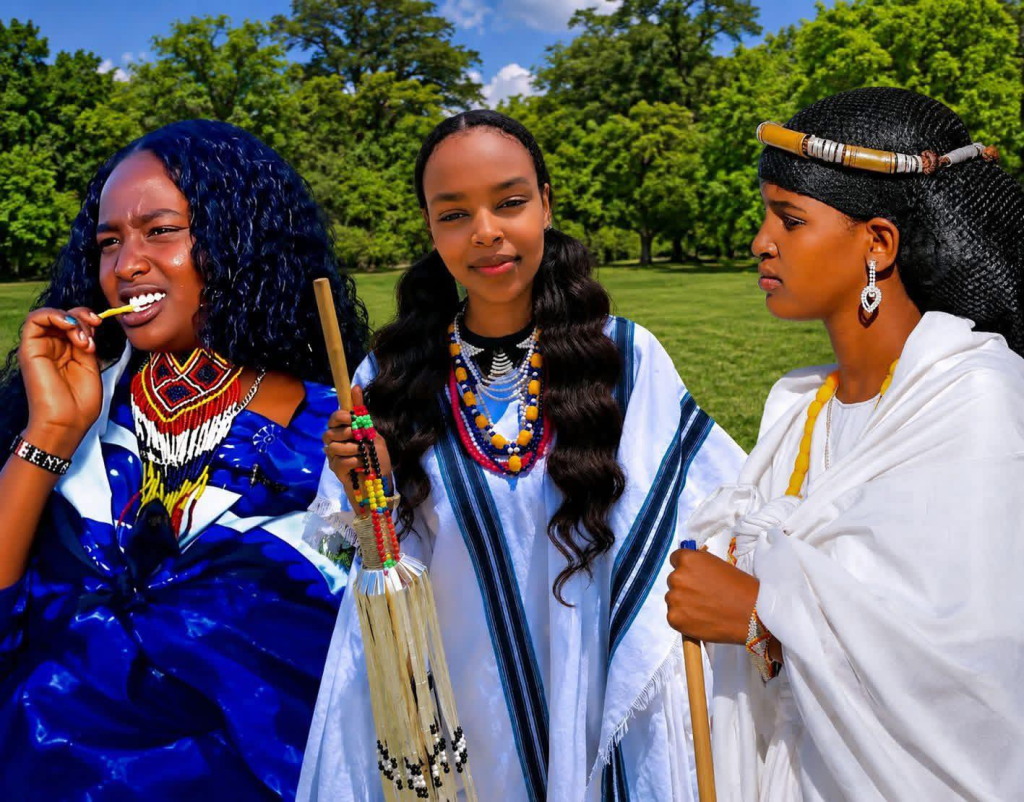
In the vast, sun-scorched lowlands of southern Oromia and northern Kenya, where pastoralists have roamed with their cattle for centuries, three names are spoken with reverence: Borana, Gabra, and Guji. They are not merely neighboring communities. They are, in the words of a powerful new message circulating among Oromo communities, “ilmaan haadha tokkoo”—children of one mother.
Now, as political tensions and fragmented narratives threaten to sow discord across the Horn of Africa, elders, youth, and community leaders from these three groups have raised a collective voice. Their message is simple, ancient, and urgent: We are one.
“Warri ajandaa dhunfaa barbaachaaf, fixxi-fixxi jechaa uummata wal irraa qoqqooduu yaaltaan dhaabbadhaa ofi ilalaa,” the statement reads. “Those who seek personal agendas, speaking in fragments and trying to divide the people, should look at themselves.”
The declaration leaves no room for ambiguity. Borana, Guji, and Gabra are not separate nations. They are siblings—”qorii tokko keessaa nyaatu,” those who eat from the same bowl. They share ancestry, language, culture, and a profound bond of kinship that predates modern maps and political borders.
A History of Harmony, Not Hatred
The message acknowledges that misunderstandings may arise from time to time, often rooted in the complex history of past kingdoms and shifting governance. But it insists that there is no innate enmity between these communities.
“Wantii yeroo adda addaatti mul’ataa ture seenaa fi adeemsa mootummootii darban irraa kan madde malee, ummatoota kana gidduutti hammeenyii dhalootaan jiru tokkoo hin jiru,” the statement explains.
Translation: Except for what occasionally appears from the history and processes of past governments, there is no generational hatred between these peoples.
In other words, the divisions some seek to exploit are not born of tradition or blood. They are artifacts of political maneuvering—and they can be undone by conscious, collective will.
Rejecting False Narratives
The statement takes particular aim at what it calls “kashalabbee miidiyaa sobaatiin”—the lies spread through dishonest media. It warns against those who, disguised in the name of the people, spread suspicion and hatred, whether from inside or outside the community.
“Namoonnii muraasnii faayidaa dhuunfaa isaaniif jechaa gosa walitti buusuuf wixxiratan ni jiru,” the message concedes. Yes, there are a few who conspire to pit clan against clan for personal gain.
But the children of Borana, Guji, and Gabra know the truth. “Harka wal qabannee tokkoomnee dura dhaabbanna; waan waliin dhabne irratti mari’anna, waan wal dhowwanne nuu hin qabnu.”
They will stand together, united hand in hand. They will discuss what they have lost together. They have nothing they need to deny each other.
Unity is Strength
The message closes with a call that echoes across the generations: “Tokkummaan keenya humna keenya.” Our unity is our strength.
Respect, listening, and mutual support are not foreign concepts—they are tradition. “Wal kabajuu, wal dhaga’uu fi wal tumsuun aadaa teenna.”
Borana, Guji, and Gabra, the statement affirms, have lived together, grown together, and stood for each other—yesterday, today, and tomorrow. They are Oromo. They are children of one mother.
Tokko taanee haa jiraannu; Tokkummaan humna!
Let us live as one. Unity is strength.
—

Revitalizing the Oromo System: A Modern Approach
By Daandii Ragabaa
Finfinne
FINFINNE – There is a quiet conversation echoing across the highlands and lowlands of Oromia, spoken not in boardrooms but around hearth fires, under sycamore trees, and in the patient queues outside polling stations. It is a conversation about something ancient being made new again: Sirna Oromoo—the Oromo system.
For generations, the Gadaa system stood as one of Africa’s most sophisticated indigenous democracies, a cyclical governance framework that rotated power every eight years, long before the word “election” entered the colonial lexicon. But time, war, and the relentless press of modernity have frayed its fabric. Now, a quiet but determined movement is underway to do the unthinkable: to not merely preserve the Oromo system, but to revitalize it, rebuild it, strengthen it, and expand it for a new century.
“Revisiting our system is not about turning back the clock,” said a cultural elder who spoke on condition of anonymity, his voice carrying the weight of decades. “It is about remembering that we had answers before we were told we had none.”
Deebisanii Haaromsuu: Revitalizing the Roots
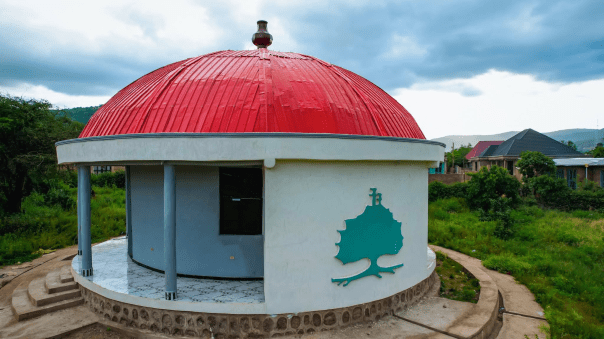
The first pillar of this vision is deebisanii haaromsuu—to revitalize. Across Oromia, from the bustling streets of Finfinne to the pastoral lands of Borana, young and old are gathering in Odaa trees, the sacred meeting places where consensus was once forged. But these are not nostalgia tours. They are resuscitation sessions.
Scholars at Odaa Bultum University have begun digitizing oral Gadaa laws that were never written down, afraid they would be lost to memory. Youth groups, once skeptical of what they called “grandfather’s politics,” are now undergoing training in Gadaa principles of conflict resolution. The language of Safuu—the moral-legal code that governs Oromo society—is being taught again in community schools.
“We are not archeologists,” said Hunde Fekadu, a 28-year-old community organizer in Jimma. “We are gardeners. We are pulling the weeds of neglect away from something that is still alive.”
Ijaaruu: Building the Scaffolding
Revitalization alone is hollow without structure. The second pillar—ijaaruu (building)—is perhaps the most ambitious. For decades, the Oromo system existed informally, a shadow government whispered about but rarely empowered. Now, community-led initiatives are constructing tangible institutions.
In Adama, a newly established Gadaa Center now mediates land disputes that formal courts have spent years failing to resolve. In Bale, a cooperative of farmers has adapted the Waaqeefannaa calendar—an indigenous timekeeping system based on lunar cycles—to coordinate planting seasons with climate resilience strategies.
“We are building bridges,” said Aynalem Tsegaye, a legal researcher focusing on customary law. “Not between the old and the new, but between the old and the now. The Sirna Oromoo never collapsed entirely. It bent. We are straightening it with new timber.”
Jabeessuu: Strengthening the Weave
A system rebuilt must also be fortified. Jabeessuu—strengthening—speaks to the internal work required to make the Oromo system durable against the forces that weakened it before.
This means confronting uncomfortable truths. The Gadaa system, for all its democratic brilliance, had gaps: the historical exclusion of certain clans, the uneven role of women in leadership, and the rigidity that sometimes accompanied tradition. Strengthening today means opening the Gadaa assembly to voices once left at the margins.
“We are not romantics,” said Fatuma Jara, a women’s rights advocate in Ambo. “Our ancestors built something remarkable, but they built it in their time. If we want this system to survive our time, women must sit at the Caffee [assembly] not as observers but as decision-makers. That is not breaking tradition. That is strengthening it.”
Pilot programs in three Gadaa “generation sets” have already integrated equal representation principles, with elders and youth councils sitting side by side.
Gabbisuu: Expanding the Vision
Finally, gabbisuu—to expand. This is the most forward-looking pillar, the one that dares to ask: Can the Oromo system offer something to the world?
Proponents argue yes. As Ethiopia and other African nations struggle with centralized, top-down governance models inherited from colonial powers, the Sirna Oromoo offers an alternative: power sharing, term limits (eight years, enforced by celestial cycles rather than constitutional amendments), and consensus-based decision-making.
“We are not asking to replace the modern state,” said a policy advisor close to cultural affairs in the Oromia regional government. “But why should our children learn only about Athenian democracy in school? Why not Gadaa? Why not Safuu? Expansion means taking our system out of the museum and putting it into the curriculum.”
Pilot expansions are already underway. In several districts, customary Oromo courts now operate alongside federal tribunals, with the blessing of both community elders and legal authorities. Cross-border initiatives with Oromo communities in Kenya’s Marsabit County are exploring how Gadaa principles can manage resource conflicts over water and grazing land—conflicts that modern borders have only worsened.
The Road Ahead
To witness these four movements in action—revitalizing, building, strengthening, expanding—is to watch a people refuse to let their civilizational inheritance dissolve. It is not without tension. Skeptics worry about romanticizing the past or creating parallel systems that clash with federal law. Traditionalists worry about diluting sacred customs. Modernists worry it is all nostalgia dressed in policy clothing.
But on a recent afternoon in Finfinne, inside a modest cultural center, a scene unfolded that offered a different kind of answer. An elder—his hair white with Gadaa grades—sat teaching a teenager how to recite the seera (laws) from memory. Beside them, a young woman typed the same laws into a laptop, translating them into three languages.
“See?” the elder said, noticing a visitor’s gaze. “The Sirna Oromoo is not dead. It is just changing clothes.”
Daandii Ragabaa is a journalist based in Finfinne covering cultural, political, and social affairs across Oromia and Ethiopia.

Ethiopia’s Election: 143 Polling Stations Closed Amid Security Crisis
By Daandii Ragabaa
Finfinne
FINFINNE – The hopeful hum of a nation casting its ballots was silenced in 143 corners of Ethiopia today, their shuttered polling stations standing as stark monuments to the country’s persistent security fractures.
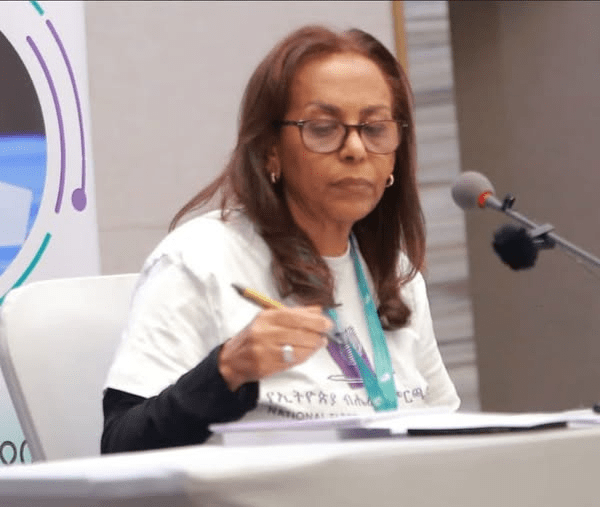
As voters lined up under a heavy sky in the capital, the chairperson of the National Election Board of Ethiopia (NEBE) delivered a sobering update from behind a lectern at the Skylight Hotel. “Security concerns,” Chairperson Melatwork Hailu explained, have forced the complete closure of 143 polling stations across the Amhara and Oromia regions. Their doors never opened.
But the tally of disenfranchisement does not end there. In a separate, more chaotic category, an undisclosed number of additional stations managed to open only to be violently silenced, forced to shut their doors early as the security situation on the ground deteriorated.
The electoral map is now pocked with dark spots. In the districts of Kersa, Kutaber, Gilolopa, and Gosache, voting began with the morning bell only to be interrupted by unseen threats. For the citizens there, the act of democracy was reduced to a waiting game—one that, by late afternoon, appeared lost. It remains unclear exactly how many voters will be unable to cast their ballots, their civic voices swallowed by regional instability.
Melatwork tried to offer a counterpoint of resilience amid the disorder. Of the more than 52,000 polling stations erected across the sprawling federal landscape, she noted, over 50,000 did open on time. Yet nearly 700 others suffered delays—not all from bullets or intimidation, but from the tangled knots of technology.
Across the country, long queues snaked around schoolyards and community halls, not just from enthusiasm but from frustration. Election officials pinned the sluggish pace on complications with the online voter registration data. In a nation still bridging the digital divide, the glitches led to hours of waiting, with fingers stained not by ink, but by restless anxiety.
The day, already heavy with political weight, took a tragic turn long before the polls closed. Melatwork disclosed that an election facilitator—one of the thousands of citizens who had volunteered to shepherd this democratic process—lost his life earlier today. He died not in a clash with security forces, nor at the hands of militia, but in a mundane yet devastating motorcycle accident in Enamorena Enayer, deep in the Gurage Zone.
He was, the chairperson noted quietly, simply trying to help.
As the sun sets on this seventh national election, the image that lingers is not of the ballots cast, but of the 143 doors that never opened—each one a silent referendum on whether, in parts of this country, peace can arrive before the next election day.
Daandii Ragabaa is a journalist based in Finfinne covering political and social affairs across Ethiopia.

The Calculus of Participation: Why Ethiopia’s ABO Party Joined the 7th Round Election – and Its Three Options Ahead

FINFINNE – At first glance, the decision seemed paradoxical. After boycotting multiple national elections over the past decade, the opposition ABO (a pseudonym for a major Oromo opposition party in this feature) suddenly threw its weight into Ethiopia’s 7th round national polls. Skeptics called it a climbdown. Loyalists called it strategy.
The party itself offered a blunt two-part explanation – one legal, one political – that has since become the subject of intense debate across opposition circles and government offices alike.
“We participated for two reasons,” a senior ABO strategist told this reporter on condition of anonymity because he is not authorized to speak to foreign media. “First, the Electoral Board’s own rules say that missing two consecutive national elections would de‑legalize us as a political entity. Second, we saw a gap: we need to mobilize the people, teach our policies and programs. Sitting out does not fill that gap.”
But the same strategist was quick to douse any expectation of an electoral upset. “Do not misunderstand us,” he added. “We do not think we will form the next government.”
—
The Two Reasons: Legal Survival and Public Education
The legal argument is straightforward. Ethiopia’s electoral law, as interpreted by the National Election Board of Ethiopia (NEBE), stipulates that political parties that fail to field candidates in two consecutive national elections may lose their legal registration. ABO had already sat out the 6th round. Another boycott would have meant administrative dissolution.
“You cannot change the system if you don’t exist,” says Dr. Mulugeta Abera, a political scientist at Addis Ababa University who follows opposition dynamics closely. “For ABO, participation was an existential choice – not a win‑now calculation.”
The second reason is more ambitious. By entering the 7th round – even without a full slate of candidates – ABO leaders believe they can use the campaign period as a mobile classroom. Public rallies, door‑to‑door canvassing, and media appearances become platforms to explain ABO’s alternative vision on land rights, federalism, and economic reform.
“They are playing a long game,” Mulugeta explains. “The ballot box is not the only measure of success. The real prize is political education. If thousands of voters hear ABO’s message now, that seed may grow by the 8th round.”
—
Why Not a Serious Bid for Power?
If the goal is eventual governance, why not contest every seat? ABO’s own analysis, shared in internal strategy documents and confirmed by multiple sources, points to two stark realities.
First, the absence of a level playing field. “There is no free, fair, and just election in Ethiopia today,” the strategist said flatly. “Without a democratic transfer of power – where the ruling party accepts defeat – no opposition can truly win. And the ruling party, from what we see, is not prepared for that.”
Second, a mathematical problem. ABO did not field candidates for all 537 Caffee (regional council) seats or all 547 parliamentary seats. “To defeat an incumbent, you need a full slate. You need thousands of candidates, not hundreds,” the strategist acknowledged. “Under a truly democratic election, we could do that. Under the current constraints, we cannot.”
Thus, the 7th round is framed internally as a testing and learning election – a chance to gauge organizational capacity, test messaging, and build a database of sympathetic voters, all without the crushing expectation of immediate victory.
—
Three Roads, One Destination?
Where does ABO go from here? Party insiders have outlined three possible paths forward. None is easy. Each carries distinct risks and opportunities.
Option One: The Incrementalist Path
“Take what is available – just like Abiy and Izzema did,” the strategist said, referring to how Prime Minister Abiy Ahmed’s Prosperity Party and other Oromo political figures consolidated power by first entering parliament and regional councils. Under this scenario, ABO would accept any seats or appointments it wins (however few), enter the Caffee and federal parliament, negotiate for ministerial or regional positions, and use state resources – including the gabaa (market) of political access – to build internal strength.
The goal? Prepare in full for the 8th round election. “This is the pragmatic path,” says political analyst Obse Lemma. “You play the inside game, grow your infrastructure, and strike when the conditions mature. The danger is co‑optation. Many opposition parties have disappeared that way.”
Option Two: The Boycott‑Plus Path
This scenario would see ABO first ensure that the Electoral Board completes its full legal composition. Then, the party would publicly challenge the fairness of the 7th round process – releasing detailed reports of irregularities, mobilizing civil society, and declaring the election not credible.
The emphasis would shift to building pressure for a genuinely free and fair 8th round, while simultaneously preparing the party and the public for that future contest. “This preserves the party’s moral high ground,” Obse notes. “But it also cedes the 7th round entirely. And if the public is exhausted by endless boycotts, the party risks irrelevance.”
Option Three: The National Dialogue Path
The most ambitious option would treat the flawed 7th round as a case study – a vivid example of what not to do. ABO would then channel its energy into demanding a genuine national dialogue (Mariin Biyyoolessaa) and a national consensus (Araarri Biyyoolessaa) that establishes agreed rules for a truly competitive election.
“This is the ‘seek a solution and follow due process’ path,” explains Mulugeta. “It requires the ruling party’s cooperation, which is not guaranteed. But if successful, it could reset the entire electoral playing field – not just for ABO, but for all opposition.”
—
What the 7th Round Really Means
For now, ABO has entered the 7th round – but without abandoning any of the three options. Party leaders describe the election as a bridge, not a destination. Whether they cross toward incremental power, principled opposition, or national reform will depend on how the coming months unfold: How many votes do they actually get? How does the ruling party treat their elected officials? Does the Electoral Board reform itself?
Late one evening in Finfinne, the ABO strategist summed up the dilemma with a farmer’s metaphor: “You cannot harvest what you have not planted. But you also cannot plant if the land is poisoned. This election, we are planting test seeds – and testing the soil. Next time, God willing, we will plant the whole field.”
Outside his office, the city hummed with campaign trucks and blaring loudspeakers. The 7th round had begun. And for ABO, the long walk toward an uncertain future had finally taken its first, deliberate step.
—
— A feature story based on party strategy documents, insider interviews, and political analyst commentary. The name ABO is used as a composite representation of a major Oromo opposition party called Oromo Liberation Front (OLF) for narrative clarity.

When the Bokkuu Blooms Again: The Oromo Quest to Revive a Native System
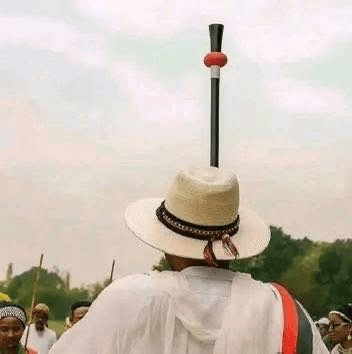
FINFINNE, OROMIA — The morning mist still clings to the highlands when Jaldessa Gammadaa, 74, raises the bokkuu—a curved wooden staff wrapped in leather and beads—toward the rising sun. His weathered hands tremble slightly, not from age, but from the weight of what this simple object represents.
“The bokkuu never died,” he says softly, his voice carried by the wind sweeping across the grassy plains of Mecha, in western Oromia. “It was only sleeping. Now, we are waking it up.”
For the Oromo people, Ethiopia’s largest ethnic group, the bokkuu is more than a ceremonial scepter. It is the embodiment of the Sirna Oromoo—the Oromo system of governance, law, spirituality, and social organization that once governed millions across the Horn of Africa. And after decades of suppression, forced assimilation, and state-sanctioned neglect, the Oromo are engaged in a quiet but determined revolution: not with guns, but with memory.
They are reviving. They are rebuilding. They are strengthening.
—
A System That Predates Modern Democracy
The Gadaa system—the beating heart of Sirna Oromoo—is a complex, age-grade-based democratic governance structure that has been recognized by UNESCO as an Intangible Cultural Heritage of Humanity. Every eight years, power transfers peacefully from one generation to the next, with elected leaders known as Abbaa Gadaa presiding over legislative, judicial, and ritual functions.
Political scientists have marveled at its checks and balances. Its separation of powers. Its regular succession mechanisms that prevent authoritarian drift—all developed centuries before many European nations had abolished absolute monarchy.
“People ask me if the Oromo had democracy before colonialism,” says Dr. Worku Tesfaye, a historian at Addis Ababa University who has studied Gadaa for three decades. “I tell them no. We had something more sophisticated. Colonialism never reached Oromia in the same way it reached the coast. The Gadaa system is indigenous, organic, and astonishingly modern in its core principles.”
Yet for much of the 20th century, successive Ethiopian regimes viewed the Gadaa system as a threat. Emperor Haile Selassie’s government sought to centralize power and absorb Oromo lands, sidelining Oromo institutions. The Marxist Derg regime (1974–1991) banned what it called “feudal and tribal structures.” And even after 1991, while ethnic federalism allowed some cultural expression, Gadaa was largely relegated to folklore—performed at tourist festivals, but stripped of its governance authority.
“The system was broken,” Jaldessa recalls. “When I was a boy, the elders still met in secret under the oda tree. But the meetings grew smaller every year. Young people laughed at us. They said we were ghosts telling old stories.”
—
The Revival: From Memory to Movement
Today, the ghosts are finding their voices again.
Across Oromia—and in diaspora communities from Minneapolis to Melbourne—a grassroots cultural renaissance is underway. Community elders known as hayyuus (wise ones) are holding intergenerational workshops. Local Gadaa councils, once dormant, are being reconstituted—not to replace modern government, but to complement it in matters of conflict resolution, environmental stewardship, and social welfare.
In the city of Adama, a youth group called “Dallachaa” (Growth) has documented over 200 oral histories from elders who remember the Gadaa system before its suppression. In Addis Ababa’s Oromo neighborhood of Bole, young professionals meet weekly to study the Seera (customary laws) and debate how they might apply to contemporary issues like land rights and gender equality.
“We’re not trying to turn back the clock,” says Hundaol Banti, 28, a software engineer who co-founded a digital platform cataloging Gadaa principles. “But there are things our ancestors got right—consensus-building, ecological balance, leadership rotation. Why would we throw that away just because it’s old?”
The revival has found unexpected allies. In 2016, the Oromo Protests—massive anti-government demonstrations rooted in land rights and political marginalization—took the bokkuu as their symbol. Young protesters, many of whom had never witnessed a full Gadaa ceremony, raised wooden staffs in defiance. The image of the bokkuu became a rallying cry.
“Those protests changed everything,” Worku says. “Suddenly, a new generation saw the bokkuu not as a relic of their grandparents, but as a weapon—a peaceful one—against injustice. The system was re-politicized in the best sense.”
—
The Challenges Ahead
Yet revival is not without its fractures.
Some women’s groups have pushed back against Gadaa’s traditionally male-dominated leadership structures. While the system includes ritual roles for women—the Siiqqee institution, named after a staff carried by women—critical governance positions were historically held by men. Contemporary reformers are debating how to reinterpret these traditions for an era that demands gender parity.
“The Siiqqee was not just symbolic,” insists Asha Boru, a women’s rights activist and Gadaa scholar from Borana zone. “Women could veto decisions, call assemblies, and protect other women from abuse. But yes, there is work to do. The beauty of Sirna Oromoo is that it is built on debate. We are debating now.”
There are also tensions between rural and urban practitioners. In rural areas, particularly among the Borana and Guji Oromo, the Gadaa system never fully disappeared; it operated underground. In cities, revival efforts sometimes risk romanticizing a complex system that also had hierarchies and rigidities.
And then there is the state. While the current Ethiopian government, led by Prime Minister Abiy Ahmed (himself Oromo), has made conciliatory gestures—declaring the Irreecha festival a national holiday, funding cultural centers—the legal authority of Gadaa councils remains unclear. Can customary courts sentence someone? Can Gadaa assemblies collect taxes? The boundaries remain contested.
“The government is comfortable with Irreecha and folklore,” says one Addis Ababa-based analyst who requested anonymity to speak freely. “But a fully autonomous Oromo governance system? That is a different conversation. The revival is cultural for now. Whether it becomes political again—that is the question.”
—
Under the Oda Tree
On a recent Friday afternoon, under a sprawling oda tree in the village of Odaa Nabee—a site of immense spiritual significance where Oromo oral tradition says the Gadaa system was formalized—Jaldessa oversees a ceremony. But this is no tourist performance.
Twenty-three young men and women sit in a semicircle, notebooks in hand. They are learning the Gadaa grades—the five eight-year stages through which every Oromo male (and now, in some communities, female) once passed. They memorize the names of the Abbaa Gadaas of the past. They practice the Jaarsummaa (eldership) protocols of conflict mediation.
“We will not all become elders overnight,” Jaldessa tells them. “But you cannot grow a tree from a dead root. We are watering the root.”
One of his students, 19-year-old Marge Waqjira, raises her hand. She wants to know whether a woman can one day hold the bokkuu as a full Abbaa Gadaa. The question hangs in the air.
Jaldessa smiles. “The law does not forbid it,” he says slowly. “The law says a leader must be wise, just, and chosen by the people. So I ask you: does wisdom have a gender?”
The students laugh. Marge writes something in her notebook. And under the oda tree, the Oromo system—rebuilt, revived, and strengthened—takes another small step into the future.
As the sun sets behind the highlands, Jaldessa plants the bokkuu into the earth. It stands upright, alone for a moment. Then he walks away, leaving it there—a promise that next time, it will be younger hands that lift it.
— Reported from Oromia

The Power of One Voice: Ambassador Dagifee Bulaa on Ethiopia’s Electoral Responsibility
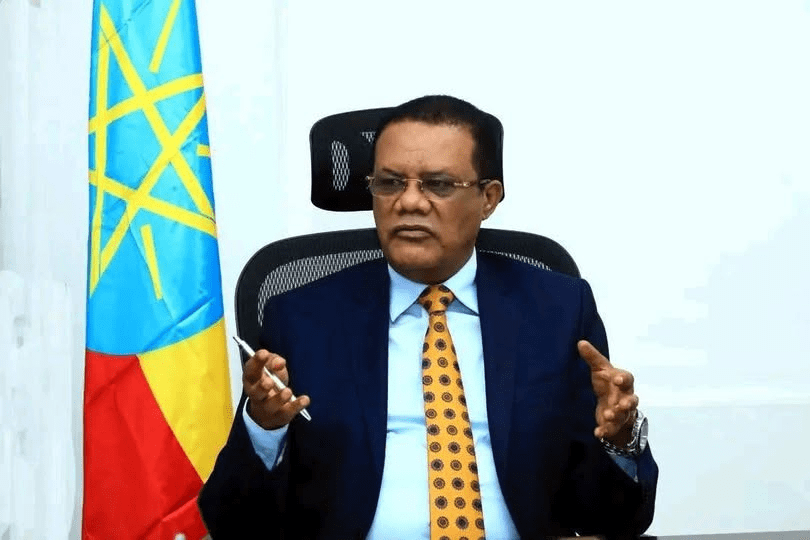
By Bariisaa Newspaper
May 23, 2018
In the quiet corridors of the Federal Institute of Law and Justice, Ambassador Dagifee Bulaa speaks with the measured precision of a man who has spent decades navigating the complex intersections of justice, diplomacy, and national transformation. As the current Director of Ethiopia’s Federal Institute of Law and Justice, his voice carries the weight of experience—from serving as ambassador to Uganda, Rwanda, Burundi, and the Democratic Republic of Congo to leading the Ethiopian Football Federation and media oversight.
But today, on the eve of Ethiopia’s seventh national election, his message is both urgent and timeless: “In an election, the people must understand that every single vote is decisive, and they must participate.”
Building Justice from the Ground Up
The Federal Institute of Law and Justice, under Ambassador Dagifee’s leadership, operates on four fundamental pillars: conducting research on justice sector issues, providing training to legal professionals, collecting evidence from various jurisdictions, and spearheading comprehensive reform efforts.
“We don’t just conduct research and leave it on a shelf,” Ambassador Dagifee explains from his office in the Ayat area of Addis Ababa. “Our research has directly contributed to reforming legal procedures, including the long-overdue revision of the Criminal Procedure Law that served for over sixty years.”
What sets the Institute apart is its three-tiered training approach—a comprehensive system designed to transform theoretical legal education into practical, applied justice. Newly appointed judges and legal professionals undergo nine months of intensive training before ever hearing a case. Sitting judges receive five-to-ten-day refresher courses. And practicing lawyers must complete five days of paid continuing education annually to maintain their licenses.
Perhaps most striking is the Institute’s embrace of technology. “We have now implemented E-learning platforms,” Ambassador Dagifee notes. “Judges and legal professionals can complete their assignments from wherever they are, receiving their certifications without disrupting their court schedules.”
A Dictionary for Justice
One of the Institute’s most ambitious projects has been the creation of the first-ever comprehensive Oromo language law dictionary—the “Walabu Law Dictionary”—alongside an updated Amharic version completed two years ago.
This was no academic exercise. Ambassador Dagifee recounts the urgent need: “For too long, legal terminology has been interpreted inconsistently across different regions. A term that works in Shawa might cause confusion in Wallagga, Boorana, Gujii, Arsi, or Hararge. When a judge’s decision affects someone’s property and very life, precise understanding of legal terms is not optional—it is essential.”
The dictionary took two and a half years to complete, bringing together legal scholars, linguists, and practitioners from across Oromia. “This is unprecedented in Ethiopia,” he says with pride. “Not just in quality, but in scope. And it is available in both print and soft copy, ensuring accessibility for judges, lawyers, police, and anyone working in the justice system who works in Oromo.”
The Justice Sector’s Electoral Duty
As Ethiopia prepares for its seventh national election, Ambassador Dagifee emphasizes the critical role of justice sector institutions in ensuring the process is democratic, fair, peaceful, and free.
The Institute recently convened a symposium for judges and legal professionals specifically focused on their electoral responsibilities. “The role of four key institutions—NEBE, police, prosecutors, and courts—is paramount,” he explains.
The electoral board creates the enabling environment. Police ensure security around polling stations. Prosecutors investigate and refer any electoral disputes to the courts. And the courts adjudicate based on electoral law.
“The election has proceeded peacefully so far,” Ambassador Dagifee observes. “Both parties and individuals have been given the opportunity to compete wherever they wish. Even those who have stepped back, perhaps doubting their chances of victory, must remain engaged.”
On Federalism and National Unity
Some political parties have argued that Ethiopia’s federal system divides rather than builds. Ambassador Dagifee disagrees—but with an important qualification.
“Twenty-eight countries worldwide, including the United States, Canada, Germany, and Nigeria, operate under federal systems. There is nothing unique about Ethiopia’s federalism that makes it inappropriate for our context.”
He continues: “Properly implemented, federalism allows regions to govern themselves while uniting under a national framework. The problem has never been federalism itself, but how it has been implemented. We have not adequately focused on what binds us as one nation.”
A Final Appeal
As our interview concludes, Ambassador Dagifee returns to the eve of the election with a final message to every Ethiopian holding a voter card.
“The election belongs to all the people of this country. Every citizen who holds a voter card must cast their vote. Our hope is that tomorrow’s election will be peaceful, democratic, fair, and free for every Ethiopian.”
His words echo through the Institute’s modern facility—a 10,000 square meter campus built with 3.5 million Euros of European Union support, complete with training halls, dormitories, cafeteria, library, E-learning studio, and a 40 million Ethiopian birr borehole.
But the most important resource, Ambassador Dagifee would argue, is not in the buildings or the technology or even the new law dictionary. It is in the hands of millions of Ethiopian voters, each holding a single vote, each deciding to make their voice heard.
=======
This feature story was developed from an interview conducted by Bariisaa Newspaper’s Natsaannat Taaddasa on May 23, 2018






