The One Who Stayed: Jaal Dawud Ibsa and the Courage of Constancy
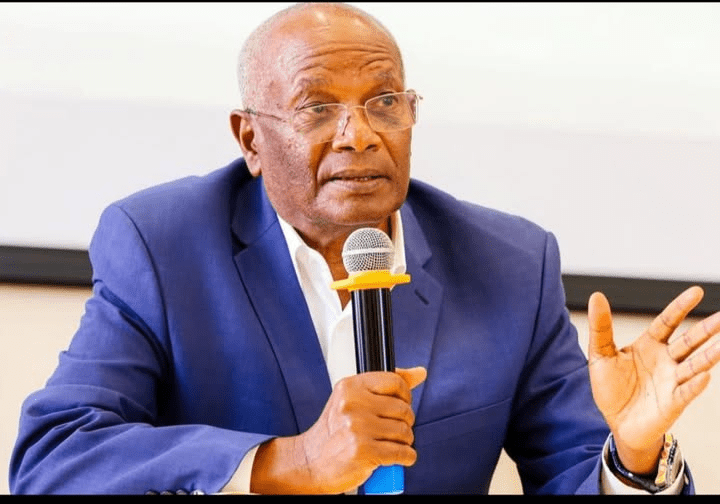
By Daandii Ragabaa
Author’s Note on Attribution: The following feature story is based on a reflection written by Giiftii Waaqoo. Daandii Ragabaa has engaged with that reflection as a commentator, and the present feature draws substantially from the themes, observations, and framing originally articulated by Giiftii Waaqoo. This story is offered as a synthesis and expansion of that shared conversation, with full acknowledgment of the original source.
In an age of fleeting loyalties and fair-weather friends, there is a quality so rare that when we encounter it, we almost do not recognize it. We have become accustomed to leaders who rise on waves of enthusiasm and vanish at the first sign of storm. We have learned to expect that today’s champion may be tomorrow’s deserter.
But then there are those who refuse to follow that script. They do not leave when the road gets rough. They do not silence themselves when the applause fades. They simply stay. They keep moving. They keep believing. And no matter what—no matter the betrayal, no matter the setback, no matter the exhaustion—they show up.
Giiftii Waaqoo, in a reflection that has moved many, names such a man. And Daandii Ragabaa, as commentator, amplifies that recognition. The subject of this reflection is Jaal Dawud Ibsa, chairman of the Oromo Liberation Front.
But this feature story is not merely about one leader. It is about the quality of leadership that his life exemplifies—a quality that the Oromo people, in their long struggle, have desperately needed and too rarely received.
The Simple Thing That Sets Him Apart
Giiftii Waaqoo begins with a striking claim: “What sets him apart is simple.”
Not complex. Not mysterious. Not hidden in secret strategies or charismatic performances. Simple.
He stayed the course. He kept moving. He kept believing. He always showed up—no matter what.
In a political culture where leaders often emerge from nowhere, burn brightly for a season, and then disappear into comfortable exile or cynical silence, Jaal Dawud Ibsa has done something almost unremarkable in its description yet extraordinary in its execution: he has remained.
He has seen it all. The victories that lifted spirits and the setbacks that crushed them. The betrayals—those wounds inflicted not by enemies but by those who once stood beside him. The storms that threatened to uproot everything. And the stillness—those long, quiet periods when the world seemed not to be listening, when the struggle seemed to have stalled, when every day required a fresh decision to continue.
Through every moment—the high and the low, the loud and the silent—he kept going.
Not because it was easy. Giiftii Waaqoo is careful to name this. The easy path would have been to stop, to retreat, to claim exhaustion and rest on past laurels. He kept going because he stayed true to his commitment. Not to popularity. Not to comfort. To commitment.
Beyond Applause
There is a particular temptation that haunts public figures: the hunger for applause. It is a seductive drug, the sound of crowds cheering your name, the sight of hands raised in your honor. Many leaders begin their journeys with genuine conviction, only to find themselves, years later, performing for approval rather than acting from principle.
Jaal Dawud Ibsa, Giiftii Waaqoo observes, never chased applause. He never sought attention for its own sake. Instead, he focused on something larger than himself—a belief that the Oromo nation deserves better.
That belief is not a slogan. It is a fire that has sustained him through decades of struggle. It is the answer he gives himself in the dark hours when no one is watching. It is the compass that has kept him oriented when every external marker of success—recognition, power, safety—pointed in the opposite direction.
The Stamina to Behold
Giiftii Waaqoo uses a striking phrase: “His stamina is something to behold.”
To behold means to see with wonder, to regard with awe. Stamina, in the context of political struggle, is not merely physical endurance. It is the capacity to absorb disappointment after disappointment and still rise the next morning with purpose. It is the ability to forgive betrayals without becoming cynical. It is the discipline of continuing to do what is possible under difficult circumstances, even when the ideal remains out of reach.
Jaal Dawud Ibsa has been fighting for the Oromo people for longer than many of his critics have been alive. He has outlasted regimes that imprisoned him. He has outlasted factions that splintered from him. He has outlasted the patience of those who expected quick victories.
And he is still standing. Still giving. Still mentoring. Still coaching. Still holding the fort.
The Wisdom Carried Through Years
There is a kind of wisdom that cannot be learned from books. It cannot be downloaded from the internet or acquired through workshops. It is earned slowly, painfully, through years of experience—through mistakes made and owned, through losses absorbed and transcended, through the slow accumulation of small, hard-won insights.
Giiftii Waaqoo notes that Jaal Dawud Ibsa carries such wisdom. And he does not hoard it. He gives it away—to the young, to the aspiring, to anyone who will listen. He mentors. He coaches. He shapes the next generation of Oromo leaders not through grand speeches but through patient investment in individual human beings.
This is perhaps the most underappreciated aspect of his leadership. While others seek the spotlight, he has quietly been building the bench—training those who will lead after him, ensuring that the struggle does not die with his generation.
The Gratitude of a People
Giiftii Waaqoo concludes with words that many Oromos, whether they agree with every political decision of Jaal Dawud Ibsa or not, would recognize as true:
“For that, we are grateful.”
Gratitude is a rare virtue in politics, where criticism is constant and appreciation is often withheld until after death. But Giiftii Waaqoo names what deserves to be named: a man has given his life to a cause. He has sacrificed comfort, safety, and the ordinary joys of family life. He has endured imprisonment, exile, and the particular pain of being attacked by those who once called him comrade.
He has not done it perfectly—no human being has. But he has done it persistently. Faithfully. Courageously.
And so the reflection ends with a blessing: “May God continue to bless you and protect you, Jaal Dawud Ibsa, chairman of the Oromo Liberation Front.”
What His Example Teaches Us
For those who read Giiftii Waaqoo’s reflection and Daandii Ragabaa’s commentary, the example of Jaal Dawud Ibsa offers several lessons.
First, that commitment is not a feeling. It is a decision made daily, renewed each morning, often in the absence of any emotional reward.
Second, that leadership is not about being the loudest or the most visible. It is about being the most reliable—the one who shows up, who does not flee when the situation turns difficult, who can be counted on when counting is all that remains.
Third, that the Oromo struggle, like all liberation movements, requires not only warriors but also elders—people who have accumulated wisdom through decades of experience and who are willing to transmit that wisdom to the young.
Fourth, that gratitude, properly expressed, is not weakness. It is recognition. It is the acknowledgment that no one achieves anything alone, and that those who have carried the heaviest burdens deserve to hear, while they can still hear, that their labor has been seen and valued.
The Unfinished Work
Jaal Dawud Ibsa, at this stage of his journey, is still working. He is still holding the fort. He is still doing what is possible under difficult circumstances.
The Oromo nation has not yet achieved its full liberation. The struggle continues. There will be more setbacks, more betrayals, more storms.
But there will also be more moments of victory, more acts of solidarity, more mornings when the sun rises on a people still determined to be free.
And through it all, if Giiftii Waaqoo’s reflection holds true, Jaal Dawud Ibsa will be there. Not because he needs applause. Not because the path is easy. But because he made a commitment—and he stayed the course.
Conclusion: The Courage to Stay
In a world that celebrates the new, the young, the freshly emerged, there is a special kind of courage in staying. Staying when the spotlight has moved elsewhere. Staying when younger, louder voices have captured the public imagination. Staying when your body is tired and your heart has known too many betrayals.
Jaal Dawud Ibsa has that courage. He has stayed. He has kept moving. He has kept believing. He has shown up, no matter what.
For that, the Oromo people owe him something that cannot be repaid in a single feature story or a single moment of recognition. They owe him the continuation of the work—the completion of the struggle to which he has given his life.
May God bless him. May God protect him. And may the Oromo nation, one day soon, arrive at the freedom for which he has so long and so faithfully labored.
“He never chased applause. He focused on something bigger than himself. A belief that the Oromo nation deserves better.”

Posted on May 17, 2026, in Aadaa, Events, Finfinne, Information, Media, News, Oromia, Press Release, Promotion. Bookmark the permalink. Leave a comment.




 Advocacy for Oromia
Leave a comment
Comments 0