Daily Archives: May 17, 2026

The One Who Stayed: Jaal Dawud Ibsa and the Courage of Constancy
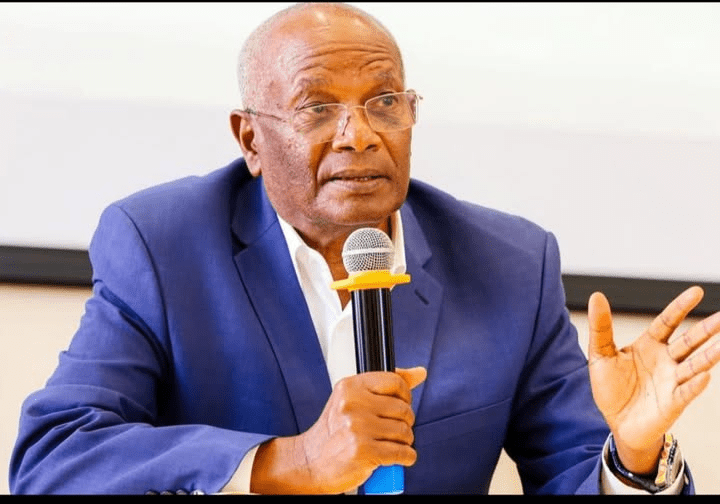
By Daandii Ragabaa
Author’s Note on Attribution: The following feature story is based on a reflection written by Giiftii Waaqoo. Daandii Ragabaa has engaged with that reflection as a commentator, and the present feature draws substantially from the themes, observations, and framing originally articulated by Giiftii Waaqoo. This story is offered as a synthesis and expansion of that shared conversation, with full acknowledgment of the original source.
In an age of fleeting loyalties and fair-weather friends, there is a quality so rare that when we encounter it, we almost do not recognize it. We have become accustomed to leaders who rise on waves of enthusiasm and vanish at the first sign of storm. We have learned to expect that today’s champion may be tomorrow’s deserter.
But then there are those who refuse to follow that script. They do not leave when the road gets rough. They do not silence themselves when the applause fades. They simply stay. They keep moving. They keep believing. And no matter what—no matter the betrayal, no matter the setback, no matter the exhaustion—they show up.
Giiftii Waaqoo, in a reflection that has moved many, names such a man. And Daandii Ragabaa, as commentator, amplifies that recognition. The subject of this reflection is Jaal Dawud Ibsa, chairman of the Oromo Liberation Front.
But this feature story is not merely about one leader. It is about the quality of leadership that his life exemplifies—a quality that the Oromo people, in their long struggle, have desperately needed and too rarely received.
The Simple Thing That Sets Him Apart
Giiftii Waaqoo begins with a striking claim: “What sets him apart is simple.”
Not complex. Not mysterious. Not hidden in secret strategies or charismatic performances. Simple.
He stayed the course. He kept moving. He kept believing. He always showed up—no matter what.
In a political culture where leaders often emerge from nowhere, burn brightly for a season, and then disappear into comfortable exile or cynical silence, Jaal Dawud Ibsa has done something almost unremarkable in its description yet extraordinary in its execution: he has remained.
He has seen it all. The victories that lifted spirits and the setbacks that crushed them. The betrayals—those wounds inflicted not by enemies but by those who once stood beside him. The storms that threatened to uproot everything. And the stillness—those long, quiet periods when the world seemed not to be listening, when the struggle seemed to have stalled, when every day required a fresh decision to continue.
Through every moment—the high and the low, the loud and the silent—he kept going.
Not because it was easy. Giiftii Waaqoo is careful to name this. The easy path would have been to stop, to retreat, to claim exhaustion and rest on past laurels. He kept going because he stayed true to his commitment. Not to popularity. Not to comfort. To commitment.
Beyond Applause
There is a particular temptation that haunts public figures: the hunger for applause. It is a seductive drug, the sound of crowds cheering your name, the sight of hands raised in your honor. Many leaders begin their journeys with genuine conviction, only to find themselves, years later, performing for approval rather than acting from principle.
Jaal Dawud Ibsa, Giiftii Waaqoo observes, never chased applause. He never sought attention for its own sake. Instead, he focused on something larger than himself—a belief that the Oromo nation deserves better.
That belief is not a slogan. It is a fire that has sustained him through decades of struggle. It is the answer he gives himself in the dark hours when no one is watching. It is the compass that has kept him oriented when every external marker of success—recognition, power, safety—pointed in the opposite direction.
The Stamina to Behold
Giiftii Waaqoo uses a striking phrase: “His stamina is something to behold.”
To behold means to see with wonder, to regard with awe. Stamina, in the context of political struggle, is not merely physical endurance. It is the capacity to absorb disappointment after disappointment and still rise the next morning with purpose. It is the ability to forgive betrayals without becoming cynical. It is the discipline of continuing to do what is possible under difficult circumstances, even when the ideal remains out of reach.
Jaal Dawud Ibsa has been fighting for the Oromo people for longer than many of his critics have been alive. He has outlasted regimes that imprisoned him. He has outlasted factions that splintered from him. He has outlasted the patience of those who expected quick victories.
And he is still standing. Still giving. Still mentoring. Still coaching. Still holding the fort.
The Wisdom Carried Through Years
There is a kind of wisdom that cannot be learned from books. It cannot be downloaded from the internet or acquired through workshops. It is earned slowly, painfully, through years of experience—through mistakes made and owned, through losses absorbed and transcended, through the slow accumulation of small, hard-won insights.
Giiftii Waaqoo notes that Jaal Dawud Ibsa carries such wisdom. And he does not hoard it. He gives it away—to the young, to the aspiring, to anyone who will listen. He mentors. He coaches. He shapes the next generation of Oromo leaders not through grand speeches but through patient investment in individual human beings.
This is perhaps the most underappreciated aspect of his leadership. While others seek the spotlight, he has quietly been building the bench—training those who will lead after him, ensuring that the struggle does not die with his generation.
The Gratitude of a People
Giiftii Waaqoo concludes with words that many Oromos, whether they agree with every political decision of Jaal Dawud Ibsa or not, would recognize as true:
“For that, we are grateful.”
Gratitude is a rare virtue in politics, where criticism is constant and appreciation is often withheld until after death. But Giiftii Waaqoo names what deserves to be named: a man has given his life to a cause. He has sacrificed comfort, safety, and the ordinary joys of family life. He has endured imprisonment, exile, and the particular pain of being attacked by those who once called him comrade.
He has not done it perfectly—no human being has. But he has done it persistently. Faithfully. Courageously.
And so the reflection ends with a blessing: “May God continue to bless you and protect you, Jaal Dawud Ibsa, chairman of the Oromo Liberation Front.”
What His Example Teaches Us
For those who read Giiftii Waaqoo’s reflection and Daandii Ragabaa’s commentary, the example of Jaal Dawud Ibsa offers several lessons.
First, that commitment is not a feeling. It is a decision made daily, renewed each morning, often in the absence of any emotional reward.
Second, that leadership is not about being the loudest or the most visible. It is about being the most reliable—the one who shows up, who does not flee when the situation turns difficult, who can be counted on when counting is all that remains.
Third, that the Oromo struggle, like all liberation movements, requires not only warriors but also elders—people who have accumulated wisdom through decades of experience and who are willing to transmit that wisdom to the young.
Fourth, that gratitude, properly expressed, is not weakness. It is recognition. It is the acknowledgment that no one achieves anything alone, and that those who have carried the heaviest burdens deserve to hear, while they can still hear, that their labor has been seen and valued.
The Unfinished Work
Jaal Dawud Ibsa, at this stage of his journey, is still working. He is still holding the fort. He is still doing what is possible under difficult circumstances.
The Oromo nation has not yet achieved its full liberation. The struggle continues. There will be more setbacks, more betrayals, more storms.
But there will also be more moments of victory, more acts of solidarity, more mornings when the sun rises on a people still determined to be free.
And through it all, if Giiftii Waaqoo’s reflection holds true, Jaal Dawud Ibsa will be there. Not because he needs applause. Not because the path is easy. But because he made a commitment—and he stayed the course.
Conclusion: The Courage to Stay
In a world that celebrates the new, the young, the freshly emerged, there is a special kind of courage in staying. Staying when the spotlight has moved elsewhere. Staying when younger, louder voices have captured the public imagination. Staying when your body is tired and your heart has known too many betrayals.
Jaal Dawud Ibsa has that courage. He has stayed. He has kept moving. He has kept believing. He has shown up, no matter what.
For that, the Oromo people owe him something that cannot be repaid in a single feature story or a single moment of recognition. They owe him the continuation of the work—the completion of the struggle to which he has given his life.
May God bless him. May God protect him. And may the Oromo nation, one day soon, arrive at the freedom for which he has so long and so faithfully labored.
“He never chased applause. He focused on something bigger than himself. A belief that the Oromo nation deserves better.”
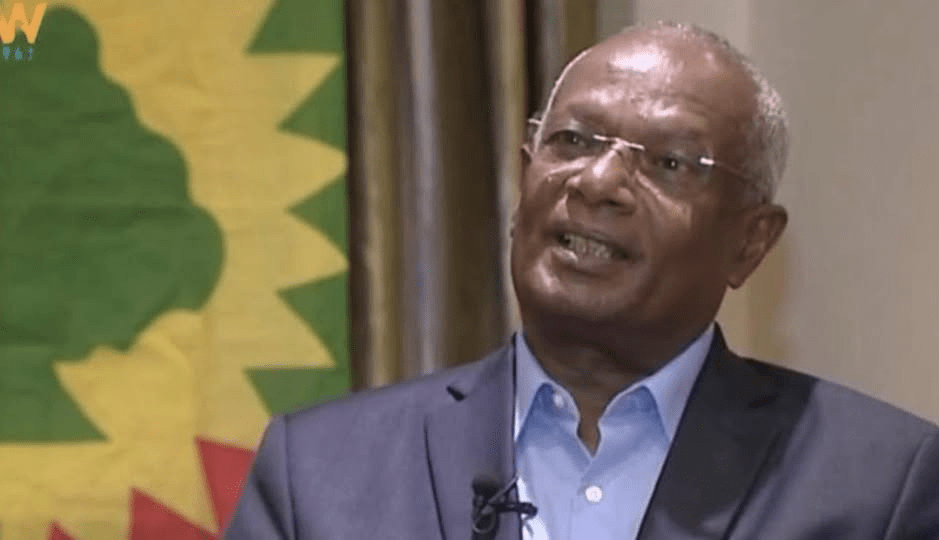

Surrounded by Empowerment: The Circle of Success
“Yeroo namoota si humneessan, jajjabeessanii fi deeggaraniin marfamtu, akka milkooftu shakkiin hin jiru.”
“When you are surrounded by people who empower you, encourage you, and support you, there is no doubt that you will succeed.”
—
By Dhabessa Wakjira*
The Circle of Success: Why No One Rises Alone
There is a quiet truth that survivors know, that athletes whisper before championships, that artists carry into their studios, and that revolutionaries feel in the dark hours before dawn: success is never a solitary act.
The Oromo people, with their deep wisdom of community, have long understood this. Their proverb rings like a bell across generations: “Yeroo namoota si humneessan, jajjabeessanii fi deeggaraniin marfamtu, akka milkooftu shakkiin hin jiru.”
When you are surrounded by people who empower you, encourage you, and support you, your success is not a matter of hope. It is a matter of certainty.
This feature story explores the anatomy of that circle—what it means to be empowered, what it looks like to be encouraged, and why support is not a luxury but a necessity for any human being daring to achieve something meaningful.
The Three Pillars of the Circle
The proverb names three distinct gifts that others bestow upon us. They are not the same. And each is indispensable.
Humneessan: Those Who Empower You
To empower is not merely to praise. It is to provide the tools, the resources, the access, and the authority that a person needs to act. Empowerment says, “I believe in you—and here is what you need to prove me right.”
Think of the mother who sells her last chicken to buy a notebook for her daughter. Think of the teacher who stays after school to explain a difficult lesson for the third time. Think of the community that pools its meager savings to send one promising student to university. These are acts of empowerment. They are not abstract. They are hands reaching down to lift another up.
Jajjabeessan: Those Who Encourage You
Encouragement is the oxygen of the human spirit. It costs nothing materially, yet it is often the rarest gift of all. The encourager says, “You are not alone. You are not wrong to try. You are not foolish to dream.”
In the long journey of any struggle—whether against political oppression, personal trauma, or professional failure—there are moments when the only thing keeping a person moving forward is a voice saying, “You can do this. I have seen you do hard things before. You will see the other side.”
The Oromo struggle, like all liberation movements, has been sustained not only by weapons and strategies but by songs, by poems, by whispered words of encouragement passed from cell to cell, from village to village, from mother to child.
Deeggaraniin: Those Who Support You
Support is the scaffolding. It is not flashy. It does not seek recognition. But without it, the entire structure collapses. Supporters show up. They cook meals when you are too exhausted to cook. They watch your children when you must attend a meeting. They contribute money when your resources run dry. They defend your name when you are not in the room to defend yourself.
Support is the quiet architecture of every successful life. And it is almost always invisible to the outside world.
The Myth of the Self-Made Person
Western culture, in particular, has elevated the myth of the “self-made” individual—the lone genius, the solitary warrior, the entrepreneur who pulled himself up by his own bootstraps. It is a seductive story. It is also a lie.
No one is self-made. Every successful person stands on a foundation laid by others. Every champion was once a beginner who was coached. Every leader was once a follower who was mentored. Every revolutionary was once a child who was fed, protected, and taught to dream.
The Oromo proverb cuts through this myth with the precision of a blade. It does not say “if you are strong, you will succeed.” It does not say “if you work hard enough, you will succeed.” It says: when you are *surrounded*—by empowerers, encouragers, and supporters—success is inevitable.
The focus is not on the individual. The focus is on the circle.
What Happens in the Absence of the Circle
To understand the power of the circle, one must also understand the devastation of its absence.
What happens to a child who is never empowered? They grow into an adult who does not believe they have the right to act, to speak, to claim space.
What happens to a person who is never encouraged? They become paralyzed by self-doubt, convinced that their efforts are worthless, that their dreams are ridiculous, that failure is the only possible outcome.
What happens to a community that receives no support? It fragments. It turns inward. It cannibalizes its own hope.
The absence of the circle is not merely disappointment. It is a form of slow death. It is the death of potential, the death of possibility, the death of the future.
This is why oppression is so effective. Oppressive systems do not merely take away resources. They isolate. They silence. They ensure that the empowered, the encouraged, and the supportive are removed from your side. They leave you alone—because a person alone is a person easily defeated.
The Circle in the Oromo Struggle
The history of the Oromo people is a history of circles. Under successive regimes that sought to divide, conquer, and erase, the Oromo have survived precisely because they have refused to let each other stand alone.
Think of the Gadaa system—an indigenous democracy built not on individual ambition but on collective responsibility. The Gadaa circle rotates power, shares knowledge, and ensures that no leader governs without the counsel of elders, the wisdom of the Qaalluu, and the consent of the assembly.
Think of the Siinqee institution—women gathering under the sacred staff to demand justice, to halt conflicts, to protect the vulnerable. That is a circle of empowerment, encouragement, and support.
Think of the afooshaa (burial societies) and buusaa gonofaa (savings rotations)—grassroots institutions where ordinary people pool their meager resources to ensure that no family faces death or poverty alone.
These are not charities. These are circles of survival. And they have kept the Oromo people alive through conquest, through famine, through imprisonment, and through exile.
The Modern Circle: Rebuilding What Was Broken
In the contemporary world, the forces that break circles have only grown stronger. Urbanization scatters families. Economic pressure forces migration. Social media creates the illusion of connection while eroding the substance of community.
Many Oromo today find themselves far from the villages of their ancestors, far from the elders who carry the oral histories, far from the physical presence of those who speak their language and share their struggles. The circle has been stretched thin.
But the proverb does not despair. It insists on a truth that cannot be broken: when the circle is present, success is certain. The task, then, is to rebuild the circle. To find new forms of empowerment, new voices of encouragement, new structures of support.
This is happening. In diaspora communities across the globe, Oromos are gathering in living rooms, in community centres, in virtual meeting spaces. They are teaching their children the language that was once forbidden. They are creating media, art, and scholarship that centre Oromo experience. They are sending money home, advocating for justice abroad, and refusing to let distance destroy the bonds of mutual care.
What the Circle Asks of You
If the proverb describes the conditions for success, it also implies a responsibility. To be surrounded by empowering, encouraging, supportive people, you must also be willing to be that person for others.
You cannot demand a circle that you are unwilling to join.
The circle asks: Whom have you empowered today? To whom have you spoken words of encouragement? Whose burdens have you lightened through your quiet, unglamorous support?
Success is not a trophy you receive. It is a current that flows through a network of relationships. You are either part of that current—receiving and giving—or you are standing outside, wondering why the water never reaches you.
Stories from the Circle
Consider the young Oromo woman who wanted to become a doctor. Her family had no money. Her village had no clinic. But her mother empowered her by selling the family’s only cow. Her teacher encouraged her by staying late to tutor her in science. Her community supported her by raising funds for her university application. Today, she is a physician. She did not succeed alone. She succeeded because a circle held her.
Consider the political prisoner who spent seven years in a dark cell. He was tortured. He was isolated. But he later said that the reason he survived was the letters—smuggled, infrequent, but relentless—from his wife. She empowered him by reminding him of his worth. She encouraged him by describing the future they would build together. She supported him by keeping the children alive on the outside. His survival was not his alone. It was hers, too.
Consider the artist whose work was ridiculed by critics. She nearly gave up. But a friend—just one friend—said, “This is important. Do not stop.” That friend spent months helping her find galleries, connecting her with other artists, sitting with her through rejection after rejection. Today, that artist’s work hangs in museums. The friend’s name appears nowhere. But the friend was the circle.
The Certainty of Success
The proverb ends with a bold claim: *shakkiin hin jiru* — there is no doubt.
This is not the language of wishful thinking. It is the language of empirical observation. The proverb is not saying “if you have a circle, you might succeed.” It is saying “if you have a circle, you will succeed.”
Why such certainty? Because human beings are not islands. We are not designed to achieve alone. When the conditions of empowerment, encouragement, and support are present, failure becomes nearly impossible. Not because the path is easy—it never is—but because the circle absorbs the blows that would otherwise destroy the individual.
When you stumble, the circle catches you. When you despair, the circle lifts you. When you are attacked, the circle defends you. With such a structure around you, how could you not eventually reach your goal?
Conclusion: Building the Circle, Securing the Future
The Oromo people are engaged in a long struggle for recognition, justice, and self-determination. There will be setbacks. There will be betrayals. There will be moments when the darkness seems absolute.
But the proverb offers a strategy and a promise.
The strategy: surround yourself—and surround each other—with empowerment, encouragement, and support. Build the institutions that sustain the circle. Be the person who empowers, encourages, and supports, even when you are tired, even when you have received nothing in return.
The promise: when that circle is in place, success is not a question of *if*. It is only a question of *when*.
*Yeroo namoota si humneessan, jajjabeessanii fi deeggaraniin marfamtu, akka milkooftu shakkiin hin jiru.*
When you are surrounded by people who empower you, encourage you, and support you, there is no doubt that you will succeed.
Let the circle hold. And let the success come.
—
No one rises alone. But when we rise together, no power on earth can keep us down.
*Dhabessa Wakjira is a journalist, social worker, community worker, and interpreter who writes commentary, features, analysis, and reflections on issues that build and empower the Oromo people and their affairs. Dhabessa Wakjira can be reached at dabessa@socialworker.net

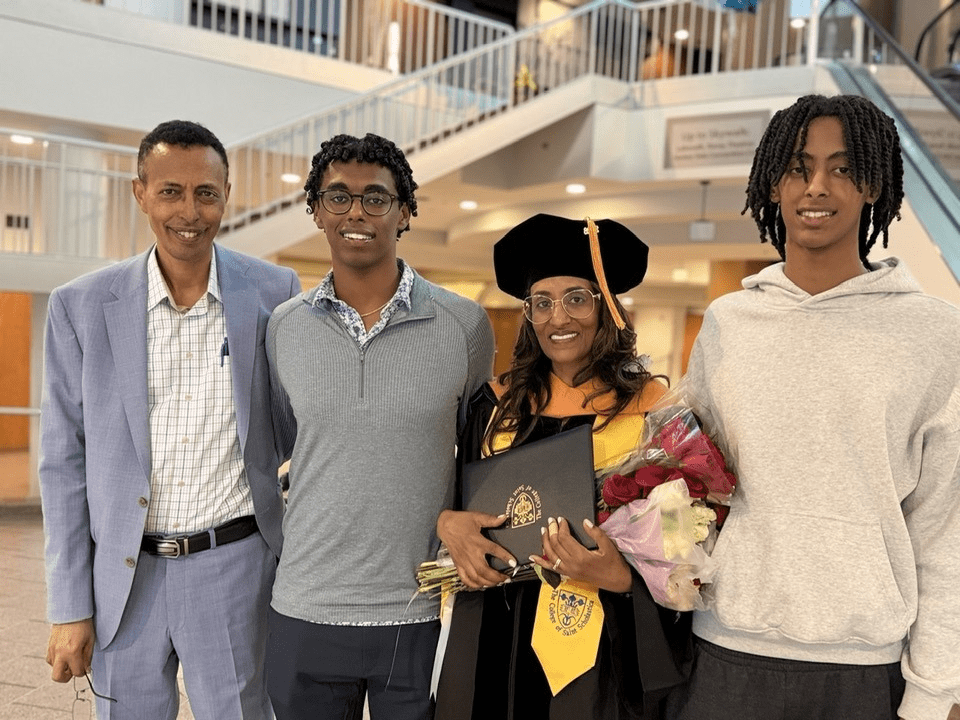
Standing Alone, Standing Proud: The Quiet Defiance of Najat Sakaye Hamza
By Dhabessa Wakjira* (based on a reflection by Najat Sakaye Hamza)
“My life is about standing for my dreams even if it means standing alone sometimes.”
—
There is a photograph that Najat Sakaye Hamza keeps on her phone, not as a screensaver but as a secret talisman. In it, she is young—perhaps nineteen—sitting on a worn suitcase in a bus station somewhere between Oromia and the unknown. Her face is tired. Her eyes are not. She is leaving something behind, though she is not yet sure what she is walking toward.
Years later, she would find the words to describe that moment. “My life,” she would write, “is about standing for my dreams even if it means standing alone sometimes.”
Najat Sakaye Hamza is not a politician. She is not a general or a public intellectual in the traditional sense. She is, by her own definition, a woman who decided that the cost of kneeling was higher than the risk of standing. And in that decision, she has become something quietly revolutionary: an example.
This is her story—not of power, but of persistence. Not of armies, but of a single voice that refused to be absorbed into the noise.
—
The Education of a Dreamer
Born into an Oromo family that valued resilience over complaint, Najat learned early that dreams require rent. They do not live in the mind for free. They demand time, sacrifice, and the ability to endure the puzzled looks of those who cannot see what you see.
She was a curious child in a world that often punished curiosity in girls. She asked questions that made elders uncomfortable. She wanted to study when marriage was the expected path. She wanted to speak when silence was the safer option. And so, early on, she learned to stand alone.
“Representing who I am everywhere I am and in any situation,” she would later reflect, “is my quiet protest and my pride.”
That quiet protest took many forms. In classrooms where her language was dismissed, she learned two more. In workplaces where her identity was questioned, she performed her duties with an excellence that left no room for debate. In social settings where Oromo women were expected to be seen and not heard, she spoke—not loudly, but clearly.
The Loneliness of the Standing Woman
There were years when standing alone felt less like courage and more like punishment. Friends drifted away, unable to understand why she could not simply “fit in.” Relatives suggested she was too proud, too political, too difficult. There were nights, she has admitted privately, when she wondered if they were right.
But she kept standing. Not because it was easy, but because the alternative—sitting down, blending in, disappearing—was a kind of death she refused to accept.
She found sustenance in her faith. Alhamdullilah, she would whisper. Thank God for this moment, for this day. Gratitude became her anchor. Not gratitude for the struggle itself—that would be romantic nonsense—but gratitude for the fact that she was still upright, still breathing, still capable of taking the next step.
And then, the steps began to lead somewhere.
A Family That Stands Together
The photograph on her phone now is different. In the newer image, Najat is not alone. She is holding a baby—her daughter, Seran—and beside her stands her husband, Sabsib. There is a softness in this picture that the bus-station photo lacks. The tired eyes have been replaced by something warmer: not rest, but purpose.
“I get to share this moment with my baby, Seran, and my amazing husband Sabsib,” she wrote. The word amazing is not casual. It is the recognition that finding a partner who does not ask you to shrink is a miracle as profound as any in scripture.
Sabsib, by all accounts, is a man who never asked Najat to be smaller. He met her when she was already standing, and he chose to stand beside her rather than in front of her. Together, they have built a home where Seran is being raised to know that her mother’s quiet protests are not embarrassments but inheritances.
The Work Behind the Dream
Najat is careful to demystify her own journey. She has no patience for the myth of the self-made dreamer who simply wished upon a star.
“Dream realization belongs to those who work to achieve it,” she insists.
The work was unglamorous. Early mornings. Late nights. Jobs that had nothing to do with her passions but paid for the rent while she pursued her passions on the side. Rejection letters. Doors that closed. People who said “no” so many times that the word lost its sting.
But she kept working. And eventually, the work began to answer back.
She found platforms to speak about the Oromo experience, about the specific weight that Oromo women carry, about the need for community and also for the courage to stand outside the community when the community is wrong. She wrote. She organized. She showed up to meetings where she was the only Oromo face in the room—and spoke anyway.
Quiet Protest as a Way of Life
There is a phrase in the Oromo language: of-beekuu—to know oneself. Najat Sakaye Hamza has made of-beekuu her compass. To represent who she is, everywhere she is, regardless of the situation, requires a deep and unshakable self-knowledge. It requires knowing what you believe before the test arrives.
That is her quiet protest. Not shouting from a rooftop (though she has done that too, when necessary). But living, daily, as a visible, proud, unapologetic Oromo woman who happens to also be a mother, a wife, a professional, and a believer.
“Pride,” she says, “is not the opposite of humility. Pride is knowing that your existence has value, and refusing to act as if it doesn’t.”
The Moment She Is Living Now
On the day she shared her reflection, Najat was not marking a major public victory. There was no award ceremony, no signed legislation, no standing ovation. She was simply pausing—with her baby in her arms and her husband nearby—to say Alhamdullilah. Thank God for this moment. Thank God for this day.
It is a radical act, in a world that demands constant striving, to stop and give thanks. To acknowledge that the dream is not only in the future but also in the present—in the weight of a child, the steadiness of a partner, the simple fact of still being here, still standing.
The Legacy of the Standing Woman
Najat Sakaye Hamza is not famous. You will not find her name in the headlines of major newspapers, nor her face on the covers of magazines. She is, in the best sense, ordinary—an ordinary woman who decided that ordinary was not the same as invisible.
And that is precisely why her story matters. Because most of us will never be revolutionaries with monuments. Most of us will never speak before the United Nations. Most of us will struggle, in quiet and unglamorous ways, to hold onto our dreams in the face of pressure to let them go.
Najat’s life is a letter to those people. It says: Stand. Even if you stand alone. Even if no one applauds. Even if the only witness to your standing is God and the child sleeping in the next room.
And then, when the moment comes, stop standing long enough to say thank you.
Epilogue: The Unfinished Sentence
At the end of her reflection, Najat does not declare victory. She does not announce the completion of her dreams. She simply shares the moment—a moment that contains her daughter, her husband, her faith, and her own still-standing self.
The sentence is not finished, because her life is not finished. There will be more lonely days. More quiet protests. More mornings when the dream feels distant and the work feels endless.
But there will also be more Alhamdullilahs. More moments of sharing. More proof that standing for your dreams, even alone, eventually brings others to stand with you.
Najat Sakaye Hamza is still standing. Her daughter, Seran, is learning to stand. And somewhere, in a bus station or a boardroom or a quiet living room, someone who reads her words will decide to stand too.
That is not a small thing. That is everything.
—
Alhamdullilah for this moment. For this day. For the women who stand alone and discover they were never truly alone.
*Dhabessa Wakjira is a journalist, social worker, community worker, and interpreter who writes commentary, features, analysis, and reflections on issues that build and empower the Oromo people and their affairs. Dhabessa Wakjira can be reached at dabessa@socialworker.net

A Great Tree Has Fallen: Feature Condolence for Jaal Waldee Hurrisoo (1944-2026), Founding Father of the Oromo Liberation Front
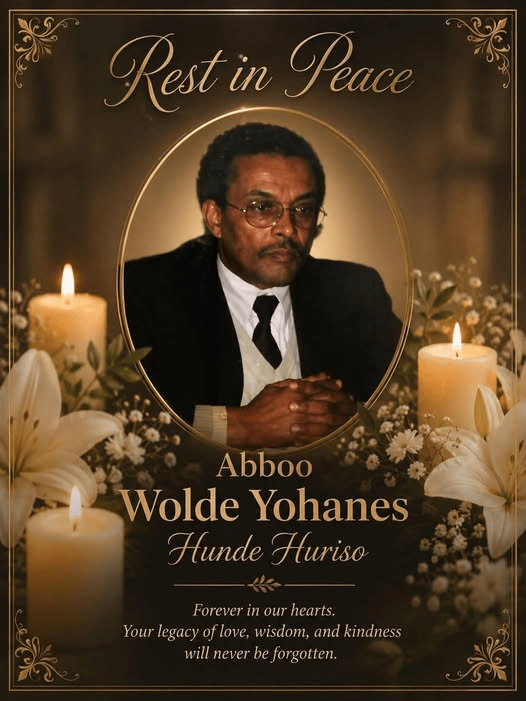
“Du’aan addunyaa irraa godaanuu Jaal Waldee… gadda guddaa itti dhagahame ibsata.” — Adda Bilisummaa Oromoo (ABO)
—
FINFINNEE– The Oromo Liberation Front has announced, with profound grief and a sense of irreplaceable loss, the passing of Jaal Waldee Hundee Hurrisoo (also known as Waldayuhaannis) – a founding pillar of the Oromo struggle, a prisoner of conscience, a teacher, a journalist, and a lifelong servant of his people. He was 82 years old.
The news, delivered on 16th Caamsaa, 2026 (May 16, 2026), has sent waves of sorrow across Oromia and the wider Oromo diaspora. For those who knew him – and for countless more who knew only his name and his sacrifice – the death of Jaal Waldee is not merely the loss of an elder. It is the falling of a great tree under whose shade generations of Oromo freedom fighters found rest and resolve.
From the Highlands of Arsii: A Humble Beginning
Jaal Waldee was born in 1944 (Ethiopian calendar 1937) in Ona Boqqojji, East Arsi, in the highlands of Oromiya. His father, Obbo Hundee Hurrisoo, and his mother, Aadde Ayeetuu Gammadaa, were simple farmers. Like any rural child of his time, young Waldee grew up herding cattle and working the land alongside his family. There was no prophecy of greatness, no early sign of the revolutionary he would become – only the quiet dignity of a people who knew their worth long before the world acknowledged it.
But even among those humble beginnings, something burned. A hunger not just for food, but for knowledge.
The Path of Education, The Call of Conscience
Jaal Waldee completed his primary education in Boqqojji and other local schools, then enrolled at the Teacher Training Institute (TTI) in Dabra Birihan, graduating in 1966. For five years, he served as a teacher in Bale Province – a region that would later become a crucible of the Oromo liberation struggle. He taught children to read and write, but the classroom could not contain him. The injustices he witnessed – land alienation, cultural suppression, the daily humiliations of the Oromo people – planted seeds that would soon sprout into activism.
In 1971, he entered Haile Selassie I University (now Finfinnee University). It was there that he found his political voice. Joining an underground student movement, he began organizing Oromo students, discussing not just grades but grievances, not just textbooks but tyranny. The university became his second battlefield – quieter than the forests, but no less dangerous.
The 1975 Campaign: Bullets and Bread
When the “Idigat Bahibrati” (Development through Cooperation) campaign was launched in 1975, Jaal Waldee volunteered to go to Wallo Province. The region was ravaged by famine, and the official response was a cruel mixture of neglect and propaganda. He did not go as a soldier. He went as a human being – distributing food, organizing relief, and bearing witness to the starvation that the state refused to see. He saw children die in his arms. He saw mothers sell their last possessions for a handful of grain. And he swore that such suffering would never be forgotten.
The Birth of the OLF: A Brotherhood of Struggle
Returning to university after the campaign, Jaal Waldee deepened his commitment to the Oromo cause. Alongside his comrade and closest friend, Magarsaa Bari, he became one of the founding members of the Oromo Liberation Front (OLF) – Adda Bilisummaa Oromoo. Together, they dreamed of an independent Oromia, a nation where Oromo children would never again be ashamed of their language, their name, or their land.
After graduation, Jaal Waldee worked as a journalist for the newspaper Bariisaa (The Dawn), eventually rising to the position of assistant editor. He understood that the pen could be as powerful as the gun. His articles gave voice to the voiceless, exposed abuses, and called Oromos to unity. But the Derg regime – the brutal military junta that had seized power – had no tolerance for Oromo journalism.
Twelve Years in Hell: The Prisoner of Conscience
In 1980 (Amajjii), Jaal Waldee was appointed to a position in the government as a continuing official. But two days later, without trial, without charge, without even the pretense of justice, he was arrested and thrown into prison.
For twelve years, he remained behind bars. Twelve years of torture. Twelve years of solitary confinement. Twelve years of watching comrades die from untreated wounds and deliberate neglect. The Derg’s interrogators wanted confessions, names, betrayals. They received only silence and the occasional smile from a man who had already decided that his body could be broken but his soul would not negotiate.
When he was finally released in May 1991 (Caamsaa), as the Derg collapsed, Jaal Waldee emerged a different man. The torture had left permanent physical damage. For the rest of his life, he would suffer from the consequences of those years – chronic pain, weakness, and the ghosts of a dozen deaths he had witnessed. But he never spoke of revenge. Only of justice.
A Brief Season in Parliament, A Lifetime of Service
After the fall of the Derg, the Transitional Government of Ethiopia was established. Jaal Waldee served as a member of parliament representing the OLF for one year. It was a frustrating time – he saw the compromises of power, the betrayals of principle, the slow strangulation of the very ideals for which he had been imprisoned. When the OLF withdrew from the transitional government, he withdrew with it.
But he never withdrew from his people. He traveled extensively through Bale and Arsi, educating communities about their rights, organizing political awareness, and reminding Oromos that liberation was not a gift to be received but a struggle to be waged. Later, he worked within the OLF’s external affairs department, helping to raise funds, build solidarity, and keep the flame alive during years of exile and repression.
The Juba Award: A People’s Gratitude
The Oromo community recognized his sacrifices. He was honored with the Juba Award, a tribute to those who have given everything to the Oromo struggle. For a man who had received nothing from the state but chains and suffering, this recognition from his own people meant more than any title.
He also left behind a written legacy – most notably a work titled “The Ten-Minute Mission,” along with many other unpublished manuscripts. He was a historian of his own times, determined that the truth of the Oromo struggle would survive even if its tellers did not.
The Final Goodbye
In recent months, Jaal Waldee’s health – already fragile from decades-old torture wounds – declined sharply. On the appointed day, 16th May 2026, he finally laid down the burden that he had carried since 1944. He left this world not as a defeated man, but as a soldier who had fought to his last breath and now, at 82, had earned his rest.
The OLF’s grief statement captures the sentiment of millions: “Addi Bilisummaa Oromoo du’aan addunyaa kanarraa godaanuu jaala keenya Jaal Waldee… dhagahutti gadda guddaa itti dhagahame ibsata.” (The Oromo Liberation Front expresses its profound sorrow upon hearing of the passing of our beloved Jaal Waldee…)
A Legacy That Will Not Fade
What do you say about a man who gave twelve years of his youth to a dungeon, who emerged with his principles intact, and who then spent the remaining decades of his life serving a people who could offer him nothing in return but love?
You say: Qabsaawaan ni kufa, qabsoon itti fufa. (A fighter may fall, but the struggle continues.)
Jaal Waldee is gone. His voice is silent. His hands, which once held chalk in a Bale classroom and a pen at Bariisaa and a smuggled manuscript in a prison cell, have finally stilled. But the Oromo nation he helped to awaken will not go back to sleep.
To his family, his friends, his comrade Magarsaa Bari (who now walks alone), and to the millions who never met him but knew that his survival was their survival – we offer the only comfort that truth allows: He lived for you. He suffered for you. And because of him, you stand taller than you would have.
Farewell, Jaal Waldee Hundee Hurrisoo. The dawn you wrote for has not yet fully broken. But your ink has made it certain.
Injifannoo ummata bal’aaf.
Victory to the broad masses.
— Adda Bilisummaa Oromoo, 16 May 2026
Rest in power, Jaal Waldee. The struggle continues.

The Unbowed: Seenaa G-D Jimjimo and the Art of Refusing to Break

“Jabduu-dhiibbaan keessaa fi alaa kamiyyuu gadhinqabne.”
— “She did not bow to any pressure, from inside or outside.”
—
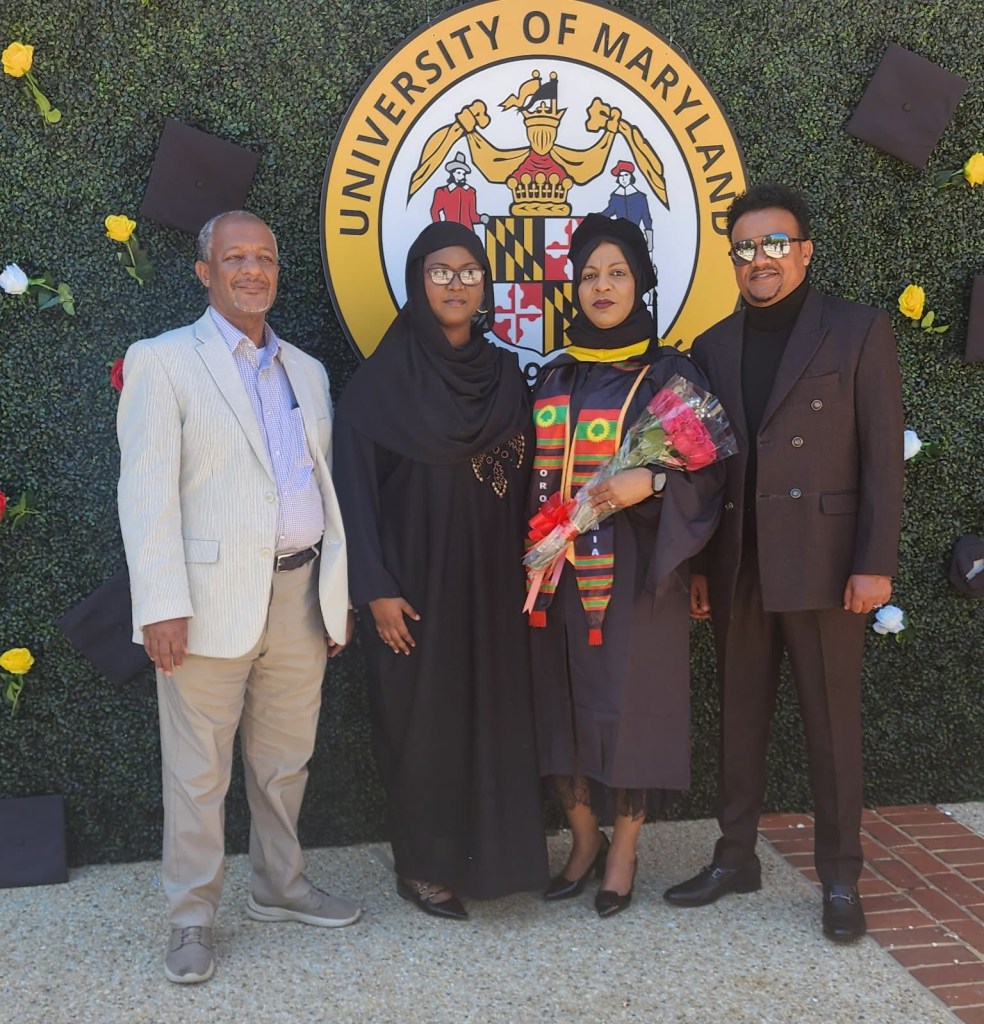
WASHINGTON, D.C. – In the polished corridors of the U.S. State Department, she speaks with the measured precision of a public health expert. In the dusty highlands of rural Oromia, she kneels beside girls who have never seen a classroom, handing them pencils and hope. And in the pages of her own writing, she dissects the lonely space between two worlds—the Oromo homeland she loves and the American life she built.
Her name is Seenaa G-D Jimjimo. For those who know only her acronym—OLLAA, the Oromo Legacy Leadership & Advocacy Association—she is the Executive Director who has briefed the White House, lobbied the U.K. Parliament, and helped steer House Resolution 128 into law. For those who know her heart, she is something rarer: a leader who has never forgotten that the loudest pressure comes not from external enemies, but from the whispers inside one’s own community to be silent, to be small, to bow.
And she has never bowed.
—
The Roots of Resistance
Born and raised in Oromia, Seenaa G-D Jimjimo grew up watching the slow, systematic strangulation of her people. The Oromo—the largest nation in the country—had been subjected to land confiscation, linguistic suppression, and political marginalization for generations. But it was the violence against Oromo women that carved the deepest wound into her young consciousness.
She saw neighbors dragged from their homes by Ethiopian security forces. She heard stories of girls, barely teenagers, who were arrested, abused, and never seen again. And she made a quiet promise to herself: I will learn. I will speak. And I will never look away.
That promise carried her across an ocean.
In the United States, she pursued higher education with a ferocity that astonished her professors. She earned an undergraduate degree in political science—the tool for understanding power. Then graduate degrees in public health and public administration—the tools for healing and organizing. At the University of Illinois, her peers elected her Senator at Large for the Graduate Student Association and treasurer for the African Student Organization. She was awarded the Dr. Martin Luther King Jr. Scholarship and the Whitney M. Young Fellowship—honors that recognized not just her intellect, but her commitment to justice.
But she was not content to remain in classrooms. The lessons she learned, she brought back to her people.
Forging a Leadership Legacy
Today, as Executive Director of the Oromo Legacy Leadership & Advocacy Association (OLLAA), Seenaa G-D Jimjimo oversees a global apparatus of advocacy. The organization does not simply issue press releases; it builds coalitions. It does not merely condemn human rights abuses; it documents them, presents them to international bodies, and demands accountability.
Under her leadership, OLLAA has engaged directly with the White House, the U.S. State Department, and the United Kingdom’s All-Party Parliamentary Group on Africa. She has sat across tables from diplomats who once could not locate Oromia on a map—and left those tables with commitments to investigate atrocities, support democratic reforms, and amplify Oromo voices.
One of her most significant achievements came through House Resolution 128. Introduced in 2017 and passed in 2018, the resolution urged respect for human rights and encouraged democratic changes in Ethiopia. It was not a sweeping victory—no single piece of legislation could undo a century of oppression—but it was a crack in the wall. And Seenaa G-D Jimjimo was among the key figures who pried that crack open, lobbying members of Congress, mobilizing the diaspora, and refusing to let the issue die.
“People think advocacy is glamorous,” she once told a young organizer. “It is not. Advocacy is showing up to the same office forty-seven times until someone finally agrees to listen. Advocacy is being told ‘no’ so often that the word loses its meaning. And then showing up again.”
The Danboobiduu Foundation: Building What Advocacy Cannot
But Seenaa G-D Jimjimo knows that laws and resolutions are not enough. They do not put food on a child’s table. They do not keep a rural girl in school when her family needs her labor.
That understanding gave birth to the Danboobiduu Foundation in 2014. Named after a cherished Oromo concept of nurturing and empowerment, the foundation focuses on one deceptively simple goal: keeping girls in school.
In rural parts of Oromia, young girls are often pulled from classrooms to work—in the fields, in domestic labor, sometimes in conditions that amount to exploitation. Early marriage remains a threat. Poverty makes education seem like a luxury. Danboobiduu intervenes with scholarships, mentorship, and community engagement, convincing families that a girl with a diploma is worth more than a girl with a dowry.
The foundation does not make headlines. It does not appear in congressional testimony. But for the hundreds of girls who have stayed in school because of its work, it is the difference between a future and a sentence.
The Writer as Truth-Teller
Beyond the boardrooms and the village paths, Seenaa G-D Jimjimo is also a writer. Her work is not the polished propaganda of a movement; it is the raw, searching reflection of a woman trying to diagnose her people’s wounds without romanticizing them.
Her book, The In-Between, addresses the cultural and social fractures that her community faces—the clash between tradition and modernity, the silence around internal problems, the difficulty of building a future when the past is still on fire. She writes about the Oromo Gadaa system, the ancient democratic governance model that predates many Western constitutions, and asks how its principles might be revived for a new generation.
She also writes about the pressures from inside—the fear of criticizing one’s own community, the reluctance to hold fellow Oromos accountable, the temptation to present a flawless front to the world. “We must tell the truth about our struggles,” she has written, “including the ones we inflict on ourselves. Only then can we be truly free.”
The Unfinished Work
Today, Seenaa G-D Jimjimo continues to balance multiple roles: Executive Director, public health specialist, keynote speaker, mentor, and commentator on African intellectual traditions. She is as comfortable discussing epidemiological trends as she is debating Oromo nationalism. She moves between Finfinnee and Washington, between the Gadaa council and the House Foreign Affairs Committee, with a fluency that seems almost effortless—until one remembers the weight she carries.
That weight is the memory of every Oromo woman who was silenced. Every political prisoner who did not emerge from the dungeon. Every child who never learned to read because her school was burned and her language banned.
And yet, she does not bow. Not to the pressure of despair. Not to the cynicism that says change is impossible. Not to the internal critics who accuse her of being too radical or not radical enough. Not to the external forces—states, lobbies, powerful men—who would prefer that she simply disappear.
“I did not bow to any pressure, from inside or outside.” Those words, carved into the identity of Seenaa G-D Jimjimo, are not a boast. They are a discipline. A daily decision to stand, even when standing requires more than one person should have to give.
The Legacy She Is Building
She will tell you, if you ask, that she is not a hero. She is a daughter of Oromia who happened to learn English, earn degrees, and find herself in rooms where decisions are made. She will tell you that the real heroes are the girls in the Danboobiduu program who walk two hours to school each morning, the mothers who hide Oromo books under their beds, the prisoners who refuse to name their comrades under torture.
But those girls and mothers and prisoners would say something different. They would say: She gave us a voice when we had none. She took our whispers and shouted them into the halls of power. She did not bow, and because she did not bow, we can stand.
Seenaa G-D Jimjimo’s story is not finished. The Oromo struggle is not finished. But every morning, in an office in the United States or a village in Oromia, she wakes up and chooses to continue. The pressure will come again—from inside, from outside, from the thousand small deaths of hope deferred. And she will refuse, again, to bow.
That is not a story of suffering. That is a story of unbending grace.
And to the woman who taught them to stand—honor upon honor.






