Revitalizing the Oromo System: A Modern Approach
By Daandii Ragabaa
Finfinne
FINFINNE – There is a quiet conversation echoing across the highlands and lowlands of Oromia, spoken not in boardrooms but around hearth fires, under sycamore trees, and in the patient queues outside polling stations. It is a conversation about something ancient being made new again: Sirna Oromoo—the Oromo system.
For generations, the Gadaa system stood as one of Africa’s most sophisticated indigenous democracies, a cyclical governance framework that rotated power every eight years, long before the word “election” entered the colonial lexicon. But time, war, and the relentless press of modernity have frayed its fabric. Now, a quiet but determined movement is underway to do the unthinkable: to not merely preserve the Oromo system, but to revitalize it, rebuild it, strengthen it, and expand it for a new century.
“Revisiting our system is not about turning back the clock,” said a cultural elder who spoke on condition of anonymity, his voice carrying the weight of decades. “It is about remembering that we had answers before we were told we had none.”
Deebisanii Haaromsuu: Revitalizing the Roots
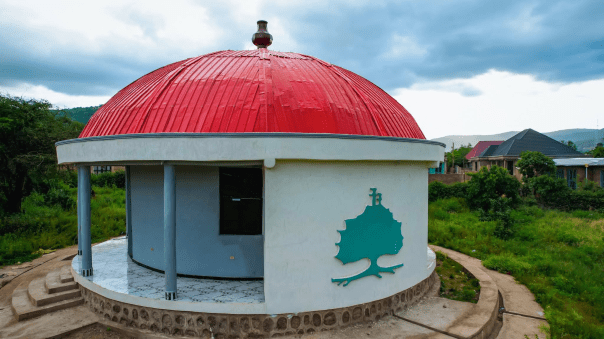
The first pillar of this vision is deebisanii haaromsuu—to revitalize. Across Oromia, from the bustling streets of Finfinne to the pastoral lands of Borana, young and old are gathering in Odaa trees, the sacred meeting places where consensus was once forged. But these are not nostalgia tours. They are resuscitation sessions.
Scholars at Odaa Bultum University have begun digitizing oral Gadaa laws that were never written down, afraid they would be lost to memory. Youth groups, once skeptical of what they called “grandfather’s politics,” are now undergoing training in Gadaa principles of conflict resolution. The language of Safuu—the moral-legal code that governs Oromo society—is being taught again in community schools.
“We are not archeologists,” said Hunde Fekadu, a 28-year-old community organizer in Jimma. “We are gardeners. We are pulling the weeds of neglect away from something that is still alive.”
Ijaaruu: Building the Scaffolding
Revitalization alone is hollow without structure. The second pillar—ijaaruu (building)—is perhaps the most ambitious. For decades, the Oromo system existed informally, a shadow government whispered about but rarely empowered. Now, community-led initiatives are constructing tangible institutions.
In Adama, a newly established Gadaa Center now mediates land disputes that formal courts have spent years failing to resolve. In Bale, a cooperative of farmers has adapted the Waaqeefannaa calendar—an indigenous timekeeping system based on lunar cycles—to coordinate planting seasons with climate resilience strategies.
“We are building bridges,” said Aynalem Tsegaye, a legal researcher focusing on customary law. “Not between the old and the new, but between the old and the now. The Sirna Oromoo never collapsed entirely. It bent. We are straightening it with new timber.”
Jabeessuu: Strengthening the Weave
A system rebuilt must also be fortified. Jabeessuu—strengthening—speaks to the internal work required to make the Oromo system durable against the forces that weakened it before.
This means confronting uncomfortable truths. The Gadaa system, for all its democratic brilliance, had gaps: the historical exclusion of certain clans, the uneven role of women in leadership, and the rigidity that sometimes accompanied tradition. Strengthening today means opening the Gadaa assembly to voices once left at the margins.
“We are not romantics,” said Fatuma Jara, a women’s rights advocate in Ambo. “Our ancestors built something remarkable, but they built it in their time. If we want this system to survive our time, women must sit at the Caffee [assembly] not as observers but as decision-makers. That is not breaking tradition. That is strengthening it.”
Pilot programs in three Gadaa “generation sets” have already integrated equal representation principles, with elders and youth councils sitting side by side.
Gabbisuu: Expanding the Vision
Finally, gabbisuu—to expand. This is the most forward-looking pillar, the one that dares to ask: Can the Oromo system offer something to the world?
Proponents argue yes. As Ethiopia and other African nations struggle with centralized, top-down governance models inherited from colonial powers, the Sirna Oromoo offers an alternative: power sharing, term limits (eight years, enforced by celestial cycles rather than constitutional amendments), and consensus-based decision-making.
“We are not asking to replace the modern state,” said a policy advisor close to cultural affairs in the Oromia regional government. “But why should our children learn only about Athenian democracy in school? Why not Gadaa? Why not Safuu? Expansion means taking our system out of the museum and putting it into the curriculum.”
Pilot expansions are already underway. In several districts, customary Oromo courts now operate alongside federal tribunals, with the blessing of both community elders and legal authorities. Cross-border initiatives with Oromo communities in Kenya’s Marsabit County are exploring how Gadaa principles can manage resource conflicts over water and grazing land—conflicts that modern borders have only worsened.
The Road Ahead
To witness these four movements in action—revitalizing, building, strengthening, expanding—is to watch a people refuse to let their civilizational inheritance dissolve. It is not without tension. Skeptics worry about romanticizing the past or creating parallel systems that clash with federal law. Traditionalists worry about diluting sacred customs. Modernists worry it is all nostalgia dressed in policy clothing.
But on a recent afternoon in Finfinne, inside a modest cultural center, a scene unfolded that offered a different kind of answer. An elder—his hair white with Gadaa grades—sat teaching a teenager how to recite the seera (laws) from memory. Beside them, a young woman typed the same laws into a laptop, translating them into three languages.
“See?” the elder said, noticing a visitor’s gaze. “The Sirna Oromoo is not dead. It is just changing clothes.”
Daandii Ragabaa is a journalist based in Finfinne covering cultural, political, and social affairs across Oromia and Ethiopia.

Posted on June 2, 2026, in Aadaa, Bokkkuu, Events, Finfinne, Information, Media, News, Oromia, Press Release, Sirna Oromo. Bookmark the permalink. Leave a comment.






Leave a comment
Comments 0