When the Bokkuu Blooms Again: The Oromo Quest to Revive a Native System
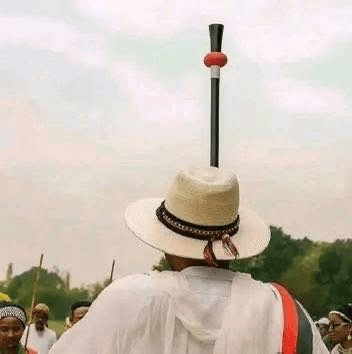
FINFINNE, OROMIA — The morning mist still clings to the highlands when Jaldessa Gammadaa, 74, raises the bokkuu—a curved wooden staff wrapped in leather and beads—toward the rising sun. His weathered hands tremble slightly, not from age, but from the weight of what this simple object represents.
“The bokkuu never died,” he says softly, his voice carried by the wind sweeping across the grassy plains of Mecha, in western Oromia. “It was only sleeping. Now, we are waking it up.”
For the Oromo people, Ethiopia’s largest ethnic group, the bokkuu is more than a ceremonial scepter. It is the embodiment of the Sirna Oromoo—the Oromo system of governance, law, spirituality, and social organization that once governed millions across the Horn of Africa. And after decades of suppression, forced assimilation, and state-sanctioned neglect, the Oromo are engaged in a quiet but determined revolution: not with guns, but with memory.
They are reviving. They are rebuilding. They are strengthening.
—
A System That Predates Modern Democracy
The Gadaa system—the beating heart of Sirna Oromoo—is a complex, age-grade-based democratic governance structure that has been recognized by UNESCO as an Intangible Cultural Heritage of Humanity. Every eight years, power transfers peacefully from one generation to the next, with elected leaders known as Abbaa Gadaa presiding over legislative, judicial, and ritual functions.
Political scientists have marveled at its checks and balances. Its separation of powers. Its regular succession mechanisms that prevent authoritarian drift—all developed centuries before many European nations had abolished absolute monarchy.
“People ask me if the Oromo had democracy before colonialism,” says Dr. Worku Tesfaye, a historian at Addis Ababa University who has studied Gadaa for three decades. “I tell them no. We had something more sophisticated. Colonialism never reached Oromia in the same way it reached the coast. The Gadaa system is indigenous, organic, and astonishingly modern in its core principles.”
Yet for much of the 20th century, successive Ethiopian regimes viewed the Gadaa system as a threat. Emperor Haile Selassie’s government sought to centralize power and absorb Oromo lands, sidelining Oromo institutions. The Marxist Derg regime (1974–1991) banned what it called “feudal and tribal structures.” And even after 1991, while ethnic federalism allowed some cultural expression, Gadaa was largely relegated to folklore—performed at tourist festivals, but stripped of its governance authority.
“The system was broken,” Jaldessa recalls. “When I was a boy, the elders still met in secret under the oda tree. But the meetings grew smaller every year. Young people laughed at us. They said we were ghosts telling old stories.”
—
The Revival: From Memory to Movement
Today, the ghosts are finding their voices again.
Across Oromia—and in diaspora communities from Minneapolis to Melbourne—a grassroots cultural renaissance is underway. Community elders known as hayyuus (wise ones) are holding intergenerational workshops. Local Gadaa councils, once dormant, are being reconstituted—not to replace modern government, but to complement it in matters of conflict resolution, environmental stewardship, and social welfare.
In the city of Adama, a youth group called “Dallachaa” (Growth) has documented over 200 oral histories from elders who remember the Gadaa system before its suppression. In Addis Ababa’s Oromo neighborhood of Bole, young professionals meet weekly to study the Seera (customary laws) and debate how they might apply to contemporary issues like land rights and gender equality.
“We’re not trying to turn back the clock,” says Hundaol Banti, 28, a software engineer who co-founded a digital platform cataloging Gadaa principles. “But there are things our ancestors got right—consensus-building, ecological balance, leadership rotation. Why would we throw that away just because it’s old?”
The revival has found unexpected allies. In 2016, the Oromo Protests—massive anti-government demonstrations rooted in land rights and political marginalization—took the bokkuu as their symbol. Young protesters, many of whom had never witnessed a full Gadaa ceremony, raised wooden staffs in defiance. The image of the bokkuu became a rallying cry.
“Those protests changed everything,” Worku says. “Suddenly, a new generation saw the bokkuu not as a relic of their grandparents, but as a weapon—a peaceful one—against injustice. The system was re-politicized in the best sense.”
—
The Challenges Ahead
Yet revival is not without its fractures.
Some women’s groups have pushed back against Gadaa’s traditionally male-dominated leadership structures. While the system includes ritual roles for women—the Siiqqee institution, named after a staff carried by women—critical governance positions were historically held by men. Contemporary reformers are debating how to reinterpret these traditions for an era that demands gender parity.
“The Siiqqee was not just symbolic,” insists Asha Boru, a women’s rights activist and Gadaa scholar from Borana zone. “Women could veto decisions, call assemblies, and protect other women from abuse. But yes, there is work to do. The beauty of Sirna Oromoo is that it is built on debate. We are debating now.”
There are also tensions between rural and urban practitioners. In rural areas, particularly among the Borana and Guji Oromo, the Gadaa system never fully disappeared; it operated underground. In cities, revival efforts sometimes risk romanticizing a complex system that also had hierarchies and rigidities.
And then there is the state. While the current Ethiopian government, led by Prime Minister Abiy Ahmed (himself Oromo), has made conciliatory gestures—declaring the Irreecha festival a national holiday, funding cultural centers—the legal authority of Gadaa councils remains unclear. Can customary courts sentence someone? Can Gadaa assemblies collect taxes? The boundaries remain contested.
“The government is comfortable with Irreecha and folklore,” says one Addis Ababa-based analyst who requested anonymity to speak freely. “But a fully autonomous Oromo governance system? That is a different conversation. The revival is cultural for now. Whether it becomes political again—that is the question.”
—
Under the Oda Tree
On a recent Friday afternoon, under a sprawling oda tree in the village of Odaa Nabee—a site of immense spiritual significance where Oromo oral tradition says the Gadaa system was formalized—Jaldessa oversees a ceremony. But this is no tourist performance.
Twenty-three young men and women sit in a semicircle, notebooks in hand. They are learning the Gadaa grades—the five eight-year stages through which every Oromo male (and now, in some communities, female) once passed. They memorize the names of the Abbaa Gadaas of the past. They practice the Jaarsummaa (eldership) protocols of conflict mediation.
“We will not all become elders overnight,” Jaldessa tells them. “But you cannot grow a tree from a dead root. We are watering the root.”
One of his students, 19-year-old Marge Waqjira, raises her hand. She wants to know whether a woman can one day hold the bokkuu as a full Abbaa Gadaa. The question hangs in the air.
Jaldessa smiles. “The law does not forbid it,” he says slowly. “The law says a leader must be wise, just, and chosen by the people. So I ask you: does wisdom have a gender?”
The students laugh. Marge writes something in her notebook. And under the oda tree, the Oromo system—rebuilt, revived, and strengthened—takes another small step into the future.
As the sun sets behind the highlands, Jaldessa plants the bokkuu into the earth. It stands upright, alone for a moment. Then he walks away, leaving it there—a promise that next time, it will be younger hands that lift it.
— Reported from Oromia

Posted on June 2, 2026, in Aadaa, Bokkkuu, Events, Finfinne, gender, Information, Media, News, Oromia, Press Release, Sirna Oromo. Bookmark the permalink. Leave a comment.






Leave a comment
Comments 0