Daily Archives: June 19, 2026

The Written Word: The Story of Afaan Oromoo’s Journey to Script
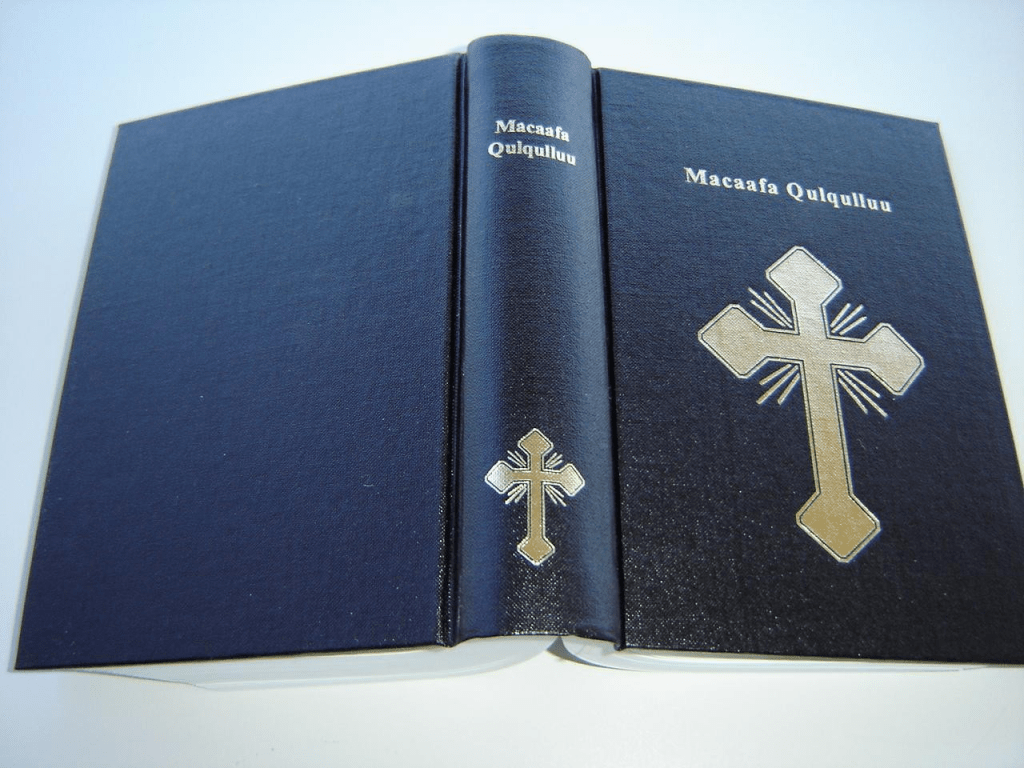
For centuries, Afaan Oromoo existed as a purely oral language—spoken by millions across the Horn of Africa, yet never written down in any systematic way. Stories, poems, history, and knowledge were passed from generation to generation through speech alone. Today, that has changed dramatically. The story of how Afaan Oromoo gained a writing system is not merely a linguistic tale—it is a story of resistance, identity, and cultural survival.
The Spoken Foundation
Before any script was ever applied to Afaan Oromoo, the language thrived through an rich oral tradition. Literature existed in the form of tales, poems, songs, epics, riddles, proverbs, and lullabies. These oral works served a vital purpose: they socialized Oromo youth into ethically committed and morally strong individuals, teaching what was good and evil, destructive and constructive. The language was the vessel for Oromo identity, a storehouse of values, myths, and collective experience.
This oral tradition would later prove crucial. When political forces attempted to suppress Afaan Oromoo and Oromo cultural identity, the grievances were articulated, recorded, and passed on vertically from generation to generation and horizontally across geographic areas through this oral literature. The language itself became an instrument of resistance.
The First Written Attempts (1840s)
The earliest known written documents in Afaan Oromoo date to the 1840s. They were the work of Johann Ludwig Krapf (1810–1881), a German missionary whose indefatigable endeavors left a lasting mark on languages across the Horn of Africa. Initially, Krapf used the Latin script to write Oromo, but he later shifted to the Ethiopic (Ge’ez) script.
Krapf’s work was foundational: he translated sections of the Bible into Afaan Oromoo and wrote its grammar. But this early flowering of Oromo writing was short-lived. After King Menilek annexed Oromo territories in the west, south, and southeast in the 1880s, the project was discontinued. The political winds had shifted against Oromo linguistic expression.
The Ge’ez Era: Onesimos Nasib’s Bible
The most significant contribution to Oromo writing in the Ge’ez script came from Onesimos Nasib (c. 1856–1931), an Oromo evangelist who was freed from slavery and educated by the Swedish Evangelical Mission. Nasib, whose birth name was Hika—meaning “Translator”—chose to use the Ge’ez alphabet, believing it would be better received by Ethiopia’s Coptic Orthodox priests than a Latin-based script.
His crowning achievement was the translation of the entire Bible into Afaan Oromoo, published in 1899. This was a monumental work that had a significant impact on introducing Oromo literacy. For decades, this Bible translation—along with the work of Aster Ganno and others—remained one of the few major published texts in the language.
Yet the Ge’ez script had limitations. It could not adequately represent certain Oromo sounds, particularly vowel length and consonant germination. The script, increasingly associated with Amharic dominance, also carried political baggage.
Indigenous Innovation: The Saphalo Script
In 1956, an Oromo scholar, poet, and religious teacher named Sheikh Bakri Sapalo (1895–1980) created his own writing system specifically designed for Oromo phonology. The Saphalo script—also known as Qubee Sheek Bakrii Saphaloo—was an abugida, like Ge’ez, but with no inherent vowels associated with consonants. It was, in many ways, more linguistically suited to Oromo than the scripts that preceded it.
The script gained acceptance in the Hararghe region of Ethiopia. But the Ethiopian government viewed it with suspicion, worrying it would make the Oromo self-aware and endanger national unity. In 1965, Sheikh Bakri Sapalo was placed under house arrest. He later fled to Somalia in 1978 and died in a refugee camp in 1980, his writings largely unpublished. The Saphalo script remains one of the few scripts so closely associated with a single individual—and one that met such a tragic end.
The Struggle Intensifies
Writing Afaan Oromoo in any script was banned under the government of Haile Selassie. This suppression only intensified Oromo determination. The struggle to write in Afaan Oromoo became inseparable from the broader Oromo national struggle.
During the Italian occupation (1936–1941), the Oromo experienced a brief period of linguistic freedom, as the Italians used Afaan Oromoo for education, broadcasting, and official activities. This taste of cultural freedom made the Oromo pose serious resistance against the restoration of Haile Selassie’s rule. The Harar and Bale uprisings, the Maccaa-Tuulamaa Association, the Afran Qalloo Cultural Movement—all emerged from the imposed language policies and gradually consolidated Oromo consciousness.
The Birth of Qubee
The search for an appropriate alphabet intensified in 1968, when Oromo students in Europe began the work. In 1972, an Oromo students’ study group formally adopted the Latin-based alphabet that would come to be known as Qubee. The Oromo Liberation Front (OLF) began using Qubee for communication and literacy work in the late 1970s, both at its bases and among Oromo refugees in neighboring countries.
The decisive moment came on November 3, 1991. The OLF convened a meeting of over 1,000 Oromo intellectuals to decide which alphabet to use for writing Oromo. After many hours of debate, they decided unanimously to adopt the Latin alphabet. The choice was conscious and political: the Ethiopic script was seen as the colonial script of the Amharic people, while the Latin script was not felt to be the colonial script of the Anglo-American world. Global functional considerations also played a role: the Latin alphabet was better suited to computer technology, more pedagogically accessible, and more linguistically adequate for representing Oromo sounds.
Qubee was formally adopted as the official orthography of Afaan Oromoo in 1991. For the first time, the language spoken by approximately 40 percent of Ethiopia’s population—more than 40 million people—had an officially recognized writing system.
A Literary Renaissance
The impact was immediate and profound. It is believed that more texts were written in the Oromo language between 1991 and 1997 than in the previous 100 years. Schools in Oromia began teaching in Afaan Oromoo. Oromo communities in the diaspora gained a standardized way to write their language. Literature flourished.
Today, Qubee consists of 33 fundamental letters: 5 vowels and 24 consonants, with additional combined consonant letters like CH, DH, NY, PH, SH, TS, and ZH. The alphabet has been adapted for modern use, including educational apps like “Qubee Kids” that teach children the letters through interactive games.
Challenges and Controversies
The adoption of Qubee has not been without controversy. Proponents of the Ge’ez script argue that its use would unite Ethiopians and that using other scripts threatens national unity. Some have actively petitioned regional governments to replace Qubee with the Ge’ez script.
Supporters of Qubee counter that the opposition is not based on linguistic analysis or technical considerations, but on subjective political grounds. They point to Qubee’s linguistic suitability, pedagogical ease, and adaptability to technology. The Latin-based alphabet, they argue, better represents Oromo sounds—showing vowel length, marking consonant germination, and adequately representing all Oromo phonemes.
Looking Forward
The story of Afaan Oromoo’s writing system is far from over. It is a living narrative of a people’s determination to see their language written, read, and preserved. From the oral traditions that sustained Oromo identity for centuries, through the missionary translations of the 1840s, the monumental Bible of Onesimos Nasib, the indigenous innovation of Sheikh Bakri Sapalo, and finally the political decision for Qubee in 1991—each chapter reflects the broader struggle for cultural survival and self-determination.
Today, Afaan Oromoo thrives in written form as never before. But challenges remain: internal debates about orthography, external political pressures, and the ongoing work of developing literature, educational materials, and digital resources. The language that was once officially unwritten now has a script that carries the hopes, history, and identity of millions.
As the Oromo saying goes: *”Afaan keenya, aadaa keenya”—our language, our culture. In the written word of Afaan Oromoo, that culture has found a new and enduring voice.






