Category Archives: SBO

Ukee: An Oromo Tradition of Nurturing the Next Generation
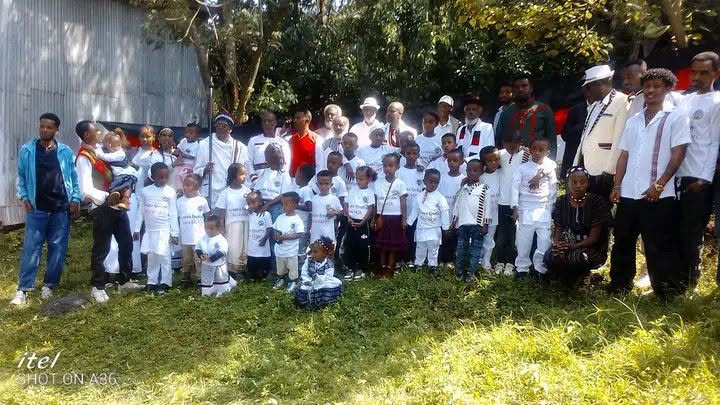
Celebrating Childhood and Cultural Continuity in Walisoo
By Daandii Ragabaa
Today, in the historic town of Walisoo, the Galma Amantaa Waaqeffannaa Duudhaa Ganamaa Walisoo Liiban was filled with the joyous sounds of children’s laughter and celebration. The occasion was the annual Ukee festival—a sacred Oromo tradition dedicated to honouring children and ensuring the continuity of culture from one generation to the next.
What Is Ukee?
Ukee, also known as Taabooree in some regions, is a traditional Oromo children’s festival celebrated during the month of Hagayya (July-August). It is a time when the community comes together to honour its youngest members—the inheritors of the culture, the carriers of the language, and the hope of the future.
The festival reflects the deep value that Oromo culture places on children. In a society where oral tradition is the foundation of cultural transmission, children are not merely the future—they are the living connection to ancestors and the continuity of identity.
A Celebration of Childhood and Community
The Ukee festival is a vibrant celebration filled with traditional songs, games, and communal gatherings. Children are the centre of attention, dressed in their finest traditional attire, participating in activities that have been passed down through generations.
The festival is also a time for intergenerational connection. Elders share stories, teach traditional values, and impart the wisdom of the Gadaa system to the younger generation. Through these interactions, children learn about their history, their culture, and their responsibilities to their community.
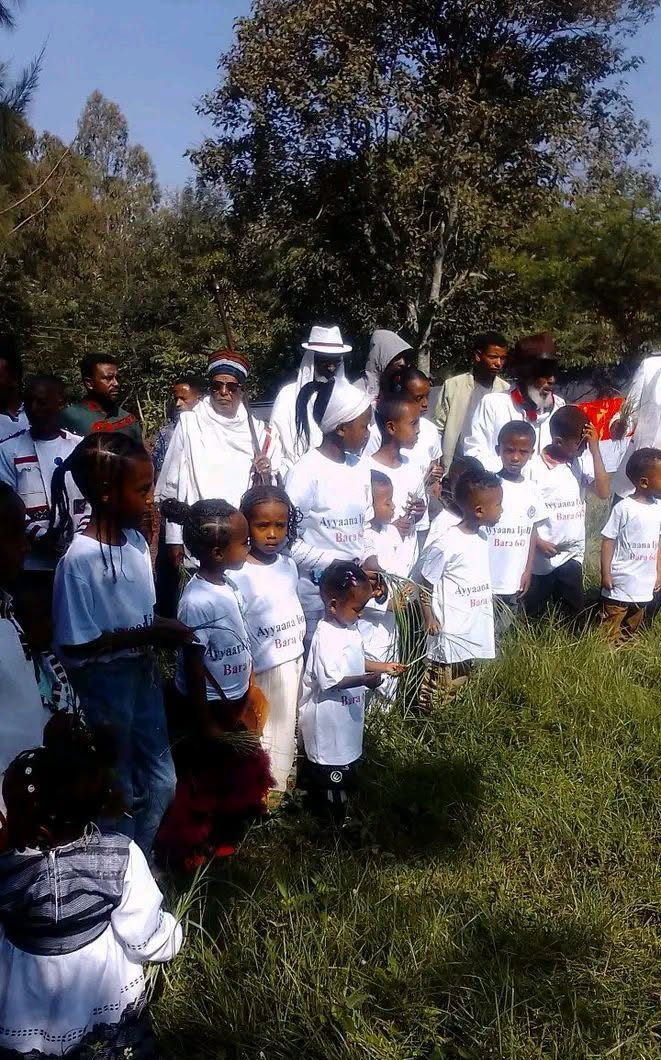
The Significance of Ukee
For the Oromo people, the Ukee festival is not merely a children’s holiday—it is a profound expression of the community’s commitment to its future. By celebrating and nurturing children, the community ensures that its culture, language, and values will endure for generations to come.
The festival also reinforces the bonds of community. Families come together, neighbours share meals, and the entire community participates in the celebration of its youngest members. This collective affirmation of the value of children strengthens the social fabric and builds a foundation for future prosperity.
A Living Tradition
In a rapidly changing world, traditions like Ukee serve as anchors of identity and continuity. The celebration at the Galma Amantaa Waaqeffannaa in Walisoo is a testament to the resilience of Oromo culture and the commitment of the community to preserving its heritage.
As the children of Walisoo gather to sing, dance, and celebrate, they are not only enjoying a moment of joy—they are participating in a ritual that has sustained the Oromo people for centuries. They are learning who they are and who they can become.
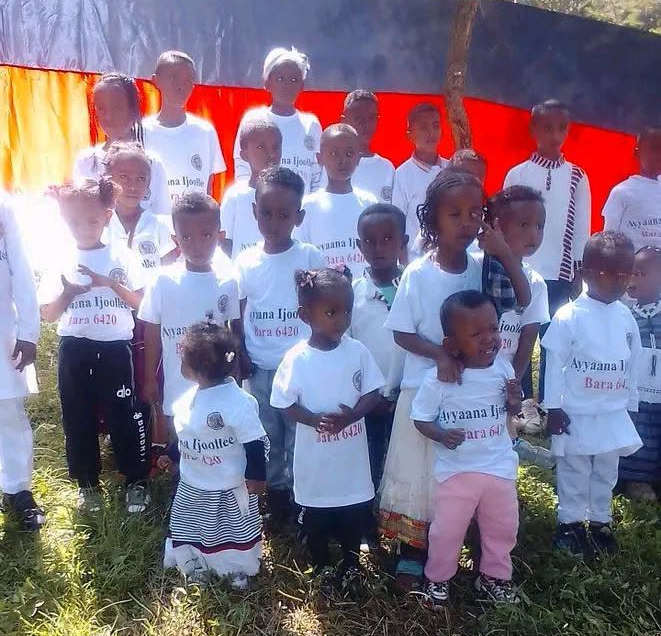
Conclusion
The Ukee festival is a beautiful reminder that the strength of a community lies in its children. By honouring them, we honour our ancestors. By celebrating them, we celebrate our future. By teaching them, we ensure that the flame of our culture will never be extinguished.
This feature article is dedicated to the children of Oromia and all those who work to ensure that Oromo culture thrives for generations to come.

Ifaanoo: Welcoming the Season of Light
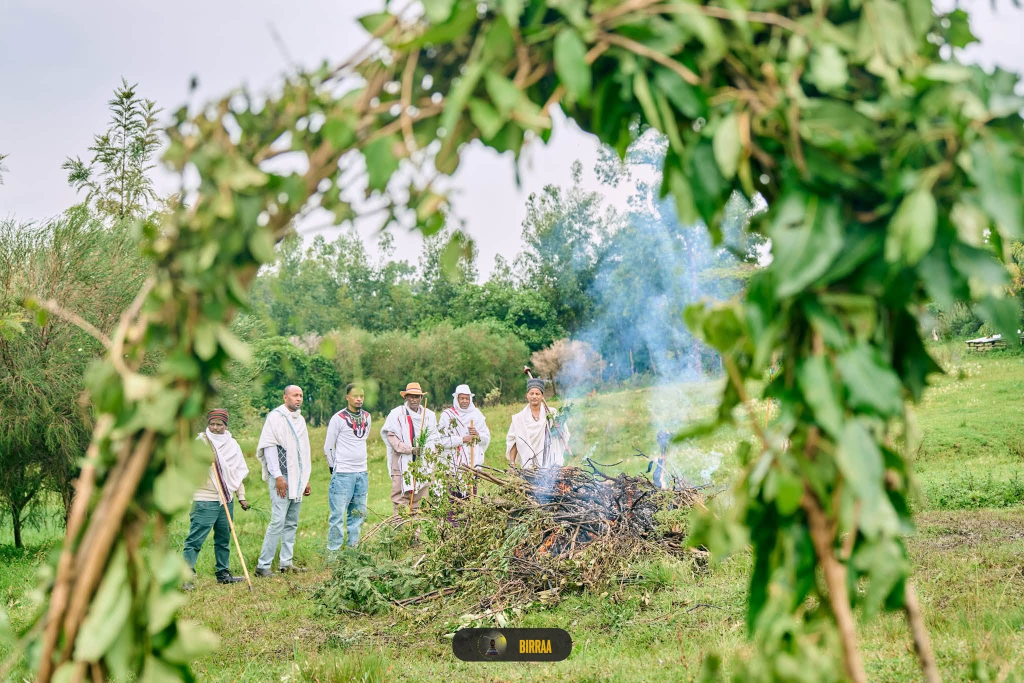
How the Sacred Mijirii Bonfire Illuminates Hope, Rebirth, and Oromo Unity
ByMaatii Sabaa
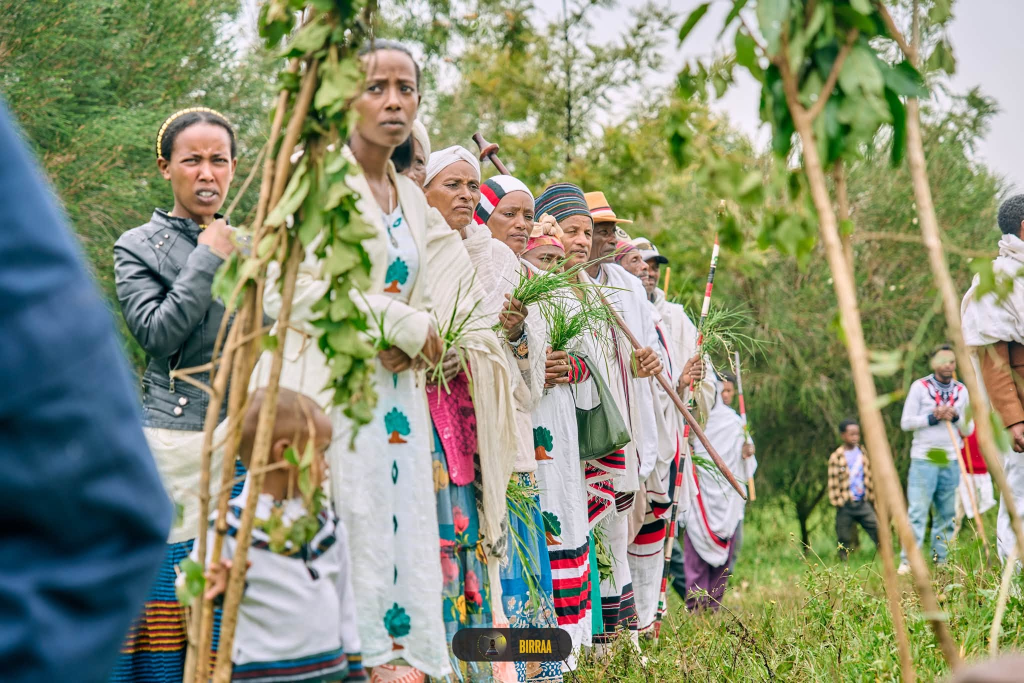
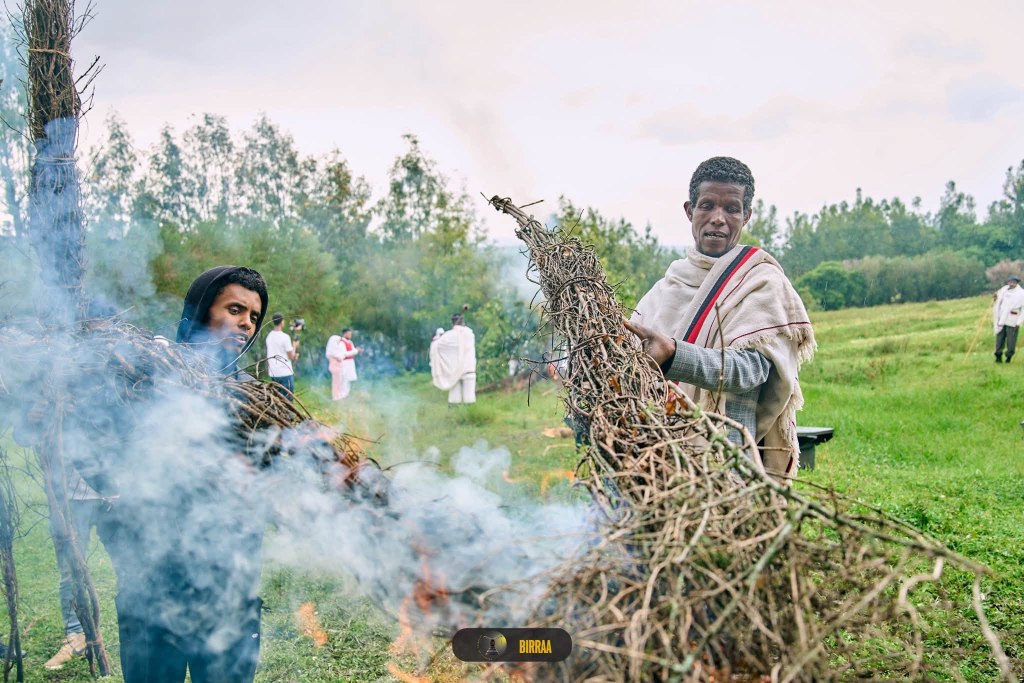
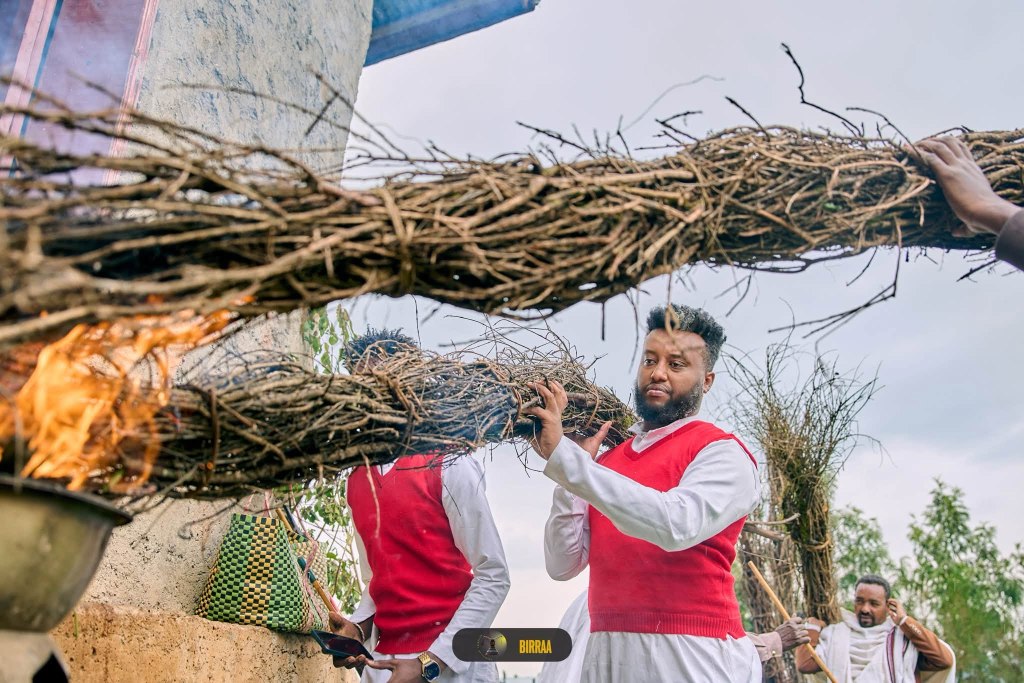
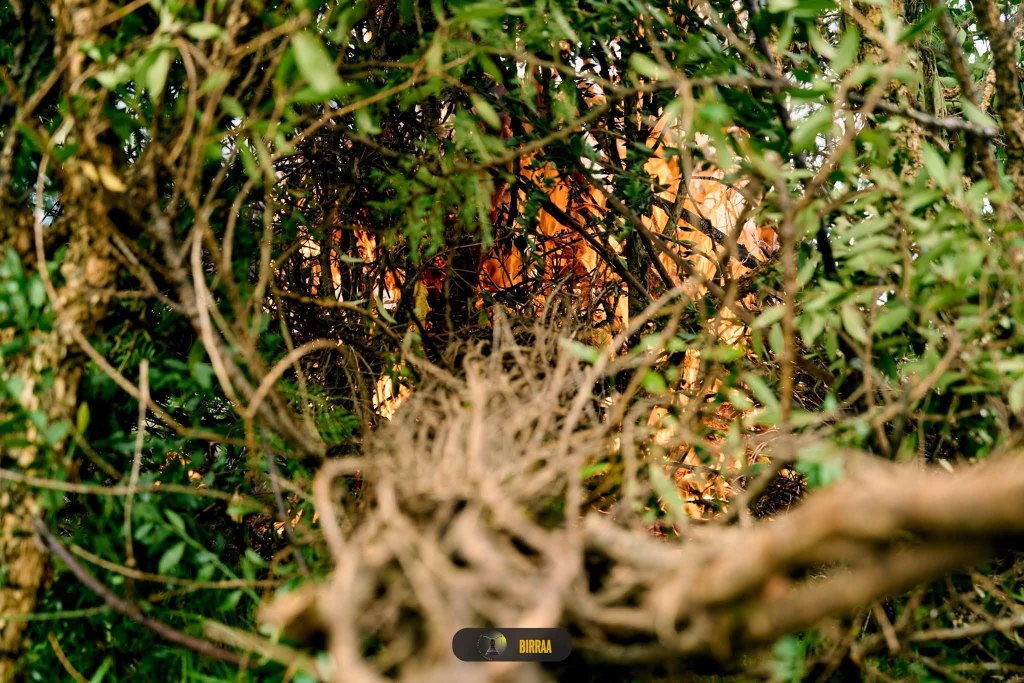
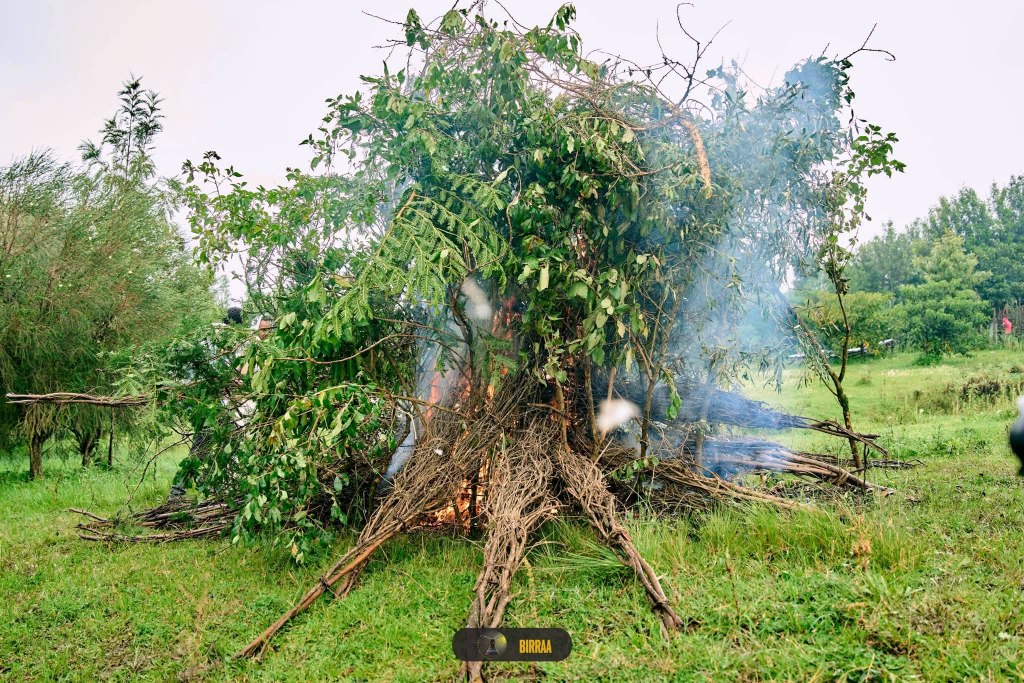
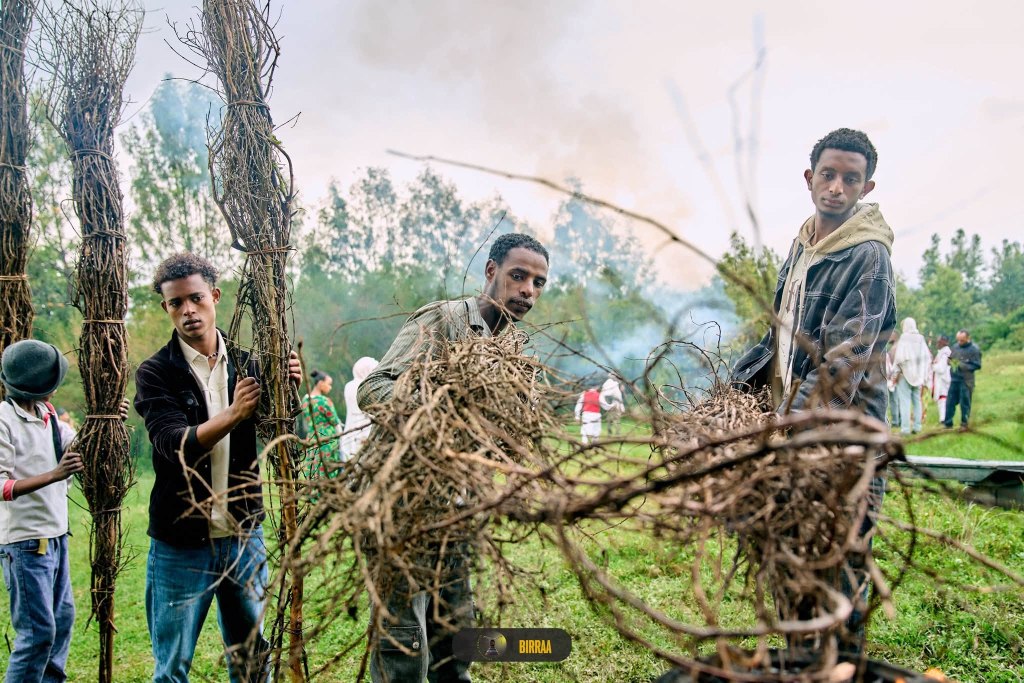
At the break of dawn, as the first rays of light touch the horizon, the sky ignites with warmth. Flames leap toward the heavens, casting a golden glow across the gathered community. This is Ifaanoo—the sacred Oromo ritual that marks the end of the dark winter season and the joyous arrival of Birraa (spring).
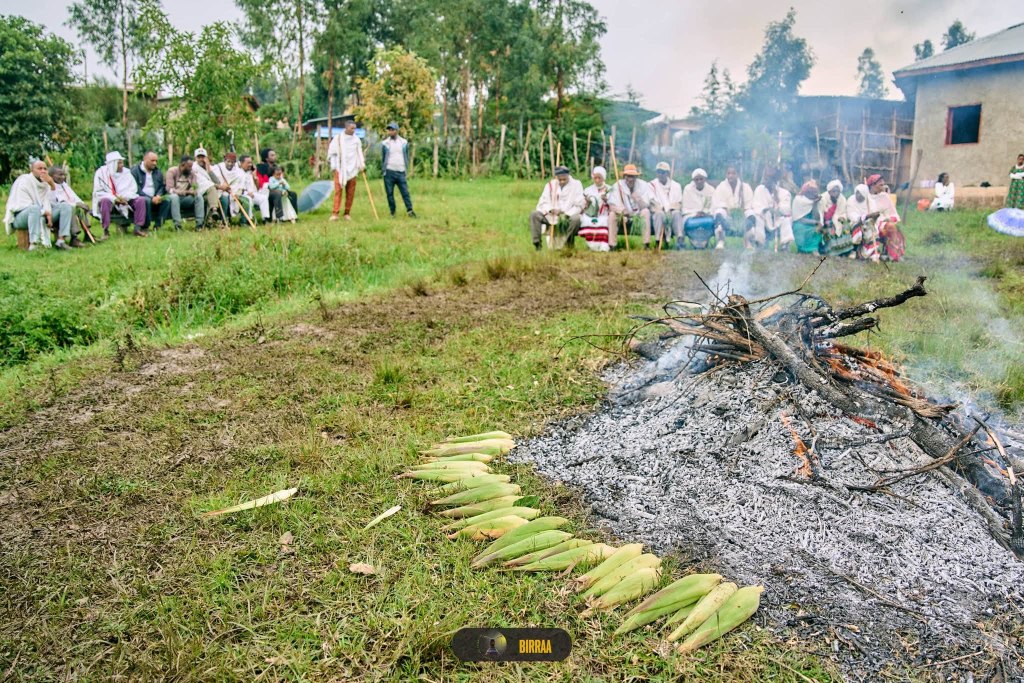
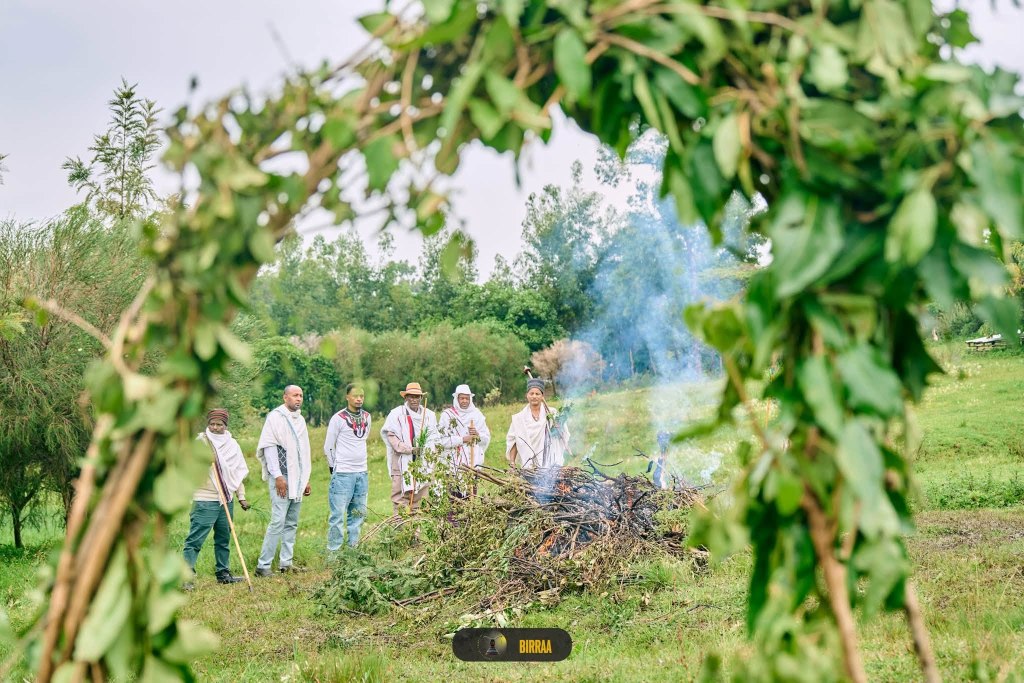
The historic Mijirii bonfire is lit, filling the air with the crackling sound of fire and the scent of burning wood. Families, elders, youth, and children gather around the flames, their faces illuminated by the glow. It is a moment of profound spiritual significance—a time when the community comes together to cast away the gloom of winter, uplift one another, and celebrate the rich, enduring customs of their ancestors.
The Meaning of Ifaanoo
Ifaanoo is a celebration of light and renewal. The word ifaa in Afaan Oromoo means “light,” and the festival embodies the dispelling of darkness—both literal and metaphorical. Just as the dawn breaks after a long night, Ifaanoo represents the triumph of hope over despair, of unity over division, of life over hardship.
The lighting of the Mijirii bonfire is the centrepiece of the celebration. The bonfire is not merely a source of warmth; it is a symbol of the sun’s return, the rebirth of the earth, and the renewal of the community’s covenant with Waaqa (God). As the flames rise, participants offer prayers of gratitude for the blessings of the past year and petitions for peace, prosperity, and unity in the year ahead.
A Ritual of Community and Solidarity
Ifaanoo is a profoundly communal celebration. Families and neighbours gather around the bonfire, sharing stories, songs, and traditional foods. The warmth of the fire mirrors the warmth of human connection, reinforcing the bonds that hold the community together.
The festival is also a time for reconciliation. As with other Oromo celebrations, participants are encouraged to resolve conflicts and seek forgiveness before joining the festivities. This requirement ensures that the celebration is not merely a superficial gathering but a genuine act of collective healing and renewal.
Elders play a central role in the Ifaanoo ceremony. They lead the prayers, offer blessings, and share the wisdom of the ancestors with the younger generation. The intergenerational transmission of knowledge ensures that the values and traditions of the Oromo people are preserved and passed on.
The Symbolism of Light
For the Oromo people, light represents not only physical illumination but also spiritual clarity, moral purity, and the presence of divine blessing. The bonfire is a reminder that even in the darkest times, light can be kindled—that hope is never extinguished, and that renewal is always possible.
The transition from winter to spring is a powerful metaphor for the human experience. Winter, with its cold, darkness, and isolation, represents the hardships and challenges of life. Spring, with its warmth, light, and abundance, represents the promise of renewal and hope. Ifaanoo celebrates this transition, reminding the community that after every winter, spring will come.
A Living Tradition
Ifaanoo is not a relic of the past—it is a living tradition that continues to evolve and adapt to the needs of the present. In recent years, the celebration has been revived and embraced with renewed enthusiasm in Oromia and diaspora communities across the world.
The festival serves as a powerful statement of cultural identity and resilience. For a people who have faced centuries of oppression and cultural erasure, the act of gathering around the Mijirii bonfire is a declaration that their traditions endure and that their identity will not be extinguished.
A Call to Renewal
As the Mijirii bonfire illuminates the sky, it also illuminates the path forward. Ifaanoo is a call to renewal—to let go of past grievances, to embrace hope, and to recommit to the values of unity, peace, and mutual respect.
In a world often marked by division and despair, the Oromo people offer a powerful alternative: a celebration of light, community, and the enduring hope that dawn will always follow the night.
This feature article is dedicated to the custodians of Oromo tradition who keep the flame of Ifaanoo burning bright for future generations.





Advocacy for Oromia (A4O) Condemns Escalating Violence Against Civilians in Western Oromia, Calls for Urgent International Action

FOR IMMEDIATE RELEASE
Melbourne – 22 August 2026 – The Advocacy for Oromia (A4O) today issued a strong condemnation of the ongoing and escalating violence against civilians in Western Oromia (Wallagga), warning that the situation has reached an alarming level and demanding immediate action to protect vulnerable communities.
Recent attacks have reportedly intensified, with civilians in the Giddaa Ayyaanaa and Angar Guutee areas bearing the brunt of the violence. According to local accounts, families are being forcibly displaced from their homes, while others have lost their lives while traveling or in their own residences, creating a pervasive climate of fear and instability across the region.
While many attacks have been attributed to the Fano armed group, A4O also expressed grave concern over allegations implicating state actors. The organization highlighted the Ethiopian government’s apparent failure to adequately protect affected communities, stating that these serious allegations necessitate independent and transparent investigations to establish facts, ensure accountability, and bring perpetrators of abuses to justice.
“Western Oromia is a region of profound political and social significance, and this continued violence threatens not only the immediate security of residents but also the broader stability of the region,” a spokesperson for A4O stated. “The resulting displacement and destruction have severe humanitarian consequences that require an urgent global response.”
In response to the crisis, A4O is issuing a Call to Action, urging community members, advocates, civil society organizations, faith leaders, youth, women, and the diaspora to break their silence. The organization insists that “silence is not an option” in the face of such suffering and calls for:
- Strengthened advocacy and documentation of human rights violations.
- Immediate humanitarian assistance for displaced families.
- Local, national, and international awareness campaigns.
- Unity and collective action to amplify victims’ voices and advance justice.
Furthermore, A4O is calling on international institutions, humanitarian organizations, and global human rights bodies to closely monitor the situation in Western Oromia and take concrete steps to prevent further atrocities.
“We must not remain silent,” the statement concludes. “The lives, dignity, and security of innocent civilians depend on immediate attention and action. We stand in solidarity with all victims of violence and their families and demand lasting peace, justice, and respect for human rights in the region.”
About Advocacy for Oromia (A4O):
The Advocacy for Oromia is a civil society organization dedicated to promoting human rights, justice, and democratic governance for the people of Oromia. A4O works to amplify the voices of the Oromo people and advocate for peaceful solutions to conflicts affecting the region.
#UNHumanRightsCouncil #Oromia #Wallagga #Justice #HumanRights

Irreechaa 2026: Africa’s Largest Gathering of Gratitude and Resilience
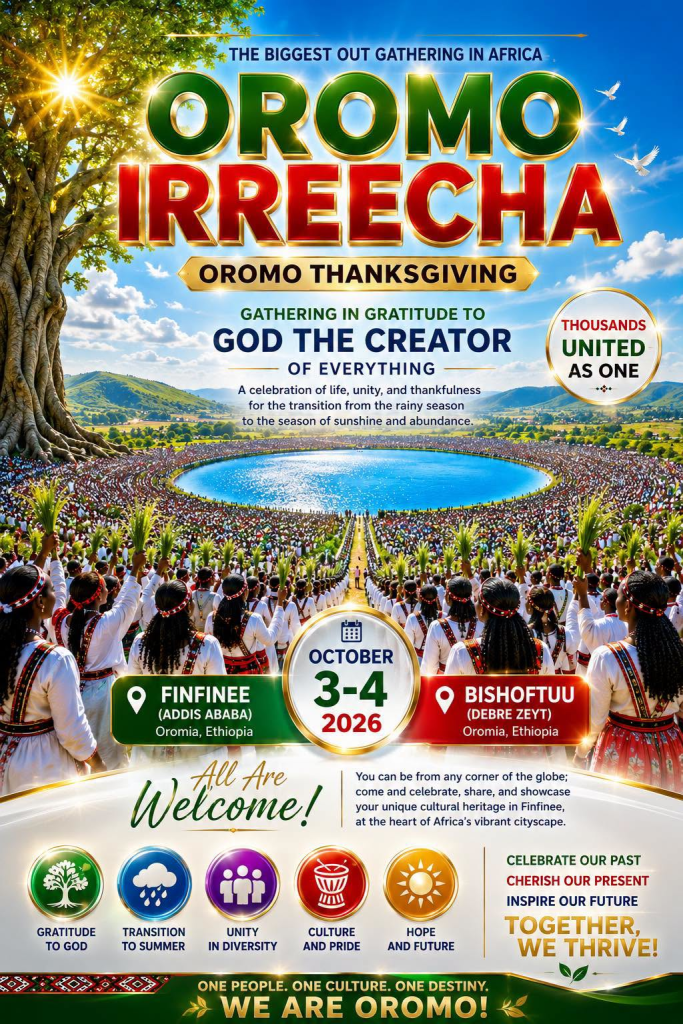
Millions Prepare to Celebrate Oromo Thanksgiving in Finfinne and Bishoftu
By Maatii Sabaa
As the golden light of spring breaks over the Oromo landscape, a profound spiritual awakening stirs across Oromia and the global diaspora. Irreechaa—the Oromo Thanksgiving—is set to transform Finfinne and Bishoftu into a vibrant sea of white, green, and cultural pride from October 3 to October 4, 2026 . This is not merely a festival. It is Africa’s largest outdoor gathering, where millions will come together to express gratitude to Waaqa (God) and celebrate a cultural heritage that has endured for millennia .
The Heartbeat of a People: What Is Irreechaa?
Irreechaa, known in some traditions as Irreessa or Dhibaayyuu, is an annual thanksgiving holiday that marks the end of the rainy winter season and the joyous arrival of Birraa (spring) . It is a time when the Oromo people gather at sacred lakes, rivers, and springs to thank Waaqa for the blessings, mercies, and bountiful harvests received over the previous twelve months .
The festival’s roots run deep—over 6,000 years into the ancient Oromo and Cushitic civilization, long before the rise of modern empires or religions . It is intimately connected to the Gadaa system, the traditional Oromo governance structure recognised by UNESCO as an Intangible Cultural Heritage of Humanity . As the elders teach, Irreechaa is simply “giving thanks to the one God”—the pinnacle of Oromo religious and cultural expression .
Two Sacred Sites, One Unifying Spirit
This year’s celebration will unfold over two days across two of the Oromo people’s most sacred sites, following a time-honoured itinerary announced by the Council of Oromo Gadaa Elders .
Hora Finfinne: Reclaiming the Heart of the Capital
On October 3, the celebration will commence at Hora Finfinne, in the heart of the capital city . This location carries profound historical weight. For decades, under oppressive regimes, public celebrations of Irreechaa were banned, and the Oromo people were denied the right to give thanks at their own sacred sites . The site now known as Finfinne was originally named after the very same Hora Finfinne—a sacred geography that the construction of a colonial capital attempted to overwrite . Celebrating Irreechaa here is not just a cultural act; it is a powerful reclamation of space, identity, and dignity.
Hora Arsadi: The World’s Stage
On October 4, the festival moves to its grandest location: Hora Arsadi in the city of Bishoftu, approximately 45 kilometres south of Finfinne . This is the site of the main event—a gathering so vast that it is recognised as one of the largest annual human gatherings on the African continent . Here, in a landscape of breathtaking natural beauty and sacred waters, the celebration reaches its crescendo.
In recent years, the scale of the gathering has been so immense that international media, including the BBC, Al Jazeera, and CNN, have broadcast images of the spectacle: hundreds of thousands, sometimes millions, of people dressed in a vibrant sea of traditional colours, moving with purpose and joy towards the water .
The Rituals of Renewal
The Irreechaa ceremony is a tapestry of ritual and symbolism. At the lake, participants carry freshly cut green grass and flowers—symbols of fertility, life, and renewal . They immerse these offerings in the water, sprinkle themselves, and raise their hands in prayer. The grass, dipped and sprinkled, is a symbolic gesture of cleansing, purification, and the washing away of hardship. Traditional songs, known as sirba, echo across the valley, their melodies passed down from elders to the youth, ensuring the continuity of a living heritage .
Women are decorated in their finest traditional attire, while youth, particularly young men known as Kormoomsaa, move through the crowd, sprinkling people with fresh water as a gesture of cleansing and blessing . The event is a total immersion in culture and community. After the prayers, families and friends share meals of traditional dishes and freshly brewed coffee, reinforcing the profound social bonds that the festival strengthens .
More Than a Festival: A Symbol of Unity and Resilience
Irreechaa is often described as the “most celebrated cultural festival in Africa” . However, its significance extends far beyond its sheer scale. The festival’s core principles are peace, unity, love, and reconciliation. As the history of the festival teaches, holding onto resentment or grievance is not permitted at Irreechaa. A person cannot attend unless they have resolved their disputes with others . This requirement is a profound social intervention, reinforcing the idea that one cannot give thanks while holding a grudge.
The revival and growth of Irreechaa, particularly the celebrations in Finfinne, represent a powerful statement of cultural resilience. It is a declaration to the world that the Oromo culture, with its deep-rooted values of democracy, community, and spirituality, is not a relic of the past but a vibrant force for the present and future .
A Call to the World
The message from the Oromo community is clear: “You can be from any corner of the globe, individuals can come and showcase their unique cultural heritage in Finfinne during our celebration, at the heart of Africa’s vibrant cityscape.” As the Oromo people gather to give thanks, they extend an invitation to the world to witness the unity and resilience of a nation that has overcome immense challenges and continues to celebrate life, faith, and hope with unparalleled passion.

More Than an Ancient Civilization: The Kingdom of Kush—A Powerful Empire of Land and Sea
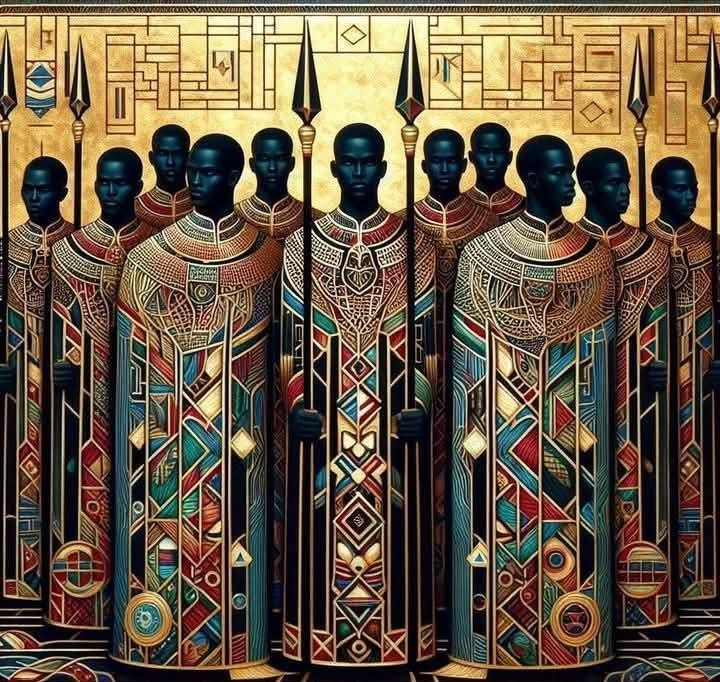
A people whose legacy challenges the very foundations of African history
When we speak of the great civilisations of antiquity, our minds often turn to Egypt, Greece, or Rome. But long before the Persian Empire rose to dominance, there existed in the heart of Africa a kingdom of extraordinary power, wealth, and sophistication—the Kingdom of Kush.
The Kingdom of Kush, with its three major cities of Meroe, Kerma, and Napata, emerged in the Nubian Desert south of Egypt along the Upper Nile River Valley from the 2nd millennium B.C. to the fourth century A.D. . For over a thousand years, Kush was a major power in the Nile valley, controlling an empire that at its height stretched from Central Sudan to the Mediterranean .
The achievements of this ancient civilisation challenge long-held beliefs that Egypt was the sole centre of advancement in the region. As renowned archaeologist Charles Bonnet’s excavations have revealed, Kush was not a mere vassal state of Egypt but a powerful and independent kingdom with its own distinctively indigenous culture . This sophisticated political state organised trade to the Mediterranean basin and built up a military strong enough to resist Egyptian forces .
The Black Pharaohs: A Legacy of Power
The Kushite rulers of Egypt’s 25th Dynasty, often referred to as the “Black Pharaohs,” represent a pivotal moment in the history of the Nile Valley. Emerging from the Kingdom of Kush at Napata in Nubia, these rulers not only unified Egypt after centuries of fragmentation but also reinvigorated pharaonic traditions .
The first major figure of this dynasty, King Piye, launched a campaign into Egypt during a period of political fragmentation known as the Third Intermediate Period. His Victory Stela records the subjugation of Delta rulers and proclaims his role as restorer of order . By 730 BCE, Piye had conquered Lower Egypt, establishing Kushite authority over both Upper and Lower Egypt .
The dynasty reached its zenith under Taharqa (690–664 BCE), whose reign is remembered for monumental building projects and ambitious foreign policy. Taharqa sponsored extensive temple construction at Karnak, Kawa, and Jebel Barkal, reinforcing his devotion to Amun and his claim to pharaonic legitimacy . He intervened in the Levant, supporting coalitions against Assyrian expansion, and is mentioned in both Biblical and Assyrian sources .
One of the most remarkable features of Meroitic civilisation was its powerful queens. The title “Candace,” meaning “sister,” was given to Kushite queens . Queens such as Amanirenas—who signed a peace treaty with the emperor Augustus—and Amanishakheto, whose treasure was looted in 1834, demonstrate the prominent role of women in Kushite society .
Kush: More Than a Footnote
The Kingdom of Kush was more than a civilisation; it was a power that commanded both land and sea. Kushite armies were formidable, and their military prowess allowed them to conquer and control Egypt itself . Kush also boasted a powerful navy, controlling trade routes along the Nile and beyond .
The economy of the ancient Kushites relied on trade in exotic African goods with Egypt and beyond. As middlemen, Kushite traders passed along ivory, ebony, incense, and other exotic goods from the South to the Egyptians, who then traded with other Mediterranean peoples . The city of Kerma, with its strategic location on the Nile River, controlled this crucial trade route .
Kush produced more gold than anywhere in the world at that time . Archaeologists have uncovered massive gold-processing operations at sites like Hosh el-Guruf, revealing the scale of Kush’s wealth . Minerals and high-quality stone were also mined for trade, and the Kushites introduced and developed iron metallurgy to the region .
A Sophisticated Society
The art and architecture of the Kushites reveal a sophisticated society of innovative craftsmen who constantly assimilated new artistic techniques from other lands . Notable architecture includes stone temple complexes such as the Lion Temple at Naqa and the steep-sided, solid pyramids found at Meroe and Jebel Barkal .
In fact, Sudan has more pyramids than all of Egypt—a testament to the grandeur of the Kushite civilisation . These tall, slender, graceful monuments bear witness to the lasting splendour of Kush .
Kushite art includes narrative tomb wall paintings and unique, eggshell-thin pottery with geometric patterns traded all over the Mediterranean . Stoic granite and bronze statues of gods and kings convey the religious beliefs of this ancient people .
The Question of Cush
The name “Kush” has been connected since at least the time of Josephus with the biblical character Cush, son of Ham (Genesis 10:6). Ham had four sons: Cush, Put, Canaan, and Mizraim (Egypt) . According to the Bible, Nimrod, a son of Cush, was the founder and king of Babylon, Erech, Akkad, and Calneh .
The Cushitic-speaking peoples, who are the ethnolinguistic groups speaking Cushitic languages natively, are today found primarily in the Horn of Africa, with minorities in Egypt, Sudan, Kenya, and Tanzania . Proto-Cushitic was spoken on the Ethiopian Highlands by 5000–4000 BC .
A Civilisation Worthy of Recognition
The Kingdom of Kush is not merely a footnote in the history of Africa—it is a testament to the power, ingenuity, and resilience of the peoples of the Nile Valley. As the American Journal of Archaeology notes in its review of The Nubian Pharaohs of Egypt, the term “Black Pharaohs” has sometimes been used to market exhibits, but the historical significance of Kush extends far beyond its interaction with Egypt . Sudanese colleagues and community members rightly resent the idea that the kings of ancient Sudan are only important because they ruled over Egypt . The Kingdom of Kush deserves to be remembered on its own terms.


The Price of Silence: A Reflection on Inaction and the Tragedy of Our People

We Knew This Was Coming — Yet We Chose to Stay Silent
By Koste Abdiisaa
If we had shown even 1% of the outrage we have expressed over the past two days three, four, or five years ago—when Fano killed hundreds of innocent Oromos in Kiramu, Hagamsa, Amuru, Alibo, Jardega-Jartee, and elsewhere—perhaps these killings would not have happened.
We knew this was coming. The signs were everywhere. The warnings were clear. Yet we chose to remain silent. We chose to look away. We chose to believe that the storm would pass us by.
But storms do not pass by those who refuse to prepare. They break over them.
The Warning Signs We Ignored
For years, the enemies of the Oromo people have been methodically preparing for this moment. While we argued among ourselves, they were opening training camps in our backyard. While we engaged in name-calling and petty divisions, they were building security structures and training hundreds of people to carry out their plans.
We saw it happening. We heard the reports. We knew that innocent farmers—our farmers—were being killed in Kiramu, Hagamsa, Amuru, Alibo, Jardega-Jartee, and countless other places. And what did we do?
We expressed outrage on social media. We posted our anger, shared our grief, and then went back to business as usual.
Our collective inaction allowed this to continue. Our silence gave them permission to proceed. Our failure to act was an invitation for more violence.
The Consequences of Inaction
This is not about hindsight. This is about foresight—and our failure to use it. We cannot pretend that these killings were unexpected. We knew what was coming. We had every warning. But we failed to act.
And now, the consequences are here.
The killing of our innocent farmers is not just a tragedy—it is a judgment on our collective failure to protect our own. It is the result of years of political naivety, misplaced priorities, and a refusal to confront the reality of the threat we faced.
We were good at crying after the fact. We were good at expressing outrage on social media after tragedies happened. But we were very poor at recognizing threats early on, listening to those who recognized them, and preparing ourselves to face them.
The Deeper Outrage
Like many of you, I am outraged by the killing of our innocent farmers. But I am even more outraged by our inaction—our lack of political awareness, our failure to recognize and respond to such cruelty for so long.
What is even more troubling is that some of our so-called political entities—those who claim to speak for us—continue to seek alignment with those responsible. They act as if there is still some humanity left in them to appeal to. They still hope for dialogue with those who have shown, time and again, that they have no interest in peace, only in domination.
This is not leadership. This is delusion.
And we, as a people, have allowed it. We have allowed ourselves to be led by those who refuse to see the enemy for what they are. We have allowed ourselves to be distracted by petty divisions while our people are being slaughtered.
The Beginning, Not the End
Let us not pretend that this is the end. This is the beginning. The attacks will continue. The killings will escalate. And if we do not act now—with unity, determination, and clarity—the tragedies we see today will seem small compared to what is coming.
I fear that we may still fail to act in a timely manner. I fear that we will continue to cry and express outrage for a week, and then return to normal life. I fear that we will continue to do what we seem to be good at: mourning after the fact, but never preparing for what lies ahead.
A Call to Look Within
If this senseless killing of our people does not make us angry enough to question our collective inaction, then perhaps we need to look within ourselves and ask: What kind of society have we become?
Have we become a people who only react after the damage is done? Have we become a people who prioritize social media outrage over real action? Have we become a people who are more concerned with who is right than with what is right?
We must ask ourselves these questions. And we must answer them honestly.
The Path Forward
We cannot change the past. The blood that has been spilled cannot be unspilled. But we can change the future. We can act now—today—to ensure that these tragedies do not continue.
This requires several things:
- Unity: We must put aside our petty divisions and unite as a people. Our enemies are united; we must be even more united.
- Awareness: We must wake up to the reality of the threat we face. We must recognize the signs and act before it is too late.
- Action: We must support those who are willing to sacrifice and risk their lives to defend our people. We must build the structures and institutions necessary to protect ourselves.
- Accountability: We must hold our political entities accountable. We must demand that they prioritize the defense of our people over their own political ambitions.
- Resilience: We must be prepared for the long fight ahead. This is not a battle that will be won in a day. It requires patience, courage, and an unwavering commitment to our people.
Conclusion: Enough Is Enough
The killing of our innocent farmers is a crime against humanity. But our collective inaction is a crime against ourselves.
We cannot afford to continue down this path. We cannot afford to remain silent while our people are being slaughtered. We cannot afford to wait until the next tragedy to express our outrage.
Enough is enough.
Let us honor the memory of those who have been killed by resolving to act—not just with words, but with deeds. Let us build a future where our people are safe, our land is protected, and our dignity is restored.
Injifannoon Ummata Oromoo!
Nagaan haa jabaatu!
This reflection is dedicated to the innocent Oromo farmers who have lost their lives, and to all those who are determined to build a future of peace, justice, and security for our people.

The Hour of Need: Forging a Resilient Future for Oromia and Its People

By Maatii Sabaa
The air in Oromia is heavy with a sense of urgency. Across the region and its surrounding areas, a silent tremor of concern is reverberating through the hearts of its people. We are witnessing a pivotal moment in our history, a time fraught with challenges that test the very fabric of our society. The question is no longer if we will act, but when—and how boldly.
As we look at the current state of affairs, it is impossible to ignore the profound anxieties that grip our communities. The safety net that once held our families together is fraying under the weight of economic strain, environmental upheaval, and political instability. We are, to put it plainly, standing on the precipice of a great ordeal. The need for a unified, robust, and relentless response—a determined stand against the tide of adversity—has never been more critical.
This is not merely a time for sorrow; it is a time for strategy. The path forward is not found in despair, but in the deliberate construction of a new paradigm. We must build a fortress of resilience, brick by brick, institution by institution. It is through the creation of resilient systems—in agriculture, education, and governance—that we can effectively combat the crises that threaten to overwhelm us. We need a “fala/ gaachanaa” (shield) that is not just reactive but proactive, designed to protect the most vulnerable and secure the borders of our collective future.
Yet, the ultimate shield for Oromia is not made of steel or stone; it is made of the mind and spirit of its youth. The young men and women of this generation are the architects of tomorrow. To leave them untrained, unmotivated, or disconnected is to invite disaster. Our imperative is clear: we must educate, energize, and organize the Oromo youth.
This is more than a call to action; it is a call to transformation. We must transform our schools into crucibles of critical thinking, our communities into hubs of entrepreneurial energy, and our political spaces into arenas of constructive dialogue. By doing so, we ensure that our youth do not become victims of circumstance, but rather, become the standard-bearers of a proud heritage. They must become the vanguard that carries the torch of Oromia forward, ready to stand as “gaachana” (champions) for their land and their people.
It is a saddening truth that the heritage of the Oromo people—a legacy of resilience, democracy, and cultural richness—is at risk of being eroded. We are custodians of a “Dhaloota qaroo” (a heritage of value), a distinct identity that has survived for millennia. To protect this inheritance is to diversify it; to bring in new voices, new ideas, and new energy. We must ensure that the narrative of our people is written not by our oppressors, but by our own hands, in our own words.
The time for deliberation is over. The foundations of a new era must be laid today. It is not enough to hope for a brighter tomorrow; we must labor for it. Starting today, we must commit to the arduous but noble task of rebuilding. Starting today, we must bridge the divides that separate us. Starting today, we must empower the next generation to take the helm.
The challenges are great, but the spirit of Oromia is greater. Let us meet this moment with the courage it demands. The hour of need is upon us, but it is also an hour of opportunity. Let us rise, unite, and forge a destiny worthy of the sacrifices of our ancestors and the dreams of our children.
The time to start is now.

Legal Foundations of Finfinne’s Special Status: A Review of Federal and Regional Laws
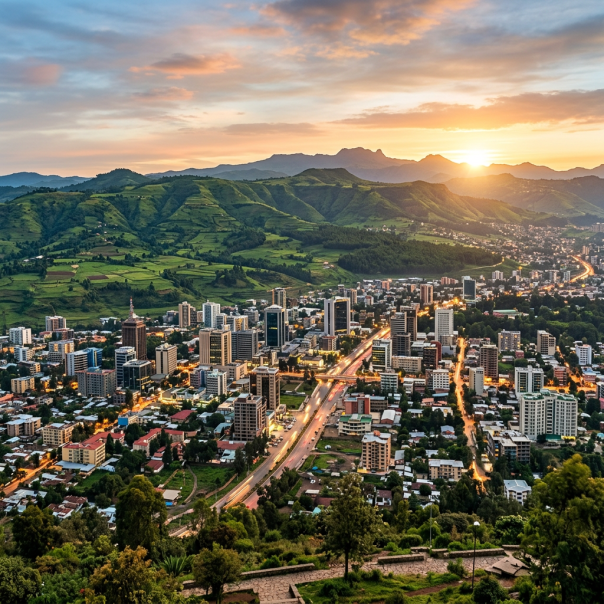
Examining the Constitutional and Statutory Provisions Recognizing Oromia’s Special Interest in the Capital
By Dhabessa Wakjira
(Melbourne-11 August 2026) The question of Finfinne—the city known internationally as Addis Ababa—is not merely a matter of political debate or historical narrative. It is also a matter of law. Over the past four decades, a series of federal and regional legal instruments have recognized and codified the unique relationship between the Oromo people and their ancestral capital.
From the transitional period following the fall of the Derg to the present day, Ethiopian law has acknowledged that Finfinne, by virtue of its location within the State of Oromia, gives rise to a “special interest” for Oromia—an interest that encompasses social services, natural resources, and joint administrative matters . This legal framework, while contested in its implementation, provides a constitutional foundation for the Oromo people’s claim to their historical capital.
Federal Legal Instruments: The Constitutional and Statutory Framework
A. Proclamation No. 7/1984: Establishing National Regional Self-Governments
The legal recognition of Oromia’s special interest in Finfinne predates the 1995 Constitution. In the transitional period following the fall of the Derg regime, the Transitional Government of Ethiopia enacted Proclamation No. 7/1984 to establish National Regional Self-Governments.
Article 3(1) of this proclamation identified the Oromo people as one of the nations, nationalities, and peoples entitled to establish a regional self-government, designated as “Region 4.” Critically, Article 3(4) of the proclamation stated that the “special national interests and political rights of Oromo” over Harari (Region 13) and Addis Ababa (Region 14) would be protected .
This provision represented the first formal legal acknowledgment of Oromia’s special claim over the capital following the collapse of the unitary state. It recognized that the city’s location within Oromia created a unique relationship that could not be ignored, even as the city was designated as a separate administrative entity.
B. The FDRE Constitution, Article 49(5): The Constitutional Recognition
The most significant legal recognition of Oromia’s special interest in Finfinne is enshrined in the Federal Democratic Republic of Ethiopia Constitution, adopted in 1995.
Article 49(5) states:
“The special interest of the State of Oromia in Addis Ababa, regarding the provision of social services or the utilization of natural resources and other similar matters, as well as joint administrative matters arising from the location of Addis Ababa within the State of Oromia, shall be respected. Particulars shall be determined by law.”
This provision was the product of extensive debate during the Constitutional Assembly. The legislative history reveals that the Oromo representatives argued for the inclusion of this clause on several grounds:
- Geographical reality: Finfinne is located within the State of Oromia.
- Historical connection: The city was established on Oromo land and is the heart of Oromia.
- Practical necessity: The city’s expansion affects surrounding Oromo farming communities.
- Constitutional identity: The city serves as Oromia’s capital and is deeply connected to Oromo identity .
The clause was approved with 507 votes in favour and only 6 against, demonstrating broad consensus on the principle of Oromia’s special interest.
C. Addis Ababa City Administration Charter Proclamation No. 87/1989
The first charter for the Addis Ababa City Administration, Proclamation No. 87/1989, provided detailed provisions on the relationship between the city and Oromia.
Article 33 of this proclamation established four key elements of Oromia’s special interest:
- Boundary Determination: The city’s boundary shall be delimited jointly by the City Administration and the Oromia Regional Government.
- Seat of Government: The Oromia Regional Government has the right to establish its seat in Addis Ababa.
- Access to Services: Social services provided by the City Administration to Addis Ababa residents shall also be accessible to residents of neighbouring Oromia communities, who shall be entitled to benefit from those services on an equal footing.
- Consultation on Development: The City Administration shall undertake development activities affecting Oromia only in consultation and agreement with the Oromia Regional Government.
This charter represented a significant legal acknowledgment of the practical interdependence between the city and its surrounding region .
D. Amended City Charter Proclamation No. 311/1995 and No. 361/1995
Subsequent amendments to the City Charter, including Proclamation No. 311/1995 and Proclamation No. 361/1995, modified the framework for the relationship between the city and Oromia.
Article 62 of these proclamations, concerning the relationship between the City Administration and the Oromia Regional Government, provided that:
- The City Administration shall maintain a relationship based on fruitful cooperation with Oromia.
- In accordance with Article 49(5) of the Constitution, Oromia’s interest shall be respected. The particulars shall be determined by agreement between the City Administration and the Regional Government or by a law enacted by the House of Peoples’ Representatives.
Article 5 of these proclamations, concerning the city’s boundaries, departed from the earlier charter. It provided that the boundary shall be delimited by agreement between the City Administration and Oromia or pursuant to the decision of the Federal Government—a provision that allowed for federal determination of boundaries without necessarily requiring the consent of the Oromia Regional Government .
This shift represented a legal narrowing of Oromia’s special interest compared to the 1989 charter, a development that has been a source of ongoing tension.
Regional Legal Instruments: The Oromia Constitutional Framework
A. The Oromia Transitional Constitution (1984)
The first constitution of the Oromia National Regional State, enacted in 1984 through Proclamation No. 2/1985, established the fundamental identity of the region.
This historic document, adopted by the newly established Oromia Council following popular elections, declared:
- Article 55: The name of the region shall be Oromia.
- Article 57: The working language of the region shall be Afaan Oromoo, written in the Latin script.
- Article 58: The capital city of the region shall be Finfinne.
This constitution represented the first formal assertion of Oromo self-governance and affirmed Finfinne as the heart of Oromia.
B. The Oromia Constitution (1987)
The second Oromia Constitution, enacted through Proclamation No. 1/1987, reaffirmed the region’s identity and capital following the transition to a civilian government.
Article 6 of this constitution confirmed that Finfinne is the capital city of the Oromia Regional State, maintaining the continuity of the region’s constitutional identity.
C. The Amended Oromia Constitution (1994) and Proclamation No. 94/1997
The third Oromia Constitution, enacted through Proclamation No. 46/1994 following the political reforms of 1993, introduced a significant change: Article 6 declared that the capital of Oromia would be Adama.
This change was made following Proclamation No. 35/1992, which had designated Adama as Oromia’s capital effective July 1992. However, this decision was met with widespread public opposition and protest.
Following the 1997 elections, the Oromia Regional Government, responding to popular demand, returned its seat to Finfinne without preconditions. Subsequently, Proclamation No. 94/1997, adopted by the Oromia Council, amended the constitution to restore Finfinne as the capital of Oromia.
Article 2(3) of this proclamation formally declared that the capital of Oromia shall be Finfinne, reversing the 1994 amendment. This decision reflected the deep historical and cultural connection between the Oromo people and their ancestral capital .
The Ongoing Debate: Implementation and Contestation
While the legal framework recognizing Oromia’s special interest in Finfinne is well-established, its implementation has been a source of persistent tension.
The Special Interest Council
The draft proclamation on Oromia’s special interest in Addis Ababa contemplates the establishment of a Joint Council composed of delegates from both the City Government and Oromia Regional State . However, legal experts have noted shortcomings in the draft, including the postponement of determining key details such as the number of members, structure, mandates, and tenure—matters that should be clearly defined in the establishing legislation .
The 2014 Master Plan Controversy
The 2014 Addis Ababa Integrated Development Master Plan, which proposed expanding the city’s boundaries by 1.1 million hectares into surrounding Oromia districts, ignited widespread protests and led to hundreds of deaths. Critics argued that the plan was centrally imposed without prior consultation or participation of the Oromia Regional Government, in violation of constitutional principles .
The Failure to Fully Implement Article 49(5)
Legal commentators have noted that the concept of “special interest” was intended to imply a form of ownership and the immunity of the Oromo people from eviction from the city . However, successive federal governments have been accused of failing to implement the constitutional provision meaningfully, instead pursuing policies that marginalize Oromo communities in and around the capital .
Conclusion: A Legal Framework Awaiting Implementation
The legal instruments examined in this article reveal a consistent pattern: from the transitional period to the present day, Ethiopian law has recognized Oromia’s special interest in Finfinne. The FDRE Constitution, the City Charters, and the Oromia Constitutions all acknowledge the unique relationship between the city and the region that surrounds it.
However, legal recognition alone is insufficient. The gap between the law on paper and its implementation in practice has been a source of ongoing tension and conflict. The failure to fully implement Article 49(5), the controversies over boundary expansions, and the inadequate representation of Oromo interests in the governance of the capital have all contributed to the perception that Oromia’s constitutional rights are being violated.
The path forward lies in the genuine implementation of the constitutional and legal framework—through joint administrative mechanisms, meaningful consultation, and the protection of Oromo communities affected by the city’s expansion. As one legal commentator has noted: “The concept of special interest entered the Ethiopian legal lexicon to ensure that the Oromo people, whose land was taken to establish the capital, would not be excluded from the benefits of the city’s existence” . Fulfilling this vision requires not only legal recognition but also political will.
Injifannoon Ummata Oromoo!
Finfinne haa jabaattu!
Seerri haa raawwatamu!
This feature article is based on a review of federal and regional legal instruments and is dedicated to all those who seek the full implementation of Oromia’s constitutional rights in Finfinne.

A Vision for the Future: Dereje Mamuye Welcomes Guests at the Grand Opening of Godo Housing and Smart Real Estate
African Holding Group Founder and CEO Celebrates a New Era of Innovation and Development
By Maatii Sabaa
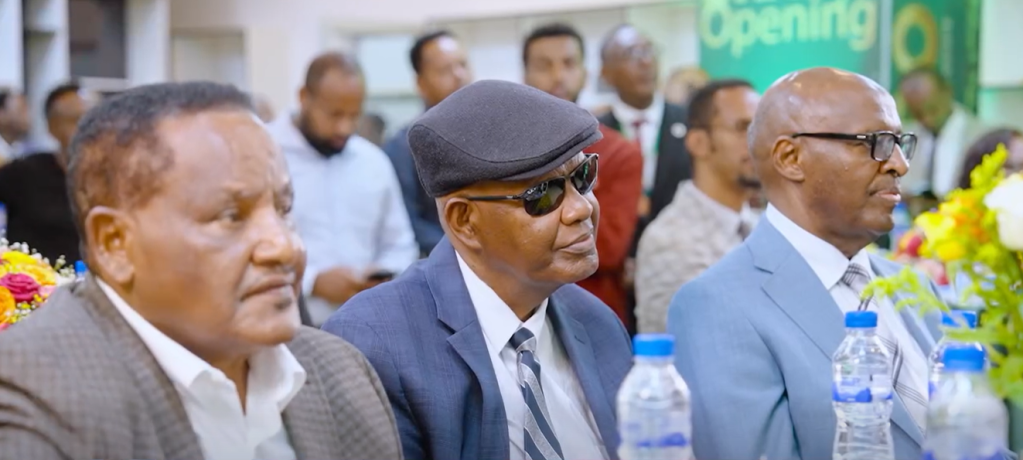
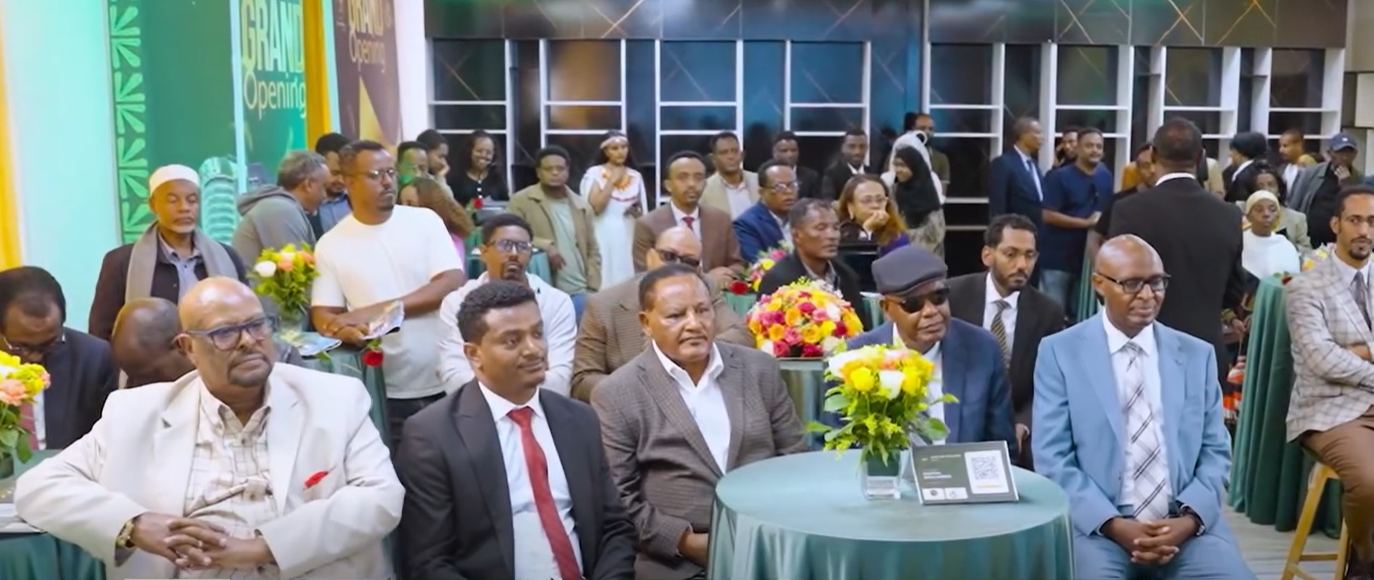
In a moment of celebration and vision, Dereje Mamuye, the Founder and CEO of African Holding Group, delivered a warm welcome message at the special inauguration ceremony of Godo Housing and Smart Real Estate. The event, which marked a significant milestone in the company’s journey, was a testament to the power of vision, innovation, and commitment to building a better future.
The ceremony was not just a celebration of a new development; it was a celebration of the spirit of enterprise that drives progress and transforms communities. As Mamuye addressed the gathered dignitaries, partners, and community members, his message resonated with hope, determination, and a deep sense of purpose.

A Leader’s Vision: Dereje Mamuye and African Holding Group
Dereje Mamuye is a prominent entrepreneur and visionary leader whose work has had a significant impact on the business landscape. As the Founder and CEO of African Holding Group, he has been at the forefront of driving innovation and development across various sectors.
African Holding Group is known for its commitment to excellence and its focus on creating value for communities. Under Mamuye’s leadership, the company has grown to become a major player in the industry, with a reputation for integrity, quality, and innovation. His vision is rooted in the belief that business can be a force for good—a tool for creating jobs, building communities, and empowering individuals.
Mamuye’s journey is an inspiration to many. His rise from humble beginnings to becoming a successful entrepreneur is a testament to the power of hard work, determination, and a clear vision. He is a role model for young people, showing that with dedication and perseverance, anything is possible.
Godo Housing and Smart Real Estate: A Milestone in Development
The inauguration of Godo Housing and Smart Real Estate represents a significant achievement in the field of real estate and housing. The project embodies the principles of innovation, sustainability, and community-centered design.
Godo Housing is not just a development; it is a vision for the future of housing. The project incorporates smart technology, sustainable design, and a focus on creating communities where people can thrive. By combining modern technology with thoughtful design, Godo Housing is setting a new standard for real estate development.
The project was a collaborative effort, reflecting the power of partnerships and the shared commitment to building a better future. The support of partners, investors, and community members was essential in bringing this vision to life.
A Message of Welcome and Gratitude
In his welcome address, Dereje Mamuye expressed his heartfelt gratitude to all those who contributed to the success of the project. He welcomed guests with warmth and humility, emphasizing the importance of community and collaboration.
“Today marks a significant milestone in our journey,” Mamuye said. “We are grateful to all those who have supported us along the way. This project is a testament to what can be achieved when we work together with vision and determination.”
Mamuye’s message was one of hope and optimism. He spoke of the potential of the project to transform lives and communities, and he expressed his confidence in the future.
Innovation and Sustainability: The Future of Real Estate
The Godo Housing and Smart Real Estate project is a model for the future of real estate development. It incorporates a range of innovative features, including:
- Smart Technology: The integration of smart technology to enhance convenience, efficiency, and security.
- Sustainability: Environmentally friendly design and construction practices that reduce the environmental impact.
- Community Focus: A focus on creating communities where people can live, work, and thrive.
- Quality Design: Thoughtful design that prioritizes comfort, functionality, and aesthetics.
These features reflect the vision of the project’s creators and their commitment to creating spaces that meet the needs of modern life.
A Greeting of Welcome
In his address, Dereje Mamuye extended a warm welcome to all the guests. He offered his thanks for their presence and support for this important milestone. This welcome message was a true reflection of the spirit of the event.
A Celebration of Partnership
The inauguration ceremony was also a celebration of the partnerships that made the project possible. Mamuye acknowledged the contributions of investors, partners, and community members, emphasizing that the success of the project was a collective achievement.
“We are grateful for the trust and confidence that our partners have placed in us,” Mamuye said. “It is through collaboration and shared vision that we can achieve great things.”
The event was attended by a distinguished group of guests, including business leaders, government officials, and community members. The diverse attendance reflected the broad support for the project and its potential to have a positive impact.
The Legacy of Dereje Mamuye
Dereje Mamuye is not just a businessman; he is a visionary leader who is committed to making a difference. His work has inspired many, and his legacy will continue to grow as he builds on his achievements.
His commitment to giving back to the community is a core part of his philosophy. He believes that true success is measured not only by financial achievement but by the positive impact one has on the lives of others. This philosophy is reflected in the projects he undertakes and the values he upholds.
Conclusion: A Bright Future Ahead
The inauguration of Godo Housing and Smart Real Estate marks the beginning of a new chapter in the story of African Holding Group and its visionary leader, Dereje Mamuye. The project is a testament to what can be achieved when vision, innovation, and commitment come together.
As the company continues to grow and innovate, it will undoubtedly continue to make a positive impact on communities and inspire others to pursue their dreams. The welcome message of Dereje Mamuye is a reminder that the journey of building a better future is one that we must all undertake together.
Injifannoon Ummata Oromoo!
Godo Housing haa jabaattu!
African Holding Group haa jabaattu!
This feature article is dedicated to Dereje Mamuye, the African Holding Group, and all those who are working to build a better future through innovation, vision, and commitment.

Finfinne and Dirree Dhawaa: The Macha-Tulama Association Declares That Their Inclusion in National Dialogue Is an Attempt to Weaken the Oromo People
A Historic Statement on the Struggle for Oromo Land, Identity, and Justice
By Daandii Ragabaa
(SBO/VOL — HAGAYYA 10, 2026) In a powerful and uncompromising statement, the Waldaa Maccaa fi Tuulamaa (Macha-Tulama Self-Help and Development Association) has declared that the inclusion of Finfinne and Dirree Dhawaa in the national dialogue agenda is a deliberate attempt to weaken and undermine the Oromo people. The association, which has long been a voice for Oromo rights and historical justice, has issued a clear warning: the Oromo people will not accept the theft of their ancestral land, and the struggle for justice will continue.
The Macha-Tulama Association’s statement comes at a critical moment, as Ethiopia’s national dialogue process unfolds and the status of Finfinne—the city known internationally as Addis Ababa—and its surrounding areas, including Dirree Dhawaa, remain deeply contested.
A Declaration of Historical Truth
The Macha-Tulama Association has issued its statement as a direct response to the agenda items concerning Oromia and Oromo rights being brought before the national dialogue. The association has made its position clear:
“Even today, our ancestral land is being stolen.”
“Finfinne and Dirree Dhawaa are Oromo.”
These declarations are not political slogans; they are assertions of historical truth. The association has reminded the Oromo people and the world of the atrocities committed during the Menelik era, when the Oromo people were systematically dispossessed of their land, their dignity, and their lives.
Remembering the Atrocities of the Menelik Era
The Macha-Tulama Association has brought the dark history of the Menelik era back into the spotlight, reminding the Oromo people of the crimes committed against their ancestors.
“Menelik committed an unforgivable crime against the Oromo people when he separated Finfinne from its Oromo owners,” the association declared.
The association detailed the atrocities of that era, naming specific victims and families who suffered under Menelik’s expansionist campaign:
- Abbaa Gadaa Guraaraa Lataa was executed by hanging.
- His father, mother, and three children were killed in a brutal and inhumane manner.
- Qajeelaa Dooyyoo and Guraaraa Dooyyoo were also executed, along with their mother, in a similarly horrific fashion.
- Shubbuu Ejersoo had his hands and feet severed before being killed.
- Aaxalee Jaatanii was starved to death in detention—denied food until life was extinguished.
These were not random acts of violence. They were part of a systematic campaign to break the spirit of the Oromo people, to erase their presence from Finfinne, and to establish a new political order built on Oromo suffering.
The Suffering Continues: Three Generations of Pain
The Macha-Tulama Association declared that the suffering of the Oromo people over Finfinne has now spanned three generations. From the initial dispossession under Menelik to the brutal repression under the Derg regime and now to the present day—the Oromo people have paid a heavy price.
“During the Derg era, many Oromo paid a great price for Finfinne,” the association stated. “The wound is still not healed.”
The association raised a pointed and urgent question:
“As long as this truth exists on this earth, the question of ‘Whose Finfinne is it?’ will always be asked. What has brought us to this point?”
The answer, according to the association, lies in the persistent refusal of successive Ethiopian regimes to acknowledge Oromo rights.
A Challenge to the Current Regime
The Macha-Tulama Association has posed a direct challenge to the architects of the ongoing injustice:
“Oromo people are struggling to reclaim their land and their rights. How can you govern on someone else’s land? What right do you have to claim authority over people who do not belong to you? It would have been better for you to struggle for your own land rather than occupy ours.”
The association’s statement is a fundamental challenge to the legitimacy of the Ethiopian state as it currently exists. It questions not just the governance of Finfinne but the entire framework of domination that has denied Oromo people their rights for over a century.
The National Dialogue: A Tool of Deception?
The Macha-Tulama Association expressed deep concern about the ongoing national dialogue and how the issues of Finfinne and Dirree Dhawaa are being treated within it.
According to the association, the dialogue is not being used as a genuine mechanism for reconciliation and justice. Instead, it is being manipulated to further marginalize the Oromo people and to legitimize the ongoing dispossession of Oromo land.
“The agenda of Finfinne and Dirree Dhawaa has been brought to the national dialogue to weaken the Oromo people,” the association declared. “The old politics of the Abyssinian elite continues, refusing to step back from the land that rightfully belongs to Oromo.”
The association emphasized that the ongoing process is not just disrespectful—it is a violation of basic rights and dignity. The association described the current situation as “an insult that crosses all boundaries” and declared that “something that did not exist before has now arrived” —a reference to the unprecedented nature of the current assault on Oromo rights.
A Call to Resistance and Unity
In the face of these challenges, the Macha-Tulama Association issued a clear and urgent call to the Oromo people:
“The Oromo people must fight for their land and their rights.”
The association’s call to action is not a call to violence—it is a call to resistance, to unity, and to the defense of Oromo rights through every legitimate means available. It is a call to refuse subjugation, to refuse silence, and to refuse to accept the theft of Oromo land as a settled fact.
The association also addressed the issue of Dirree Dhawaa—the area that has become a symbol of Oromo resistance and a flashpoint of conflict. The association’s declaration that Finfinne and Dirree Dhawaa are inseparable from the broader Oromo struggle serves as a reminder that these are not isolated issues—they are part of a continuous thread of resistance that stretches back over a century.
The Historical Context: Dirree Dhawaa as a Symbol of Resistance
Dirree Dhawaa is more than just a piece of land—it is a symbol of Oromo resilience and a monument to the struggle for justice. It is the site where Oromo people have gathered to demand their rights, where they have faced brutal repression, and where they have continued to return in defiance of all efforts to silence them.
The association’s statement linking Finfinne and Dirree Dhawaa in the same breath is significant. It sends a clear message: the Oromo people will not accept piecemeal solutions. They will not accept partial recognition. They will not accept the suggestion that one part of their historical homeland can be compromised while another is defended.
Both Finfinne and Dirree Dhawaa are Oromo.
A Historical Challenge to the Ethiopian State
The Macha-Tulama Association’s statement is not just a declaration of grievance—it is a fundamental challenge to the legitimacy of the Ethiopian state as it currently exists.
By raising the question “Whose Finfinne is it?” —and by insisting that Oromo people have the right to live on their own land with dignity, self-respect, and self-determination—the association is questioning the foundational narrative upon which the Ethiopian state was built.
The association’s demand is not for charity or concessions. It is for recognition of historical truth, for justice for past crimes, and for a future in which Oromo people are treated as equals in their own homeland.
The Path Forward: Recognition, Justice, and Peace
The Macha-Tulama Association’s statement concludes with a clear vision for what must happen:
The wounds of the past must be acknowledged. The atrocities committed against the Oromo people—from the Menelik era to the present—cannot be ignored or forgotten. They must be named, documented, and taught.
Justice must be pursued. Those who committed crimes against the Oromo people must be held accountable. This is not revenge—it is the foundation of lasting peace.
Oromo rights must be recognized. The Oromo people have the right to their land, their language, their culture, and their self-determination. This is not negotiable.
The national dialogue must be genuine. If the dialogue is to be meaningful, it must include a full and honest discussion of Finfinne, Dirree Dhawaa, and all the historical injustices suffered by the Oromo people.
Conclusion: The Struggle Continues
The statement of the Macha-Tulama Association is a powerful reminder that the struggle for Oromo justice is far from over. The wounds of the past remain open. The injustices of the present continue. And the future remains uncertain.
But one thing is clear: the Oromo people will not give up their land, their rights, or their dignity. They will continue to resist. They will continue to demand justice. And they will continue to remember the sacrifices of those who came before—from Abbaa Gadaa Guraaraa Lataa to the thousands of unnamed Oromo who have given their lives for Finfinne and for Oromia.
As the association stated:
“Oromo people are struggling to reclaim their land. This struggle has not ended—it continues. And it will continue until justice is done.”
Finfinne is Oromo.
Dirree Dhawaa is Oromo.
Oromia is Oromo.
The struggle continues.
For the memory of Abbaa Gadaa Guraaraa Lataa, Qajeelaa Dooyyoo, Guraaraa Dooyyoo, Shubbuu Ejersoo, Aaxalee Jaatanii, and all the Oromo martyrs who gave their lives for the land.
Injifannoon Ummata Oromoo!
Finfinne haa jabaattu!
Dirree Dhawaa haa jabaattu!
This feature article is dedicated to the Macha-Tulama Self-Help and Development Association and all those who continue to speak truth to power in the pursuit of justice for the Oromo people.





 Advocacy for Oromia