Daily Archives: June 20, 2026

Adaamaa: The City of Many Names
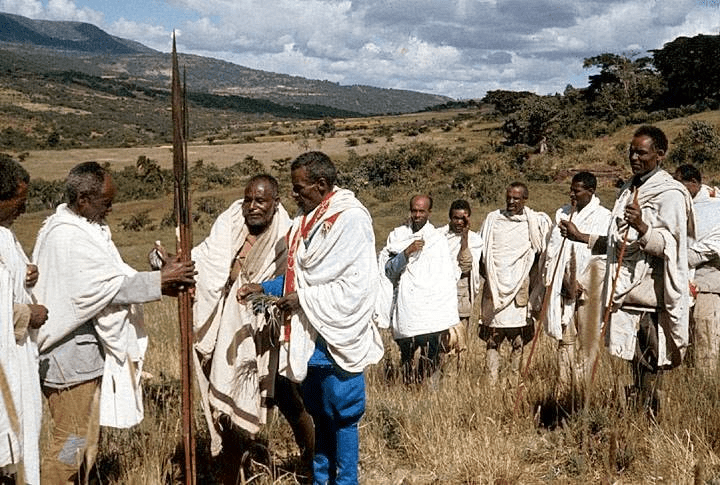
In the heart of Ethiopia’s Oromia region, nestled along the banks of the Awash River, lies a city that has worn many names like layers of history. To the Oromo, it is Adaamaa —a name given by a man. To others, it is Nazareth —a name imposed by empire. And to the elders who still remember, it is a land of ancient villages with names that whisper of a time before the city ever existed.
This is the story of Adaamaa, a city whose very name is a testament to the resilience of a people and the ever-shifting tides of power.
The Man Behind the Name
The name “Adaamaa” is not a random word. It comes from Adaamaa Buttaa, a man of the Torban Oboo clan . His story is woven into the fabric of the city’s founding, and the elders of his lineage have kept his memory alive through generations.
When the name was changed to “Nazareth” after 1948 G.C. , it was a wound that cut deep. The Oromo elders of the Torban Oboo clan responded with a biting poem, a lament that still echoes in the oral traditions of the region:
“Adaamaa gurrarraan yaasee, yaasee,
Dabalaa rabbiitu baasee,
Haylasillaseen kunumti ni maraatee?
Akka namaatti, lafa kiristinnaa kaasee”
Translated, it speaks of Adaamaa rising from the darkness, of God lifting the lowly, and of Haile Selassie’s attempt to claim the land as Christian territory. It was a poetic protest against the erasure of Oromo identity from a place that had long been theirs.
Before the City: A Landscape of Villages
Before Adaamaa was a city, before the name “Nazareth” was ever uttered, this land was home to Oromo villages. The Karrayyuu Oromo and the Torban Oboo clan lived in scattered settlements across the area . These were not empty lands waiting to be claimed; they were thriving communities with names that told stories of their own.
According to scholars like Alemayehu Haile, Corree (or Chorre) was not the name of a clan but the name of a place—a piece of Oromo land . The Karrayyuu Oromo called this area by that name long before any city was built. The villages of Kurriftuu, Sololoqaa, Qobboo, Ulkaa, and Marguu dotted the landscape, each with its own identity and history .
The site where the city would eventually rise was known as Didibbisa before the railway station was built . The river that flows through it, now called Hawaas, was known as Malkaa Hiddaa —a name that evokes the deep, flowing waters that sustained life in this land .
The Birth of a City
The modern city of Adaamaa was born from a single structure: a railway station . When the railway line connecting Addis Ababa to Djibouti was constructed, a station was built at this location, and the settlement began to grow around it. The train brought commerce, commerce brought people, and people brought a city into being.
In the 1940s, a massive wave of development transformed the settlement. An Armenian businessman named Armank Bagadsoniya built many of the city’s early shops and markets . He left a lasting mark on the city’s commercial landscape. When Bagadsoniya died without children, his wealth and property passed to his wife, Almaz Abboye . It was a small story of love and legacy in a city that was rapidly changing.
The Forced Change to Nazareth
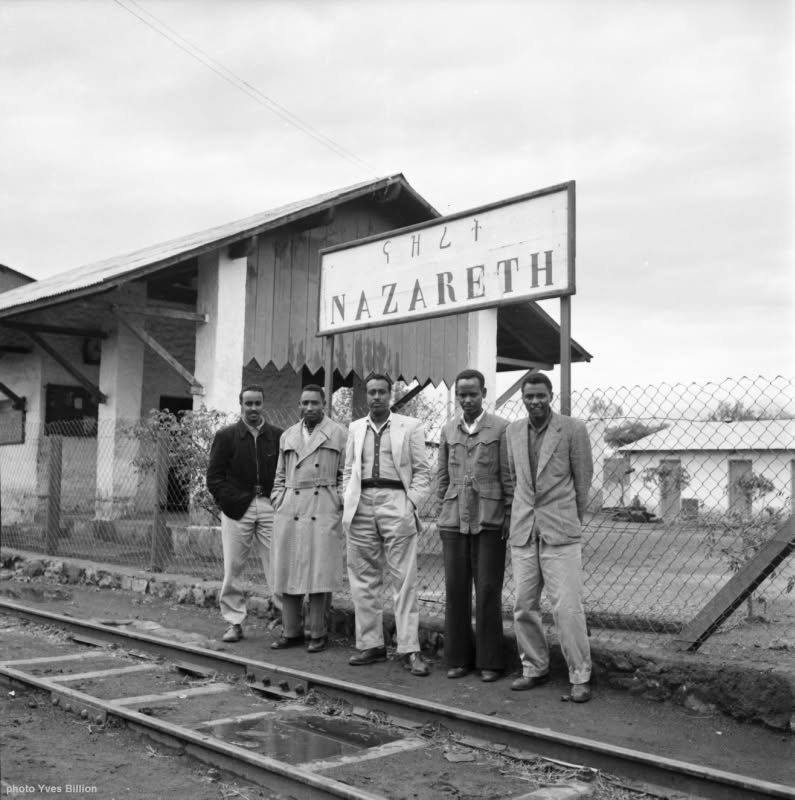
The transformation of Adaamaa into Nazareth was not a natural evolution—it was a deliberate act of political will. Dejazmach Sahlu Difaye, the governor of the city at the time, was the one who first erected a sign reading “Nazareth” in front of the railway station . The name was chosen, some say, to evoke the biblical city of Nazareth, aligning the growing settlement with Christian imagery and imperial ambition.
The renaming did not stop at the city itself. The oil company changed its name from “Kabanus” to “Nazareth Oil.” The American missionary school, the Abebe Andarge Hotel, the NAFC pasta factory—all adopted the new name . It was an effort to erase Adaamaa from the map, to rebrand a city that had been born of Oromo land and Oromo labor as something foreign.
Only the Akropool Palace Hotel stubbornly held onto its original name, a quiet act of resistance in a city that was being renamed piece by piece.
A City Under Administration
For decades, Adaamaa—now Nazareth—was administered under the Shawa Xeqlay Gizat (the Shewa province) . It became the capital of the Awrajaa Erer fi Karrayyuu (Erer and Karrayyuu District) . The name “Erer” represents the Torban Oboo Oromo, while “Karrayyuu” refers to the Karrayyuu Oromo . The district was further divided into the Bosat woreda (district), with Oolancitii serving as the woreda capital . This administrative structure, imposed from above, attempted to compartmentalize and control the Oromo people who had lived in these lands for centuries.
The Modern City
The city’s infrastructure grew with the times. The asphalt road connecting Adaamaa to Finfinnee (Addis Ababa) was constructed in 1963 G.C. , linking the city more closely to the capital. The city’s internal asphalt roads were completed in 1964 G.C. , paving the way for modernization.
Yet even as the roads were paved and the signs were changed, the memory of Adaamaa persisted. It survived in the songs of the elders, in the poems passed down through generations, and in the hearts of a people who refused to let their history be erased.
Adaamaa Today
Today, the city is officially known as Adama (the modernized spelling of Adaamaa) in government documents, though many still call it Nazareth in everyday speech. It has grown into one of Ethiopia’s largest cities, a bustling hub of commerce, education, and industry. But beneath the surface, the old tensions remain.
The story of Adaamaa is a story of names. Each name—Adaamaa, Nazareth, Didibbisa, Malkaa Hiddaa, Corree—represents a different layer of history, a different claim to the land. It is a testament to the enduring power of language and memory, and a reminder that a city is never just a city. It is a living archive of the people who built it, named it, and loved it.
As the Oromo elders said in their lament, “Adaamaa gurrarraan yaasee, yaasee” —Adaamaa rose from the darkness. And despite all attempts to rename it, Adaamaa still rises.
Sources: Local History of Ethiopia /Nazareth/ p-230, Nordic Africa Institute; Alemayehu Haile – Seenaa Oromoo Hanga Jaarraa 20ffaa – p-367; Journal of Ethiopia – 1966 – No-2 – pp-362-373.

The Lion’s Roar: How Wasanuu Didoo Carried Oromo Music Through Darkness to Light
By Daandii Ragabaa
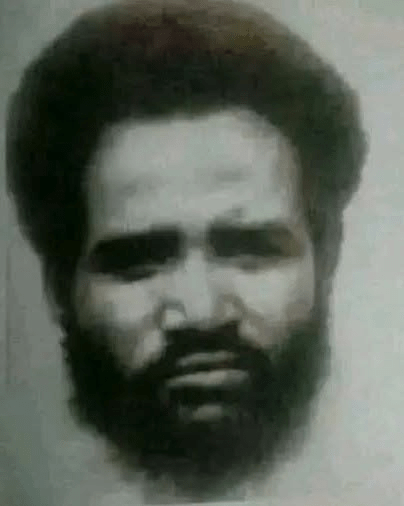
In the shadowed years when speaking Afan Oromo was itself an act of resistance, a young man from the heart of Oromia picked up his father’s masenqo and began to sing. He did not know then that his voice would become the soundtrack of a people’s struggle, or that his songs would outlive the very darkness that sought to silence them.
His name is Wasanuu Didoo—and in the story of modern Oromo music, he is the lion who refused to be caged.
The Son of the Masenqo
To understand Wasanuu is to understand that music, for him, was never a choice. It was inheritance.
Born into a family where the masenqo—the traditional one-stringed fiddle of Oromo culture—was as familiar as breath, Wasanuu learned his art at the feet of his father, Didoo Booraa. In their household, the day did not begin without the plucking of strings, the rasp of the bow, the call-and-response that connected the living to the ancestors.
“When Wasanuu sang, Didoo played,” an elder once recalled. “The father and son were not two artists but one spirit divided between hands and voice.”
The music they made together was not for fame or fortune. It was for something far more ancient: the preservation of a people’s soul.
Singing Through the Long Night
The era in which Wasanuu rose to prominence was one of profound hardship. These were the dark years when Afan Oromo was suppressed, when cultural expression was monitored, when even a song could be interpreted as sedition.
But Wasanuu Didoo did something unprecedented.
He was among the first to take Oromo music and arrange it for ensemble performance—transforming the solitary sound of the masenqo into something that could fill concert halls and rally crowds. He brought Oromo melody to the stage at a time when such visibility was dangerous, and he did so with a courage that earned him the title of pioneer.
“Before Wasanuu, Oromo music was something you heard in villages, in homes, in secret gatherings,” writes music historian Tilahun Gemeda. “He was the bridge that carried it into the public sphere, into the consciousness of the nation.”
The Songs That Would Not Die
Many of Wasanuu’s compositions from that era remain unmatched in their resonance. Two in particular stand as monuments to his vision.
“Alam mangistaata bira deemna” (“We Walk Alongside the System”) and “Maasaan gamaa lafa hinbaatu” (“The Dance Floor Does Not Touch the Ground”) were not merely songs—they were coded messages, poetic declarations that navigated the narrow straits between expression and survival.
His lyrics are layered with xiiqii—the Oromo tradition of poetic irony and metaphor that says one thing while meaning another. To the uninitiated, his words might seem simple. To those who understood, they were revolutionary.
A verse from one of his most famous compositions captures this perfectly:
“Sangaa oofaa jennaan, oofnee baane Shaggariinii
Kaan shaniin bitata, kuun shantamaan bita gariini
Yaa alaamaa qawwee, taa’an tola Labaniinii
Labaniin ni iyyaa, maarree yoo du’e jabaan gaafa biyyaa”
Roughly translated:
“They said drive the ox, and we drove them out, Shaggarii
Others buy with eight, this one buys with five and a half
O sign of the spear, sit well with Labanii
Labanii cries out, but if the strong man dies, the day belongs to the nation”
To sing of Labaniin—one of the legendary Oromo warriors—was to remind the people that resistance did not die with one generation. When the father falls, the son must rise. When one voice is silenced, a hundred more must take up the cry.
The Wellspring of Tradition
Wasanuu Didoo is often described as the foundation stone of Oromo art—the bu’uura from which all else flows.
His innovation did not lie in invention but in reverence. He reached backward to pull forward, drawing from the deep well of Oromo oral tradition and reimagining it for a new age. His rhythms carried the pulse of the qeerroo; his melodies echoed the arsii; his lyrics breathed the philosophy of the gadaa system.
When he sang, he was not alone on that stage. His father’s spirit sang with him. The ancestors sang with him. And the future—unborn and unshaped—sang through him as well.
The Spreading Light
From the household of Didoo Booraa, the fire spread.
The Oromo art movement that began in that modest home reached outward like water finding its level. It flowed to the Afran Qal’oo, to the great cities, to the diaspora. Artists who came after—many of whom owe their careers to the path Wasanuu cleared—remember him as the one who opened the door.
“Wasanuu Didoo is the gateway,” says contemporary Oromo musician Ali Birra, himself a legend in his own right. “He was the one who made it possible for us to dream.”
Indeed, Ali Birra would follow in Wasanuu’s footsteps, carrying the tradition even further, but he would be the first to acknowledge that without Wasanuu’s pioneering work, the road might never have been paved.
The Echo That Remains
Today, the songs of Wasanuu Didoo continue to be performed. They are played on radio stations in Addis Ababa and in cafes in Minneapolis. They are sung by grandmothers in rural villages and by university students in global capitals.
The world has changed since those dark years. Afan Oromo is now spoken freely, broadcast widely, celebrated publicly. But the music of Wasanuu Didoo does not feel like a historical artifact. It feels alive—because it was never really about the time in which it was composed.
It was about something timeless.
His lyrics, with their layered meanings and poetic resilience, speak to any generation facing oppression. His rhythms, rooted in the earth of Oromia, connect people across distances and decades. And his example—an artist who chose courage over comfort, purpose over safety—continues to inspire those who pick up instruments or lift their voices in the name of cultural preservation.
The Lion’s Legacy
They called him the lion—and for good reason. Like the leenca of the Oromo highlands, Wasanuu Didoo was both powerful and protective. He did not roar for himself. He roared for his people.
He carried a culture on his shoulders when no one else would. He sang songs that could have been his downfall. He looked into the darkness and found the courage to sing anyway.
In the annals of Oromo art, many names will be written. But at the very beginning—at the source, at the kallacha from which the river flows—there is one name that cannot be erased.
Wasanuu Didoo. The pioneer. The foundation. The lion who roared, and in roaring, set a people free.
“His strings are the fabric of freedom. His words are woven with irony and depth. And that irony—that xiiqii—it carries you, it holds you, it makes you feel something beyond yourself.”
— An Oromo elder reflecting on the music of Wasanuu Didoo
Author’s Note: Wasanuu Didoo’s contributions to Oromo music and culture remain largely undocumented in mainstream historical accounts, but among the Oromo people, his legacy is preserved in the songs that continue to be passed from generation to generation. This feature story draws from oral histories, musical scholarship, and the enduring presence of his work in contemporary Oromo cultural life.






