Daily Archives: May 15, 2026

A Historic First: The Walabu Oromo Law Dictionary Inaugurated in Finfinne
By Dhabessa Wakjira
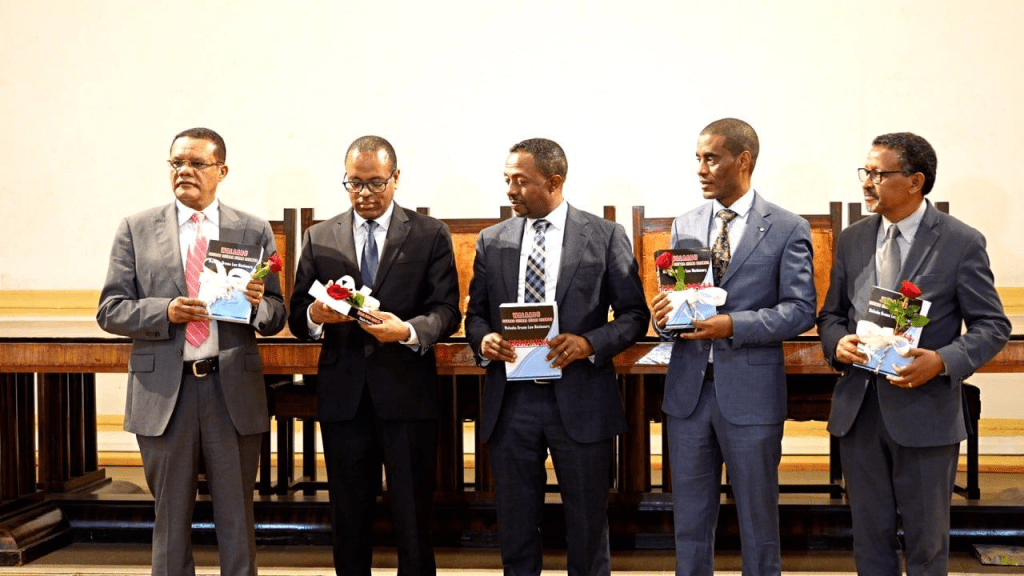
(Finfinne, May 14, 2026) — In a landmark moment for Ethiopia’s legal history, the very first Oromo language law dictionary—titled the Walabu Oromo Law Dictionary (Walaabuu Guuboo Jechoota Seeraa Afaan Oromoo)—was officially inaugurated today in a vibrant ceremony at Ras Mekonnen Hall, Addis Ababa University.
This monumental legal reference work, which opens an entirely new chapter in Ethiopian jurisprudence, is the result of a collaborative effort between the Federal Law and Justice Institute (FLJI), the Ethiopian Studies Institute at Addis Ababa University, and Justice for All – PFE Ethiopia (JFA-PFE).
A Ceremony of Significance
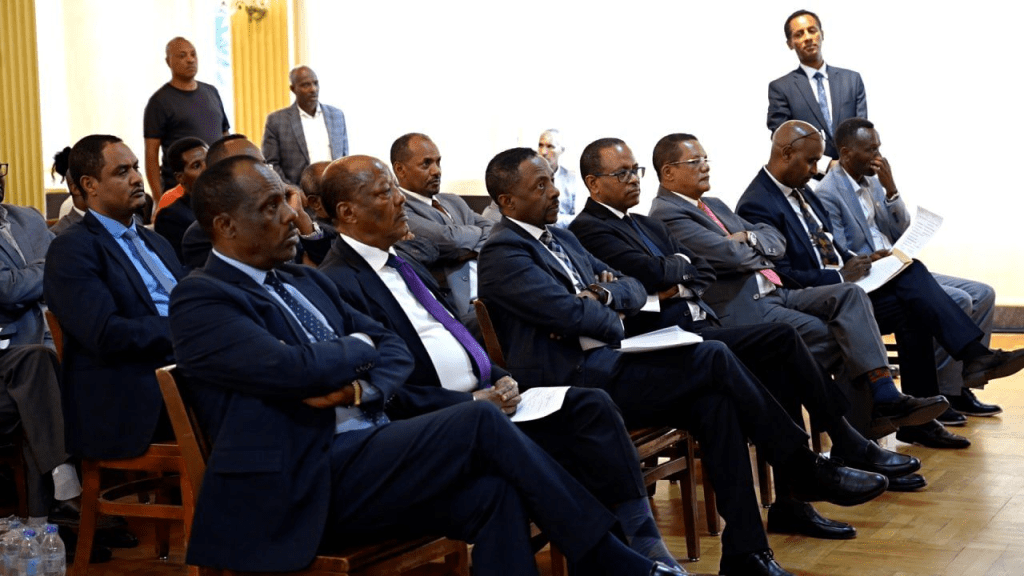
The inauguration ceremony was attended by high-ranking government officials, leaders of justice institutions, legal scholars, researchers, and distinguished invited guests. The atmosphere was one of collective pride and historical awareness—those present understood that they were witnessing not merely the launch of a book, but the solidification of a language’s place in the formal legal architecture of the nation.
The President of the Federal Supreme Court Speaks
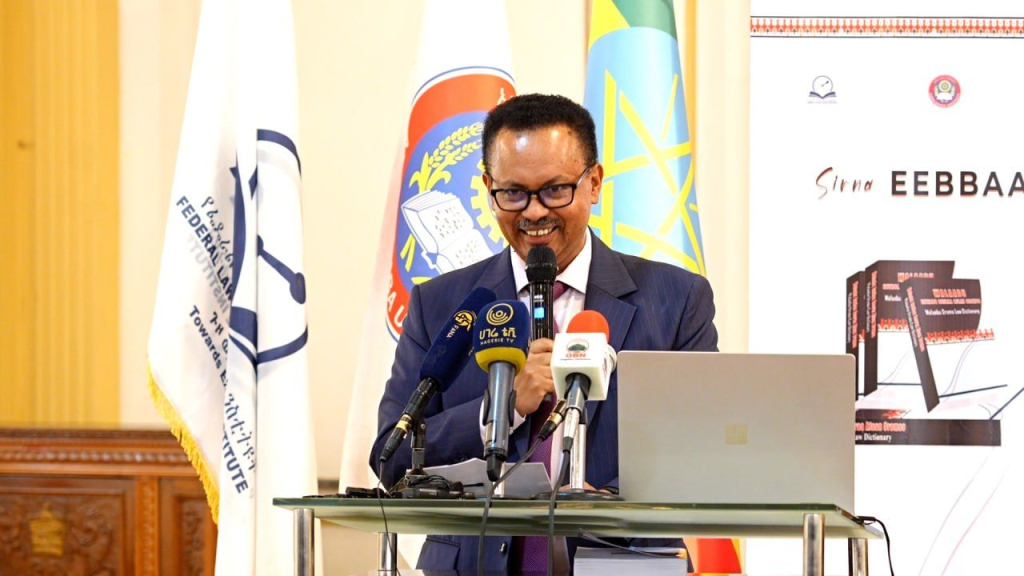
Honorable Mr. Tewodros Mihret, President of the Federal Supreme Court, addressed the gathering with particular gravity. He emphasized the profound utility of the dictionary in resolving one of the persistent challenges within the justice system: inconsistency.
President Tewodros explained that until today, legal professionals had been translating legal terminology into Afaan Oromo according to their individual understandings and preferences. This ad hoc approach, he noted, had a negative impact on the quality of justice delivery. Different judges, prosecutors, and lawyers might interpret the same legal concept differently, leading to confusion, contradiction, and ultimately, a erosion of public trust in the fairness of the legal system.
The Walabu Oromo Law Dictionary, the President declared, will serve as an authoritative reference work that eliminates fragmented translations and divergent interpretations. By establishing a unified legal vocabulary, the dictionary will enable consistent justice services and strengthen the rule of law. It is, he said, a major achievement.
Ambassador Degife Bula: A Testament to Dedication
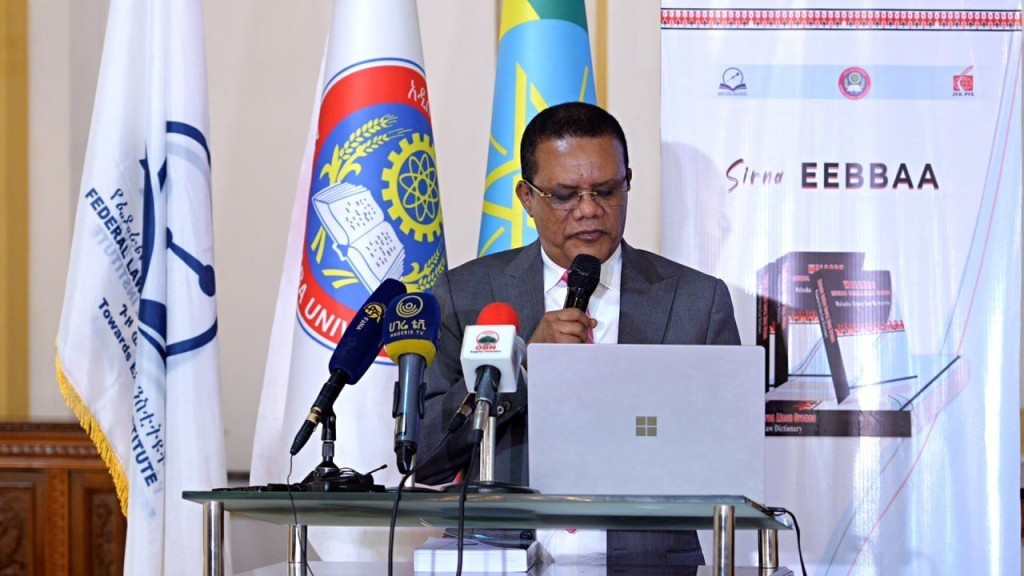
Following the President’s remarks, Ambassador Degife Bula, Director General of the Federal Law and Justice Institute, delivered a message that traced the dictionary’s journey from conception to completion.
Ambassador Degife emphasized that the dictionary will play an irreplaceable role in harmonizing the linguistic and conceptual differences that have long been observed within the legal and justice systems. He noted that the work is not only significant because it is the first of its kind in Oromo history. Its distinction is further elevated by the fact that it was prepared in collaboration with Addis Ababa University—Ethiopia’s most venerable institution of higher learning—and inaugurated within its very premises.
The Director General acknowledged that the project took considerable time. However, he stressed that its quality was assured by the dedication of Oromo legal scholars and professionals with exceptional linguistic expertise—individuals who committed themselves tirelessly to the task. He extended his profound gratitude to the media, religious institutions, and political organizations that played supportive roles in ensuring the work’s successful completion, whether directly or indirectly. Most of all, he thanked the scholars who labored day and night in their respective fields.
A Dictionary Rooted in Oromo Reality
A particularly noteworthy aspect of the Walabu Oromo Law Dictionary, as explained by Ambassador Degife, is its methodological grounding. The preparation process made significant efforts to harmonize the dialectal variations and terminological usage patterns from all regions of Oromia. Rather than privileging one dialect over others, the dictionary seeks to represent the richness of the Oromo language in its full diversity.
Furthermore, the dictionary’s foundation and explanatory framework are entirely in Afaan Oromo. This is not a translation of a foreign legal dictionary into Oromo; it is a legal dictionary born in Oromo, for Oromo, from Oromo conceptual frameworks. This approach, Ambassador Degife argued, greatly enhances understanding of legal terminology because users are not forced to think through a second language.
The Practical Impact on Justice
Given that Afaan Oromo is currently serving as the working language of education and administration across all three branches of government in the Oromia region, the Walabu Oromo Law Dictionary will provide an indispensable resource for the region’s judicial and justice institutions.
For the ordinary citizen—the farmer, the market woman, the teacher, the patient—access to justice has often been blocked by language barriers. Legal proceedings conducted in a language they do not fully understand leave them vulnerable, dependent on interpreters, and disconnected from the proceedings that determine their lives. With this dictionary, judges, lawyers, and legal aid providers can now communicate legal concepts to Afaan Oromo speakers with precision, consistency, and clarity.
The dictionary will also serve as a vital resource for legal professionals at the federal level who speak, write, and read Afaan Oromo. As Ethiopia continues to navigate the complexities of its federal system, the availability of authoritative legal references in multiple languages is not a luxury—it is a necessity for genuine equality before the law.
A Broader Meaning: Language as Justice
Beyond its immediate utility, the inauguration of the Walabu Oromo Law Dictionary carries a deeper symbolic weight. For centuries, Afaan Oromo was systematically excluded from formal legal, educational, and administrative domains. It was relegated to the private sphere—the home, the market, the oral tradition—while Amharic dominated the courts, the parliament, and the classroom.
The presence of a comprehensive law dictionary in Afaan Oromo, inaugurated at Addis Ababa University and supported by federal institutions, signals a shift. It is a tangible acknowledgment that justice cannot be truly blind if it is also monolingual. A citizen who cannot understand the language of their own trial is not receiving justice; they are receiving procedure.
This dictionary is a tool of decolonization. It is an act of epistemic justice. It says, in the most concrete terms possible: the Oromo language is not inferior. The Oromo language can carry the full weight of legal reasoning, of complex jurisprudence, of the rights and responsibilities of citizenship.
The Road Ahead
The launch of the Walabu Oromo Law Dictionary is not the end of the journey. It is a beginning. Legal terminology evolves as societies change, as new laws are written, and as new legal challenges emerge. The dictionary will require updates, expansions, and continuous refinement.
Moreover, the model established by this project—collaboration between federal institutions, universities, and civil society—can and should be replicated for other Ethiopian languages. A truly multilingual legal system, where every citizen can access the law in their mother tongue, remains an unfinished project. But the Walabu Oromo Law Dictionary has laid the first bricks.
Conclusion: A Day to Remember
May 14, 2026 (Ginbot 6, 2018 E.C.) will be remembered as the day when the Oromo language took another decisive step toward full institutional equality. It will be remembered as the day when legal professionals gained a tool that will enable them to serve their Oromo-speaking fellow citizens with greater precision, consistency, and dignity.
The scholars who labored day and night, the institutions that provided support, the leaders who championed the project—all of them have earned the gratitude of a people who have waited too long to see their language honored in the halls of justice.
The Walabu Oromo Law Dictionary is here. May it serve justice. May it serve truth. May it serve the Oromo people—and all Ethiopians—in the relentless pursuit of equality before the law.
“When a citizen understands the law in their own language, justice is no longer a distant promise. It becomes a daily reality.”

The Hands That Build: Women and the Unfinished Work of Nation Building
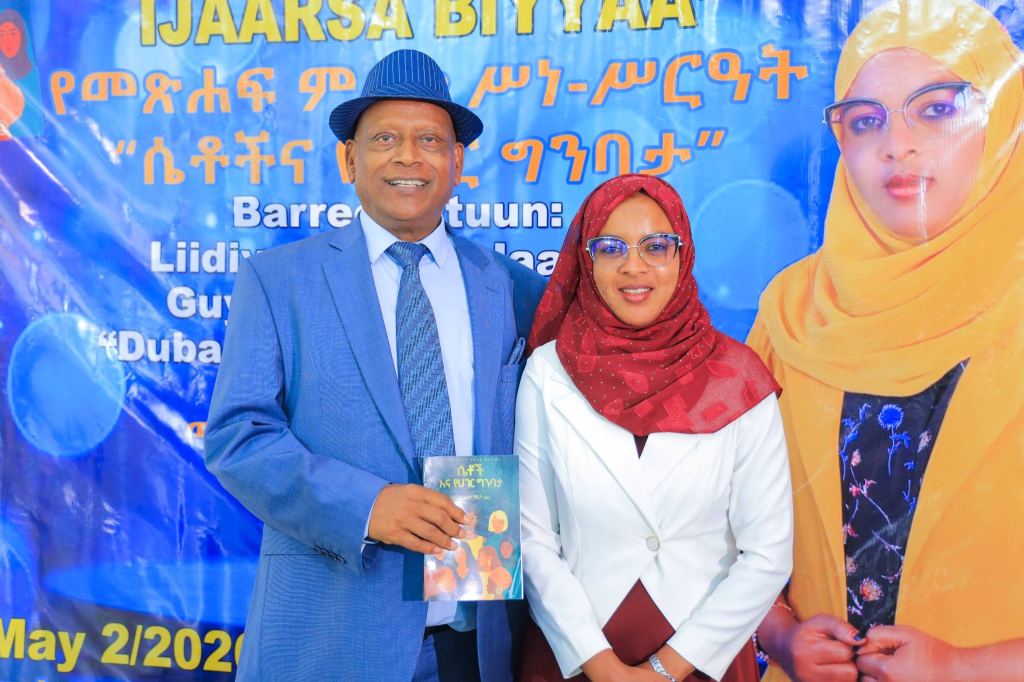
By Dhabessa Wakjira*
There is a proverb in many African cultures: “When a woman stumbles, the whole household trembles.” But the corollary is rarely spoken: when a woman rises, the entire nation ascends with her.
For generations, the story of nation building has been told as a masculine epic—a tale of warriors, kings, negotiators, and generals. Yet the quiet truth, known in every village and every home, is that nations are not built by speeches alone. They are built by hands that grind grain, by backs that bend over rivers, by voices that sing children into sleep and then rise at dawn to plant the seeds of tomorrow.
This feature story turns the lens on the women of Oromia and Ethiopia—not as victims, not as symbols, but as architects. It is a reflection on what it means to say dubartootaafi ijaarsa biyyaa: women and the construction of a country.
The Invisible Foundation
Walk into any rural household in Oromia before the sun has touched the horizon. Who is awake? The woman. She has already fetched water, kindled the fire, and begun preparing the marqaa that will fuel the day’s labor. By the time the first light breaks, she has completed a morning’s work that would exhaust a city dweller by noon.
This is not a scene from the past. This is the present. And it is the foundation upon which the national economy rests—unpaid, unacknowledged, and utterly indispensable.
Yet when we speak of “nation building,” we speak of parliaments, budgets, roads, and treaties. We speak of the visible architecture of power. The invisible architecture—the reproductive labor, the agricultural toil, the social cohesion woven through kinship networks—is left to women, and left out of the story.
Beyond the Domestic Sphere
To say “dubartootaafi ijaarsa biyyaa” is to make a claim that challenges this erasure. It is to insist that women are not merely beneficiaries of development or recipients of aid. They are active agents in the creation of the nation.
Consider the Gadaa system, the indigenous Oromo democracy. For centuries, it has been understood primarily as a male institution—five parties, eight years each, a cycle of power passed between generations of men. But what of the Siinqee? The institution of the Siinqee staff, carried by Oromo women, was not a decoration. It was a check on power. When a woman raised the Siinqee, disputes stopped. When women marched together, decisions were delayed until justice could be heard. The Siinqee was not outside the Gadaa; it was the conscience of the Gadaa.
This is the deeper meaning of women and nation building. It is not about “including women” in structures designed by men. It is about recognizing that women have always possessed their own structures, their own forms of authority, their own ways of holding the nation together when men—with their armies and their ambitions—pulled it apart.
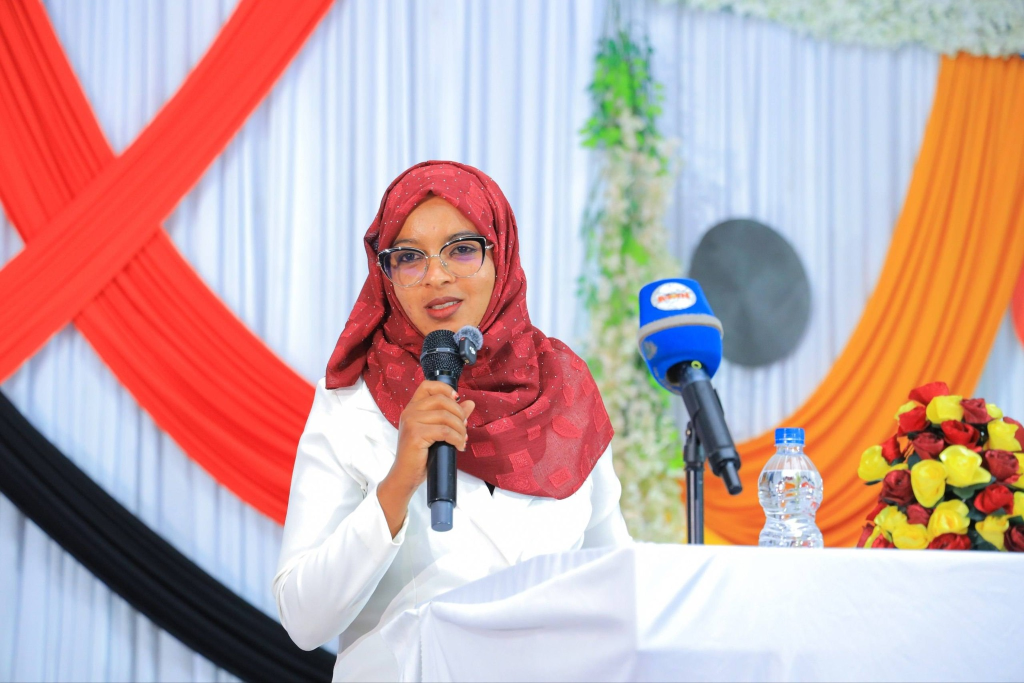
The War Women Fight
In times of conflict, women are called the “first victims.” They bear the weight of displacement, of sexual violence, of watching their children starve. But they are also the first responders, the first rebuilders, the first to gather the scattered pieces of a shattered community.
The women of Oromia know this intimately. They have buried sons who fell in the struggle. They have visited husbands in prisons built by regimes that feared their names. They have fled across borders with infants on their backs and nothing else in their hands. And then, when the shooting stopped—or even before it stopped—they began to rebuild.
They formed iddir (burial associations) to ensure that the dead were honored. They formed iqqub (rotating savings groups) to send children back to school. They turned refugee camps into marketplaces, turning nothing into something, turning survival into life.
This is nation building. This is ijaarsa biyyaa.
The Politics of Presence
In recent years, the political landscape of Oromia and Ethiopia has shifted. Women have taken seats in parliament, ministries, and regional councils. The language of gender equality has entered the constitution, the party platforms, and the international donor reports.
These are victories. They are not empty.
But presence is not power. A woman sitting in a chair designed by a patriarchal system, following rules written by that same system, speaking a language that was never her mother tongue—this is not liberation. It is a foot in the door. And a foot in the door, while necessary, is not the same as building a new house.
The true work of dubartootaafi ijaarsa biyyaa lies deeper. It lies in asking: What would a nation look like if it were built not on competition but on care? Not on extraction but on cultivation? Not on the logic of the battlefield but on the logic of the kitchen—where resources are shared, where no one eats until everyone is served, where waste is a sin and generosity is survival?
These are not soft questions. They are revolutionary ones. And they are questions that women, who have been excluded from the official story of nation building, are uniquely positioned to ask.
The Double Burden
No honest reflection on women and nation building can ignore the double burden. Women are expected to build the nation while also building the home. They are told to lead, but only after they have cooked, cleaned, raised the children, and cared for the elderly. They are praised for their strength while being denied the rest that strength requires.
This is not sustainable. A nation that demands everything from its women while giving them nothing—no shared domestic labor, no affordable childcare, no protection from violence, no recognition for unpaid work—is a nation that is eating its own seed corn.
Ijaarsa biyyaa requires the bricks of justice. And justice begins at home.
The Young Girl and the Future
Imagine a girl born today in a rural village of Oromia. If she is lucky, she will go to school. If she is very lucky, she will finish. If she is extraordinarily lucky, she will find work, marry by choice, and live without fear of violence.
But luck is not a policy. And nation building is not a lottery.
The question before the Oromo people—before all Ethiopians—is whether they will continue to build their nation on the backs of women, or whether they will finally build with them, for them, through them.
The girl in that village has her hand on the future. She does not yet know the word “feminism.” She may never read a book about “gender and development.” But she knows what her mother knows: that the country will be what women make it. Because women have always made it. They have just never been given the credit.
Conclusion: The Unfinished House
Dubartootaafi ijaarsa biyyaa is not a slogan. It is a description of reality. Women have been building this nation since the first seed was planted, since the first child was named, since the first council gathered under the sycamore tree.
The house is not yet finished. The roof leaks. The walls have cracks. Some rooms are still locked to those who built them.
But the builders are still here. They are waking before dawn. They are fetching water. They are raising the Siinqee. They are sitting in parliament and sleeping in refugee camps. They are doing two jobs, three jobs, the work of generations compressed into a single day.
The question is not whether women can build a nation. They already have.
The question is whether the nation will finally acknowledge their hands—and let them help design the blueprints.
When a woman rises, the entire nation ascends with her. Let her rise. Let the nation rise.
*Note on Attribution: The feature story is based on the author, Lediya K Jarso, the book reflection. Dhabessa Wakjira engaged with that reflection as a commentator, and the present reflection draws substantially from the ideas, themes, and framing originally articulated by the author. This feature story is offered as a synthesis and expansion of that shared conversation, with full acknowledgment of the original source.
The Unfinished Struggle: Leencoo Lataa and the Long Road to Oromo Freedom
By Daandii Ragabaa*
“Akkuma mootummaa Hayilasillaasee, Dargiifi Wayyaanee lolaa turetti lolla taanaan gaarii hinta’u.”
Like the governments of Haile Selassie, the Derg, and the Woyane that were fought, it is not good for this one to become a battlefield.
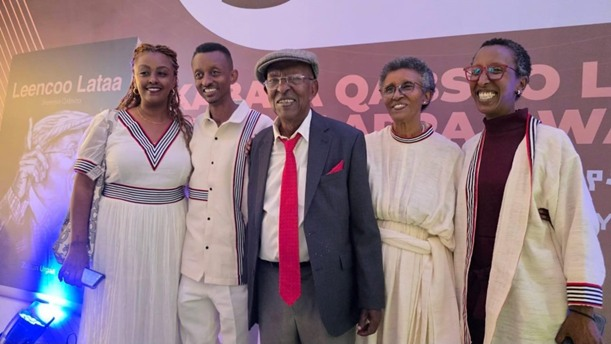
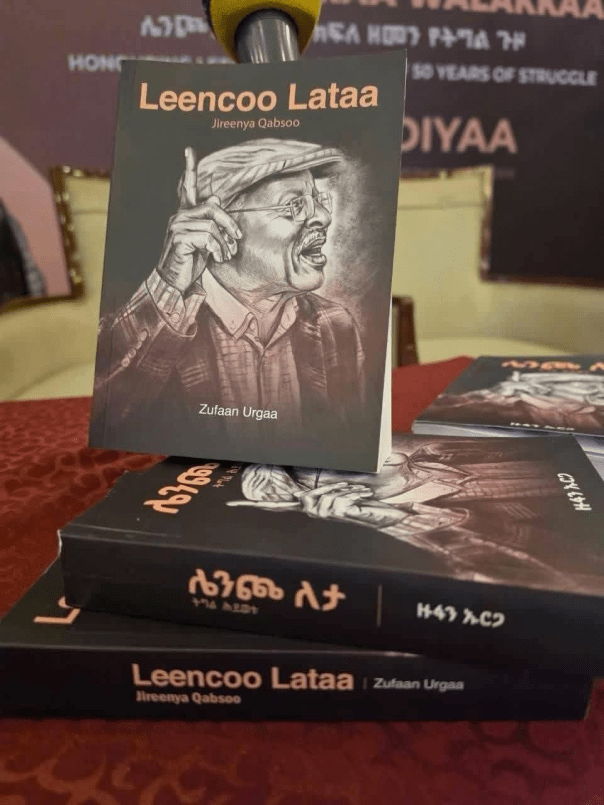
These words belong to Obbo Leencoo Lataa. They were spoken not in the heat of revolution, nor in the shadows of exile, but at a book launch in Finfinnee—a ceremony celebrating the publication of his own memoir, “Leencoo Lataa: Jireenya Qabsoo” (Leencoo Lataa: A Life of Struggle). The book, written by Zufaan Urgaati and published in both Afaan Oromo and Amharic, was unveiled on a recent Saturday to an audience of federal and regional officials, members of parliament, scholars, ambassadors, artists, political leaders, Gadaa elders, Siinqee mothers, family members, and ordinary citizens.
It was a gathering of memory. And at its center sat a man who has spent more than fifty years in the trenches of the Oromo liberation struggle.
A Life Forged in Struggle
Obbo Leencoo Lataa is not a newcomer to the stage of Oromo politics. He is a well-known figure, a seasoned political intellectual, a man who has dedicated more than half a century to the cause of Oromia and the Oromo people. He was among the founders of the ABO (Afran Qallo Oromo) and one of the original architects of Gaazexaa Bariisaa—a publication that has served as a voice for the Oromo struggle across decades.
His memoir, spanning three volumes, eleven chapters, and 447 pages, is priced at 1,200 Ethiopian Birr. It is not a light read in any sense—neither in weight nor in content. It is the record of a life lived on the edge, a chronicle of sacrifice, imprisonment, exile, and unyielding commitment to a people who have known generations of subjugation.
The Family That Struggle Built
The book launch was not merely a political event. It was also a family reunion—of a family shaped in profound ways by the struggle.
Obbo Leencoo is married to Professor Kuwee (Maartaa) Kumsaa, herself a scholar and activist of considerable stature. Together, they have three children: two daughters, Huriyaa and Goolii, and one son, Roobaa. Their family story is not one of quiet domesticity. It is a story of separation, of longing, of children growing up without fully knowing their father, of a mother who endured her own imprisonment while her husband was in the forests.
Huriyaa Leencoo, the eldest daughter, spoke at the event. Her testimony cut through the political rhetoric and landed like a stone dropped into still water:
“In my childhood, I do not remember my father very much. But I remember the suffering my mother went through. My mother and father were married for only three years, and in that time they had three children.
My father—the husband, the lover of struggle, the father of her children—left home without proper farewell and went into the battlefield. When he left, my mother was heartbroken. I remember her lying on the sofa, tears flowing, repeating, ‘Beenu ka’ii, beenu ka’ii, allaattii koo joobiraa beenu sifaanan bu’aa’ — ‘Let’s go, get up, let’s go, my bird, my joobira, let’s go down from here.’
At that age, I did not understand why she was crying. I tried to ask her, but I was afraid.
Before my father left for the battlefield, he used to play with us as a father plays with his children. We experienced his love. Then he left. After he was gone, my brother and I would constantly trouble our mother, asking, ‘Where is our father?’
Finally, our mother printed a poster of his photograph and hung it on the wall. She told us, ‘From today onward, do not ask me about your father! This is your father!’ But whenever we had the chance, we still wanted to talk about him.
After our mother was imprisoned, we hardly spoke of him at all. When she was released and we fled the country, crossing into Kenya, we finally heard his voice on the phone. He was at a conference in London. I listened as he spoke. The voice on the other end said, ‘Who is this?’ I said, ‘A wild animal told me to call.’ I felt in my heart that it was my father’s voice. I handed the phone to my mother. It was him.
For three months after that, we talked about him constantly at home. Then, just days before we left for Canada, he came and saw us.
We knew our father as Yohaannis Lataa. We had to learn to call him Leencoo Lataa. That name—Leencoo—appeared in my mind as someone very tall, very great. When he stepped out of the car to speak to us, the first thing that came out of my mouth was, ‘Why are you so short?’
The audience laughed. But the laughter carried tears. This is what struggle does to families. It steals the ordinary moments—the graduations, the birthdays, the simple act of a father coming home for dinner. And it replaces them with phone calls from London, with posters on walls, with children who must learn their father’s revolutionary name as if meeting a stranger.
Roobaa Leencoo, the son, added his own testimony:
“I did not know my father in my early childhood. Our family came together in Canada. Because we had not grown up together, my father once gathered the family and said, ‘Let’s start as friends, beginning with me.’ Slowly, patiently, we built our relationship. He became a good father to us. He is a man of great patience and strong determination.”
And Goolii Leencoo, the youngest daughter, reflected on the uniqueness of their family:
“My family is different from others—I have known this my entire life. When we were children, our parents were not with us. Our father was in the forest. Our mother was in prison.
The three of us grew up among relatives. Only after we had grown and gained some independence did I understand why we were separated from our mother and father. Our mother would tell us, ‘I was not imprisoned because I hated anyone or killed anyone. I was imprisoned because of Oromummaa.’
After we came to know our father, he would tell us why he fought. We came together as a family after we had already grown. But the love between us, the way we came to know each other, the patience, the mutual respect, the way we corrected and advised one another—for me, that is what makes us unique.”
The Scholar’s Reflection: Professor Kuwee Kumsaa
Professor Kuwee Kumsaa, wife of Leencoo and a distinguished intellectual in her own right, addressed the gathering with characteristic gravity:
“I want to speak briefly about the history of Obbo Leencoo’s struggle. When we entered the struggle in the early years, we knew that the struggle would take a long time—that it would span generations. The oppression and enslavement of our people was not a matter of one hundred or two hundred years. It was the work of many generations.
When we entered that struggle, we did not think we would live to see this moment.
Leencoo committed himself to the fight for justice. He met me as a fighter and an activist. A true fighter lives for the truth of his cause and does not harm his own people. A true fighter puts himself aside in order to pass the cause on to his nation. Leencoo’s purpose in entering the struggle was not for himself—it was to pass something on to his people. His purpose was made visible through his actions and his work. The spirit within us that seeks freedom, justice, and equality—that spirit is what endures.”
The Warning from a Veteran
Then Obbo Leencoo himself spoke. His words were not triumphant. They were measured, reflective, and laced with warning.
“The gratitude truly belongs to those who were sacrificed on this struggle. For those of us still living, any recognition we receive is enough. In my life, there are certainly those I have angered. Much criticism has come my way.
When we entered Finfinnee during the transition period, the Oromo language had reached the point of near disappearance. And the disappearance of the language, I say, means the disappearance of the nation itself.
Today, however, the Oromo is insulted as ‘Baala Gizee’—a leaf of the season. That kind of insult is good. Previously, we were not even able to be insulted like that. The struggle has a record of where it started and what it has accomplished. There is still work remaining.
If we only analyze what is missing and do not move forward, that is not good.
Like the governments of Haile Selassie, the Derg, and the Woyane that were fought, it is not good for this one to become a battlefield. We must adapt our strategy to the times. We must ask ourselves: What has been accomplished by the struggle we have waged? What is missing? We must complete what is lacking—not start again from zero.”
The Heart of the Warning
This is the core of Leencoo’s message—and the core of Natsaannat Taadsasaa’s reporting, as reflected upon by Daandii Ragabaa.
The Oromo struggle has known three regimes: the Imperial monarchy of Haile Selassie, the Marxist Derg, and the Woyane (TPLF) regime. Each was met with resistance. Each was fought. And each, eventually, fell or transformed.
Now, a new political order exists. Leencoo’s warning is clear: it is not good for this new order to become yet another battlefield. The Oromo people have spilled enough blood. They have filled enough prisons. They have raised enough children on posters and phone calls.
But this is not a call for surrender. It is a call for strategic evolution. Adaptation, not abandonment. Completion, not restarting from zero. The struggle has a record. It has accomplishments. It has sacrifices that cannot be forgotten. But it also has gaps—and those gaps must be filled.
The Unfinished Work
Huriyaa asked her father, through her testimony, why he was so short when she had imagined him so tall. It is a metaphor for the gap between the legend and the man, between the hero of the struggle and the father who missed his children’s childhoods.
But perhaps there is another meaning. Perhaps the struggle itself has been imagined as something larger, taller, more imposing than it has turned out to be. Not because it has failed—but because the mountain is still being climbed. The summit is not yet visible. And the climbers are tired.
Leencoo’s message, as carried through Natsaannat Taadsasaa’s reporting, is that the path forward is not to throw away the map and start over. It is to study the map, see where the journey has gone wrong, and correct the course.
Akkuma Hayilasillaasee, Dargiifi Wayyaanee lolaa turetti lolla taanaan gaarii hinta’u.
Like the governments of Haile Selassie, the Derg, and the Woyane that were fought, it is not good for this one to become a battlefield.
Conclusion: The Legacy and the Road Ahead
The book launch was a celebration—of a life, of a struggle, of a memoir that will preserve Leencoo Lataa’s experiences for future generations. But it was also something rarer: a moment of honest reckoning.
Professor Kuwee spoke of the spirit that seeks freedom, justice, and equality. That spirit, she said, endures.
Huriyaa spoke of a mother crying on a sofa, of a poster on a wall, of a phone call from London, of meeting a father who was shorter than she had imagined.
Roobaa spoke of patience and determination.
Goolii spoke of love built slowly, carefully, through mutual correction and advice.
And Leencoo himself—the man who spent fifty years in the struggle—spoke not of victory but of adaptation. Not of the end but of the unfinished.
The Oromo people have not yet reached their destination. But they have traveled far. They have paid a price that cannot be calculated in Birr or in years. And they have, in Leencoo Lataa and his family, a living testament to what the struggle costs—and what it is worth.
Galanni kan maluuf namoota qabsoo kanarratti wareegaman qofaafi.
The gratitude truly belongs to those who were sacrificed on this struggle.
May their sacrifice not be in vain. May the unfinished work be completed. And may the children of the struggle—Huriyaa, Roobaa, Goolii, and all the others who grew up on posters and phone calls—inherit a world where no father has to choose between the battlefield and the dinner table.
The struggle continues. But it must not continue forever as it has been. Adaptation. Completion. Liberation. That is the message of Leencoo Lataa
*Author’s Note on Attribution: The feature story is based on a post written by Natsaannat Taadsasaa and published in Gaazexaa Bariisaa on May 5, 2018 (according to the Ethiopian calendar). That post reported on the book launch event for Obbo Leencoo Lataa’s memoir, including remarks from Obbo Leencoo Lataa himself, Professor Kuwee Kumsaa, and his children Huriyaa, Roobaa, and Goolii Leencoo. Daandii Ragabaa has engaged with that reporting as a commentator, and the present reflection draws substantially from the ideas, testimonies, and framing originally presented by Natsaannat Taadsasaa. This feature story is offered as a synthesis and expansion of that shared conversation, with full acknowledgment of the original source.

The Unfinished Project: Language, Liberation, and the Oromo Struggle for Epistemic Freedom
By Dhabessa Wakjira
Introduction: Language, Power, and the Unfinished Multilingual Project
Language is not merely a tool for communication. It is the backbone of identity, the engine of governance, and the very medium through which a citizen accesses justice, opportunity, and dignity. In multilingual nations, language policy determines not only how people speak to their government but also who receives power, who finds justice, and who is consigned to the margins.
Ethiopia, one of the world’s most linguistically diverse nations, enshrines equality for all languages in Article 5 of its constitution. On paper, it is a model of multicultural federalism. But between the constitutional promise and the lived reality lies a vast chasm—a gap where Amharic has continued to enjoy structural dominance at the expense of other languages, most notably Afaan Oromo, the most widely spoken language in the country.
This feature story explores how Amharic supremacy was forged during imperial expansion (which many scholars directly term colonization), how it has been perpetuated through institutional mechanisms, and the profound political, social, and economic consequences for the Oromo people. More critically, it examines this struggle through the lens of decoloniality—the understanding that true liberation requires not merely political independence but the dismantling of colonial power structures that persist in knowledge production, governance, and identity.
For the Oromo people, whose lands were incorporated into the Ethiopian Empire through military conquest in the late 19th century, the struggle against Amharic dominance is not a request for administrative convenience. It is an act of decolonial resistance.
The Historical Foundations of Amharic Supremacy: The Colonization of Oromia
The dominance of Amharic was forged in the crucible of empire. During the late 19th and early 20th centuries, the expanding Ethiopian Empire absorbed Oromia through military conquest. Amharic was imposed as the language of administration, military command, taxation, and the courts.
This was not a neutral or practical choice. It was a political weapon—a tool for centralizing power, assimilating cultures, and controlling subjugated populations. The policy was explicit. In 1933, Education Minister Sahle Tsedalu called for the suppression of so-called “pagan languages.” In 1968, the renowned British anthropologist Paul Baxter documented that in Arsi, the speaking of Afaan Oromo was actively suppressed. Publishing, preaching, teaching, or broadcasting in Afaan Oromo was forbidden.
While Amharic was institutionally elevated, Afaan Oromo was relegated to the informal sphere—the home, the oral tradition, the market. This historical process established a linguistic hierarchy that persisted through the Imperial era, the socialist Derg, and even into the current federal system. After Ethiopia adopted ethnic federalism in 1991, the structural advantages of Amharic remained largely untouched. The constitution embraced diversity, but the daily machinery of the state continued to reflect older, colonial norms.
For the Oromo people, this history is not abstract. The Gadaa system—an indigenous democratic governance structure and knowledge system—was suppressed. The language was erased from public life. Stripped of meaningful representation and denied the ability to govern their own social existence, the Oromo were subjected to what scholars Asafa Jalata and Mohammed Hassen have described as a condition of landlessness, rightlessness, and systematic exploitation on their own soil.
As decolonial theory teaches, colonialism does not end with a change in political structure. It continues in the organization of knowledge, in education, and in the daily interactions between state and citizen. The continued dominance of Amharic is a living scar—proof that the colonization of the Oromo has never been fully undone.
Institutional Mechanisms of Linguistic Hierarchy: Coloniality in Practice
Decolonial thinkers, including Anibal Quijano, argue that colonialism created a global system of power organized around three interconnected hierarchies: the coloniality of power (racial/ethnic ranking), the coloniality of knowledge (the suppression of indigenous ways of knowing), and the coloniality of being (the imposition of foreign values of humanity). In Ethiopia, these hierarchies are embodied in the dominance of Amharic over Afaan Oromo.
The Civil Service and Employment Structures
The most glaring evidence of linguistic inequality lies in federal employment. A study cited by Bulto shows that while Afaan Oromo speakers constitute approximately 34.5 percent of the population, they hold only 7.9 percent of federal civil service positions. In stark contrast, Amharic speakers, representing 29 percent of the population, occupy 68.5 percent of these jobs.
This is not an accident. Civil service examinations are administered in Amharic. Hiring processes require Amharic proficiency. Internal communications—including policy documents and performance evaluations—are conducted in Amharic. Career advancement is contingent upon navigating a bureaucratic environment that assumes Amharic fluency. The language requirement has become a systematic filter that disadvantages Afaan Oromo speakers and restricts their access to state power.
Access to Justice and Legal Communication
The right to justice is fundamental, yet language barriers have systematically excluded Afaan Oromo speakers from equitable participation in Ethiopia’s legal system. Laws, regulations, and the official legal gazette (Negarit Gazeta) are published primarily in Amharic alone. For citizens whose primary language is Afaan Oromo, understanding the law, participating in legal proceedings, and defending their rights presents an overwhelming obstacle.
The absence of a consistent multilingual legal framework undermines the principles of fairness and equal protection under the law. This is a manifestation of what decolonial theory terms epistemicide—the systematic destruction of other knowledge and communication systems by rendering them invisible before the law.
Symbolic and Ceremonial Dominance
Beyond formal institutions, language carries symbolic power. Amharic has long been associated with state authority, national identity, and political legitimacy. Major national ceremonies, government announcements, and presidential addresses are predominantly conducted in Amharic. This symbolic supremacy reinforces the perception that “serious” national affairs belong to Amharic speakers, while other languages—and their speakers—are secondary.
For the Oromo, these symbolic structures are daily reminders of their colonial subjugation. They are not abstract grievances; they are concrete triggers that reinforce feelings of exclusion and second-class citizenship.
Educational Structures and Language Hierarchy: The Coloniality of Knowledge
The education system plays a central role in reproducing linguistic inequality. While mother-tongue education expanded under the federal system, higher education and professional advancement remain tightly linked to Amharic and, to a lesser extent, English. Students who fail English proficiency exams cannot enter university regardless of their knowledge in other subjects.
Students educated primarily in Afaan Oromo face a sudden barrier when transitioning to Amharic-dominated systems, limiting their competitiveness and access to opportunity. The language hierarchy is thus reproduced in educational outcomes and professional trajectories.
This echoes the critique of Kenyan writer Ngũgĩ wa Thiong’o, who argued that the colonial education model ensures that a child sees himself not through his own culture but through the lens of London and New York. In the Oromo context, a child is taught to see the state through Amharic—to internalize the colonizer’s language as natural and their own as inferior.
Decolonial “epistemic liberation” requires rejecting these internalized narratives and reclaiming an identity shattered by colonial structures. A genuine educational policy would allow students first to study their own community’s culture and environment, then to relate it to others. In Ethiopia, however, Oromo students are rarely afforded that equal foundation.
The Wider Consequences of Linguistic Inequality
Barriers to a Shared Civic Identity
A shared civic identity depends on inclusive communication. When major national debates occur primarily in Amharic, large segments of the Oromo population are forced to participate indirectly—through translation or second-hand interpretation. This asymmetry diminishes democratic engagement and prevents the emergence of a truly inclusive national conversation.
Social Mobility and Economic Opportunity
Language competence profoundly affects individual life chances. Oromo citizens who do not speak Amharic face additional barriers when seeking federal employment or pursuing higher education. Professional networks among lawyers, doctors, engineers, and civil servants are constrained by language differences, limiting inter-regional mobility and integration.
Tensions Between Regional and Federal Authorities
Regional governments like Oromia have developed administrative systems based on Afaan Oromo, yet they must interact with federal institutions that operate primarily in Amharic. This creates an unequal burden: regional officials must be bilingual, while their federal counterparts operate monolingually. Such asymmetry contributes to tensions between regional self-governance and federal centralism—tensions that a properly functioning federal system should have resolved by requiring federal officials to speak at least two languages.
The Mind in the Structure
Even within Oromia’s cities and bureaucracy, Amharic retains its dominance. No language in the world can develop its full capacity if confined to rural areas alone. Worse, in Finfinnee (Addis Ababa)—a city Oromia claims as its “capital”—Afaan Oromo is not even the working language. Ethiopia remains the only country in the world where the most widely spoken language is neither the federal working language nor a recognized national language.
If there exists anywhere in the world a city where the language of the majority of its inhabitants is spoken only as a foreign tongue, an island of alien speech, that city is Finfinnee. This reality exposes the failure within Oromia itself: Afaan Oromo has not achieved the institutional status and development it requires, even within the region’s own boundaries.
This failure is partly due to a leadership shaped by colonial mentality—leadership that has continued to maintain Amharic dominance through both policy and inaction—and partly due to colonial structures that were never dismantled. As Ngũgĩ argued, “decolonizing the mind” is a personal and collective project of rejecting the colonizer’s language, values, and internalized narratives. For the Oromo, this begins with their own institutions and leadership.
Emancipation vs. Liberation: A Critical Distinction
To properly address the Oromo condition, one must understand the difference between emancipation and liberation.
Emancipation means achieving reforms within an existing oppressive system—securing a few more government jobs, amending a few laws, while the overall colonial structure remains intact. Liberation, by contrast, demands radical political and economic freedom, including epistemic freedom.
Post-1994 South Africa serves as a cautionary tale. The liberation movement transformed into an emancipation project, embracing liberal democracy rather than genuine decolonization. The Black majority remains mired in poverty, and the colonial economy continues unchanged. Similarly, Ethiopia’s post-1991 ethnic federalism was emancipation, not liberation. It granted limited cultural recognition but left intact the Amharic-based federal power structure.
Indigenous elites—the adbarayoch—regardless of their ethnic identity, remain captives of colonial modernity. They learned Amharic systematically, internalized colonial administrative logic, and seek not to transform the system but merely to replace the old elite. For the Oromo people, genuine liberation means breaking free from the coloniality of power entirely—rejecting the assumption that federal affairs must be conducted in Amharic, making Afaan Oromo a full language of education, research, law, and administration as a matter of right, not a favor.
Decolonial theory demands “peripheral thinking”—producing knowledge from the colonized context. Oromo scholars, teachers, and citizens must not translate their concepts into Amharic or Western frameworks. They must stand on their own validity.
Consider a simple metaphor: A bird in a cage is not free. Opening the cage and removing the bird is emancipation—a concrete act that ends captivity. But when the bird flies through the sky, going wherever it chooses, that is liberation—the result of that act. The Oromo people will be truly liberated only when they secure self-determination through free popular participation.
Toward a Decolonial Language Policy
Breaking free from Amharic dominance requires more than symbolic recognition. It demands structural transformation grounded in decolonial principles. Ethiopia—and particularly Oromia—needs a comprehensive language policy that includes the following elements:
First, institutionalizing multilingualism. Federal institutions must accommodate multiple working languages in daily operations, provide translation and interpretation services, and ensure that internal communications are accessible in Afaan Oromo and other major languages.
Second, civil service reform. Hiring and promotion processes should treat multilingual competence as a valuable asset, eliminate unnecessary language barriers, and ensure that the civil service reflects Ethiopia’s actual linguistic diversity.
Third, expanding multilingual public services. Health facilities, legal aid, administrative services, and commercial transactions must be accessible in Afaan Oromo and other major languages.
Fourth, legal and judicial reform. Laws must be published in Afaan Oromo. Court proceedings must guarantee interpretation services.
Fifth, educational transformation. Mother-tongue education must be strengthened at all levels—including higher education—ensuring that Afaan Oromo becomes a language of research and professional service.
Sixth, building multilingual public platforms. Media, civic education, and political debates must not only be conducted in multiple languages but must also ensure proportional representation based on population size and economic contribution. Given the number of Afaan Oromo speakers and the Oromo people’s critical role in the national economy, Afaan Oromo deserves proportional attention and space in media, education, and political discourse.
The Unfinished Multilingual Project
Ethiopia’s constitution dreams of a multilingual federal system built on language equality. But in practice, the state remains trapped within a historical colonial framework that privileges Amharic. This linguistic gap is not a mere operational issue. It reflects a deep tension between federal aspirations and the persistence of colonial inheritance.
Decolonial theory teaches that colonialism does not end—it updates itself, changing form but not substance. In the Oromo context, decolonization means questioning the very foundations of the Ethiopian state: its linguistic hierarchy, its health service accessibility, its commercial and religious languages, its education system, its access to justice, and the very meaning of citizenship.
It means actively building new structures—schools, courts, media, and bureaucracies—grounded in Oromo perspectives and practices. It is a project of “living again” for a people told they had no right to exist on their own terms.
A reimagined language policy—rooted in equity, inclusivity, and the practical realities of decolonial thought—can transform language from a source of division into a foundation for cooperation. For Oromia and for Ethiopia as a whole, the path forward lies not in replacing one dominance with another but in building a system where all languages and their speakers can participate equally in the nation’s comprehensive life.
This is the unfinished multilingual project. This is the call to liberation. And this struggle continues—in the schools, in the courts, in the civil service offices, and in the daily conversations of millions who dare to dream not merely of dreaming, but of changing the world.
Language is not only a cultural expression. It is economic power. It is diplomacy. It is technology. It is global influence. And for the Oromo people, it is the final frontier of freedom.
The unfinished project calls. The struggle continues. And liberation, once chosen, cannot be undone.
*Author’s Note on Attribution: The above feature story is based on a social media post written by Jaal Daawwiit Abdataa Hundeessaa. Dhabessa Wakjira engaged with that post as a commentator, and the present reflection draws substantially from the ideas, analysis, and historical framing originally articulated by Jaal Daawwiit Abdataa Hundeessaa. This feature story is offered as a synthesis and expansion of that shared conversation, with full acknowledgment of the original source.




 Advocacy for Oromia