The History of Oromo Writing and the Role of Dr. Sheikh Mohammed Rashaad
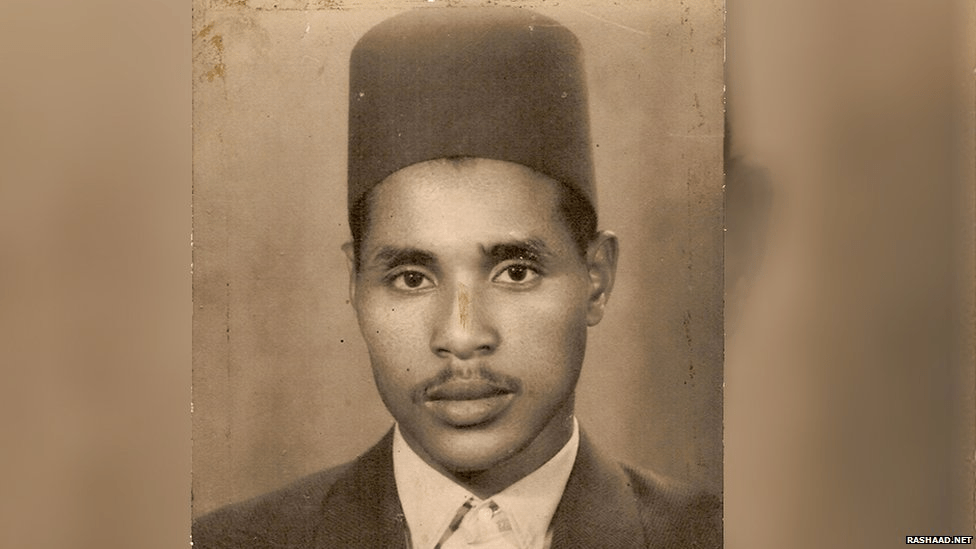
Language is a tool of communication and a symbol of identity. But for the Oromo people, their language remained largely oral for centuries—confined to the spoken word while the world around them moved forward in ink. The story of how Afaan Oromoo finally found its written form is a story of struggle, sacrifice, and one man’s relentless vision.
A Language Without Letters
The Oromo language, spoken by tens of millions across the Horn of Africa, was for a long time a language of the spoken word alone. Unlike many of its neighbors, Afaan Oromoo lacked an indigenous writing system that could accurately capture its unique sounds and grammatical structure.
Efforts to write Oromo began in the 19th century. The first known written Oromo texts were religious manuscripts from the Rayya area, produced during the time of the sheikhs of Anniyya and Danniya. These were handwritten poetry collections, hymns to God and His Prophet, penned with a reed pen using the Arabic script.
But the Arabic script was never a perfect fit for Oromo. Arabic has only a limited set of vowels and consonant distinctions. Oromo, by contrast, has ten vowels and a richer set of consonants. Six Oromo phonemes—c, ch, dh, g, ny, and ph—had no direct equivalents in Arabic writing. Scholars had to adapt, improvise, and sometimes simply make do with imperfect approximations.
Three Scripts, Three Attempts
The Ethiopian Script (Ge’ez/Amharic)
In 1886, an Oromo man named Onisimos Nasiib (Abbaa Gammachiis) translated the Bible into Oromo and had it published in Asmara, Eritrea. He used the Ge’ez script—the same writing system used for Amharic and Tigrinya. This script, however, was designed for languages with seven vowels, not ten. It could not adequately represent Oromo sounds, and the translation, while groundbreaking, was limited by the tools at hand.
The Italian Contribution
After the Italian occupation of Ethiopia in 1935, the Italian linguist Martino Mario Moreno conducted systematic research on the Oromo language. In 1939, he published Grammatica teorico-pratica della lingua galla (Theoretical-Practical Grammar of the Galla Language) in Milan, using a Latin-based alphabet. His work was the first to accurately describe the phonology, morphology, and syntax of Oromo in a scientific way.
“The period of Moreno can be called the ‘Moreno Era’—a time when the science of linguistics began to properly understand the language”.
Moreno’s alphabet represented a significant step forward:
‘ A B C Č D Ḑ0 E F G H I J K L M N Ñ O H Q R S Ṧ T Ṭ U W Y Z
The Sheikh Bakri Script
Meanwhile, within Oromo society, a different approach was emerging. Sheikh Bakri Sapalo (born Abubakar Garad Usman, 1895-1980), an Oromo scholar and religious teacher, invented an entirely new writing system for Oromo in 1956. His script was designed from the ground up to capture Oromo sounds accurately.
Sheikh Bakri had studied under several distinguished Islamic teachers and became renowned for his poetry. Under Haile Selassie’s regime, however, Oromo language was banned in education, conversation, and administrative matters. Sheikh Bakri’s script was developed in secrecy, perhaps to avoid detection by authorities who would have opposed Oromo writing in any form.
His most important work was Shalda, a twenty-page pamphlet that purported to be religious instruction but was actually a veiled account of Oromo suffering under Haile Selassie. It became the first and last major work in his alphabet. In 1965, Sheikh Bakri was placed under house arrest. In 1978, he fled to a refugee camp in Somalia, where he died without ever seeing his script widely adopted.
Dr. Sheikh Mohammed Rashaad: The Man Who Completed the Mission
A Journey Begins on Foot
Born in 1934 in Eastern Oromia, in a village called Laga Arba, Sheikh Mohammed Rashaad Abdullee grew up under the harsh realities of colonial settler rule. As a young man, he was severely chastised by one of the settlers. With no one to defend him, his young mind resolved on a radical course: he would go overseas to acquire skills and weapons for his people’s emancipation.
At the age of 15, in 1949, he left Ethiopia on foot. He traveled through Djibouti, Yemen, and Saudi Arabia, performing Hajj in 1950. From there, he continued to Syria, where he spent five years at the Fatul Islam school in Damascus, eventually earning the title of Mufti.
In 1956, he entered Al-Azhar University in Cairo, a center of learning and liberation movements across Africa. There, surrounded by students from across the continent, his Oromo consciousness deepened.
“When he entered Al-Azhar University in 1956, all nations began to showcase their languages, cultures, and identities. He saw histories of different countries beautifully written and thought, ‘We also have a history to tell, a language to speak, a script to write with'”.
The Mogadishu Years: Radio and Rebellion
After graduating with top honors in 1962, receiving an award from Egyptian President Gamal Abdel Nasser, Sheikh Rashaad was sent by Al-Azhar to Somalia. There, he was hired by the Somali government as a linguistic expert. This gave him a new opportunity to study Oromo language using available Somali sources.
In Mogadishu, he joined forces with other Oromo refugees and intellectuals, including the journalist Ayub Abubakar. Together, they started the first Oromo-language radio broadcast from Mogadishu in 1965. The program began at 15 minutes, grew to 30, and eventually to a full hour.
“The broadcast shook the Haile Selassie regime in Ethiopia, which dispatched agents to assassinate and put a stop to their work. Haile Selassie’s agents eventually assassinated Ayub but were apprehended in Mogadisho before they could similarly murder Sheikh Rashad”.
The Birth of Qubee
It was during this period that Sheikh Rashaad discovered the suitability of the Latin script for writing Oromo. His comparative studies of Oromo and Somali led him to develop the modern Oromo alphabet.
In 1969, he prepared a manuscript titled “Fura Afaan Oromoo” (The Key to Oromo), which was handwritten and circulated among Oromo communities. Two years later, in 1971, it was published—the first complete Oromo-language reader in the modern Latin alphabet.
The book faced immediate challenges. In Somalia, the regime tried to impose the label “Somali-Abbo” on Oromos and recalled his book to redo the cover. But in haste, they left the inside page intact, which still read “Fura Afaan Oromoo”—exposing the plot. In Ethiopia, his writings were strictly forbidden; anyone found with them would face severe punishment.
Exile and Lifelong Work
Under pressure from both sides, Sheikh Rashaad relocated to Saudi Arabia, where he continued his scholarly work. Over the following decades, he produced an extraordinary body of work:
- The first Quran translation in Afaan Oromoo
- Translation of over 40 Hadith books from Arabic to Oromo
- The first Somali-Oromo dictionary
- The first Arabic-Oromo dictionary
- Numerous articles on Islam with particular emphasis on Eastern Africa
- Hajj and Umra guidance for Oromo pilgrims
- Collections of Oromo traditional songs (miriysaa, dhiichisa, geerarsa)
- Children’s stories in Oromo
- History of the Prophet Muhammad in Oromo
- History of Islam in Oromo
“He spent over 15 years conducting research on the Oromo and Somali languages, which later became the focus of his thesis for a PhD in linguistic studies, which he received from the UK”.
Recognition and Final Years
In recognition of his lifelong contribution, the Oromo Studies Association bestowed on him its Lifetime Achievement Award in 2009. In 2010, the Oromiyaa Radio and Television (ORTO) recognized him for his contribution to the development of the Oromo alphabet.
In 2009, he returned to his homeland, settling in Adama, central Oromia. But his final years were not peaceful. When the Ethiopian regime tried to impose a particular interpretation of Islam on the faithful, Sheikh Rashaad objected. For his conviction, he was evicted from his home and forced to relocate to Dire Dawa.
Fiercely independent and unquestionably loyal to his people, Dr. Sheikh Mohammed Rashaad passed away with dignity on May 25, 2013, at the age of 79.
The Legacy
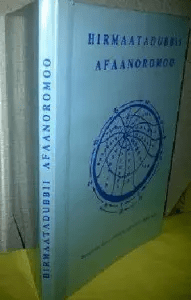
Sheikh Rashaad was not alone. He worked alongside others who contributed to the development of Oromo writing. Haylee Fidaa and Abdullaahi Yuusuf, Oromo students in Europe, adopted the Moreno alphabet with modifications and published two important books in 1973-74: Hirmaata Dubbii Afaan Oromoo (an Oromo grammar) and Bara Birraan Barihe (a drama about the suffering under the Neftenya system).
But it was Sheikh Rashaad who provided the definitive, scientifically-based alphabet that would eventually be adopted for all Oromo writing—from educational materials to official government communications to the translations that would bring the world’s knowledge into the Oromo language.
“His contribution in informing and educating the masses and in strengthening Oromo nationalism, despite serious threats and challenges, is immense. His works will live with the Oromo people forever and continue to inspire millions”.
Today, when millions of Oromo children learn to read and write in their own language, when Oromo scholars publish research in international journals, when the Bible and the Quran are read in Oromo by millions, the foundation they are building on—the alphabet they are using—is the one that Sheikh Mohammed Rashaad developed, refined, and fought to protect.
He ranks among the patriotic Oromo religious scholars from both Muslim and Christian traditions who, despite persecution from successive regimes, paid heavy sacrifices for their people. Among them are the Reverend Gudina Tumsa, who gave his life for the cause; Sheikh Bakri Saphalo, who died in a refugee camp; and the great Abbaa Gammachis, who endured humiliation and subjugation. They remain giant role models who will continue to inspire future generations—shining forever like lighthouses in a free Oromia.
May the angels welcome this man who made written Oromo language accessible to millions—a renewer of his time, a truly great man.

Posted on June 22, 2026, in Aadaa, Afaan, Biography, Events, Finfinne, gadaa, gender, Information, Language, Media, News, Oromia, Press Release, SBO, Sirna Oromo. Bookmark the permalink. Leave a comment.




 Advocacy for Oromia
Leave a comment
Comments 0