Daily Archives: June 21, 2026

Stand Up and Be Counted: The Oromo Community’s Call to Action for the 2026 Australian Census
By Daandii Ragabaa
MELBOURNE/SYDNEY/CANBERRA – A powerful call is echoing across Australian cities and suburbs, urging every Oromo person to stand up and be counted. On Tuesday, 11 August 2026, the Australian Census will offer what community leaders describe as a once-in-a-five-year opportunity to secure the Oromo community’s visibility, identity, and influence in the national landscape.
For decades, Oromo Australians have been rendered statistically invisible, their rich heritage and growing numbers absorbed into broader, less specific categories such as “Ethiopian” or “Other African.” This lack of precise data has meant that government funding, language services, youth programs, and multicultural support have often failed to reach the community in proportion to its actual size. But this year, every Oromo person holds the power to change that narrative—simply by identifying clearly and proudly as Oromo.
The Power of Two Answers
Community advocates are spreading a clear and urgent message: On Census Day, every household must take two decisive steps.
- For Ancestry: Choose “Oromo.”
- For Language Spoken at Home: Choose “Oromo/Afaan Oromo.”
These two seemingly simple answers are, in fact, powerful political and social tools. They ensure that the community is not only counted accurately but also recognised in federal and state government planning. When the Australian Bureau of Statistics (ABS) compiles its data, accurate Oromo responses directly translate into evidence-based allocations for services, from interpreting and translation resources to culturally appropriate aged care and youth mentorship initiatives.
A History of Invisibility
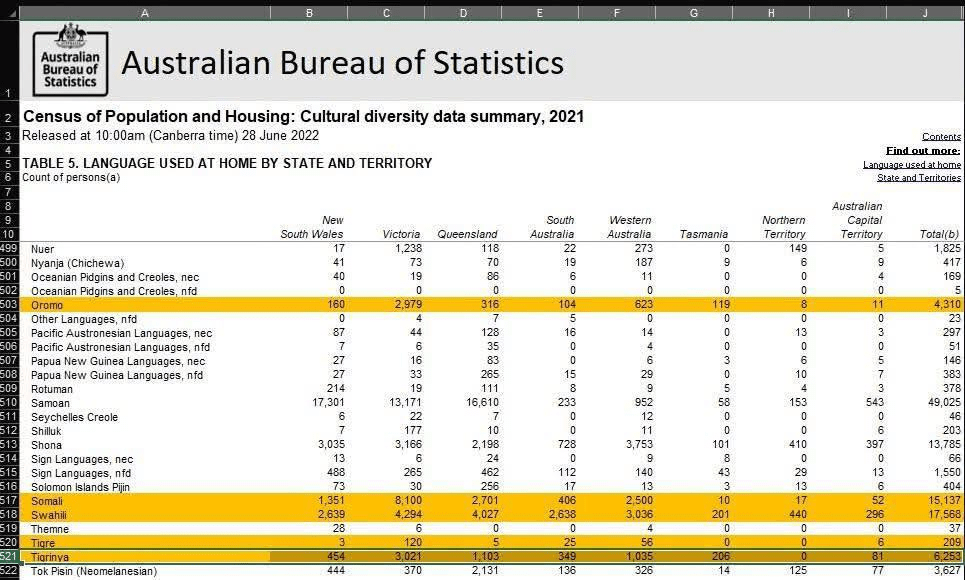
The numbers from previous Census years paint a sobering picture. In the 2021 Census, only 2,578 people recorded Oromo ancestry, while 4,310 reported speaking Afaan Oromo at home. The significant gap between these two figures suggests that many community members—perhaps out of habit, misunderstanding, or a lack of clear guidance—did not fully self-identify.
Community leader Aliye Geleto, who has been at the forefront of the awareness campaign, emphasises the stakes involved. “If the Oromo public wants to have any influence on any entity—whether government, media, or civil society—we must first match their success with our own organised success. Being counted in the Census is the first and most fundamental step,” he stated.
A Community-Wide Mobilisation
The campaign is now a grassroots movement. Community organisations, cultural associations, and religious institutions are being urged to spread the message through every channel available. Social media platforms, community radio, WhatsApp groups, and local gatherings are buzzing with the hashtags #OromoCensus2026 and #StandUpAndBeCounted.
The process itself has been made simpler than ever. Households will receive a unique code in the mail, allowing them to complete the Census online quickly and securely. The deadline is clear: every form must be submitted on or before 11 August 2026.
Organisers are emphasising that every member of the household—children, youth, adults, and elders—must be recorded as Oromo. “When a family of five all ticks ‘Oromo,’ that is five voices that were previously silent. When a thousand families do it, that is a community that can no longer be ignored,” one community organiser explained.
Beyond Numbers: A Future of Influence
This visibility is not merely an exercise in statistics. It is a declaration of existence, a demand for recognition, and a blueprint for organised success. Accurate Census data will enable the Oromo community to advocate effectively for:
- Language Services: Afaan Oromo interpreters in hospitals, courts, and government offices.
- Cultural Events: Funding for annual Oromo cultural festivals, music, and arts.
- Youth Programs: Mentorship and leadership initiatives tailored to second-generation Oromo Australians.
- Multicultural Support: Targeted social services that understand the unique experiences of Oromo refugees and migrants.
As Australia continues to evolve as a multicultural nation, the Oromo community has a unique chance to ensure its voice is heard in the halls of power. The Census is not just a government form; it is a mirror reflecting the nation’s diversity, and for too long, the Oromo reflection has been blurred.
A Final Plea
As 11 August approaches, the message is clear: Choose Oromo. Speak Oromo. Record Oromo. Share widely.
This is not just about being counted. It is about being seen. It is about being heard. And it is about building a future where the Oromo community in Australia is recognised for its true size, strength, and potential.
“Our future influence begins with our numbers,” Aliye Geleto reminds the community. “On 11 August 2026, let every Oromo in Australia stand up and be counted.”
#Oromo #OromoInAustralia #Census2026 #StandUpAndBeCounted #AfaanOromo

A New Dawn for the Oromo: The Proclamation of the Michilleen Jahan Bachoo Seera Caffee Baldhoo Gahate
By Daandii Ragabaa
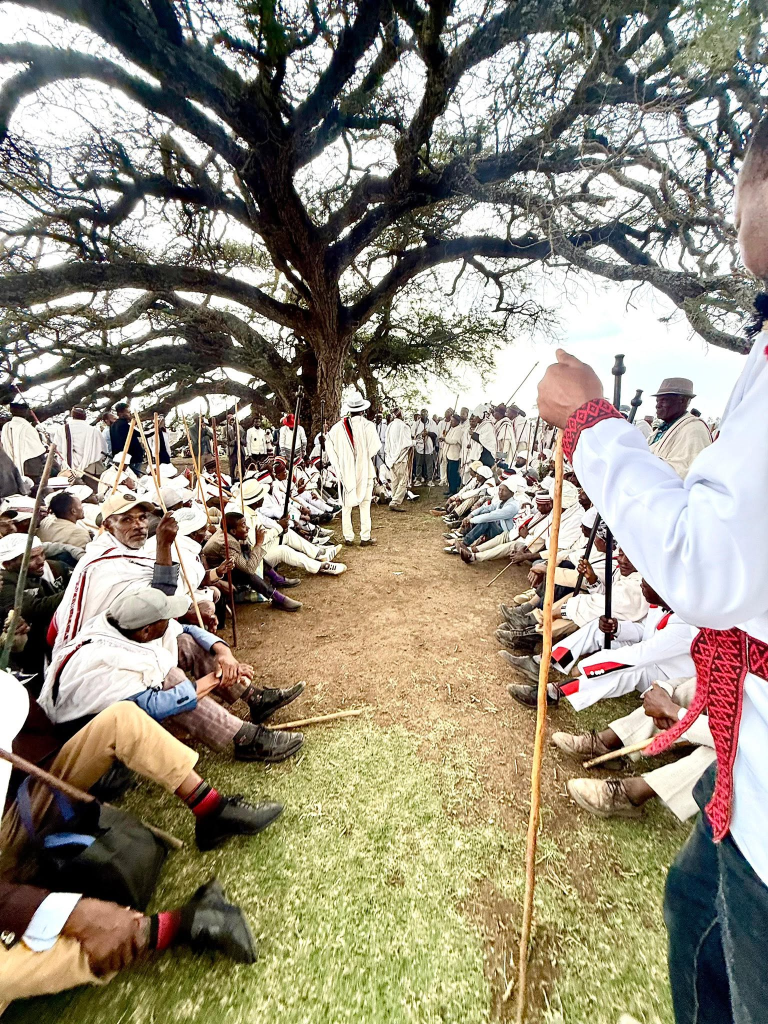
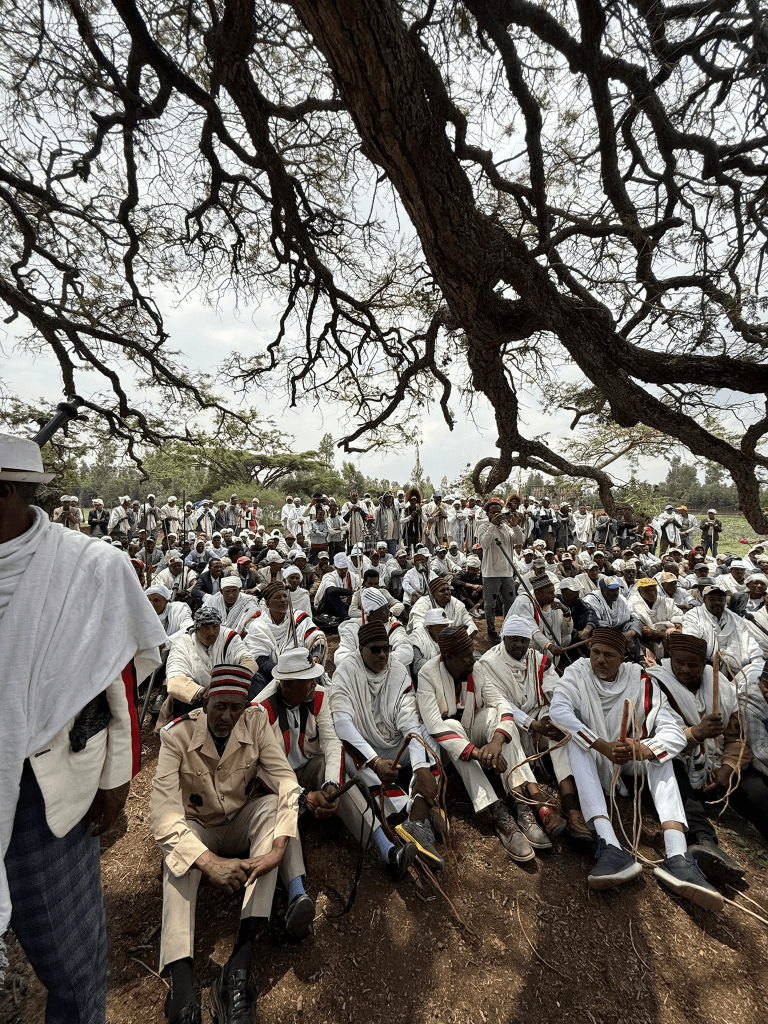
BALDHOO, OROMIA – In a historic and vibrant ceremony that resonated with the weight of tradition and the promise of the future, the Michilleen Jahan Bachoo have officially proclaimed the long-anticipated Seera Caffee (Coffee Ceremony Law) to the Tuulamaa community. After a year of rigorous deliberation and community consultation, the law was ratified and publicly announced on Saturday, marking a pivotal moment in the region’s governance and cultural preservation.
The event, held at the Awaash Baldhoo grounds, was not merely a procedural formality but a powerful reaffirmation of Oromo identity and self-determination. Thousands gathered as the Michilleen (the clan leaders) stood before their people to declare the new legal framework that will guide the sacred institution of the Caffee, the traditional Oromo coffee ceremony that serves as a cornerstone of social and political life.
The Proclamation of the Law
The air was thick with the aroma of coffee and incense as the Michilleen, led by the distinguished figure of Jahan Bachoo, addressed the assembly. The Seera Caffee, which had been under review and debate, was officially and publicly announced, bringing clarity and structure to the cultural practice. This act symbolized the community’s commitment to preserving its heritage through codified law.
In a parallel and equally significant move, the Michilleen also implemented the long-standing Seera Dhaka-Koratti, formally electing and announcing the new leaders (the “Saglii” or nine) at various levels of the Gadaa system. The process was hailed for its transparency and adherence to traditional democratic principles.
The Installation of Leadership
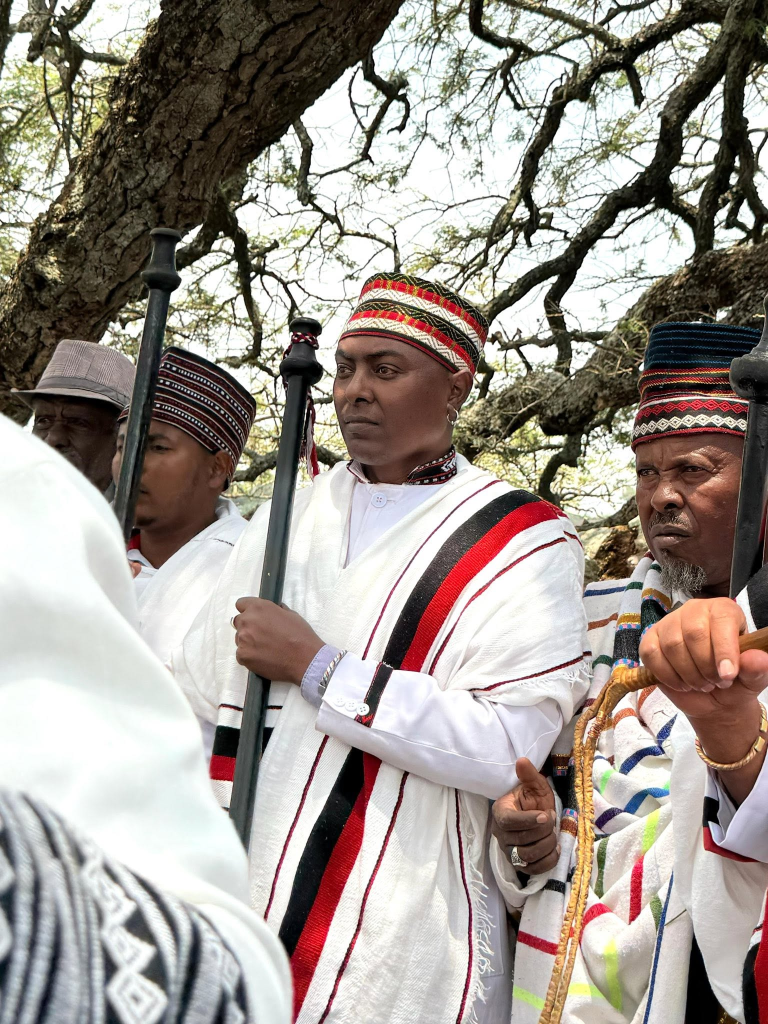
The heart of the ceremony was the formal installation of the new leadership. The Michilleen appointed and inaugurated the leadership for the Awaash Baldhoo region, with a new eight-year term of governance being proclaimed. The announcement of the new Abbaa Gadaa (the leader of the Gadaa system) was met with resounding cheers and the sounding of traditional horns.
One of the most poignant moments was the public blessing and transfer of power to Fissahaa Fiixa, the newly appointed Abbaa Gadaa for the Tuulamaa Jahan Bachoo Lammeechaa Lammaa Alangee. The ritual, conducted with the pouring of milk and honey by elders and spiritual leaders, symbolized purity, abundance, and the sacred continuity of the Gadaa cycle. The new leader was presented with the symbols of his office, including the traditional staff and headdress, amidst ululations and prayers for wisdom.
Highlights of the Ceremony
- Public Announcement: The ratified laws were proclaimed to the entire community, ensuring that every clan member was aware of their rights and responsibilities under the new Seera.
- Blessings and Rituals: The occasion was marked by the ritual of “Damma Biifudhaan,” where honey and milk were poured by scholars (Hayyuu) and spiritual leaders to bless the new leadership and the land. The ritual also included a symbolic act of touching the earth with a ceremonial staff, invoking a prayer for rain and prosperity, as the heavens answered with a gentle shower that was seen as a divine omen.
- Reconstruction of the Gadaa Council: A significant focus was placed on rebuilding the council of Oromo scholars (Hayyota Gadaa Tuulamaa), with prominent figures who have played a crucial role in the process being honored and reinstated.
- Election of Officials: The new “Saglii” (nine leaders) for the Michillee at various levels were officially elected and their appointments confirmed.
The Jahan Bachoo Lineage
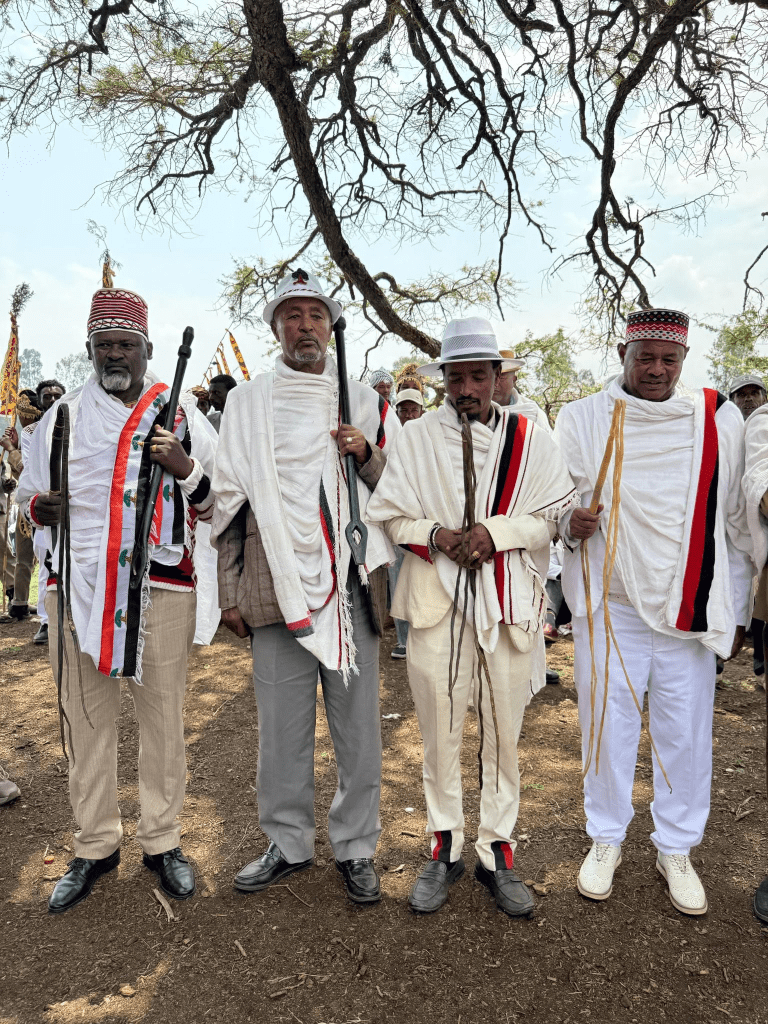
The event was particularly significant for the Jahan Bachoo, a major Oromo clan with a presence in multiple zones, including Sh/Ki/Lixaa, Sh/Lixaa, and Sh/Kaabaa, with a diaspora stretching across all of Oromia. The Jahan Bachoo clan is a confederation of sub-clans including Iluu, Garasuu, Meettaa, Keekuu, Uruu, and Waajituu. The unity displayed at the Baldhoon gathering underscored the enduring strength of the Gadaa system as a tool for uniting the Oromo people.
A Celebration of Culture and Continuity
The ceremony was a resounding success, blending the solemnity of law-making with the joy of cultural celebration. Traditional songs, dances, and the rhythmic chanting of the Gadaa system filled the air, creating an atmosphere of profound unity and hope. The proclamation of the Seera Caffee and the installation of the new Gadaa leaders marks a new chapter for the Tuulamaa community, one that honors the past while boldly stepping into the future.
As the sun set over the plains of Baldhoon, the community dispersed with a renewed sense of purpose, confident that the spirit of the Gadaa – with its principles of equality, justice, and consensus – will continue to guide them for generations to come.
#Oromoo #Tuulamaa #Gadaa #Michillee






