Daily Archives: June 22, 2026

The History of Oromo Writing and the Role of Dr. Sheikh Mohammed Rashaad
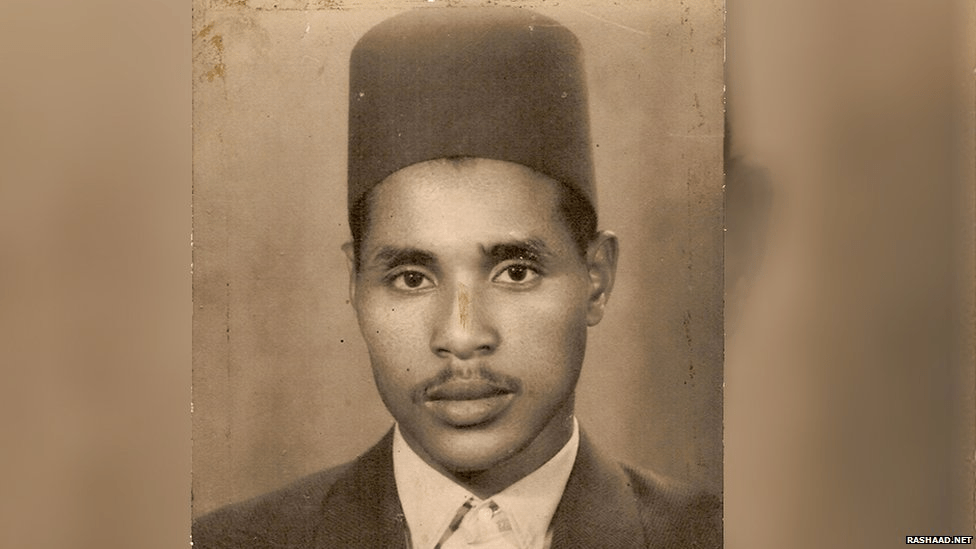
Language is a tool of communication and a symbol of identity. But for the Oromo people, their language remained largely oral for centuries—confined to the spoken word while the world around them moved forward in ink. The story of how Afaan Oromoo finally found its written form is a story of struggle, sacrifice, and one man’s relentless vision.
A Language Without Letters
The Oromo language, spoken by tens of millions across the Horn of Africa, was for a long time a language of the spoken word alone. Unlike many of its neighbors, Afaan Oromoo lacked an indigenous writing system that could accurately capture its unique sounds and grammatical structure.
Efforts to write Oromo began in the 19th century. The first known written Oromo texts were religious manuscripts from the Rayya area, produced during the time of the sheikhs of Anniyya and Danniya. These were handwritten poetry collections, hymns to God and His Prophet, penned with a reed pen using the Arabic script.
But the Arabic script was never a perfect fit for Oromo. Arabic has only a limited set of vowels and consonant distinctions. Oromo, by contrast, has ten vowels and a richer set of consonants. Six Oromo phonemes—c, ch, dh, g, ny, and ph—had no direct equivalents in Arabic writing. Scholars had to adapt, improvise, and sometimes simply make do with imperfect approximations.
Three Scripts, Three Attempts
The Ethiopian Script (Ge’ez/Amharic)
In 1886, an Oromo man named Onisimos Nasiib (Abbaa Gammachiis) translated the Bible into Oromo and had it published in Asmara, Eritrea. He used the Ge’ez script—the same writing system used for Amharic and Tigrinya. This script, however, was designed for languages with seven vowels, not ten. It could not adequately represent Oromo sounds, and the translation, while groundbreaking, was limited by the tools at hand.
The Italian Contribution
After the Italian occupation of Ethiopia in 1935, the Italian linguist Martino Mario Moreno conducted systematic research on the Oromo language. In 1939, he published Grammatica teorico-pratica della lingua galla (Theoretical-Practical Grammar of the Galla Language) in Milan, using a Latin-based alphabet. His work was the first to accurately describe the phonology, morphology, and syntax of Oromo in a scientific way.
“The period of Moreno can be called the ‘Moreno Era’—a time when the science of linguistics began to properly understand the language”.
Moreno’s alphabet represented a significant step forward:
‘ A B C Č D Ḑ0 E F G H I J K L M N Ñ O H Q R S Ṧ T Ṭ U W Y Z
The Sheikh Bakri Script
Meanwhile, within Oromo society, a different approach was emerging. Sheikh Bakri Sapalo (born Abubakar Garad Usman, 1895-1980), an Oromo scholar and religious teacher, invented an entirely new writing system for Oromo in 1956. His script was designed from the ground up to capture Oromo sounds accurately.
Sheikh Bakri had studied under several distinguished Islamic teachers and became renowned for his poetry. Under Haile Selassie’s regime, however, Oromo language was banned in education, conversation, and administrative matters. Sheikh Bakri’s script was developed in secrecy, perhaps to avoid detection by authorities who would have opposed Oromo writing in any form.
His most important work was Shalda, a twenty-page pamphlet that purported to be religious instruction but was actually a veiled account of Oromo suffering under Haile Selassie. It became the first and last major work in his alphabet. In 1965, Sheikh Bakri was placed under house arrest. In 1978, he fled to a refugee camp in Somalia, where he died without ever seeing his script widely adopted.
Dr. Sheikh Mohammed Rashaad: The Man Who Completed the Mission
A Journey Begins on Foot
Born in 1934 in Eastern Oromia, in a village called Laga Arba, Sheikh Mohammed Rashaad Abdullee grew up under the harsh realities of colonial settler rule. As a young man, he was severely chastised by one of the settlers. With no one to defend him, his young mind resolved on a radical course: he would go overseas to acquire skills and weapons for his people’s emancipation.
At the age of 15, in 1949, he left Ethiopia on foot. He traveled through Djibouti, Yemen, and Saudi Arabia, performing Hajj in 1950. From there, he continued to Syria, where he spent five years at the Fatul Islam school in Damascus, eventually earning the title of Mufti.
In 1956, he entered Al-Azhar University in Cairo, a center of learning and liberation movements across Africa. There, surrounded by students from across the continent, his Oromo consciousness deepened.
“When he entered Al-Azhar University in 1956, all nations began to showcase their languages, cultures, and identities. He saw histories of different countries beautifully written and thought, ‘We also have a history to tell, a language to speak, a script to write with'”.
The Mogadishu Years: Radio and Rebellion
After graduating with top honors in 1962, receiving an award from Egyptian President Gamal Abdel Nasser, Sheikh Rashaad was sent by Al-Azhar to Somalia. There, he was hired by the Somali government as a linguistic expert. This gave him a new opportunity to study Oromo language using available Somali sources.
In Mogadishu, he joined forces with other Oromo refugees and intellectuals, including the journalist Ayub Abubakar. Together, they started the first Oromo-language radio broadcast from Mogadishu in 1965. The program began at 15 minutes, grew to 30, and eventually to a full hour.
“The broadcast shook the Haile Selassie regime in Ethiopia, which dispatched agents to assassinate and put a stop to their work. Haile Selassie’s agents eventually assassinated Ayub but were apprehended in Mogadisho before they could similarly murder Sheikh Rashad”.
The Birth of Qubee
It was during this period that Sheikh Rashaad discovered the suitability of the Latin script for writing Oromo. His comparative studies of Oromo and Somali led him to develop the modern Oromo alphabet.
In 1969, he prepared a manuscript titled “Fura Afaan Oromoo” (The Key to Oromo), which was handwritten and circulated among Oromo communities. Two years later, in 1971, it was published—the first complete Oromo-language reader in the modern Latin alphabet.
The book faced immediate challenges. In Somalia, the regime tried to impose the label “Somali-Abbo” on Oromos and recalled his book to redo the cover. But in haste, they left the inside page intact, which still read “Fura Afaan Oromoo”—exposing the plot. In Ethiopia, his writings were strictly forbidden; anyone found with them would face severe punishment.
Exile and Lifelong Work
Under pressure from both sides, Sheikh Rashaad relocated to Saudi Arabia, where he continued his scholarly work. Over the following decades, he produced an extraordinary body of work:
- The first Quran translation in Afaan Oromoo
- Translation of over 40 Hadith books from Arabic to Oromo
- The first Somali-Oromo dictionary
- The first Arabic-Oromo dictionary
- Numerous articles on Islam with particular emphasis on Eastern Africa
- Hajj and Umra guidance for Oromo pilgrims
- Collections of Oromo traditional songs (miriysaa, dhiichisa, geerarsa)
- Children’s stories in Oromo
- History of the Prophet Muhammad in Oromo
- History of Islam in Oromo
“He spent over 15 years conducting research on the Oromo and Somali languages, which later became the focus of his thesis for a PhD in linguistic studies, which he received from the UK”.
Recognition and Final Years
In recognition of his lifelong contribution, the Oromo Studies Association bestowed on him its Lifetime Achievement Award in 2009. In 2010, the Oromiyaa Radio and Television (ORTO) recognized him for his contribution to the development of the Oromo alphabet.
In 2009, he returned to his homeland, settling in Adama, central Oromia. But his final years were not peaceful. When the Ethiopian regime tried to impose a particular interpretation of Islam on the faithful, Sheikh Rashaad objected. For his conviction, he was evicted from his home and forced to relocate to Dire Dawa.
Fiercely independent and unquestionably loyal to his people, Dr. Sheikh Mohammed Rashaad passed away with dignity on May 25, 2013, at the age of 79.
The Legacy
Sheikh Rashaad was not alone. He worked alongside others who contributed to the development of Oromo writing. Haylee Fidaa and Abdullaahi Yuusuf, Oromo students in Europe, adopted the Moreno alphabet with modifications and published two important books in 1973-74: Hirmaata Dubbii Afaan Oromoo (an Oromo grammar) and Bara Birraan Barihe (a drama about the suffering under the Neftenya system).
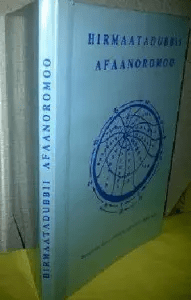
But it was Sheikh Rashaad who provided the definitive, scientifically-based alphabet that would eventually be adopted for all Oromo writing—from educational materials to official government communications to the translations that would bring the world’s knowledge into the Oromo language.
“His contribution in informing and educating the masses and in strengthening Oromo nationalism, despite serious threats and challenges, is immense. His works will live with the Oromo people forever and continue to inspire millions”.
Today, when millions of Oromo children learn to read and write in their own language, when Oromo scholars publish research in international journals, when the Bible and the Quran are read in Oromo by millions, the foundation they are building on—the alphabet they are using—is the one that Sheikh Mohammed Rashaad developed, refined, and fought to protect.
He ranks among the patriotic Oromo religious scholars from both Muslim and Christian traditions who, despite persecution from successive regimes, paid heavy sacrifices for their people. Among them are the Reverend Gudina Tumsa, who gave his life for the cause; Sheikh Bakri Saphalo, who died in a refugee camp; and the great Abbaa Gammachis, who endured humiliation and subjugation. They remain giant role models who will continue to inspire future generations—shining forever like lighthouses in a free Oromia.
May the angels welcome this man who made written Oromo language accessible to millions—a renewer of his time, a truly great man.

A Concise History of Oromo Media: From Colonial Radio to Digital Revolution
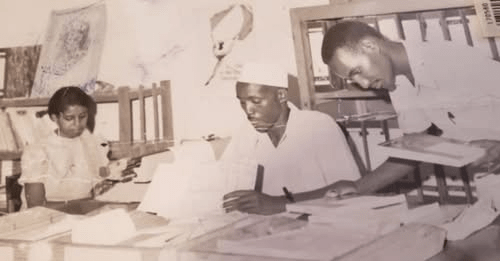
From the hills of Jimma to the screens of the diaspora, the journey of Oromo media is a story of resilience, sacrifice, and an unyielding quest for voice. It is a tale that begins not with ink on paper, but with electromagnetic waves cutting through the Ethiopian highlands during a time of war.
Part One: The Electronic Beginning
In the history of world media, print came first. Newspapers and magazines preceded radio and television. But in the story of Oromo media, the opposite is true. The first medium to speak the language of the Oromo people was not a newspaper—it was a radio station.
The Italian Experiment (1935-1941)
It was during the Italian occupation of Ethiopia that the first Oromo-language radio broadcast came to life. When Emperor Haile Selassie fled the country following Italy’s invasion, the fascist regime of Victor Emmanuel III sought to consolidate its control over the diverse peoples of the empire.
The Italians understood something the previous regime had ignored: that the Oromo people, who had been subjugated under the Neftenya (Amhara settler) system, harbored deep resentment toward the imperial order. To win their loyalty—or at least their compliance—the colonial administration needed to speak to them in their own language.
In a move that would forever change Oromo history, the Italians built a radio station near the city of Jimma. They called it “Centro Radio” in Italian, but the local Oromo people gave it a name that has stuck to this day—Shanta-Raadiyoonii (Radio Station). The hill where it was built, approximately 10 kilometers northwest of Jimma, still bears this name. To this day, visitors to Jimma can look toward the northwest and see the spot where the first Oromo voice entered the airwaves.
This radio station, however, served a calculated purpose. It was designed to persuade Oromos to embrace Italian fascism over Ethiopian imperialism—trading one master for another. The Italians dismantled the Neftenya system and replaced it with a form of ethnic-based administration, drawing borders along ethnic lines for the first time. But their propaganda was not liberation; it was another form of subjugation.
When Haile Selassie returned to power with British support in 1941, he quickly shut down the Italian-built station. Its equipment—studios, transmitters, and antennas—was dismantled and moved to Addis Ababa (Finfinne). The emperor tried to erase the memory of the station, even attempting to suppress the name “Shanta-Raadiyoonii.” But the people would not forget. For years after, Oromos remembered the brief time they had heard their language on the radio.
The Cairo Experiment (1960s)
The emperor had made a fatal miscalculation. He feared that acknowledging Oromo language on national radio would strengthen ethnic solidarity against his rule. And so, for decades, Oromo voices remained silent on Ethiopian airwaves.
But in the 1960s, a new voice emerged—from Egypt.
Oromo students studying at Al-Azhar University in Cairo, including the pioneering scholar Sheik Muhammad Rashaad Abdullee, established an Oromo-language radio broadcast from Cairo. This was different from the Italian station. The Cairo broadcast was not propaganda for any foreign power; it was a genuine Oromo voice advocating for Oromo rights, educating the people about their history, and mobilizing resistance against the Neftenya system.
The emperor’s government was alarmed. In his eyes, a broadcast of Oromo from Cairo was not a weapon to be used against him—and he could not allow it to continue. Through diplomatic pressure, Haile Selassie’s government persuaded the Egyptian regime to shut down the station.
The Mogadishu Martyrs (1967)
As soon as the Cairo station went silent, a new one emerged—this time from Mogadishu, Somalia. Oromo scholars and intellectuals who had studied in Egypt, including the likes of Sheik Muhammad Rashaad and others, moved to Somalia and established another Oromo-language radio station. Among those who joined this effort was a young Oromo journalist named Ayub Abubakar.
This station had a profound impact, particularly in the eastern Oromo regions of Hararge. The broadcasts ignited resistance and brought Oromo national consciousness to a new level. The emperor’s regime, already nervous, could not tolerate this. They struck a deal with the government of Siad Barre in Somalia to silence the station. When diplomatic pressure failed to achieve full compliance, the emperor’s agents reached into Mogadishu itself.
On a Friday afternoon in 1967, near a place called Liizo on the shores of the Indian Ocean, 25-year-old Ayub Abubakar was washing clothes. Agents of the imperial regime seized him and killed him. His body was found two days later and buried in Mogadishu. His crime? He had dared to give his people a voice.
Other journalists from that station managed to escape. Abubakar Muussaa, who would later bring his artistry to Radio Harar; Shantam Shubbisaa (the last living survivor today); Abdii Huseen; and Hindiyaa Ahmed (Shantam Shubbisaa’s wife) were among those who continued the struggle. They are the founding fathers and mothers of Oromo media, and their sacrifices paved the way for everything that followed.
Part Two: Radio Harar—A Calculated Gamble
By the early 1970s, the emperor had reached a desperate conclusion. The Mogadishu station had become too powerful to ignore. Fearful that the Oromo people of Hararge would align with Somalia against the Ethiopian state, Haile Selassie’s government made a strategic decision.
They would open their own Oromo-language radio station.
The Birth of Radio Harar (1973)
In 1973, Radio Harar was launched. But it was never intended as a genuine celebration of Oromo culture. According to veterans of the station, “Radio Harar was not originally intended for the Oromo when it was launched. Prior to that, a radio station broadcasting in Oromo was established in Mogadishu.”
The emperor’s government feared that if they opened an Oromo station in Addis Ababa (Finfinne), the Oromo people would unite around it. If they did nothing, the eastern Oromo would align with Mogadishu. Their solution was to create a limited, controlled Oromo-language program called “Qophii Afaan Oromoo”—a station they could monitor and manipulate.
The Price of Voice
But even under imperial control, Radio Harar became something more than its creators intended. The station’s Oromo staff—journalists, artists, and technicians—turned it into a genuine voice for their people.
The station faced immense pressure. Its journalists were imprisoned, persecuted, and killed. The bandleader Abubakar Muussaa survived persecution under Haile Selassie and later faced mortal danger from the Derg regime. The singer Abdi Qophee (Mohammed) wrote lyrics that became anthems of Oromo resistance.
For Jaafar Ali, who grew up listening to Radio Harar and later worked there as a producer of dramas and educational programs, the station was more than a workplace—it was family. “Our programming wasn’t just for entertainment,” he recalls. “We also produced programs for the struggle, about the persecution, imprisonment, and oppression that was being perpetrated against Oromos.”
Part Three: The Derg Era—From Suppression to Instrumentalization
In 1974, the Derg military regime overthrew Haile Selassie. At first, it seemed the new regime might be more amenable to Oromo aspirations. For the first time, Oromo language was allowed on Ethiopian national radio and television. Newspapers like Bariisaa began publication in Afaan Oromoo.
The Derg’s Instrumentalization
But the Derg’s motives were strategic, not benevolent. The regime used Oromo language to achieve three goals:
- Divide and co-opt: The Derg sought to bring educated Oromo elites into its fold, painting them as integral parts of a “revolutionary” Ethiopia while pitting them against the old Neftenya establishment.
- Create the illusion of change: By embracing Oromo language, the regime hoped to win the loyalty of the Oromo people and distinguish itself from the previous imperial order.
- Broadcast socialist ideology: Using Oromo language allowed the regime to disseminate its ideology to a wider audience, framing socialism as the true path to Oromo liberation.
Despite these political motivations, the Derg era brought significant development to Oromo media. Radio broadcasts in Oromo expanded. Oromo music flourished. Artists like Dr. Ali Birra and Wasannuu Didoo emerged, singing songs that, while occasionally paying lip service to the regime, secretly educated and mobilized the Oromo people.
Listen to the words of Dr. Ali Birra’s songs from that era:
“What did they say, what did they tell us?
When minds are tortured,
When life is spent in lies!
Those who lost land and had livestock stolen,
Those who fled from fear to the hills—
Why should they accept a bridle?!
Those who drove the enemy into foreign woods,
Those whose freedom was bought with blood…”
Songs like these resonated with the Oromo people across the country, reminding them of their shared suffering and inspiring a generation of resistance fighters. Even a radio station not built for Oromo liberation could, in the hands of Oromo artists, serve the cause of freedom.
The Birth of SBO (1988)
The most significant development of the Derg era came in 1988, when the first explicitly Oromo liberation radio station was established by Oromo freedom fighters. This was Sagalee Bilisummaa Oromoo (SBO)—the Voice of Oromo Liberation.
SBO was different from all previous Oromo broadcasts. It was established:
- By Oromos, for Oromos: Not as a colonial tool or a state calculation, but as an instrument of Oromo national liberation.
- On a scientific historical foundation: SBO educated Oromos about their history, culture, and political rights in a systematic, analytical way.
- At a time of technological expansion: By 1988, radio ownership had spread to many Oromo homes, both in cities and rural areas. SBO could reach a broad audience quickly.
SBO became the voice of the Oromo liberation struggle, broadcasting resistance messages and mobilizing the people. Its impact was profound, and it laid the groundwork for the media explosion that would follow.
Part Four: The Post-Derg Transformation (1991-2000s)
In 1991, the Derg regime fell. A new Ethiopia emerged, and with it, a new era for Oromo media.
ETV and the First Oromo Television Broadcast
For the first time in history, Oromo language was broadcast on Ethiopian Television (ETV). Oromo had moved from audio to video—from ears to eyes. This was a watershed moment.
The Written Word Emerges
Following the fall of the Derg, a true “Oromo media explosion” occurred:
- Oromo on television began for the first time.
- The Latin script for Afaan Oromoo was officially adopted, after extensive research by Oromo scholars. This paved the way for widespread literacy and publication.
- Independent newspapers and magazines began publishing in Afaan Oromoo in cities across Oromia and beyond—a first in Oromo media history.
- Mass literacy campaigns in the Oromo script meant that Oromos could now read and write in their own language, dramatically expanding the media market.
VOA and International Recognition (1996)
On November 8, 1996, another milestone was reached: the Voice of America (VOA) began broadcasting in Afaan Oromoo. This was a stunning development—Oromo had joined the ranks of major world languages recognized by one of the world’s most powerful broadcasters.
At first, Oromo broadcasts were only 15 minutes per day. Meanwhile, Amharic broadcasts were reduced from 60 to 30 minutes—a shift that caused significant political controversy. Critics accused VOA of bowing to Oromo pressure, but the American broadcaster had done its homework: it recognized that Oromo was the language of one of Africa’s largest ethnic groups, a language with a growing global presence.
Diaspora Media Grows
Throughout the 1990s and 2000s, Oromo diaspora media flourished. Diaspora radio stations like Radio Sagalee Oromoo (RSO) launched. In the 2000s, the first Oromo television station in the diaspora—Oromo TV—began broadcasting from Minnesota, USA.
Part Five: The Internet Revolution—A Level Playing Field
The most transformative development in Oromo media has been the rise of the internet. For the first time in history, Oromo language has achieved something truly revolutionary: it now competes on a level playing field with Amharic.
Script and Technology
A key factor in this transformation has been the script. Oromo’s adoption of the Latin alphabet gave it a massive advantage in the digital age. While Amharic and Tigrinya speakers struggled to adapt their ancient Ge’ez scripts to computers, keyboards, email, and social media, Oromos could simply type.
Today, 80% of Eritreans—who also used Ge’ez script—have shifted to Latin script for digital communication, including emails, Facebook, Messenger, Skype, and mobile texts. The situation for Amharic speakers in Ethiopia is not significantly different.
The Rise of Oromo Websites, Social Media, and Online Media
The internet has enabled:
- Oromo websites and online publications to flourish, providing news, analysis, and cultural content.
- Social media (Facebook, Twitter, Telegram) to become dominated by Oromo voices, with Oromo activists driving discourse on Ethiopian and international issues.
- Online radio and TV to reach a global Oromo audience, free from state control.
Oromo social media presence is often more vibrant and dynamic than Amharic presence—a remarkable development given the historical dominance of Amharic in Ethiopian public life.
Part Six: The Road Ahead—Challenges and Opportunities
Despite this progress, significant challenges remain.
The Rural Majority
More than 85% of the Oromo people still live in rural areas. Many do not have access to television, internet, or even reliable radio signals. Media content—no matter how powerful—cannot reach them effectively.
State Jamming and Censorship
State-owned media in Ethiopia remains tightly controlled. Oromo-language broadcasts are often co-opted for state propaganda, and independent Oromo media faces pressure, jamming, and censorship.
The Need for Strong, Unified Media
The proliferation of independent Oromo media organizations is a strength. But it also risks fragmentation. Many diaspora Oromo radio and TV stations operate with limited resources, broadcasting to small audiences. The sustainability of these efforts is questionable.
The solution, many argue, lies in consolidation. Instead of dozens of small, struggling stations, Oromos should pool resources to create one powerful, well-funded, well-staffed media organization capable of:
- Producing high-quality, standardized programming that reaches rural audiences.
- Overcoming state jamming and propaganda with technical sophistication.
- Serving as a true voice of the Oromo people—educating, entertaining, and mobilizing.
The Challenge of Content
Even as technology improves, content remains a challenge. Oromo media must move beyond mere entertainment and propaganda. It must deliver substantive, accurate, and transformative content that addresses the real needs of the Oromo people—from education to health, from economic development to cultural preservation.
Conclusion: A Voice That Will Not Be Silenced
The history of Oromo media is a story of struggle against overwhelming odds. From the colonial radio of Jimma to the diaspora television of Minnesota, from the martyred journalists of Mogadishu to the vibrant voices of social media, Oromos have never stopped seeking to speak—and to be heard.
The journey has been long and painful. The Italian radio was propaganda. The emperor’s station was a calculated gamble. The Derg’s broadcasts were instrumentalized. But in each case, Oromo artists, journalists, and intellectuals took these tools and turned them into instruments of liberation.
Today, Oromo media is more vibrant and accessible than ever before. But the work is not complete. Millions of Oromos still lack access to reliable, trustworthy media in their language. The state still seeks to control the narrative. The diaspora still struggles to reach the homeland.
But the trajectory is clear. Oromo media will continue to grow. The voice of the Oromo people, once silenced, will become louder and clearer. And the martyrs of Mogadishu, the dreamers of Cairo, the artists of Radio Harar—their legacy will be fulfilled.
The history of Oromo media is a history of defiance. It is proof that a people who refuse to be silenced, who insist on speaking their truth in their own language, can never truly be conquered.
May the voices of those who came before rest in peace. And may those of us who carry the microphone today do justice to their memory and their dream.
The above feature story is adapted from YB, February 2014, Asmara, Ertirea.






