Category Archives: Census

The Question of Finfinne and Dirree Dhawaa: Toward a Balanced and Sustainable Solution

Navigating History, Constitutional Rights, and the Complex Realities of Governance
By Jafer Ali
The question of Finfinne—the city known internationally as Addis Ababa—and its surrounding areas, including Dirree Dhawaa, has long been one of the most contentious and emotionally charged issues in Ethiopian political discourse. For the Oromo people, Finfinne is not merely a city; it is the heart of their ancestral homeland, a symbol of their historical presence, and a constitutional matter that has yet to be resolved. For others, it is the capital of Ethiopia, the seat of the federal government, and a city that belongs to all Ethiopians.
The debate has intensified as the national dialogue process unfolds, and the question of how to resolve the status of Finfinne and Dirree Dhawaa has become central to discussions about the future of Ethiopia’s federal system, ethnic relations, and governance structure.
This article seeks to explore the key questions surrounding Finfinne and Dirree Dhawaa, examining the constitutional, historical, political, and practical dimensions of the issue. It argues that a sustainable solution must move beyond simplistic claims of ownership and instead focus on a framework of mutual consent, shared benefit, and constitutional fidelity.
The Key Questions
The debate over Finfinne and Dirree Dhawaa can be distilled into two fundamental questions:
1. What does the Constitution say?
The Ethiopian Constitution, adopted in 1995, establishes the federal structure of the country and recognizes the rights of nations, nationalities, and peoples. Article 49(5) specifically recognizes Oromia’s “special interest” in Finfinne regarding social services, natural resources, and joint administrative matters arising from the city’s location within the State of Oromia.
This constitutional provision has been the subject of intense debate. For Oromo advocates, it represents a legal acknowledgment of the city’s historical and geographical connection to Oromia—a connection that has never been fully implemented. For others, the provision is a compromise that balances the city’s role as the federal capital with the rights of the surrounding region.
2. What does the people demand?
The Oromo people’s demand regarding Finfinne and Dirree Dhawaa is clear and consistent: the city is Oromo land, and its rightful owners are the Oromo people. The demand is often framed as a call for the city to be placed under the administrative jurisdiction of the Oromia Regional Government or for the Oromo people to have greater control over the city’s governance and resources.
This demand is rooted in a historical narrative that the city was established on Oromo land through conquest and dispossession, and that the Oromo people have never consented to the city’s status as a separately administered entity.
The Need for a Balanced Approach
The challenge of resolving the status of Finfinne and Dirree Dhawaa lies in reconciling these two perspectives. On one hand, the Oromo people’s historical and constitutional claims cannot be ignored. On the other hand, the city’s role as the federal capital, its international significance, and the presence of diverse communities cannot be dismissed.
A balanced approach must consider the following dimensions:
1. The Constitutional Dimension
The Constitution provides a starting point for resolving the issue. Article 49(5) recognizes Oromia’s special interest in Finfinne, but the provision has never been fully implemented. A sustainable solution must begin by implementing this constitutional provision through joint administrative mechanisms, resource-sharing agreements, and coordinated governance frameworks.
However, any implementation must respect the city’s role as the federal capital and the rights of all its residents. The Constitution does not provide for the city to be placed under Oromia’s exclusive administrative control. Rather, it envisions a framework of cooperation and shared responsibility.
2. The Historical Dimension
The Oromo people’s historical connection to Finfinne is a fact that must be acknowledged. The area known as Finfinnee was inhabited by Oromo people before the expansion of the Ethiopian Empire, and the city’s name itself is Oromo, meaning “place of hot springs.”
But historical claims alone cannot determine the city’s future. The city has evolved over the past century into a multi-ethnic metropolis that is home to people from across Ethiopia. The current residents—Oromo, Amhara, Gurage, Tigrayan, and others—have legitimate claims to the city as their home. A just solution must respect both the historical rights of the Oromo people and the contemporary rights of all residents.
3. The Political Dimension
The status of Finfinne and Dirree Dhawaa is a political question that requires political solutions. It cannot be resolved through unilateral declarations or zero-sum demands. It requires negotiation, compromise, and good-faith dialogue between the federal government, the Oromia regional government, and other stakeholders.
The political dimension also includes considerations of power, representation, and resource allocation. Any solution must ensure that the Oromo people have a meaningful voice in the governance of the city while also ensuring that all residents are treated equally and fairly.
4. The Practical Dimension
Finfinne is not just a symbol; it is a functioning city with millions of residents, extensive infrastructure, and a critical role in Ethiopia’s economy and international relations. The city is home to the African Union headquarters, numerous diplomatic missions, and major economic enterprises.
Any change in the city’s governance must consider the practical implications for its residents, businesses, and international partners. Disruption to the city’s administration could have far-reaching consequences that extend beyond Oromia.
The Complexities of the Dirree Dhawaa Question
While the focus has often been on Finfinne, the question of Dirree Dhawaa is equally significant. Dirree Dhawaa is a symbol of Oromo resistance—a site where the Oromo people have gathered to demand their rights and have faced repression from state forces.
The status of Dirree Dhawaa is closely linked to the broader question of Oromo land rights and the expansion of the capital. The area is located within Oromia and has been the focus of protests and resistance. A sustainable solution for Finfinne must also address the concerns of communities in Dirree Dhawaa and other surrounding areas.
The Risk of Unilateral Decisions
The debate over Finfinne and Dirree Dhawaa is not without risk. Unilateral decisions—whether by the federal government or the Oromia regional government—could have serious consequences. As history has shown, when the boundaries of the capital were previously redrawn, it led to widespread protests, conflict, and political instability.
The controversy over the 2014 Finfinne Integrated Development Master Plan highlighted these risks. The proposed expansion of the capital into surrounding Oromia districts led to widespread protests that spread throughout Oromia and eventually led to the cancellation of the plan. The experience demonstrated that decisions made in the capital directly affect neighboring Oromo communities, and that meaningful consultation and participation are essential.
The Need for Comprehensive Analysis
Before any decision is made on the status of Finfinne and Dirree Dhawaa, a comprehensive analysis is needed. This analysis should consider:
- The interests of all residents: The rights and needs of all residents of the city must be respected.
- The interests of the Oromo people: The historical and constitutional claims of the Oromo people must be acknowledged.
- The interests of the federal government: The city’s role as the federal capital must be protected.
- The interests of the Oromia regional government: The region’s constitutional rights and interests must be respected.
- The interests of the broader Ethiopian people: The solution must serve the long-term stability and unity of the country.
A Possible Framework for Resolution
A sustainable resolution to the status of Finfinne and Dirree Dhawaa must be based on mutual consent, shared benefit, and constitutional fidelity. A possible framework could include:
1. Implementation of Constitutional Provisions
Oromia’s special interest in Finfinne, as recognized in Article 49(5), should be implemented through joint administrative mechanisms that ensure meaningful Oromo participation in decisions affecting the city and surrounding communities. This could include joint committees, shared decision-making structures, and resource-sharing agreements.
2. Recognition of Historical Rights
The Oromo people’s historical connection to Finfinne and Dirree Dhawaa should be recognized through cultural institutions, public acknowledgment, and educational programs that celebrate the city’s diverse history.
3. Fair Development and Consultation
Urban expansion and development should be planned with meaningful consultation with affected communities, ensuring fair compensation, environmental protection, and shared benefits.
4. Inclusive Governance
All residents of Finfinne—regardless of ethnicity—should have equal rights to participation, public services, and legal protection. The city’s governance should reflect its diversity and ensure that all voices are heard.
5. Shared Prosperity
The economic benefits of the capital’s growth should be shared with surrounding communities, creating a virtuous cycle of development rather than a pattern of exploitation.
The Role of Dialogue and Mutual Consent
Ultimately, the solution to the status of Finfinne and Dirree Dhawaa must be based on dialogue and mutual consent. The federal government and the Oromia regional government must engage in good-faith negotiations to find a mutually acceptable governance framework.
The national dialogue process provides an opportunity to address this issue in a comprehensive and inclusive manner. However, the dialogue must be genuine, transparent, and committed to finding a solution that serves the interests of all parties.
Conclusion: Toward a Just and Sustainable Future
The question of Finfinne and Dirree Dhawaa is one of the most complex and consequential issues facing Ethiopia today. It touches on history, identity, constitutional rights, governance, and the future of the nation.
A sustainable solution cannot be based on unilateral declarations, zero-sum demands, or the denial of legitimate rights. It requires a commitment to dialogue, constitutional fidelity, and the recognition that the interests of all parties—the Oromo people, the residents of the city, the federal government, and the broader Ethiopian people—must be balanced.
The status of Finfinne and Dirree Dhawaa is not just a question of ownership—it is a question of justice, governance, and the future of Ethiopia itself.
Injifannoon Ummata Oromoo!
Finfinne haa jabaattu!
Nagaan haa bulaa!
This feature article is dedicated to all those who are committed to finding a just, constitutional, and sustainable solution to the status of Finfinne and Dirree Dhawaa.

A Historical Reflection on the Betrayal of Abiishee Garbaa: Lessons for the Oromo Struggle Today
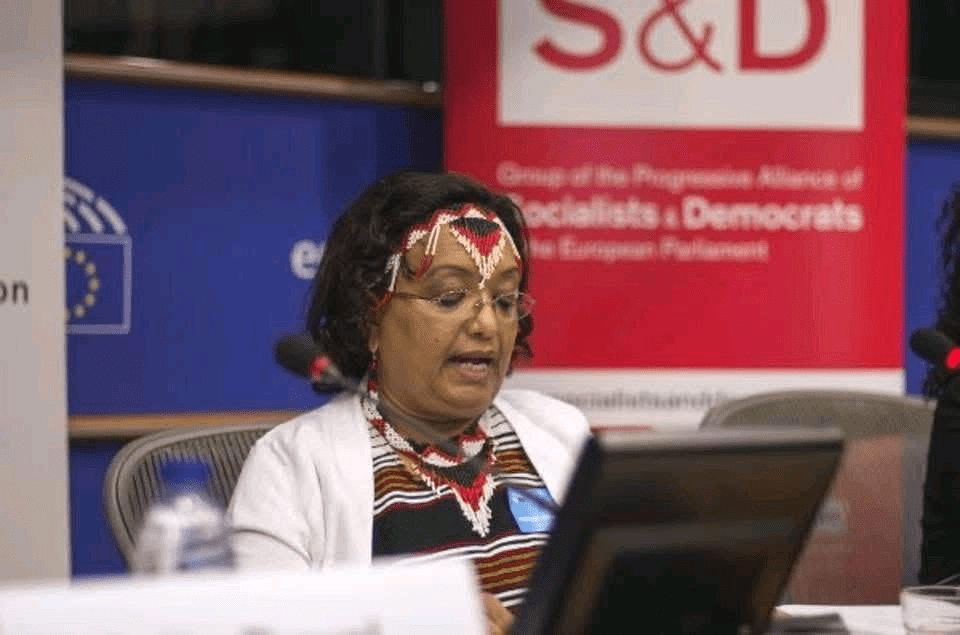
How Deception, Diplomacy, and Divide-and-Rule Tactics Defeated a Leader—and What the Oromo Liberation Army Must Learn
By Dinknesh Dheeressaa
As I observe the events unfolding in our midst today, I am reminded of a painful chapter in Oromo history—the story of Abiishee Garbaa, a leader whose fate was sealed not by the strength of his enemies on the battlefield, but by their cunning, deception, and manipulation of Oromo unity.
This is not merely a tale of the past. It is a mirror held up to the present. The same tactics that brought down Abiishee Garbaa are being employed today against the Oromo people and their liberation struggle. The question we must ask ourselves is: Have we learned the lessons of history?
The Historical Context: Abiishee Garbaa and the Gojjam Invasion
According to the authoritative book “Seenaa Abiishee Garbaa fi Gootota Oromoo Biroo” by Ginbaar Nagaraa Kumsaa (2013), the story of Abiishee Garbaa is one of betrayal, deception, and the tragic fragmentation of Oromo unity .
In the years 1854/55, following the death of Garbaa Huruubaa—the ruler of Horro and Abiishee’s father—the region fell into political turmoil. No new leader had been appointed to rule Horro, and this power vacuum was exploited by the Gojjam forces. They crossed the Mormor River through Amuru and launched a devastating campaign against the Horro people .
Abiishee, compelled to defend his people and claim his father’s legacy, mobilized his forces. He gathered the Qondaaltota (warriors) of Horro and successfully repelled the Gojjam invaders. Despite multiple attempts, the Gojjam forces could not defeat Abiishee in direct military confrontation .
But they did not need to.
The Tactics of Deception: Divide, Bribe, and Betray
Unable to defeat Abiishee through conventional warfare, the Gojjam forces turned to a different strategy: division and deception.
They exploited internal rifts within the Horro leadership. One of Abiishee’s own commanders, Soorii Galaa, who had opposed Abiishee’s leadership, defected to the enemy. Soorii Galaa fled to Gojjam, where he was received and employed. He then conspired to betray his people, using his insider knowledge to undermine Oromo resistance .
This pattern is all too familiar. As the Oromo proverb says: “Soogiddaan soogidda cabsu” —”Salt breaks salt.” The enemy does not always need to destroy you from the outside. Often, they find someone from within to do the work for them.
The Gojjam forces used a combination of modern weaponry, espionage, bribery, and deception. They pitted Oromo leaders against each other, spreading rumours, creating alliances based on false promises, and exploiting personal ambitions and grievances to shatter the unity of the Oromo people .
The Role of Qadiidaa Wannabee: False Diplomacy and Betrayal
The most infamous act of deception was the role of Qadiidaa Wannabee. Unable to defeat Abiishee through force, the Gojjam forces enlisted Qadiidaa to lure Abiishee into a trap through the promise of peace. Qadiidaa went to Abiishee, swore oaths of friendship, and assured him that the Gojjam forces were sincere in their desire for reconciliation .
Abiishee, believing in the promise of peace, agreed to meet the Gojjam forces at a location they had prepared. He set out without his weapons—unarmed, trusting in the word of Qadiidaa.
But it was a trap.
As Abiishee entered the camp of the Gojjam forces, the Amhara forces, who had been lying in wait, surrounded him. Soorii Galaa—the defector—served as the translator. Abiishee was disarmed and taken captive .
The Humiliation and Tragic End
Abiishee was not given a warrior’s death. Instead, he was subjected to unspeakable humiliation. He was bound with heavy wooden yokes—the same yokes used to bind oxen. He was paraded and forced to walk to Gojjam. Stripped of his dignity, his clothing, and his freedom, he was led like an animal before his enemies.
According to the account, when Abiishee realized the depth of the deception and the humiliation he had been forced to endure, his grief and rage were so overwhelming that he chewed off his own fingers in despair .
This tragic ending is a searing reminder: when unity is broken, when trust is misplaced, when the enemy’s diplomacy is a mask for violence, the price is catastrophic.
The Relevance of History: The Oromo Liberation Army Today
The story of Abiishee Garbaa is not just a historical curiosity. It is a lesson for the Oromo Liberation Army (WBO) today. As the armed wing of the Oromo struggle, the WBO faces challenges that echo the past:
1. The Danger of Deception and False Diplomacy
Today, the Ethiopian government and its allies are skilled in the same tactics that defeated Abiishee. They offer peace, dialogue, and reconciliation—but often, these are merely tools for disarmament and control. The legacy of Qadiidaa Wannabee lives on. Abiishee’s mistake was trusting the word of an enemy who offered peace while preparing to destroy him.
The WBO must remain vigilant. Not every hand extended in peace is sincere. Some are reaching for a weapon.
2. The Need for Unity
Abiishee’s downfall was accelerated by division within his own leadership. The defection of Soorii Galaa and the internal conflicts among the Horro commanders fractured their resistance. The enemy exploited these divisions masterfully.
The WBO must guard against internal fragmentation. The Oromo struggle is a collective effort, and unity is its greatest strength. As the Oromo saying goes: “Tokkummaan jabina” —”Unity is strength.”
3. The Power of Knowledge and Preparation
Abiishee’s defeat was also a failure of intelligence and preparation. He underestimated his enemies, overestimated their sincerity, and failed to anticipate the trap they had set.
The WBO must prioritize intelligence, strategy, and preparation. The enemy is often more cunning than they appear. Knowledge of history, awareness of tactics, and readiness for deception are essential weapons in the struggle.
The Broader Lesson: History Must Not Be Forgotten
The story of Abiishee Garbaa is part of the larger history of Oromo resistance—a history that has been systematically suppressed and erased. As one historian notes, studies focusing on the history of Oromo heroes like Abiishee Garbaa are relatively scarce, and the historical narratives have often been shaped by external perspectives .
Recovering and teaching Oromo history is therefore a political act. It is an act of resistance against the erasure of Oromo identity and memory. It is a way of ensuring that the mistakes of the past are not repeated.
The book “Seenaa Abiishee Garbaa fi Gootota Oromoo Biroo” is one such effort to reclaim that history. By telling the stories of Oromo heroes, it provides the younger generation with the knowledge they need to continue the struggle with wisdom and determination.
A Call to Action: Learn from the Past, Build for the Future
The story of Abiishee Garbaa is a cautionary tale. It reminds us that the struggle for Oromo liberation is not only a battle against external enemies but also against internal divisions and naivety.
Today, the Oromo Liberation Army and the broader Oromo movement face challenges that require wisdom, unity, and vigilance. The Ethiopian government continues to use the same tactics of divide-and-rule that were employed against Abiishee. False diplomacy, offers of peace, and political manipulation are still weapons in their arsenal.
The lesson is clear: the enemy does not always come with guns. Sometimes they come with promises.
The WBO and all Oromo people must learn from the mistakes of the past. They must:
- Study history to understand the tactics of their enemies.
- Remain united and guard against internal division.
- Be vigilant in the face of false diplomacy.
- Prepare strategically for both political and military challenges.
Conclusion: Honouring the Memory of Abiishee Garbaa
Abiishee Garbaa was a leader who fought bravely to defend his people and his land. He was defeated not by a stronger enemy on the battlefield, but by betrayal, division, and deception. His story is a tragedy—but it is also a lesson.
As Dinknesh Dheeressaa reminds us: “The wounds of history are not just memories; they are warnings. They tell us what we must not do again.”
The Oromo struggle has been marked by many such tragedies. But each tragedy has also produced heroes, martyrs, and lessons. If we honour the memory of Abiishee Garbaa, we must do so by learning from his story—by ensuring that the same mistakes are not repeated.
Let us learn from the past so that the future may be free.
Injifannoon Ummata Oromoo!
Seenaa haa barannu!
WBO haa jabaattu!
This feature article is based on the reflections of Dinknesh Dheeressaa and is dedicated to all those who continue to struggle for Oromo liberation and who seek wisdom from the lessons of history.

Historic Milestone: The First Diaspora Structure Council of the ABO Concludes with Resolute Decisions
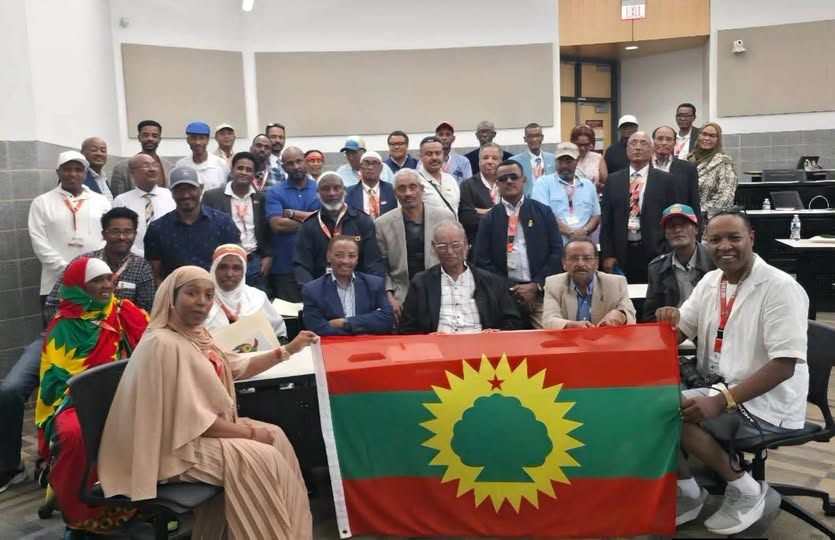
Minneapolis Hosts Landmark Gathering as Oromo Diaspora Leaders Forge a Unified Path Forward
By Dhabessa Wakjira
(Minneapolis, Minnesota — Hagayya 5, 2026) In a historic display of organizational unity and democratic resolve, the Kora 1ffaa Caasaa ABO Biyyoota Ambaa —the First Diaspora Structure Council of the Oromo Liberation Front (ABO)—successfully concluded its proceedings in Minneapolis, Minnesota. Convened over two days, Hagayya 4–5, 2026, the gathering brought together a broad cross-section of the Oromo diaspora community, including representatives from the ABO Diaspora Structure, transitional leaders, families of fallen fighters, elders, scholars, artists, youth, women, and community organizations. Dignitaries from the Caayaa Utubaa ABO and Caayaa Biiftuu Ganamaa were also in attendance, lending their wisdom and authority to the proceedings.
The participation was overwhelming—with over eighty-seven percent (87%) of invited representatives in attendance, ensuring that the gathering met the necessary quorum for legitimacy and decision-making. As the Preparatory Committee Chair, Jaal Yaddii Abdulshakuuri, had confirmed prior to the event, the conditions for a successful council were met, and the assembly proceeded with confidence and purpose.
A Ceremonial Opening: Tradition and Blessings
In keeping with Oromo cultural tradition, the council opened with the recitation of the Eebba Manguddoo—the Great Blessing—led by elders and religious figures, alongside the ceremonial contributions of the Haadholii Siiqqee (Siinqee women). The opening ceremony, which featured the singing of the Faaruu Alaabaa (national anthem), set a tone of reverence and unity, connecting the political work of the council to the cultural and spiritual foundations of the Oromo people.
Jaal Shuggux Galataa, the Coordinator of the Diaspora Structure Council, formally opened the proceedings. Following the opening, he presented a comprehensive report on the work accomplished over the past years. The report assessed the progress, achievements, and challenges encountered within the movement, offering a candid reflection on both victories and shortcomings. After extensive discussion and deliberation, the report was approved by the assembly.
Eighteen Resolute Decisions: A Blueprint for Action
Following thorough deliberations on various foundational issues, the First Diaspora Structure Council passed a series of 18 landmark decisions, establishing a clear path for the diaspora’s role in the Oromo liberation struggle. These decisions are as follows:
1. Approval of the By-Laws
The Council reviewed, debated in depth, and approved the By-Laws of the ABO Diaspora Structure, incorporating necessary amendments before ratification.
2. Election of the Leadership Council
The Council democratically elected a 39-member Leadership Council (Mana Marii Caasaa ABO Biyyoota Alaa) to lead the Diaspora Structure for the next three years, entrusting them with the mandate to guide the diaspora’s organizational work.
3. Commitment to the Struggle
The newly elected leadership members pledged their commitment, taking an oath to fulfill their responsibilities with integrity and dedication, ensuring that the ABO’s struggle achieves its objectives.
4. Institutional Strengthening
The Council resolved that the diaspora’s contribution to the Oromo liberation struggle is not to be seen as a supplementary effort. Recognizing institutional strengthening as a priority, it decided to fortify existing structures and establish new ones where absent, across all diaspora chapters and communities.
5. Engagement with Civic Organizations
The Council committed to engaging with and strengthening civic organizations and community groups, ensuring they contribute effectively to the struggle and amplify the Oromo voice.
6. International Advocacy and Diplomacy
The Council resolved to work with various governments and non-governmental institutions to establish international relations and alliances for the Oromo cause. This includes raising awareness of the oppression faced by Oromo people under the Ethiopian government and advocating for international support for the ABO’s struggle.
7. Support for Internal Struggles
The Council pledged to continue providing necessary support for the work of the ABO’s structures inside Oromia.
8. Supporting the ABO Inside Oromia
The Council committed to supporting the legal and political work of the ABO within Ethiopia, in accordance with national laws and electoral board regulations, ensuring the continuation of the struggle through all available means.
9. Confronting Atrocities
The Council resolved to expose and demand accountability for all atrocities committed by the Ethiopian government against the Oromo people, calling for an end to these acts and for those responsible to be held accountable.
10. Finfinne and the National Dialogue
The Council demanded that the ongoing “National Dialogue” process, which has been used to further divide Oromo land and undermine Oromo rights, be subjected to deep scrutiny. It called for a genuine, inclusive dialogue involving all parties, including opposition groups, that would serve the interest of all peoples of Ethiopia, not just narrow political agendas.
11. Opposition to the Extension of Term
The Council condemned the Ethiopian government’s actions to extend its term in office through military operations across Oromia under various pretexts, declaring its opposition to these maneuvers.
12. The Return of Finfinne and Dirree Dhawaa
Reaffirming that Finfinne and Dirree Dhawaa were illegally separated from Oromia in the past and have not been returned, the Council demanded their immediate return to Oromia.
13. Opposing Excessive Taxation
The Council called for an end to the excessive taxes imposed on Oromo farmers, merchants, and pastoralists, which are impoverishing communities, and demanded that these taxes be revised and reduced.
14. Adherence to the By-Laws
The Council affirmed that all its members are bound by the By-Laws ratified at this gathering and that they will support and work within the structures established by this Council.
15. Call for Ceasefire and Peace
Expressing grave concern over the ongoing armed conflict between the Oromo Liberation Army (WBO) and the Ethiopian government, which is causing immense loss of life and property, the Council called for an immediate cessation of hostilities. It urged the government to lift restrictions and engage in dialogue with the WBO to reach a lasting and just resolution.
16. Addressing Generational Injustices
The Council declared that Oromia and the Oromo people have endured over a century and a half of oppression and denial of their rights. At this critical juncture, when Oromo leadership is expected to govern, the people are experiencing unprecedented hardship. The Council demanded that the current system provide justice, dignity, and a peaceful existence for Oromo people in their own land.
17. Protection of the ABO’s Rights
While affirming that the ABO operates legally within Ethiopia to pursue the rights of the Oromo people, the Council condemned the government’s actions against the party—including the imprisonment of its leaders, the closure of its offices, the seizure of its property, and the restriction of its political activities. The Council demanded that the government respect the legal and political rights of the ABO to operate freely within the country.
18. Release of Political Prisoners
The Council called for the immediate release of all political prisoners who have been detained without due process, held in prisons, police stations, military camps, and other detention facilities across the country, demanding that they either be brought to court or released without delay.
A New Chapter in the Diaspora Struggle
The successful conclusion of the First Diaspora Structure Council marks a watershed moment in the Oromo liberation movement. For the first time, the diaspora’s role in the struggle has been codified through a comprehensive structure and set of mandates, ensuring that the community’s resources, voices, and efforts are directed with cohesion and purpose.
The gathering brought together the full spectrum of Oromo society in the diaspora—from elders and scholars to youth and artists—united in their determination to see the liberation of Oromia achieved. The presence of the families of fallen fighters served as a powerful reminder of the sacrifices upon which the movement is built.
Conclusion: The Struggle Continues, In Unity
As the council concluded its historic session, the spirit of “Injifannoon Ummata Oromoo” —Victory to the Oromo People—resounded through the halls of Minneapolis. The decisions made, the leadership elected, and the commitments sealed represent a renewed pledge to the cause of freedom, justice, and self-determination.
The work of the diaspora is now more organized, more strategic, and more impactful than ever before. The First Diaspora Structure Council has laid the foundation for a new phase in the struggle—one that harnesses the full potential of the Oromo diaspora while remaining firmly connected to the aspirations of the people in the homeland.
Injifannoon Ummata Oromoo!
ABO haa waaru!
Caasaa ABO Biyyoota Alaa haa jabaattu!
Hagayya 5, 2026
Minneapolis, Minnesota, USA
This feature article is dedicated to all who participated in this historic council, to the leadership of the ABO, and to the Oromo people everywhere who continue to strive for freedom, justice, and dignity.

A Line Crossed: Ambassador Suleiman Dedefo Warns of Eritrea’s Grave Violation of Ethiopian Sovereignty
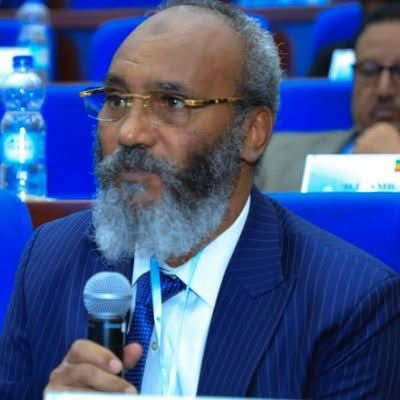
In the volatile landscape of the Horn of Africa, where alliances shift like desert sands and the embers of conflict never fully cool, a stark warning has been issued. Ambassador Suleiman Dedefo, Ethiopia’s top diplomat, has leveled a serious accusation against Eritrea: that it has committed a “grave violation” of Ethiopia’s sovereignty by sending an armed military delegation across their internationally recognized border into the Tigray region—without the consent of the Ethiopian government.
A Breach of Sovereign Borders
According to Ambassador Dedefo, Eritrea’s military delegation did not merely cross into Ethiopian territory; it was received by forces engaged in active military confrontation with the Ethiopian government—a “gang group” aligned with the Tigray People’s Liberation Front (TPLF). This, he argues, constitutes a direct and reckless act of alliance with a group waging war against Ethiopia.
“It is highly unusual and contrary to established principles of international law for an armed military delegation to cross the internationally recognized border of another sovereign state without the consent of its government,” Ambassador Dedefo stated, framing the incursion not as a diplomatic misstep but as a fundamental breach of the rules that govern relations between sovereign nations.
The Legal Framework: A Violation of the UN Charter
The Ambassador’s words carry the weight of international jurisprudence. Under the United Nations Charter and customary international law, the territorial integrity and political independence of sovereign states are inviolable. An armed incursion by one state into another, particularly to support an armed group hostile to the host government, is widely recognized as an act of aggression.
By receiving Eritrea’s military delegation in territory it does not control, the TPLF-aligned forces have, in Ambassador Dedefo’s view, effectively made Eritrea a party to the conflict. “This amounts to joining the war that TPLF is waging on Ethiopia,” he declared. Such an action erases any pretense of Eritrea acting as a neutral observer or a humanitarian partner—it positions Asmara as a belligerent.
A Reckless Alliance
The implications extend far beyond the battlefield. Ambassador Dedefo characterized Eritrea’s move as a “reckless act of alliance with a mercenary group” that jeopardizes not only Ethiopia’s sovereignty but also the stability of the entire region. In the Horn of Africa, where borders remain contested and historical grievances run deep, an act of this nature threatens to unravel the fragile peace.
By aligning with a group that the Ethiopian government has designated as hostile, Eritrea is gambling with regional security. The message sent to other nations in the region is deeply troubling: that borders can be crossed with impunity, and that external actors may choose sides in a neighbor’s internal conflict without consequence.
The Right to Self-Defense
Perhaps the most significant portion of Ambassador Dedefo’s statement is his assertion regarding Ethiopia’s legal recourse. “Such actions may give rise to Ethiopia’s rights under international law, including those recognized by the UN Charter,” he noted. He went further, stating unequivocally that “Eritrea becomes a legitimate target for any action that Ethiopia could take in self defense”.
This is not merely diplomatic rhetoric. Article 51 of the UN Charter enshrines the “inherent right of individual or collective self-defence if an armed attack occurs.” By framing Eritrea’s actions as an armed incursion in support of a hostile force, Ambassador Dedefo has laid the groundwork for a potential Ethiopian military response—one that would be legally justified under international law.
The Broader Context
Ambassador Suleiman Dedefo is no stranger to the complexities of Ethiopian diplomacy. Having served as Ethiopia’s ambassador to the United Arab Emirates and later as its top envoy to Somalia, he has been at the center of some of the region’s most sensitive negotiations. He has previously warned of external forces creating “political and strategic challenges” to Ethiopian interests and has been a vocal critic of those who threaten the nation’s sovereignty.
His latest warning comes at a time of heightened tensions in the Horn of Africa. Ethiopian Prime Minister Abiy Ahmed has spoken of “correcting” the historic loss of Red Sea access, a statement that has drawn sharp criticism from Eritrea. Meanwhile, Egypt has deployed troops to Somalia, further complicating an already fraught regional dynamic. Into this cauldron of competing interests, Eritrea’s alleged military incursion adds a volatile new element.
A Line That Cannot Be Uncrosed
Ambassador Dedefo’s words are a clear signal: Ethiopia views Eritrea’s actions as an act of war. Whether this leads to direct military confrontation between the two neighbors remains to be seen. What is certain is that the diplomatic landscape of the Horn of Africa has shifted.
The international community now faces a critical test. Will it condemn Eritrea’s violation of Ethiopian sovereignty and call for de-escalation? Or will it remain silent, allowing the precedent of armed incursion to take root? Ambassador Dedefo has drawn a line in the sand—a line that, once crossed, may prove impossible to uncross.
As the region holds its breath, one thing is clear: the principle of sovereign borders, hard-won over centuries of international law and diplomacy, hangs in the balance. And Ethiopia, through the voice of its ambassador, has made it known that it will not stand idly by while that principle is trampled.

Every Answer Matters: Australia’s 2026 Census Approaches

As Census night draws near, multicultural communities are being encouraged to participate and ensure their voices are heard and counted.
AUSTRALIA — On Tuesday 11 August, Australia will conduct its national Census, a vital exercise that captures a snapshot of the nation’s people and housing, telling the story of how we are changing. The data collected is used to shape services that people use every day, helping governments, community groups and businesses plan for healthcare, education, transport and infrastructure.
The Census is held every five years and is compulsory for everyone in Australia on Census night, including visitors, international students and visa holders .
Support for Multicultural Communities
The Australian Bureau of Statistics (ABS) has developed a range of support options to help people from culturally and linguistically diverse backgrounds participate. While the Census form is only available in English, information is available in multiple languages. Translated resources can be accessed through the ABS website, and help is available through the Translating and Interpreting Service (TIS National) on 131 450.
Census National Spokesperson Emily Walter said it’s important that Australia’s multicultural communities know what support is available to help them take part.
“Information is available in 25 languages to help the community better understand what the Census is, how it works and what you need to do,” according to the ABS.
Ancestry and Language Questions
For the 2026 Census, Australians will be able to nominate up to four ancestries, an increase from two in previous years, providing a more accurate reflection of the country’s multicultural population. This change has been welcomed by community organisations, who say it helps ensure people from diverse backgrounds are accurately represented.
Community leaders have encouraged people to pay close attention to the ancestry and language questions, as this data helps organisations advocate for the needs of their communities.
“If we want our community to be accurately represented, we need to be accurately counted,” community leaders have said.
How to Complete the Census
Most households will receive a letter in the mail containing a unique 16-digit Census number and temporary password to complete the Census online. Some households will receive a paper form instead.
Once you receive your instructions, you can complete the Census immediately if you know where you will be on Census night.
If you need help, you can:
- Call the Census Contact Centre on 1800 181 227 for assistance in English
- Call TIS National on 131 450 for help in your preferred language
- Visit the ABS website to find in-person support locations near you
Protecting Your Information
The ABS has reassured Australians that personal Census information is protected by law and cannot be shared with agencies such as the Australian Taxation Office, police, landlords or private companies.
“Every answer helps us understand what Australia needs now, and in the future,” the ABS states.
The 2026 Census is on Tuesday 11 August. For more information, visit census.abs.gov.au/language-support.
The Political Boat Called “Tsimdo”: Where Are the Far-Right and Far-Left Extremists Steering It?

In the strange theater of modern politics, strange bedfellows emerge—temporary alliances born not of shared vision but of shared hatred
By Ibsaa Nagawoo
In the annals of modern political history, few phenomena are as remarkable—and as dangerous—as the spectacle of ideological opposites joining forces against a common enemy. The far-right and far-left, whose philosophies on economics, governance, and the role of the state stand in irreconcilable opposition, sometimes find themselves on the same side of a political struggle. Their alliance, however, is not built on shared principles or a common vision for the future. It is built on a single, fragile foundation: shared enmity.
This is the political boat called “Tsimdo” (or Cimdii)—a vessel that carries strange passengers, navigates treacherous waters, and ultimately leads nowhere good for anyone aboard.
The Strange Alliance
“One of the surprising phenomena in modern world politics is the emergence of forces that fundamentally oppose each other in their political philosophy, economic policies, and views on the role of government, yet temporarily unite against a common enemy.”
This is not a new phenomenon, but it is one that has become increasingly visible in recent years. The left and right, traditionally locked in ideological struggle, discover that their hatred for a particular leader, government, or political direction outweighs their differences. They form a temporary alliance—an “unholy coalition” that promises to overthrow the common enemy but offers no coherent vision for what should come after.
“However, such alliances are often short-lived because they are based not on shared vision and common political principles, but on shared animosity.”
This is the fatal flaw of these coalitions. They are unions of convenience, not conviction. They can tear down, but they cannot build. They can oppose, but they cannot propose. They can unite in hatred, but they cannot govern in peace.
Ethiopia’s Own Experience
“Both world history and Ethiopia’s political history provide many examples that confirm this.”
In recent years, Ethiopia has witnessed this phenomenon in stark relief. The conflict between the federal government and the TPLF, and the alliances that formed around it, created some of the most improbable political marriages in the country’s history.
“In Ethiopia, this trend has been clearly seen in recent years. One can observe and analyze the strange political alliances formed during the TPLF provocation, the war between the Federal Government of Ethiopia and the TPLF, and the resulting unconventional political marriages.”
Groups that had spent decades opposing each other—ideologically, politically, and sometimes militarily—found themselves on the same side of a conflict. The shared goal of removing the TPLF from power created a temporary unity that papered over fundamental disagreements about Ethiopia’s political future.
The Unholy Alliance Against Oromo Gains
“The far-right and far-left extremist forces that shed crocodile tears in the name of the Oromo people, the Amhara, the Tigray, and the Ethiopian people—no matter how strong their unholy alliance becomes—the Oromo people will not easily surrender the political, economic, and legal rights they have won through long struggle and years of sacrifice.”
This is the central warning of the reflection: the Oromo people, who have fought for generations to secure their rights, are not about to hand them over to an alliance of convenience—whether that alliance claims to speak for the Oromo or not.
“The matter has become one of survival. And the victory achieved is not something that can be stolen through temporary political pressure or false propaganda.”
The Oromo struggle is not a passing phase or a fleeting moment of political mobilization. It is a deep, sustained, and principled movement that has survived decades of repression, co-optation, and marginalization. It will not be undone by an alliance whose only common ground is opposition to Oromo self-determination.
The Blindness of Some Oromo
“As the struggle of the Oromo people within Ethiopia has been strengthening and registering some victories, some Oromo individuals and groups who could not see—or refused to believe—that organized anti-Oromo sentiment had been building for a long time, have failed to understand that the exaggerated political hatred, character assassination, and coordinated propaganda campaign against the reformist Prime Minister Dr. Abiy Ahmed is ultimately not just about Dr. Abiy but about the Oromo as a whole.”
This is a painful truth that some Oromo have been reluctant to face. The campaign against Prime Minister Abiy Ahmed is not merely a personal vendetta against one individual. It is an attack on Oromo leadership, Oromo gains, and Oromo aspirations. The fact that some Oromo have joined in this campaign, or remained silent in the face of it, is a betrayal of the Oromo cause.
“Only they themselves can answer why this happened.”
The reflection leaves this question hanging in the air, inviting self-examination. Why have some Oromo joined forces with those who fundamentally oppose Oromo rights? Why have some remained silent when anti-Oromo rhetoric has reached dangerous levels? Why have some failed to see that the attack on one Oromo leader is an attack on all Oromo?
The Washington Statement and Its Aftermath
“There is one thing we all cannot forget. The statement by the international Fano ‘intellectuals’ that was read in Washington contained dangerous rhetoric: ‘We will return the Gallas to Madagascar.’ This is still being echoed by Mahayimannu Fano. This hate speech did not remain merely words—many believe it has found expression in acts of violence against innocent Oromo in various places, especially today in East Wollega and Dera.”
This is a chilling reminder of the stakes involved. The anti-Oromo rhetoric that has been circulating is not harmless—it has real-world consequences. Innocent Oromo people have been targeted, attacked, and killed. The words of hate have become acts of violence.
“The sad part is that some forces who call themselves ‘freedom fighters’ have silently covered up or overlooked this issue. This silence itself carries a major political message.”
The silence of those who claim to fight for freedom is deafening. When the self-proclaimed champions of liberation refuse to condemn violence against Oromo, they reveal their true priorities. Their silence is not neutrality—it is complicity.
The Poisoned Boat
“Some Oromo politicians and activists, having lost their own political direction, have found themselves unwittingly in the same political boat (Tsimbo) as Amhara extremist unitarist far-right extremists. Since this act conflicts with the common interest and political will of the Oromo people, it should be remembered as a political lesson and historical warning for generations.”
This is perhaps the most pointed criticism in the reflection: some Oromo have lost their way. They have abandoned the principles of Oromo liberation and joined forces with those who have historically opposed—and continue to oppose—Oromo rights.
“Any individual or political organization that organizes in the name of Oromo must distance itself from political ideologies, philosophies, and economic policies that divide the Oromo people. Any idea presented as a ‘political reality’ that weakens Oromo unity, if it conflicts with the interests of Oromia, Ethiopia, and the Oromo nation, should not be accepted.”
This is a clear call to Oromo political actors: know who you are, know what you stand for, and know who your true allies and enemies are. The lines must be drawn clearly. There is no room for ambiguity when the survival of the Oromo people is at stake.
A Call to Abandon the Boat
“Therefore, if you find yourself in this propaganda of organized anti-Oromo hatred, you should distance yourself from this destructive political boat (Tsimbo). This boat does not benefit the Oromo people—it represents hatred, division, and destructive ideologies. It is not too late to distance yourself from this extremist political direction; the beneficial thing is to stop it.”
This is a call to choose. A call to abandon the alliance of hatred and return to the principles of justice, self-determination, and unity. A call to recognize that the path of extremism leads nowhere good.
“It is not too late to distance yourself from this extremist political direction; the beneficial thing is to stop it.”
There is still time to turn back. There is still time to choose the path of dialogue, mutual respect, and peaceful political competition. There is still time to build rather than destroy.
The Role of External Forces
“Finally, this extremist political and war ‘Tsimbo’ is not just an internal problem—it can also be a tool for the interests and proxy wars of external forces, and it is targeted as such. Therefore, it does not bring lasting benefit to the Oromo, the Amhara, the Tigray, or other nations and nationalities, nor to the Ethiopian people in general.”
The reflection recognizes that the forces driving the “Tsimbo” are not purely domestic. External actors have their own interests in Ethiopia’s political landscape. They seek to exploit divisions, weaken the country, and advance their own agendas. The Tsimbo serves their purposes, not the purposes of the Ethiopian people.
“Therefore, I believe that abandoning this politics of hatred, division, and extremism and returning to dialogue, trust, and peaceful political competition is the beneficial path for everyone.”
This is a vision of hope: a return to politics as a means of resolving differences, not a weapon for destroying enemies. A return to the belief that dialogue and trust are possible. A return to the conviction that Ethiopia’s future will be built, not destroyed.
The Way Forward
“Ethiopia’s future destiny will not be found in an alliance based on hatred. The country’s lasting peace, stability, and democratic progress can only be ensured when they are based on constitutional supremacy, the rule of law, mutual respect, genuine democratic dialogue, and a shared national vision.”
This is the heart of the message: the future belongs not to those who hate, but to those who build. Not to those who divide, but to those who unite. Not to those who destroy, but to those who create.
“One truth, however, is clear: an alliance based on hatred may change a government, but it cannot build a country.”
This is a profound insight. The Tsimbo may succeed in its immediate objective—the removal of a particular leader or the overthrow of a particular government. But what then? What vision does it offer for the future? What principles will guide it? What foundation will it build upon?
The answer is: none. An alliance based solely on hatred can only destroy; it cannot create. It can tear down; it cannot build. It can oppose; it cannot govern.
Conclusion: A Choice to Make
The political boat called Tsimbo is a dangerous vessel. It carries those who have lost their way, those who have confused hatred for principle, those who have abandoned the struggle for justice in favor of the easier path of revenge.
But there is another path. The path of dialogue, trust, and peaceful political competition. The path that builds rather than destroys. The path that unites rather than divides. The path that leads to lasting peace, stability, and democracy.
The choice is clear. The time for choosing is now.
“An alliance based on hatred may change a government, but it cannot build a country.”
Let us choose to build. Let us choose to unite. Let us choose the path of peace, justice, and shared national vision.
May we all make the right choice.
====
*The above feature article is based on the reflection of Ibsaa Nagawoo

The Sacred Trust: Why Workplace Confidentiality Is a Duty Beyond Law

In every workplace, there are lines that should never be crossed—and confidentiality is one of them. It is not just a rule; it is a promise.
A colleague shares a private frustration over coffee. A manager casually discusses sensitive restructuring plans. A personnel file is left open on a shared screen. An email containing personal information is forwarded without a second thought.
In the moment, these seem like small slips—harmless, even human. But the consequences can ripple far beyond what anyone anticipates.
“Namni kamuu iccitii mana hojii eeguuf dirqama qaba.”
(Every person has a duty to protect workplace confidentiality.)
This is not merely a bureaucratic requirement tucked into employment contracts. It is a fundamental pillar of trust, professionalism, and ethical conduct. And when that trust is broken, the damage can be profound—not only to individuals but to entire organisations, communities, and lives.
What Is Workplace Confidentiality?
Workplace confidentiality refers to the obligation of employees to protect sensitive information they encounter in the course of their work. This includes:
- Personal information about colleagues, clients, and customers
- Financial data and business strategies
- Medical records and health information
- Performance reviews and disciplinary matters
- Trade secrets and proprietary knowledge
- Internal communications and decision-making processes
Whether it is spoken in a meeting, written in an email, or stored in a database, such information is entrusted to employees on the understanding that it will be handled with care and discretion.
The Line Between Sharing and Violating
We live in an age of oversharing. Social media encourages us to broadcast our thoughts, workplace chat platforms blur the boundaries between professional and personal, and the ease of forwarding an email can make us forget that some messages were never meant to be shared.
But there is a clear and important distinction.
“Namni tokko iccitiin namoota dhuunfaa baasee maxxansuu fi saaxiluun dhorkaa dha.”
(It is forbidden for a person to disclose and share private information with others.)
This is not merely a suggestion—it is a legal and ethical obligation. In Australia, privacy laws such as the Privacy Act 1988 (Cth) and the Australian Privacy Principles (APPs) regulate how personal information must be handled, and breaches can result in serious penalties. Beyond the legal consequences, there are reputational and relational costs that can take years to repair.
When Confidentiality Is Broken: Real-World Consequences
Consider the real-world impact of a breach:
A team leader casually mentions in a group meeting that a staff member is struggling with a health condition. The staff member feels exposed and humiliated, their trust shattered. Colleagues begin to treat them differently, and the workplace atmosphere becomes strained. The staff member may even leave the organisation, taking their talent and experience elsewhere.
A payroll officer accidentally emails salary details to the entire company. The fallout is immediate—resentment, comparisons, and a breakdown in morale that affects productivity for months. Trust in management evaporates, and the company’s culture is damaged for years.
An employee posts about a confidential client dispute on social media. The client discovers the post, files a complaint, and the company’s reputation is irreparably damaged. The employee is terminated, and the company loses a valuable contract—and potentially many more.
A healthcare worker shares a patient’s medical details with friends. The patient feels violated, their privacy destroyed. They may lose trust in the entire healthcare system, avoiding necessary care in the future. The worker faces disciplinary action, loss of registration, and potential legal consequences.
These are not hypothetical scenarios. They happen every day in workplaces across the world—in hospitals, schools, government offices, and corporate boardrooms.
Why Confidentiality Matters
Confidentiality is not about secrecy for its own sake. It is about:
1. Respect for Individuals
Every person has a right to privacy. When we respect that right, we affirm the dignity and worth of our colleagues, clients, and stakeholders. We acknowledge that their personal information belongs to them—not to us.
2. Building Trust
Trust is the currency of effective workplaces. Employees who feel their private information is safe are more likely to speak openly, seek help when needed, and contribute fully to their teams. Trust is hard-won and easily lost. Once broken, it is rarely fully restored.
3. Protecting the Organisation
A breach of confidentiality can expose an organisation to legal liability, financial loss, and reputational harm. In competitive industries, it can also hand advantages to rivals. The cost of a data breach—in fines, legal fees, and lost business—can run into the millions.
4. Maintaining Professional Standards
In professions such as healthcare, law, social work, and finance, confidentiality is not just expected—it is mandated by codes of conduct and professional ethics. Breaches can result in loss of professional registration, ending careers.
5. Protecting Vulnerable People
For clients and customers who are vulnerable—such as those seeking mental health support, financial advice, or legal assistance—confidentiality is essential. Without it, they may not seek help at all. The consequences can be devastating.
Striking a Balance
Of course, confidentiality does not mean silence in the face of wrongdoing. Whistleblower protections exist to allow employees to report illegal or unethical behaviour without fear of retaliation. The distinction lies in the purpose and intent of the disclosure.
Sharing information to expose corruption, protect public safety, or prevent harm is fundamentally different from gossiping about a colleague’s personal struggles or leaking sensitive data for personal gain.
The key questions to ask:
- Is there a legitimate public interest in this disclosure?
- Is the information being shared through proper channels?
- Is the motivation to protect, or to harm?
What Every Employee Should Remember
“Kun seeraanis ta’ee naamusaan kan eegamuu dha.”
(This is to be upheld both by law and by conscience.)
Workplace confidentiality is a dual obligation—it is written into contracts and legislation, but it is also a matter of personal integrity. The law can penalise breaches, but it is conscience that should guide us in the moment of decision.
Before sharing information, ask yourself:
- Does this person have a legitimate need to know?
- Am I authorised to share this?
- Could this cause harm or embarrassment to anyone?
- Would I be comfortable if this were shared about me?
- Is this information protected by law or professional ethics?
If the answer to any of these questions gives you pause, it is likely better to remain silent.
A Shared Responsibility
Confidentiality is not just the responsibility of managers, HR professionals, or legal teams. It belongs to every single person in the workplace.
It means:
- Locking your screen when you step away from your desk
- Not discussing sensitive matters in public spaces like elevators or cafeterias
- Thinking twice before forwarding an email or sharing a document
- Saying, “I’m sorry, I can’t discuss that,” even when pressed by curious colleagues
- Properly disposing of confidential documents (shredding, not just recycling)
- Using secure communication channels for sensitive information
In an era of information overload and digital permanence, discretion has become a rare and valuable quality. Those who practise it are trusted more, respected more, and ultimately succeed more in their careers.
The Cost of Silence—and the Cost of Speaking
Sometimes, the most difficult ethical decision is knowing when to speak and when to remain silent.
Speak when:
- You are reporting illegal activity or serious misconduct through proper channels
- You have a legal obligation to disclose (such as mandatory reporting of child abuse)
- There is an immediate risk of serious harm
Remain silent when:
- You are tempted to share gossip or personal information about colleagues
- You do not have authorisation to share the information
- The information could be used to harm or embarrass someone
The Bottom Line
Workplace confidentiality is not a constraint—it is a protection. It protects individuals from harm, organisations from liability, and workplaces from the corrosive effects of mistrust.
When we honour confidentiality, we send a clear message: We value you. We respect your privacy. And we will not betray your trust.
That is not just a legal requirement. It is a promise—one that every ethical professional should be proud to keep.
In the end, the question is not whether we can share something. The question is whether we should. And sometimes, the most powerful thing we can say is nothing at all.
Key Takeaways
| Principle | Action |
|---|---|
| Respect privacy | Only share information with those who have a legitimate need to know |
| Understand the law | Familiarise yourself with privacy legislation and your organisation’s policies |
| Think before sharing | Ask yourself: Is this authorised? Could it cause harm? |
| Use secure channels | Protect digital and physical information from unauthorised access |
| Speak up through proper channels | Report misconduct, but do so responsibly |
| Lead by example | Model confidentiality in your own behaviour |
Confidentiality is not about hiding problems—it is about protecting people. When we get that right, we build workplaces that are safer, more trusting, and more effective for everyone.

Breaking the Silence: The Cost of Complicity in the Face of Injustice

By Dhabessa Wakjira
In the annals of human history, some of the darkest chapters were not written by tyrants alone. They were co-authored by the silence of those who witnessed evil and chose to look away, who heard the cries of the oppressed and chose to hear nothing, who saw injustice unfolding and chose to remain still.
“Remaining silent like sheep is the source of our problems,” the saying goes. “Failing to respond to those who are oppressing people with falsehoods is turning many just people into victims.”
These words carry a weight that transcends any single community or era. They speak to a universal truth: silence is not neutrality. Silence is a choice, and in the face of oppression, it is a choice that sides with the oppressor.
The Anatomy of Silence
Throughout history, silence has been the soil in which tyranny flourishes. The Holocaust did not begin with gas chambers; it began with whispers, with the gradual dehumanisation of neighbours, with the silence of those who saw their Jewish friends being marginalised and said nothing. The Rwandan Genocide was not spontaneous; it was enabled by the silence of the international community, which refused to call what was happening by its name. The enslavement of millions was sustained not only by chains but by the silence of those who profited from human suffering and those who looked the other way.
In the Oromo context, this silence has taken many forms. Political persecution has often been met with a deafening quiet from those in positions of power. Human rights abuses have been documented yet ignored. Communities have been displaced, lives have been destroyed, and voices have been silenced.
The question is not whether oppression exists—it does, in many forms, in many places. The question is: what are we doing about it?
The False Comfort of Neutrality
There is a dangerous myth that silence is a form of neutrality. Many believe that by staying out of political or social struggles, they are remaining impartial, above the fray, wise in their restraint.
This is a delusion.
As the philosopher Edmund Burke famously observed, “The only thing necessary for the triumph of evil is for good men to do nothing.” When we fail to respond to falsehoods, we allow them to become accepted truths. When we fail to challenge oppression, we allow it to become normalised. When we fail to speak for the voiceless, we become complicit in their suffering.
Silence is not a safe harbour; it is a choice to abandon the moral high ground.
The Weaponisation of Lies
In today’s world, falsehoods are weaponised with unprecedented sophistication. Disinformation campaigns, propaganda, and the deliberate distortion of truth are tools used to divide communities, incite hatred, and justify atrocities.
Those who oppress rely on the silence of the masses. When a lie is repeated often enough and loudly enough, and when no one challenges it, it begins to wear the mask of truth. In this environment, even the most just individuals can find themselves victimised—not just by the direct violence of the oppressor but by the collective silence that allows the oppressor to act with impunity.
When a community is falsely accused of violence, and good people remain silent, that community suffers. When a political leader spreads hatred against a minority, and people of conscience say nothing, that minority is endangered. When human rights abuses are reported, and no one demands accountability, the abuses continue.
The Courage to Speak
To break this cycle, we must cultivate the courage to speak. This courage is not always easy—it often comes with a cost. Speaking truth to power can lead to persecution, ostracism, or worse. But the cost of silence is far greater.
Speaking out does not always mean taking to the streets or publishing manifestos. It can take many forms:
- Amplifying the voices of the oppressed: Sharing their stories, supporting their struggles, and ensuring their perspectives are heard
- Challenging falsehoods: When you hear a lie about a community or individual, correct it. Do not let hate speech go unchallenged
- Using your privilege: If you have access to platforms that others do not, use them to speak for those who cannot
- Educating yourself and others: Understanding the issues, the history, and the context of oppression is the first step to effective action
- Supporting organisations that fight for justice: Many organisations work tirelessly to document human rights abuses, provide legal aid to the oppressed, and advocate for political change. They need support
The Power of Solidarity
Throughout history, solidarity has been the antidote to silence. When communities stand together, they create a force that oppressors cannot ignore.
The civil rights movement in the United States succeeded not only because of the courage of African Americans but because of the solidarity of people from all backgrounds who refused to be silent. The anti-apartheid movement in South Africa was sustained by global solidarity that isolated the regime and demanded change. The struggle of the Oromo people is no different—it requires solidarity from within and beyond the community.
Solidarity means recognising that the oppression of any group is a threat to all groups. It means understanding that the forces that silence one voice will eventually silence all voices. It means refusing to be divided by the false narratives that oppressors use to fragment potential resistance.
A Call to Action
The time for silence is over. The time for speaking, for action, and for solidarity is now. Every voice that rises in defence of justice strengthens the collective resolve. Every hand that reaches out to support the oppressed builds a barrier against injustice. Every person who refuses to be complicit through silence transforms the landscape of possibility.
Those who oppress rely on division and fear. They rely on us remaining silent, on us being too afraid to speak, too comfortable to act, too indifferent to care.
Let us prove them wrong.
Let us break the silence.
Let us stand with the oppressed, not as passive bystanders but as active participants in the struggle for justice, truth, and humanity.
“The only thing necessary for the triumph of evil is for good people to do nothing.” – Edmund Burke
#BreakTheSilence #JusticeForAll #Oromo #Solidarity #SpeakTruth #NoMoreComplicity

Navigating Loss: A Guide to Grief Support for Oromo Families in Victoria

By Staff Reporter
MELBOURNE, VICTORIA – The loss of a loved one is always difficult. For members of the Oromo community living in Victoria, that difficulty is often deepened by a profound sense of isolation. Families may feel far from their homeland, uncertain of the local systems, and unsure where to turn for help .
Yet, no one needs to navigate this time alone. Whether it is practical assistance with funeral arrangements, financial support, or emotional comfort, there are organisations and services ready to help.
Finding Community: The Australian Oromo Community Association in Victoria (AOCAV)
One of the most vital resources for the Oromo community in Victoria is the Australian Oromo Community Association in Victoria Inc. (AOCAV) . Founded in 1984 by the first Oromo pioneers who migrated to Australia as refugees, the association has served as a cornerstone of support for the Oromo community .
The association understands the significance of traditional rituals and rites of passage, including those surrounding death . When a family member passes, reaching out to AOCAV can provide:
- Cultural guidance – assistance in ensuring that funeral arrangements respect Oromo customs and traditions
- Community support – mobilising the local community to offer practical help and emotional comfort
- Referrals – directing families to funeral directors and other relevant services
Practical Steps: Organising a Funeral in Victoria
When a death occurs, one of the first practical steps is to contact a funeral director . Several funeral directors in Melbourne have experience serving Victoria’s diverse communities.
One prominent provider is Le Pine Funerals, with over 130 years of service in Victoria. They are committed to serving the state’s “diverse and harmonious community, catering to all cultures, religions and traditions” and have a multilingual team ready to assist in arranging funerals in over 140 languages . For families seeking services that specifically cater to multicultural communities, Le Pine Asian offers personalised funeral services with experienced multilingual staff who can accommodate individual wishes and cultural requirements .
Other trusted funeral providers in Victoria include Tobin Brothers Funerals, White Lady Funerals, and Simplicity Funerals .
When choosing a funeral director, it is helpful to discuss cultural or religious obligations. For Oromo families, this might include the desire for a burial as opposed to a cremation, specific rituals, or the need for a service conducted in the Oromo language or with an interpreter .
Financial Assistance and Practical Support
Funerals can be expensive . However, there are avenues for financial support.
Centrelink Payments – Services Australia provides several payments to help people after the death of a loved one . Depending on your situation, you may be eligible for a Bereavement Payment, a Pension Bonus Bereavement Payment, or bereavement assistance for carers .
If a person passes away without family or the means to pay for a funeral, the Victorian State Government has arrangements in place, with the Department of Health and Human Services potentially contributing .
Grief and Emotional Support
Beyond the practicalities, the emotional toll of losing a loved one is immense. Several national and state-based organisations offer free grief counselling and support.
- Lifeline – 24-hour crisis support: 13 11 14
- Australian Centre for Grief and Bereavement – Provides information on grief support and offers counselling services: 1800 642 066
- Grief Australia – Offers free bereavement counselling and support groups for all Victorians at their Mulgrave office and various locations, as well as telehealth services
- Grief Line – Telephone or online counselling: 1300 845 745
- Mensline Australia – Telephone support specifically for men: 1300 78 99 78
For those who have experienced the loss of a baby or child, Red Nose Australia provides specialist bereavement counselling and support free of charge, 24 hours a day, 7 days a week .
Wombat’s Wish is a grassroots not-for-profit organisation based in Clifton Springs that offers free therapeutic weekend grief programs and one-to-one counselling for children and young people who have lost a parent or carer .
Real Path Health and Wellbeing in Werribee specialises in trauma-informed counselling and grief and loss support for individuals and families, including multicultural communities .
Additionally, spiritual and pastoral support from faith communities is often a vital source of comfort for many in the Oromo community .
Specialised Support for CALD Communities
The Victorian Foundation for Survivors of Torture Inc. (Foundation House) has received substantial funding to provide the Program of Assistance for Survivors of Torture and Trauma, which supports people from CALD backgrounds who have experienced trauma, including grief related to displacement and loss .
A Step-by-Step Guide: What to Do
If you are an Oromo family member in Victoria, here are the steps to take :
- Connect with your community – Reach out to the Australian Oromo Community Association in Victoria (AOCAV). They can provide cultural and practical support.
- Contact a funeral director – Choose a funeral director that respects your culture, such as Le Pine Funerals, which has experience with diverse communities. Discuss your needs: burial, specific rituals, and the need for an interpreter.
- Inform Centrelink and seek financial assistance – Notify Services Australia by calling 132 300 and ask about the Bereavement Payment and other benefits.
- Seek emotional support – Call a grief support line. Services like Lifeline (13 11 14) and the Australian Centre for Grief and Bereavement (1800 642 066) are available and confidential.
Key Contacts
| Service | Contact | Description |
|---|---|---|
| Australian Oromo Community Association in Victoria | P.O. Box 2123, Footscray, VIC 3011 | Cultural and community support network |
| Centrelink Bereavement Line | 132 300 | Financial assistance and payments after a death |
| Lifeline | 13 11 14 | 24-hour crisis support |
| Australian Centre for Grief and Bereavement | 1800 642 066 | Grief counselling and information |
| Grief Australia | Free bereavement counselling and support groups | |
| Red Nose Australia | 24/7 Bereavement Support Line | Specialist support for loss of a baby or child |
| Wombat’s Wish | Free grief programs for children who have lost a parent | |
| Real Path Health and Wellbeing | Werribee | Trauma-informed grief counselling |
| Le Pine Funerals | (03) 8587 5700 | Funeral services for diverse communities |
Sources: Advocacy for Oromia, Australian Oromo Community Association in Victoria, Grief Australia, Lifeline, Red Nose Australia, Australian Centre for Grief and Bereavement.
Disclaimer: This article provides a general guide only. Readers should seek professional advice for their own particular situations.
#Oromo #GriefSupport #Victoria #Bereavement #CommunitySupport #FuneralServices

Honouring Our Elders: A Guide to Aged Care Support for Oromo Seniors in Victoria
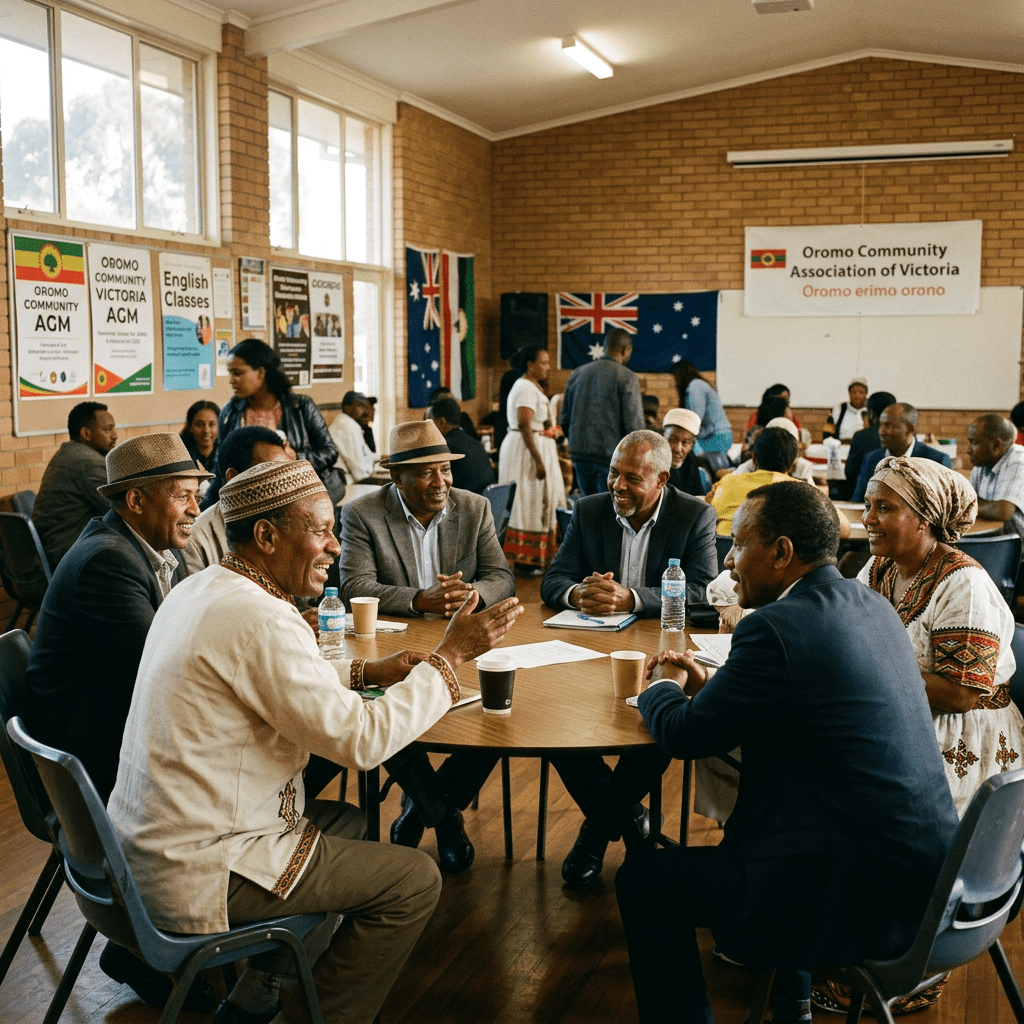
By Daandii Oromia
MELBOURNE, VICTORIA – For the Oromo community in Victoria, elders are more than just family members; they are the keepers of history, the carriers of language and tradition, and the living roots of a culture that stretches across continents. They endured hardship, made the courageous journey to Australia, and built new lives for their children and grandchildren.
Now, as they enter their golden years, these pioneers deserve care, respect, and dignity.
But for many Oromo families, navigating the aged care system can feel overwhelming. Language barriers, cultural differences, and unfamiliar government processes often make it difficult to find the right support . However, a growing network of community and government organisations is dedicated to ensuring that Oromo elders receive the care they need—in a way that honours who they are .
The Growing Need: Supporting an Ageing Community
The Oromo community in Victoria has been establishing itself since the 1980s, when the first Oromo pioneers arrived as refugees . Today, approximately 5,000 Oromo people call Victoria home, and many are now reaching an age where they need support .
In recent years, community organisations have become increasingly active in supporting Oromo seniors. The Federation of Oromo Civic Organizations in Australia and the Oromo Seniors Welfare and Benevolent Association in Victoria regularly hold events to bring elders together, combat isolation, and share important information about available services .
These gatherings are more than social occasions—they are vital lifelines. As one community reflection noted, “For many in the diaspora, especially seniors, such gatherings provide a sense of connection and reduce feelings of loneliness or alienation” .
Where to Find Help: Key Organisations for Oromo Seniors
Oromo Community Organisations
The Australian Oromo Community Association in Victoria Inc. (AOCAV) is a vital first point of contact for Oromo families. Founded in 1984, the association serves as a “cornerstone of support” for the Oromo community, helping members navigate life in Australia while preserving cultural heritage . They offer vital resources for new arrivals, assistance with settlement, education, and employment, and are dedicated to uniting and empowering Oromo people residing in Australia . They can connect families with aged care services and other resources .
Advocacy for Oromia Association in Victoria is another key resource. Based at offices in Dandenong and Melbourne, this nonprofit organisation works to empower the Oromo community through advocacy, education, and information services . They can help seniors and their families understand available support and navigate the system .
Multicultural Aged Care Specialists
Australian Multicultural Community Services (AMCS) is one of Victoria’s leading providers of culturally appropriate aged care. With over 40 years of experience, AMCS specialises in supporting seniors from culturally and linguistically diverse backgrounds . They employ over 200 bilingual staff who speak more than 50 languages and provide home care and support packages, social and group activities, referrals and information services, and free consultations on home care support. AMCS operates across metropolitan Melbourne and Geelong .
Benetas, a not-for-profit aged care provider, has also been recognised as a specialist provider for CALD communities. They offer home care services across Victoria and have staff who speak Arabic, Vietnamese, Mandarin, Turkish, and many other languages . Their care planning includes asking every client about their cultural and linguistic needs to ensure services are tailored appropriately .
Access and Support: Navigating the System
The Access and Support program, coordinated by the Ethnic Communities Council of Victoria (ECCV), is a free service designed to help older people from diverse backgrounds navigate the aged care system. With 80 workers across Victoria, the program helps identify individuals in need, explains available services, supports clients through the My Aged Care assessment process, and connects them to providers . This service is particularly valuable because it is impartial and builds trust over time—essential when working with communities who may be wary of government services .
Centre for Cultural Diversity in Ageing
This Victorian organisation, funded by the Australian Government, helps aged care providers deliver culturally appropriate care. They provide policy advice, training, and resources for providers—meaning that more mainstream services are becoming better equipped to serve Oromo elders .
Practical Steps for Oromo Families
If you or a family member are an Oromo elder in Victoria needing support, here is a path forward :
- Start with your community: Reach out to the Australian Oromo Community Association in Victoria Inc. or Advocacy for Oromia Association. They understand your culture and language and can guide you.
- Contact a multicultural aged care specialist: Organisations like AMCS or Benetas offer culturally appropriate home care. Call them for a free consultation.
- Access the Access and Support program: If you are unsure where to start, call ECCV or ask your doctor or community worker to connect you with an Access and Support worker.
- Call My Aged Care: The government’s central aged care information line can help you understand your options. Ask for an interpreter if needed.
- Consider social groups: Many organisations run social and activity groups for seniors from diverse backgrounds. These are a wonderful way to stay connected, combat loneliness, and maintain cultural traditions.
- Know your rights: Everyone receiving government-funded aged care is entitled to be treated with dignity and respect, and to have their identity, culture, and diversity valued. The new Aged Care Act, effective from November 2025, explicitly states that aged care service providers must respect an individual’s preferences, needs, and rights, including their cultural identity . If you are a carer for an older family member, you may also be eligible for support through the Victorian Government’s Support for Carers Program, which provides counselling, respite, and other practical supports, with specific programs for carers from CALD backgrounds .
The Importance of Culturally Safe Care
For many Oromo elders, the transition to aged care is not just about medical needs—it is about maintaining identity. Research shows that older people from diverse communities often enter aged care with higher needs for daily function, behavioural support, and complex care . When dementia sets in, the ability to communicate in one’s own language becomes even more critical; for those with dementia, “if they cannot communicate in their language, they suffer even more” .
There is also a real stigma around aged care in some CALD communities, with institutional care being an unfamiliar concept to many migrants . This is why community-led support and culturally safe services are so important. When residents encounter familiar cultural references, whether through language, music, or shared traditions, it can spark powerful moments of recognition and connection . A familiar dish might evoke family gatherings from decades earlier, helping residents feel understood and grounded in environments that are often new and unfamiliar .
Key Contacts for Oromo Elders in Victoria
| Service | Contact | Description |
|---|---|---|
| Australian Oromo Community Association in Victoria (AOCAV) | 25 Mt Alexander Rd, Flemington VIC 3031 | Support, settlement, cultural preservation |
| Advocacy for Oromia | 39 Clow St, Dandenong VIC 3175; 247-251 Flinders Lane, Melbourne VIC 3000; 0432 057 473 | Advocacy, information, community support |
| Australian Multicultural Community Services (AMCS) | (03) 9689 9170; http://www.amcservices.org.au | Culturally appropriate home care |
| My Aged Care | 1800 200 422; http://www.myagedcare.gov.au | Government aged care information and access |
| Carers Victoria | Carer support, counselling, respite | |
| Ethnic Communities Council of Victoria (ECCV) | Access and Support program coordination | |
| Senior Rights Victoria | 1300 368 821 | Support for elder abuse issues |
Sources: Advocacy for Oromia, Australian Oromo Community Association in Victoria, Australian Multicultural Community Services, My Aged Care, Victorian Government, ABC News.
Disclaimer: This article provides a general guide only. Readers should seek professional advice for their own particular situations.
#Oromo #Seniors #AgedCare #Victoria #CommunitySupport #CulturalSafety





 Advocacy for Oromia