Daily Archives: June 24, 2026

The Lioness Queen of Africa: Reclaiming the Legacy of Aayyo Guddittii
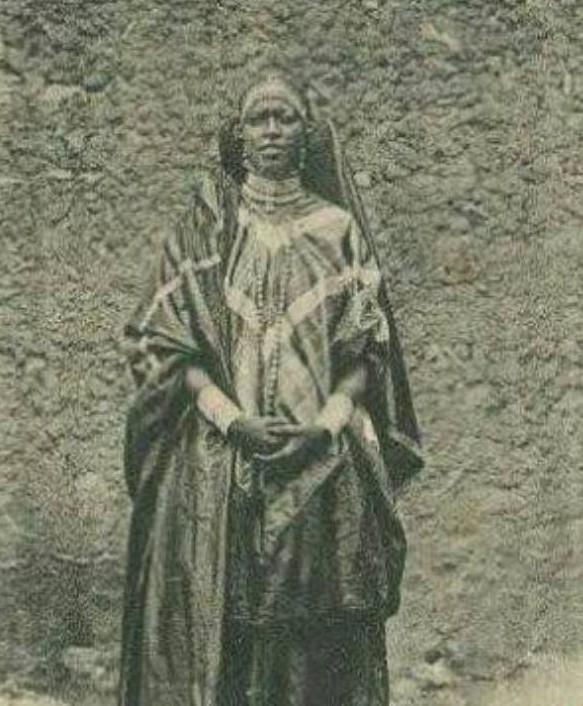
She was called the “Lioness Queen of Africa” by the world, a figure of such power that she reshaped the political landscape of the Horn of Africa. To the Oromo people, she is known as Aayyo Guddittii Gaadi’aa—Grandmother of Wisdom, the Great Queen. To the dominant Ethiopian historical narrative, she is Yodit Gudit—a destroyer of churches and a rebellious woman. But who was she, and why is her story so contested?
A Figure Shrouded in Mystery
The personage known by multiple names—Gudit, Yodit, Isato, Aayyo Guddittii, Akoo Manooyee—is one of the most fascinating and controversial figures in Ethiopian history. If she is the same as Māsobā Wārq, the daughter of the last Aksumite king Dil Na’ad, she ruled in the 10th century and is said to have been responsible for laying waste to the Kingdom of Aksum and its countryside .
According to Oromo oral tradition, Aayyo Guddittii was not a destroyer but a liberator. She was born into the Bareentu branch of the Oromo, in the area of Asaboot (Ashaboo) in Hararge . The name “Asaboot” itself comes from the Arabic Aṣ-ṣaḥābah (“The Companions”), referring to companions of the Prophet Muhammad, and the town still exists today in the West Hararghe Zone of the Oromia Region . Her people were from the Azabo (Asabo) clan, a Cushitic Oromo group, known for their resistance and warrior traditions.
The Habesha (Amhara and Tigrayan) chronicles tell a different story. They describe Gudit as a rebellious woman—even a prostitute—who raised an army, invaded Aksum, and burned its palace and churches . She is portrayed as a monstrous figure, a “female gud or monster” . Her deeds are still cursed in the northern Ethiopian countryside. To this day, when stories are told of her violent misdeeds, they are recounted among peasants in the northern Ethiopian countryside .
But is this portrayal history—or propaganda?
The Rise of the Queen
In the 9th century, she mobilized an army, destroyed the ancient Kingdom of Aksum, and took power. She ruled for 40 years over a vast territory that included northern Ethiopia, ruling over both Oromo and Habesha subjects . This was a time when Aksum, once one of the four great civilizations of the world alongside Rome, Persia, India, and China, was in decline .
The reasons for her rise are disputed. One legend says she was stripped of her title as princess and became a prostitute to survive. After a priest stole a sacred artifact on her behalf, she was blamed and exiled. She married Prince Zenobis and together they invaded Aksum, where she destroyed the palace and churches . Another legend claims she was the granddaughter of Aksumite Emperor Wuden Asferé and that her motherland was Hahaylé in Tigré .
But Oromo tradition offers a different interpretation: she was a unifier, a leader who rose to challenge an oppressive empire and liberated her people. As one Oromo source puts it, “Oromo calls her the father of imperialism. Habesha said Yodit Gudi Abba Ire Wareertu and still cursing her” .
The Zagwe Dynasty: An Oromo Legacy
After her death, power passed to a dynasty that Oromo tradition calls Hidda-Zagwe—the Zagwe Dynasty. This dynasty ruled for 333 years, with 11 kings, and is recognized for building the famous rock-hewn churches of Lalibela .
The name “Zagwe” itself is contested. In Oromo, it is connected to Haagahu—a name derived from an Oromo tribe from the Gojjam region. The Habesha narrative has transformed this into “Agaw” or “Z-Agaw,” obscuring the Oromo origins of these rulers . The dynasty’s capital was Roha, later renamed Eddeessaa, and eventually Lalibela—a name that in Oromo means “Laali balaa” or “look at danger/see the threat,” referring to the defensive architecture of the churches .
The most famous of the Zagwe kings was Laalibala (Lalibela), who commissioned the eleven magnificent rock-hewn churches. According to both tradition and archaeological evidence, these churches were carved in the 12th and 13th centuries, in the mountainous region of Lasta in northern Ethiopia . The Zagwe dynasty is credited with preserving and spreading Orthodox Christianity, particularly into the southern regions of Gojjam and Shewa .
The 11 churches, including the iconic Church of Saint George (Biete Giorgis), were carved from a single block of stone. According to the Acts of Lalibela, the king built them in the likeness of what he had seen in a vision, with the help of both men and angels . The site became a major pilgrimage destination—a “New Jerusalem” for Ethiopian Christians .
The Erasure of Oromo History
The Zagwe dynasty’s rule ended in 1270 when the so-called “Solomonic Dynasty” was restored, claiming descent from King Solomon and the Queen of Sheba. The new rulers launched a campaign of propaganda warfare against the Zagwe, labeling them as “alien and impious groups of adventurers” . The Kebrā Nāgäst (Glory of Kings) was used as a political gospel to delegitimize the Zagwe and justify Solomonic rule .
This anti-Zagwe propaganda deliberately obscured what is perhaps the richest and most artistic period of Ethiopian civilization since the conversion of Ezana . The Zagwe kings, who were of Agaw/Oromo heritage, had “preserved their linguistic identity and used Agaw outside the church,” making them linguistically different from the Amhara and Tigray elites—and thus easy to dismiss as “foreign” .
The obscurity of this period has been “further aggravated by both subjective and objective factors”—including “deliberate and concerted intrigue of the Solomonic elite and the clergy” .
Reclaiming the Legacy
Today, Oromo scholars and advocates are working to restore the true history of Aayyo Guddittii and the Zagwe dynasty. They argue that the deliberate distortion of this history has served to:
- Erase Oromo contributions to Ethiopian civilization, including the construction of the Lalibela churches and the spread of Christianity .
- Suppress Oromo identity by claiming that Oromo history begins only in the 16th century—a claim that is thoroughly debunked by linguistics and archaeology .
- Justify the dominance of Amhara and Tigrayan political elites over Oromo and other Cushitic peoples .
The Zagwe period, as one scholar notes, “laid the foundation for a multi-national unitary state.” They preserved “incalculable material and spiritual wealth from devastation” and initiated commercial and cultural links with other countries . Their “contribution to the survival and consolidation of Christianity is hardly acknowledged” .
The Story That Will Not Be Silenced
Aayyo Guddittii—whether called Gudit, Yodit, or the Lioness Queen of Africa—represents a powerful symbol of Oromo resistance. She challenges the dominant narrative that has portrayed Oromo people as latecomers to Ethiopian history, as “invaders” from the south.
The sources cited in this account, including the book “Eenyummaan Dhokate” (Hidden Identity) and “Bultoo Hubachiisaa” (The Informer) by Bulto Hubechi, argue that the Oromo people have been in the Horn of Africa for millennia, that they are central to the Christian heritage of Ethiopia, and that their history has been systematically stolen and distorted .
May the story of Aayyo Guddittii, the Lioness Queen, continue to inspire generations of Oromo people to reclaim their heritage, their history, and their identity. The truth, once buried, will always find a way to the surface.




 Advocacy for Oromia