Exploring the Intellectual Legacy of the Oromo Struggle

The Oromo national movement, a tapestry of resistance, cultural revival, and political awakening, has been shaped by countless individuals. While the world often focuses on political leaders and activists, the intellectual and artistic foundations of the struggle are equally vital. Three figures—Professor Asmerom Legesse, Tesfaye Gebreab, and Teferi Berhane—stand as pillars of this movement, each contributing uniquely to the Oromo cause through scholarship, literature, and advocacy.
The Scholar Who Validated a Civilization: Professor Asmerom Legesse
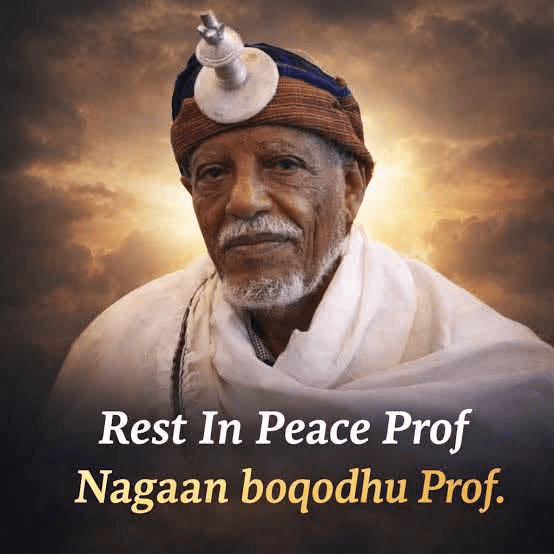
If the Oromo struggle has an intellectual godfather, it is undoubtedly Professor Asmerom Legesse. Born in Asmara, Eritrea, in 1931, this Harvard-trained anthropologist dedicated his life to a singular, revolutionary mission: proving that Africa, and specifically the Oromo people, possessed a sophisticated democratic governance system long before the advent of Western constitutionalism.
His seminal works—Gadaa: Three Approaches to the Study of African Society (1973) and Oromo Democracy: An Indigenous African Political System (2000)—were not mere academic texts. They were intellectual weapons that dismantled colonial narratives that had long dismissed African governance as primitive. Legesse meticulously documented the Gadaa system, an indigenous Oromo governance structure based on age-sets, rotational leadership every eight years, and deliberative assemblies known as Gumi.
His work demonstrated that the Oromo had institutionalized principles of checks and balances, egalitarian participation, and rule-bound succession centuries before similar ideals emerged in Europe. This scholarship provided a powerful source of pride and legitimacy for the Oromo people, proving that their struggle was not for imported ideals but for the restoration of their own democratic heritage. His contributions were so profound that the United Nations formally registered the Gadaa system as an Intangible Cultural Heritage of Humanity in 2016, a recognition largely built upon his foundational research.
The Unlikely Voice of the Oppressed: Tesfaye Gebreab
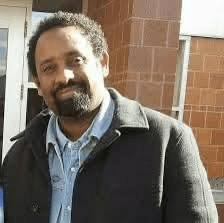
While Legesse operated in the halls of academia, Tesfaye Gebreab brought the Oromo struggle to the masses through the power of literature. An Eritrean by birth but raised in the Oromo town of Bishoftu, Gebreab was a prolific author and journalist who achieved a literary first: he created the first Oromo main character in the vast history of Amharic literature.
His semi-historical novel, Yeburqa Zimita (The Silence of the Burqa), was a groundbreaking work that centered on the reflection and reaction of the Oromo people to centuries of marginalization and discrimination. In a literary landscape where Oromos were often relegated to the roles of housemaids and guards, Gebreab dared to place them at the heart of the narrative. He described himself as an “Eritrean by birth but an Oromo by experience and attachment”.
His work was deeply controversial; he was accused by some of fueling ethnic conflict. However, Gebreab defended his art as a product of historical fact and observation. By giving voice to the Oromo experience in the dominant language of the Ethiopian state, he challenged the very fabric of Ethiopian literary tradition and forced a national conversation about oppression and identity, making the Oromo struggle visible to a wider audience.
The Custodian of Knowledge: Teferi Berhane
The third pillar, Teferi Berhane, represents the modern, institutional effort to sustain and advance Oromo scholarship. While detailed public records of his early life are less prominent, his role as a leader within the Oromo Studies Association (OSA) marks him as a crucial figure in the struggle’s intellectual infrastructure.
The OSA, founded in 1986, was established to create an independent academic home for the study of Oromo history, culture, and identity at a time when such voices were systematically marginalized. Teferi Berhane served on the board and completed a term as the president of this vital organization. In this capacity, he helped guide an institution dedicated to producing and disseminating knowledge about the Oromo people.
His work involved not only academic administration but also direct engagement with Ethiopia’s political and economic challenges. He co-organized high-profile symposia on the country’s transition and contributed to economic policy papers addressing crises like youth unemployment. As a professor of development economics, Teferi Berhane represents the struggle’s future: a generation of scholars working within global institutions to build the intellectual and economic frameworks necessary for a just and prosperous Oromia.
A Unified Legacy
The contributions of these three men are distinct, yet they form a cohesive whole. Asmerom Legesse provided the historical and theoretical foundation, proving that the Oromo are a people with a rich democratic heritage. Tesfaye Gebreab translated that heritage into a living, breathing narrative, giving the Oromo a voice in the literary canon of their oppressors. And Teferi Berhane works to institutionalize this knowledge, ensuring that the struggle is sustained through rigorous scholarship and policy engagement.
Together, they demonstrate that the Oromo struggle is not just a political or military campaign, but a profound intellectual and cultural renaissance. They remind the world that the fight for justice is also a fight for truth, history, and the right to define one’s own identity. Their legacies are not just Oromo—they are a testament to the power of knowledge in the face of oppression.

Posted on July 1, 2026, in Aadaa, Afaan, Biography, Bokkkuu, Events, Face of Injustice, Finfinne, gadaa, Information, Language, Media, News, Oromia, Press Release, Promotion. Bookmark the permalink. Leave a comment.




 Advocacy for Oromia
Leave a comment
Comments 0