Category Archives: mental health
Dr. & Dr.: A Celebration of Love, Perseverance, and Two Doctoral Degrees
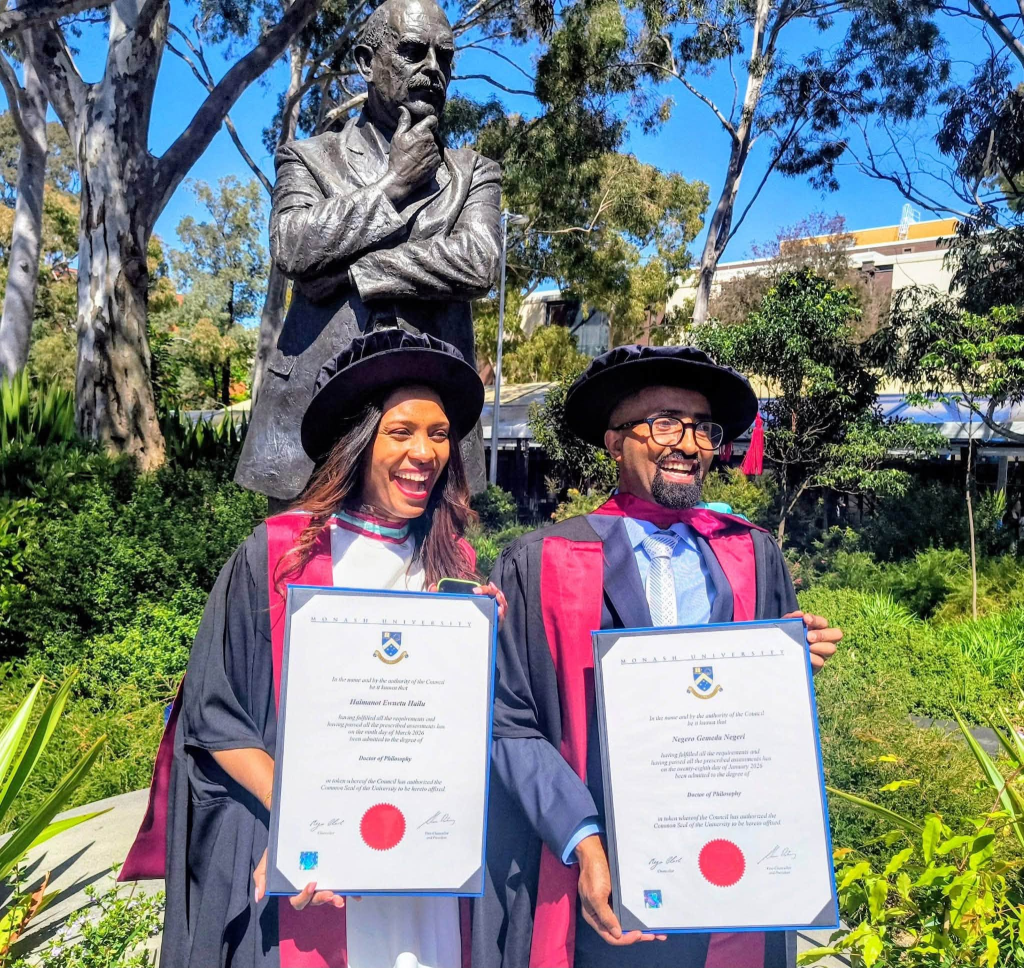
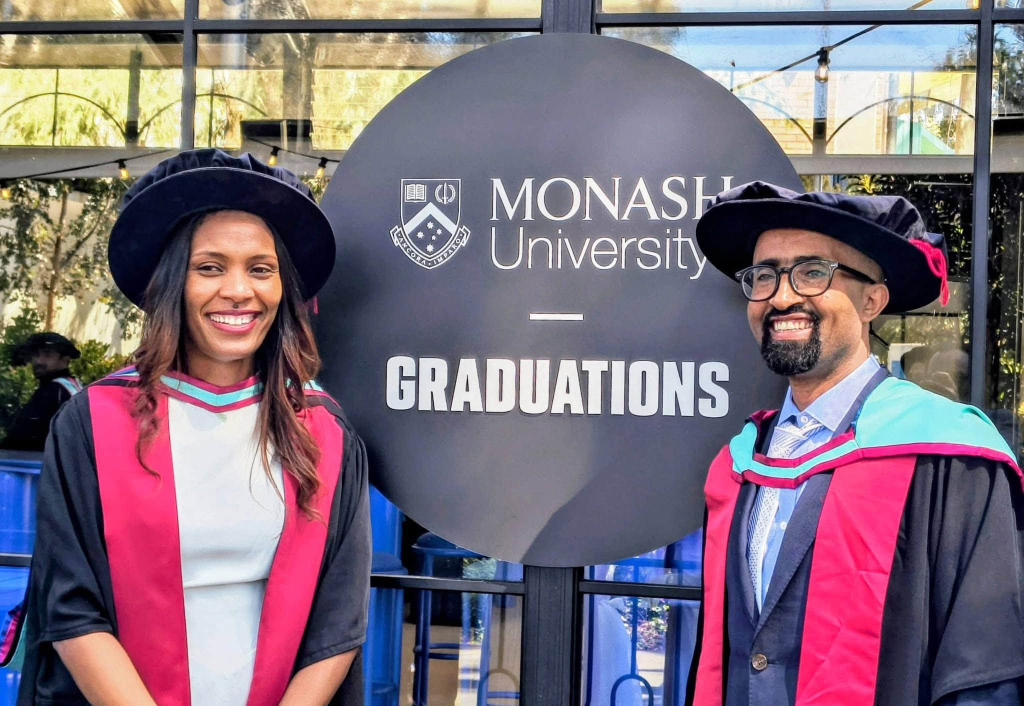
Congratulations to Haimanot Ewnetu and Nege GN Sindibin on an Extraordinary Achievement
There are milestones in life that deserve more than a passing congratulations. There are moments that call for reflection, for celebration, and for acknowledging the sheer weight of what has been accomplished. Today is one of those moments.
Today, Haimanot Ewnetu and Nege GN Sindibin graduate with their PhDs — together.
Not one doctorate. Two. Earned not in isolation, but side by side, through years of shared sacrifice, mutual encouragement, and a partnership strong enough to weather the most demanding academic journey one can undertake.
The Weight of a Doctorate
A PhD is not simply a degree. It is a test of endurance, of intellect, of patience, and of character. It demands years of rigorous research, countless revisions, long nights spent wrestling with questions that refuse easy answers. It asks for sacrifice — time with family, moments of rest, the simple luxury of certainty.
Many begin this journey. Not all finish it.
To complete a PhD is to prove something profound: that you can push the boundaries of human knowledge, that you can persist when the path is unclear, and that you can emerge on the other side not just with a title, but with a transformation.
To complete a PhD while supporting someone else through theirs — to share the burden, to celebrate each other’s wins, to hold each other up when the weight felt unbearable — that is something rarer still.
A Partnership Forged in Perseverance
Haimanot and Nege, you did not simply pursue degrees in parallel. You built something together.
You shared the quiet victories — the accepted paper, the successful defense, the moment a difficult chapter finally made sense. You shared the hard days too — the rejections, the revisions, the moments when the finish line seemed impossibly far away. And through it all, you remained each other’s greatest supporter.
That is what makes today so remarkable. This is not just a celebration of academic achievement. It is a celebration of what two people can accomplish when they refuse to let go of each other’s hands.
Years of hard work. Years of dedication. Years of choosing, again and again, to keep going — together.
And now, here you are. Dr. Haimanot Ewnetu and Dr. Nege GN Sindibin.
A Moment Worth Celebrating
Today, we celebrate not only the degrees you have earned, but the people you have become in the process. We celebrate your brilliance, your resilience, and your unwavering commitment to your goals.
We celebrate the families and friends who stood beside you, the mentors who guided you, and the community that cheered you on.
But most of all, we celebrate you — two extraordinary individuals who proved that the hardest journeys are made easier when walked side by side.
So proud of you both. So happy we could celebrate with you.
Here’s to the years of hard work behind you, the bright future ahead, and the knowledge that you did it — together.
Congratulations, Doctors! 🎓🎉👏

From Kenya with Love: Our Brothers and Sisters Who Journeyed Home for Irreecha Bishooftuu 2026
By Dhabessa Wakjira
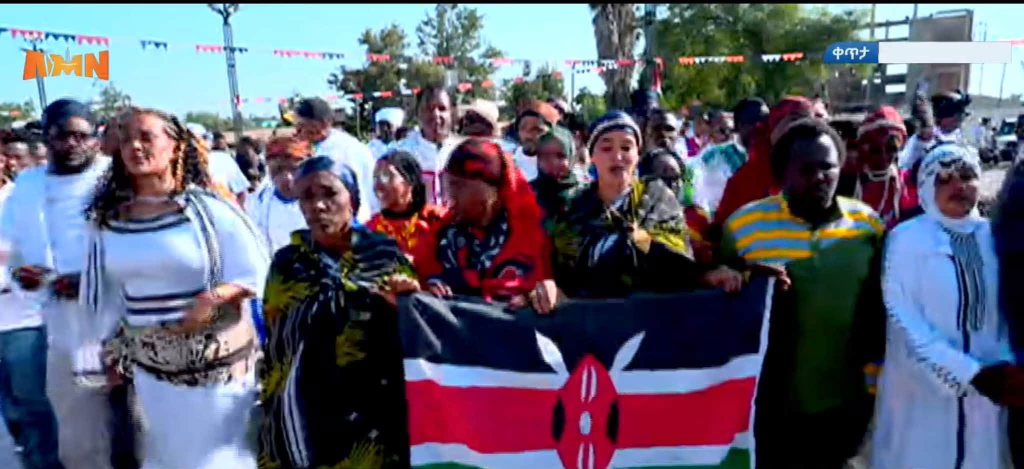
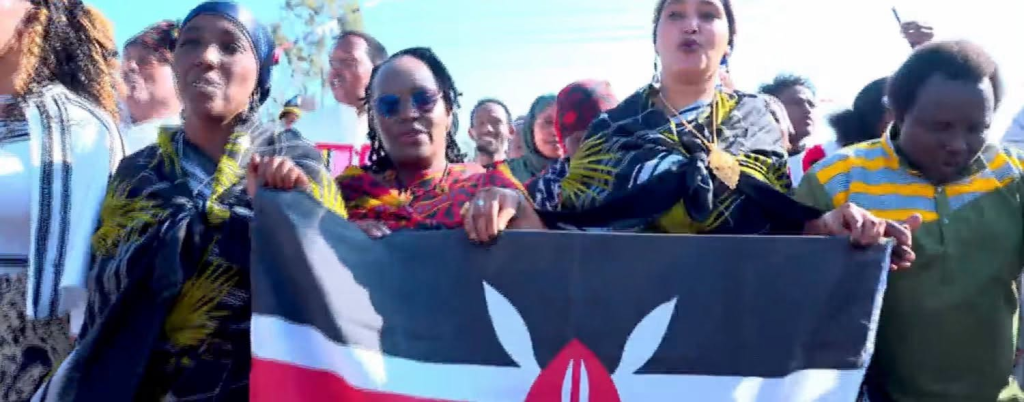
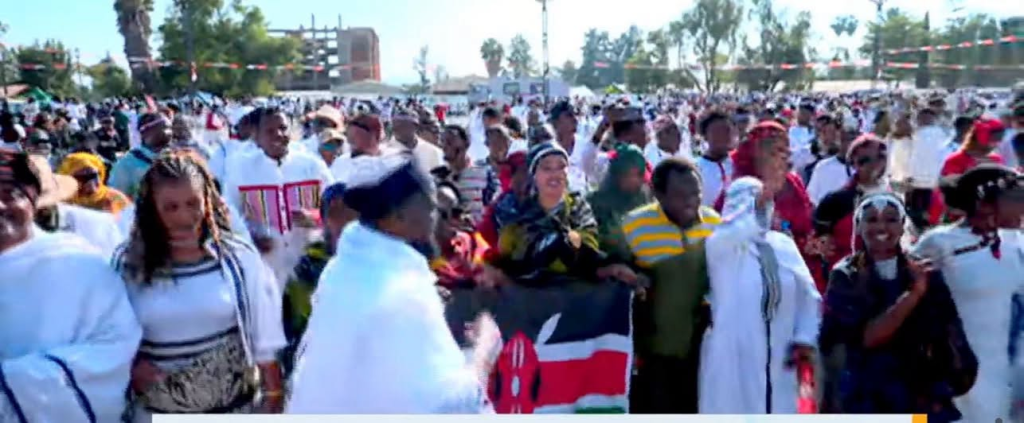
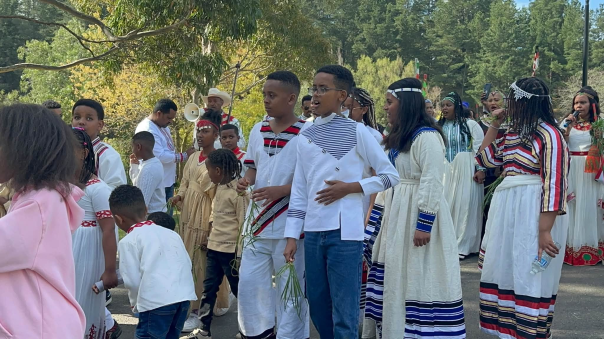
HARSADII, OROMIA — The morning sun had barely touched the shores of Lake Harsadii when the first buses rolled in from the south. Dust rose from the unpaved roads, horns blared in celebration, and the unmistakable rhythm of drums began to echo across the water. Among the thousands gathered for Irreecha Bishooftuu 2026, a special group stood out — not because of their dress or their language, but because of the distance they had traveled to be here.
They came from Kenya.
“Kunneen firoottan keenya Keeniyaa: Irreecha Bishooftuu, Harsadii (2026) irratti hirmaatanii dha,” the announcement rang out across the grounds — “These are our brothers and sisters from Kenya who have come to participate in Irreecha Bishooftuu, Harsadii 2026.” The words were met with thunderous applause, ululations, and the waving of green flags that stretched as far as the eye could see.
For the Oromo community in Kenya, the journey to Irreecha is more than a trip. It is a homecoming.
A Bond That Crosses Borders
Irreecha is the great thanksgiving festival of the Oromo people — a celebration of the end of the rainy season, a moment to give thanks to Waaqa (God) for peace, fertility, and the bounty of the earth. Held along the shores of lakes and rivers, it draws millions of Oromo from Ethiopia and across the globe. But the Oromo nation does not end at Ethiopia’s borders. In Kenya, Oromo communities have lived for generations, preserving their language, their customs, and their faith.
This year, that connection was on full display at Harsadii.
“We have always known we are one people,” said one elder from Kenya, his voice thick with emotion as he stood near the water’s edge. “But to stand here, on this soil, with our brothers and sisters — it is something else. It is a healing.”
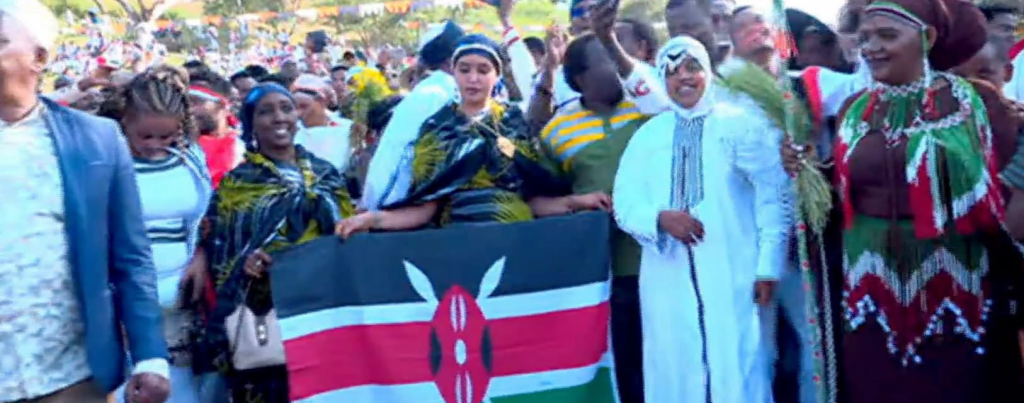
The delegation from Kenya arrived in colorful traditional attire, carrying green branches and singing songs passed down through generations. They joined the procession to the lake, participated in the rituals of thanksgiving, and shared in the communal feast that followed. For many, it was their first time experiencing Irreecha on Ethiopian soil — and for some, it was a return to the land of their ancestors.
A Celebration of Unity
The presence of the Kenyan delegation was a powerful reminder that Irreecha is not just an Ethiopian festival. It is an Oromo festival — and the Oromo are one people, bound by language, history, and a shared love for their land and their Creator.
Organizers of this year’s Irreecha Bishooftuu emphasized the significance of the Kenyan participation. “Irreecha is a celebration of peace and unity,” one organizer said. “When our brothers and sisters from Kenya join us, it shows the world that we are strong together. It shows that our culture knows no borders.”
Throughout the day, the Kenyan visitors were welcomed with open arms. Elders exchanged blessings. Young people danced together, their feet moving to the same beat. Women shared stories and laughter. And as the sun set over Harsadii, the crowd stood as one, raising their hands in thanksgiving.
A Message of Hope
For the Oromo in Kenya, the journey to Irreecha is also a statement — a declaration that they remain connected to their roots, their identity, and their people. In a world where borders often divide, Irreecha serves as a bridge.
“We are here to show our children where they come from,” said a Kenyan mother, her daughter clutching her hand. “We are here to teach them that they belong. That they are Oromo. That they are home.”
As the celebration drew to a close, the words of the announcement echoed in the hearts of all who heard them: “Kunneen firoottan keenya Keeniyaa.” These are our brothers and sisters from Kenya. And they came home.
Happy Irreecha Bishooftuu 2026. May peace, unity, and blessings be upon us all.

The Sacred Rite of Irreechaa: Fresh Grass, Yellow Flowers and the Waters of Blessing
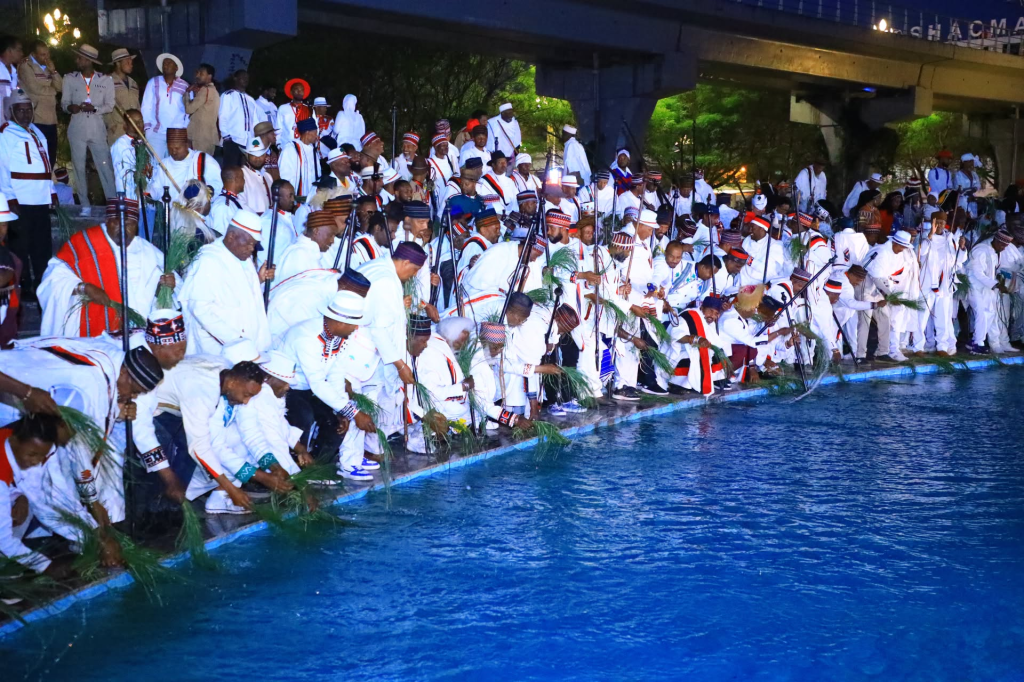
How Oromos carry keelloo and fresh grass to the riverbanks, dip them into the water, and renew their covenant with Waaqa
By Staff Writer
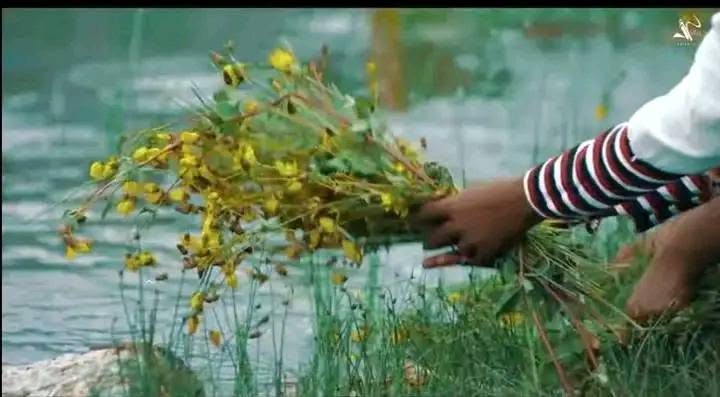
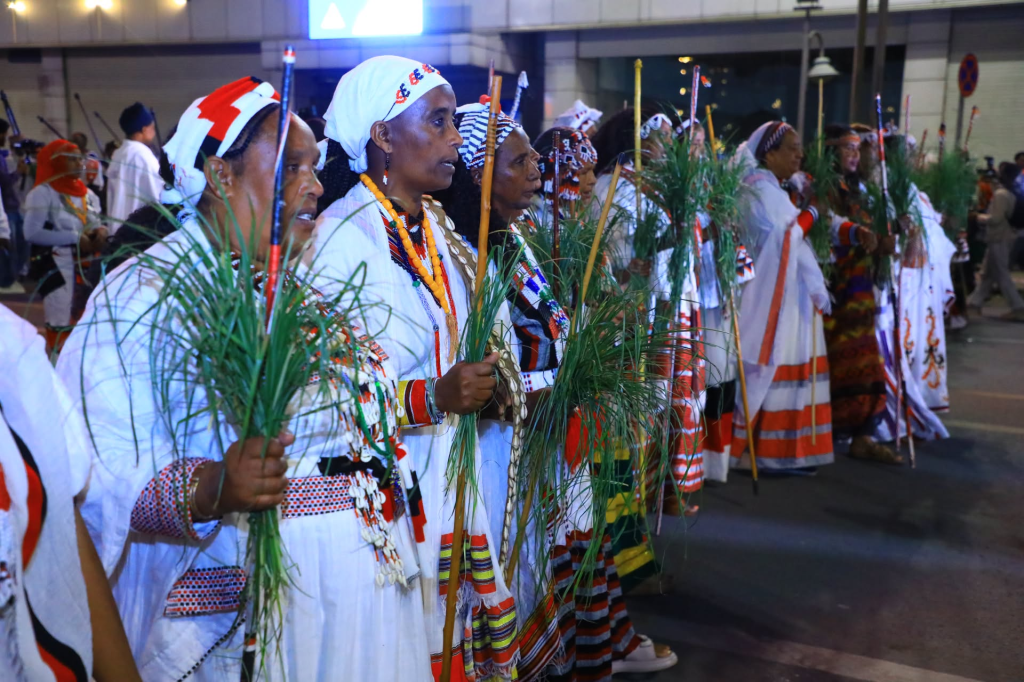
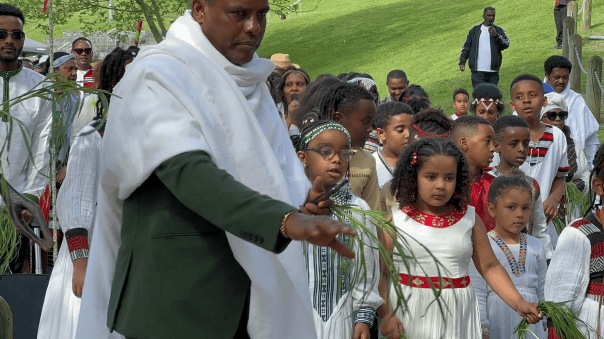
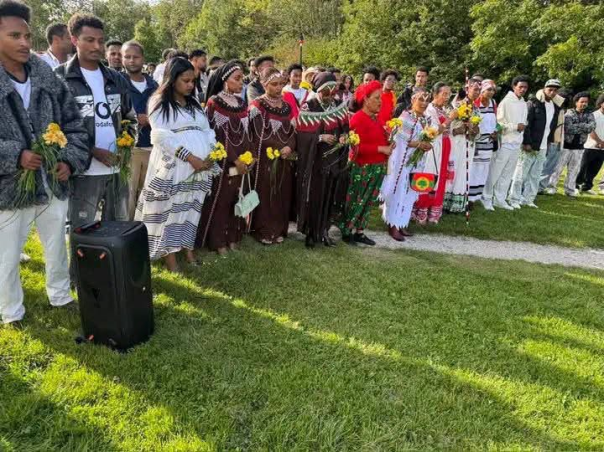
At the heart of the Irreechaa festival lies a ritual of profound simplicity and immense spiritual depth. Long before the songs reach their peak and the crowds swell along the riverbanks, Oromo elders, mothers and youth begin their journey toward the water. In their hands they carry daraaraa keelloo — yellow flowers — and marga jiidhaa — fresh, green grass.
These are not decorative items. They are sacred emblems of life, fertility, peace and gratitude. And when they are dipped into the flowing water as part of the irreeffannaa rite, they become instruments of blessing for the entire community.
Daraaraa Keelloo: The Yellow Flower of Blessing
The keelloo — a bright yellow flower that blooms in the Oromo landscape, particularly in the season surrounding Irreechaa — holds a special place in Oromo spiritual and cultural life. Its yellow color symbolizes light, hope, warmth and the radiance of the sun after the long, dark rainy season. It is the color of ayyaana — blessing and divine favor.
During Irreechaa, the keelloo is gathered with care. Young men and women often collect the flowers in the early morning, singing traditional songs as they go. The flowers are then carried to the riverside, where they will be used in the central act of the celebration. The keelloo is also used in other Oromo rituals and is associated with joy, celebration and the beauty of creation.
For Oromos, the keelloo is more than a flower. It is a visible sign of Waaqa’s goodness — a reminder that after hardship comes renewal, and that the earth itself rejoices with the people.
Marga Jiidhaa: Fresh Grass as the Symbol of Life
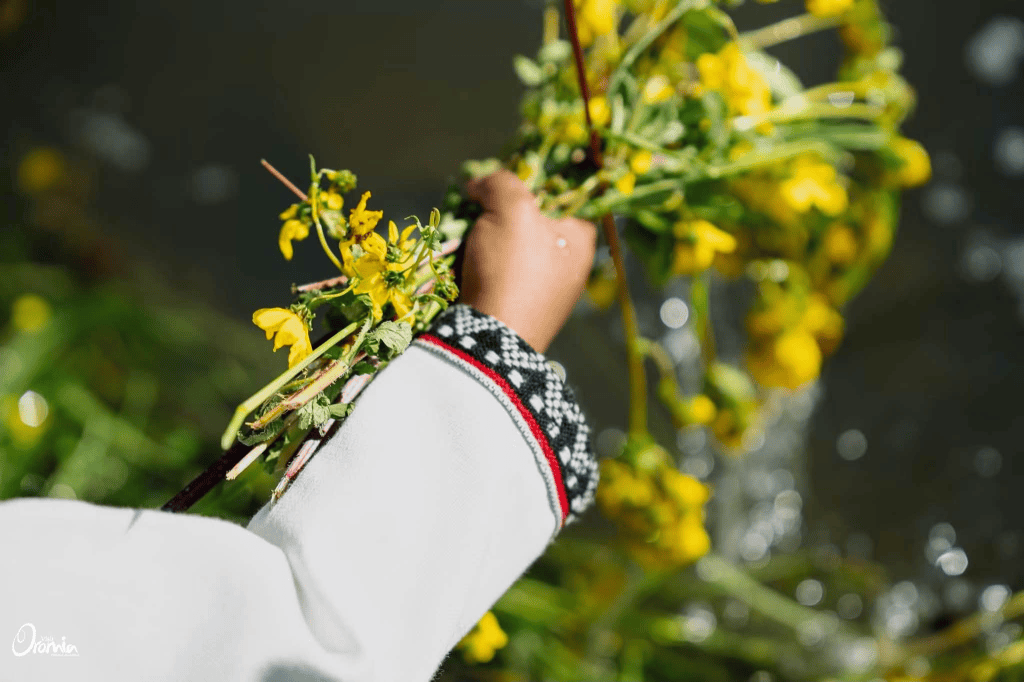
Marga jiidhaa — fresh, moist grass — is equally central to the Irreechaa ritual. In Oromo culture, green grass is the universal symbol of peace, life, fertility and well-being. It is used in ceremonies of reconciliation, in blessings, and in prayers for abundance. When elders wish to bless someone, they may sprinkle fresh grass or hold it as they speak words of peace.
At Irreechaa, the grass is gathered in bundles. It is often mixed with the keelloo flowers, creating a combined emblem of life and blessing. The grass must be fresh and green — a sign that the land has received rain and that the season of abundance has arrived.
The Journey to the Malkaa: Walking Together to the Water
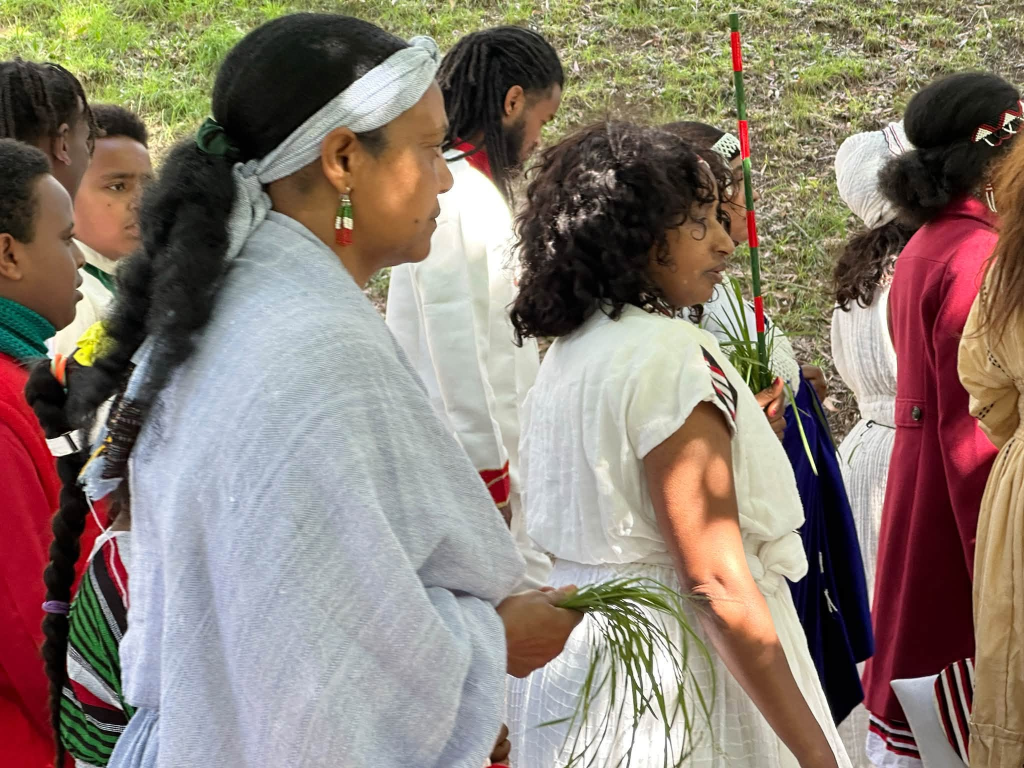
When the time comes, the community moves toward the malkaa — the riverbank, lakeshore or sacred water body. This journey is itself a ritual. People walk together, often dressed in their finest traditional attire, singing songs of praise and gratitude. The movement toward the water is a movement toward purification, renewal and encounter with Waaqa.
The choice of water is significant. In Oromo cosmology, water is the source of life, a symbol of purity and a channel of blessing. Rivers and lakes are understood as sacred spaces where the spiritual and physical worlds meet. To stand by the water during Irreechaa is to stand at the threshold of the divine.
Cuuphaa: Dipping the Grass and Flowers into the Water
At the water’s edge, the central rite unfolds. The participants — often led by the Haadha Siinqee, Qaalluu figures, elders and the Abbaa Gadaa — approach the water with the keelloo and fresh grass in hand.
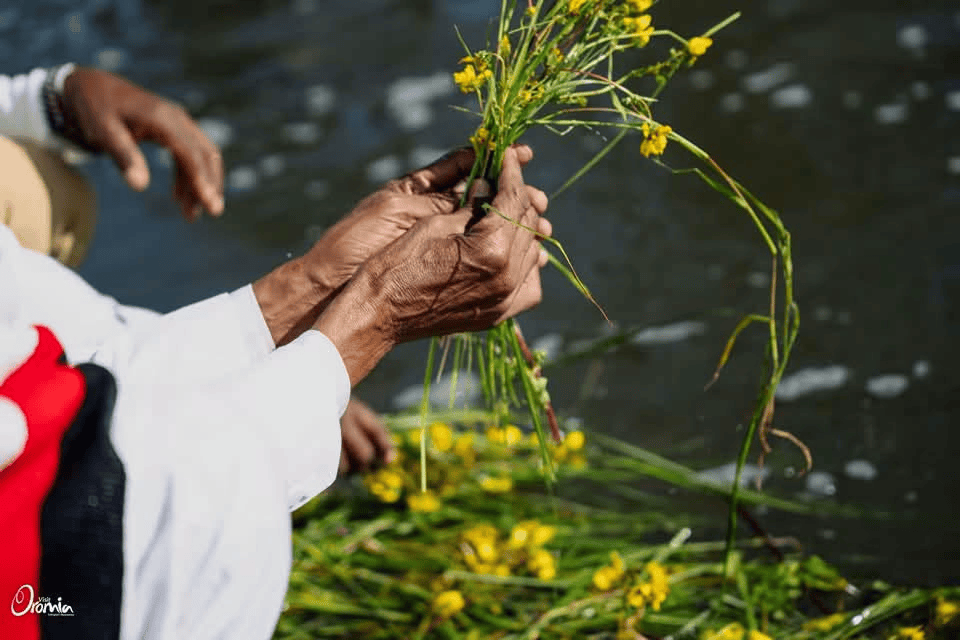
They then dip the grass and flowers into the water (cuuphaa). This act of immersion is rich with meaning:
- Thanksgiving: It is an offering of gratitude to Waaqa for the gift of rain, fertility and life. The water is the visible blessing, and the grass and flowers are the visible response of the people.
- Purification: The dipping represents a cleansing of the community — a washing away of the impurities, grievances and misfortunes of the past year.
- Renewal of Covenant: It symbolizes the renewal of the covenant between Waaqa, the people and the earth. The relationship is restored and made fresh for the coming season.
- Blessing and Sprinkling: After dipping, the participants often sprinkle the water from the grass and flowers upon themselves, upon others, and upon the ground. This sprinkling is a gesture of blessing, conveying peace and fertility to all present.
Some accounts describe the water being sprinkled on the participants’ heads and faces, a ritual act that marks them with divine favor. Others describe the grass being passed through the water and then carried back to the community as a sign of peace.
The Irreeffannaa Prayer: Words Said Over the Water
The dipping is accompanied by prayer and invocation. The irreeffannaa — the act of giving thanks and blessing — is spoken aloud by elders and ritual leaders. Words of gratitude are offered for the rains, for the harvest, for the health of families and livestock, for the peace of the land. Prayers are also lifted for the year ahead: for continued fertility, for protection from disaster, and for harmony among all peoples.
The community responds with “Irreechaa!” — a joyful affirmation and invocation of blessing. The sound of the word itself carries the meaning of “thank you” and “may it be blessed.”
A Ritual That Connects All Creation
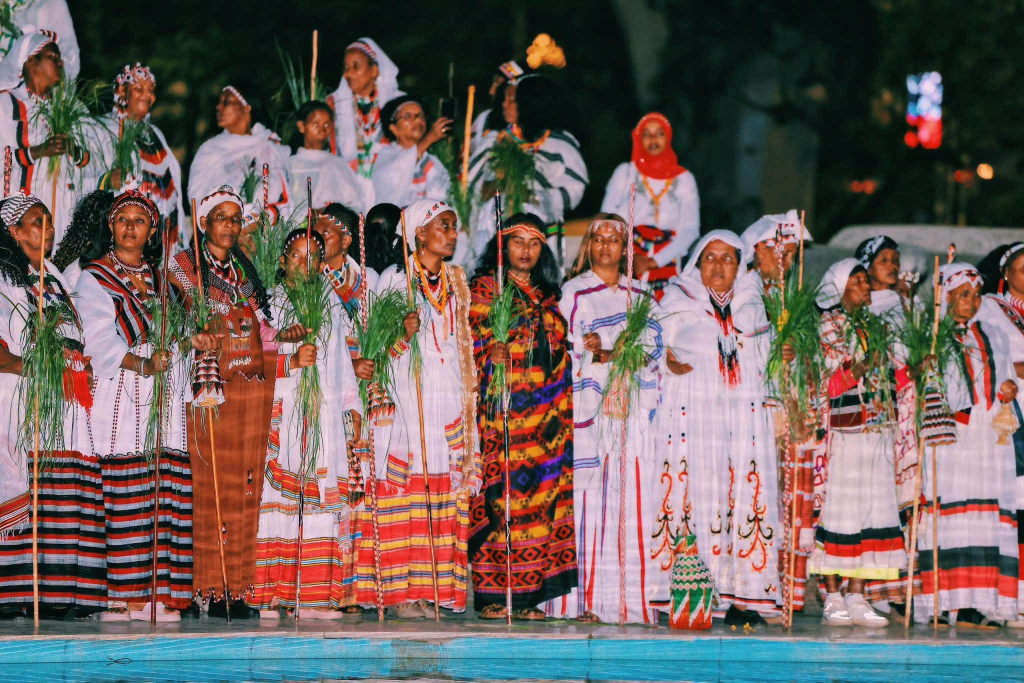
The Irreechaa water rite is a profound expression of Oromo cosmology — the understanding that human beings, the earth, the waters, the plants and the divine are all interconnected. By carrying the flowers and grass to the water, dipping them in, and offering them up, the Oromo people enact their belief that gratitude, peace and life itself flow from the sacred relationship between Waaqa and creation.
The daraaraa keelloo and the marga jiidhaa are therefore not merely objects. They are prayers made visible. The water is not merely water; it is the medium of blessing. And the act of dipping is not merely a gesture; it is a covenant renewed — a promise of peace, a plea for abundance, and a song of thanks to the source of all life.
At the riverbank, with flowers in hand and water flowing, the Oromo people stand as they have stood for generations: grateful, humble and connected to the sacred rhythm of the earth. And when they raise their voices and dip the green grass into the water, they declare to the world that life is a gift — and that gratitude is the way to honor it.

Irreechaa: The Festival That Renews Humanity, Reconciles Creation, and Reclaims Time Itself
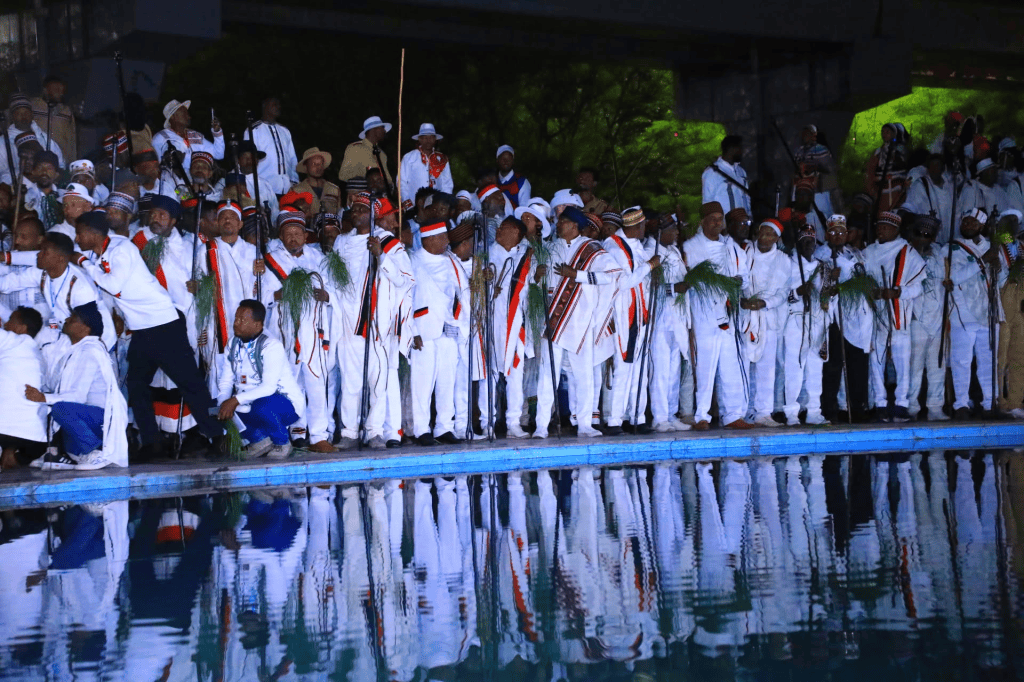
In the Oromo language, nineteen sacred phrases capture the full magnitude of Irreechaa — a celebration that is not merely cultural but cosmic, not merely annual but eternal, not merely human but divine.
Beneath the sycamores, beside the sacred waters, a people gather to become whole — and to remind the universe what wholeness means.
A Litany of Renewal
There are sentences that function as scripture. The Oromo people have such a sentence about Irreechaa:
“Irreechaan humneessaa namummaa, lachiisaa namummaa, marabeessaa namummaa, nageessaa namummaa, araarsaa namummaa, waloomsaa uumaa-uumamaa, sirna galateeffannaa, yaadannoo uumamaa, hulluuqoo hameenyaa, mallattoo ulfoo, yeroo dhiifamaa, ce’umsaa baraa, damboobsaa namummaa, fooyyessaa namummaa, fufsiisaa namummaa, fineessaa namummaa, guutessaa namummaa, kadhannaa gaarummaa, fi haaromsaa namummaa ti.”
This is not a description. It is a declaration. It is the Oromo people’s theological testimony about what Irreechaa is — not what it symbolizes, not what it represents, but what it accomplishes in the world.
Nineteen phrases. Nineteen dimensions of one reality. Nineteen ways of saying: Irreechaa renews humanity, reconciles creation, and reclaims time itself.
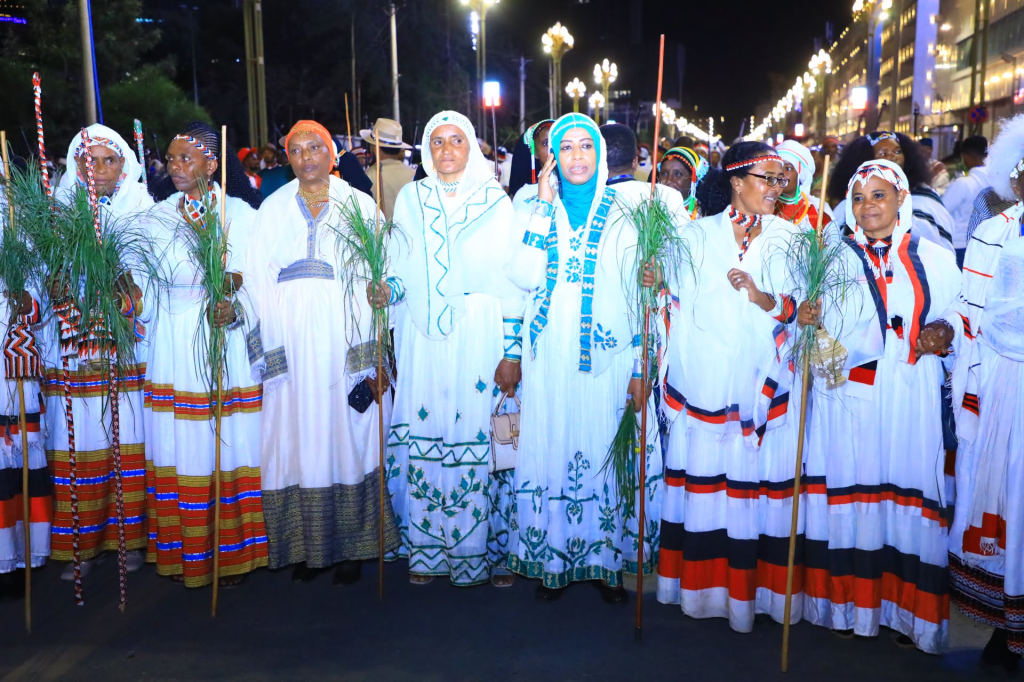
Part One: The Renewal of Humanity
The first five phrases focus on the human person — what Irreechaa does to the individual soul.
Humneessaa Namummaa — The Empowerment of Humanity
Irreechaan humneessaa namummaa. Irreechaa is the empowering of humanity.
Before the festival, participants are asked to reconcile. They set aside grudges. They release resentment. This is not weakness — it is the most difficult form of strength. To forgive is to be liberated from the prison of grievance.
The person who has made peace is not just morally superior. They are empowered. They have reclaimed energy that was being spent on resentment. They stand at the water’s edge lighter, freer, more capable of gratitude.
This is the first renewal: the empowerment that comes from letting go.
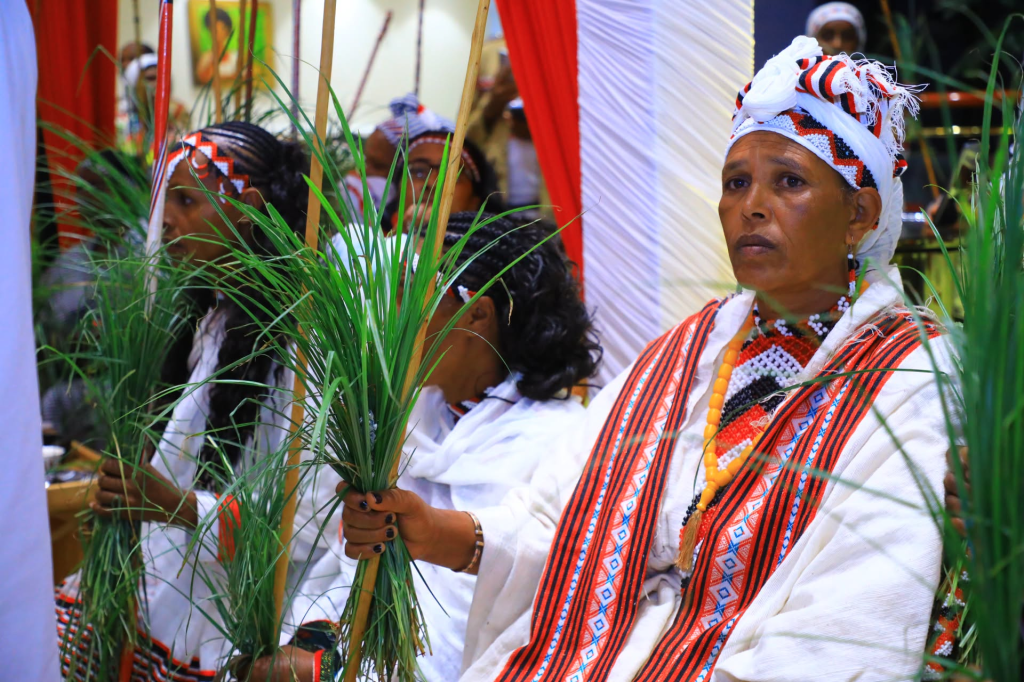
Lachiisaa Namummaa — The Reconciliation of Humanity
Irreechaan lachiisaa namummaa. Irreechaa is the reconciling of humanity.
This is Irreechaa’s beating heart. Without araara — reconciliation — the festival cannot proceed. The tradition is explicit: you cannot participate while holding a grudge. The water will not receive your thanks if your heart is still at war.
In a world that profits from division, this requirement is revolutionary. Irreechaa says: Before you celebrate, reconcile. Before you give thanks, make peace. Before you approach the sacred, heal the human relationships that have been broken.
The Oromo do not pretend that reconciliation is easy. They simply insist that the work of peace must be done — deliberately, consciously, before the community gathers.
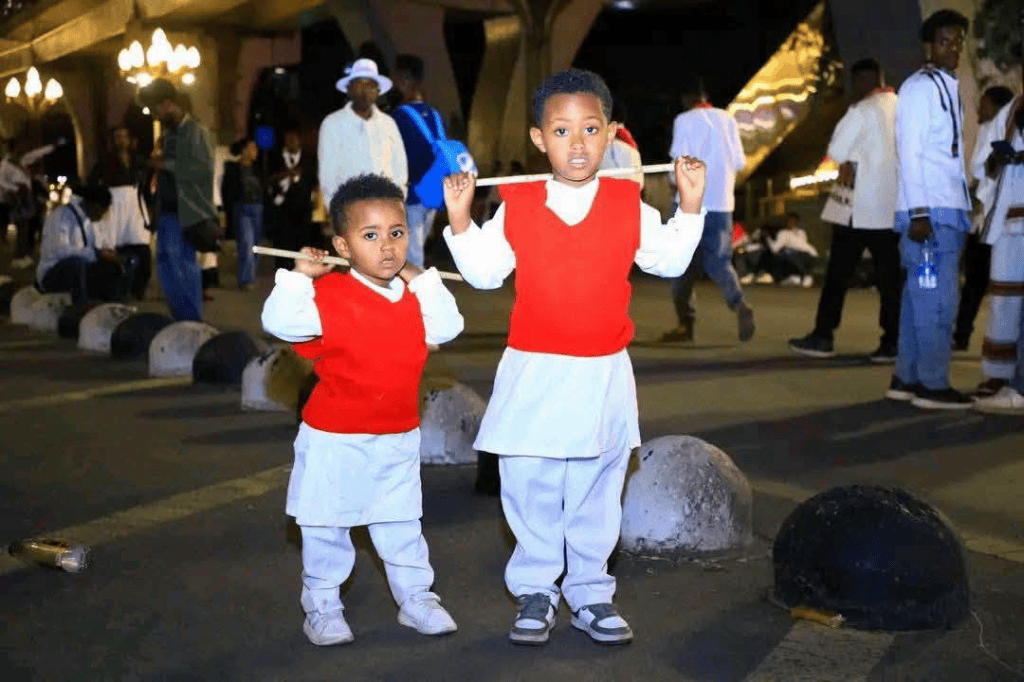
Marabeessaa Namummaa — The Unification of Humanity
Irreechaan marabeessaa namummaa. Irreechaa is the unifying of humanity.
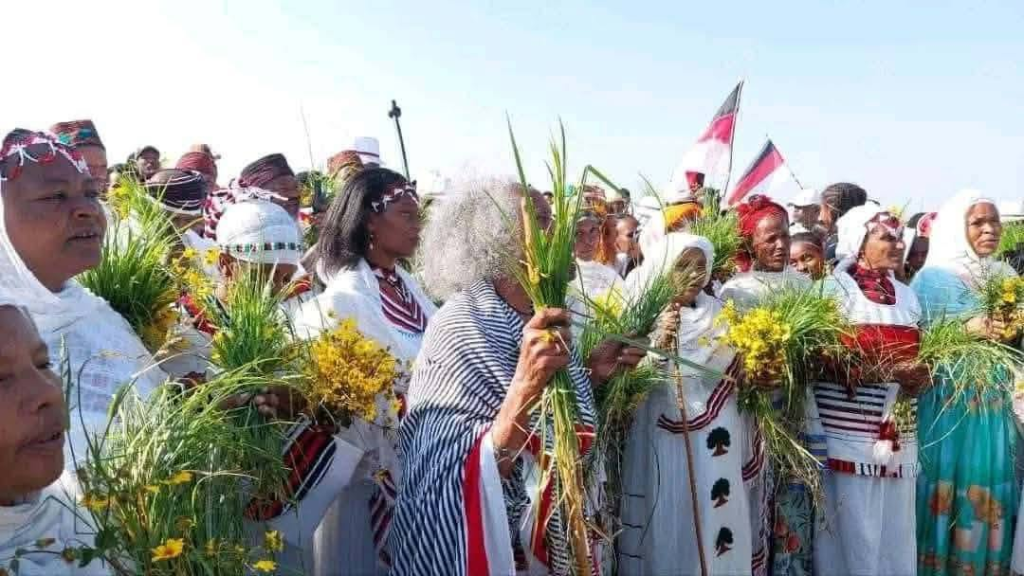
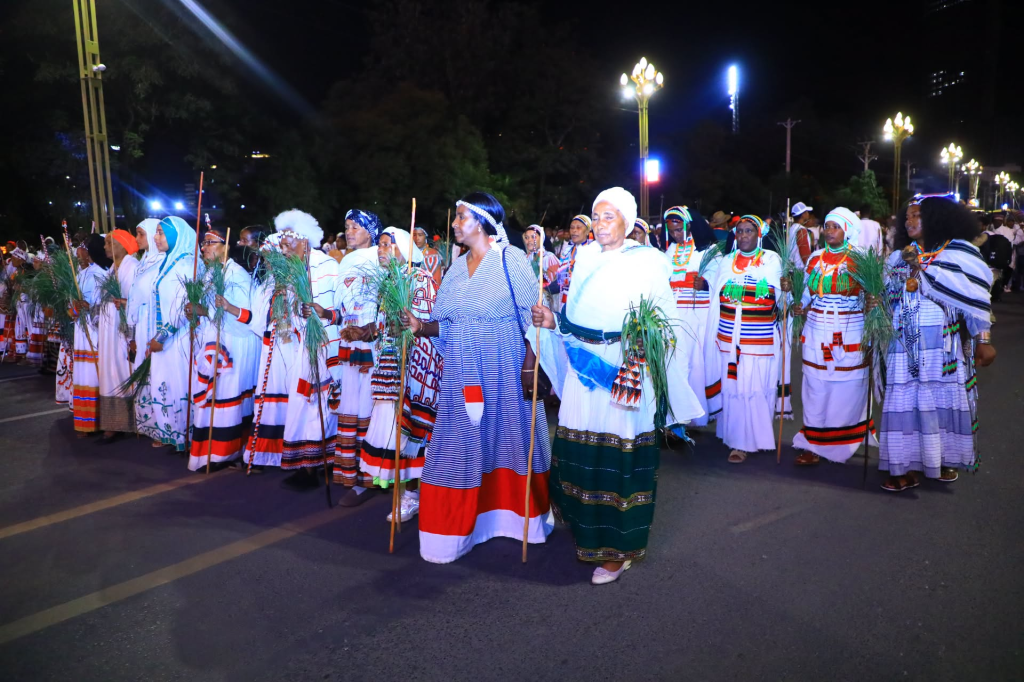
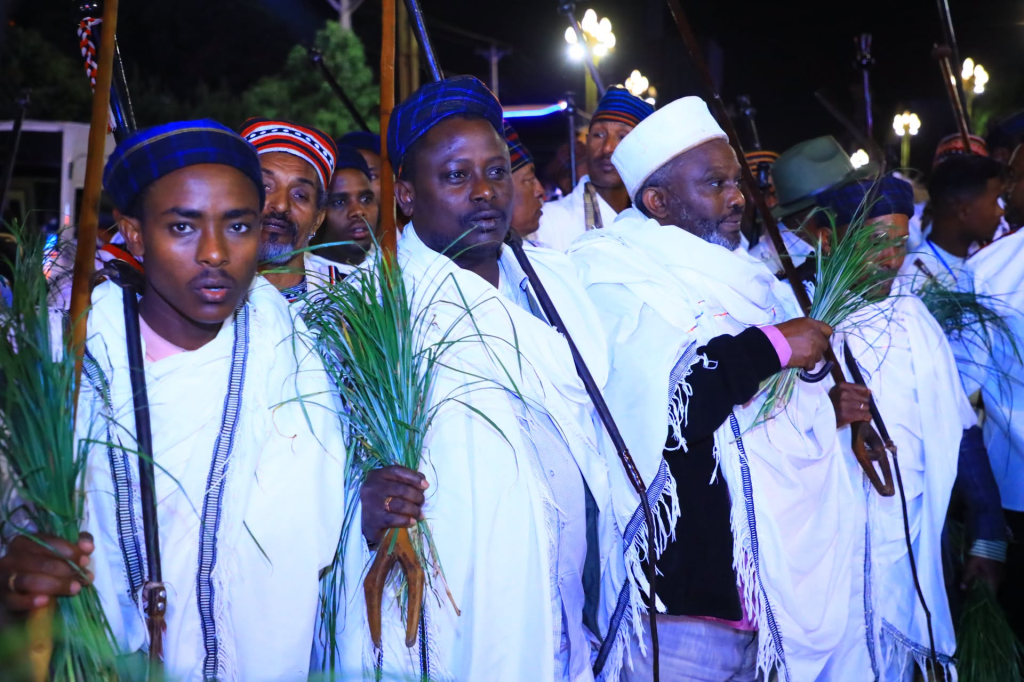
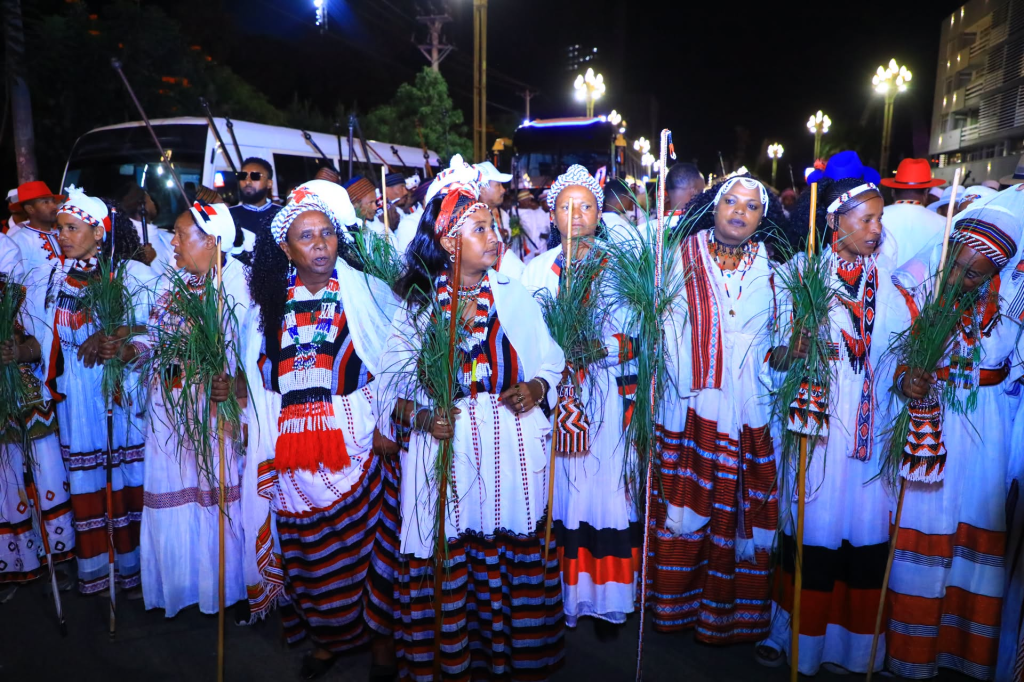
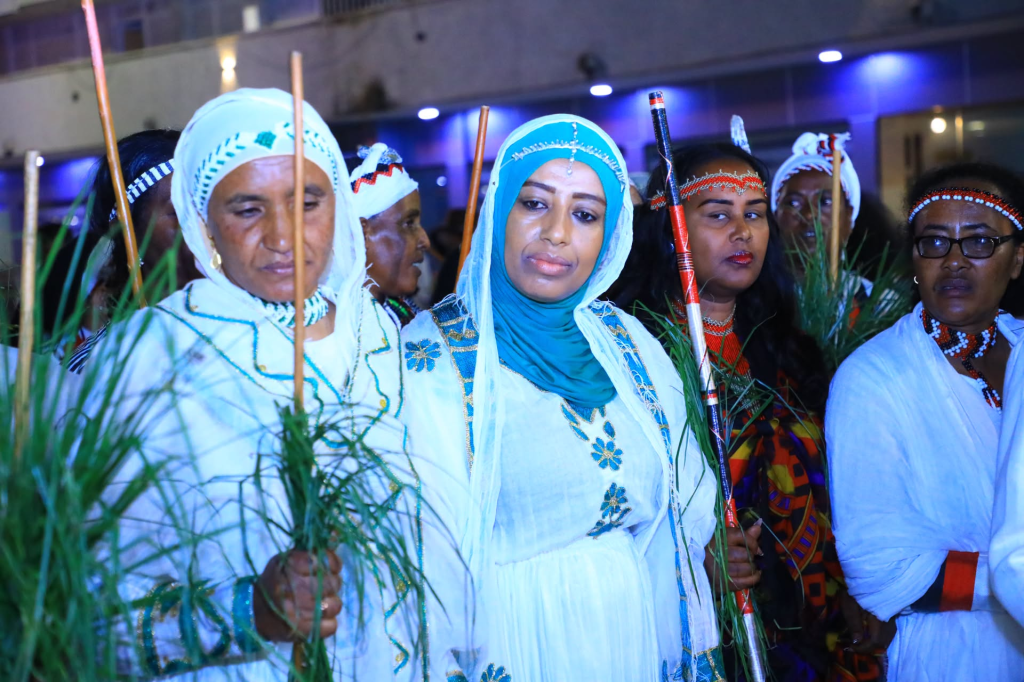
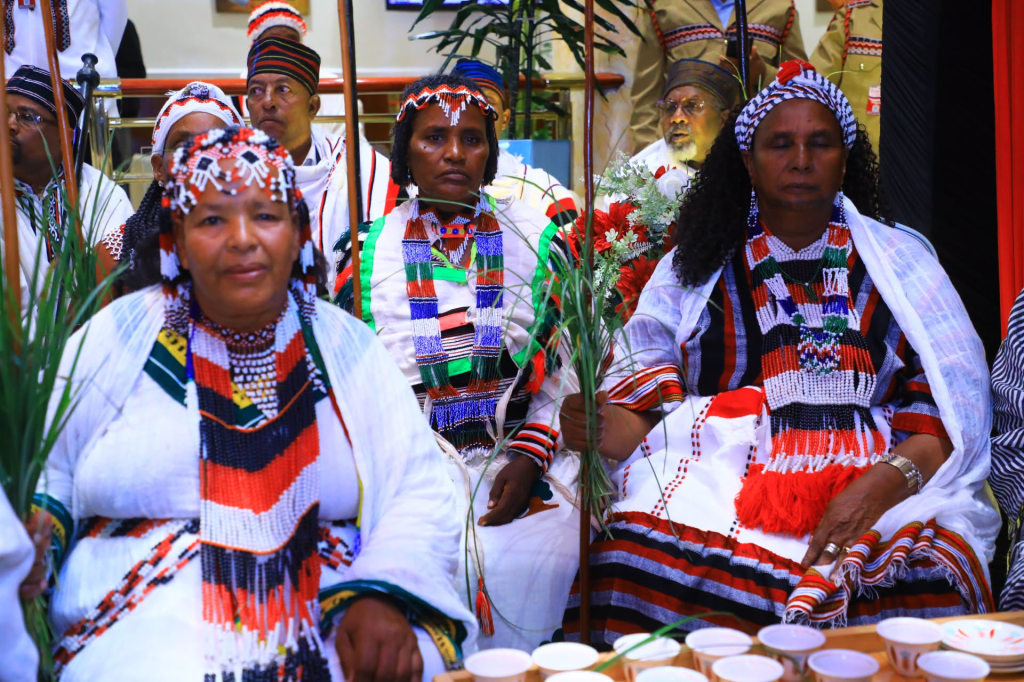
Millions arrive from across Ethiopia, from the diaspora, from every walk of life. Farmers and professors. Mothers and students. Elders and children. Muslims and Christians and practitioners of the old faith. They dress in white — a sea of unity that visually overwhelms the eye.
But the unification is not mere numbers. It is spiritual. It is the experience of dissolving the boundaries that separate human beings from one another. For one day, the Oromo people are not many. They are one.
This is tokkummaa — unity — and it is not an abstract ideal. It is a lived experience at the water’s edge. The person standing beside you is not a stranger. They are your brother. They are your sister. They are yourself.
Nageessaa Namummaa — The Peace-Bringing of Humanity
Irreechaan nageessaa namummaa. Irreechaa is the peace-bringing of humanity.
The Oromo greeting for the festival is “Baga Irreechaa nagaan geessan” — May the Irreechaa arrive in peace. This is not a casual wish. It is a declaration of intent.
Irreechaa does not merely celebrate peace. It produces it. The festival is a peace-making technology, an ancient ritual that creates the conditions for harmony between individuals, communities, and the divine.
Consider what happens when millions of people gather in a single place and commit, together, to reconciliation. Consider what happens when a nation’s largest cultural event is built on the requirement that participants set aside their conflicts. Peace is not the absence of conflict. It is the presence of araara. And Irreechaa makes that presence visible, tangible, and real.
Araarsaa Namummaa — The Forgiveness of Humanity
Irreechaan araarsaa namummaa. Irreechaa is the forgiving of humanity.
Araara is the Oromo word for reconciliation, but it carries a deeper meaning: the restoration of relationship, the healing of rupture, the return to wholeness. At Irreechaa, forgiveness is not a suggestion. It is a prerequisite.
The person who comes to the water carrying resentment is not participating in Irreechaa. They are merely present. True participation requires the internal work of forgiveness — the decision to release the debt, to let go of the grievance, to choose relationship over righteousness.
This is the fifth renewal: the forgiveness that makes all other renewal possible.
Part Two: The Reconciliation of Creation
The next several phrases expand beyond the human person to encompass the entire created order.
Waloomsaa Uumaa-Uumamaa — The Harmony of Creation
Irreechaan waloomsaa uumaa-uumamaa. Irreechaa is the harmonizing of creation.
The Oromo understanding of Irreechaa is not limited to human community. The festival reconciles the entire cosmos — uumaa (the Creator) and uumamaa (creation) — in a single act of thanksgiving.
When the Oromo gather at the water, they are not just repairing human relationships. They are restoring the primal harmony between the divine, the human, and the natural. The water is sacred. The grass is sacred. The sky, the earth, the trees, the animals — all are participants in the festival.
This is waloomaa — harmony — and it is the original condition of creation. Irreechaa returns what was broken to what it was meant to be.
Sirna Galateeffannaa — The Order of Thanksgiving
Irreechaan sirna galateeffannaa. Irreechaa is the order of thanksgiving.
Sirna means order, system, institution, ceremony. Irreechaa is not spontaneous emotion. It is structured ritual — a carefully preserved system of thanksgiving that has been practiced for thousands of years.
The Gadaa system organizes Oromo society by age grades, each with defined responsibilities. Irreechaa is woven into this system. It is not just a festival. It is an institution — a sirna — that orders the relationship between the human community and the divine.
Thanksgiving, in Oromo cosmology, is not optional. It is the fundamental posture of the creature toward the Creator. To give thanks is to acknowledge reality: that we did not create ourselves, that we depend on forces beyond our control, that life is a gift.
Yaadannoo Uumamaa — The Memory of Creation
Irreechaan yaadannoo uumamaa. Irreechaa is the memory of creation.
Yaadannoo means memorial, remembrance, commemoration. At Irreechaa, the Oromo people remember not just the harvest of the past year but the creation of the world itself.
This is sacred memory — not nostalgia, not sentimentality, but the deliberate act of recalling what is fundamental. The Oromo remember that they are creatures. They remember that the earth is sacred. They remember that water is the source of life. They remember that gratitude is the proper response to existence.
In a modern world that so often forgets the sacred, Irreechaa is a collective act of remembrance. It says: We have not forgotten who we are. We have not forgotten where we came from. We have not forgotten what we owe.
Hulluuqoo Hameenyaa — The Rejection of Evil
Irreechaan hulluuqoo hameenyaa. Irreechaa is the rejection of evil.
Hulluuqoo means that which is rejected, refused, cast out. Hameenyaa means evil, wickedness, malice. Irreechaa is not just the affirmation of good. It is the explicit rejection of evil.
At the water’s edge, the Oromo people collectively renounce the forces that destroy human community: hatred, jealousy, greed, violence, deception. They name these forces and cast them out. They declare that these things have no place in the renewed humanity they are creating.
This is spiritual warfare — not against flesh and blood, but against the principalities and powers that corrupt the human heart. And it is fought not with weapons but with water, grass, and words of prayer.
Mallattoo Ulfoo — The Sign of Love
Irreechaan mallattoo ulfoo. Irreechaa is the sign of love.
Ulfoo means love, compassion, mercy. Irreechaa is not just a festival of gratitude. It is a sign — a visible, tangible, public demonstration — of divine love.
The Oromo believe that Waaqa (God) loves humanity. The rains come. The harvest arrives. The sun returns after the darkness. These are not accidents of nature. They are expressions of divine love.
And Irreechaa is the human response to that love. It is the sign that the relationship is mutual. God gives; the people give thanks. God loves; the people love in return.
Part Three: The Reclamation of Time
The next phrases focus on Irreechaa’s relationship to time itself — its power to forgive the past, transform the present, and renew the future.
Yeroo Dhiifamaa — The Time of Forgiveness
Irreechaan yeroo dhiifamaa. Irreechaa is the time of forgiveness.
Yeroo means time, season, moment. Dhiifamaa means forgiveness, pardon, release. Irreechaa is not just a festival. It is a time — a specific, sacred season set apart for the work of forgiveness.
In the rhythm of the Oromo year, Irreechaa is the moment when the community pauses and says: Now is the time to make peace. Now is the time to release grievances. Now is the time to forgive.
This is the ritualization of forgiveness. It is not left to chance or whim. It is scheduled. It is expected. It is required.
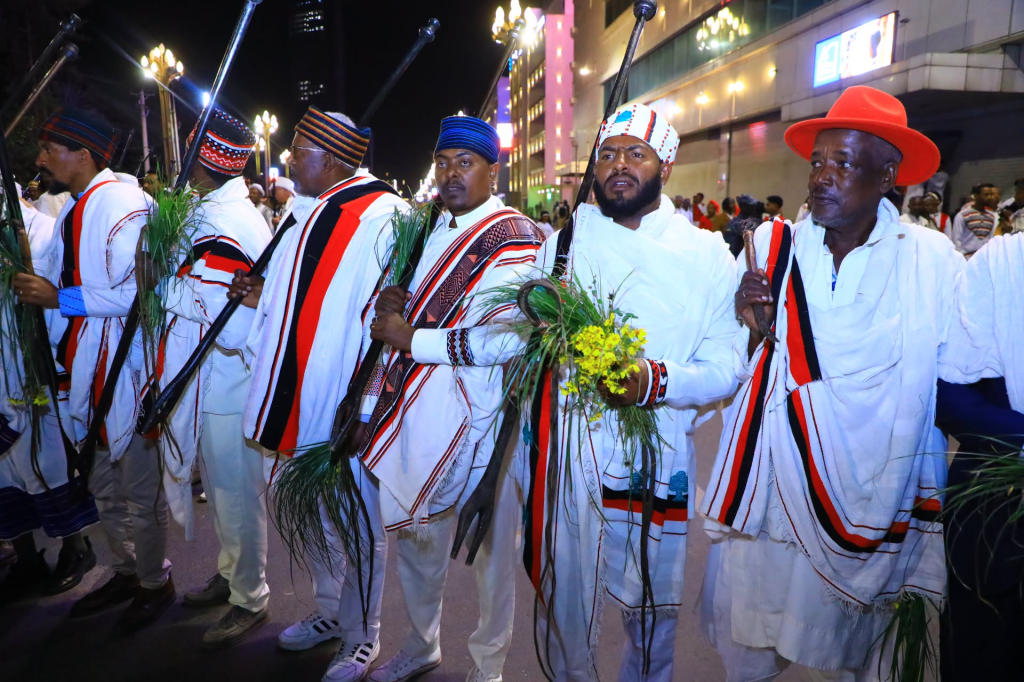
Ce’umsaa Baraa — The Turning of the Year
Irreechaan ce’umsaa baraa. Irreechaa is the turning of the year.
Ce’umsaa means transition, passage, crossing over. Irreechaa marks the turning point of the year — the end of the rainy season Ganna and the beginning of spring Birraa. It is a threshold, a liminal moment between what was and what will be.
At this threshold, the old year dies and the new year is born. The mistakes of the past are released. The possibilities of the future are welcomed. The community stands at the hinge of time and chooses to move forward.
This is ce’umsaa baraa — the turning of the year. And it is not just a calendar event. It is a spiritual one.
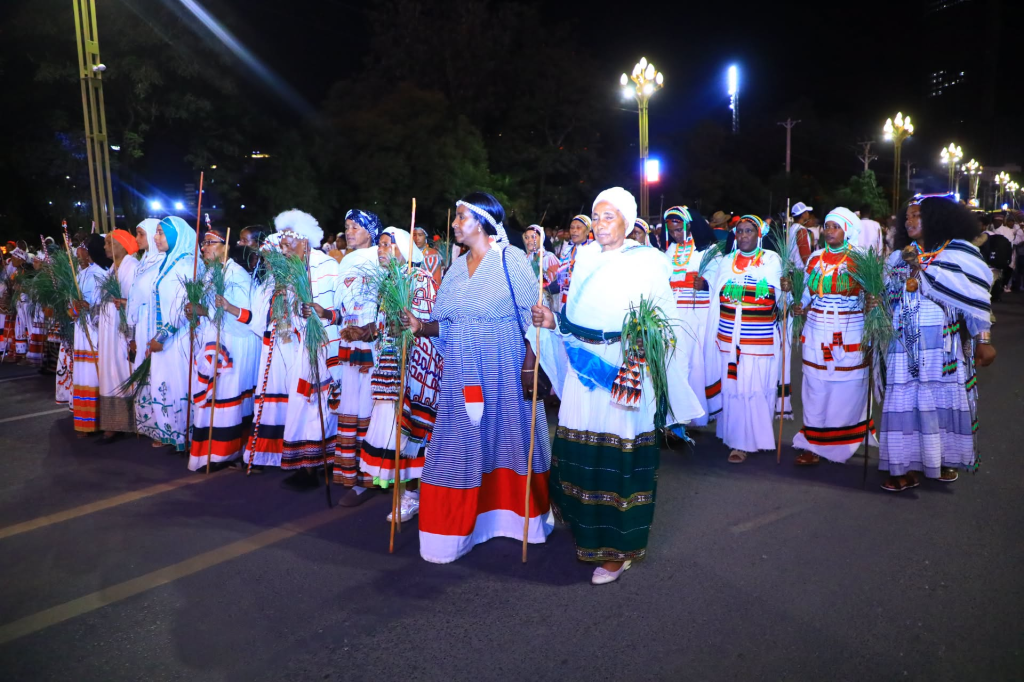
Damboobsaa Namummaa — The Restoration of Humanity
Irreechaan damboobsaa namummaa. Irreechaa is the restoring of humanity.
The rainy season destroys. Rivers swell. Roads wash out. Crops are lost. The land itself seems to be in mourning.
Then the rains end. The sun returns. The harvest begins. The people gather at the water to give thanks.
Irreechaa is the celebration after the suffering. It is the moment when the community pauses and says: We made it through. We survived. We are still here.
This is restoration — not the erasure of hardship, but the transformation of hardship into gratitude. The floods came, and we endured. The darkness came, and we waited. The sun returned, and we give thanks.
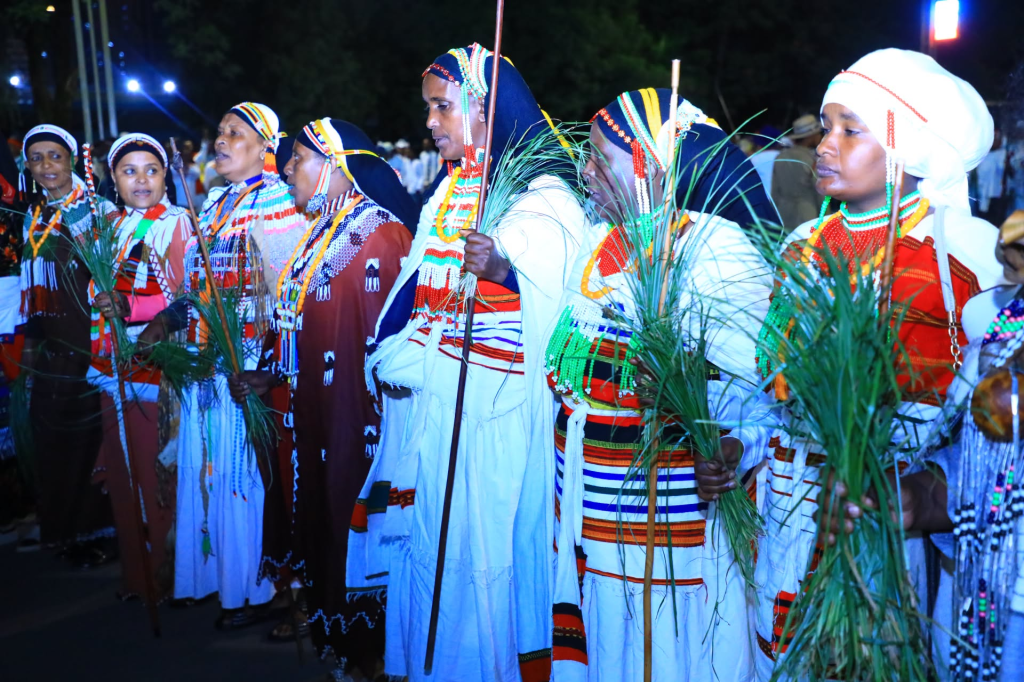
Part Four: The Perfection of Humanity
The final phrases describe Irreechaa’s ultimate purpose: the perfection of the human person and community.
Fooyyessaa Namummaa — The Improvement of Humanity
Irreechaan fooyyessaa namummaa. Irreechaa is the improving of humanity.
Irreechaa is not content with survival. It seeks flourishing. The festival is not merely about maintaining what exists but about becoming more than you were.
Fooyya’uu means progress, development, growth. The person who participates in Irreechaa is not the same person who entered the festival. They have been improved — refined by the discipline of reconciliation, elevated by the experience of unity, deepened by the practice of gratitude.
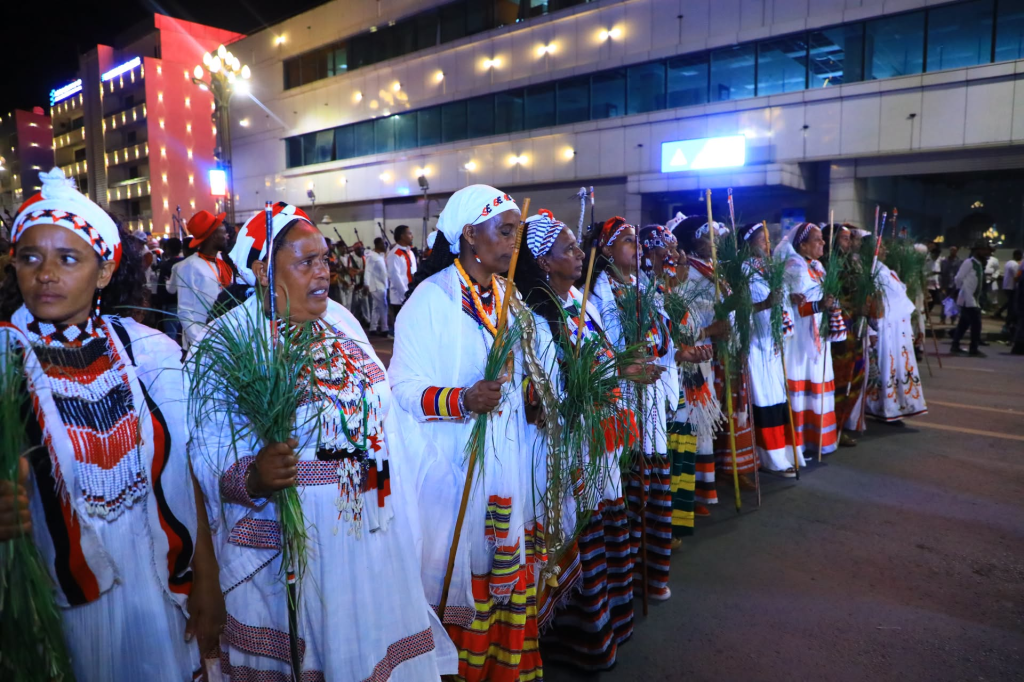
Fufsiisaa Namummaa — The Fulfillment of Humanity
Irreechaan fufsiisaa namummaa. Irreechaa is the fulfilling of humanity.
There is a deep longing in the human heart for completion — for the sense that life is not fragmented, that it has meaning, that it is going somewhere. Irreechaa answers that longing.
At the water’s edge, surrounded by millions of people who share your language, your faith, your hope, you experience a sense of completeness that modern life so often denies. You are not alone. You are not meaningless. You are part of something larger than yourself.
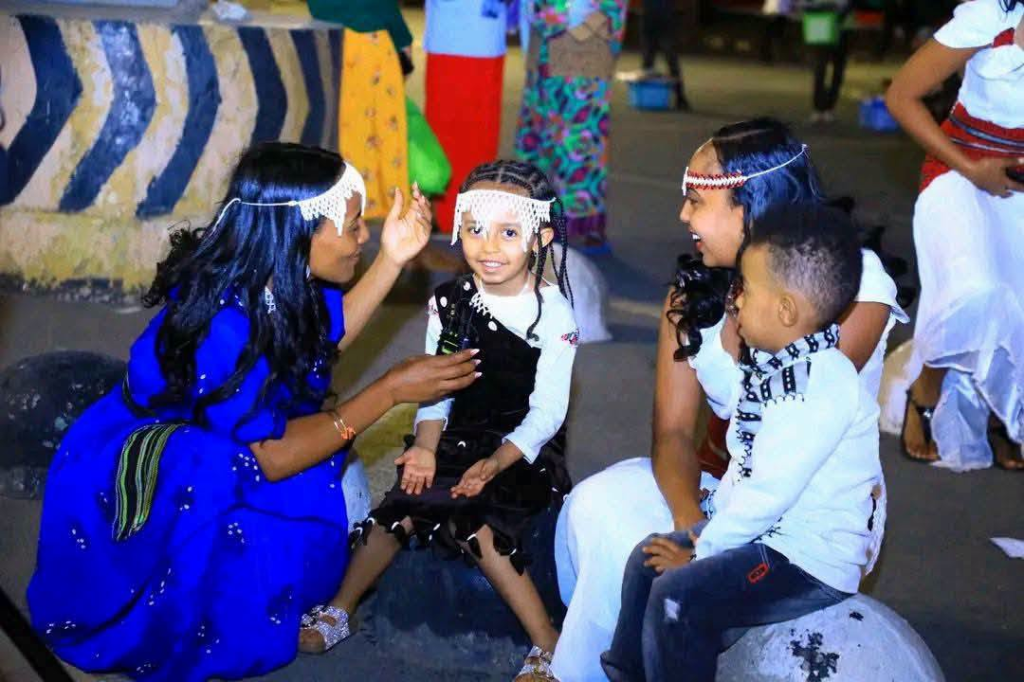
Fineessaa Namummaa — The Refinement of Humanity
Irreechaan fineessaa namummaa. Irreechaa is the refining of humanity.
Water is the medium of purification. At Irreechaa, participants dip sacred grass into the water and sprinkle it upon themselves and others. The Kormoomsaa — the blessing of the young men — cleanses and consecrates.
The refinement Irreechaa offers is the refinement of character. At the water’s edge, the layers of resentment, pride, and grievance are stripped away. What remains is the essential human being — vulnerable, grateful, connected, at peace.
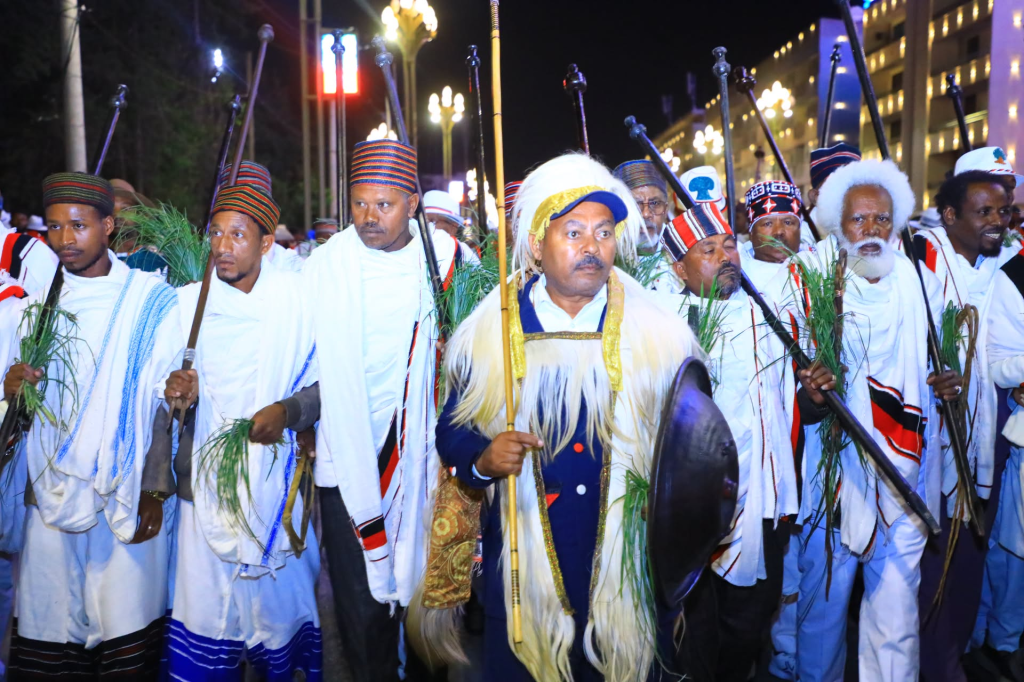
Guutessaa Namummaa — The Completion of Humanity
Irreechaan guutessaa namummaa. Irreechaa is the completing of humanity.
There is a difference between fulfillment and completion. Fulfillment is the experience of meaning. Completion is the achievement of wholeness. Irreechaa offers both.
The festival completes the cycle of the year. It completes the work of reconciliation. It completes the process of purification. It completes the community — bringing together all its members, from the youngest child to the oldest elder.
At Irreechaa, nothing is left out. No one is excluded. The festival is guutuu — complete, full, entire. The sea of white garments is not just a visual image. It is a theological statement: this is what wholeness looks like.
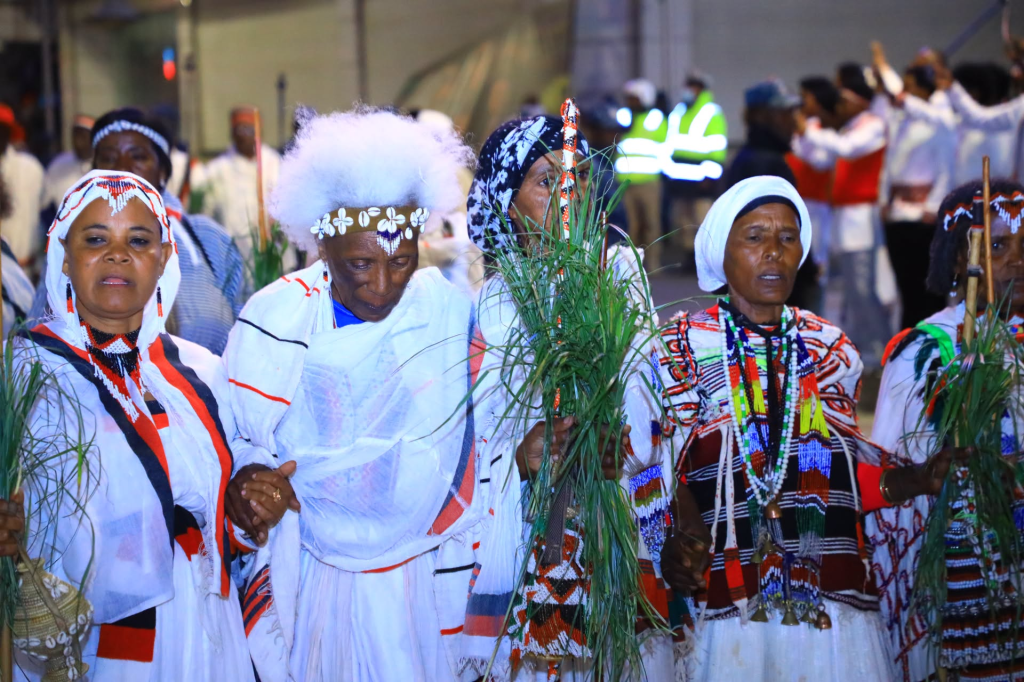
Kadhannaa Gaarummaa — The Prayer of Goodness
Irreechaan kadhannaa gaarummaa. Irreechaa is the prayer of goodness.
Kadhannaa means prayer, supplication, petition. Gaarummaa means goodness, virtue, excellence. Irreechaa is not just a festival of the past. It is a prayer for the future.
At the water’s edge, the Oromo people pray for goodness — for themselves, for their families, for their communities, for their nation, for the world. They ask Waaqa to make them good, to keep them good, to use them for good.
This is the prayer that summarizes all the others. It is the request that the renewal that has begun at Irreechaa will continue throughout the year.
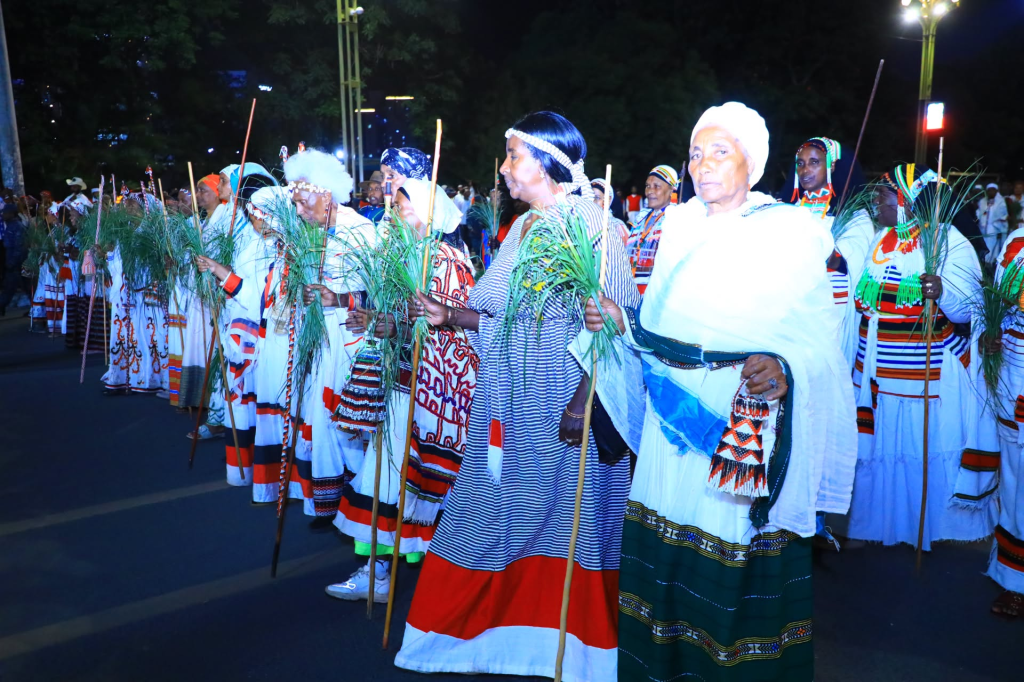
Haaromsaa Namummaa — The Renewal of Humanity
Irreechaan haaromsaa namummaa. Irreechaa is the renewing of humanity.
And so we arrive at the final phrase — the culmination of all the others.
Empowerment leads to reconciliation. Reconciliation leads to unity. Unity brings peace. Peace enables forgiveness. Forgiveness restores creation. Creation remembers its Creator. Evil is rejected. Love is affirmed. Time is redeemed. Humanity is restored, improved, fulfilled, refined, completed. And then — haaromsaa namummaa — humanity is renewed.
Irreechaa is not just a festival. It is a process — a spiritual technology that takes human beings as they are and transforms them into what they can become. It takes fractured people and makes them whole. It takes divided communities and makes them one. It takes a broken world and makes it new.
This is what the Oromo people have known for thousands of years. This is what they celebrate at the water’s edge every year. This is what they offer to Ethiopia, to Africa, and to the world.
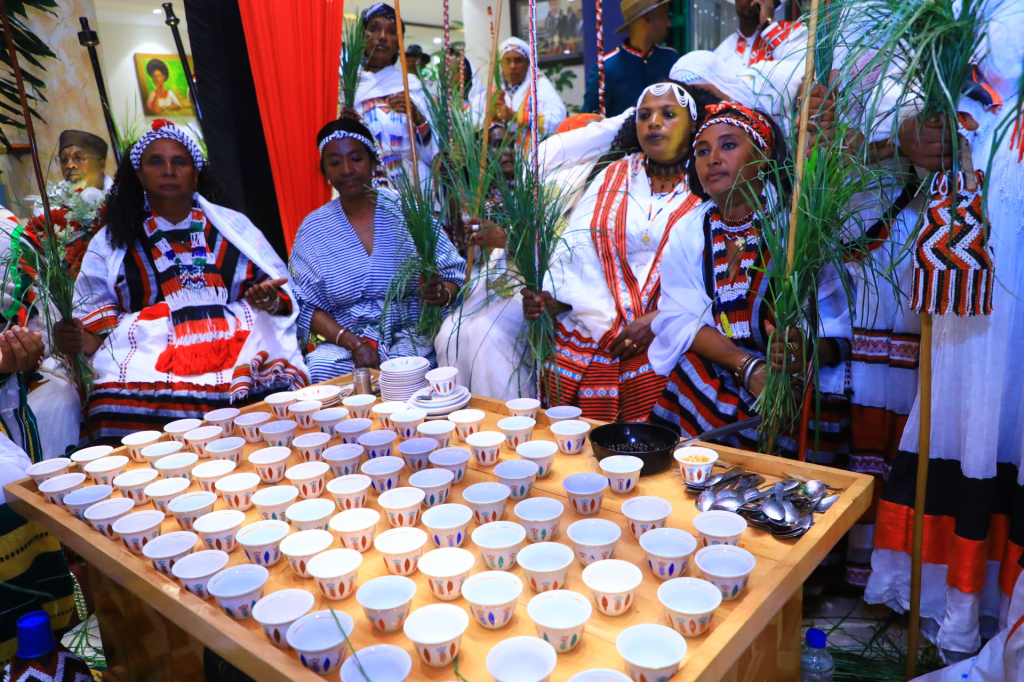
The Full Testimony
Let us read the sentence again — the full sentence — and hear it now with understanding:
“Irreechaan humneessaa namummaa, lachiisaa namummaa, marabeessaa namummaa, nageessaa namummaa, araarsaa namummaa, waloomsaa uumaa-uumamaa, sirna galateeffannaa, yaadannoo uumamaa, hulluuqoo hameenyaa, mallattoo ulfoo, yeroo dhiifamaa, ce’umsaa baraa, damboobsaa namummaa, fooyyessaa namummaa, fufsiisaa namummaa, fineessaa namummaa, guutessaa namummaa, kadhannaa gaarummaa, fi haaromsaa namummaa ti.”
Irreechaa is the empowering of humanity, the reconciling of humanity, the unifying of humanity, the peace-bringing of humanity, the forgiving of humanity, the harmonizing of creation, the order of thanksgiving, the memory of creation, the rejection of evil, the sign of love, the time of forgiveness, the turning of the year, the restoring of humanity, the improving of humanity, the fulfilling of humanity, the refining of humanity, the completing of humanity, the prayer of goodness, and the renewing of humanity.
This is not poetry. This is testimony. This is the Oromo people’s declaration of what Irreechaa does in the world.
Humanity can be renewed. Not through politics or economics or technology alone, but through the ancient practices of reconciliation, gratitude, purification, and community. Not through grand ideological projects, but through the simple, profound act of gathering at the water with your people, setting down your grudges, and giving thanks.
Irreechaa is the renewal of humanity. And it happens every year, at the water’s edge, one person at a time.
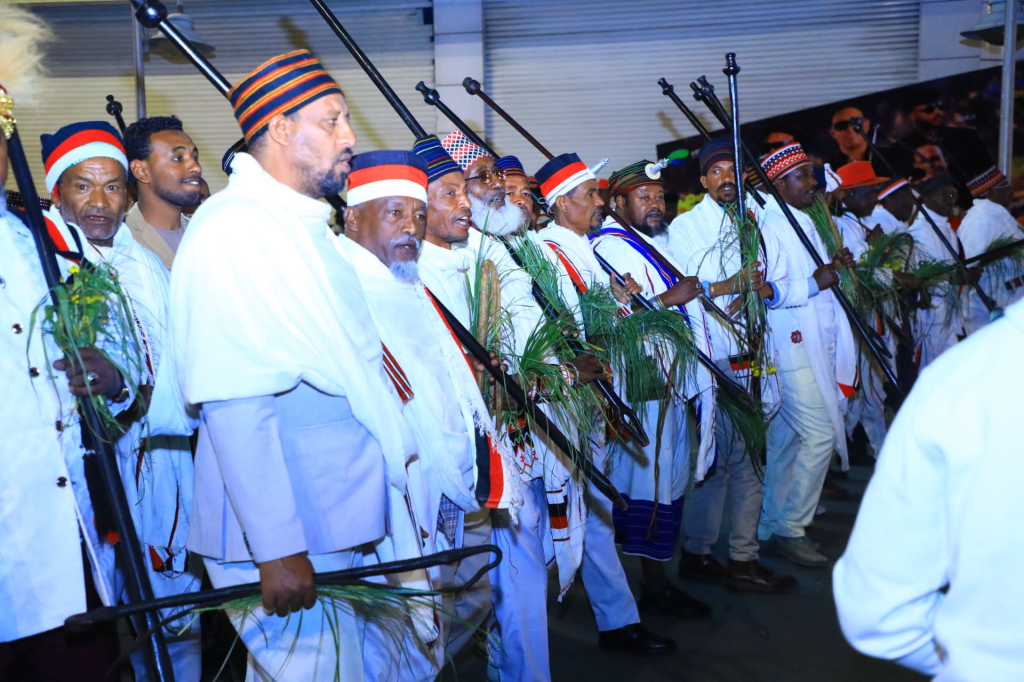
Baga Irreechaa Nagaan Geessan
The Oromo greeting says it all:
Baga Irreechaa nagaan geessan.
May the Irreechaa arrive in peace.
May the festival be empowering, reconciling, unifying, peace-bringing, forgiving, harmonizing, thanksgiving, memorial, rejecting of evil, sign of love, time of forgiveness, turning of the year, restoring, improving, fulfilling, refining, completing, prayerful, and renewing of humanity.
May the waters receive your gratitude.
May the grass carry your prayers.
May the nation, like the earth after the rains, emerge greener and stronger than before.
And may you — and all of us — be renewed.
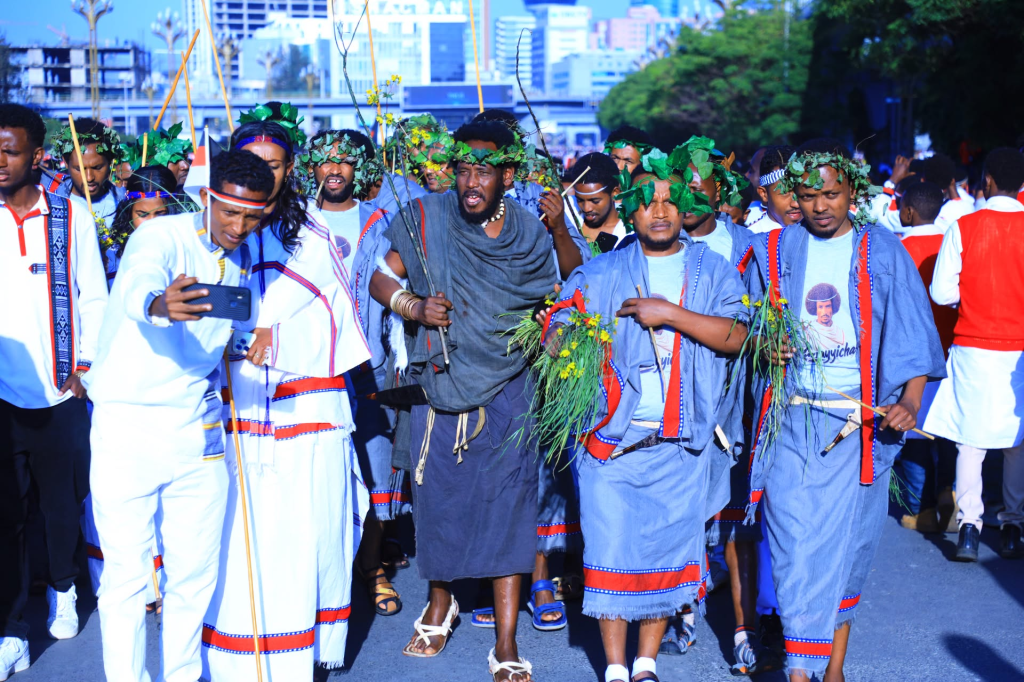
#Irreechaa #Oromia #Ethiopia #RenewalOfHumanity #HaaromsaaNamummaa #PeaceAndReconciliation #Thanksgiving #KadhannaaGaarummaa
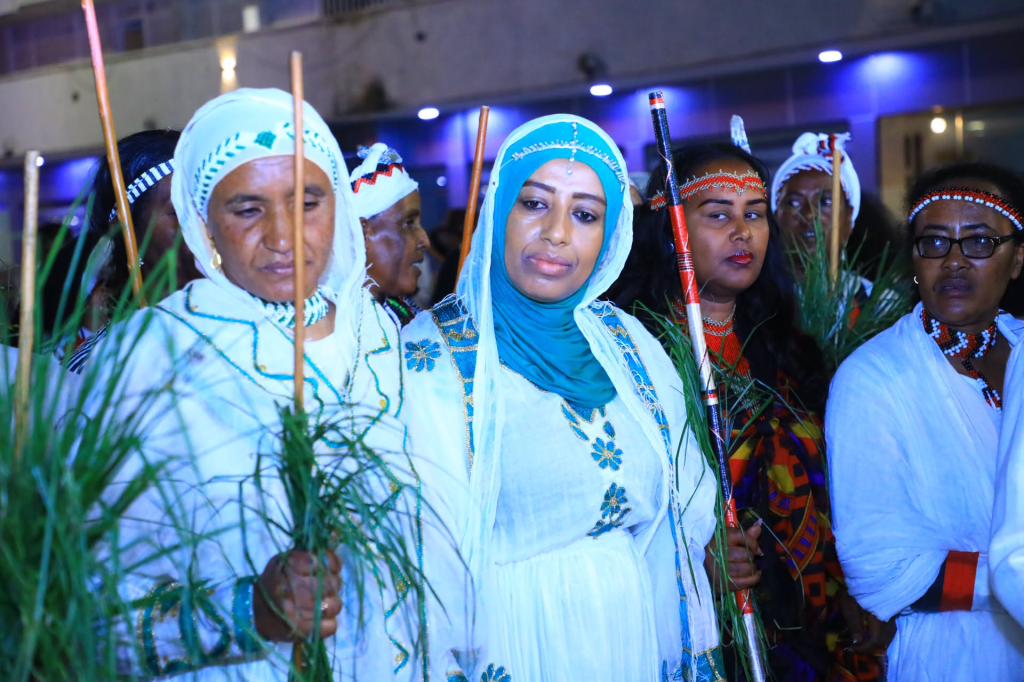
photos credit: OBN

Irreechaa: A Billion Hearts, One Festival of Light
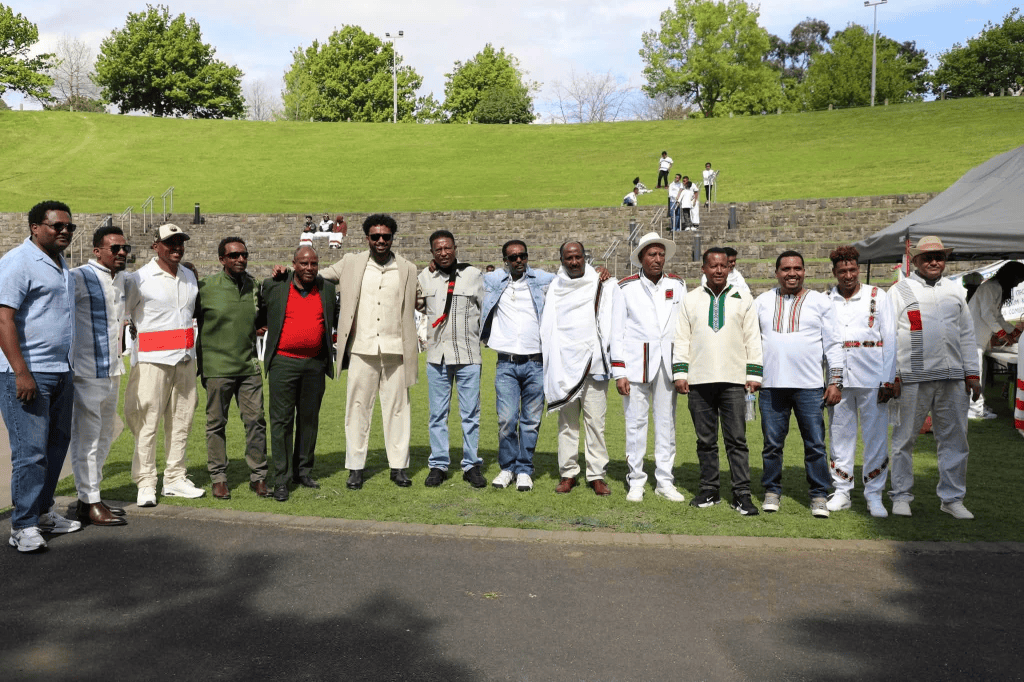
Across continents and generations, the Oromo nation celebrates the victory of light over darkness — a festival that unites, sustains, and inspires
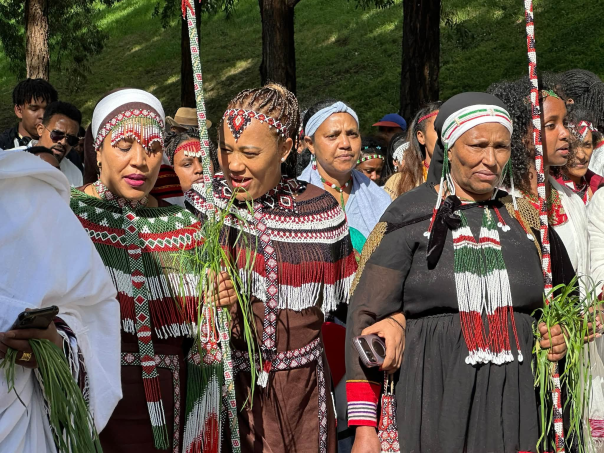
(MELBOURNE, AUSTRALIA, 27 September 2026) — This week, more than a billion people around the world are celebrating Irreechaa, the cultural festival celebrating the victory of light over darkness. It’s an important time for the Oromo nation. Across states, regions and cities, it fostered unity, sustainability, and joy, illuminating paths to prosperity and peace.
From the sacred shores of Hora Arsadi in Bishoftu to the riverbanks of the Awash, from the bustling streets of Addis Ababa to the quiet parks of Melbourne, Minneapolis, and London, the sounds of shaggooyyee and the colors of calanchi have once again filled the air. Irreechaa has returned — and with it, a message that transcends borders, generations, and circumstances.
A Festival Rooted in Gratitude
At its heart, Irreechaa is a thanksgiving. It marks the end of the rainy season and the beginning of the harvest, a moment when the Oromo people gather at the water’s edge to offer thanks to Waaqa (God) for the gift of life, fertility, and renewal. The festival is celebrated twice a year: Irreechaa Hiyyessa (the small Irreechaa) and Irreechaa Guddaa (the great Irreechaa), with the latter drawing millions to sacred sites across Oromia and beyond.
But Irreechaa is more than a ritual. It is a philosophy. The triumph of light over darkness is not merely a seasonal metaphor — it is a declaration of hope. It reminds us that even after the longest night, the sun rises. Even after the heaviest rain, the land blooms. Even in the face of adversity, a people united by faith and tradition can find their way forward.
Unity Across Divides
This year’s celebrations carried particular weight. In a world often divided by politics, religion, and geography, Irreechaa stood as a powerful counter-narrative. In cities across Ethiopia and the diaspora, people of all ages, backgrounds, and walks of life gathered side by side. Elders passed down blessings. Mothers sang songs of gratitude. Children danced in celebration. And for a moment, the divisions that so often define modern life seemed to dissolve.
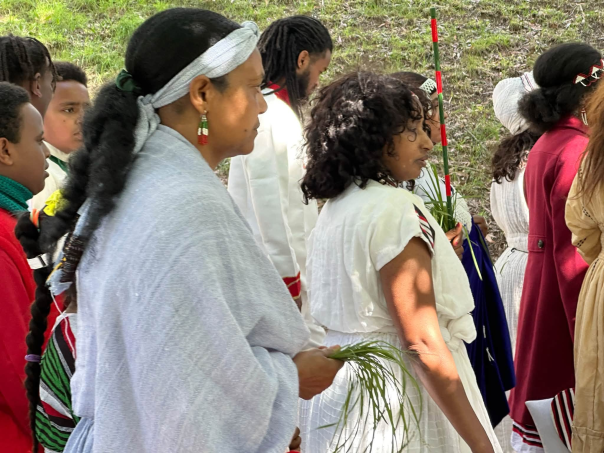
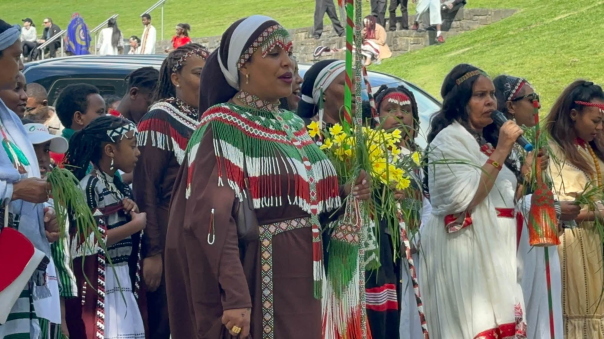
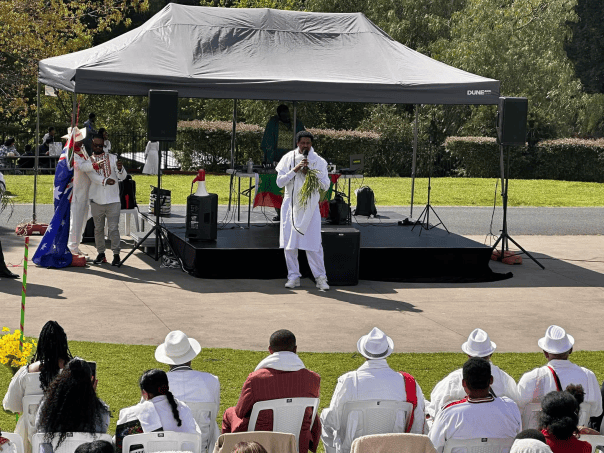
In Melbourne, where the Oromo community has grown into a vibrant and organized presence, Irreechaa was celebrated with the same reverence as it is in the homeland. Families dressed in traditional wandaboo and uffannaa aadaa, exchanged greetings of “Happy Irreechaa!” and shared meals that tasted of home. The event was a testament to the resilience of a people who, even thousands of miles from their ancestral land, refuse to let their culture fade.
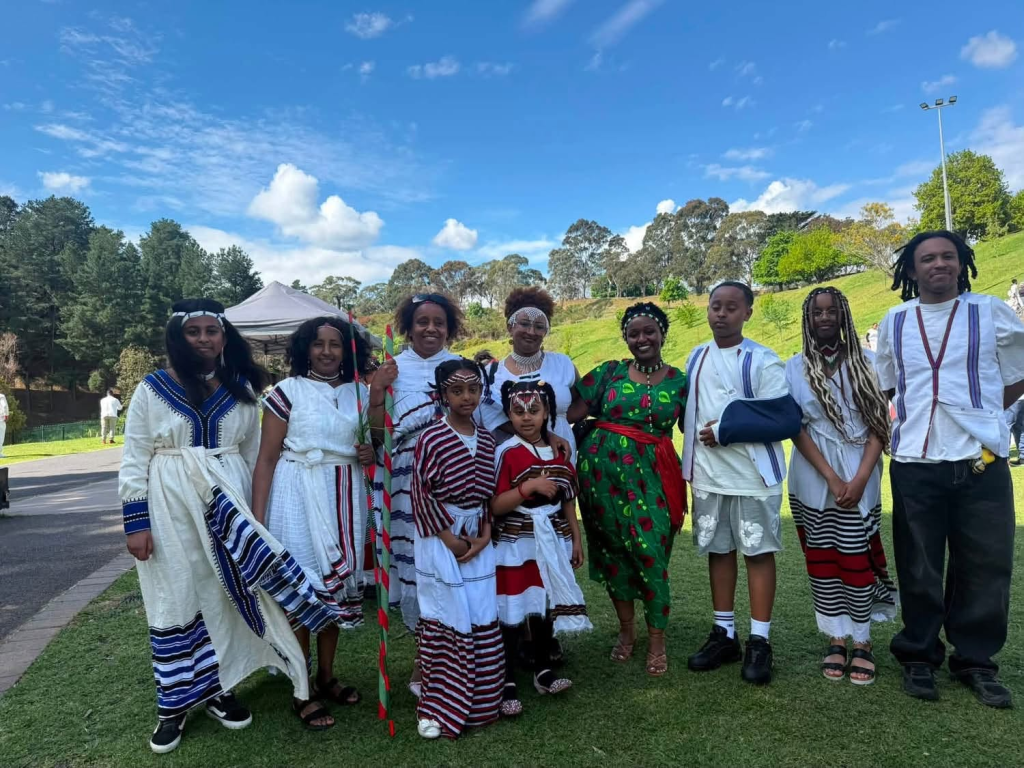
Sustainability: A Legacy of Respect for the Earth
Irreechaa is also a reminder of humanity’s relationship with nature. The festival is intrinsically tied to the land, the rivers, and the changing seasons. It teaches that gratitude must be accompanied by stewardship — that the earth is not ours to exploit but to protect.
In an era of climate crisis, this message could not be more urgent. The Oromo people’s reverence for water, land, and life offers a model of sustainability that the world would do well to heed. Irreechaa is not just a celebration of what we have received; it is a commitment to preserve it for those who come after us.
Joy as Resistance
Perhaps most powerfully, Irreechaa is a celebration of joy. In a world that often demands we focus on what divides us, the festival insists on what unites us. It is a reminder that joy is not frivolous — it is revolutionary. To celebrate in the face of hardship is to declare that hardship will not have the final word.
The images emerging from this year’s celebrations tell that story. A grandmother teaching her granddaughter the steps of a traditional dance. A young man helping an elder across the river. A group of friends laughing as they share a meal under the open sky. These are the moments that define Irreechaa. These are the memories that will be passed down.
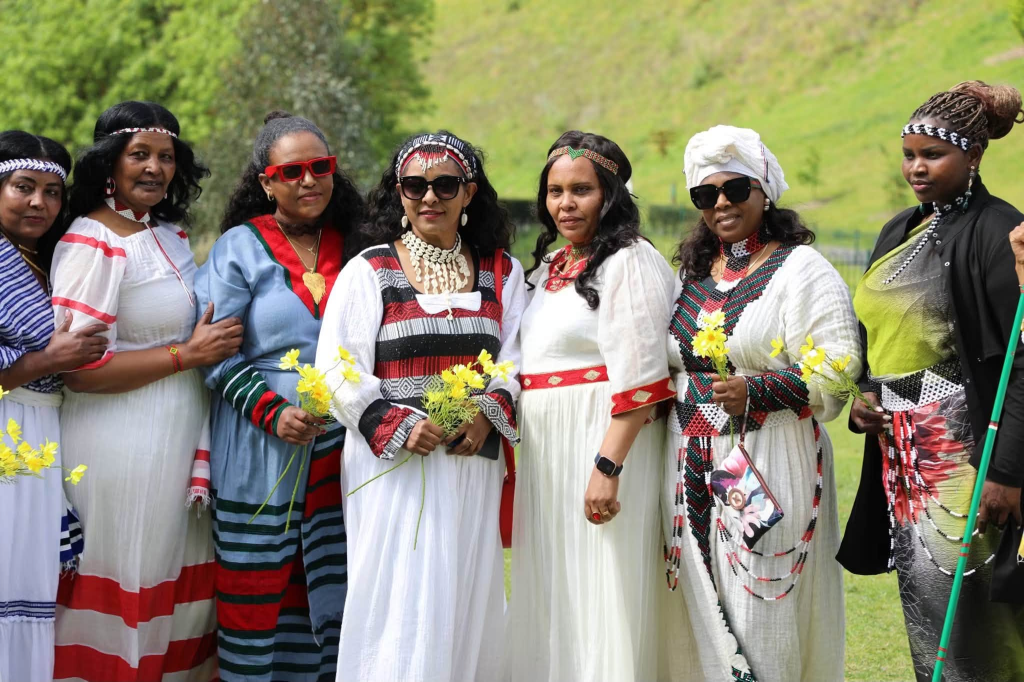
Illuminating Paths to Prosperity and Peace
As the celebrations draw to a close, the message of Irreechaa lingers. Light has triumphed over darkness. Gratitude has triumphed over despair. Unity has triumphed over division.
For the Oromo nation, Irreechaa is not just a festival — it is a compass. It points toward a future built on peace, prosperity, and mutual respect. It reminds us that the path forward is illuminated not by the brightness of any single star, but by the collective light of a people who refuse to be extinguished.
And as the sun rises on another year, that light shines on — in Bishoftu, in Melbourne, in Minneapolis, and in every corner of the world where the Oromo spirit lives.
Baga Irreechaa Nagayaan Geessan! Baga Bara Haaraa Geessan!
May the light of Irreechaa guide us all toward a year of peace, unity, and abundance.
Irreechaa: A Living Memory Across Generations
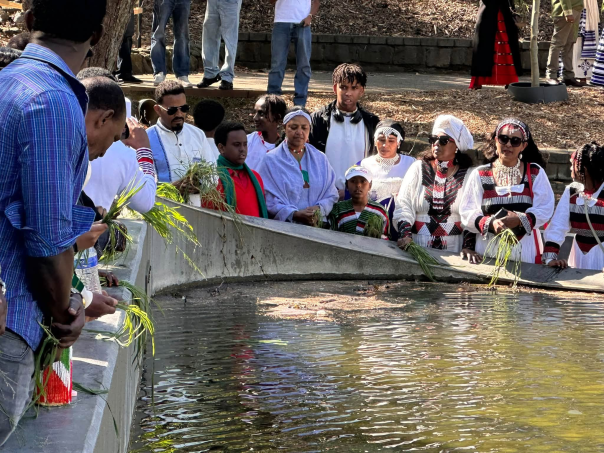
“Irreechaa waggaatti naanna’e dhufa; ayyaana kana irratti yaadannoo barayyuu jiraatu dhalootaaf kahanii darbuu waanti fakkaatu hin jiru.”
Irreechaa returns year after year; there is nothing that seems to pass beyond the reach of generations when the memory of this festival lives on and is preserved.
This profound truth captures the essence of Irreechaa — a festival that refuses to be confined to a single moment in time. It is a celebration that travels with its people, crossing rivers, mountains, and oceans, carrying with it the sacred duty of remembrance.
A Festival That Travels With Its People
Irreechaa is more than a thanksgiving ceremony. It is a living testament to the resilience, faith, and unity of the Oromo people. Celebrated at the banks of rivers and lakes, it marks the transition from the rainy season to the harvest, a moment of gratitude to Waaqa (God) for the blessings of life, fertility, and community.
But when Irreechaa travels — as it has with the Oromo diaspora to cities like Melbourne — it does not lose its meaning. Instead, it multiplies. Each celebration in a new land becomes a bridge between the homeland and the heart, between ancestors and descendants, between memory and hope.
Melbourne: A New Chapter in an Ancient Story
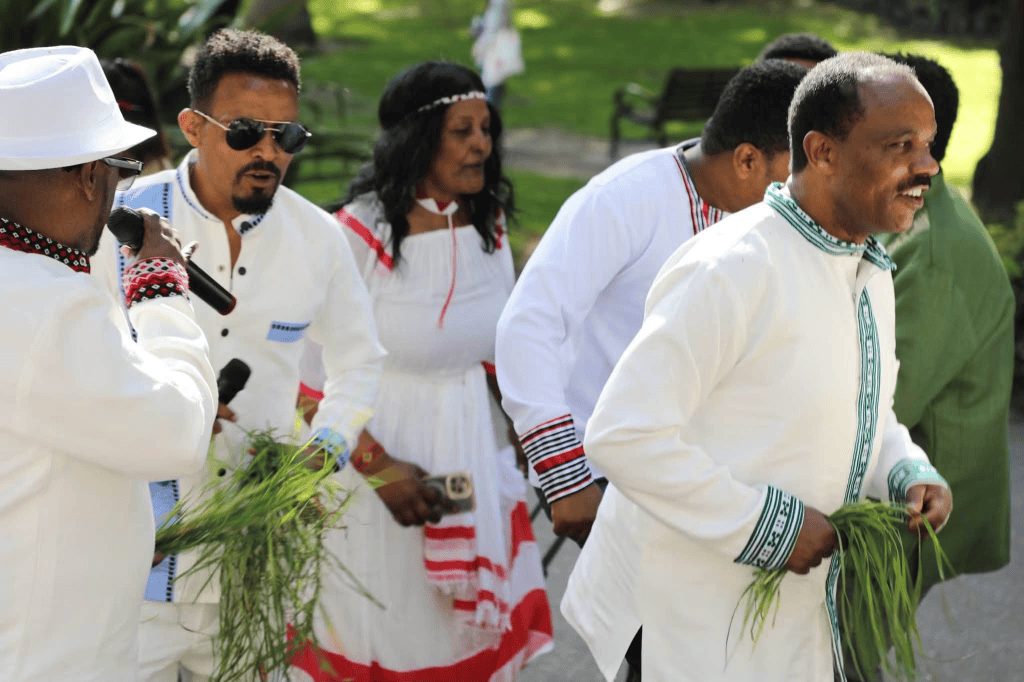
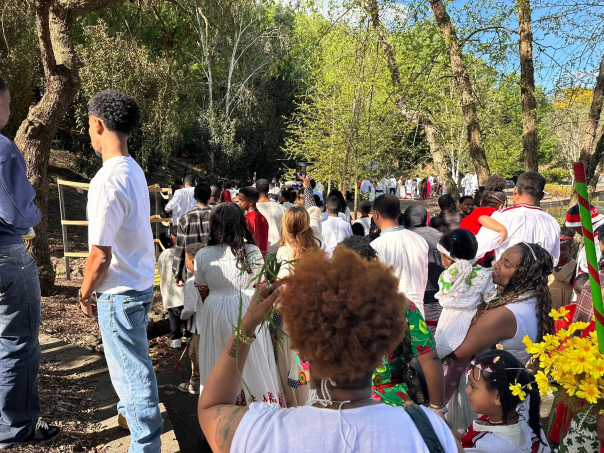
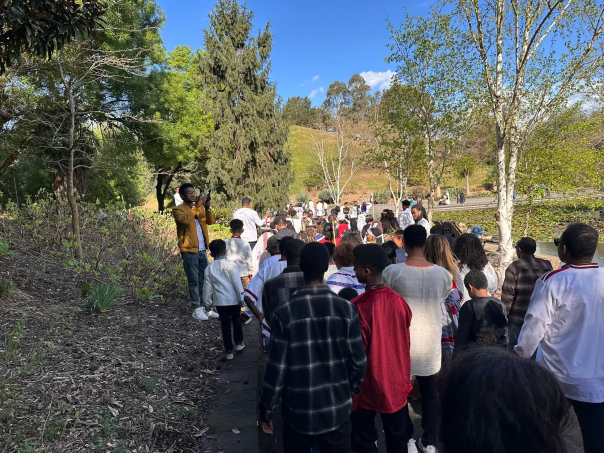
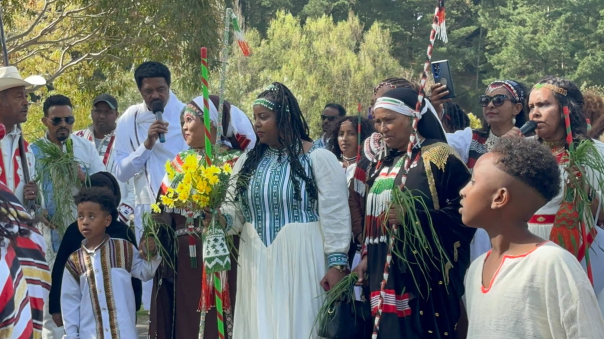
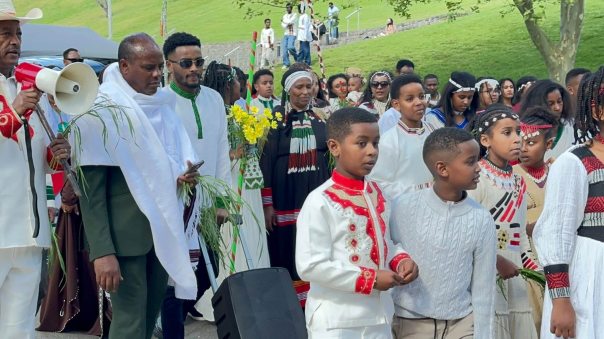
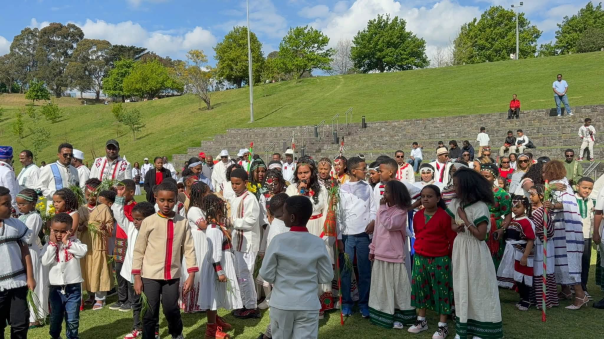
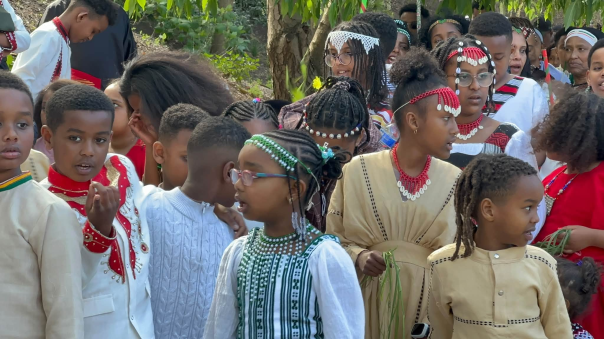
The Irreechaa celebrations in Melbourne are a vivid reminder that distance does not diminish devotion. Under the open sky of a foreign land, Oromo families gather in their traditional attire, sing songs of praise, and perform the sacred rituals that have been passed down for centuries. The colors of the calanchi and the rhythm of the shaggooyyee echo the same spirit that fills the banks of the Hora Arsadi and the Awash River.
These gatherings are not merely cultural events; they are acts of survival. They are declarations that no matter where life takes a people, their identity remains rooted in their traditions.
The Power of Shared Memories
“Suuraalee Irreechaa Melbourne kana waliif qooduunis yaadannoo keenyatti lubbuu haa horru!”
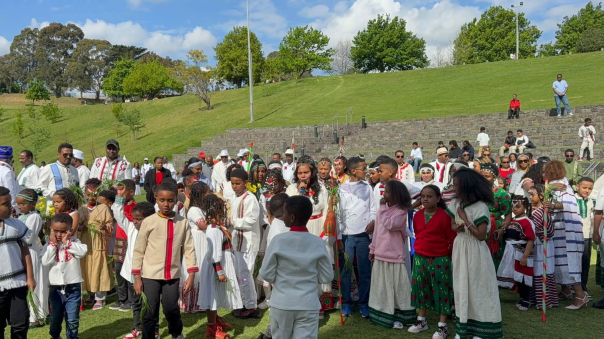
Sharing the photos of this Irreechaa in Melbourne breathes life into our memory!
In the age of digital connection, every photograph, every video, every shared post becomes a vessel of memory. When we share these images, we are not simply documenting an event — we are breathing life into our collective story. We are telling the next generation: This is who we are. This is where we come from. This is what we carry with us.
For those who could not attend, these shared moments become a lifeline. For those who were present, they become anchors of joy. For those yet to be born, they become a legacy.
A Call to Keep the Flame Alive
We extend our deepest gratitude to Yadeta Lemu, Kasahun Soboka, Aliye Geleto, Dhabessa Wakjira, and Yadesa Bedhasa for their dedication in capturing and sharing the spirit of Irreechaa Melbourne. Their efforts ensure that the memory of this celebration does not fade with time but grows stronger with each passing year.
Their work reminds us that preserving culture is not a passive act. It requires effort, commitment, and love. It requires people who understand that when we share our traditions, we are not just looking back — we are building forward.
Conclusion: Irreechaa as a Bridge
Irreechaa is a bridge. It spans the distance between generations, between homelands, between hearts. It teaches us that as long as we remember, we are never truly far from home. As long as we celebrate, we are never truly alone.
So let us continue to share. Let us continue to remember. Let us continue to breathe life into our memories — for in doing so, we ensure that Irreechaa will indeed return, year after year, carrying our stories to generations yet to come.
Irreechaa fi yaadannoo keenya — dhalootaaf kahanii darbuu hin danda’u!
Irreechaa and our memory — they cannot pass beyond the reach of generations!

Oromia Restructures: Six New Administrative Clusters and Their Administrators
Ethiopia’s largest federal state moves to a clustered governance model, appointing six vice presidents to oversee regional zones
(ONA, Finfinne — Oromia)– Ethiopia’s largest and most populous federal state, is undergoing a significant administrative restructuring. Under a newly approved arrangement, the state will be organized into six administrative “clusters,” each led by a vice president responsible for coordinating the zones within their region.
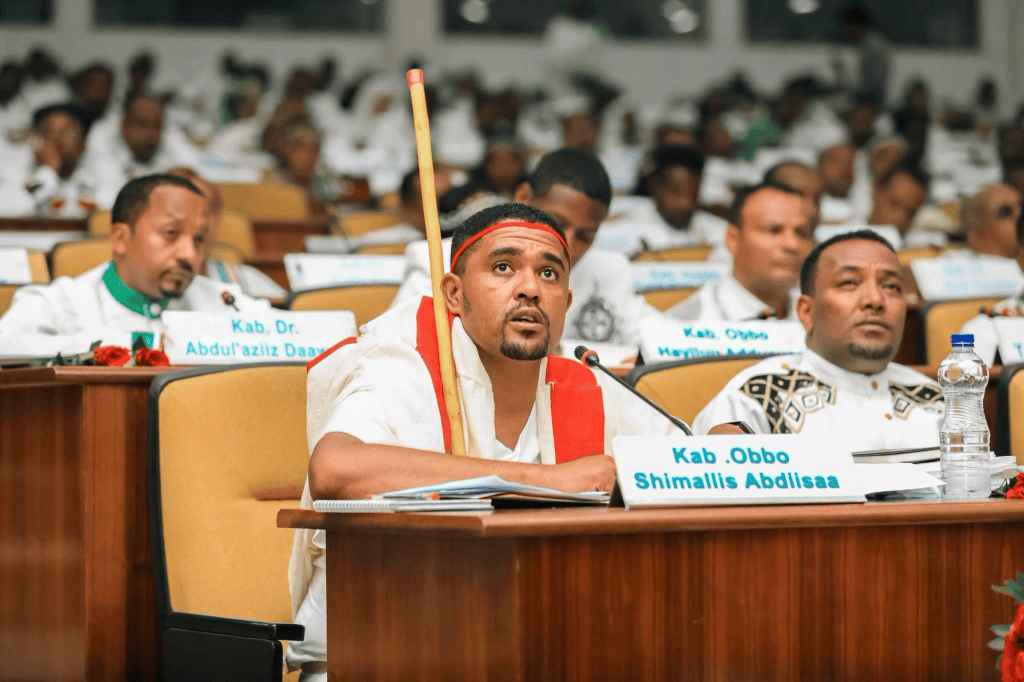
The plan was approved during the first session of the Oromia Regional Council (Caffee Oromia) held in Adama. Governor Shimelis Abdisa was successfully reelected, and he subsequently nominated six vice presidents, all of whom were confirmed by the council.
The Six Clusters and Their Administrators
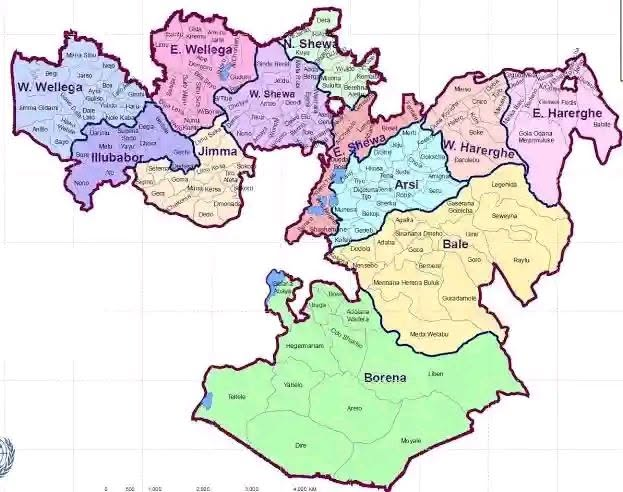
According to the approved plan, Oromia will be divided into the following six administrative regions:
1. East Oromia (2 Zones) — Administrator Ato Abdurahman Abdela
Oversees West Hararghe and East Hararghe. These zones are located in eastern Oromia, bordering the Somali Region and the Harari region.
2. Southeast Oromia (4 Zones) — Administrator Ato Ahmed Idris
Oversees Arsi, Bale, West Arsi, and East Bale. This cluster spans the Rift Valley area and includes important ecological resources such as Bale Mountains National Park.
3. South Oromia (4 Zones) — Administrator Ato Ahmed Haji
Oversees Guji, West Guji, Borena, and East Borena. These areas border Kenya and are primarily characterized by pastoralism and cross-border trade.
4. West Oromia (4 Zones) — Administrator Ato Melaku Melaku
Oversees East Wollega, West Wollega, Kellem Wollega, and Horro Guduru Wollega. This region is one of Ethiopia’s important coffee-producing areas.
5. Southwest Oromia (3 Zones) — Administrator Dr. Reshad Kemal
Oversees Iluababor, Buno Bedele, and Jimma. Jimma is known as Ethiopia’s coffee capital, and the region is rich in agricultural and forestry resources.
6. Central Oromia (4 Zones) — Administrator Dr. Mengistu Bekele
Oversees East Shewa, North Shewa, Southwest Shewa, and West Shewa. This cluster surrounds the capital, Addis Ababa, and includes important cities such as Adama.
Background and Controversy
This administrative restructuring comes at a time of profound change in Ethiopia’s political landscape. Reports suggest that the ruling Prosperity Party is considering a broader “clusterization” reform of the federal system nationwide, and Oromia’s six-cluster plan may be part of that larger blueprint.
Supporters argue that dividing a vast administrative region into smaller management units can bring government closer to the people, improve administrative efficiency, and enhance public service delivery. Oromia covers an area of 353,600 square kilometers with a population of over 27 million, and single-tier management indeed faces enormous challenges.
However, criticism is equally strong. Some analysts suggest the restructuring may carry political motives — weakening Oromia’s cohesion and negotiating power as a single political entity by dividing it. Some commentators have described it as “a systematic weakening of Oromo political power.”
Human rights observers also worry that pushing through such a major administrative reform while security conditions in parts of Oromia remain unstable could exacerbate tensions at the local level.
What Comes Next
With the six vice presidents now in place, they are expected to begin forming coordination bodies for each cluster. However, the specific division of powers, financial arrangements, and relationships with existing zonal administrative units remain to be clarified.
In his address to the council, Governor Shimelis stated that the new term would “consolidate development gains and advance reforms,” but did not elaborate on the controversial aspects of the administrative reorganization.
For Oromia — a central player in Ethiopia’s political landscape — this quiet administrative revolution may have implications far beyond a single list of appointments.

Irreechaa: A Heritage That Endures, Evolves, and Lives
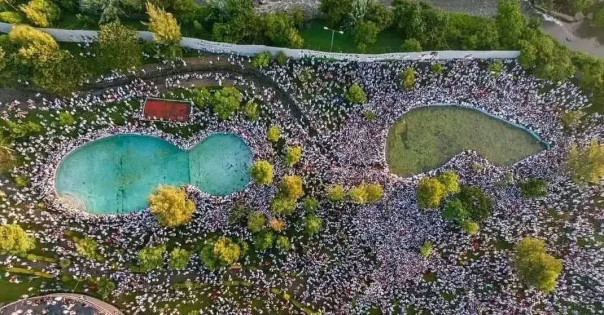
A festival of gratitude becomes a call to responsibility for nature and future generations
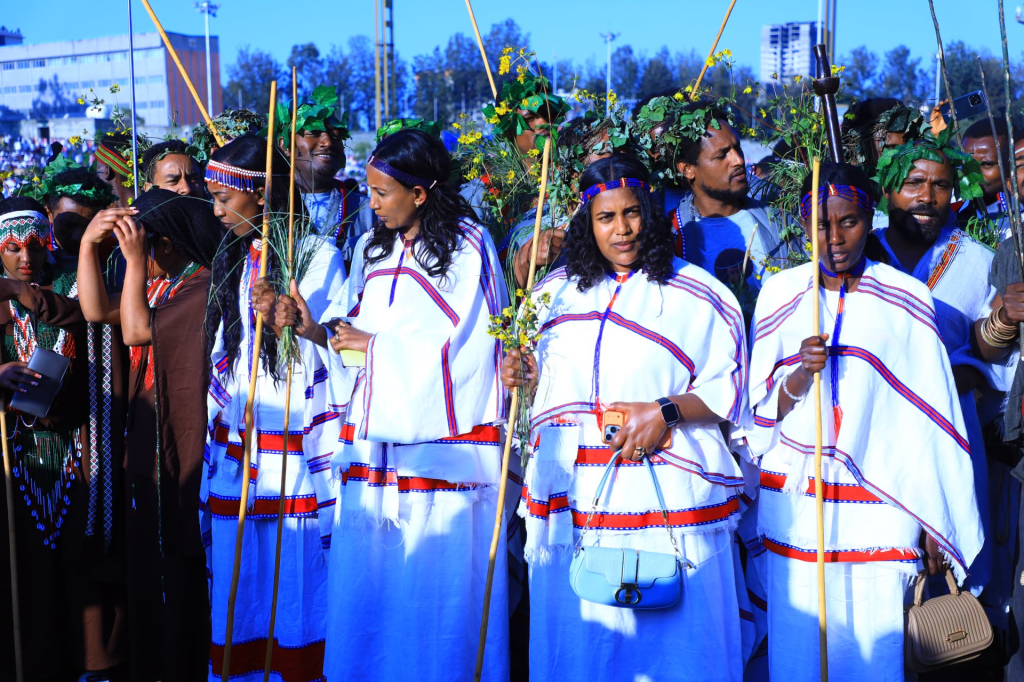
Every year, millions of Oromo people gather along the banks of rivers and lakes, dressed in white, carrying fresh green grass and yellow daisies. They come to give thanks. They come to pray. They come to remember.
But according to a new reflection by Worku Burayu (PhD), Irreechaa is far more than a colorful annual gathering. It is a living heritage — one that endures, evolves, and lives.
“Irreechaa should not be reduced to an annual article, a speech, a public gathering, or a cultural display,” Burayu writes. “It is a living heritage whose meaning continues to guide, teach, and connect generations.”
The article, titled “Irreechaa: A Heritage That Endures, Evolves, and Lives,” continues a reflection begun in 2025 with “Irreechaa: From Nature to Nation, Core Values of Oromo Culture.” This year’s piece, written after an invitation from the Irreechaa Event Ad Hoc Committee of the Atlanta Metropolitan Area, takes a different perspective — examining Irreechaa not just as a celebration, but as a relationship between memory and responsibility.
More Than a Ceremony
Irreechaa is widely known as the Oromo thanksgiving festival, celebrated at the end of the rainy season near rivers and lakes. Participants give thanks to Waaqaa (God) for life, health, peace, rain, harvest, family, and community. They sing, dance, and sprinkle water as a blessing of renewal.
Scholars have long recognized Irreechaa as an expression of Oromo identity and unity. UNESCO describes it as closely associated with the Gadaa system, the indigenous democratic sociopolitical system of the Oromo people.
But Burayu argues that its significance cannot be fully understood by viewing it only as a ritual performed at a particular time of year. Irreechaa is part of a broader Oromo worldview in which human beings exist within relationships involving Waaqaa, nature, community, ancestors, and future generations.
“The natural environment is not simply a backdrop for cultural practice,” he writes. “Soil, water, air, forests, grass, flowers, animals, and agricultural landscapes are part of the living world through which life is sustained and gratitude is expressed.”
Gratitude Must Become Responsibility
At the heart of Irreechaa is gratitude. But Burayu asks a challenging question: If water, forests, soil, grass, and flowers are gifts of Waaqaa, how should we treat them?
“The answer cannot be limited to words of thanksgiving,” he writes. “Genuine gratitude creates responsibility.”
If water is a gift, it must be protected. Lakes, rivers, springs, and wetlands associated with Irreechaa are not merely ceremonial locations — they are living ecosystems. Respect for water means preventing pollution, protecting riverbanks, safeguarding springs, and managing waste responsibly.
If forests are a gift, they must be conserved and renewed. Natural materials used during ceremonies should be gathered without unnecessary destruction of living trees. Irreechaa can become an opportunity for tree planting and forest restoration.
If soil is a gift, its fertility must be maintained. “We cannot celebrate the fruits of the land while destroying the soil that must produce those fruits in the future,” Burayu warns.
If grass and flowers are used in celebration, they should be gathered in ways that allow natural regeneration. Plants should not be unnecessarily uprooted when only their flowers or leaves are needed.
“The gift of nature does not belong to human beings alone,” Burayu writes. “It sustains an entire community of life.”
Water as a Sacred Responsibility
The relationship between Irreechaa and water is particularly significant. Many celebrations take place beside rivers, lakes, and springs. The symbolism of water, Burayu argues, should never be separated from its ecological reality.
“When people approach water during Irreechaa, touch it, sprinkle it, or gather beside it in prayer, they encounter one of the fundamental conditions of life,” he writes.
The act of approaching water should awaken responsibility. “If we pray beside a river, we should not pollute it. If we regard water as a blessing, we should not waste it carelessly. If we gather around a spring, we should protect the spring and its surrounding vegetation.”
His message is simple: “We should not pollute what we have come to honor.”
Safuu: An Indigenous Ethic of Restraint
Burayu grounds these responsibilities in Safuu, the Oromo concept of appropriate conduct and responsible relationships. Safuu asks a deeper question than whether a person is technically able to do something. It asks whether an action is appropriate, responsible, and respectful.
“A person may be physically able to cut a tree, but that does not mean the tree should be cut unnecessarily,” Burayu explains.
He points to the Odaa tree as a powerful cultural example. Odaa trees have long held deep cultural, social, and spiritual significance in Oromo society. Traditionally, those associated with important communal spaces were treated with particular respect and were not to be cut at will.
“The question is not simply ‘Can I take it?’ but ‘Should I take it, and what responsibility follows from taking it?'” Burayu writes.
This principle, he argues, extends to rivers, forests, grasslands, and wetlands. “The ability to use nature does not create an unlimited right to consume it. Safuu calls for restraint, responsibility, and respect for the conditions that make life possible.”
The Challenge of Modern Celebration
Contemporary Irreechaa celebrations can involve very large gatherings. Their growth creates opportunities for cultural visibility and community connection, but it also creates environmental responsibilities.
Large gatherings require transportation, food, water, sanitation, energy, and waste management. They can place pressure on grasslands, riverbanks, and trees.
“The success of an Irreechaa gathering should not be measured solely by attendance, visibility, or cultural performance,” Burayu writes. “It should also be measured by what remains after the gathering.”
A celebration that leaves a river polluted, vegetation damaged, and the landscape covered in waste contradicts the relationship with nature that Irreechaa seeks to express. By contrast, a celebration that leaves the environment protected, clean, and renewed demonstrates that gratitude has been translated into responsibility.
From Survival to Renewal
Irreechaa has survived because generations before us carried it through difficult circumstances. But Burayu argues that survival alone is not enough.
“A tradition can survive as a ceremony while losing its deeper values,” he warns. “It can become something repeated annually without being understood, or a cultural performance detached from everyday conduct.”
For Irreechaa to remain a living heritage, it must continually be renewed through learning. Renewal means documenting cultural knowledge before it disappears, creating opportunities for elders to share knowledge with younger generations, and connecting traditional ecological knowledge with contemporary scientific understanding.
“Renewal does not require abandoning tradition,” Burayu writes. “It requires understanding tradition deeply enough to distinguish enduring principles from the particular historical forms through which those principles have been expressed.”
Cultural Confidence Without Self-Denigration
The continuity of cultural heritage also depends on how a people understands itself. Burayu notes that Oromo history, culture, and identity have often been interpreted through external frameworks — political, religious, and colonial.
“Before rejecting what is ours, we have a responsibility to understand it,” he writes. “Before repeating judgments made about our culture, we have a responsibility to study the culture itself.”
This is not an argument for romanticizing the past. Cultural confidence does not require believing that everything inherited is perfect. A living culture must be capable of self-examination.
“There is an important difference between critical reflection and cultural self-denigration,” Burayu explains. “Critical reflection seeks to understand, improve, and strengthen. Self-denigration simply reproduces the judgment of others.”
Intergenerational Responsibility
Every generation inherits things it did not create — language, stories, values, songs, landscapes, rivers, forests, and soils. Burayu argues that we therefore have a responsibility to think of ourselves not merely as owners, but as custodians.
“A river that exists today will be needed by children who have not yet been born,” he writes. “A forest standing today may provide shade, water protection, biodiversity, and livelihoods for generations we will never meet. Soil fertility lost today may take decades to restore.”
Irreechaa makes this relationship between generations visible. “Our ancestors carried it. We received it. Our children will inherit whatever we choose to preserve, change, or neglect.”
Irreechaa in the Diaspora
For Oromo communities living outside Oromia — including in the United States, Europe, Australia, and Asia — Irreechaa carries additional significance. In the diaspora, cultural continuity requires deliberate and sustained transmission because younger generations may grow up in environments where Afaan Oromo, Oromo customs, and traditional practices are not part of everyday life.
“In this context, Irreechaa can serve as an intergenerational bridge,” Burayu writes. “That bridge, however, must carry knowledge as well as ceremony.”
Community gatherings can become spaces for learning as much as celebration. Elders can transmit knowledge, younger people can ask questions, and cultural organizations can create educational programs connecting history, language, ecology, ethics, and contemporary life.
From Ceremony to Everyday Life
The deepest measure of Irreechaa, Burayu argues, is what happens after the celebration.
“If a person gathers beside a river in thanksgiving and subsequently becomes more conscious of protecting water, the ceremony has produced an enduring value,” he writes. “If a young person learns about the significance of grass and flowers and becomes more responsible in the use of natural resources, the tradition has been transmitted meaningfully.”
A cultural tradition is truly alive when its principles enter everyday behavior. “Irreechaa should therefore not be understood merely as something people attend. It is something whose values can be lived.”
It Endures. It Evolves. It Lives.
Burayu concludes with a powerful summary of his argument.
“Irreechaa endures because it has roots in the historical and cultural experience of the Oromo people. Irreechaa evolves because every generation encounters different circumstances. Irreechaa lives when its underlying values remain meaningful within those changing circumstances.”
Its living character can be seen when gratitude becomes responsibility, identity becomes confidence, celebration becomes stewardship, tradition becomes learning, and cultural memory becomes preparation for the future.
“The question is not simply whether Irreechaa will survive,” Burayu writes. “The deeper question is whether we will understand it well enough to help it live.”
Irreechaa is not merely a heritage of the past. It is a responsibility of the present and a promise to the future.
It endures. It evolves. It lives.

Irreechaa in Edmonton: How One Diaspora Community Turned a Sacred Tradition into a Recognized Civic Celebration
By Daandii Ragabaa
EDMONTON, Alberta — When the Oromo community of Edmonton gathered for Irreechaa Malkaa this year, they were not simply marking a religious holiday. They were making a statement — to themselves, to their children, and to the wider Canadian society — that Oromo culture, identity, and heritage deserve to be seen, respected, and celebrated at the highest levels of public life.
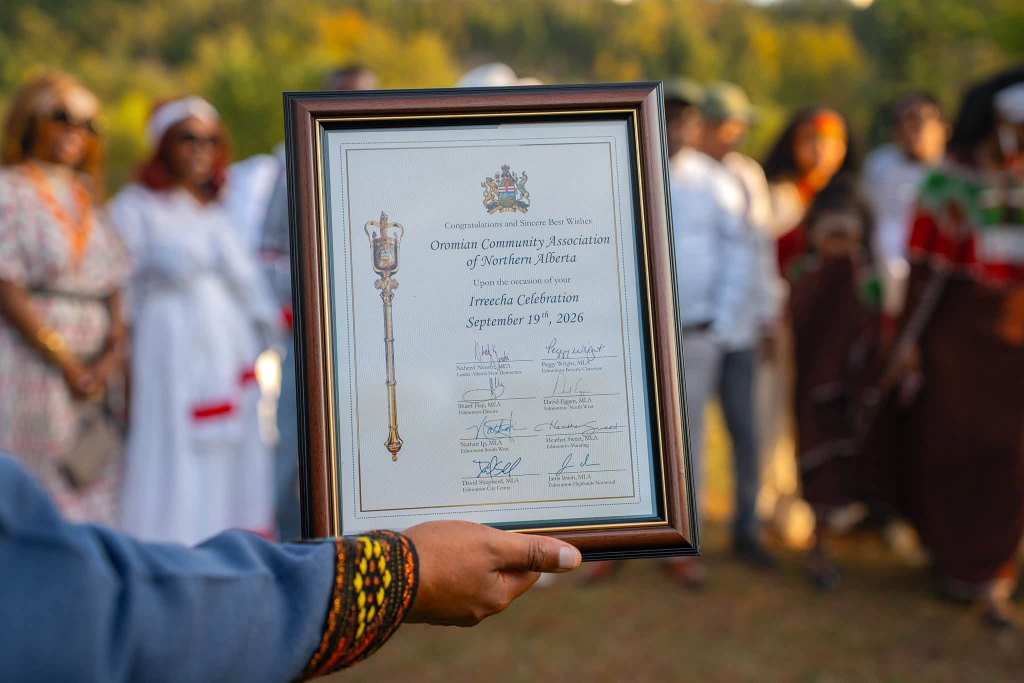
The celebration, held a week ago, was honored with an official Certificate of Recognition from the Government of Alberta, presented by representatives of the city and the provincial and federal governments who stood alongside the Oromo community in celebration. The recognition was not a casual gesture. As the community noted, this acknowledgment did not come easily or by accident. It was the result of years of persistent advocacy and grassroots organizing.
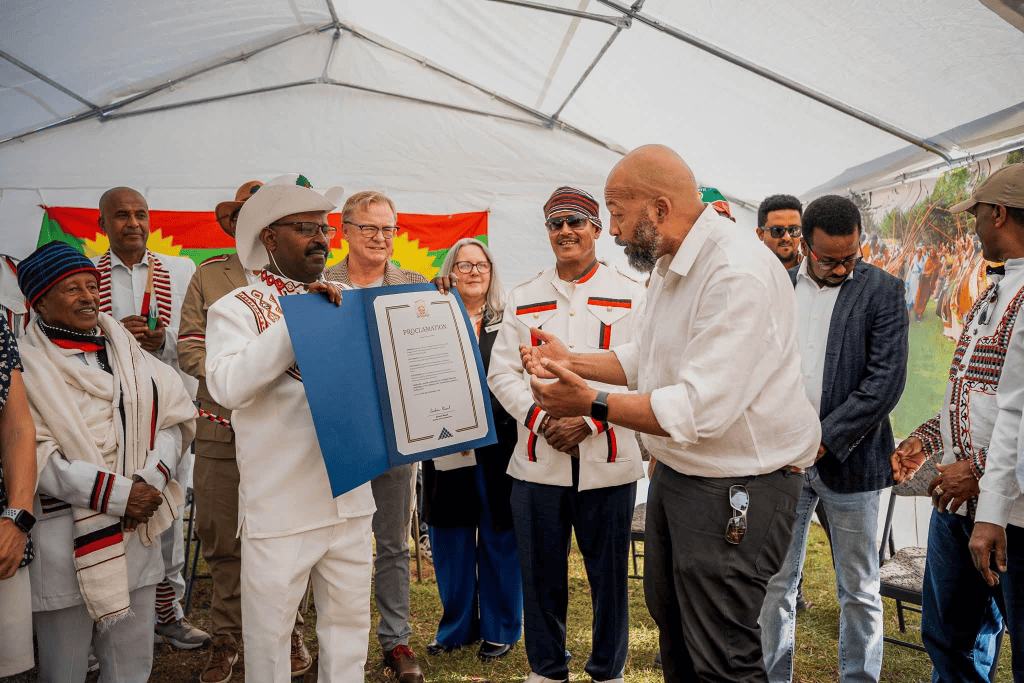
A Celebration That Speaks for Itself
The symbolism of Irreechaa is powerful, and the Edmonton community was intentional about ensuring it was understood. Irreechaa is not simply a “Thanksgiving” festival. It is rooted in Waaqeffannaa, the traditional Oromo belief in one God, and in the Gadaa system — the ancient democratic governance structure that UNESCO has recognized as Intangible Cultural Heritage.
For Oromos in the diaspora, Irreechaa is a spiritual act of gratitude to Waaqa for the blessings of the past year, a moment of reconciliation, and a prayer for peace in the year ahead. It is also a public declaration of identity — a refusal to be invisible.
As the community statement put it, the presence of elected officials and the presentation of the certificate of recognition was not simply an act of kindness by those in power. It was the product of sustained effort and organized advocacy by OCANA (the Oromo Community Association of Northern Alberta) and the broader Oromo community of the region.
The Leadership Behind the Recognition
The statement is clear that this achievement belongs to the community’s leadership and its collective will. “For our culture to flourish, for Oromos to be honored, and for Oromia to be viewed as a nation, the leadership of the Oromo Community Association of Northern Alberta played a lion’s share — and this is where it came from.”
That acknowledgment matters. In diaspora communities, recognition rarely arrives on its own. It must be cultivated — through relationship-building with local governments, through participation in multicultural events, through education, and through the persistence of community organizations.
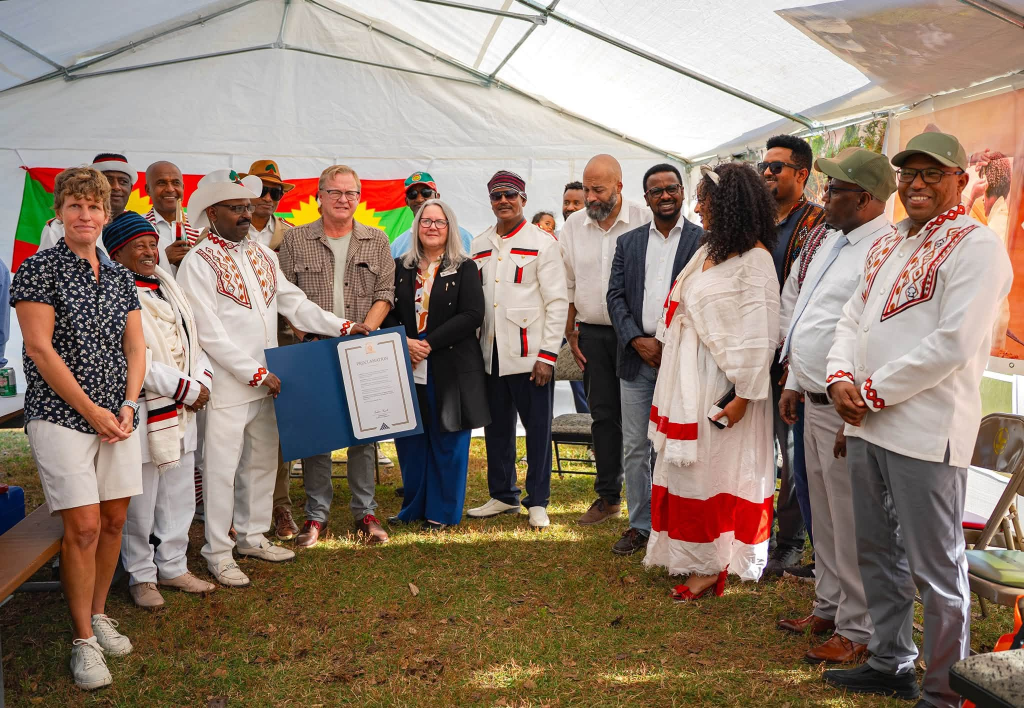
A Model for Others
The Edmonton community also highlighted a striking achievement: at God-Hambaalee Edmonton, one of the city’s major multicultural festivals featuring over 90 countries, Oromia participated as a nation in its own right — complete with its own displays and presentations, which finished among the top ranks of participants.
For a community whose homeland has often been marginalized, denied recognition, and subjected to systemic oppression, this is no small thing. It is a reversal of the invisibility that has too often been imposed on Oromo people.
The statement also noted that many multicultural associations exist across Canada, but none has demonstrated the same strength, diplomatic skill, and ability to articulate the Oromo experience as this one. The community did not celebrate in isolation — it celebrated in public, with recognition, and with dignity.
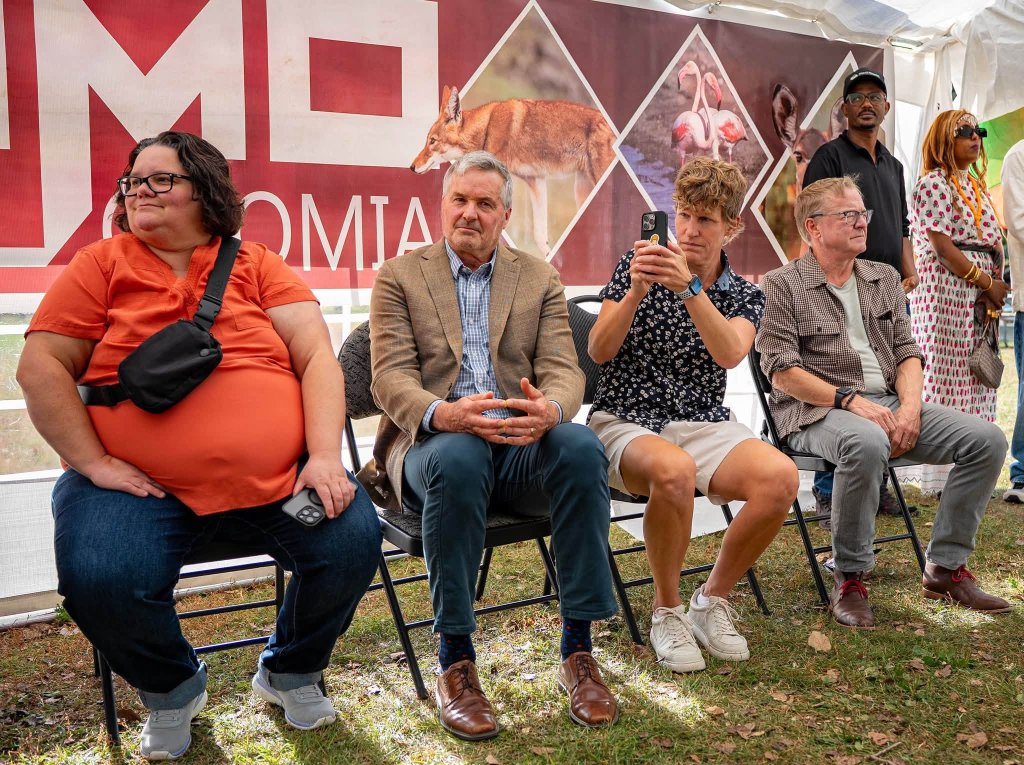
Gratitude and Looking Forward
The message closes with gratitude — to the Oromo community of the region, to OCANA’s leadership, and to everyone who contributed to making Irreechaa 2026 a success. It also issues a challenge to other Oromo communities: learn from this example. The community intends to build on this momentum, and future plans are already taking shape.
To those who are honoring their country and culture, the community offers its blessing: Irreecha milkii — may your Irreechaa be fruitful and blessed.
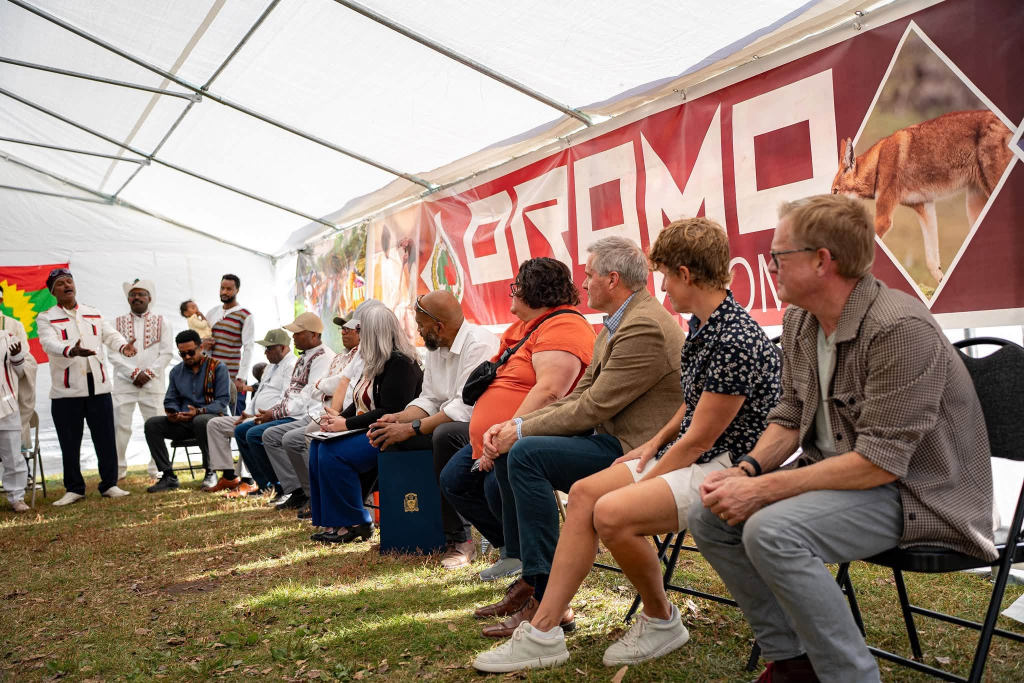
Why This Matters
Irreechaa in Edmonton is not just a local story. It is a template for how diaspora communities can transform sacred traditions into civic recognition — without compromising the spiritual essence of the festival. It shows that cultural preservation and public engagement are not mutually exclusive. And it demonstrates that when a community organizes, advocates, and speaks with one voice, governments listen.
For Oromos across Australia, North America, Europe, and beyond, the Edmonton example offers both inspiration and a challenge: celebrate proudly, organize strategically, and ensure that Irreechaa is not only a memory carried from home, but a living tradition recognized by the nations in which it is celebrated.
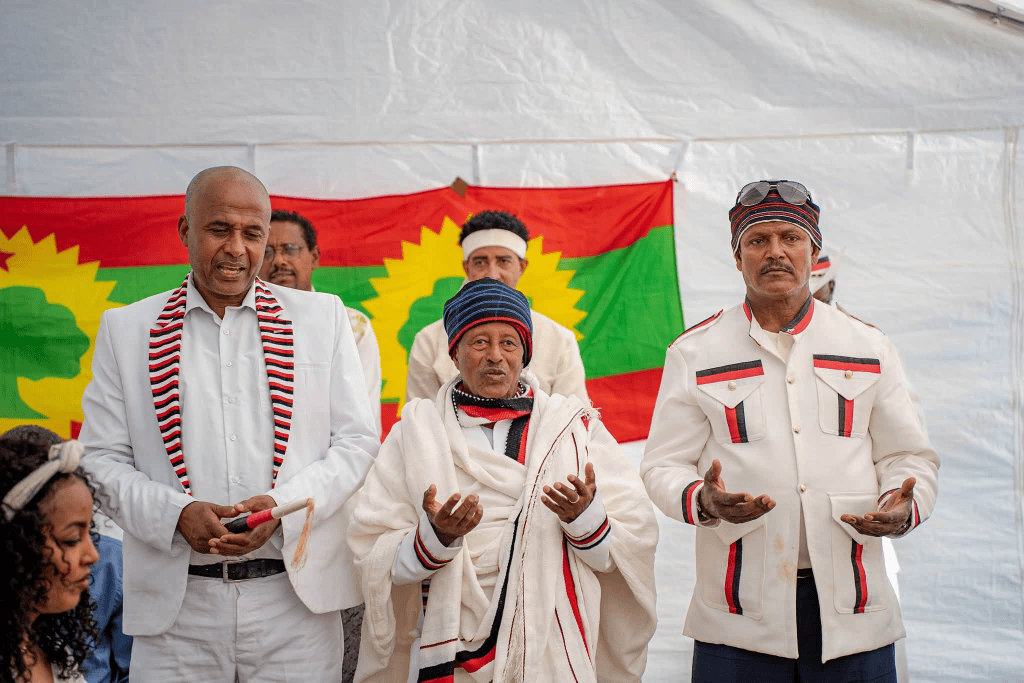
Baga Irreecha milkiin geessan!
#Irreecha_Edmonton #Irreechaa #Oromo #Oromia #OCANA #Edmonton #Alberta #Diaspora #CulturalHeritage #Waaqeffannaa #Oromummaa

A Trailblazer Honoured: Dr Melika Sheikh-Eldin Inducted into the Victorian Honour Roll of Women
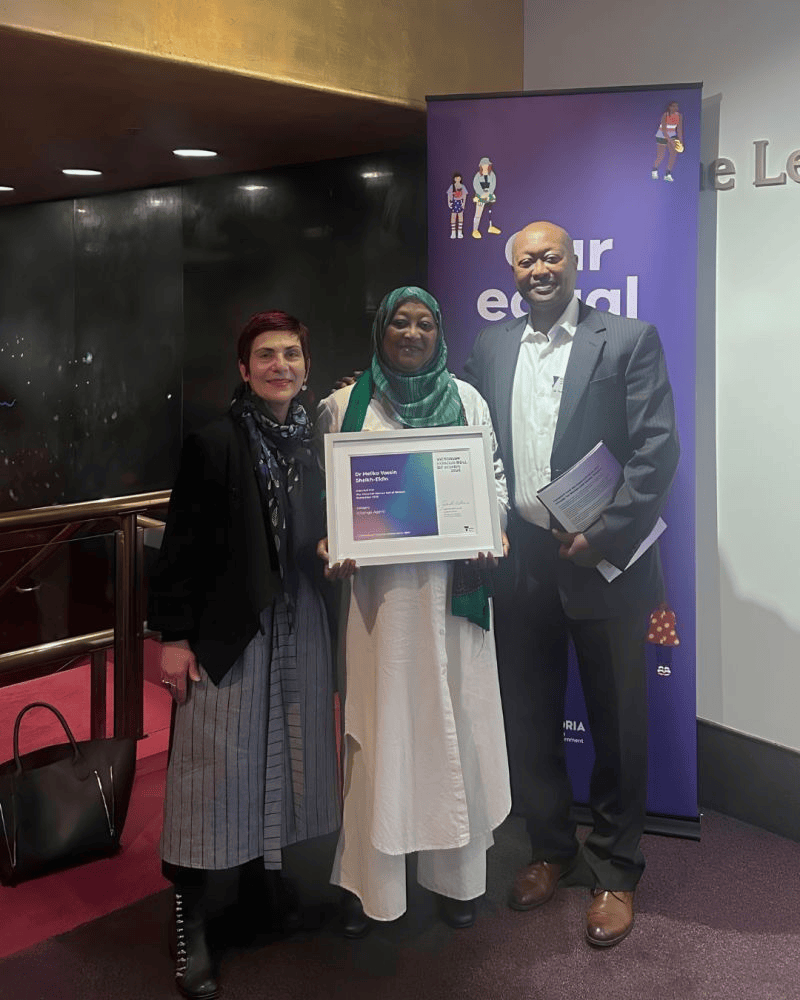
By Dhabessa Wakjira
In a moment that celebrates both personal achievement and the power of lived experience, Dr Melika Sheikh-Eldin — Manager of International and Community Development at AMES Australia — has been inducted into the Victorian Honour Roll of Women, one of the state’s most prestigious recognitions of women’s contributions to their communities and the nation.
The announcement was met with pride and joy across AMES Australia and the broader settlement sector, where Dr Melika has been a guiding force for more than two decades.
“Congratulations to Dr Melika Sheikh-Eldin, our Manager of International and Community Development, on being inducted into the Victorian Honour Roll of Women,” AMES Australia shared in a statement. “This well-deserved recognition celebrates Melika’s outstanding leadership and commitment to creating opportunities for multicultural communities.”
A Journey from Refugee to World-Leading Innovator
Dr Melika’s story is one of remarkable transformation — and of turning personal hardship into a force for systemic change. She fled war in Eritrea in the late 1970s, volunteering in Sudanese refugee camps and in Cairo for organisations including the United Nations High Commissioner for Refugees (UNHCR) , the Red Cross, and Save the Children. She resettled in Australia in 1992.
Since joining AMES Australia in 2001, she has dedicated her career to settlement, community development, capacity building, and advocacy. Her work has helped thousands of new arrivals settle successfully in Australia and has influenced settlement policy and practice both nationally and internationally.
At the Victorian Honour Roll of Women ceremony, it was recognised that Dr Melika Sheikh-Eldin has transformed her lived experience as a refugee into world-leading approaches to community integration and social cohesion.
Three World-Leading Models
Dr Melika’s impact at AMES Australia is perhaps best illustrated by the innovative programs she has led — programs that have become blueprints for others:
1. The Nhill Rural Settlement Project
In western Victoria, the small town of Nhill was facing economic decline. Dr Melika’s project settled Karen refugees in the community, revitalising the town’s economy and creating a model now considered a global blueprint for rural settlement.
2. The Werribee Park Gardening Program
Engaging isolated Karen women in gardening, this program addressed critical issues of isolation and mental wellbeing. Its success was so evident that the model has been adopted by other organisations.
3. The Community Guides Program
Perhaps her most influential innovation, the Community Guides Program recruits former refugees to use their lived experience to assist new arrivals. Dr Melika has travelled to Sweden, New Zealand, and Japan to help international organisations establish programs based on this model.
Challenging Stereotypes, Championing Two-Sided Education
Throughout her career, Dr Melika has disrupted gender stereotypes and challenged the public perception of what refugees can achieve. Central to her philosophy is the concept of “two-sided education” — the idea that both host communities and new arrivals must learn about one another for true integration to occur.
This mutual learning, she explains, helps mitigate the fear of the unknown — the anxiety that so often fuels resistance to newcomers. It is a simple but profound insight: integration is not something done to refugees, but something built with them, and with the communities that receive them.
A Scholar and a Mother
Dr Melika’s achievements are all the more remarkable given the circumstances in which she pursued them. While raising three children as a refugee in a small Australian town, she completed a PhD in aquatic science — a testament to her intellectual rigor and her refusal to be defined by the limitations others might have placed upon her.
Since 2007, she has also sat on the board of the Refugee Council of Australia and represented the nation as a “Refugee Voice” at annual UNHCR consultations in Geneva, advocating for policy shifts that recognise refugees as stakeholders rather than recipients of aid.
A Well-Deserved Recognition
The Victorian Honour Roll of Women celebrates women who have made exceptional contributions to Victoria and beyond. Inductees are recognised for their leadership, courage, and lasting impact on their communities.
Dr Melika’s induction places her among a distinguished group of women who have shaped the state’s social, cultural, and political landscape. For the Oromo community and for refugees and migrants across Australia, her recognition is a moment of immense pride.
“Congratulations, Melika. We are incredibly proud of you,” AMES Australia said. 💙
Learn More
To read Dr Melika Yassin Sheikh-Eldin’s full profile on the Victorian Honour Roll of Women, visit:
🔗 https://www.vic.gov.au/dr-melika-yassin-sheikh-eldin
#AMESAustralia #AMES #Award #VictorianHonourRoll






