Category Archives: AOD

Inside Oromia’s New Map: The Six Clusters and the Leaders Who Will Run Them
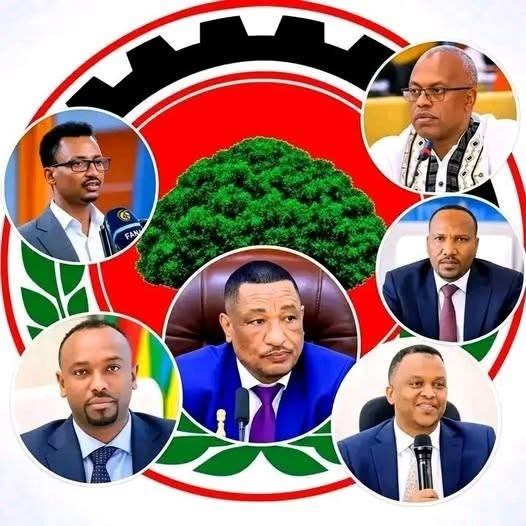
From Hararghe to Jimma, from Borana to Wollega, Oromia’s historic restructuring has redrawn the administrative landscape. Here is who leads each cluster — and which zones fall under their command
FINFINNE — Oromia has redrawn its map. In one of the most consequential administrative reforms in the region’s modern history, Ethiopia’s largest regional state has collapsed its 21 zonal administrations into six powerful clusters, each led by a chief holding the rank of deputy president.
The reform, approved by the Oromia Regional State Council during its first regular session of the seventh term, is designed to consolidate functions, eliminate duplication, and bring government closer to the people. But beyond the policy language lies a simple question every citizen wants answered: Who is in charge, and of what?
Here is the full breakdown of the six clusters, their leaders, and the zones under their authority.
1. East Oromia Cluster — Two Zones
Chief: Obbo Abdurrahman Abdalla
- Hararghe West (West Hararghe)
- Hararghe East (East Hararghe)
This eastern cluster brings together the two Hararghe zones, a region historically defined by trade routes, Islamic scholarship, and the rugged beauty of the Chercher Mountains. Its headquarters sit in the ancient walled city of Harar, with deputy offices in Chiro, Galamso, and Gurawa.
2. Southeast Oromia Cluster — Four Zones
Chief: Obbo Ahimad Haji
- Arsi
- Bale
- Arsi West (West Arsi)
- Bale East (East Bale)
Spanning the Rift Valley and the towering Bale Mountains, this cluster is one of the largest by landmass. It encompasses Ethiopia’s most productive agricultural heartlands, including the wheat fields of Arsi and the coffee and forest zones of Bale. Its administrative center is Robe, with deputy offices in Ginir, Asella, and Shashemene.
3. South Oromia Cluster — Four Zones
Chief: Obbo Ahimad Idris
- Guji
- Guji West (West Guji)
- Borana
- Borana East (East Borana)
This southern cluster stretches toward the Kenyan border and is home to Ethiopia’s most iconic pastoralist cultures. The Borana people, renowned for their gadaa system of governance — a UNESCO-recognized intangible cultural heritage — anchor this region. Its hub is Yabelo, with deputies based in Adola, Nageelle Borana, and Bule Hora.
4. West Oromia Cluster — Four Zones
Chief: Obbo Masfin Melaku
- Wollega East (East Wollega)
- Wollega West (West Wollega)
- Qellem Wollega
- Horro Guduru Wollega (Horro Guduru)
Western Oromia is gold country — literally. This cluster is home to some of Ethiopia’s richest mineral deposits, alongside vast coffee forests and fertile farmland. It is also a region that has endured significant security challenges in recent years. Its headquarters is Nekemte, with deputies in Gimbi, Shambu, and Dambi Dollo.
5. Southwest Oromia Cluster — Three Zones
Chief: Dr. Rashad Kamal
- Illu Abba Boor (Iluababor)
- Bunnoo Bedelle (Buno Bedele)
- Jimma
This cluster is the birthplace of Ethiopian coffee. Jimma, its administrative heart, is celebrated worldwide for the Arabica beans that grow in its surrounding forests. The region is also rich in history, home to the ancient Kingdom of Limmu-Ennarea and a center of Oromo scholarship and Islamic learning. Deputy offices are located in Bedele, Limmu Gannat, and Mattu.
6. Central Oromia Cluster — Four Zones
Chief: Dr. Mengistu Bekele
- Shewa East (East Shewa)
- Shewa North (North Shewa)
- Shewa Southwest (S.W. Shewa)
- Shewa West (West Shewa)
Encircling the capital, Addis Ababa, Central Oromia is the political and economic engine of the region. It includes Adama, one of Ethiopia’s largest industrial cities; Ambo, a university town known for its mineral springs; and the fertile plains of North Shewa. Its leadership is shared between Shaggar and Adama, with deputies in Waliso, Fitche, and Ambo.
A Reform Built on Coordination
Under the new structure, each cluster chief holds the rank of deputy president — a designation that signals their weight in the regional hierarchy. Alongside each chief sit two deputies: one for development, one for peace and justice. Senior advisors complete the leadership team, mirroring the executive architecture of the regional government itself.
Officials say the consolidation addresses a long-standing problem: Oromia, at over 350,000 square kilometers and more than 27 million people, was simply too vast to be governed effectively through 21 separate zones. By grouping related zones under unified cluster leadership, the government hopes to improve coordination, reduce bureaucratic overlap, and make services more accessible.
What Comes Next
The appointments are made. The headquarters are set. The structures are operational. What remains to be seen is whether the new architecture delivers on its promise — or whether it simply adds another layer of administration between the people and their government.
For now, Oromia has chosen consolidation over fragmentation. It has bet that six strong clusters will serve its people better than twenty-one scattered zones. And it has placed its trust in a new generation of leaders to make that bet pay off.
The map has changed. The work has just begun.
#Oromia #AdministrativeReform #Ethiopia

Irreechaa: A Billion Hearts, One Festival of Light
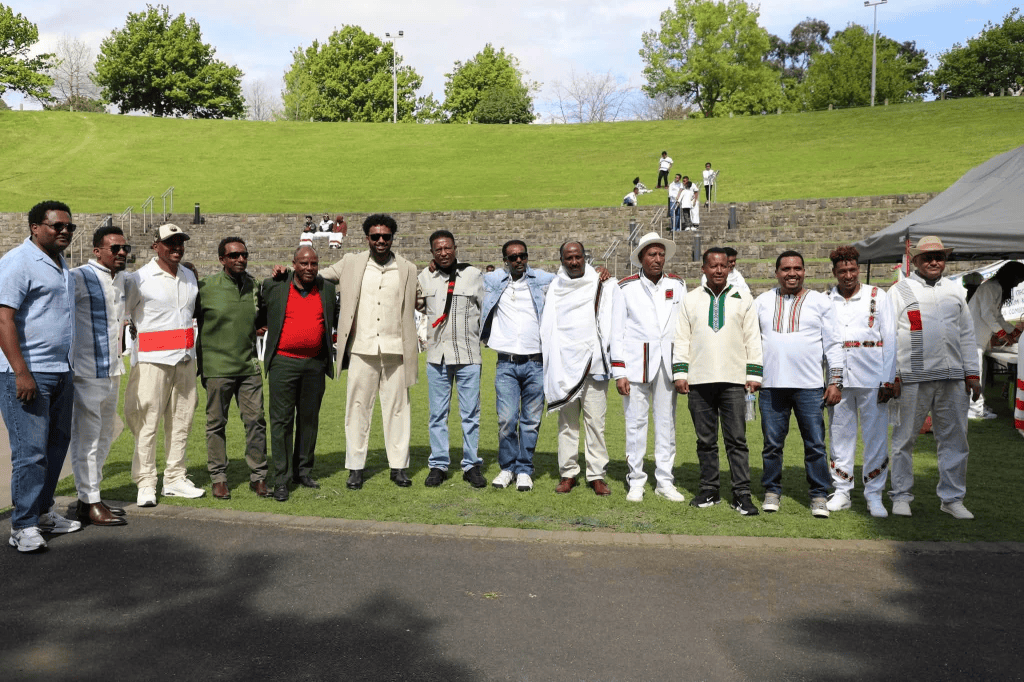
Across continents and generations, the Oromo nation celebrates the victory of light over darkness — a festival that unites, sustains, and inspires
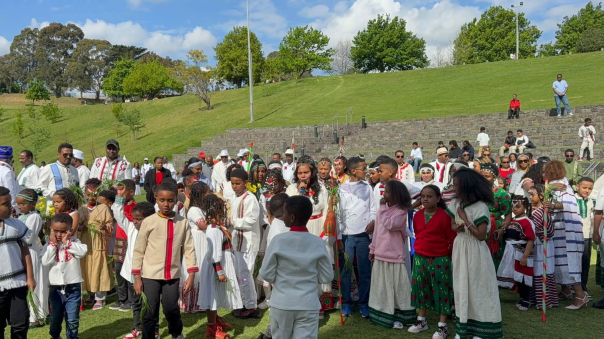
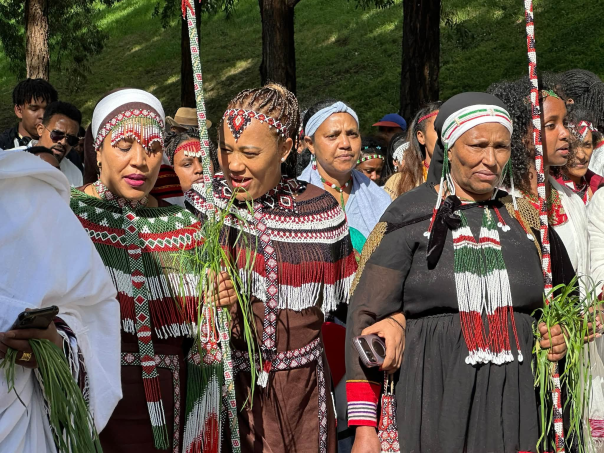
(MELBOURNE, AUSTRALIA, 27 September 2026) — This week, more than a billion people around the world are celebrating Irreechaa, the cultural festival celebrating the victory of light over darkness. It’s an important time for the Oromo nation. Across states, regions and cities, it fostered unity, sustainability, and joy, illuminating paths to prosperity and peace.
From the sacred shores of Hora Arsadi in Bishoftu to the riverbanks of the Awash, from the bustling streets of Addis Ababa to the quiet parks of Melbourne, Minneapolis, and London, the sounds of shaggooyyee and the colors of calanchi have once again filled the air. Irreechaa has returned — and with it, a message that transcends borders, generations, and circumstances.
A Festival Rooted in Gratitude
At its heart, Irreechaa is a thanksgiving. It marks the end of the rainy season and the beginning of the harvest, a moment when the Oromo people gather at the water’s edge to offer thanks to Waaqa (God) for the gift of life, fertility, and renewal. The festival is celebrated twice a year: Irreechaa Hiyyessa (the small Irreechaa) and Irreechaa Guddaa (the great Irreechaa), with the latter drawing millions to sacred sites across Oromia and beyond.
But Irreechaa is more than a ritual. It is a philosophy. The triumph of light over darkness is not merely a seasonal metaphor — it is a declaration of hope. It reminds us that even after the longest night, the sun rises. Even after the heaviest rain, the land blooms. Even in the face of adversity, a people united by faith and tradition can find their way forward.
Unity Across Divides
This year’s celebrations carried particular weight. In a world often divided by politics, religion, and geography, Irreechaa stood as a powerful counter-narrative. In cities across Ethiopia and the diaspora, people of all ages, backgrounds, and walks of life gathered side by side. Elders passed down blessings. Mothers sang songs of gratitude. Children danced in celebration. And for a moment, the divisions that so often define modern life seemed to dissolve.
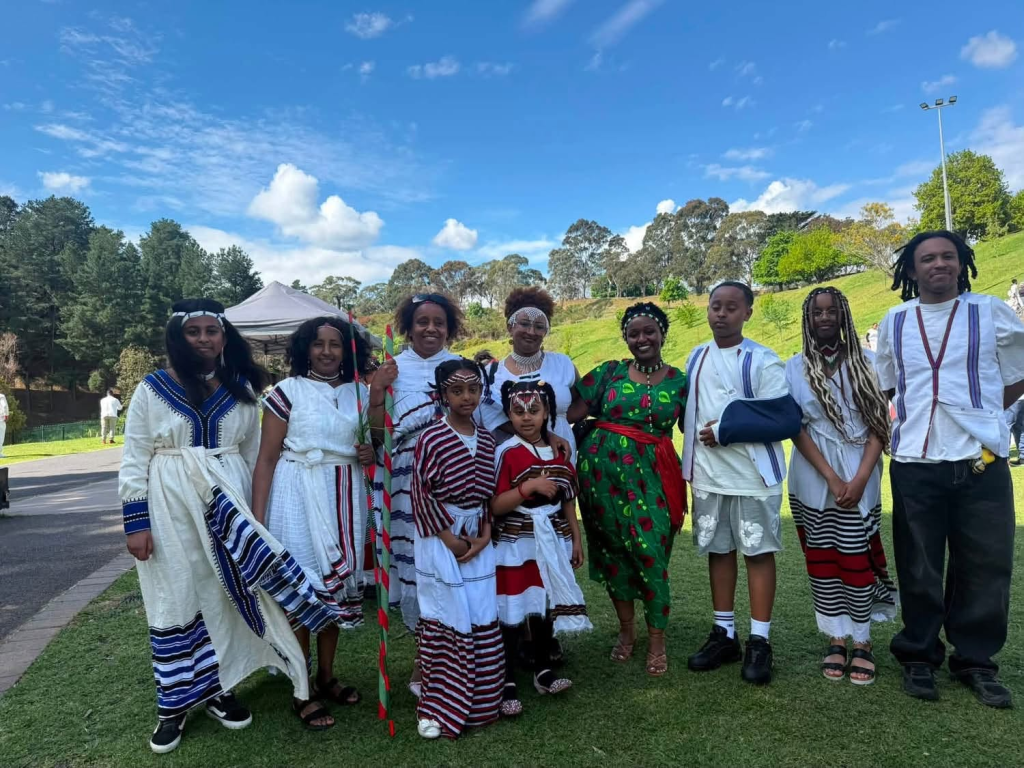
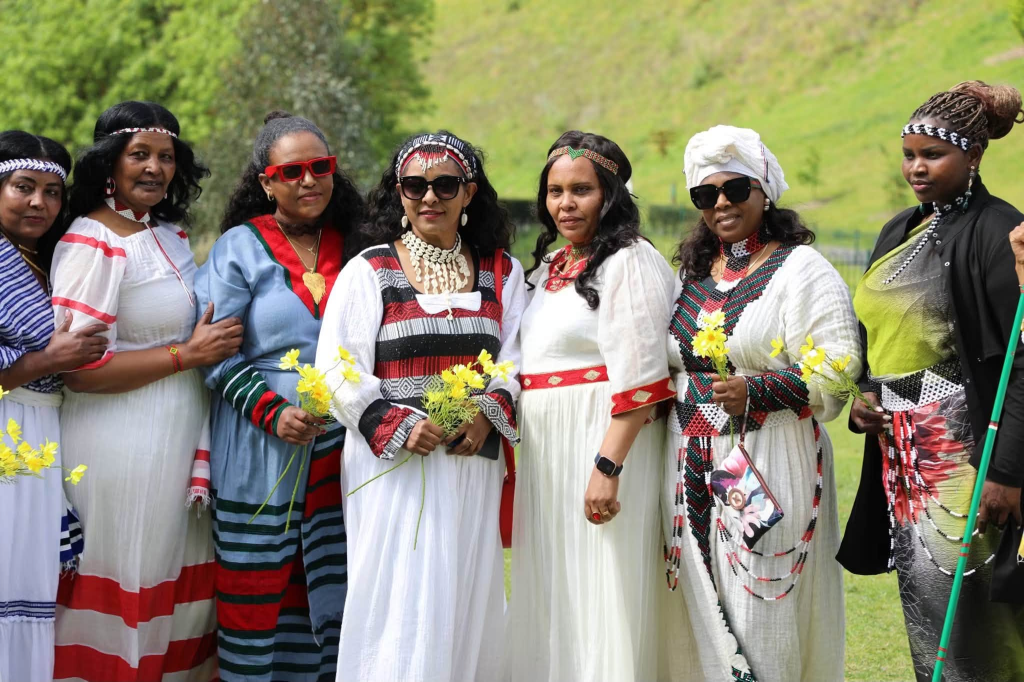
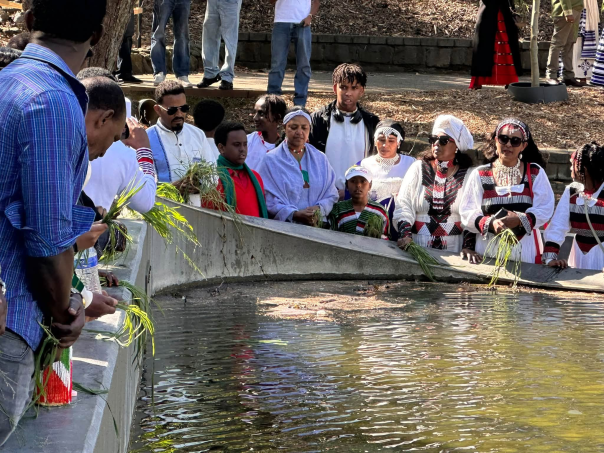
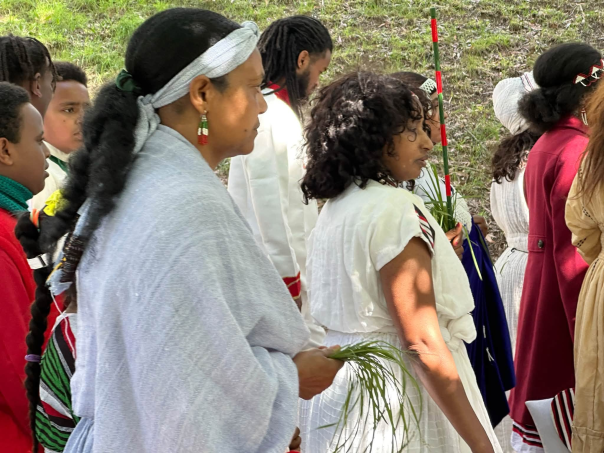
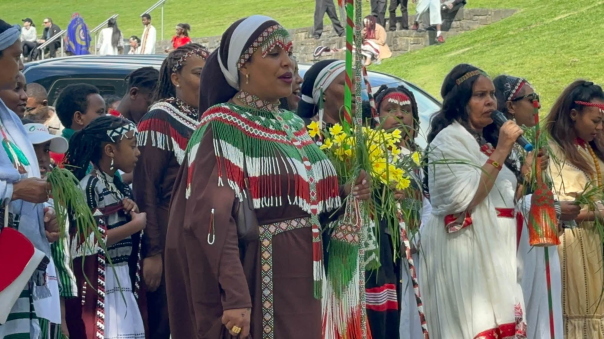
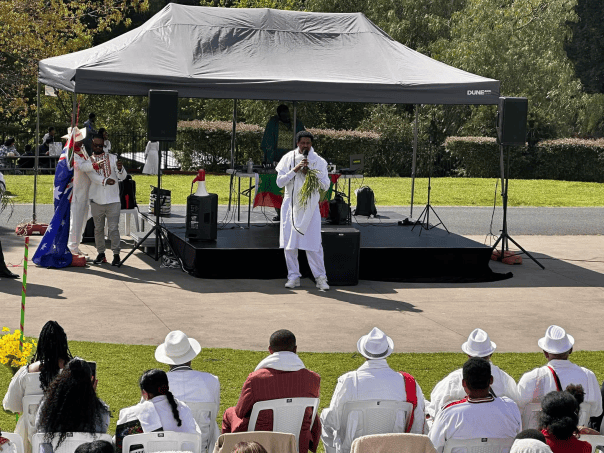
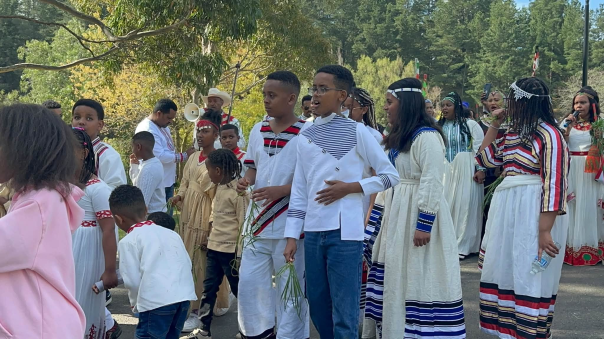
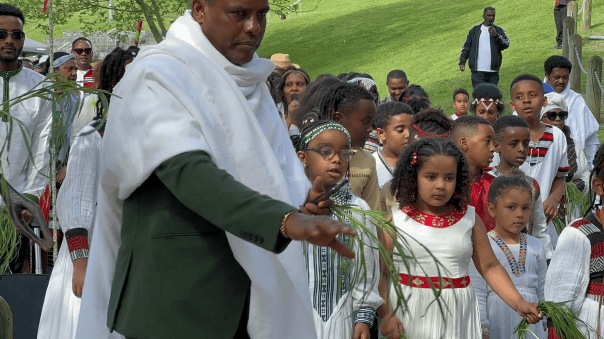
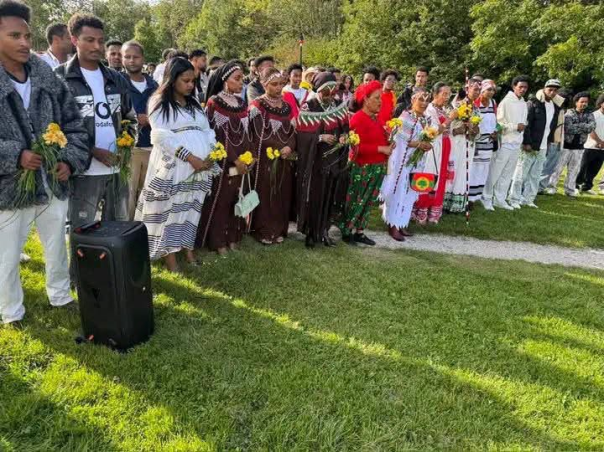
In Melbourne, where the Oromo community has grown into a vibrant and organized presence, Irreechaa was celebrated with the same reverence as it is in the homeland. Families dressed in traditional wandaboo and uffannaa aadaa, exchanged greetings of “Happy Irreechaa!” and shared meals that tasted of home. The event was a testament to the resilience of a people who, even thousands of miles from their ancestral land, refuse to let their culture fade.
Sustainability: A Legacy of Respect for the Earth
Irreechaa is also a reminder of humanity’s relationship with nature. The festival is intrinsically tied to the land, the rivers, and the changing seasons. It teaches that gratitude must be accompanied by stewardship — that the earth is not ours to exploit but to protect.
In an era of climate crisis, this message could not be more urgent. The Oromo people’s reverence for water, land, and life offers a model of sustainability that the world would do well to heed. Irreechaa is not just a celebration of what we have received; it is a commitment to preserve it for those who come after us.
Joy as Resistance
Perhaps most powerfully, Irreechaa is a celebration of joy. In a world that often demands we focus on what divides us, the festival insists on what unites us. It is a reminder that joy is not frivolous — it is revolutionary. To celebrate in the face of hardship is to declare that hardship will not have the final word.
The images emerging from this year’s celebrations tell that story. A grandmother teaching her granddaughter the steps of a traditional dance. A young man helping an elder across the river. A group of friends laughing as they share a meal under the open sky. These are the moments that define Irreechaa. These are the memories that will be passed down.
Illuminating Paths to Prosperity and Peace
As the celebrations draw to a close, the message of Irreechaa lingers. Light has triumphed over darkness. Gratitude has triumphed over despair. Unity has triumphed over division.
For the Oromo nation, Irreechaa is not just a festival — it is a compass. It points toward a future built on peace, prosperity, and mutual respect. It reminds us that the path forward is illuminated not by the brightness of any single star, but by the collective light of a people who refuse to be extinguished.
And as the sun rises on another year, that light shines on — in Bishoftu, in Melbourne, in Minneapolis, and in every corner of the world where the Oromo spirit lives.
Baga Irreechaa Nagayaan Geessan! Baga Bara Haaraa Geessan!
May the light of Irreechaa guide us all toward a year of peace, unity, and abundance.
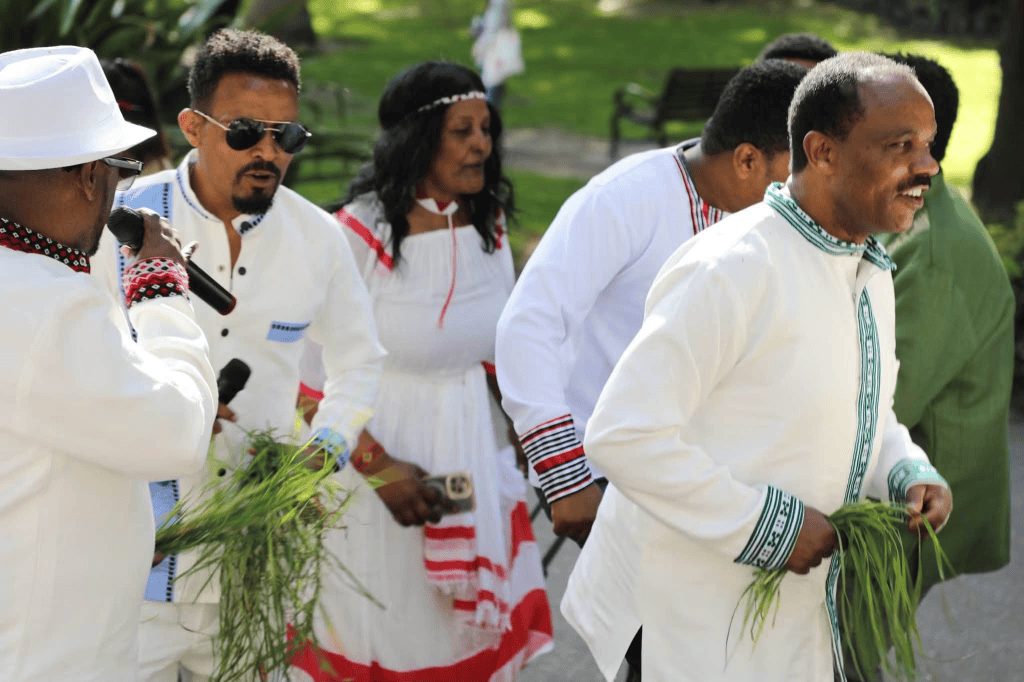
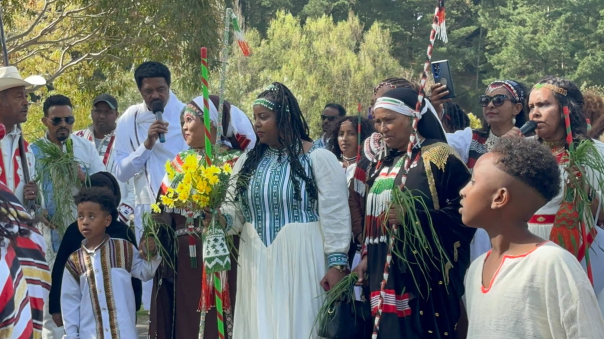
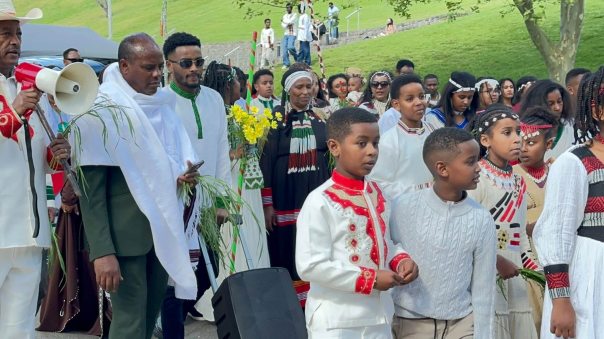
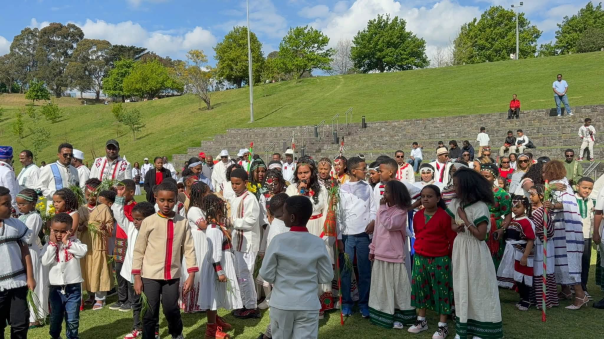
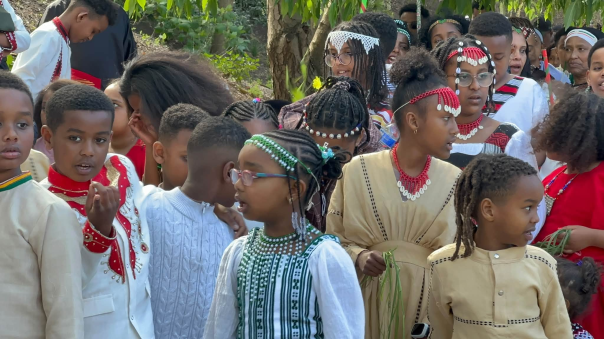
Irreechaa: A Living Memory Across Generations
“Irreechaa waggaatti naanna’e dhufa; ayyaana kana irratti yaadannoo barayyuu jiraatu dhalootaaf kahanii darbuu waanti fakkaatu hin jiru.”
Irreechaa returns year after year; there is nothing that seems to pass beyond the reach of generations when the memory of this festival lives on and is preserved.
This profound truth captures the essence of Irreechaa — a festival that refuses to be confined to a single moment in time. It is a celebration that travels with its people, crossing rivers, mountains, and oceans, carrying with it the sacred duty of remembrance.
A Festival That Travels With Its People
Irreechaa is more than a thanksgiving ceremony. It is a living testament to the resilience, faith, and unity of the Oromo people. Celebrated at the banks of rivers and lakes, it marks the transition from the rainy season to the harvest, a moment of gratitude to Waaqa (God) for the blessings of life, fertility, and community.
But when Irreechaa travels — as it has with the Oromo diaspora to cities like Melbourne — it does not lose its meaning. Instead, it multiplies. Each celebration in a new land becomes a bridge between the homeland and the heart, between ancestors and descendants, between memory and hope.
Melbourne: A New Chapter in an Ancient Story
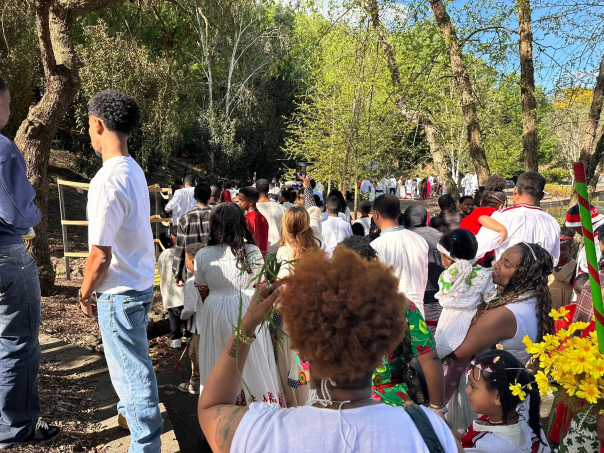
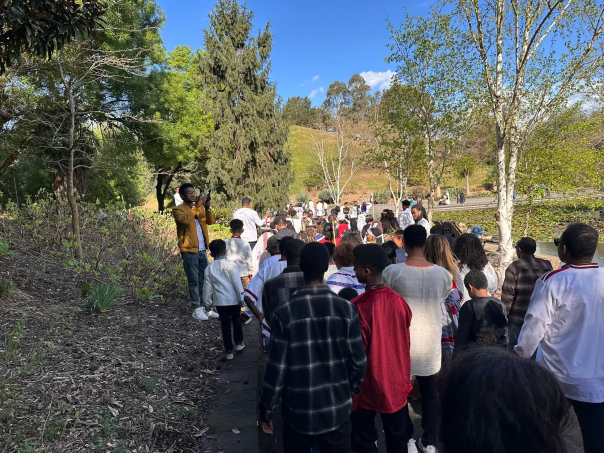
The Irreechaa celebrations in Melbourne are a vivid reminder that distance does not diminish devotion. Under the open sky of a foreign land, Oromo families gather in their traditional attire, sing songs of praise, and perform the sacred rituals that have been passed down for centuries. The colors of the calanchi and the rhythm of the shaggooyyee echo the same spirit that fills the banks of the Hora Arsadi and the Awash River.
These gatherings are not merely cultural events; they are acts of survival. They are declarations that no matter where life takes a people, their identity remains rooted in their traditions.
The Power of Shared Memories
“Suuraalee Irreechaa Melbourne kana waliif qooduunis yaadannoo keenyatti lubbuu haa horru!”
Sharing the photos of this Irreechaa in Melbourne breathes life into our memory!
In the age of digital connection, every photograph, every video, every shared post becomes a vessel of memory. When we share these images, we are not simply documenting an event — we are breathing life into our collective story. We are telling the next generation: This is who we are. This is where we come from. This is what we carry with us.
For those who could not attend, these shared moments become a lifeline. For those who were present, they become anchors of joy. For those yet to be born, they become a legacy.
A Call to Keep the Flame Alive
We extend our deepest gratitude to Yadeta Lemu, Kasahun Soboka, Aliye Geleto, Dhabessa Wakjira, and Yadesa Bedhasa for their dedication in capturing and sharing the spirit of Irreechaa Melbourne. Their efforts ensure that the memory of this celebration does not fade with time but grows stronger with each passing year.
Their work reminds us that preserving culture is not a passive act. It requires effort, commitment, and love. It requires people who understand that when we share our traditions, we are not just looking back — we are building forward.
Conclusion: Irreechaa as a Bridge
Irreechaa is a bridge. It spans the distance between generations, between homelands, between hearts. It teaches us that as long as we remember, we are never truly far from home. As long as we celebrate, we are never truly alone.
So let us continue to share. Let us continue to remember. Let us continue to breathe life into our memories — for in doing so, we ensure that Irreechaa will indeed return, year after year, carrying our stories to generations yet to come.
Irreechaa fi yaadannoo keenya — dhalootaaf kahanii darbuu hin danda’u!
Irreechaa and our memory — they cannot pass beyond the reach of generations!

The Legacy Written in Blood and Bone: Three Historical Moments When Oromos Refused to Be Divided by Religion
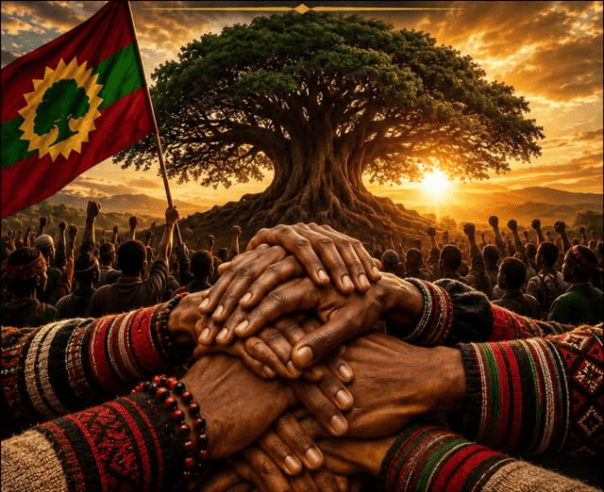
When the executioners thought faith could split them, they chose the same name: Oromo.
In Oromo collective memory, three moments spanning half a century—from 1966 to 2016—are repeatedly told, sung, and etched into stone. They occurred in different eras, different places, with participants from different generations. Yet their inner logic is strikingly identical: whenever external forces tried to tear Oromo unity apart using religious identity, someone always stood up and proved with their life that “Maqaa amantaan gargar hin baanu”—the name is not divided by faith.
From Arsi to Shinnigaa, and then to Bishooftuu, three locations form a blood-red thread, telling the story of how an oppressed people forged “refusal to be divided” into the core of their identity.
Arsi: The Resurrection of a Name
In 1966 Ethiopia, publicly using the word “Oromo” was itself a dangerous provocation. The empire’s narrative machine had erased the name from official discourse, replacing it with derogatory labels. It was precisely in this era that an Islamic scholar named Ahmed Taqi Sheikh Mohammed Rashid made a decision that would change the trajectory of history.
Taqi, later known as “Hundee” (meaning root or foundation), was born into a family of Islamic scholars in Harargee. He studied the Qur’an, Hadith, and Oromo history from childhood. By his early twenties, he was a successful merchant, but what truly defined him was his encounter with General Tadesse Birru, founder of the Macha-Tulama Self-Help Association. After Tadesse was placed under house arrest in Galamsoo, Taqi befriended him and began spreading an idea that was nearly heretical at the time: being Oromo was not a curse but a virtue worth loving.
In 1966, Taqi and Elemo Qiltu—another revolutionary who had returned from Syria—launched an armed struggle in the Guba Koricha mountains. This was the starting point of the modern Oromo national liberation movement. Their organization had no religious threshold, no sectarian conditions. Muslim scholars and Christian warriors fought under the same banner.
On September 6, 1974, Taqi and Elemo were executed in Hirroo. But the resurrection of a name had already become irreversible. The singer Ali Birra, with the help of Abubakar Musa, set Taqi’s memory to music in “Yaa Hundee Bareedaa” (Beautiful Hundee). The song played on radio, was sung at weddings, and hummed at funerals. Taqi’s “root” sank into the deepest layers of Oromo mass consciousness—a consciousness shared by Muslims, Christians, and Waaqeffataa alike.
Shinnigaa: Refusing to Separate at the Edge of the Pit
If 1966 planted the seed, then 1980 was its most tragic flowering.
On April 15, 1980, eleven top leaders of the Oromo Liberation Front were ambushed by Somali militia in Shinnigaa (located in the Ogaden region). This was not a chance encounter—they were captured alive. The militia dug a large pit, then did what they thought was the most lethal thing: they classified the prisoners by religion.
“You see,” a commander reportedly told the bound prisoners, “you fought together. But you will die separately. Let each one pray to his own god before falling into the pit.”
The executioners expected fear. They expected a scramble for last rites. They expected a tiny fracture that would prove the Oromo cause was nothing but a lie.
The answer they received came from Jar Magarsa Bari, then chairman of the OLF. He did not ask for a priest, did not ask for a Sheikh. He turned to his comrades and spoke the words that would later be repeated countless times:
“Maqaa amantaan gargar hin baanu. We do not divide the name by religion. Dig the pit wider, or throw us in together. We are Oromo first.”
Eleven men—Chairman Barisoo Wabee, Vice Chairman Gadaa Gamada, Abbaa Shikii, Dori Bari, Farmata, Fafam Doyo, Ilana Kachale, Dhadhacho Boruu, Dhadhacho Murata, Mari Galaan—arms bound together, stepped forward. According to Oromo oral tradition, Gadaa Gamada turned to the executioners and smiled: “You want to see us pray? Watch this.”
This day was written into history. Not as a massacre, but as an oath.
Bishooftuu: Another Generation’s Choice
Thirty-six years later, the same scene played out with almost identical logic.
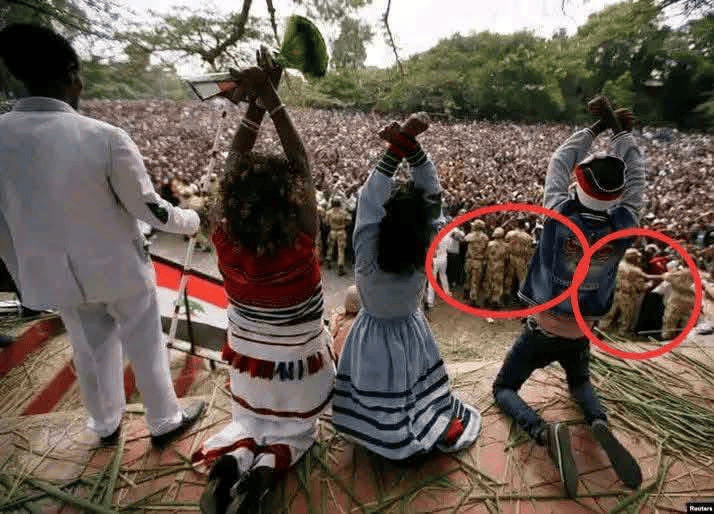
2016, Bishooftuu-Harsadi. A new wave of Oromo protests was sweeping across the region, triggered by the so-called “Addis Ababa and Surrounding Oromia Master Plan”—a plan widely seen as an attempt to annex Oromo land. Young activists known as “Qeerroo” confronted security forces in city streets and rural roads.
In Bishooftuu, a group of Oromo youth were surrounded. According to circulated accounts, security forces once again tried to exploit religious identity—separating Muslims from Christians, persuading some to deny their Oromo identity in exchange for their lives. The result was refusal once again.
They died together, buried in the same place. Their names were repeatedly invoked by Oromo social media, poetry, and song. They became “utubaa eenyummaa”—pillars of identity.
Oromo activists framed this event as “dying for Oromo identity, refusing to be divided by religion.” The words spoken at Shinnigaa thirty-six years earlier were re-spoken with bodies by a new generation at Bishooftuu.
Why This Matters
These three events—Arsi, Shinnigaa, Bishooftuu—form a clear pattern. Religion is indeed a real line of difference within Oromo society. Arsi Oromos are predominantly Muslim, partly because in the nineteenth century they chose Islam as a cultural fortress against Amhara Orthodox colonial conquest. The Orthodox Church’s role in Oromo territories was tightly bound to conquest: priests arrived alongside Menelik’s generals, “blessed” massacres, and then received land and serfs. Thus religious difference in Oromo society is not a small matter—it carries the full weight of colonial violence history.
Precisely because of this, external forces repeatedly tried to exploit this fracture. The Somali militia of 1980 tried. The security forces of 2016 tried. Each time, they lost.
But the reason they lost is not that religious differences didn’t exist. The reason is that Oromo nationalism, in its most decisive figures, developed a priority that transcends religion: We are Oromo first. This is not a denial of faith but an insistence on order. When the core logic of oppression is the denial of your very existence, any internal division that makes that oppression more effective is betrayal.
The eleven at Shinnigaa did not become “Muslim martyrs” and “Christian martyrs.” They became one thing: Oromo martyrs. The youth of Bishooftuu likewise.
“Seenaa keenya keessatti barayyuu cululuqee jiraata”
Those who wanted to bury them failed to understand one fundamental thing: a people who refuse to be divided have found something stronger than death. The pit at Shinnigaa did not end Oromo unity—it became a monument to unity. The repetition at Bishooftuu did not prove that history repeats—it proved that memory endures.
From the moment Taqi and Elemo raised weapons in 1966, to the afternoon of 1980 when eleven men walked arm-in-arm to the edge of the pit, to the streets of Bishooftuu in 2016, what runs through it all is not an abstract slogan but a concrete, testable promise: When others try to kill you using the differences within you, you choose to define yourself by what you share.
This choice has been remembered. Has been sung. Has been re-lived with life after life by generation after generation.
“Seenaa keenya keessatti barayyuu cululuqee jiraata”—in our history, it lives forever, shining.

Irreechaa in Edmonton: How One Diaspora Community Turned a Sacred Tradition into a Recognized Civic Celebration
By Daandii Ragabaa
EDMONTON, Alberta — When the Oromo community of Edmonton gathered for Irreechaa Malkaa this year, they were not simply marking a religious holiday. They were making a statement — to themselves, to their children, and to the wider Canadian society — that Oromo culture, identity, and heritage deserve to be seen, respected, and celebrated at the highest levels of public life.
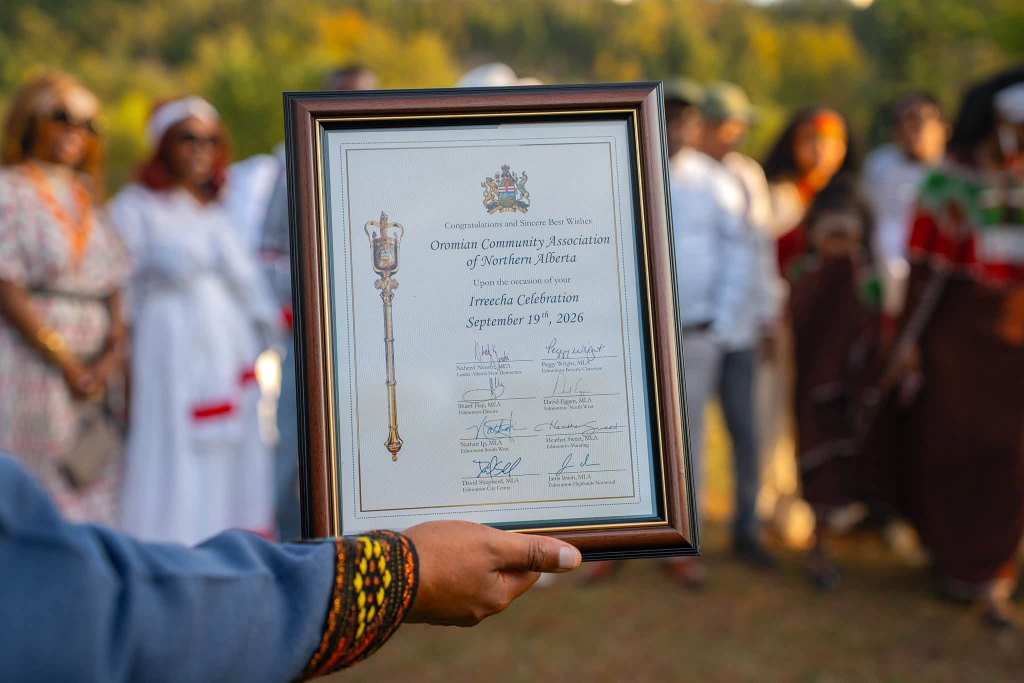
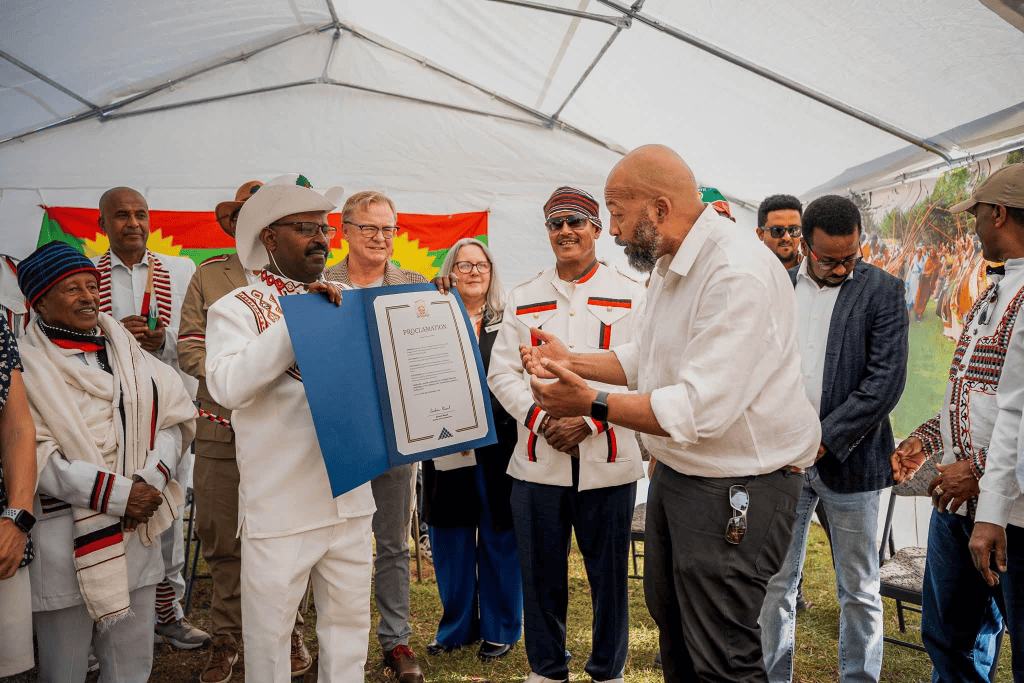
The celebration, held a week ago, was honored with an official Certificate of Recognition from the Government of Alberta, presented by representatives of the city and the provincial and federal governments who stood alongside the Oromo community in celebration. The recognition was not a casual gesture. As the community noted, this acknowledgment did not come easily or by accident. It was the result of years of persistent advocacy and grassroots organizing.
A Celebration That Speaks for Itself
The symbolism of Irreechaa is powerful, and the Edmonton community was intentional about ensuring it was understood. Irreechaa is not simply a “Thanksgiving” festival. It is rooted in Waaqeffannaa, the traditional Oromo belief in one God, and in the Gadaa system — the ancient democratic governance structure that UNESCO has recognized as Intangible Cultural Heritage.
For Oromos in the diaspora, Irreechaa is a spiritual act of gratitude to Waaqa for the blessings of the past year, a moment of reconciliation, and a prayer for peace in the year ahead. It is also a public declaration of identity — a refusal to be invisible.
As the community statement put it, the presence of elected officials and the presentation of the certificate of recognition was not simply an act of kindness by those in power. It was the product of sustained effort and organized advocacy by OCANA (the Oromo Community Association of Northern Alberta) and the broader Oromo community of the region.
The Leadership Behind the Recognition
The statement is clear that this achievement belongs to the community’s leadership and its collective will. “For our culture to flourish, for Oromos to be honored, and for Oromia to be viewed as a nation, the leadership of the Oromo Community Association of Northern Alberta played a lion’s share — and this is where it came from.”
That acknowledgment matters. In diaspora communities, recognition rarely arrives on its own. It must be cultivated — through relationship-building with local governments, through participation in multicultural events, through education, and through the persistence of community organizations.
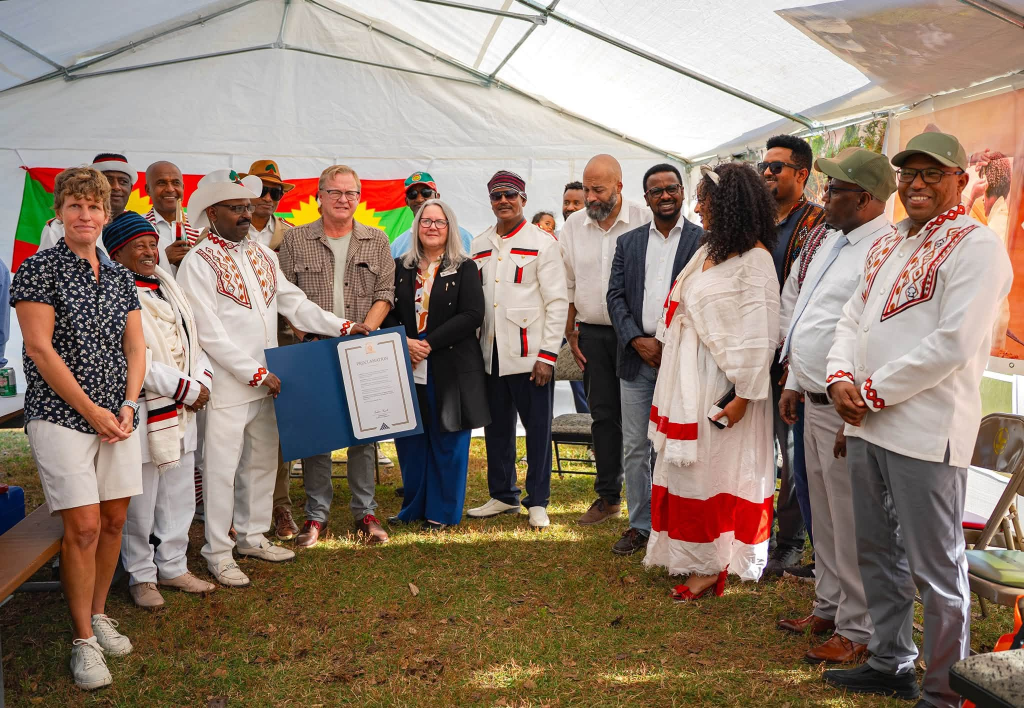
A Model for Others
The Edmonton community also highlighted a striking achievement: at God-Hambaalee Edmonton, one of the city’s major multicultural festivals featuring over 90 countries, Oromia participated as a nation in its own right — complete with its own displays and presentations, which finished among the top ranks of participants.
For a community whose homeland has often been marginalized, denied recognition, and subjected to systemic oppression, this is no small thing. It is a reversal of the invisibility that has too often been imposed on Oromo people.
The statement also noted that many multicultural associations exist across Canada, but none has demonstrated the same strength, diplomatic skill, and ability to articulate the Oromo experience as this one. The community did not celebrate in isolation — it celebrated in public, with recognition, and with dignity.
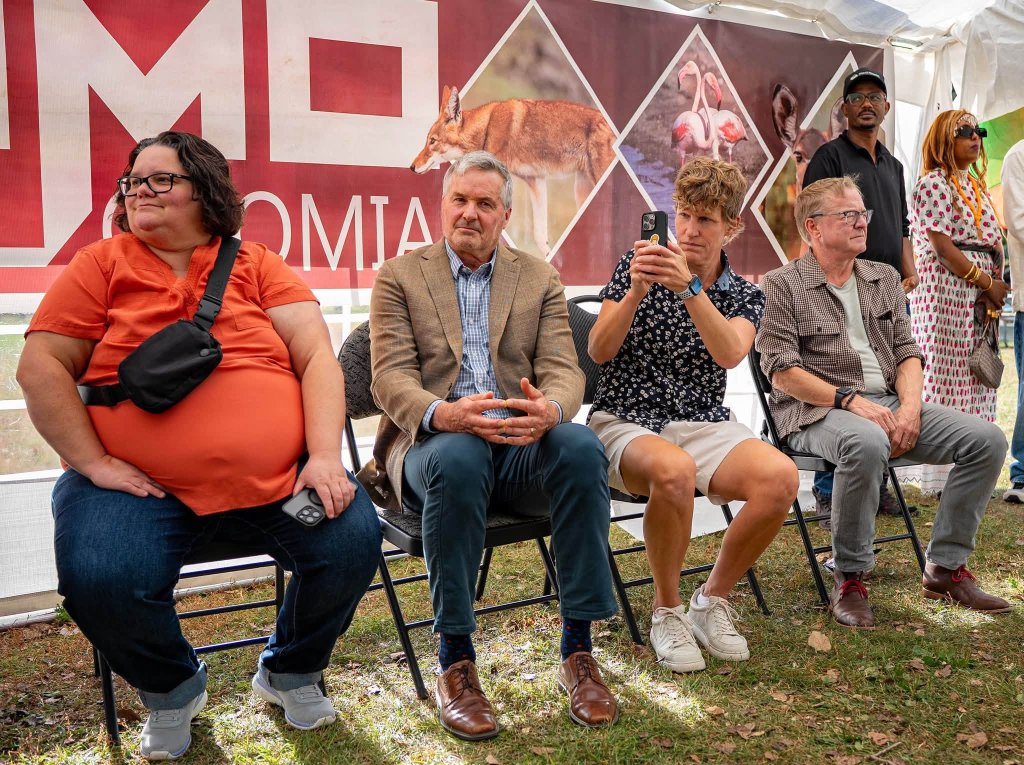
Gratitude and Looking Forward
The message closes with gratitude — to the Oromo community of the region, to OCANA’s leadership, and to everyone who contributed to making Irreechaa 2026 a success. It also issues a challenge to other Oromo communities: learn from this example. The community intends to build on this momentum, and future plans are already taking shape.
To those who are honoring their country and culture, the community offers its blessing: Irreecha milkii — may your Irreechaa be fruitful and blessed.
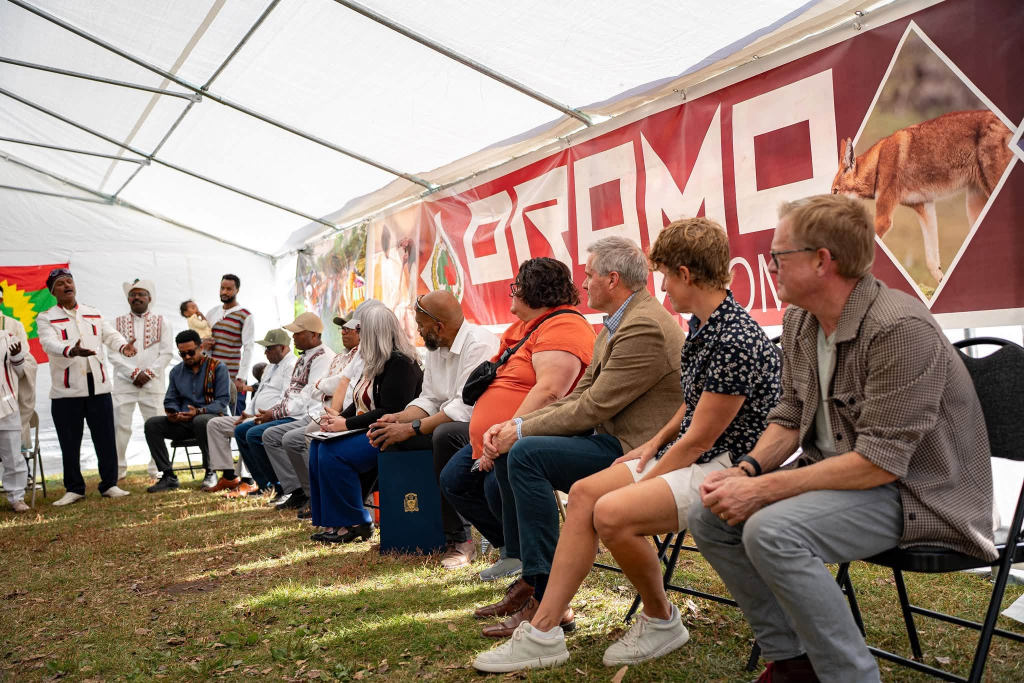
Why This Matters
Irreechaa in Edmonton is not just a local story. It is a template for how diaspora communities can transform sacred traditions into civic recognition — without compromising the spiritual essence of the festival. It shows that cultural preservation and public engagement are not mutually exclusive. And it demonstrates that when a community organizes, advocates, and speaks with one voice, governments listen.
For Oromos across Australia, North America, Europe, and beyond, the Edmonton example offers both inspiration and a challenge: celebrate proudly, organize strategically, and ensure that Irreechaa is not only a memory carried from home, but a living tradition recognized by the nations in which it is celebrated.
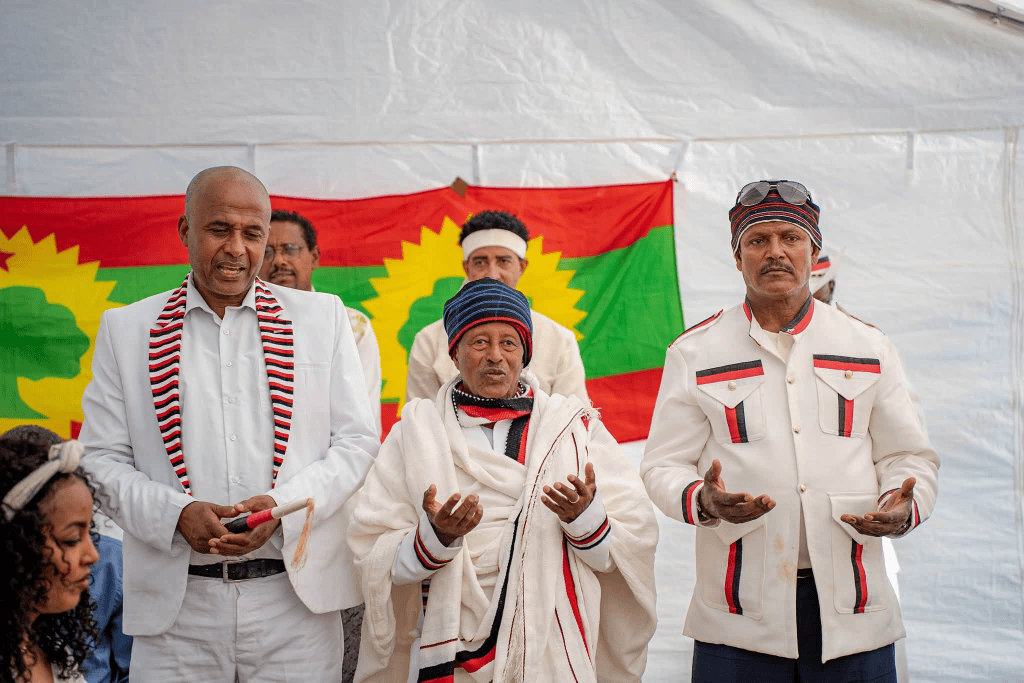
Baga Irreecha milkiin geessan!
#Irreecha_Edmonton #Irreechaa #Oromo #Oromia #OCANA #Edmonton #Alberta #Diaspora #CulturalHeritage #Waaqeffannaa #Oromummaa

Irreechaa Birraa Celebrated in Amsterdam as Diaspora Reaffirms Identity and Tradition
Where the Oromo Are, There the Oromo Order Thrives
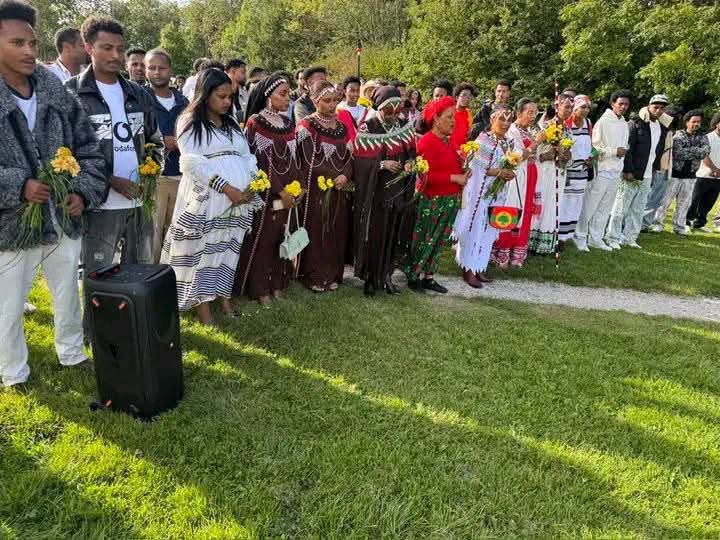
Amsterdam — Under the gray autumn skies of the Dutch capital, a sea of white, green, and yellow transformed Gaasperplas into a sacred Oromo landscape on Saturday, September 26, 2026. The Oromo community of the Netherlands gathered for Irreechaa Birraa, the ancient thanksgiving festival marking the end of the dark rainy season and the arrival of spring, in a powerful display of cultural continuity far from the Horn of Africa .
The celebration, organized by Hawaasa Oromo Nederland, drew Oromo families from across the Netherlands and neighboring European countries. Women in traditional dresses carried fresh green grass and yellow daisies; elders led prayers in Afaan Oromoo; and the sound of faaruu—traditional songs of gratitude—echoed across the park grounds .
For the Oromo diaspora, Irreechaa is more than a festival. It is a living declaration that the Oromo system—the sirna Oromoo—endures wherever the Oromo people are.
A Nation of Greatness
The Oromo are the largest ethnic group in Ethiopia and the Horn of Africa, numbering tens of millions and inhabiting a vast territory stretching from the central highlands to the southern lowlands . Their language, Afaan Oromoo, belongs to the Cushitic branch of the Afro-Asiatic family, and their traditional governance system, the Gadaa, was recognized by UNESCO as an Intangible Cultural Heritage of Humanity .
But numbers alone do not capture the depth of Oromo civilization. The Oromo possess a comprehensive philosophical and legal framework—safuu—that governs relations between humans, between humans and the natural world, and between humanity and the divine . Safuu establishes boundaries, rights, and responsibilities; it teaches that every created thing has its proper place and that violating these boundaries invites aadmalee—a profound moral transgression .
Central to this system is the land itself. For the Oromo, the earth is not merely property. She is haadha waan hunda—the mother of all things . Among the Boorana Oromo, the land is called Baattoo, a name that evokes her role as the sustainer who carries all life, both good and evil, upon her back . To farm sacred land—mountain slopes, water sources—without proper ritual is not merely an agricultural decision; it is a spiritual violation.
The Oromo are a people of profound religious tradition. Waaqeffannaa, the Oromo religion, worships one God—Waaqa—through a complex system of ayyaana, spiritual intermediaries who convey human needs to the Creator . The Oromo do not see themselves as a people without faith; they see themselves as a people with a very old faith, one that predates the arrival of Christianity and Islam in their lands.
Irreechaa: The Heartbeat of Oromo Life
No single institution better embodies the Oromo system than Irreechaa. Celebrated at the end of the rainy season (Ganna) and the beginning of spring (Birraa), Irreechaa is a national thanksgiving, a collective prayer of gratitude to Waaqa for protection, harvest, and peace .
The festival is celebrated in two principal forms. Irreechaa Malkaa takes place at the edges of rivers and lakes, where participants dip green grass and flowers into the water, sprinkling themselves as a symbol of purification and renewal . Irreechaa Tulluu is celebrated on hilltops, where the community gathers to pray for rain, fertility, and the well-being of the people . The largest celebrations occur at Hora Finfinne in Addis Ababa and Hora Arsadi in Bishoftu, where millions of Oromo gather each year—making it one of the largest annual human gatherings on the African continent .
The rituals of Irreechaa are rich with symbolism. Green grass represents life and fertility. Yellow daisies represent the joy of survival. Water represents purification and the washing away of hardship. The procession itself—elders leading, women walking in front, youth carrying flowers—is a living map of the Gadaa system’s social order .
Critical to Irreechaa is the requirement of reconciliation. A person carrying a grudge, a dispute, or an unresolved conflict is not permitted to participate fully in the festival . This is not merely a social nicety; it is a profound statement of the Oromo moral order. One cannot approach the sacred with a heavy heart. One cannot give thanks while holding anger. The Oromo system insists that gratitude and grievance cannot coexist.
The Diaspora Embraces the System
In Amsterdam, these traditions were not merely remembered—they were practiced. The Gaasperplas celebration followed the traditional structure: opening prayers led by community elders, a procession toward the water’s edge, the dipping of grass and flowers, and the sharing of food and coffee in a spirit of communal joy .
For diaspora Oromos, Irreechaa serves as a vital cultural anchor. In a world where the pressures of assimilation and the distance of migration threaten cultural continuity, Irreechaa is a reminder that the Oromo system is portable. It travels across oceans. It survives in new climates and new languages. It does not require the soil of Oromia to flourish—only the hearts of Oromo people who refuse to forget .
Community organizers emphasized the importance of the festival for younger generations. For Oromo children born in Europe, Irreechaa may be one of the few spaces where they hear prayers in Afaan Oromoo, see traditional caaccuu and siinqee carried by women, and witness elders acting in their traditional roles as Abbaa Gadaa and Hadhasiinqee .
The siinqee—the ritual stick carried by Oromo women—is itself a powerful symbol of the Oromo system’s treatment of gender. In traditional Oromo society, the siinqee represents the sacred power of women, particularly in their roles as peacemakers and protectors of life . A man who sees the siinqee planted in the ground knows that a woman has claimed her right to be heard, to demand justice, or to stop violence. That this institution survives and is honored in Amsterdam is a testament to the depth of the Oromo system.
A System That Endures
The Oromo say: Irreechi irree keenya—”Irreechaa is our unity” . The festival is not simply a religious observance or a cultural performance. It is a political and social statement: the Oromo system, with its Gadaa governance, its safuu ethics, its ayyaana spirituality, and its seasonal rhythms, is not a relic of the past. It is a living framework that continues to order Oromo life.
In Amsterdam, that framework was visible in every aspect of the celebration. It was visible in the respect shown to elders. It was visible in the equal participation of women, whose siinqee tradition remains one of the most distinctive aspects of Oromo society. It was visible in the focus on reconciliation and peace. It was visible in the integration of prayer and communal meal, ritual and celebration, solemnity and joy.
The Oromo system does not require an army to defend it. It does not require a state to enforce it. It requires only that Oromo people continue to live it. In Amsterdam, they did.
Source: Facebook page Gudisa Barbada

A Trailblazer Honoured: Dr Melika Sheikh-Eldin Inducted into the Victorian Honour Roll of Women
By Dhabessa Wakjira
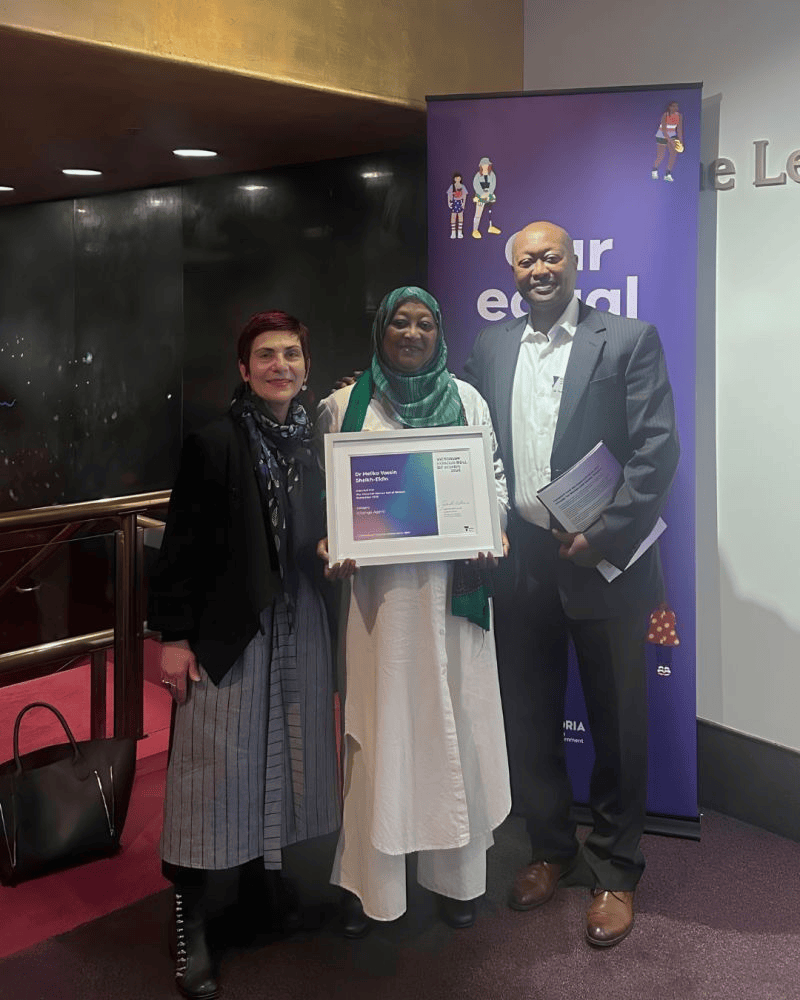
In a moment that celebrates both personal achievement and the power of lived experience, Dr Melika Sheikh-Eldin — Manager of International and Community Development at AMES Australia — has been inducted into the Victorian Honour Roll of Women, one of the state’s most prestigious recognitions of women’s contributions to their communities and the nation.
The announcement was met with pride and joy across AMES Australia and the broader settlement sector, where Dr Melika has been a guiding force for more than two decades.
“Congratulations to Dr Melika Sheikh-Eldin, our Manager of International and Community Development, on being inducted into the Victorian Honour Roll of Women,” AMES Australia shared in a statement. “This well-deserved recognition celebrates Melika’s outstanding leadership and commitment to creating opportunities for multicultural communities.”
A Journey from Refugee to World-Leading Innovator
Dr Melika’s story is one of remarkable transformation — and of turning personal hardship into a force for systemic change. She fled war in Eritrea in the late 1970s, volunteering in Sudanese refugee camps and in Cairo for organisations including the United Nations High Commissioner for Refugees (UNHCR) , the Red Cross, and Save the Children. She resettled in Australia in 1992.
Since joining AMES Australia in 2001, she has dedicated her career to settlement, community development, capacity building, and advocacy. Her work has helped thousands of new arrivals settle successfully in Australia and has influenced settlement policy and practice both nationally and internationally.
At the Victorian Honour Roll of Women ceremony, it was recognised that Dr Melika Sheikh-Eldin has transformed her lived experience as a refugee into world-leading approaches to community integration and social cohesion.
Three World-Leading Models
Dr Melika’s impact at AMES Australia is perhaps best illustrated by the innovative programs she has led — programs that have become blueprints for others:
1. The Nhill Rural Settlement Project
In western Victoria, the small town of Nhill was facing economic decline. Dr Melika’s project settled Karen refugees in the community, revitalising the town’s economy and creating a model now considered a global blueprint for rural settlement.
2. The Werribee Park Gardening Program
Engaging isolated Karen women in gardening, this program addressed critical issues of isolation and mental wellbeing. Its success was so evident that the model has been adopted by other organisations.
3. The Community Guides Program
Perhaps her most influential innovation, the Community Guides Program recruits former refugees to use their lived experience to assist new arrivals. Dr Melika has travelled to Sweden, New Zealand, and Japan to help international organisations establish programs based on this model.
Challenging Stereotypes, Championing Two-Sided Education
Throughout her career, Dr Melika has disrupted gender stereotypes and challenged the public perception of what refugees can achieve. Central to her philosophy is the concept of “two-sided education” — the idea that both host communities and new arrivals must learn about one another for true integration to occur.
This mutual learning, she explains, helps mitigate the fear of the unknown — the anxiety that so often fuels resistance to newcomers. It is a simple but profound insight: integration is not something done to refugees, but something built with them, and with the communities that receive them.
A Scholar and a Mother
Dr Melika’s achievements are all the more remarkable given the circumstances in which she pursued them. While raising three children as a refugee in a small Australian town, she completed a PhD in aquatic science — a testament to her intellectual rigor and her refusal to be defined by the limitations others might have placed upon her.
Since 2007, she has also sat on the board of the Refugee Council of Australia and represented the nation as a “Refugee Voice” at annual UNHCR consultations in Geneva, advocating for policy shifts that recognise refugees as stakeholders rather than recipients of aid.
A Well-Deserved Recognition
The Victorian Honour Roll of Women celebrates women who have made exceptional contributions to Victoria and beyond. Inductees are recognised for their leadership, courage, and lasting impact on their communities.
Dr Melika’s induction places her among a distinguished group of women who have shaped the state’s social, cultural, and political landscape. For the Oromo community and for refugees and migrants across Australia, her recognition is a moment of immense pride.
“Congratulations, Melika. We are incredibly proud of you,” AMES Australia said. 💙
Learn More
To read Dr Melika Yassin Sheikh-Eldin’s full profile on the Victorian Honour Roll of Women, visit:
🔗 https://www.vic.gov.au/dr-melika-yassin-sheikh-eldin
#AMESAustralia #AMES #Award #VictorianHonourRoll

“Welcome Home”: Artist Daawwitee Mokonnon Returns to Ethiopia After 27 Years, Received with Celebration in Bole
By Dhabessa Wakjira
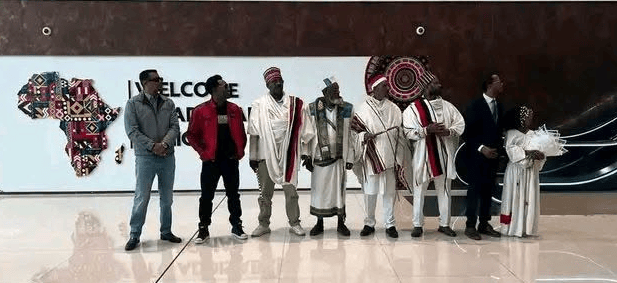
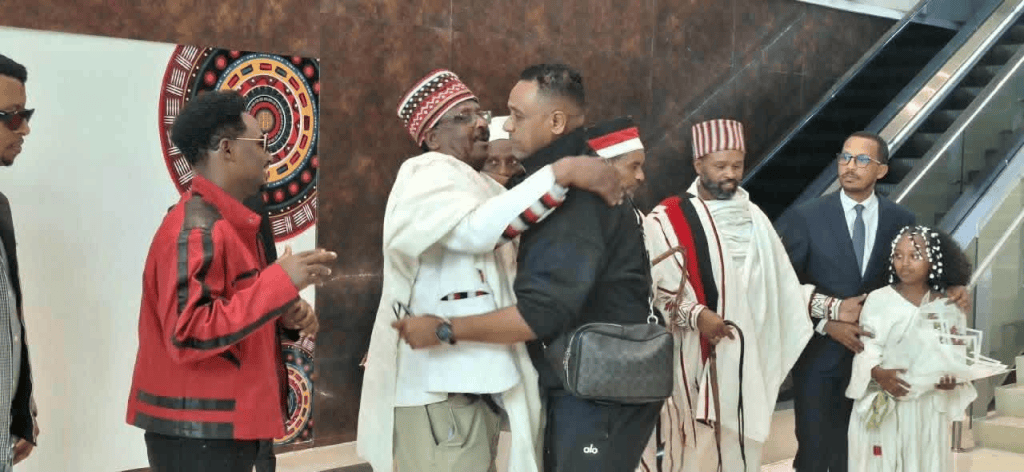
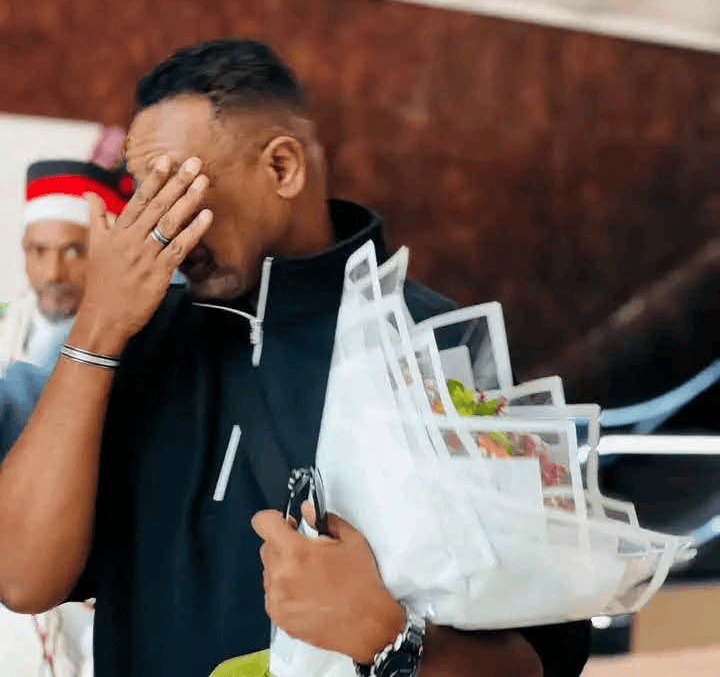
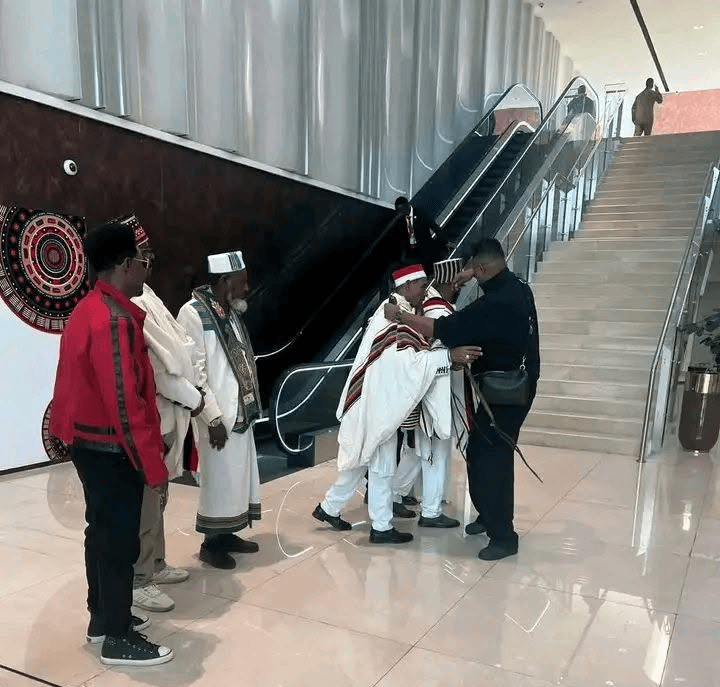
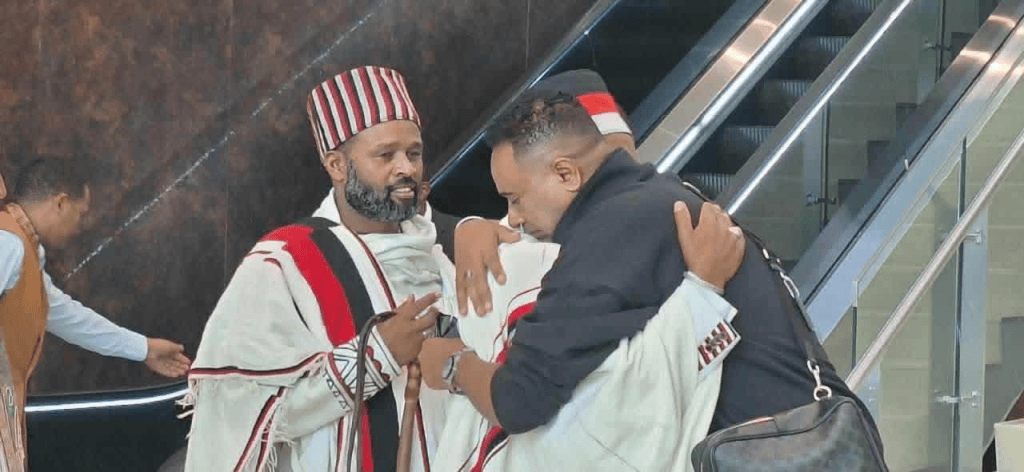
ADDIS ABABA — After 27 long years away from home, renowned Oromo artist Daawwitee Mokonnon has returned to Ethiopia. The beloved singer and cultural figure was welcomed with a warm and celebratory reception in Bole, marking an emotional homecoming that has touched the hearts of many Oromos at home and abroad.
“Baga nagaan gara biyya abbaaketti galte!” — “Welcome back to your fatherland!” — read the message shared by the Oromia Communication Bureau, capturing the joy and relief that accompanied him return.
A Long Journey Home
Twenty-seven years is a lifetime. For Daawwitee Mokonnon, those years were spent in exile — far from the land, the people, and the culture that shaped him art and his identity. His music, however, never left. Throughout him time abroad, his voice remained a powerful thread connecting the Oromo diaspora to their homeland, a source of comfort, pride, and remembrance for millions.
Now, that thread has come full circle. His return is not merely a personal milestone; it is a symbolic moment for the Oromo people — a reminder that distance, however long, cannot sever the bond between an artist and his nation.
A Reception Fit for a Cultural Icon
The reception in Bole was filled with the warmth and reverence befitting an artist of his stature. Community members, fellow artists, and admirers gathered to welcome him back, celebrating not only his return but also the decades of cultural contribution he has made from afar.
Daawwitee Mokonnon is more than a singer. He is a keeper of Oromo musical heritage, a voice that has carried the stories, struggles, and aspirations of her people across borders and generations. His songs have been sung at Irreechaa gatherings, at family celebrations, and in quiet moments of longing for home. For many in the diaspora, his music was a piece of Oromia they could carry with them.
A Symbol of Hope and Reconnection
His return after 27 years carries profound meaning. It speaks to the resilience of the Oromo people and the enduring pull of the homeland. It is a reminder that exile, however painful, does not have to be permanent — and that the cultural treasures preserved abroad can, and do, find their way back home.
For younger Oromos who grew up hearing his name but never seeing him in person, his return is an opportunity to connect with a living legend. For elders who remember his performances from decades past, it is a joyful reunion. For the diaspora, it is a sign that the distance between home and abroad is not insurmountable.
A Homecoming That Belongs to All
While the reception was held in Bole, the significance of Daawwitee Mokonnon’s return extends far beyond one city or one gathering. It belongs to every Oromo who has ever longed for home, every family separated by circumstance, and every artist who has carried their culture with them into unfamiliar lands.
His journey back is a testament to the power of perseverance and the unbreakable connection between an artist and his people.
Baga nagaan gara biyya abbaaketti galte, Daawwitee! 🥰
Welcome home.
Source: Oromia Communication Bureau

‘We Are Walking Door to Door’: Anti-Immigrant Vigilantes Escalate Campaign of Intimidation Across South Africa
With tens of thousands repatriated to Zimbabwe and Malawi, a nation confronts the dark tide of xenophobia as weekly marches promise more violence
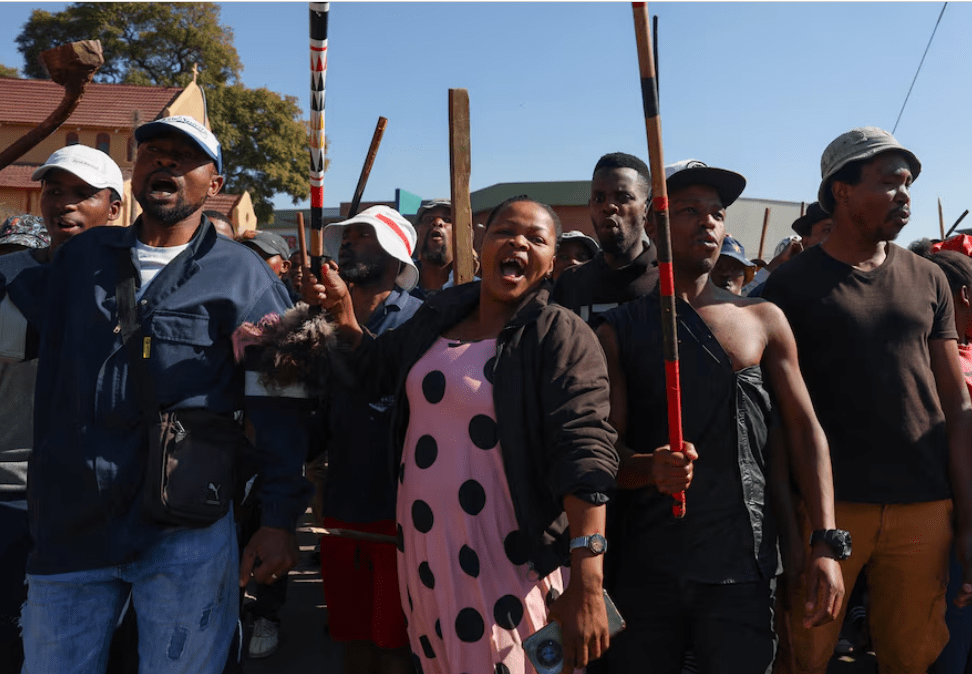
JOHANNESBURG, July 9 — The morning sun rose over Alexandra township, one of Johannesburg’s most densely populated communities, promising another day of uncertainty and fear. By midday, the streets echoed with the sound of splintering wood and desperate pleas as anti-immigrant vigilantes methodically moved from house to house, breaking down doors and dragging terrified residents into the open.
The scenes playing out across Alexandra, Soweto, and Durban represent a dangerous escalation in South Africa’s ongoing xenophobic crisis—one that has already forced tens of thousands of migrants to flee the country they once called home.
‘I Am a ZEP Holder’
Among those apprehended by the marchers was Total Mhlanga, a Zimbabwean national whose hands trembled as he was escorted toward a police van. “I am a ZEP holder,” he insisted, referring to the Zimbabwean Exemption Permit that legally allows tens of thousands of Zimbabweans to live and work in South Africa. His papers, however, seemed to matter little to those who had seized him.
In Alexandra, a Reuters reporter witnessed protesters breaking into homes where they believed undocumented immigrants were hiding. Among those forcibly removed was a woman clutching a small child—both citizens of Malawi, a country now grappling with the mass return of over 38,000 of its nationals who have fled South Africa in recent weeks.
A Zimbabwean mother of three, who asked not to be named for fear of retaliation, described watching from her window as neighbors were dragged from their homes. “I came here legally. My children were born here. This is the only home they know. Now I must decide whether to stay and risk everything or return to a country I left because there was no future there.”
‘Every Thursday Until Our Demands Are Met’
The movement driving this violence has found an unlikely and increasingly vocal leader: former radio presenter Jacinta Ngobese-Zuma. Her group, known as March and March (also referred to as “March 1 March”), has organized nationwide protests that have transitioned from street demonstrations to what community leaders describe as “door-to-door” operations targeting foreign nationals.
“Protests will take place every Thursday until our demands are met,” Ngobese-Zuma declared on June 30, an informal deadline her movement had set for undocumented immigrants to leave South Africa. The promise has become a terrifying reality for migrants across the country.
Her organization has painted undocumented immigrants as the source of South Africa’s deep-seated economic challenges—unemployment, housing shortages, and strained public services—demanding tighter border controls, mass deportation, and the prioritization of South African citizens in schools and healthcare facilities.
A Community Divided
At the march in Alexandra, community leader Bongani Msomi justified the tactics being employed. “We are walking around doing door to door removing foreigners,” he stated matter-of-factly, as behind him, protesters brandished sticks and flags.
Yet not all South Africans support the movement. In the same township, elderly residents watched with concern, some shaking their heads in silent disapproval. A local teacher, who also asked not to be named, expressed anguish over the situation: “We are destroying what Nelson Mandela built. Ubuntu is dead in these streets. These people are not our enemies—they are our neighbors, our customers, our children’s classmates.”
The Government’s Response—and Its Limits
President Cyril Ramaphosa has repeatedly warned against scapegoating immigrants for the country’s problems. His government has issued clear directives that citizens do not have the right to take immigration enforcement into their own hands.
Police have deployed officers to recent marches for safety and have stepped up arrests of undocumented migrants—yet the line between law enforcement and vigilantism has become dangerously blurred. At the scenes of Thursday’s protests, officers stood by as vigilantes dragged people from their homes. A spokesperson for Johannesburg police was not immediately available to explain the actions of officers at the scene.
Human rights organizations have raised urgent concerns about the complicity—or at minimum, inaction—of law enforcement in facilitating these “removals.” “When police receive citizens who have been unlawfully detained and physically removed from their homes, they are not acting as neutral enforcers of the law,” said a legal observer who requested anonymity. “They are, in effect, legitimizing extrajudicial actions.”
A Regional Humanitarian Crisis
The ripple effects of South Africa’s xenophobic violence are being felt across southern Africa. Malawi’s government confirmed Thursday that over 38,000 of its citizens had returned in recent weeks, part of a massive repatriation effort driven by safety concerns. Neighboring Zimbabwe has seen more than 60,000 of its nationals return—a staggering figure that represents not just a humanitarian crisis but an economic shock to both nations.
These returnees are arriving in countries that already struggle with their own economic challenges. Many had been sending remittances home, supporting extended families and local economies. Their forced return is creating new vulnerabilities while straining already limited resources in their countries of origin.
The Human Cost
Behind the statistics lie countless stories of shattered lives. A Malawian shopkeeper in Soweto watched his business—built over fifteen years—looted and destroyed. A Zimbabwean nurse who had served in a public hospital for a decade now sleeps in a shelter, uncertain if she will ever return to work. An Oromo refugee who fled political persecution in Ethiopia now faces violence in the country where he sought sanctuary.
“The pain is not just physical,” says Dr. Thabo Mbeki (not the former president), a community psychologist who has been providing counseling to affected families. “People are experiencing profound trauma. They have lost everything—their homes, their livelihoods, their sense of safety. Children are refusing to eat. Parents cannot sleep. The psychological wounds will last for generations.”
The Economic Fallacy
Economists have pushed back against the narrative that immigrants are the primary cause of South Africa’s economic woes. Studies have shown that immigrants often create jobs through entrepreneurship, fill critical skills gaps, and contribute to the tax base. The country’s unemployment crisis, they argue, has far deeper roots in systemic inequality, inadequate education, and stagnant economic growth.
“To blame immigrants for unemployment is not just inaccurate—it’s dangerous,” says economist Tendai Moyo. “It diverts attention from the real structural reforms that are needed. It gives people a scapegoat instead of solutions.”
A Nation at a Crossroads
South Africa stands at a defining moment. The post-apartheid constitution—one of the most progressive in the world—enshrines human dignity and equality. Yet the country’s actions are betraying these principles.
As Thursday’s marches conclude and communities brace for what next week may bring, a fundamental question remains: Will South Africa find the political will to protect the most vulnerable among its residents, or will it allow xenophobic violence to become normalized?
The international community is watching. The African Union has expressed concern. Human rights organizations have documented abuses. Diplomats from affected countries have raised the issue with their South African counterparts.
But for the families huddled behind locked doors—the legal permit holders who still fear arrest, the children too frightened to attend school, the business owners who have lost everything—the response so far has been insufficient.
A Plea for Humanity
As evening falls over Alexandra, the sound of broken glass crunches underfoot. Women sweep debris from their doorsteps. Men gather in small groups, their voices low with tension. Children peek through curtained windows, their games silenced.
“In a just world, this would not happen,” reflects one elderly South African woman who has lived in the township for seven decades. “We suffered under apartheid. We know what it is to be treated as less than human. How can we do this to others? How have we forgotten so quickly?”
Her question hangs in the air, unanswered.
The marches will continue, the groups have promised. And as long as they do, the fragile thread of pan-African solidarity—the very ideal that South Africa’s liberation struggle championed—grows thinner with each passing Thursday.
Reporting from Johannesburg, Alexandra township, and Soweto. Additional reporting from Lilongwe and Harare.

The Sacred Trust: Why Workplace Confidentiality Is a Duty Beyond Law

In every workplace, there are lines that should never be crossed—and confidentiality is one of them. It is not just a rule; it is a promise.
A colleague shares a private frustration over coffee. A manager casually discusses sensitive restructuring plans. A personnel file is left open on a shared screen. An email containing personal information is forwarded without a second thought.
In the moment, these seem like small slips—harmless, even human. But the consequences can ripple far beyond what anyone anticipates.
“Namni kamuu iccitii mana hojii eeguuf dirqama qaba.”
(Every person has a duty to protect workplace confidentiality.)
This is not merely a bureaucratic requirement tucked into employment contracts. It is a fundamental pillar of trust, professionalism, and ethical conduct. And when that trust is broken, the damage can be profound—not only to individuals but to entire organisations, communities, and lives.
What Is Workplace Confidentiality?
Workplace confidentiality refers to the obligation of employees to protect sensitive information they encounter in the course of their work. This includes:
- Personal information about colleagues, clients, and customers
- Financial data and business strategies
- Medical records and health information
- Performance reviews and disciplinary matters
- Trade secrets and proprietary knowledge
- Internal communications and decision-making processes
Whether it is spoken in a meeting, written in an email, or stored in a database, such information is entrusted to employees on the understanding that it will be handled with care and discretion.
The Line Between Sharing and Violating
We live in an age of oversharing. Social media encourages us to broadcast our thoughts, workplace chat platforms blur the boundaries between professional and personal, and the ease of forwarding an email can make us forget that some messages were never meant to be shared.
But there is a clear and important distinction.
“Namni tokko iccitiin namoota dhuunfaa baasee maxxansuu fi saaxiluun dhorkaa dha.”
(It is forbidden for a person to disclose and share private information with others.)
This is not merely a suggestion—it is a legal and ethical obligation. In Australia, privacy laws such as the Privacy Act 1988 (Cth) and the Australian Privacy Principles (APPs) regulate how personal information must be handled, and breaches can result in serious penalties. Beyond the legal consequences, there are reputational and relational costs that can take years to repair.
When Confidentiality Is Broken: Real-World Consequences
Consider the real-world impact of a breach:
A team leader casually mentions in a group meeting that a staff member is struggling with a health condition. The staff member feels exposed and humiliated, their trust shattered. Colleagues begin to treat them differently, and the workplace atmosphere becomes strained. The staff member may even leave the organisation, taking their talent and experience elsewhere.
A payroll officer accidentally emails salary details to the entire company. The fallout is immediate—resentment, comparisons, and a breakdown in morale that affects productivity for months. Trust in management evaporates, and the company’s culture is damaged for years.
An employee posts about a confidential client dispute on social media. The client discovers the post, files a complaint, and the company’s reputation is irreparably damaged. The employee is terminated, and the company loses a valuable contract—and potentially many more.
A healthcare worker shares a patient’s medical details with friends. The patient feels violated, their privacy destroyed. They may lose trust in the entire healthcare system, avoiding necessary care in the future. The worker faces disciplinary action, loss of registration, and potential legal consequences.
These are not hypothetical scenarios. They happen every day in workplaces across the world—in hospitals, schools, government offices, and corporate boardrooms.
Why Confidentiality Matters
Confidentiality is not about secrecy for its own sake. It is about:
1. Respect for Individuals
Every person has a right to privacy. When we respect that right, we affirm the dignity and worth of our colleagues, clients, and stakeholders. We acknowledge that their personal information belongs to them—not to us.
2. Building Trust
Trust is the currency of effective workplaces. Employees who feel their private information is safe are more likely to speak openly, seek help when needed, and contribute fully to their teams. Trust is hard-won and easily lost. Once broken, it is rarely fully restored.
3. Protecting the Organisation
A breach of confidentiality can expose an organisation to legal liability, financial loss, and reputational harm. In competitive industries, it can also hand advantages to rivals. The cost of a data breach—in fines, legal fees, and lost business—can run into the millions.
4. Maintaining Professional Standards
In professions such as healthcare, law, social work, and finance, confidentiality is not just expected—it is mandated by codes of conduct and professional ethics. Breaches can result in loss of professional registration, ending careers.
5. Protecting Vulnerable People
For clients and customers who are vulnerable—such as those seeking mental health support, financial advice, or legal assistance—confidentiality is essential. Without it, they may not seek help at all. The consequences can be devastating.
Striking a Balance
Of course, confidentiality does not mean silence in the face of wrongdoing. Whistleblower protections exist to allow employees to report illegal or unethical behaviour without fear of retaliation. The distinction lies in the purpose and intent of the disclosure.
Sharing information to expose corruption, protect public safety, or prevent harm is fundamentally different from gossiping about a colleague’s personal struggles or leaking sensitive data for personal gain.
The key questions to ask:
- Is there a legitimate public interest in this disclosure?
- Is the information being shared through proper channels?
- Is the motivation to protect, or to harm?
What Every Employee Should Remember
“Kun seeraanis ta’ee naamusaan kan eegamuu dha.”
(This is to be upheld both by law and by conscience.)
Workplace confidentiality is a dual obligation—it is written into contracts and legislation, but it is also a matter of personal integrity. The law can penalise breaches, but it is conscience that should guide us in the moment of decision.
Before sharing information, ask yourself:
- Does this person have a legitimate need to know?
- Am I authorised to share this?
- Could this cause harm or embarrassment to anyone?
- Would I be comfortable if this were shared about me?
- Is this information protected by law or professional ethics?
If the answer to any of these questions gives you pause, it is likely better to remain silent.
A Shared Responsibility
Confidentiality is not just the responsibility of managers, HR professionals, or legal teams. It belongs to every single person in the workplace.
It means:
- Locking your screen when you step away from your desk
- Not discussing sensitive matters in public spaces like elevators or cafeterias
- Thinking twice before forwarding an email or sharing a document
- Saying, “I’m sorry, I can’t discuss that,” even when pressed by curious colleagues
- Properly disposing of confidential documents (shredding, not just recycling)
- Using secure communication channels for sensitive information
In an era of information overload and digital permanence, discretion has become a rare and valuable quality. Those who practise it are trusted more, respected more, and ultimately succeed more in their careers.
The Cost of Silence—and the Cost of Speaking
Sometimes, the most difficult ethical decision is knowing when to speak and when to remain silent.
Speak when:
- You are reporting illegal activity or serious misconduct through proper channels
- You have a legal obligation to disclose (such as mandatory reporting of child abuse)
- There is an immediate risk of serious harm
Remain silent when:
- You are tempted to share gossip or personal information about colleagues
- You do not have authorisation to share the information
- The information could be used to harm or embarrass someone
The Bottom Line
Workplace confidentiality is not a constraint—it is a protection. It protects individuals from harm, organisations from liability, and workplaces from the corrosive effects of mistrust.
When we honour confidentiality, we send a clear message: We value you. We respect your privacy. And we will not betray your trust.
That is not just a legal requirement. It is a promise—one that every ethical professional should be proud to keep.
In the end, the question is not whether we can share something. The question is whether we should. And sometimes, the most powerful thing we can say is nothing at all.
Key Takeaways
| Principle | Action |
|---|---|
| Respect privacy | Only share information with those who have a legitimate need to know |
| Understand the law | Familiarise yourself with privacy legislation and your organisation’s policies |
| Think before sharing | Ask yourself: Is this authorised? Could it cause harm? |
| Use secure channels | Protect digital and physical information from unauthorised access |
| Speak up through proper channels | Report misconduct, but do so responsibly |
| Lead by example | Model confidentiality in your own behaviour |
Confidentiality is not about hiding problems—it is about protecting people. When we get that right, we build workplaces that are safer, more trusting, and more effective for everyone.






