Monthly Archives: July 2026

“A Warning from the Grave”: Dr. Negasso Gidada’s 2014 Prophecy on the Addis Ababa Master Plan – and Why It Was Ignored

As Ethiopia reels from the aftermath of the 2014 Oromo protests, a newly surfaced document reveals that one of the Constitution’s architects had foreseen the catastrophe – and offered a roadmap to avoid it. His advice went unheeded.
By Our Staff Reporter
In May 2014, just weeks after violent protests erupted across Oromia over the “10th Addis Ababa Integrated Development Master Plan,” Dr. Negasso Gidada – a key intellectual and co-architect of Ethiopia’s 1995 Constitution – sat down to write a sobering analysis. He titled it: “A Tragic Consequence of the ‘10th Addis Ababa Integrated Development Master Plan’: A Warning for the Future.”
The document, now circulating widely, reads like a dispatch from a man who saw the storm coming. In it, Dr. Negasso dissects the historical grievances, constitutional failures, and political miscalculations that ignited the unrest – and warns that if the root causes were not addressed, the federal system itself could unravel.
Nearly a decade later, his words carry a haunting resonance. The protests that began in Adaamaa University on April 29, 2014, spread to dozens of towns, leaving dozens dead, property destroyed, and ethnic tensions inflamed. The government’s response – a mix of repression and belated appeasement – did little to quell the anger. And, as Dr. Negasso predicted, the underlying issues remain unresolved.
A City Built on Conquest, a Constitution Unfulfilled
Dr. Negasso begins by grounding the crisis in history. Addis Ababa, founded in 1887 by Emperor Menelik and Empress Taitu around the hot spring of Finfinnee, was established on land that belonged to the Oromo of Shawa. He cites British envoy Harris, who in 1844 witnessed King Sahle Sellasie’s forces – armed with European guns – “destroy the Oromo life and resources,” burning homes, capturing women, and slaughtering men. The Oromo of Gulalle, he notes, still remember leaders like Tufa Mona and Birraatuu Goolee who died in those wars.
This historical memory, he argues, is not ancient grievance – it is living pain. And it has been compounded by three modern failures:
1. The Constitution of 1995, which promised Oromia a “special interest” in Addis Ababa (Article 49/5) but never defined it in law.
2. The 2003/2004 decision to move Oromia’s capital to Adaamaa, which sparked student protests and led to mass expulsions and imprisonments.
3. The broken promises of 2005, when OPDO, after losing the election, re-declared Finfinnee as the capital and vowed to build Oromo cultural centres and language schools in the city’s ten districts – none of which materialised.
“Nine years have passed,” Dr. Negasso wrote, “and nothing from the decisions and promises were implemented.”
The Master Plan: A Spark on Dry Tinder
When the “Integrated Master Plan” – which proposed integrating surrounding Oromo towns into Addis Ababa – was publicly announced in March 2014, it struck at this accumulated trauma. The plan was presented as a development initiative, but for Oromo farmers on the city’s fringes, it meant eviction. For Oromo intellectuals, it meant the erasure of their territorial rights. For the youth, it was the final straw.
“Here lies the root cause of the current incident and the tragic consequence,” Dr. Negasso wrote.
The protests were swift and fierce. They began at Adaamaa University, then spread to Haroo Maayaa, Dire Dawa, Bale, Guji, and beyond. By the time Dr. Negasso penned his note, the death toll was mounting – two students killed in a TV room explosion at Haroo Maayaa, others thrown into rivers, and reports of mutilation and ethnic violence. Security forces responded with live fire, and the government issued statements defending the plan while blaming “outside forces.”
A Constitutional Crisis in Plain Sight
Dr. Negasso’s most incisive contribution is his legal analysis. He walks through the Constitution article by article, showing how both the ruling party and nationalist forces were undermining it.
He quotes Article 49/5: “The special interest of the State of Oromia in Addis Ababa… shall be respected. Particulars shall be determined by law.” That law, he notes, has never been enacted.
He cites Article 40/4, which guarantees peasants the right to land and protection from eviction – a right routinely violated in the suburbs of Addis.
And he warns that if the Constitution is not respected, the federal system could collapse into ethnic conflict. “The end result could also mean the disintegration of Ethiopia which no one of us wants to see.”
What He Prescribed – and What Was Ignored
Dr. Negasso did not merely diagnose; he offered a cure. His recommendations were clear:
· Apologise for the failures: the unfulfilled constitutional provision, the broken promises, the violence by security forces.
· Investigate human rights violations by both state and individual actors, and bring perpetrators to justice.
· Immediately implement Article 49/5 – define Oromia’s special interest, demarcate the boundary, and affirm the jurisdiction of surrounding towns.
· Stop hate propaganda from both “Ethiopianist” and “Oromummaa” camps.
· Launch a national dialogue on the Constitution, the national question, land policy, federalism, and the role of the media.
“We can only try to mend the damage by taking corrective measures based on what we have learnt from the mistakes done,” he wrote.
The Unheeded Warning
Dr. Negasso concluded his note with a plea: “If we want to live together and save our people and country, we should either respect the Constitution as it is or create a situation in which it could be amended and ratified by the people through a referendum.”
The TPLF-led government did neither. The master plan was shelved – but the underlying issues were never resolved. The protests of 2014 would echo in the 2015 elections, and again in the 2016–2018 Oromo uprisings that ultimately reshaped the country’s political landscape.
Dr. Negasso Gidada passed away in 2019. But his note from May 2014 remains a haunting artifact – a warning written in ink, delivered from the grave, and largely ignored by those who had the power to act.
Today, as Ethiopia navigates yet another national dialogue, his words serve as a stark reminder: tragedy is not inevitable, but it is the price of constitutional neglect.
—
This feature is based on Dr. Negasso Gidada’s unpublished note dated May 2014, titled “A Tragic Consequence of the ‘10th Addis Ababa Integrated Development Master Plan’: A Warning for the Future.”

Constitutional Legitimacy and Federalism in Ethiopia: A Trap in the Making?
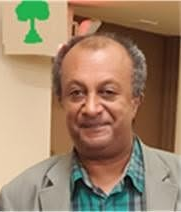
With constitutional amendments on the table and a national dialogue that critics call structurally rigged, Ethiopia stands at a crossroads that could determine the fate of its multinational federation
By Prof Asfaw Beyene
There is absolute consensus among Ethiopians on one fundamental truth: the country is bleeding, and a genuinely inclusive, transparent, and democratic dialogue is the only viable exit from the abyss . However, when the very architecture of a peace-building process is engineered to marginalise the country’s largest demographic constituency and dismantle its constitutional foundations, the process ceases to be a dialogue. It becomes a structural trap .
As the Ethiopian National Dialogue Conference commenced on July 15, 2026, the stakes could not be higher. The federal government is preparing a sweeping constitutional reform package that could redefine Ethiopia’s federal structure, with proposals that include amending Article 39—the constitutional provision that enshrines the right of nations, nationalities, and peoples to self-determination, including secession—and replacing ethnicity-based regional boundaries with geography-based ones .
These are not mere policy adjustments; they are existential threats to the constitutional order that has governed Ethiopia since 1995. As Asfaw Beyene’s analysis argues, the national dialogue may be heading toward a “barred trap” from which there is no easy escape .
The Mathematics of Disenfranchisement
At the heart of the controversy lies the decision-making framework of the National Dialogue Commission. According to the Commission’s documented multi-tier decision-making system, the ultimate power to pass or reject national agendas is vested in a Regional Representatives Assembly composed of 211 members .
Every region and city administration is granted exactly 14 representatives, alongside 15 representatives handpicked by the federal government. The result? Oromia, a region home to an estimated 40 million people—roughly 35% to 40% of the Ethiopian population—is granted the exact same voting power (14 seats) as city administrations like Dire Dawa or Harari, which have populations of approximately 500,000 .
Mathematically, Oromia is granted a mere 6.6% of the voting power in the assembly that will decide the fate of the country. This is not equality; it is the systematic erasure of the Oromo voice .
The Danger of Dismantling Federalism
“The outcome of dismantling federalism can be separation, not unity.”
Many constitutional democracies require broad consensus before fundamental constitutional changes take effect. Some do not allow even supermajority voices for constitutional amendment; they require unanimous vote .
In Germany’s Basic Law, the law that establishes Germany’s federalism cannot be amended at all, even by a unanimous vote. In Canada, unanimous provincial consent is required for certain constitutional amendments under the unanimity formula. These systems protect federalism at such high cost because they are aware the alternative would be separation and independence .
They recognize that constitutions should not be altered solely based on the political preferences of a temporary governing majority because they provoke a counter remedy: secession . Ethiopia’s elections did not provide even a majority vote to the ruling party; elections were not organized in many parts of the country for security reasons .
Article 39: A Constitutional Prerequisite, Not a Mere Provision
Article 39 of the Ethiopian constitution must be understood not merely as a constitutional provision, but as a prerequisite upon which the constitutional order itself rests. Recognition of the right to self-determination, including the possibility of secession under Article 39, establishes the foundational boundaries within which the state exists .
Because this principle defines the relationship between the state, its territory, and the peoples composing it, any amendment that would fundamentally alter or remove this guarantee must logically require unanimous consent of a duly established representative body—not a majority vote .
Article 39 is not, by itself, a sufficient condition to unite a country. But it is a prerequisite that establishes the boundaries and consent-based framework through which the country’s territorial and constitutional existence is maintained. An attempt to remove or fundamentally alter this prerequisite would forfeit the very foundation that gives the constitutional system some legitimacy .
The Eritrean precedent is instructive. When Haile Selassie dismantled Eritrea’s legally mandated autonomy and unilaterally dissolved the Eritrea-Ethiopian Federation, followed by full annexation of Eritrea in 1962, this action prompted an armed national movement, triggering the 30-year Eritrean War of Independence .
The Referendum Question
Where a legally recognized political actor has formally advanced a referendum proposal pursuant to the existing constitutional framework, and where the governing law provides a mechanism for a referendum under applicable circumstances, the constitutional process cannot be circumvented through a preemptive amendment designed to render that referendum unnecessary or ineffective .
Article 39 of the Constitution provides a clear procedure for secession: when a demand for secession has been approved by a two-thirds majority of the members of the Legislative Council of the Nation, Nationality or People concerned; and when the Federal Government has organized a referendum which must take place within three years from the time it received the concerned council’s decision for secession .
The referendum proposal submitted by the OLF for independent Oromia constitutes a pending constitutional process that must be addressed according to the law in force at the time it was initiated. Allowing a subsequent amendment to override, extinguish, or bypass a properly raised referendum petition would undermine constitutional certainty, procedural fairness, and the principle that constitutional change must follow established legal procedures .
The View from the Regions
Regional reactions to the proposed constitutional reforms are mixed. Oromia and Somali regions favor preserving the current model, while Amhara and parts of the Southern Nations, Nationalities, and Peoples’ Region (SNNPR) show growing support for change .
Mulatu Gemechu, vice chairman of the Oromo Federalist Congress (OFC), has argued that the amendment process lacks legitimacy: “One cannot just pop out of a commission and decide to amend [the Constitution]. I was there when it was created. Every element of the Constitution was put in intentionally” .
Dejen Mezgebe, chairman of the Tigray Independence Party, has warned that “this amendment proposal is dangerous, especially for Tigray, which currently has no official or legal representation in federal institutions. Any amendment before Tigray returns to the constitutional order would create a generational crisis” .
Conclusion: A Trap or a Solution?
The constitution amendment is widely seen as a trap to get rid of the Oromo regional state, which is a prerequisite for the secessionist referendum. The Constitution was created through a long, inclusive process of deliberation among all nations and nationalities—a process that reflected the free will of the peoples of Ethiopia . It is impossible to remove the right of secession from the Constitution without violating the foundations of the constitutional order and federalism .
How can the people whose constitutional rights the dialogue is supposed to address be structurally cheated out of their representation? You cannot legally bind a nation to a contract in which its signature was forged .
Instead of ending the tragic wars currently ravaging the country, including the ongoing conflict in Oromia, this manufactured consensus will inevitably exacerbate ethnic polarisation and institutionalise conflict for generations .
“A constitutional amendment cannot be used as a procedural shortcut to defeat a lawful petition or to prevent the electorate from exercising a right that has already been invoked under the existing constitutional order.”

Bonnie Holcomb: The Mother of Oromo Studies
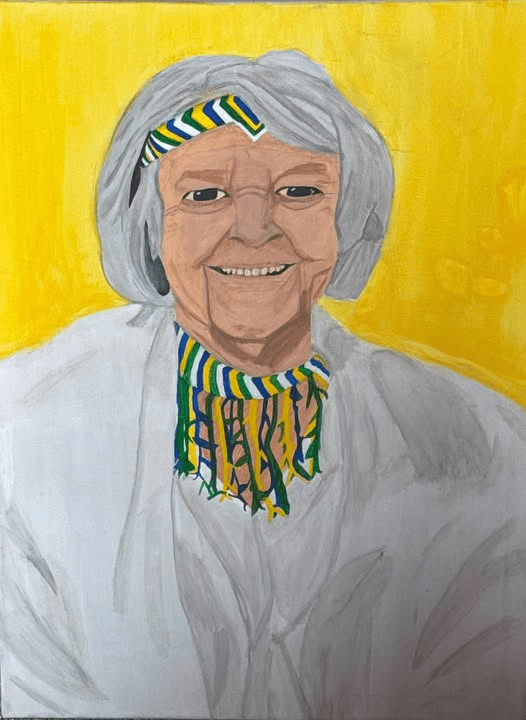
A lifetime of scholarship, sacrifice, and service in the pursuit of Oromo dignity and truth
MINNEAPOLIS, MINNESOTA — For forty years, one name has stood at the centre of Oromo scholarship, guiding the field from its exiled beginnings to global academic recognition. Bonnie Holcomb, co-founder of the Oromo Studies Association (OSA) and Editor-in-Chief of its Journal, has dedicated her life to ensuring that Oromo history, culture, and identity are studied on their own terms.
This year, as the OSA marks its 40th anniversary , the community celebrates not just an organisation, but the extraordinary vision and persistence of one woman—affectionately known as “The Mother of OSA” . In recognition of her lifetime service, a portrait of Holcomb was commissioned from a 15-year-old artist, Qabbanne, reflecting the intergenerational impact of her work .
The Founding of a Movement
The year was 1986 . In exile, scattered across meeting rooms in the diaspora, a small group of Oromo and non-Oromo scholars gathered with a radical idea: to build an independent academic home for the study of a people whose history, culture, and very existence had been systematically erased from mainstream scholarship . They would create a space where knowledge about the Oromo could be produced not by outsiders, but on its own terms .
Bonnie Holcomb was among them.
The OSA was born in direct response to a brutal crackdown—a void in which Oromo heritage was not merely absent from academia and state narratives, but actively suppressed . Those campaigning for greater recognition of the Oromo people were being murdered, tortured, jailed, or driven into exile . The founding of the OSA was an act of intellectual resistance: a refusal to accept erasure and a determination to tell stories that had been silenced .
The Invention of Ethiopia and Other Landmarks
In 1990, Holcomb, alongside fellow founder Sisai Ibssa, co-authored The Invention of Ethiopia: The Making of a Dependent Colonial State in North Africa . The book was a landmark work, offering a radical critique of how Ethiopian history had been represented and exposing a broader set of readers to Oromo history and ethnicity in the Horn of Africa . At its heart was a concern with inequality and a fundamental challenge to dominant state narratives .
The 1990s marked a productive period for Oromo studies, with diaspora intellectuals becoming key actors in the field . The Journal of Oromo Studies (JOS), launched in 1993, grew into the premier peer-reviewed publication for interdisciplinary scholarship on the Oromo people .
A Long and Difficult Road
Holcomb has described the journey as “a long and sometimes a difficult road to reveal evidence and build knowledge which shift the narrative in the region and globally” . This is not hyperbole. For decades, Oromo scholarship faced suppression, neglect, and active hostility. The OSA and its Journal have been more than academic endeavours; they have been an act of intellectual resistance—a refusal to accept the erasure of a people’s history and a determination to tell stories that had been silenced .
Despite these obstacles, the OSA has grown into a global scholarly community spanning continents and disciplines . In a landmark achievement, the Journal of Oromo Studies was recently indexed in Scopus, the gold standard of academic databases—placing it alongside publications from Springer, Elsevier, and Cambridge University Press . Holcomb’s message to contributors and advisors on this achievement reflected both pride and humility: “This publication, and the indexing in Scopus, are notable achievements, all. We have come a long way together” .
The Mother of OSA
The affectionate title “The Mother of OSA” is a testament to Holcomb’s foundational role and her ongoing commitment to the community . She has served as a Board Director and co-chair of the organising team for the 2026 annual conference, continuing to guide the organisation she helped build . Her work has been recognised with an OSA lifetime achievement award .
The theme for the 2026 conference, “Oromo on the Global Landscape: Honoring Asmarom Legesse as OSA Turns 40” , honours another visionary scholar whose work shaped Oromo studies . Asmarom Legesse, author of the landmark Gada: Three Approaches to the Study of African Society (1973), passed away in early 2026 . The conference will take place from July 31 to August 2, 2026, in Minneapolis .
Passing the Torch
In a touching tribute to Holcomb’s legacy, a portrait of her was commissioned from a 15-year-old artist, Qabbanne . This act is itself symbolic: it reflects the intergenerational impact of Holcomb’s work and the future she has invested in. As the OSA enters its fifth decade, the question is whether the next generation will carry the torch forward . Holcomb’s message to the community is also a call to action:
“Please remember that it is the Oromo Studies Association that has conceived, designed, hosted, nurtured, upheld and published the research and scholarship represented in JOS. I urge you all to continue to support OSA, and by extension, its Journal, with donations, membership in OSA and engagement as well as submissions” .
Conclusion
Four decades ago, a small group of exiled scholars dared to imagine a world in which Oromo knowledge was recognised as a contribution to the full breadth of human civilization . Today, that vision is reality . Bonnie Holcomb has been central to that journey. Her legacy is not just the Journal, the conferences, or the Scopus indexing—it is the community of scholars, activists, and artists who continue the work.
As Holcomb wrote, with a warmth that reflects decades of dedication: “Congratulations, one and all” .
The celebration is earned. The legacy is enduring. And the future—if the community continues to support it—is bright.
“Bonnie Holcomb is more than a scholar; she is the architect of a field and the mother of a movement.”

Finfinnee in the Heart of Oromia*: The Founding of Addis Ababa as a Colonial Project
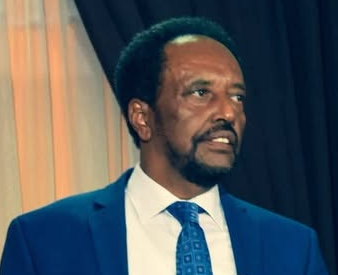
How Menelik II’s garrison towns and the establishment of Ethiopia’s capital city reshaped Oromia, displacing the Oromo people and cementing a system of political and economic control that endures today
FINFINNEE, OROMIA — The bustling streets of Addis Ababa, known to the Oromo as Finfinnee, tell a story of power, conquest, and displacement that remains largely hidden beneath the city’s modern veneer. This is not merely the capital of Ethiopia; it is the heart of a colonial project that began in the late 19th century and continues to shape the lives of millions.
The founding of Finfinnee was not an act of urban planning in the conventional sense. It was the culmination of a deliberate strategy of conquest and control, a military project disguised as a city, designed to secure the domination of the Ethiopian Empire over the Oromo people, the largest ethnic group in the Horn of Africa. As one historical account describes, the city was originally a katama – a military encampment or royal camp, with its neighborhoods laid out “mirroring an army on the march” . This military logic was not accidental; it was the foundation upon which the entire colonial structure was built.
The Strategy of the Katama
The establishment of garrison towns, or katamas, was a central feature of Emperor Menelik II’s colonial expansion. Convinced that more could be gained from the permanent exploitation of the Oromo, Menelik began to occupy conquered districts with permanent garrisons of his troops, providing for their administration under a hierarchy of his own officials. As one historical account notes, the creation of these towns was based on a desire to exercise “more effective control over the Oromo” and to escape interference from rival powers . These were strategically and politically secured regions, designed to serve as nerve centres for the Ethiopian colonial system .
From the mid-19th century, Menelik developed garrison towns such as Ankobar, Dabra Berhan, and Angolala. The last of these was burned by the Oromo in 1868, but was recovered by Menelik. He also developed Leche, Feqre Gimb, Enaware, Tamo, and Warra Illu, where he installed 40,000 soldiers in 1870. The Wallo Oromo attacked and destroyed Warra Illu that same year, but it was rebuilt. This pattern of Oromo resistance and Ethiopian colonial reassertion continued as northern Oromia gradually fell into Ethiopian hands .
Following the submission of northern Oromia, Menelik turned his attention to the Tulama Oromo, who were the residents of Finfinnee and its surroundings. The desire to exercise more effective control led him, in the latter part of 1878, to move to the mountain of Wacaca, where he dug the foundation for a new town, which he named Entoto (later called Old Entoto). In 1882, he transferred his settlement to a place called Dildila, later named New Entoto. These settlements were created by evacuating or enslaving the Oromo living there. After strengthening his army and accumulating massive firearms, Menelik built Addis Ababa on the place known by the Oromo name Finfinnee, between 1886 and 1887 .
The Founding of Finfinnee
The site of Finfinnee was originally chosen by Empress Taytu Betul in 1886, who was attracted by the hot springs in the area . The local Oromo tribes had their lands confiscated, and many were displaced . In its first years, the city was more like a military encampment than a town, with the emperor’s palace surrounded by the dwellings of his troops and retainers . As historian Getahun Benti argues, “From its earliest days, Addis Ababa was the staging station for the economic exploitation and political control of the conquered provinces of which Oromia was the largest” .
The major portion of the Oromo land on which the capital city was founded was divided among thirty-one Ethiopian officials . Army commanders were given large plots of land on which they established their respective camps for their relatives, followers, and war captives. While most Oromos were evicted and forced to migrate to far places, others were permanently marginalised and turned into servants and labourers . Through the proclamation of October 27, 1907, Oromo land became a commodity to be sold and bought, giving Ethiopian and European landlords a great deal more security of tenure .
Making Addis Ababa the centre of commerce, bureaucracy, and employment, the Ethiopian government attracted people from different parts of the world and Abyssinia proper to this city, while the Oromo people were marginalised, segregated, and dehumanised in rural and urban areas alike. The people in the city mainly obtained their food and income from the surrounding Oromos; military commanders, soldiers, and followers depended on the tribute and tax mainly collected from the Oromo people .
Consolidating the Colonial System
The garrison towns gradually evolved into the major geopolitical centres for practising political domination, wealth and capital accumulation, and religious and cultural dissemination . From these garrison centres, Ethiopian soldiers and colonial administrators were dispatched to impose colonial rule on Oromos through subjugation, enslavement, and expropriation of the basic means of production such as land, cattle, and other valuable resources .
Several non-garrison towns emerged in eastern and western Oromia with the development of trade and communication networks. As rail service was introduced, the towns of Aqaqi, Bishoftu, Mojo, Adama, Walanchiti, Metahara, Awash, Mieso, Afdem, Gota, Munesa, and Dire Dhawa flourished. While Oromos were evicted from their urban lands and forced to migrate to rural areas, Abyssinians were encouraged to migrate to cities and towns in Oromia .
The colonisation of Oromia, the development of transportation and communication systems, and the establishment of Addis Ababa and garrison towns facilitated the development of the Ethiopian institutional milieu and created “the integrating nucleus of the colonial economic system” in Oromia, with the collusion of the capitalist world economy. Commodities and food products produced by Oromo labour flowed to and were concentrated in Addis Ababa and other urban centres for local consumption and international markets .
A Legacy of Dispossession
The consequences of this colonial urbanisation are profound. The Ethiopian colonial structure has limited the access of Oromo urban residents, who are a minority in their own cities and towns, to institutions and opportunities such as employment, education, health, mass media, and other public services. The Oromo have been prevented from developing autonomous institutions, organisations, culture, and language, and have been subordinated to the institutions and organisations of the Habasha colonial settlers in their own cities, towns, and homeland .
The Ethiopian state elites and urban communities in Oromia remain determined to maintain the existing political and economic order, investing meagre available resources in building unproductive institutions, such as the army, security infrastructure, and colonial bureaucracy. The Abiy monologue, which he calls a national dialogue, is seen by many as an integral part of the Ethiopian colonial project .
Today, millions of Oromos are exposed to fatal diseases, famine, and massive poverty in Oromia cities and urban centres. Since state-terrorism, poverty, famine, and ethnonational challenges are increasing, and since the major world powers have a role in shaping these problems, they have a moral and political responsibility to become capable of mediating these processes and developing procedures and criteria by which these conflicts must be solved fairly and democratically before it is too late .
Finfinnee’s founding is etched in Oromo collective memory as a site of violent conquest. The legacy of Finfinnee is therefore inseparable from trauma, subjugation, and displacement.
*From Asafa Jalata “Oromian Urban Centers: Consequences of Spatial Concentration of Pinational Ethiopia,” Journal of Oromos Studies, Vol. 17, No. 2, January 2011, pp. 39-74.

Ethiopian Youth Football Team Vanishes After Gothia Cup in Sweden

Twenty young players and team leaders went missing on the final day of the tournament, with police believing the disappearance to be voluntary.
GOTHENBURG, SWEDEN — Swedish police have launched an international search for about 20 Ethiopian youth football players and team leaders who went missing after participating in the Gothia Cup, one of the world’s largest youth football tournaments .
The disappearance occurred on the final day of the tournament, when an administrator at the school housing the Ethiopian team discovered that the players and their accompanying adults had left without notifying anyone . The group includes boys aged between 14 and 17, along with one or more adult leaders .
Gothia Cup organizers contacted police as a precautionary measure, and a formal missing persons report was filed. Ten days after the tournament ended, the group remained unaccounted for and had not returned to Ethiopia .
Police have confirmed that the individuals did not return to Ethiopia and believe the disappearance to be voluntary . According to authorities, there is no evidence suggesting criminal activity or people smuggling behind the incident .
“No indication that anything illegal lies behind this, such as people smuggling or something similar,” Ellinor Halldin from the Swedish police’s missing persons unit told local media .
The Gothia Cup, also known as the World Youth Cup, featured teams from 77 nations this year, including four teams from Ethiopia . Fredrik Beckman, press spokesperson for the tournament, expressed surprise at the incident, noting that organizers had a good relationship with the team .
Police are working with the Swedish Migration Agency, border police, and authorities in other countries to locate the missing group . Officers expect to be alerted if any member of the group attempts to cross a border or comes into contact with officials .
“It is possible that they may be trying to stay in Sweden or another country, but that is speculation at this point,” Halldin added .
The Gothia Cup is an annual international youth football tournament held in Gothenburg, Sweden, attracting teams from around the world.

Victoria Makes Public Transport Half Price and Contactless

Statewide fare cuts and new payment options aim to ease cost-of-living pressures and improve accessibility
MELBOURNE, VICTORIA — Victoria has introduced a 50% fare reduction across all public transport services, a move that will halve travel costs for passengers statewide until 1 January 2027.
The discounted fares, announced by the state government, apply automatically to all services—including trains, trams, and buses—across the entire network. The concession applies to all passengers, including full-fare travellers, concession holders, and visitors.
“Half price fares apply automatically to all public transport services statewide and to all passengers, including concession holders,” the transport authority confirmed.
The fare reduction is designed to ease cost-of-living pressures and encourage more Victorians to use public transport. It comes at a time when household budgets are under strain and as the state continues its post-pandemic economic recovery.
Contactless Payment Rollout Expands
In a complementary move, the government has expanded contactless payment options across Victoria’s public transport network. The new system allows passengers to tap on and off using their bank card, smartphone, or wearable device.
Contactless payment is now available across the tram network and at train stations where myki is accepted. The system is designed to make travel easier and more convenient, particularly for visitors and occasional travellers who do not have a myki card.
However, the contactless option is currently available for full fare customers only.
Important Information for Concession Card Holders
Concession card holders have been advised to continue using their concession myki to ensure they are charged the correct fare. Tap-on with a phone or bank card will apply the full fare, and customers may be incorrectly charged.
“If you are a concession card holder and accidentally tap on with a phone or bank card, wait 30 seconds and tap off with the same device so you are not charged,” the transport authority advised.
Any customers who make a mistake and are incorrectly charged should contact the Transport Victoria Contact Centre on 1800 800 007 to discuss reimbursement options.
A Welcome Relief
The fare reduction has been widely welcomed by commuter groups and community organisations, who have described it as a meaningful intervention to support families and individuals.
A statement from the Public Transport Users Association described the move as a “welcome relief” for Victorian families, noting that half-price fares will make a meaningful difference to the weekly budgets of many households, particularly those who rely on public transport to get to work, school, and essential services.
The government has said that it remains committed to making public transport more accessible and affordable for all Victorians.
The half-price fares apply from now until 1 January 2027. For more information, visit the Transport Victoria website.

Every Answer Matters: Australia’s 2026 Census Approaches
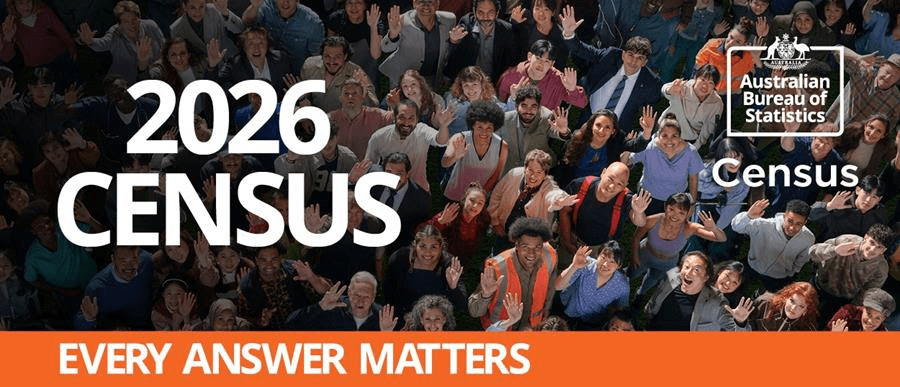
As Census night draws near, multicultural communities are being encouraged to participate and ensure their voices are heard and counted.
AUSTRALIA — On Tuesday 11 August, Australia will conduct its national Census, a vital exercise that captures a snapshot of the nation’s people and housing, telling the story of how we are changing. The data collected is used to shape services that people use every day, helping governments, community groups and businesses plan for healthcare, education, transport and infrastructure.
The Census is held every five years and is compulsory for everyone in Australia on Census night, including visitors, international students and visa holders .
Support for Multicultural Communities
The Australian Bureau of Statistics (ABS) has developed a range of support options to help people from culturally and linguistically diverse backgrounds participate. While the Census form is only available in English, information is available in multiple languages. Translated resources can be accessed through the ABS website, and help is available through the Translating and Interpreting Service (TIS National) on 131 450.
Census National Spokesperson Emily Walter said it’s important that Australia’s multicultural communities know what support is available to help them take part.
“Information is available in 25 languages to help the community better understand what the Census is, how it works and what you need to do,” according to the ABS.
Ancestry and Language Questions
For the 2026 Census, Australians will be able to nominate up to four ancestries, an increase from two in previous years, providing a more accurate reflection of the country’s multicultural population. This change has been welcomed by community organisations, who say it helps ensure people from diverse backgrounds are accurately represented.
Community leaders have encouraged people to pay close attention to the ancestry and language questions, as this data helps organisations advocate for the needs of their communities.
“If we want our community to be accurately represented, we need to be accurately counted,” community leaders have said.
How to Complete the Census
Most households will receive a letter in the mail containing a unique 16-digit Census number and temporary password to complete the Census online. Some households will receive a paper form instead.
Once you receive your instructions, you can complete the Census immediately if you know where you will be on Census night.
If you need help, you can:
- Call the Census Contact Centre on 1800 181 227 for assistance in English
- Call TIS National on 131 450 for help in your preferred language
- Visit the ABS website to find in-person support locations near you
Protecting Your Information
The ABS has reassured Australians that personal Census information is protected by law and cannot be shared with agencies such as the Australian Taxation Office, police, landlords or private companies.
“Every answer helps us understand what Australia needs now, and in the future,” the ABS states.
The 2026 Census is on Tuesday 11 August. For more information, visit census.abs.gov.au/language-support.

A New Chapter for Victoria’s Multicultural Communities: Louise Perry Welcomes Reform and Community Leadership
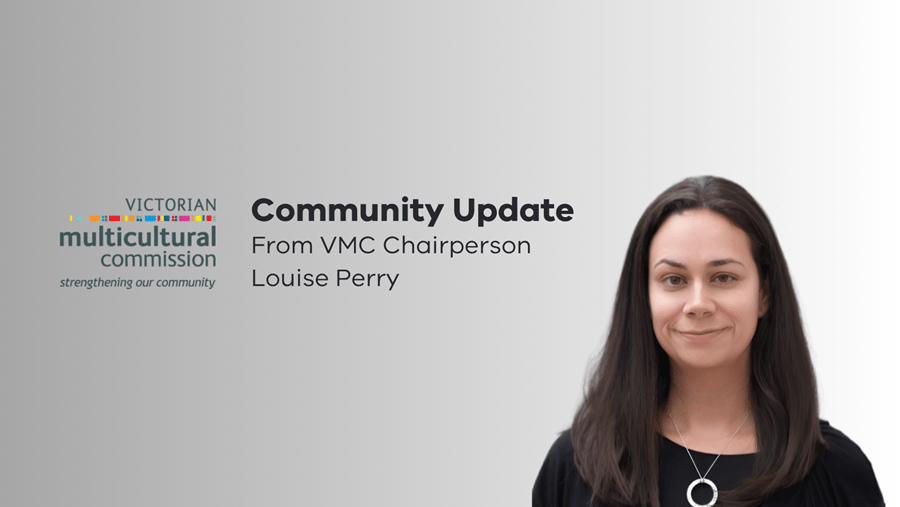
As the VMC transitions to Multicultural Victoria, the new interim Chairperson invites community participation in shaping the state’s diverse future.
MELBOURNE, VICTORIA — In her inaugural address as the interim Chairperson of the Victorian Multicultural Commission (VMC), Louise Perry has struck a tone of optimism and collaboration, heralding a “new era” for Victoria’s multicultural and multifaith communities.
Perry’s appointment marks a critical transitional period for the state, as the Victorian Government introduces legislation to establish Multicultural Victoria, a new statutory body designed to strengthen the way government listens to, engages with, and supports its diverse population.
“It is a privilege to write to you for the first time as Chairperson,” Perry stated. “I am honoured to have the opportunity to serve our multicultural and multifaith communities“.
A Leader with Deep Community Roots
A Victorian woman of Burmese heritage, Perry brings a wealth of experience to the role, including a background in journalism, leadership in community organisations, and a distinguished career in international development and human rights. Her recent role as Deputy Secretary for Fairer Victoria at the Department of Families, Fairness and Housing saw her lead landmark strategies on anti-racism, youth, and gender equality.
“This is an exciting time for multicultural Victoria,” Perry wrote, reflecting on the week’s developments, which saw the introduction of the Bill to amend the Multicultural Victoria Act into Parliament. The proposed legislation seeks to dissolve the VMC and replace it with Multicultural Victoria, a move that aims to modernise how the state engages with its migrant and refugee communities.
Building a More Inclusive Future
The new body is designed to bring together the community engagement functions of the VMC with the policy responsibilities of Multicultural Affairs, creating a more integrated and effective approach. It will be led by a newly created Multicultural Coordinator General, supported by two Deputy Coordinators, one of whom will be dedicated to regional Victoria, and a diverse advisory group.
Perry has emphasised her commitment to building an organisation that reflects the aspirations of the communities it serves, prioritising a “recalibrated and coordinated approach” that promotes cohesion, equity, and inclusion.
“I look forward to working with communities, VMC staff and government as we prepare for legislative changes,” Perry said.
A Call for Community Leadership
As part of the transition, applications are now open for a range of leadership opportunities, including membership of the new Multicultural Community Advisory Group. This is a unique opportunity for community leaders to contribute their experience and insights, ensuring community voices remain central to the future direction of Multicultural Victoria.
Perry encouraged anyone with passion and commitment to shaping Victoria’s multicultural future to consider applying. “I encourage anyone with the passion and commitment for shaping Victoria’s multicultural future to consider applying“. Applications close on Sunday, 9 August.
Looking Ahead
As Perry begins her journey, she has committed to getting out into communities across Victoria, meeting people in person, and learning about their work, aspirations, and the issues that matter most to them.
“Together, we can continue building a Victoria where every community feels heard, valued and connected,” she concluded.
The establishment of Multicultural Victoria is subject to the passage of legislation.

Louise Perry Appointed Interim Chairperson of the Victorian Multicultural Commission

A seasoned leader in human rights and community engagement steps in to guide Victoria’s multicultural sector through a historic transition
MELBOURNE, VICTORIA — As the Victorian Multicultural Commission (VMC) prepares for a significant transformation, Ms Louise Perry has been appointed as interim Chairperson to lead the organisation through a critical transitional period. Her appointment, effective Thursday 16 July, comes as Victoria moves toward the establishment of Multicultural Victoria, a new statutory body that will reshape the state’s approach to multicultural and multifaith affairs .
Perry’s term is interim, extending until Multicultural Victoria is formally established. A Victorian woman of Burmese descent, she brings a wealth of experience spanning journalism, community leadership, international development, human rights, and the Victorian Public Service .
A Career of Service and Advocacy
Louise Perry’s professional journey reflects a deep commitment to social justice and community empowerment. She began her working life as a journalist, developing a keen understanding of storytelling and the power of narrative in shaping public understanding. This foundation led her to leadership roles in community organisations, where she championed the voices of marginalised and underrepresented groups.
Her career later took her into the International Development and Human Rights space, where she worked extensively on issues of justice, equity, and inclusion. This global perspective, combined with her local experience, has equipped her with a nuanced understanding of the challenges and opportunities facing multicultural communities.
Before her appointment to the VMC, Perry served as Deputy Secretary for Fairer Victoria within the Department of Families, Fairness and Housing, where she led landmark work on anti-racism, youth, and gender equality strategies . Her leadership in this role demonstrated her ability to drive systemic change and build partnerships across government and the community sector.
A Vision for Unity and Cohesion
Perry’s appointment comes at a pivotal moment for Victoria’s multicultural and multifaith communities. The transition to Multicultural Victoria represents an opportunity to elevate multicultural affairs across the whole of government, ensuring that diverse voices remain at the centre of policy and service delivery.
“The establishment of Multicultural Victoria presents a unique opportunity for multicultural and multifaith affairs in our state,” Perry said. “I look forward to working with communities, VMC staff and government as we prepare for legislative changes” .
Her leadership is expected to support and uplift Victoria’s multicultural and multifaith communities as champions of unity and cohesion, delivering benefits for all Victorians . The changes she will guide aim to ensure that the new structure is fit for purpose and responsive to the needs of communities .
The Transition to Multicultural Victoria
The establishment of Multicultural Victoria is subject to the passage of legislation . The new body will bring together the functions of the VMC and Multicultural Affairs, creating a unified approach to multicultural policy and community engagement . It will be led by a Multicultural Coordinator General, supported by two Deputy Coordinators General and a Multicultural Community Advisory Group .
The transition reflects a recognition that Victoria’s multicultural communities are not just a part of the state’s identity—they are central to its future. As Perry noted, this is a unique opportunity to strengthen the foundations of multicultural and multifaith affairs.
A Legacy of Leadership
Perry succeeds Vivienne Nguyen AM, who concluded her seven-year tenure as Chairperson on 15 July 2026 . Nguyen’s leadership saw the VMC through the COVID-19 pandemic, flood recovery, and the impacts of international events on multicultural and multifaith communities . Her legacy of community-led engagement and partnership-building has laid the groundwork for the next chapter.
Perry expressed appreciation for Nguyen’s contributions, which she described as “invaluable” and commended the groundwork laid for the future .
Looking Ahead
As Louise Perry steps into her interim role, Victoria’s multicultural and multifaith communities can look forward to a leader with a proven track record of advocacy, collaboration, and systemic change. Her appointment signals continuity and stability during a period of significant transformation.
Applications for leadership positions within Multicultural Victoria—including the Coordinator General, two Deputy Coordinators General, and members of the Multicultural Community Advisory Group—are expected to open shortly. Community members are encouraged to stay informed and participate in shaping the future of multicultural affairs in Victoria.
“The establishment of Multicultural Victoria presents a unique opportunity for multicultural and multifaith affairs in our state. I look forward to working with communities, VMC staff and government as we prepare for legislative changes.”
— Louise Perry, Interim Chairperson, Victorian Multicultural Commission

A Grateful Farewell: Vivienne Nguyen AM Concludes Seven-Year Leadership of the Victorian Multicultural Commission
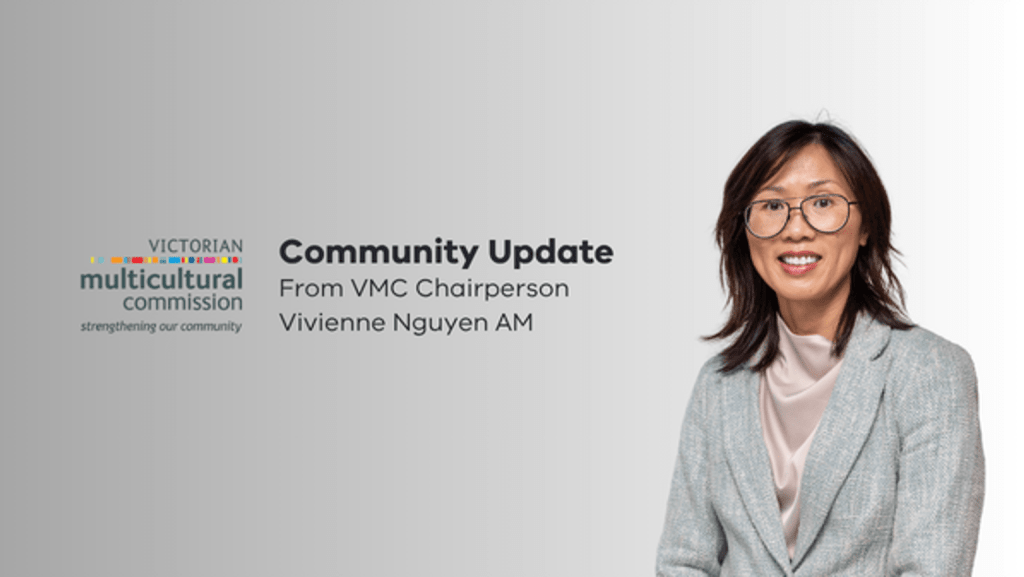
After guiding Victoria’s multicultural communities through pandemic, flood recovery, and social transformation, the VMC Chairperson’s legacy is one of resilience, inclusion, and hope.
MELBOURNE, VICTORIA — Wednesday 15 July 2026 marks the end of an era for Victoria’s multicultural landscape. Vivienne Nguyen AM, Chairperson of the Victorian Multicultural Commission (VMC), has concluded her seven-year tenure, closing a chapter defined by crisis, celebration, and profound community connection .
Since her appointment in 2019, Nguyen has served as a steadfast advocate for Victoria’s culturally, linguistically, and religiously diverse communities. Her leadership spanned some of the state’s most challenging periods, including the COVID-19 pandemic, flood recovery efforts, and the far-reaching impacts of international events on multicultural and multifaith communities . Under her guidance, the VMC ensured that diverse voices remained central to the state’s response and recovery.
A Legacy of Advocacy and Inclusion
“Being in this role has been an honour and a privilege,” Nguyen reflected. “We have shown that we can live and thrive, and we can overcome adversity no matter the shape and size. Diversity is indeed our strength and our asset.”
Nguyen’s journey to this role began long before her appointment. She arrived in Australia as a 12-year-old refugee from Vietnam, a young girl who would grow into one of Victoria’s most passionate advocates for community engagement and cultural diversity . Over more than 25 years, she has been a leader across corporate, community, and government settings, holding executive roles at AMP Asset Management and ANZ Banking Group, where she led their global diversity strategy .
In 2021, she was appointed a Member of the Order of Australia (AM) in recognition of her significant service to multicultural Victoria . Her contributions have also been acknowledged through the Australian Centenary Medal and induction into the Victorian Honour Roll for advocating for women’s leadership and supporting young Vietnamese people .
“Vivienne Nguyen is a true champion of multiculturalism who goes above and beyond,” said Mr Juma Piri Piri, Chairperson of the Refugee Communities Association of Australia, at the time of her AM recognition .
Strengthening the Foundations of Multicultural Victoria
Under Nguyen’s leadership, the VMC convened the Multifaith Advisory Group, contributed to Victoria’s Anti-Racism Taskforce, and delivered flagship initiatives including Cultural Diversity Week . She played a critical role in the Victorian Government’s pandemic response, partnering with community leaders and peak bodies to deliver unique resources for diverse communities .
Minister for Multicultural and Multifaith Victoria Ingrid Stitt expressed gratitude for Nguyen’s contributions. “I want to thank Vivienne for her valuable contributions to the Victorian Multicultural Commission and to Victoria’s multicultural communities since 2019,” Minister Stitt said.
A Transition to a New Chapter
Nguyen’s departure comes as the Victorian Government prepares for the proposed establishment of Multicultural Victoria, a new statutory body that will bring together the functions of the VMC and Multicultural Affairs, subject to the passage of legislation . This body will have a Multicultural Coordinator General and two Deputies, leading community engagement, advocacy, and accountability functions .
Applications for leadership positions within Multicultural Victoria—including the Coordinator General, two Deputy Coordinators General, and members of the Multicultural Community Advisory Group—are expected to open shortly . Community members are encouraged to keep an eye out for these opportunities and share them widely through their networks.
Ms Louise Perry has been appointed as interim Chairperson to support this transitional period, starting Thursday 16 July. Her term will continue until Multicultural Victoria is formally established .
A Victorian woman of Burmese heritage, Perry brings extensive experience in public policy and community engagement. She has served as Deputy Secretary for Fairer Victoria within the Department of Families, Fairness and Housing, where she led landmark anti-racism, youth, and gender equality strategies .
“The establishment of Multicultural Victoria presents a unique opportunity for multicultural and multifaith affairs in our state,” Ms Perry said. “I look forward to working with communities, VMC staff and government as we prepare for legislative changes” .
A Final Farewell
As Nguyen steps down, her legacy continues through the relationships she has built, the communities she has championed, and the foundation she has helped create for the next chapter of multicultural affairs in Victoria.
“Thank you for allowing me the privilege of serving alongside you,” Nguyen said in her farewell message .
While her role as Chairperson has come to an end, her commitment to Victoria’s multicultural communities remains steadfast. The VMC extends its deepest gratitude to Nguyen for her outstanding leadership and unwavering dedication over the past seven years.
“Diversity is indeed our strength and our asset.”
— Vivienne Nguyen AM, Chairperson, Victorian Multicultural Commission






