When Home Doesn’t Feel Like Home: The Quiet Struggle of Multicultural Seniors
For many older Australians from multicultural backgrounds, the decision to seek aged care isn’t about pride—it’s about feeling understood.
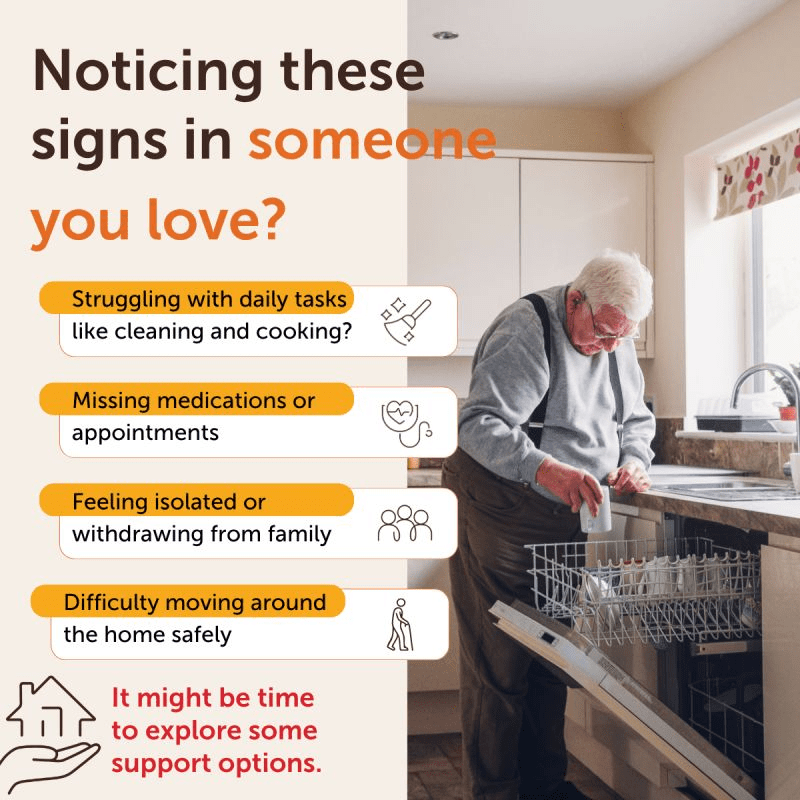
Elena* came to Australia from Greece in the 1960s. Now in her eighties, she lives alone in the Melbourne suburb where she raised her children. Her daughter Maria visits weekly, bringing groceries and checking that her mother has taken her medication. Lately, Maria has noticed changes—a forgotten appointment, a bruise from a fall that Elena dismisses as nothing.
When Maria suggested aged care support, Elena’s response was immediate: “I don’t need strangers coming into my home.”
It’s a familiar story. Many older Australians from multicultural backgrounds don’t access aged care support—not because it isn’t available, but because it doesn’t feel made for them. The system can seem foreign, the forms overwhelming, and the idea of a stranger providing personal care feels deeply uncomfortable when culture dictates that family should be the ones to help.
A Gradual Shift Families Struggle to Name
Families supporting older loved ones often describe the same experience: a gradual shift they weren’t sure how to name. A parent becoming more forgetful. A decline in mobility that makes stairs dangerous. A growing isolation as friends move away or pass on.
“For a long time, we just thought Mum was getting older,” says Maria. “It was only when the doctor pointed out the signs that we realised she needed more help than we could give her.”
But even then, the question remained: where to start?
The Support at Home Program: Meeting People Before Things Become Urgent
The Australian Government’s Support at Home program is designed to meet people at that moment—before things become urgent. Launched on 1 November 2025 as part of the new Aged Care Act 2024, the program replaces the former Home Care Package program with a simplified system that makes it easier for older Australians to get help to live safely and independently at home .
Support can include:
- Personal care such as showering, dressing, and grooming
- Domestic assistance including cleaning, laundry, and gardening
- Transport to shopping, banking, and medical appointments
- Allied health services like physiotherapy and podiatry
- Assistive technology and home modifications for safer living
- Social support to reduce isolation and maintain community connections
But for multicultural communities, accessing these services often means navigating more than just paperwork—it means finding someone who speaks their language and respects their culture.
The AMCS Difference: Care That Feels Like Home
This is where the Australian Multicultural Community Services (AMCS) steps in. For over 40 years, AMCS has been providing culturally appropriate care to seniors from diverse backgrounds across Melbourne and Geelong .
Founded in 1983 as the Australian Polish Community Services by visionary leaders who saw an urgent need for support services, the organisation has evolved significantly . It changed its name to Australian Multicultural Community Services in 2009, extending its reach to all multicultural communities .
Today, AMCS employs staff from more than 50 countries of origin who speak over 45 languages . This linguistic and cultural diversity is not incidental—it’s fundamental to how they deliver care.
“As a multicultural organisation, we understand that culture is more than just the language we speak,” says Maryanne Tadic, CEO of AMCS. “It’s in our rituals, our gestures, our celebrations, our food and shared experiences” .
Finding the Words: Breaking Down Language Barriers
For many families, the first barrier is language. Government resources like My Aged Care are available, but navigating the system can be daunting, especially when English isn’t your first language .
AMCS helps bridge this gap. Their staff guide families through the process from start to finish—identifying needs, understanding assessments, and making referrals . As one client shared:
“Amazing support for my mother and myself as a carer. With the help of the program, we were able to access the support we required, and we were not even aware that it was available. It really made a difference to us.”
More Than Just Services: Building Community
Beyond practical support, AMCS also addresses a less visible but equally important need: social connection.
Through group social support programs, community outings, and cultural celebrations, seniors have the opportunity to connect with others who share their background . For many, this is as valuable as the practical care they receive.
The organisation’s new Millenium House Community Centre, a $7 million renovation of a former Polish community centre in Melbourne’s west, will serve as a multicultural hub and events venue, continuing the legacy of community connection .
For those living with dementia, AMCS also provides free Multicultural Dementia Care and Support Centres in Melbourne and Geelong, offering culturally targeted activities, peer support, and wellbeing checks .
Starting the Conversation
If you’re working with families navigating these challenges, or if you know someone who could benefit, the first step is often the hardest. But it can be as simple as a phone call.
AMCS welcomes conversations with families and community members. Their team can help identify needs, explain the Support at Home program, and connect people with services that respect their language, culture, and personal preferences.
Call (03) 9689 9170 or visit http://www.amcservices.org.au
It’s never too early to start the conversation. Because for the Elena’s of our community, home should always feel like home.
*Name changed for privacy.
This story is published in partnership with the Australian Multicultural Community Services, a not-for-profit organisation dedicated to supporting older Australians from multicultural backgrounds to live independently at home.

Posted on June 26, 2026, in Aadaa, Events, gender, Information, Language, Media, News, Press Release, Promotion. Bookmark the permalink. Leave a comment.






Leave a comment
Comments 0