Daily Archives: June 26, 2026

When Home Doesn’t Feel Like Home: The Quiet Struggle of Multicultural Seniors

For many older Australians from multicultural backgrounds, the decision to seek aged care isn’t about pride—it’s about feeling understood.
Elena* came to Australia from Greece in the 1960s. Now in her eighties, she lives alone in the Melbourne suburb where she raised her children. Her daughter Maria visits weekly, bringing groceries and checking that her mother has taken her medication. Lately, Maria has noticed changes—a forgotten appointment, a bruise from a fall that Elena dismisses as nothing.
When Maria suggested aged care support, Elena’s response was immediate: “I don’t need strangers coming into my home.”
It’s a familiar story. Many older Australians from multicultural backgrounds don’t access aged care support—not because it isn’t available, but because it doesn’t feel made for them. The system can seem foreign, the forms overwhelming, and the idea of a stranger providing personal care feels deeply uncomfortable when culture dictates that family should be the ones to help.
A Gradual Shift Families Struggle to Name
Families supporting older loved ones often describe the same experience: a gradual shift they weren’t sure how to name. A parent becoming more forgetful. A decline in mobility that makes stairs dangerous. A growing isolation as friends move away or pass on.
“For a long time, we just thought Mum was getting older,” says Maria. “It was only when the doctor pointed out the signs that we realised she needed more help than we could give her.”
But even then, the question remained: where to start?
The Support at Home Program: Meeting People Before Things Become Urgent
The Australian Government’s Support at Home program is designed to meet people at that moment—before things become urgent. Launched on 1 November 2025 as part of the new Aged Care Act 2024, the program replaces the former Home Care Package program with a simplified system that makes it easier for older Australians to get help to live safely and independently at home .
Support can include:
- Personal care such as showering, dressing, and grooming
- Domestic assistance including cleaning, laundry, and gardening
- Transport to shopping, banking, and medical appointments
- Allied health services like physiotherapy and podiatry
- Assistive technology and home modifications for safer living
- Social support to reduce isolation and maintain community connections
But for multicultural communities, accessing these services often means navigating more than just paperwork—it means finding someone who speaks their language and respects their culture.
The AMCS Difference: Care That Feels Like Home
This is where the Australian Multicultural Community Services (AMCS) steps in. For over 40 years, AMCS has been providing culturally appropriate care to seniors from diverse backgrounds across Melbourne and Geelong .
Founded in 1983 as the Australian Polish Community Services by visionary leaders who saw an urgent need for support services, the organisation has evolved significantly . It changed its name to Australian Multicultural Community Services in 2009, extending its reach to all multicultural communities .
Today, AMCS employs staff from more than 50 countries of origin who speak over 45 languages . This linguistic and cultural diversity is not incidental—it’s fundamental to how they deliver care.
“As a multicultural organisation, we understand that culture is more than just the language we speak,” says Maryanne Tadic, CEO of AMCS. “It’s in our rituals, our gestures, our celebrations, our food and shared experiences” .
Finding the Words: Breaking Down Language Barriers
For many families, the first barrier is language. Government resources like My Aged Care are available, but navigating the system can be daunting, especially when English isn’t your first language .
AMCS helps bridge this gap. Their staff guide families through the process from start to finish—identifying needs, understanding assessments, and making referrals . As one client shared:
“Amazing support for my mother and myself as a carer. With the help of the program, we were able to access the support we required, and we were not even aware that it was available. It really made a difference to us.”
More Than Just Services: Building Community
Beyond practical support, AMCS also addresses a less visible but equally important need: social connection.
Through group social support programs, community outings, and cultural celebrations, seniors have the opportunity to connect with others who share their background . For many, this is as valuable as the practical care they receive.
The organisation’s new Millenium House Community Centre, a $7 million renovation of a former Polish community centre in Melbourne’s west, will serve as a multicultural hub and events venue, continuing the legacy of community connection .
For those living with dementia, AMCS also provides free Multicultural Dementia Care and Support Centres in Melbourne and Geelong, offering culturally targeted activities, peer support, and wellbeing checks .
Starting the Conversation
If you’re working with families navigating these challenges, or if you know someone who could benefit, the first step is often the hardest. But it can be as simple as a phone call.
AMCS welcomes conversations with families and community members. Their team can help identify needs, explain the Support at Home program, and connect people with services that respect their language, culture, and personal preferences.
Call (03) 9689 9170 or visit http://www.amcservices.org.au
It’s never too early to start the conversation. Because for the Elena’s of our community, home should always feel like home.
*Name changed for privacy.
This story is published in partnership with the Australian Multicultural Community Services, a not-for-profit organisation dedicated to supporting older Australians from multicultural backgrounds to live independently at home.

Maaramee Harqaa: The Voice of Resistance, The Soul of Oromia
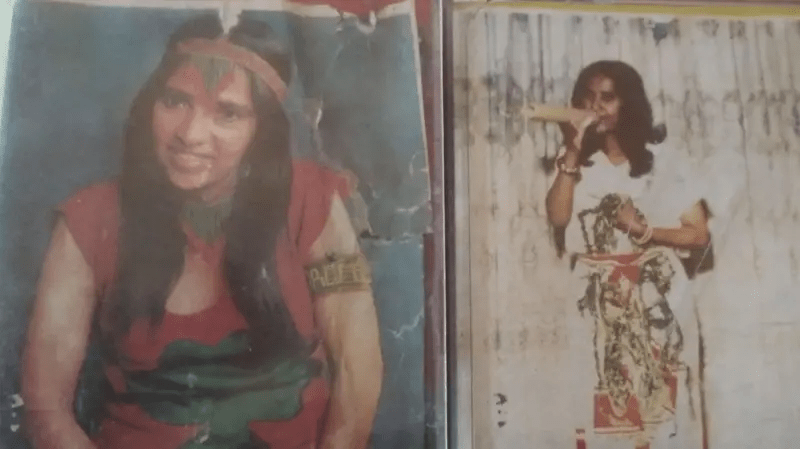
By Zelalem Tadesse Duressa
Senior Broadcast Journalist, Nairobi, BBC Afaan Oromoo
“Fo’ii loli… goonni haa baruudu…”
(“Fight, fight… let the cowards learn…”)
When Maaramee Harqaa sang these words, she wasn’t just performing—she was summoning a people to awakening. Her voice, sharp as a blade yet tender as a mother’s embrace, cut through the silence of oppression and gave language to a generation’s longing for freedom.
The Songstress Who Became a Symbol
To the Oromo people, Maaramee Harqaa Kaasaa is not merely a singer or a teacher. She is memory incarnate—a woman whose life became inextricably woven into the fabric of Oromo resistance. Those who knew her speak of her with a reverence reserved for ancestors: “Bilisummaan tola hin dhufu” (Freedom does not come for free)—one of her most famous refrains—remains etched in the collective consciousness of a people who have long known the weight of subjugation.
But who was Maaramee Harqaa, truly?
Roots in Wallagga
Born in the late 1950s in Qeejjoo, a village in Gobbuu Sayyoo district, eastern Wallagga, Maaramee entered the world as the daughter of Harqaa Kaasaa and Geexee Baloo. She was the only daughter among five brothers—a position that might have made her soft, but instead forged in her an unyielding spirit.
From childhood, those around her recognized something extraordinary. According to Baqqalaa Warquu, author of “The History of Oromo Women Fighters,” Maaramee was “a truth-teller who could not tolerate injustice, who could not be silent in the face of wrongdoing.” She was, in every sense, faaya Oromoo—the pride and ornament of her people.
Her education began at the first-grade level in Baakkoo, continued in Amboo, and culminated at Dabra Birhaan Teachers’ Training Institute (TTI). Upon completing her training, she returned to Amboo and the surrounding Awwaaro area, where she devoted herself to teaching.
The Teacher Who Became a Revolutionary
But Maaramee was never merely a teacher. Even as she stood before her students, she was organizing, mobilizing, and awakening. During the Derg regime, she became a member of the ABO (Adeemsa Bilisummaa Oromoo—the Oromo Liberation Front’s predecessor organization). Her classroom became a site of consciousness-raising; her lessons extended beyond textbooks into the realm of political awakening.
“She was particularly active in the struggle to teach the Oromo alphabet (qubee),” writes Baqqalaa. “She called countless young women into the field of education, transforming them from passive subjects into active agents of change.”
Alongside other iconic Oromo women fighters like Ilfinash Qannoo and Angaatuu Baalchaa, Maaramee immersed herself in the cultural and political resistance of her people. Through poetry, song, and unwavering activism, she became a pillar of the movement.
Exile and Resilience
When the Oromo Liberation Front withdrew from the transitional government in 1984, pressure mounted on Maaramee. The authorities intensified their surveillance, and she was forced to flee to Finfinne (Addis Ababa). Even there, however, she found no peace—the regime continued its pursuit.
Eventually, she left formal teaching and joined the Oromo Relief Association (ORA), a humanitarian organization that allowed her to continue serving her people while navigating the treacherous political landscape.
Love and Loss
It was during her years of struggle that Maaramee met Jifaara Qarneessaa—a man described as strong, historically conscious, and deeply moved by her passion and courage. Their union produced two children: Leellisee Jifaaraa and Gammachuu Jifaaraa.
But the revolution demanded its sacrifices. After her husband’s death, Maaramee was urged by a prominent woman from a fighting family to continue the struggle—to not retreat into private grief but to channel her sorrow into the collective cause. She listened.
When asked why her people suffered—“Maaf lafasaa dhaba? Maaf namasaa dhaba? Maaf gootasaa dhaba?” (Why do they have no land? Why do they have no dignity? Why do they have no strength?)—she found her answer in the faces of her children, her students, and her people. She rose, hardened, and fought with renewed vigor.
The Poet of Resistance
Maaramee’s literary legacy is profound. She became one of the first Oromo women to write extensively in the Oromo language (qubee), composing songs not only for herself but for other artists as well. Her songwriting bore the fingerprints of a scholar, a patriot, and a mother all at once.
Among her most famous lyrical moments is this haunting stanza:
Biyyoo biyya lafaa eenyut sirratti hafaa?
Du’a biyya lafaa eenyu irraa hafaa?
(Oh earth, who will remain upon you?
Who will remain after death upon this land?)
She sang these words for her deceased husband but they echoed far beyond personal grief. They became an anthem for a dispossessed nation.
Another powerful line from her recordings reveals her defiance in the face of mortality:
“Jabaatanii dhukkubaa fi du’arraa wal hin hanbifannu,
Dabareen kiyya na gahee hanga sibira gahuttii, nagaatti…”
(Let us not abandon one another to illness and death,
My beloved, stand by me until the end, in peace…)
Gundoo Booree: A Cultural Monument
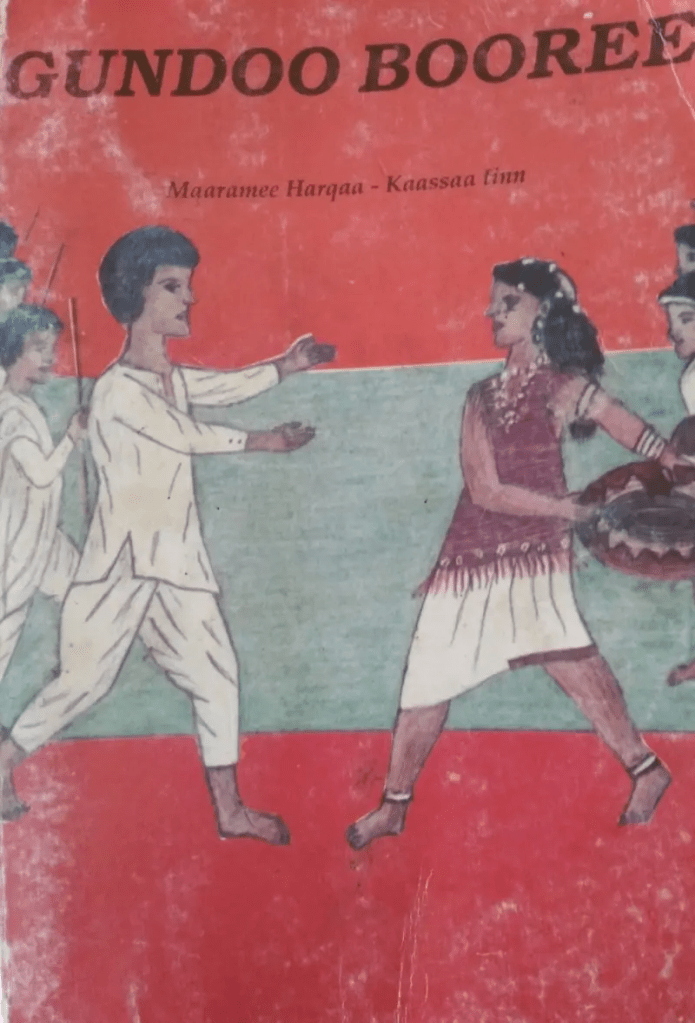
Perhaps no contribution captures Maaramee’s genius better than her work on Gundoo Booree. This traditional Oromo song, deeply embedded in the culture of the Maccaa Oromo, particularly among the sons of Jaawwii, is performed during weddings and celebrations.
The song’s lyrics—playfully provocative, filled with mock rivalry and affection—became a vehicle for Maaramee to document and preserve Oromo cultural identity:
“Fuutuu… eenyu isheen dhuftee fuutu…”
(Come… who comes to take you?)
Young women, holding enamel cups, would sing this to challenge their male counterparts, their voices dripping with both pride and mockery. The playful confrontation masked deeper cultural commentary—about dignity, about possession, about who holds power in the dance of life.
When a young man fails to properly present the traditional cup, the women sing:
“Gundoo Booree… Dhiistee galta mooree?
Gundoo dhiigaa… Gurroo dhiiraa dhiistee galta mooree?”
(Gundoo Booree… Did you leave and come back?
Gundoo of blood… Did you leave the man’s son and return?)
Maaramee elevated this cultural treasure into written form, preserving it for posterity in her book, where it stood alongside histories, political commentaries, and explorations of Oromo ethics and customs.
Discography: The Voice in Four Albums
Maaramee Harqaa released four albums during her lifetime, each a testament to her range as an artist and her depth as a thinker.
Her first album, released in 1997 E.C. (2005 G.C.) under Zeddi Music Studio, contained ten tracks, including:
- Boonaa warraa
- Fandishee Alaa’ee
- Asham Baabee
- Ishoo loli yaa durbee
- Hin booyin golloo
- Qarree durbaa baali hin haadu
- Bilisummaan tola hin dhufu (Freedom does not come free)
- Harcumme yaa looyye
- Si hin waamne yaa seesaa
- Yaa Sharrittii koo
Her second album, released in 2000 E.C. (2008 G.C.) under Kiilolee Music Studio, also featured ten tracks:
- Finfinnee
- Kuufama kee yaa garaa
- Geerarsa
- Faaruu Oromiyaa
- Ongololi
- Falmadhu addooyyee
- Yoona malee yoomiree
These songs remain alive in the hearts of Oromos across the diaspora, in refugee camps, in cities, and in the rural highlands where her voice still echoes.
The Price of Freedom
Maaramee’s life was not one of comfort. She was arrested, tortured, and forced to witness the suffering of her people firsthand. Yet she never wavered.
In 1995, after years of tireless struggle, illness finally claimed her. Surrounded by her memories and the songs she had composed, she departed this world—but not before securing her place in the eternal choir of Oromo resistance.
A Legacy Honored
In 2022, the Oromia Writers’ Association posthumously awarded Maaramee Harqaa the prestigious Gaaddisaa literary award. Though she was no longer physically present, the honor acknowledged what her people had always known:
Maaramee Harqaa was more than a singer. She was more than a teacher. She was a revolutionary, a cultural ambassador, and a mother to a nation.
The Land Remembers
Today, when Oromos gather at weddings and sing Gundoo Booree, when they murmur the lyrics of Bilisummaan tola hin dhufu, when they remember the price their ancestors paid, they are also remembering Maaramee.
Her voice—sharp with defiance, tender with love, and eternal in its call for justice—remains a compass for a people still navigating the storm toward freedom.
“Biyyoo biyya lafaa eenyut sirratti hafaa?”
Maaramee, the land remembers. The people remember. And as long as Oromo lips sing and Oromo hearts hope, your name will never fade.
Zelalem Tadesse Duressa is a Senior Broadcast Journalist based in Nairobi, BBC Afaan Oromoo, covering the Horn of Africa region.






