Oromia is My Blood: The Unbreakable Bond of Identity, Land, and Memory
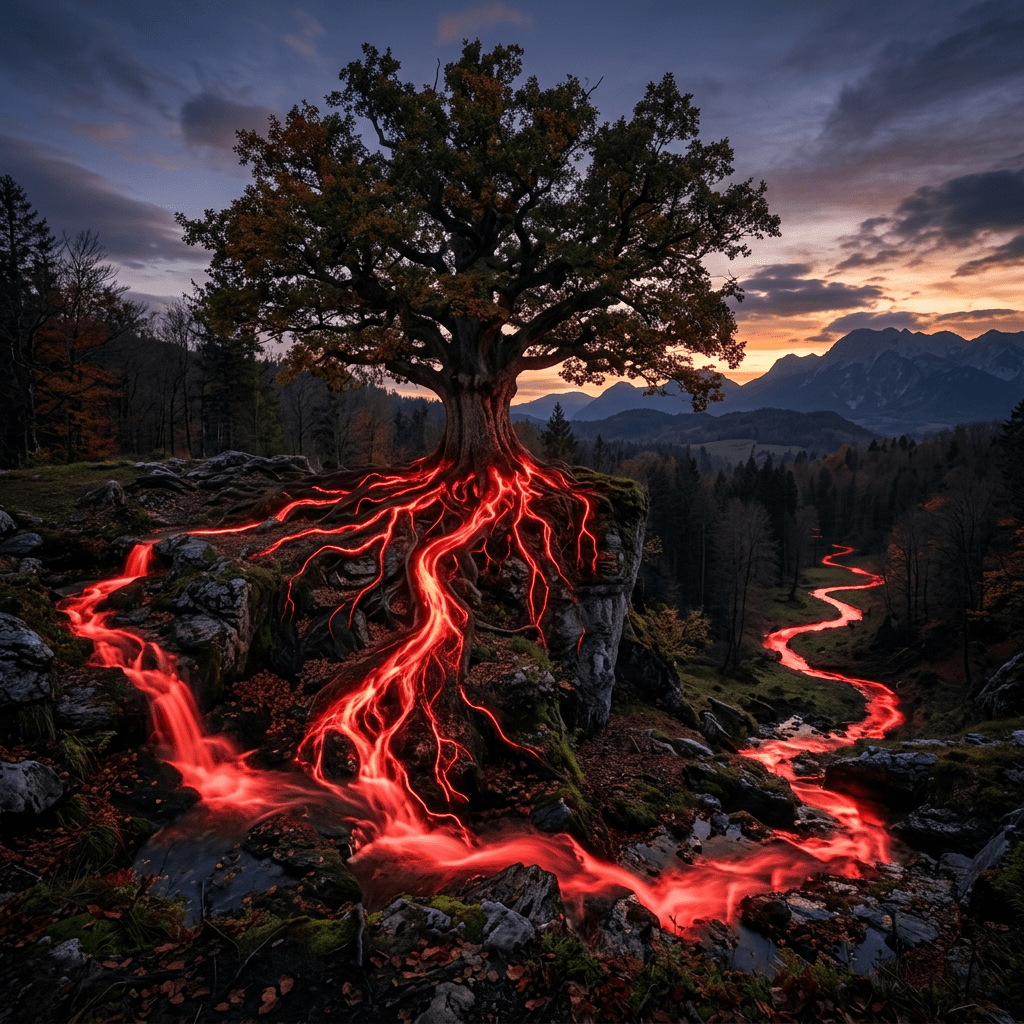
“Oromia is my blood” is more than a phrase. It is a declaration of belonging that runs deeper than politics—an ancestral connection that cannot be severed by distance or time.
For the Oromo people, identity is not something that can be chosen or changed like a political affiliation. It is something you are. It is carried in the language you speak, the customs you observe, and the land that shaped your ancestors. As one reflection on Oromo identity puts it: “A child born to Oromo parents carries Oromummaa in their blood whether they know politics or not. Oromummaa, in this sense, is sacred and unshakable.”
But what does it truly mean to say that Oromia is in one’s blood? It is a claim to history, to culture, to a homeland that has endured centuries of change and challenge—and to a people who have never stopped asserting their right to exist on their own terms.
A Land of Vastness and Significance
To understand why Oromia is so deeply woven into the identity of its people, one must first understand the land itself. Oromia is Ethiopia’s largest region, covering more than 350,000 square kilometres—an area larger than Italy or Côte d’Ivoire . It makes up 34% of Ethiopia’s landmass and shares borders with every other Ethiopian region except Tigray, as well as international boundaries with Sudan, South Sudan, and Kenya .
Its capital is Finfinne—also known as Addis Ababa—which serves both as the regional capital and the seat of Ethiopia’s federal government and the African Union .
The region is a powerhouse. Its fertile soils produce about half of Ethiopia’s total crop production, including coffee, teff, maize, and barley. Its mines yield gold, platinum, and iron ore. Its industries produce textiles, pharmaceuticals, and construction materials. In the 2021-2022 financial year alone, Oromia generated US$324 million from mining . For Oromos, this is not just statistics—it is the land of their fathers and mothers, the soil that has nourished generations.
Identity Forged Through Struggle
Yet the relationship between Oromia and its people has never been simple. For much of modern Ethiopian history, Oromos have been described as “always on the outside looking in” . The Ethiopian state, historically shaped by Amhara aristocracy, defined the terms of belonging—permitting Oromos to enter public life only as individuals, not as a collective .
The 20th century saw the rise of pan-Oromo consciousness. Scholars trace the emergence of Oromo nationalism and the assertion of the self-identifying name “Oromo”—replacing the externally imposed label “Galla”—as a powerful reclamation of dignity and identity . The formation of the Oromo Liberation Front and the growing force of Oromo ethno-nationalism reflected a people demanding to be seen and heard .
This struggle is not merely political—it is existential. It is about the right to speak Afaan Oromo without fear, to celebrate Irreecha openly, and to walk proudly in clothing that bears the red, black, and white of Oromo identity . As photographer Elias Badhaasaa put it: “I want us to be visible in the Horn of Africa and beyond” .
Culture as the Pulse of Identity
In recent years, a cultural renaissance has taken hold. Young Oromos are increasingly expressing ethnic pride through fashion, music, and art . Designers are modernising traditional Oromo garments, incorporating the iconic Odaa tree—a sacred symbol—into their creations .
The annual Irreecha thanksgiving festival, once a celebration that drew millions, has grown in national profile. In 2020, it was held in Addis Ababa for only the second time in history—a milestone that reflects the growing visibility of Oromo culture . Though tragedy struck the festival years earlier, the spirit of Oromo resilience has endured.
At the heart of this cultural awakening is Oromummaa—the essence of being Oromo . It is not a political ideology or a man-made theory. It is something older than the modern state itself. As one writer explains: “Oromummaa is seen in the way we respect elders, the way we greet with ‘Akkam?’, the way we celebrate Irreecha, and how we uphold principles of fairness (nagaa, araara, safuu)” .
Solidarity Beyond Ethnicity
Remarkably, the cry of “Oromia is my blood” has also resonated beyond the Oromo community. During mass protests in 2015 and 2016, Amhara protesters in Gondar chanted: “Oromo blood is our blood!” and “The killing of our Oromo brothers should stop!” . In Shambu, Wollega, demonstrators proclaimed: “Oromo blood is Amhara blood and Amhara blood is Oromo blood and we are inseparable” .
This solidarity threatened the ruling party’s long-standing strategy of pitting ethnic groups against one another. As one analysis observed: “The blood flowing in Oromia is our blood too”—these words are not just slogans but actions that exist as words, actions that threaten to unsettle the myths that hold together the ideological edifice of the system” .
For a moment, it seemed that shared suffering and shared hope could bridge historical divides. Whether that promise has been fulfilled remains an open question—but the sentiment itself speaks to the power of identity as a unifying force.
The Diaspora: Blood That Spans Oceans
For Oromos living in the diaspora—in the United States, Canada, Australia, Europe, and beyond—the phrase “Oromia is my blood” takes on a particular resonance. Far from the homeland, identity becomes both a lifeline and a burden. Political conditions in Ethiopia have encouraged exiled communities to construct “imagined landscapes” that evoke nostalgia and maintain engagement with homeland affairs .
These landscapes are not mere fantasy—they are integral to enduring memory. Most forced emigres involve themselves in the social and economic issues of their place of birth, rather than focusing only on their routines in host countries . The nexus between origin and host countries sustains a powerful form of transnationalism—a proof that home is not just a place, but a bond that travels.
Blood as Memory, Blood as Future
When Oromos say “Oromia is my blood,” they are saying something profound. They are claiming a history that precedes modern borders, a culture that has survived attempts at erasure, and a future that they intend to shape.
It is not about hatred of others. It is not about exclusion. It is about affirmation. It is about the right to speak a language, to tell a story, to honour ancestors, and to pass on a legacy.
As the reflection on Oromo identity concludes: “Let us celebrate it in its purest form—as the unshakable mark of a people who have endured, resisted, loved, and hoped through centuries” .
Oromia is not just a region on a map. It is blood memory. It is the rhythm of the shagoyyee drum. It is the poetry of Ali Birra. It is the wisdom of proverbs. It is the sacred Odaa tree. It is the land that gives life—and the people who give that land meaning.
“Oromia is my blood” is not just a phrase. It is a promise. A belonging. A truth that cannot be denied.

Posted on July 1, 2026, in Aadaa, Afaan, Biography, Diaspora, Events, Face of Injustice, Finfinne, gender, Grief Support, Information, Language, News, Oromia, Press Release, Promotion, Sirna Oromo. Bookmark the permalink. Leave a comment.




 Advocacy for Oromia
Leave a comment
Comments 0