The Ceremony of Nyaachisaa: A Sacred Rite of Humanity and Renewal at Ardaa Jilaa Daawwitii Borbor
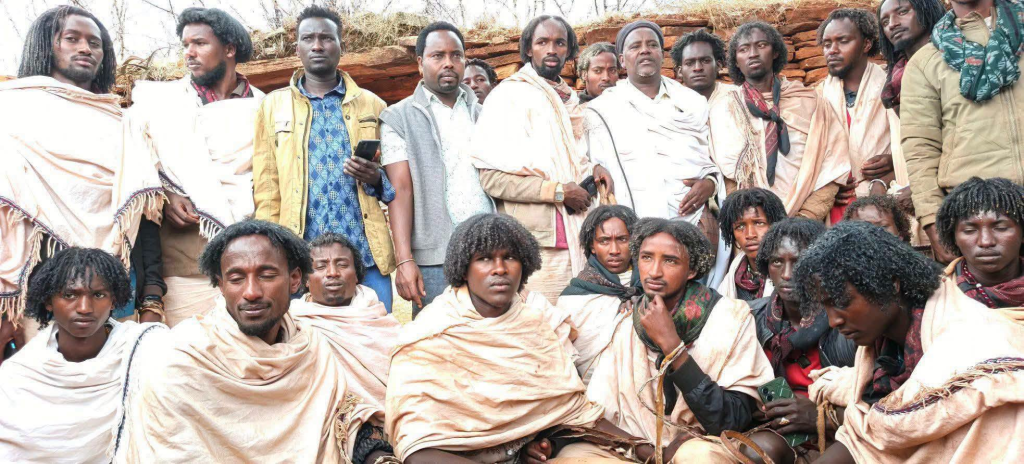
In the heart of Borana, the ancient Gadaa tradition comes alive as the community gathers to celebrate the Nyaachisaa ceremony—a profound rite of passage that honours brotherhood, culture, and the sacred bonds that unite the Borana people.
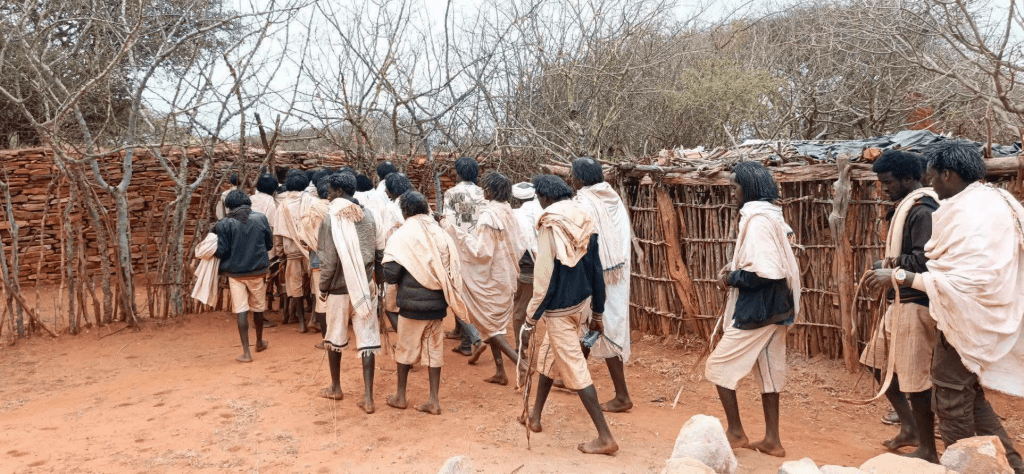
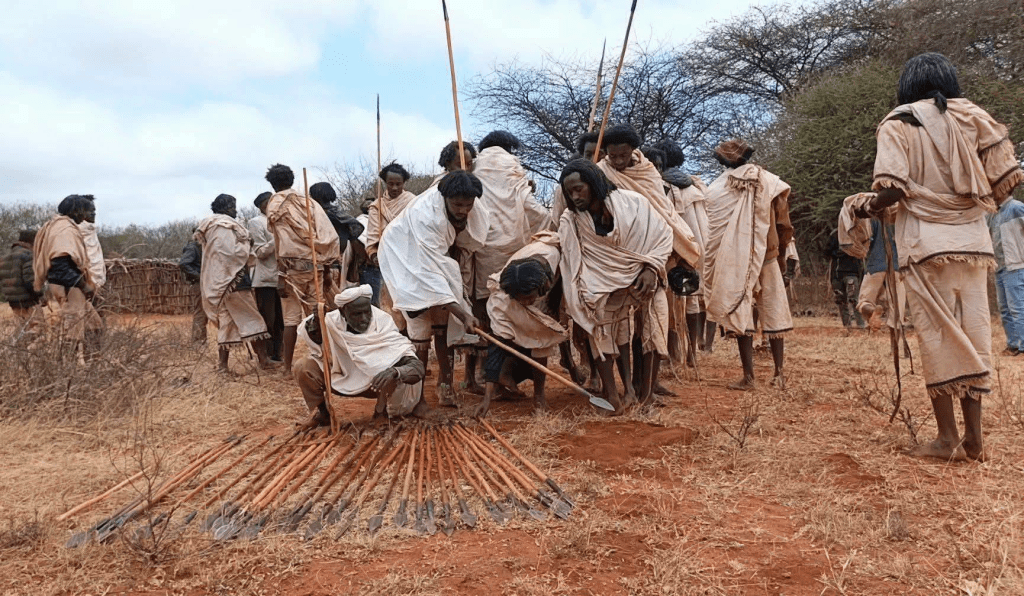
At Ardaa Jilaa Daawwitii Borboritti in East Borana Zone, Dhaasii district, a powerful cultural ceremony is unfolding. The sons of Guyyoo Gobbaa Bulee—the revered elder and former Abbaa Gadaa—are conducting the Nyaachisaa ritual, a sacred feast that embodies the values of brotherhood (waloomaa), mutual respect, and cultural preservation .
“Nagaan Gooroo marmaaraa ga’aa, gammee buufadha!”
This invocation—”Peace to the Gooroo Marmaaraa, enter the assembly!”—echoes across the gathering, summoning participants to a celebration that is both ancient and vibrantly alive.
Understanding Nyaachisaa: More Than a Feast
The Nyaachisaa ceremony is far more than a simple communal meal. It is a sacred rite within the Borana Gadaa system, marking important transitions and reaffirming the social fabric of the community. The ritual is closely tied to the Gadaa cycle, the indigenous democratic system that has governed the Borana people for centuries .
The Gadaa system, recognised by UNESCO as an Intangible Cultural Heritage of Humanity, is a sophisticated form of governance that operates in eight-year cycles . Every eight years, power is transferred from one Abbaa Gadaa (customary ruler) to his successor, a process that involves elaborate ceremonies and rituals . The recent installation of the 72nd Abbaa Gadaa, Guyo Boru Guyo, demonstrates that this tradition remains vibrantly alive .
The Nyaachisaa ceremony is one of the rituals associated with this system. The term nyaachisaa refers to the ritual of “feeding” or “causing to eat”—a symbolic act that carries deep meaning.
The Meaning Behind the Ritual
When the sons of Guyyoo Gobbaa Bulee conduct the Nyaachisaa ceremony, they are participating in a tradition that has been passed down through countless generations. The ritual involves:
- Communal Slaughter: The slaughter of a bull (sangaa) is central to the ceremony. The bull is not just a source of food—it is a sacrificial offering that carries profound spiritual and symbolic meaning . The Borana believe that before slaughtering, they must first bless the animal through a ritual called ariracha, asking for blessings to prosper both people and livestock .
- Food as Social Bond: The meat from the slaughtered bull is shared according to customary rules. The act of sharing meat—called jiffu—reinforces kinship ties and social obligations, strengthening the bonds between families, clans, and the broader community .
- Cultural Preservation: Through the Nyaachisaa ceremony, the Borana preserve not just their culinary heritage but also the values of solidarity, mutual support, and respect for elders .
The Sacred Setting: Ardaa Jilaa and the Odaa Tree
The ceremony takes place at Ardaa Jilaa Daawwitii Borboritti—a sacred site of immense cultural significance to the Borana people. In Borana tradition, ardaa jilaa refers to a sacred gathering place, often associated with the odaa tree (sycamore fig tree) .
The odaa tree holds profound symbolic meaning in Oromo culture. Most Gadaa rituals are performed in the shade of this tree, and both the tree and the surrounding area are fully protected as sacred spaces . The tree represents life, wisdom, and the continuity of tradition across generations.
At these sacred sites, cultural ceremonies like Nyaachisaa reaffirm the community’s connection to their ancestors and the land.
The Role of Abbaa Gadaa and Elders
The involvement of Guyyoo Gobbaa Bulee and his sons in the Nyaachisaa ceremony is particularly significant. Guyyoo Gobbaa Bulee was a retired Abbaa Gadaa who, along with Guyyo Boru, served as a main speaker during the Gumi Ganyo Assembly—a traditional gathering where community issues are discussed and resolved according to custom (aada) and law (seera) .
The elders play a crucial role in Borana society:
- Preserving Knowledge: Elders are the keepers of oral history, laws, and rituals .
- Teaching the Next Generation: They train young initiates about history, laws, and the function of the Gadaa system .
- Resolving Conflicts: The Abbaa Gadaa is responsible for solving feuds and disputes, often related to cattle-raiding and access to resources .
The Nyaachisaa ceremony is therefore not just a celebration—it is an educational moment where younger generations learn the values and traditions that define their identity.
Food as Identity: The Significance of Koche
One of the central elements of the Nyaachisaa ceremony is the preparation and sharing of koche, a traditional meat dish that has deep cultural significance .
What is Koche?
Koche is a nutritious and rich food made from meat, fat, and other ingredients. It is highly regarded in Borana culture and is:
- A Symbol of Hospitality: Koche is prepared for important guests and during ceremonies. It is a sign of respect and generosity .
- An Expression of Love: Beyond its nutritional value, koche is also a food of passion. Women would prepare it for their lovers—even secret ones—as an expression of love. If discovered, the lover would be fined a cow to appease the husband .
- A Measure of Status: Among Borana women, it was considered embarrassing for their traditional storage container (dhibe) for meat to be empty. Women of substance were expected to have koche in their dhibe at all times .
Communal Preparation
The preparation of koche is a communal affair involving elders, women, herders, and villagers. The process takes days of careful planning :
- Women fetch water and firewood and prepare a mat-like structure called sage for holding the meat.
- Men are involved in the slaughter and butchering of the bull.
- The community comes together to share in the meal, strengthening social ties and reaffirming collective identity.
This communal effort reflects the Borana belief that food is not just fuel for the body but nourishment for social relationships.
The Values of Waloomaa and Obbolummaa
The Nyaachisaa ceremony embodies the Borana values of waloomaa (cohesion) and obbolummaa (siblinghood). The sharing of meat is a physical expression of these values. As one analysis of Borana culture explains, eating together (commensality) is more than just sharing and consuming food—it strengthens kinship ties and friendship.
When the sons of Guyyoo Gobbaa Bulee conduct the Nyaachisaa ceremony at Ardaa Jilaa Daawwitii Borboritti, they are not just feeding the community. They are:
- Honouring their father: Guyyoo Gobbaa Bulee’s legacy as an elder and former Abbaa Gadaa is celebrated and passed on.
- Reinforcing brotherhood: The act of sharing meat reminds everyone of their obligations to one another.
- Preserving culture: The ceremony ensures that ancient traditions continue to have meaning in the present.
The Bigger Picture: Gadaa and Cultural Preservation
The Nyaachisaa ceremony at Ardaa Jilaa Daawwitii Borboritti is part of a broader cultural renaissance among the Borana and Oromo peoples. Despite centuries of pressure and challenges, the Gadaa system has survived:
- UNESCO Recognition: In 2016, the Gadaa system was added to UNESCO’s list of Intangible Cultural Heritage of Humanity, acknowledging its significance as one of Africa’s oldest democratic governance systems .
- Cross-Border Significance: The Gadaa system unites Borana communities across national borders—in both Ethiopia and Kenya .
- A Living Tradition: The Gadaa system is not a museum piece but a living, dynamic tradition that continues to evolve while maintaining its core values .
As one Borana elder explained, the age-set system (hariya) may end when members die, but the generation-set system (luba) continues forever—a cycle of renewal that keeps the community alive .
Conclusion: The Feast That Feeds the Soul
The Nyaachisaa ceremony at Ardaa Jilaa Daawwitii Borboritti is a powerful reminder of what makes the Borana people unique—their commitment to brotherhood, their respect for elders, their connection to the land, and their ability to preserve their culture across generations.
“Nagaan Gooroo marmaaraa ga’aa, gammee buufadha!”
Peace has come to the Gooroo Marmaaraa—the ritual journey from one sacred site to another . The assembly is called. The bull is slaughtered. The koche is shared. And through this ancient rite, the Borana people reaffirm who they are and what they stand for.
In a changing world, the Nyaachisaa ceremony remains a source of identity, solidarity, and hope. It is a feast that feeds not just the body but the soul—a testament to a people who refuse to forget their past even as they face the future.
The Nyaachisaa ceremony honours the wisdom of elders, the strength of community, and the enduring values of humanity, respect, and cultural pride.

Posted on July 1, 2026, in Aadaa, Afaan, Bokkkuu, Events, Finfinne, gadaa, Information, Language, Media, News, Oromia, Press Release, Promotion, SBO, Sirna Oromo. Bookmark the permalink. Leave a comment.




 Advocacy for Oromia
Leave a comment
Comments 0