The Unbreakable Spirit: The Role of Oromo Women in the Liberation Struggle
By Our Special Correspondent
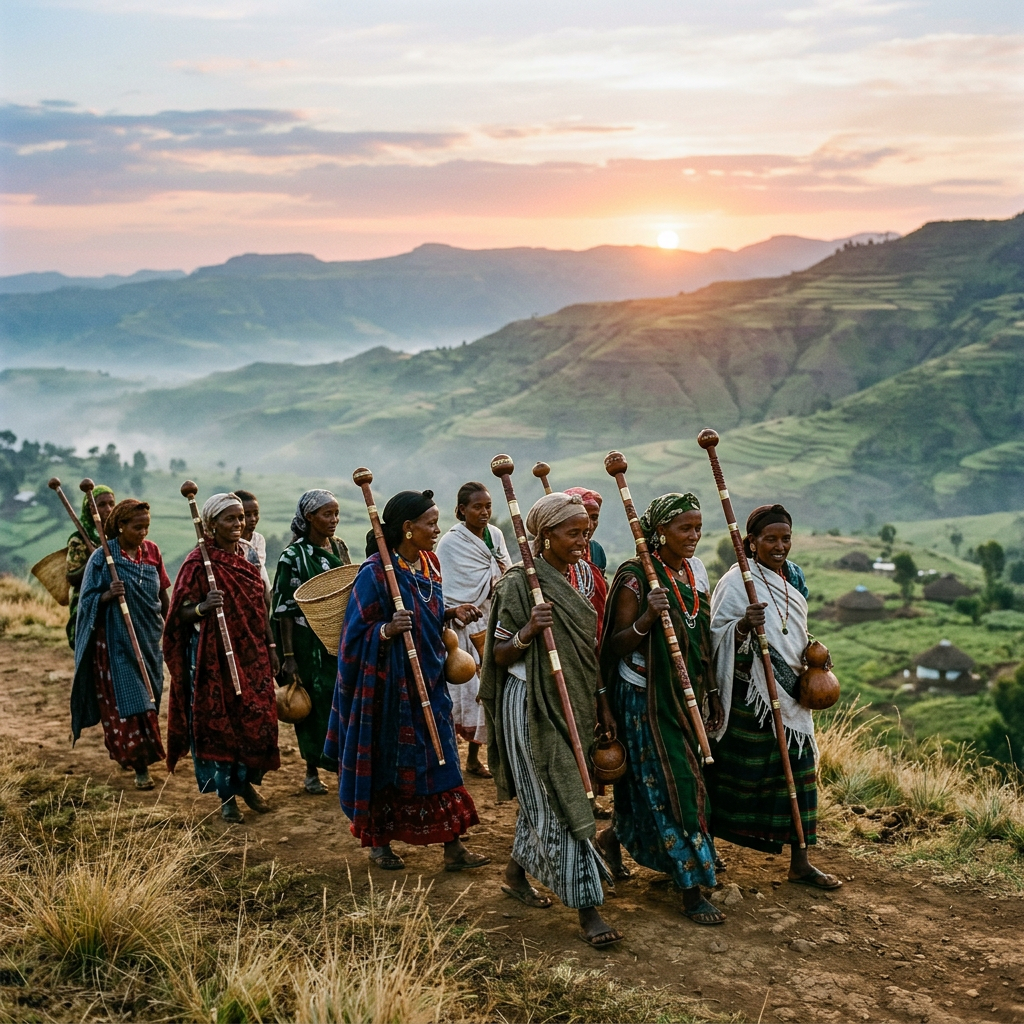
History often remembers the faces of revolutionaries as male—the generals, the politicians, the spokesmen. Yet, in the Oromo liberation struggle, this narrative is not merely incomplete; it is a profound erasure. For decades, Oromo women have been the backbone of the movement, serving not only as its supporters but as its leaders, its strategists, its fighters, and its soul.
Their contributions span the political, the military, the cultural, and the social. They have organized protests, taken up arms, preserved a threatened culture, and sustained communities through the darkest hours of conflict. And they have done so while facing a double oppression—as members of a marginalized ethnic group and as women in a patriarchal society.
This is their story—a story of courage, resilience, and an unyielding commitment to freedom.
—
The Historical Foundation: Resistance Rooted in Tradition
The role of Oromo women in resistance is not a modern phenomenon. It is deeply rooted in the traditional structures of Oromo society. Within the Gadaa system—the indigenous democratic governance framework that has guided the Oromo for centuries—women exercised influence through institutions like the Siiqqee, a women’s assembly that ensured gender balance and protected women’s rights.
During the 19th-century colonization of Oromia by Abyssinian forces, Oromo women actively resisted displacement, land confiscation, and cultural erasure. Their resistance was both direct and indirect, often taking the form of cultural preservation—passing down language, traditions, and memory to subsequent generations. This cultural defiance laid the groundwork for the political and armed struggles that would follow.
The Siinqee Tradition: A Philosophy of Resistance
Central to understanding the role of Oromo women is the Siinqee—a traditional Oromo women’s institution that symbolizes unity, resistance, and empowerment. It is more than a cultural artifact; it is a lived practice of mutual protection among Oromo women, a covenant of resistance against all forms of oppression.
Scholar Martha Kuwee Kumsa has developed this into a formal framework known as Siinqee Feminism—an Oromo philosophy of womanhood and solidarity that predates Western feminist thought. It offers a unique lens through which to understand how Oromo women mobilize to foster solidarity and challenge oppressive systems. The Siinqee is not merely an academic concept; it is a living tradition that continues to empower women in the struggle for liberation.
Political Leadership: Organizing and Advocating
Oromo women have been active in political movements for decades, serving as leaders, organizers, and advocates within organizations such as the Oromo Liberation Front (OLF) and other nationalist groups. They have organized protests, participated in negotiations, and represented the Oromo cause on national and international platforms.
The Qeerroo movement—the youth-led protests that shook Ethiopia from 2014 onward—saw women at the forefront. One female leader from Sebeta, known as “Chali,” recalled: “People who did not understand how the 2015 Oromo protest was organized tend to give credit to the diaspora. We were the ones”. These protests, which began in response to the Addis Ababa Master Plan, evolved into a broader movement against systemic marginalization. Women were not merely participants; they were architects of the resistance.
The Armed Struggle: Taking Up Arms
Perhaps the most striking testament to the commitment of Oromo women is their participation in the armed struggle. Many have joined the Oromo Liberation Army (OLA) , the armed wing of the OLF, taking up arms to defend their people and land.
For some, joining the armed group was described as “a refuge from a state that persecuted Oromo womanhood and identity”. A former OLA fighter reflected on her decision to move from political organizing to the bush: “I felt most welcomed in my Oromoness when I took the erbuu [oath] with bullets and our flag in the bush… At least in that moment, I was safe in my belonging”. Another former mobilizer explained: “I knew I was born into a social justice struggle; I’ve never had an identity or childhood separate from this oppression. My development, at a basic level, was formed around Oromoness”.
Beyond combat, women have provided critical logistical support to the armed struggle—supplying food, shelter, and medical care to fighters, and acting as messengers and intelligence gatherers, often at great personal risk.
The Diaspora: A Global Struggle
The Oromo women’s struggle is not confined to the borders of Ethiopia. In September 2020, Oromo women marched through the streets of Berlin, Germany, demanding recognition for their struggle. This protest march, called a Hiriira in the Oromo language, was a powerful statement of solidarity and resistance, linking the struggles of Oromia to global movements against oppression.
Cities across Germany have been sites of prolific organizing and resistance against the Ethiopian state, as seen in archival documents from the 1970s declaring “Freiheit für Oromiya”. Many of these activists are now elders in the Oromo community, still fighting for liberation today.
Guardians of Culture: Preserving Identity
In times of displacement and cultural erasure, Oromo women have been the guardians of their people’s identity. They have preserved and promoted Oromo language, traditions, and cultural practices. Through ceremonies like Irreechaa (Oromo Thanksgiving) and the passing down of oral traditions, they have kept Oromo identity alive across generations.
This cultural preservation is not a passive act; it is a form of resistance. By maintaining their language and traditions in the face of assimilationist policies, Oromo women have ensured that the struggle for freedom has a cultural foundation to build upon.
The Weight They Carry: Challenges and Sacrifice
The contributions of Oromo women have come at an immense cost. They face what scholars describe as “double oppression”—marginalization as Oromo people and as women. They have endured violence, displacement, and loss, yet they remain steadfast in their commitment to the struggle.
In the armed conflict, women have been particularly vulnerable to sexual violence and exploitation. Within their own communities, their voices are sometimes marginalized in political and social spaces. Despite these challenges, they continue to push for gender equality within the liberation movement itself, challenging patriarchal norms and advocating for women’s representation in leadership roles.
The Unfinished Struggle: A Vision for the Future
The struggle for Oromo liberation is far from over, and the role of women within it continues to evolve. As one analysis notes, “Oromo women have fought not only for national liberation but also for gender equality”. The movement’s true liberation will not be complete until the voices of women are fully included in leadership and decision-making.
As Martha Kuwee Kumsa’s work reminds us, we must “draw inspirations from the lived experiences of Oromo women and how they mobilise Siinqee feminist practices to foster solidarity”. Their resilience, courage, and vision offer a blueprint not only for the Oromo struggle but for movements for justice everywhere.
—
The story of the Oromo liberation struggle cannot be told without honoring the women who have sustained it, led it, and sacrificed for it. They are the fighters, the organizers, the mothers, the scholars, and the guardians of a people’s soul.
They have shouldered the weight of history and refused to break. Their unbreakable spirit is the heartbeat of the Oromo struggle—and a reminder that true freedom is never won without the full participation of women.
“Namni waan hin beekne hin dhaabatu” — One who does not know does not stand firm. And the women of Oromia know—they know their history, their worth, and their power.

Posted on July 5, 2026, in Aadaa, Afaan, Biography, Bokkkuu, Diaspora, Events, Face of Injustice, Finfinne, freedom, gadaa, gender, Information, Language, Media, News, Oromia, Press Release, Promotion, SBO, Siinqee, Sirna Oromo. Bookmark the permalink. Leave a comment.




 Advocacy for Oromia
Leave a comment
Comments 0