Category Archives: freedom

The Many Faces of Freedom: Understanding the Oromo Struggle for Self-Determination

By Our Special Correspondent
The question echoes across generations, continents, and political divides: How does one become an Oromo freedom fighter?
The answer, like the struggle itself, is complex. It defies the simplistic caricatures often peddled by those who would reduce the Oromo quest to a single narrative of violence. The reality is far richer—and far more demanding.
To become an Oromo freedom fighter is to commit oneself to a cause that transcends any single organization, any single leader, or any single moment in history. It is to join a continuum of resistance that stretches from the 19th-century resistance to Abyssinian expansion to the Oromo popular uprisings of 2014-2017, and into the present-day struggle for recognition, justice, and self-determination.
This commitment can take many forms. Some choose the path of political advocacy and grassroots organizing. Others dedicate themselves to academic and cultural scholarship, reclaiming a history long suppressed. Still others—driven by circumstances and conviction—take up arms in the forests and mountains of Oromia.
Each path carries its own risks, its own rewards, and its own profound responsibilities.
—
The Path of Political Advocacy: Building Power Through Participation
For many, the struggle begins not with a weapon but with a ballot, a placard, or a community meeting. Political advocacy and grassroots organizing represent the most accessible—and often the most sustainable—forms of participation.
Joining Political Parties
Ethiopia’s constitutional framework, for all its imperfections, provides space for political organization. The Oromo Liberation Front (OLF) , once a rebel movement, is now a legally registered political party operating within the country’s electoral process. Alongside it, the Oromo Federalist Congress (OFC) —formed in 2012 through the merger of the Oromo Federalist Democratic Movement and the Oromo People’s Congress—advocates for Oromo rights within the federal system.
These parties, along with others, have issued joint statements calling for the unconditional opening of political space and the cessation of conflict ahead of national elections. For those who believe in change through established channels, joining and supporting such parties offers a legitimate, if often frustrating, avenue for political expression.
Civic Engagement and Community Organizing
Beyond party politics lies a vast landscape of civic organizations. In the diaspora, Oromo community organizations have emerged as powerful platforms for advocacy, education, and cultural preservation. Groups like Advocacy for Oromia (A4O) , founded in 2014, work to improve the settlement process and advance the wellbeing of the Australian-Oromo community. The Oromo Legacy Leadership and Advocacy Association (OLLAA) connects and organizes Oromos around a common cause—creating positive change in Ethiopia and the world through advocacy, education, and community organizing.
These organizations organize peaceful protests, fundraising campaigns, and global awareness initiatives. They amplify voices that might otherwise go unheard, documenting human rights violations and advocating for international attention. In the words of one such organization, they work to “promote universal human values by supporting, advocating, and amplifying the voices of the human rights violation victims”.
The path of political advocacy is not without its perils. The OLF has accused the government of deliberately closing the political arena and obstructing the lawful activities of opposition parties. Political activists face arrest, harassment, and worse. Yet for many, the risk is worth taking. As one activist put it, “Silence is not an option when your people are suffering.”
—
The Path of Scholarship: The Weapon of Knowledge
There is an Oromo proverb: “Namni waan hin beekne hin dhaabatu” —One who does not know does not stand firm. This principle lies at the heart of the academic and cultural path to freedom.
Oromo Studies: Reclaiming a Suppressed History
For generations, Oromo history was written by others—often by those who sought to justify conquest and marginalization. The Oromo were treated as “historical objects,” their agency erased, their contributions ignored. The Ethiopian knowledge elites, as scholars have noted, “treated the Oromo as historical objects or have ignored them because of their subordination and powerlessness”.
The emergence of Oromo Studies as an academic discipline represents a profound act of liberation. It is, as one scholar has written, an attempt to “replace colonial history by a history of liberation”. The Oromo Studies Association (OSA) , founded in the last quarter of the 20th century, publishes the Journal of Oromo Studies (JOS) , a premier peer-reviewed publication for interdisciplinary scholarship on the Oromo. Now fully open-access, the journal publishes articles, research notes, and scholarly book reviews in both English and Afaan Oromoo.
The OSA plays a vital role in “making the world community aware of Oromo aspirations and grievances”. For intellectuals and students, contributing to this body of knowledge is a form of resistance—a refusal to accept the erasure of Oromo history and identity.
Combating Historical Marginalization
Academic scholarship is not confined to university libraries. It extends to the broader project of combating historical marginalization through education, cultural preservation, and public awareness. Organizations like the Mecha and Tulaama Association —founded in 1963 not as a militant front but as “a critical socio-cultural and intellectual awakening”—provided an organized platform at a time when “the very fabric of Oromo identity was under systemic pressure”.
Today, this tradition continues through cultural festivals like Irreecha, language preservation efforts, and the promotion of the Gadaa system—an indigenous democratic governance framework recognized by UNESCO as an Intangible Cultural Heritage of Humanity.
To become a freedom fighter through scholarship is to understand that liberation begins in the mind. It is to recognize that a people who know their history cannot be easily conquered, and that knowledge, once planted, grows into something no army can destroy.
—
The Path of Armed Resistance: The Oromo Liberation Army
For some, the path to freedom leads not to a lecture hall or a political party office, but to the forests and mountains of Oromia. This is the path of the Oromo Liberation Army (OLA) —the armed wing of the struggle that has been engaged in a prolonged conflict with the Ethiopian government.
Who Joins and Why
The OLA’s ranks have historically included farmers, students, and intellectuals who joined the movement to achieve self-determination. They come from diverse backgrounds but share a common conviction: that peaceful avenues for change have been exhausted, and that armed resistance is the only remaining option.
The OLA operates out of remote forest outposts across Oromia, a region with a population of roughly 40 million people. Its commander, Jaal Marroo (also known as Kumsa Diriba), is a wanted man who moves constantly to stay ahead of government drones hunting him from the skies. The group has taken several towns in western, central, and southern Oromia, at times facing little resistance from government forces.
A Complex Legal and Political Status
The OLA’s relationship with the OLF is complex. The OLA split from the OLF after a 2018 peace agreement between the OLF and the Ethiopian government. While the OLF is a legally registered political party operating within Ethiopia’s political system, the OLA is proscribed by the government as a “terrorist organization”.
The OLA says it is fighting for the self-determination of Ethiopia’s largest ethnic group, the Oromo. It has welcomed international human rights reports and called for impartial, internationally mandated investigations into alleged atrocities. Yet the conflict has taken a devastating toll on civilians. The International Committee of the Red Cross has highlighted the “devastating” impact of the Oromia conflict on civilian populations, and both government forces and the OLA have been accused of human rights violations.
The Risks and Realities
The path of armed resistance carries extraordinary risks. Fighters face death, injury, and imprisonment. They live in constant danger, moving through remote territories, evading government forces and surveillance. Their families face harassment and persecution.
Yet for those who choose this path, the risks are outweighed by conviction. As one fighter reportedly said, “We did not choose this life. It was chosen for us by a government that left us no other option.”
—
The Common Thread: A Shared Commitment
Despite the differences between these paths—political advocacy, academic scholarship, and armed resistance—they share a common thread: a commitment to the fundamental principles of the Oromo struggle.
These principles are not merely separatist or nationalist. They are transformative, aiming to reshape, support, and sustain a more just and inclusive Ethiopia. They include:
· Oromia as the territorial homeland and foundation of Oromo identity.
· Afaan Oromo as the linguistic unifier and symbol of dignity.
· Gadaa as the indigenous democratic blueprint for governance.
· Oromummaa as the cultural conscience of the people.
· Finfinnee as the symbolic capital and national crucible.
· Diree Dawa as the multicultural frontier demanding inclusive governance.
—
Conclusion: Choosing Your Path
Becoming an Oromo freedom fighter is not a single act but a lifelong commitment. It requires historical literacy, strategic clarity, ethical grounding, and profound personal readiness. It demands that one count the cost—whether that cost is imprisonment, exile, or death—and choose nonetheless.
The path one takes depends on circumstance, conviction, and opportunity. Some will march in peaceful protests. Others will write scholarly articles or teach Oromo history. Still others will take up arms in the forests of Oromia.
Each path is valid. Each path is necessary. And each path, in its own way, contributes to the larger struggle for justice, recognition, and self-determination.
As an Oromo elder once said: “The struggle is not about what we take from others; it is about what we build for ourselves and our children. It is about reclaiming our dignity and offering it as a gift to the nation we share.”
The question is not whether to become a freedom fighter. The question is: Which path will you choose?
—
“Namni waan hin beekne hin dhaabatu” — One who does not know does not stand firm.

The Unbreakable Spirit: The Role of Oromo Women in the Liberation Struggle
By Our Special Correspondent
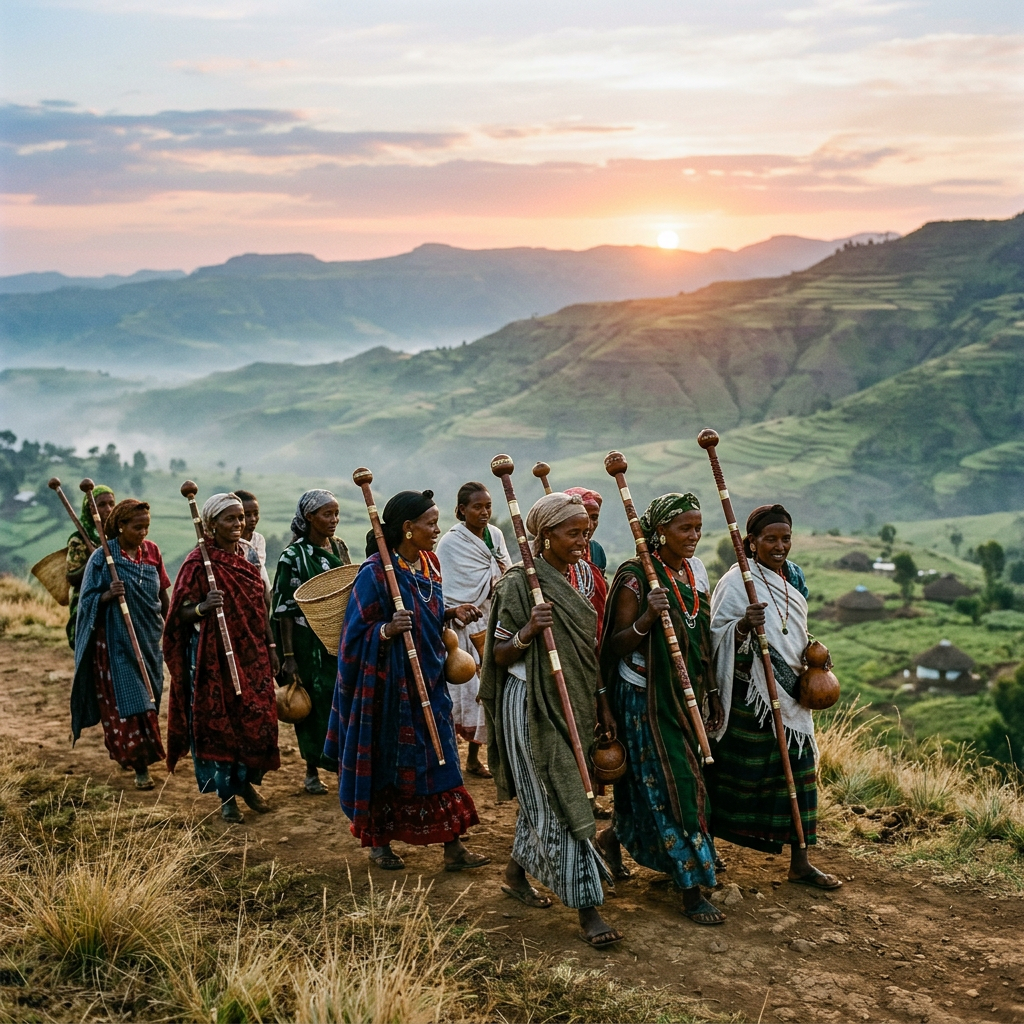
History often remembers the faces of revolutionaries as male—the generals, the politicians, the spokesmen. Yet, in the Oromo liberation struggle, this narrative is not merely incomplete; it is a profound erasure. For decades, Oromo women have been the backbone of the movement, serving not only as its supporters but as its leaders, its strategists, its fighters, and its soul.
Their contributions span the political, the military, the cultural, and the social. They have organized protests, taken up arms, preserved a threatened culture, and sustained communities through the darkest hours of conflict. And they have done so while facing a double oppression—as members of a marginalized ethnic group and as women in a patriarchal society.
This is their story—a story of courage, resilience, and an unyielding commitment to freedom.
—
The Historical Foundation: Resistance Rooted in Tradition
The role of Oromo women in resistance is not a modern phenomenon. It is deeply rooted in the traditional structures of Oromo society. Within the Gadaa system—the indigenous democratic governance framework that has guided the Oromo for centuries—women exercised influence through institutions like the Siiqqee, a women’s assembly that ensured gender balance and protected women’s rights.
During the 19th-century colonization of Oromia by Abyssinian forces, Oromo women actively resisted displacement, land confiscation, and cultural erasure. Their resistance was both direct and indirect, often taking the form of cultural preservation—passing down language, traditions, and memory to subsequent generations. This cultural defiance laid the groundwork for the political and armed struggles that would follow.
The Siinqee Tradition: A Philosophy of Resistance
Central to understanding the role of Oromo women is the Siinqee—a traditional Oromo women’s institution that symbolizes unity, resistance, and empowerment. It is more than a cultural artifact; it is a lived practice of mutual protection among Oromo women, a covenant of resistance against all forms of oppression.
Scholar Martha Kuwee Kumsa has developed this into a formal framework known as Siinqee Feminism—an Oromo philosophy of womanhood and solidarity that predates Western feminist thought. It offers a unique lens through which to understand how Oromo women mobilize to foster solidarity and challenge oppressive systems. The Siinqee is not merely an academic concept; it is a living tradition that continues to empower women in the struggle for liberation.
Political Leadership: Organizing and Advocating
Oromo women have been active in political movements for decades, serving as leaders, organizers, and advocates within organizations such as the Oromo Liberation Front (OLF) and other nationalist groups. They have organized protests, participated in negotiations, and represented the Oromo cause on national and international platforms.
The Qeerroo movement—the youth-led protests that shook Ethiopia from 2014 onward—saw women at the forefront. One female leader from Sebeta, known as “Chali,” recalled: “People who did not understand how the 2015 Oromo protest was organized tend to give credit to the diaspora. We were the ones”. These protests, which began in response to the Addis Ababa Master Plan, evolved into a broader movement against systemic marginalization. Women were not merely participants; they were architects of the resistance.
The Armed Struggle: Taking Up Arms
Perhaps the most striking testament to the commitment of Oromo women is their participation in the armed struggle. Many have joined the Oromo Liberation Army (OLA) , the armed wing of the OLF, taking up arms to defend their people and land.
For some, joining the armed group was described as “a refuge from a state that persecuted Oromo womanhood and identity”. A former OLA fighter reflected on her decision to move from political organizing to the bush: “I felt most welcomed in my Oromoness when I took the erbuu [oath] with bullets and our flag in the bush… At least in that moment, I was safe in my belonging”. Another former mobilizer explained: “I knew I was born into a social justice struggle; I’ve never had an identity or childhood separate from this oppression. My development, at a basic level, was formed around Oromoness”.
Beyond combat, women have provided critical logistical support to the armed struggle—supplying food, shelter, and medical care to fighters, and acting as messengers and intelligence gatherers, often at great personal risk.
The Diaspora: A Global Struggle
The Oromo women’s struggle is not confined to the borders of Ethiopia. In September 2020, Oromo women marched through the streets of Berlin, Germany, demanding recognition for their struggle. This protest march, called a Hiriira in the Oromo language, was a powerful statement of solidarity and resistance, linking the struggles of Oromia to global movements against oppression.
Cities across Germany have been sites of prolific organizing and resistance against the Ethiopian state, as seen in archival documents from the 1970s declaring “Freiheit für Oromiya”. Many of these activists are now elders in the Oromo community, still fighting for liberation today.
Guardians of Culture: Preserving Identity
In times of displacement and cultural erasure, Oromo women have been the guardians of their people’s identity. They have preserved and promoted Oromo language, traditions, and cultural practices. Through ceremonies like Irreechaa (Oromo Thanksgiving) and the passing down of oral traditions, they have kept Oromo identity alive across generations.
This cultural preservation is not a passive act; it is a form of resistance. By maintaining their language and traditions in the face of assimilationist policies, Oromo women have ensured that the struggle for freedom has a cultural foundation to build upon.
The Weight They Carry: Challenges and Sacrifice
The contributions of Oromo women have come at an immense cost. They face what scholars describe as “double oppression”—marginalization as Oromo people and as women. They have endured violence, displacement, and loss, yet they remain steadfast in their commitment to the struggle.
In the armed conflict, women have been particularly vulnerable to sexual violence and exploitation. Within their own communities, their voices are sometimes marginalized in political and social spaces. Despite these challenges, they continue to push for gender equality within the liberation movement itself, challenging patriarchal norms and advocating for women’s representation in leadership roles.
The Unfinished Struggle: A Vision for the Future
The struggle for Oromo liberation is far from over, and the role of women within it continues to evolve. As one analysis notes, “Oromo women have fought not only for national liberation but also for gender equality”. The movement’s true liberation will not be complete until the voices of women are fully included in leadership and decision-making.
As Martha Kuwee Kumsa’s work reminds us, we must “draw inspirations from the lived experiences of Oromo women and how they mobilise Siinqee feminist practices to foster solidarity”. Their resilience, courage, and vision offer a blueprint not only for the Oromo struggle but for movements for justice everywhere.
—
The story of the Oromo liberation struggle cannot be told without honoring the women who have sustained it, led it, and sacrificed for it. They are the fighters, the organizers, the mothers, the scholars, and the guardians of a people’s soul.
They have shouldered the weight of history and refused to break. Their unbreakable spirit is the heartbeat of the Oromo struggle—and a reminder that true freedom is never won without the full participation of women.
“Namni waan hin beekne hin dhaabatu” — One who does not know does not stand firm. And the women of Oromia know—they know their history, their worth, and their power.
Two and a Half Centuries of Freedom: Oromo Americans Celebrate America’s 250th Independence Day
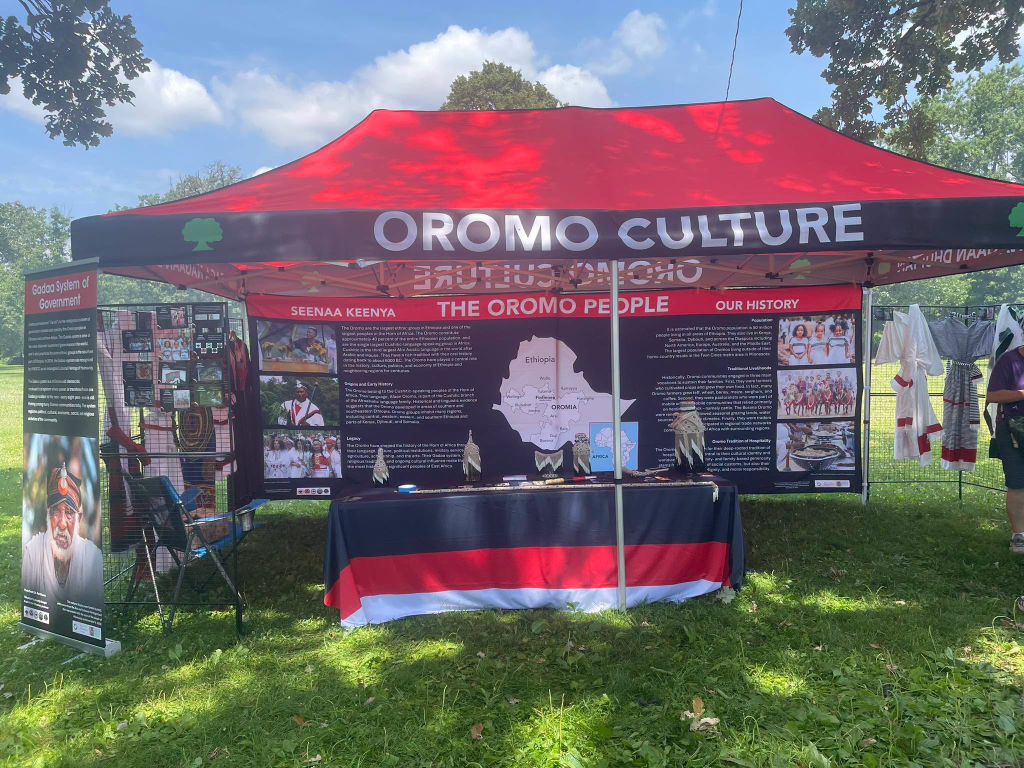
From the shores of Lake Minnetonka to the bustling streets of Minneapolis, Oromo Americans across Minnesota have marked the Fourth of July with profound gratitude—celebrating not just a nation’s birthday, but the freedoms they have found in their adopted homeland.
A Celebration of Freedom, Democracy, and Resilience
The spirit of the Fourth of July was unmistakable across Minnesota’s Oromo community. Families gathered for barbecues, community picnics, and cultural celebrations—but beneath the festivities lay a deeper resonance. For Oromo Americans, Independence Day is more than a national holiday. It is a testament to the values they have embraced and the opportunities they have secured.
“We had a wonderful holiday, and we have captured the true spirit of the holiday: freedom, democracy, and resilience.”
This sentiment echoes across the community. For many Oromo Americans, the Fourth of July carries profound meaning—not just as a celebration of American independence, but as a reflection on the liberties they now enjoy compared to the struggles their families endured in Oromia.
The Weight of Gratitude: Freedom Found and Valued
For those who have fled political repression, persecution, and conflict, the freedoms of the United States are not abstract concepts. They are lived realities—the ability to speak one’s mind without fear, to worship freely, to pursue education and opportunity, and to participate in the democratic process.
“Freedom and democracy are indeed precious gifts, and it’s incredibly moving to hear how much we appreciate the liberties we’ve found here in the United States of America, compared to what our family or ancestors experienced back home in Oromia.”
These words capture the immigrant experience at its most profound: the recognition that freedom is not guaranteed, that democracy is fragile, and that the rights enjoyed in the United States are the result of centuries of struggle, sacrifice, and commitment.
Honoring Sacrifice: Those Who Made It Possible
Independence Day is also a time to honour those who have fought to protect the values of freedom and democracy—both in America and in the homelands left behind.
“The sacrifices made by the military and generations of leaders to protect those values are exactly what today is all about.”
For Oromo Americans, this recognition is twofold. It honours the American soldiers and leaders who have defended liberty across two and a half centuries. It also honours the Oromo freedom fighters, activists, and community leaders who have struggled for justice and self-determination in their homeland—often at great personal cost.
250 Years of Democracy: A Milestone Worth Celebrating
This year’s Fourth of July holds special significance: the United States is celebrating its 250th anniversary of independence.
“Just a quick, friendly note on history: the United States is actually celebrating its 250th anniversary of independence this year (1776 to 2026), two and a half centuries of this grand democratic experiment.”
Two hundred and fifty years is a remarkable milestone for any nation. It represents generations of Americans who have built, defended, and renewed the democratic experiment. It is a testament to the resilience of democratic institutions, the power of constitutional governance, and the enduring belief that all people are created equal and endowed with certain unalienable rights.
For Oromo Americans, this anniversary is particularly meaningful. It is a reminder that democracy, though imperfect, can endure. It is a source of hope for the future of their homeland. And it is an invitation to be part of the ongoing American story.
Becoming Part of the American Story
“Thank you for sharing the moment and being part of the American story.”
These words carry a profound invitation. The American story is not complete—it is still being written. And Oromo Americans are among those writing it.
From community leaders to small business owners, from students to professionals, from artists to activists, Oromo Americans are contributing to the fabric of American life. They are bringing their culture, their resilience, and their hopes to a nation that has welcomed them. They are honouring their heritage while embracing their new homeland.
The Big 250: How Are You Celebrating?
As the fireworks light up the Minnesota sky, as families gather around tables filled with traditional American fare and Oromo dishes, the question resonates:
“How are you and your family celebrating the big 250th today?”
For some, it is a quiet reflection—a moment to consider how far they have come and what they have overcome. For others, it is a jubilant celebration—a time to dance, to feast, and to give thanks. For all, it is a recognition that freedom is a gift to be cherished and protected.
Looking Forward: Freedom for All
As Oromo Americans celebrate the 250th anniversary of American independence, their celebrations are tinged with hope—hope that the freedoms they have found in the United States will one day be available to their families and communities back in Oromia.
The Fourth of July is not just about the past. It is about the future—the ongoing struggle for justice, equality, and freedom for all people, everywhere. And in that struggle, Oromo Americans are playing their part.
Happy 250th Independence Day to all Americans—and especially to the Oromo community in Minnesota, who remind us all that freedom is a precious gift, never to be taken for granted.
Minnesota’s Oromo community celebrates with gratitude, reflection, and hope—honoring two and a half centuries of American democracy while looking forward to a future of freedom for all.




 Advocacy for Oromia