Category Archives: Oromia

The Poet Who Spoke for a Continent: Remembering Tsegaye Gabre-Medhin (1936-2006)
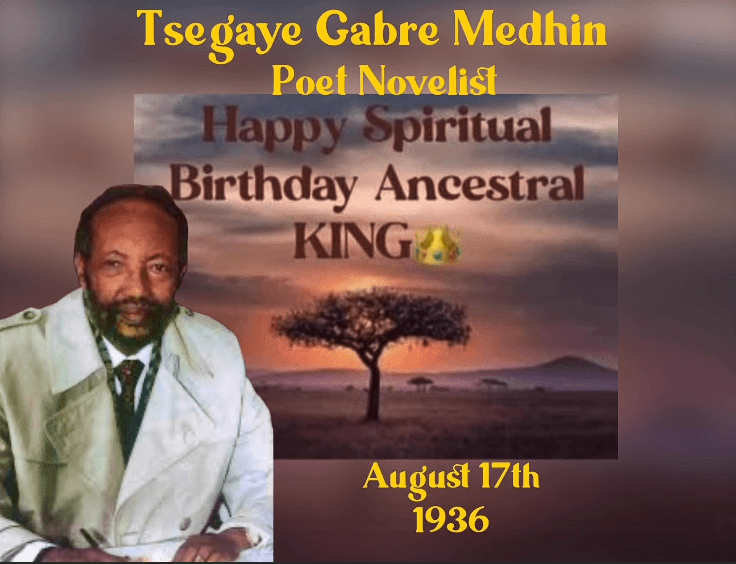
Subtitle: Ethiopia’s towering playwright, poet laureate, and pan-African visionary left a legacy that bridged tradition, revolution, and human dignity.
On a February day in 2006, in a Manhattan hospital room far from the highlands of Boda where he was born, the heart of Ethiopian letters ceased to beat. Tsegaye Gabre-Medhin – playwright, poet, pan-Africanist, and keeper of his nation’s conscience – passed away at 69, physically separated from the land he immortalized but spiritually never departed from it.
Tsegaye’s life was a testament to the power of art to shape national identity and awaken continental consciousness. Educated in the wake of Ethiopia’s liberation from Italian occupation, his genius was recognized early. While still a schoolboy, he wrote a play performed before Emperor Haile Selassie—a prophetic beginning for a writer who would spend a lifetime wrestling with the myths, heroes, and soul of his nation.
The Playwright as Patriot and Teacher
Rejecting careers in law and commerce, which he saw as “soul-destroying,” Tsegaye devoted himself to the stage. As a director of Ethiopia’s National Theatre, he became a deliberate pedagogue. He believed his country needed heroes, and through historical dramas like Tewodros and Petros at the Hour, he taught Ethiopians to respect the martyrdom, reform, and resistance that defined their past. Yet his vision was never parochial. His celebrated play The Oda Oak Oracle, a comedy of Ethiopian country life, was performed across eight nations, proving the universal appeal of locally-rooted storytelling.
The Poet as Pan-African Visionary
Tsegaye’s patriotism was expansive, firmly rooted in an Africanist worldview. A friend of Senegal’s President Léopold Sédar Senghor, he engaged deeply with the Négritude movement. His scholarship led him to trace the linguistic and cultural threads linking the Nile Valley civilizations, asserting Ethiopia’s place within a broader African continuum. This vision culminated in 2002 when his poem, calling to “make Africa the tree of life,” was adopted as the anthem of the newly-formed African Union.
The Advocate as Unyielding Conscience
Beyond the stage and page, Tsegaye was a formidable advocate for justice. He campaigned tirelessly for the return of Ethiopia’s looted heritage—the Aksum Obelisk taken by Mussolini and the priceless manuscripts pillaged from Emperor Tewodros’s fortress at Magdala. For him, these were not mere artifacts but fragments of the national soul.
In his later years, his focus broadened to the universal themes of peace and human dignity, earning him international recognition and a place in the United Poets Laureate International.
A Legacy of Unbroken Spirit
Confined to exile by the medical necessity of dialysis, Tsegaye became a spiritual anchor for the diaspora, affectionately known as Blattengetta—the great scholar. His seminal poem, “Prologue to African Conscience,” remains a piercing critique of post-colonial malaise, warning of “luxury and golden chains that free the body and enslave the mind.”
Tsegaye Gabre-Medhin taught us that to look forward, a people must first learn to look deeply into their own past and see themselves within the grand tapestry of their continent. He was not just Ethiopia’s poet laureate; he was Africa’s scribe, a visionary who understood that true freedom lives in the stories we tell, the history we reclaim, and the conscience we dare to awaken.
Galatoomaa, Blattengetta. Your footprints in time are indelible.

Urgent Action: Halt Ethiopia TPS Termination Now

FOR IMMEDIATE RELEASE
URGENT PETITION: HUMANITARIAN GROUPS PLEA FOR LAST-MINUTE HALT TO ETHIOPIA TPS TERMINATION
With just 48 hours remaining before a critical deportation protection expires, the Oromia Support Group (OSG) is issuing a global call to action. A petition on Change.org, directed at Secretary of Homeland Security Kristi Noem, demands the immediate rescission of the decision to terminate Temporary Protected Status (TPS) for nationals of Ethiopia, including the Oromo people.
The termination, set for February 13, will revoke the legal right of approximately 2,200 Ethiopians to live and work in the United States. The Department of Homeland Security (DHS) decision, announced last year, concludes that conditions in Ethiopia—a country grappling with recent conflict, severe drought, and ongoing human rights concerns—no longer warrant temporary humanitarian protection.
“This decision implies Ethiopia is now a safe place to deport people to, which contradicts the reality on the ground,” said Dr. Trevor Trueman, Chair of the Oromia Support Group. “We are in a race against time to prevent the return of individuals to a situation of extreme peril.”
The petition explicitly holds Secretary Noem, who oversees U.S. Immigration and Customs Enforcement (ICE), accountable. It references controversial ICE actions, alleging the agency has “detained thousands of immigrants, including children, in hostile detention centres many hundreds of miles from their homes, families, and legal representatives.” The petition frames the appeal as a chance for the public to “register disapproval of the actions of the DHS, including ICE.”
Dr. Trueman specifically addressed potential concerns about the petition’s organizer, the Ethiopian American Association. He emphasized it is a young, non-partisan organization with no nationalistic bias within Ethiopia. “Unlike other similarly-named organisations, it does not exhibit an anti-Oromo bias,” he stated, noting that its President, Aga Ambissa Ayana, is a former Oromo refugee himself, whom Trueman met in Nairobi in 2010 prior to his resettlement in the U.S.
Advocates warn that without TPS, beneficiaries will face imminent deportation to a country still recovering from a devastating civil war and facing severe humanitarian crises in several regions, including Oromia. The termination affects those who have built lives, families, and careers in the U.S., often for several years.
The Petition can be found here: https://www.change.org/…/protect-tps-holders-of…
About the Oromia Support Group:
The OSG is a UK-based advocacy organization focused on human rights and political issues concerning the Oromo people of Ethiopia.
Contact: Dr. Trevor Trueman, Chair, Oromia Support Group.
###
Note to Editors: The DHS has stated the termination is based on a thorough assessment of country conditions. Requests for comment from the Department of Homeland Security on this specific petition were not immediately returned.

Gadaa Bank Honors Professor Asmarom Legesse’s Legacy

Gadaa Bank Mourns the Loss of a Guiding Intellectual: Professor Asmarom Legesse
(Finfinnee, Oromia – 5 February 2026) The Board of Directors, Management, and Staff of Gadaa Bank have announced their profound sorrow at the passing of Professor Asmarom Legesse, the eminent scholar and preeminent global authority on the Oromo Gadaa system. In an official statement of condolence, the institution extended its deepest sympathies to his family, relatives, and the entire community, wishing them strength and solace.
The bank’s statement carries a unique and symbolic significance. As a financial institution that bears the name “Gadaa,” its tribute to the scholar who dedicated his life to studying, documenting, and elevating this indigenous democratic system represents more than a standard corporate condolence. It is a poignant acknowledgment of the intellectual and cultural foundations that underpin its very identity.
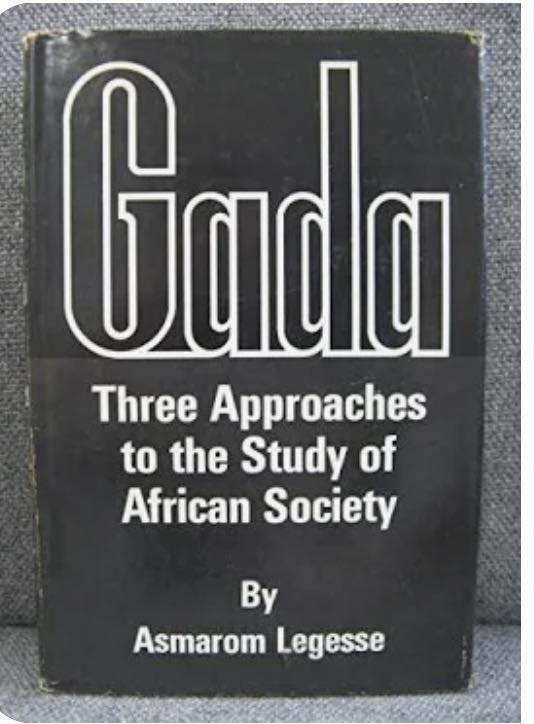
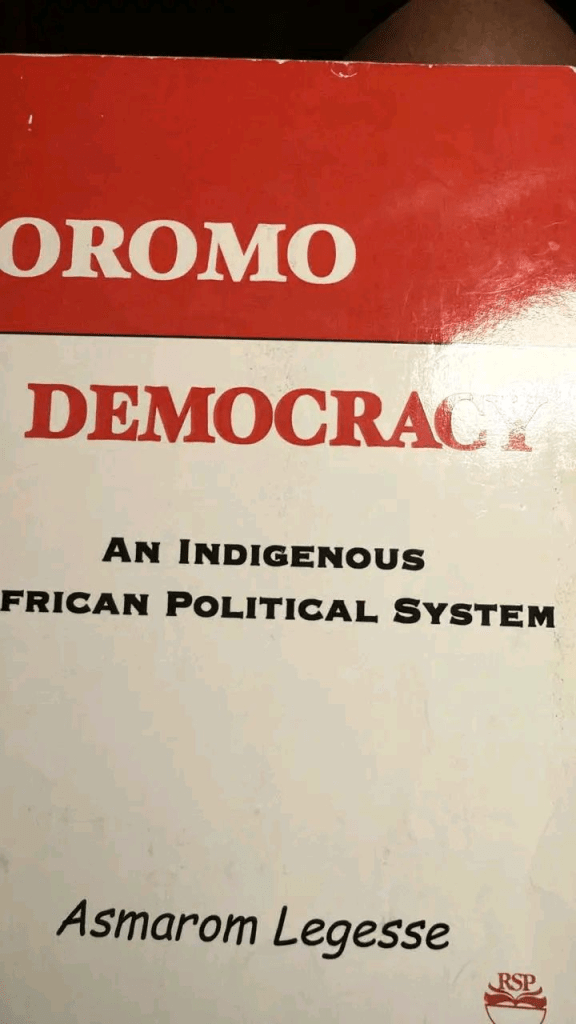
Professor Asmarom Legesse’s pioneering scholarship, particularly his seminal texts “Gada: Three Approaches to the Study of African Society” (1973) and “Oromo Democracy: An Indigenous African Political System” (2000), is credited with transforming global understanding of the Gadaa system. His work meticulously detailed its sophisticated architecture—built on principles of rotational leadership, term limits, checks and balances, and public accountability—revealing it as a self-originating model of African democracy. His efforts were instrumental in UNESCO’s 2016 inscription of the Gadaa system as an Intangible Cultural Heritage of Humanity.
The tribute from Gadaa Bank underscores the professor’s dual legacy: as a towering academic figure and as a cultural pillar whose work provides a source of pride and a framework for modern institutions. While the bank’s core operations are financial, its namesake connects it to a heritage of governance, social order, and communal responsibility—principles that Professor Legesse spent a lifetime elucidating for the world.
In expressing grief, the institution implicitly honors the connection between contemporary enterprise and ancestral wisdom. The statement serves as a powerful reminder of how indigenous knowledge, once brought to light and validated by scholars of Professor Legesse’s caliber, can resonate across all sectors of society, inspiring identity and purpose.
###
About Gadaa Bank:
Gadaa Bank is a private financial institution in Ethiopia, committed to providing inclusive banking services. Its name honors the enduring legacy of the Gadaa system, reflecting values of governance, fairness, and community development.
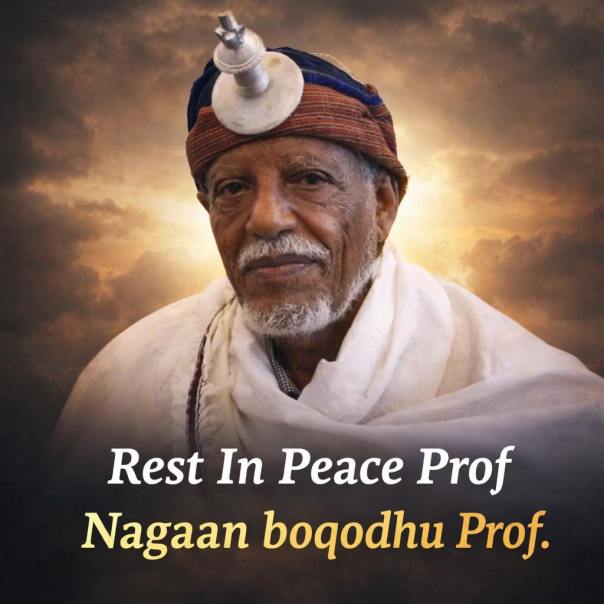

A Scholar Immortal: Prof. Asmerom Legesse’s Legacy Lives in the Hearts of a Nation
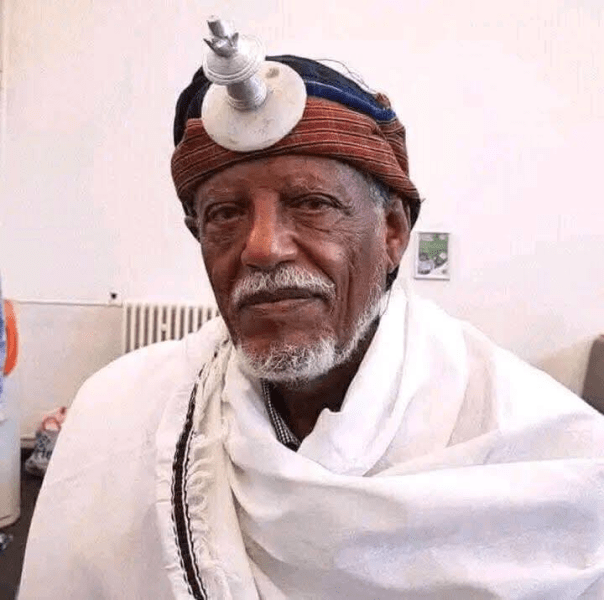
5 February 2026 – Across the globe, from the halls of academia to the living rooms of the diaspora, the Oromo community is united in a chorus of grief and profound gratitude. The passing of Professor Asmerom Legesse at the age of 94 is not merely the loss of a preeminent scholar; it is, as countless tributes attest, the departure of a cherished friend, a fearless intellectual warrior, and an adopted son whose life’s work became the definitive voice for Oromo history and democratic heritage.
The outpouring of personal reflections paints a vivid portrait of a man whose impact was both global and deeply intimate. Olaansaa Waaqumaa recalls a brief conversation seven years ago, where the professor’s conviction was unwavering. “Yes! It is absolutely possible,” he declared when asked if the Gadaa system could serve as a modern administrative framework. “The scholars and new generation must take this mantle, think critically about it, and bridge it with modern governance,” he advised, passing the torch to future generations.
This personal mentorship extended through his work. Scholar Luba Cheru notes how Professor Legesse’s 1973 seminal text, Gada: Three Approaches to the Study of African Society, became an indispensable guide for her own decade-long research on the Irreecha festival. She reflects, “I never met him in person, but his work filled my mind.”
Ituu T. Soorii frames his legacy as an act of courageous resistance against historical erasure. “When the Ethiopian empire tried to erase Oromo existence, Professor Asmarom rose with courage to proclaim the undeniable truth,” they write, adding a poignant vision: “One day, in a free Oromiyaa, his statues will rise—not out of charity, but out of eternal gratitude.” Similarly, Habtamu Tesfaye Gemechu had earlier praised him as the scholar who shattered the conspiracy to obscure Oromo history, “revealing the naked truth of the Oromo to the world.”
Echoing this sentiment, Dejene Bikila calls him a “monumental figure” who served as a “bridge connecting the ancient wisdom of the Oromo people to the modern world.” This notion of the professor as a bridge is powerfully affirmed by Yadesa Bojia, who poses a defining question: “Did you ever meet an anthropologist… whose integrity was so deeply shaped by the culture and heritage he studied that the people he wrote about came to see him as one of their own? That is the story of Professor Asmerom Legesse.”
Formal institutions have also affirmed his unparalleled role. The Oromo Studies Association (OSA), which hosted him as a keynote speaker, stated his work “fundamentally reshaped the global understanding of African democracy.” Advocacy for Oromia and The Oromia Culture and Tourism Bureau hailed him as a “steadfast guardian” of Oromo culture, whose research was vital for UNESCO’s 2016 inscription of the Gadaa system as Intangible Cultural Heritage.
Binimos Shemalis reiterates that his “groundbreaking and foundational work… moved [Oromo studies] beyond colonial-era misrepresentations.” Scholar Tokuma Chala Sarbesa details how his book Oromo Democracy: An Indigenous African Political System proved the Gadaa system was a sophisticated framework of law, power, and public participation, providing a “strong foundation for the Oromo people’s struggle for identity, freedom, and democracy.”
The most recent and significant political tribute came from Shimelis Abdisa, President of the Oromia Regional State, who stated, “The loss of a scholar like Prof. Asmarom Legesse is a great damage to our people. His voice has been a lasting institution among our people.” He affirmed that the professor’s seminal work proved democratic governance originated within the Oromo people long before it was sought from elsewhere.
Amidst the grief, voices like Leencoo Miidhaqsaa Badhaadhaa offer a philosophical perspective, noting the professor lived a full 94 years and achieved greatness in life. “He died a good death,” they write, suggesting the community should honor him not just with sorrow, but by learning from and adopting his teachings.
As Seenaa G-D Jimjimo eloquently summarizes, “His scholarship leaves behind not just a legacy for one community, but a gift to humanity.” While the physical presence of this “real giant,” as Anwar Kelil calls him, is gone, the consensus is clear: the intellectual and moral bridge he built is unshakable. His legacy, as Barii Milkeessaa simply states, ensures that while “the world has lost a great scholar… the Oromo people have lost a great sibling.”

Barak Mountain’s Irreechaa: A Spiritual Gathering for Peace and Gratitude

From the Highlands, a Prayer of Gratitude: Irreechaa Tulluu Unites Community on Barak Mountain
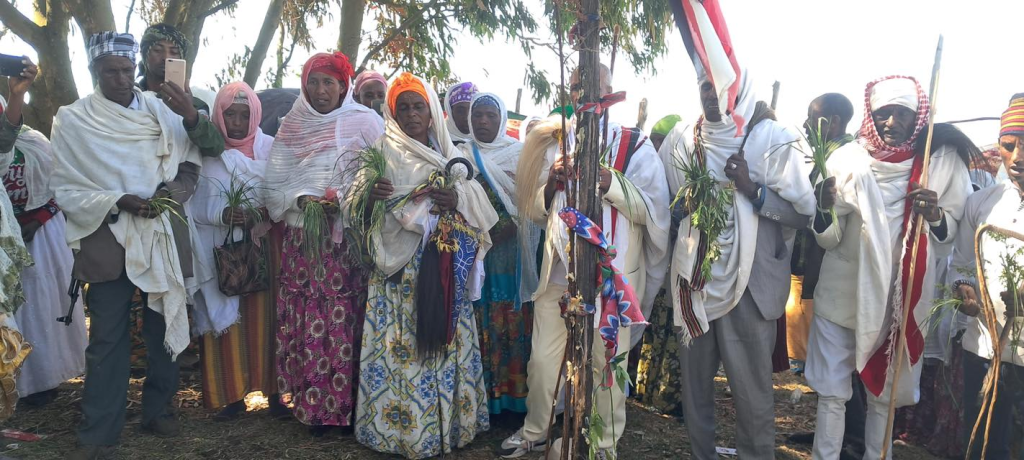
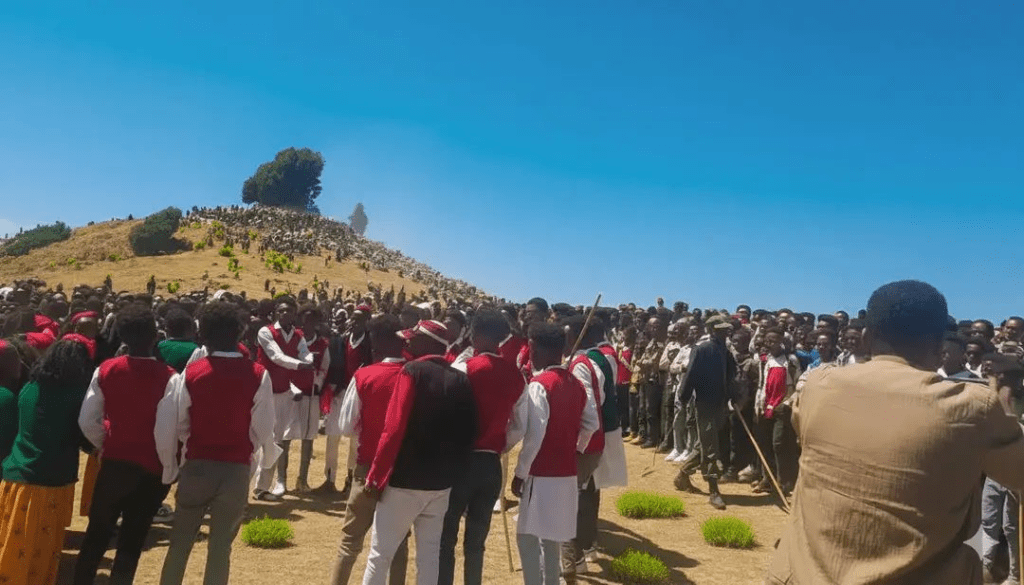
SANDAFAA BAKKEE, OROMIA – As the first light of the autumn sun crests the horizon, the slopes of Barak Mountain are already a tapestry of movement and color. Thousands of men, women, and children, dressed in the brilliant whites and intricate embroideries of traditional Oromo attire, ascend the paths in a serene, purposeful procession. They are not mere hikers; they are participants in one of humanity’s oldest and most profound rituals: offering thanks to the divine for life’s sustenance and praying for peace in the seasons to come. This is Irreechaa Tulluu, the hill festival, and on this day, Barak Mountain is its sacred stage.
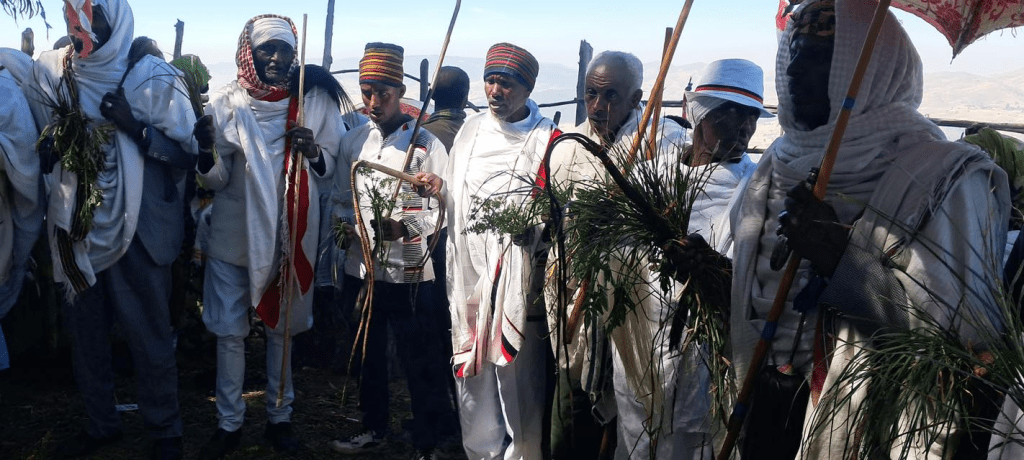
Irreechaa is not a single event but a bi-annual dialogue with nature, deeply embedded in the Gadaa system’s ecological wisdom. The first, Irreechaa Arfaasaa, celebrated at riversides in early October, welcomes the rainy season—a festival of renewal, cleansing, and thanksgiving for the promise of life. The second, unfolding now in the crisp autumn air, is Irreechaa Tulluu. As the harvest is gathered, the community climbs to the high places, turning gratitude into a physical act of ascent, symbolizing a spiritual upliftment and a reflective review of the passing year.
This season, the community of Sandaafaa Bakkee has transformed Barak Mountain into a breathtaking open-air temple. Led by revered elders, or Hayyus, who carry staffs of authority and centuries of tradition, the people climb. The air fills with the sound of communal prayer, traditional Geerarsa (praisesongs), and the soft murmur of individual supplications. At the summit, the focal point is not an altar of stone, but a shared spiritual intention. Participants bring fresh green grasses and flowers, symbols of peace and prosperity, offering them as tokens of gratitude to Waaqaa (the Creator) for the blessings of the past year and as prayers for harmony and abundance in the next.
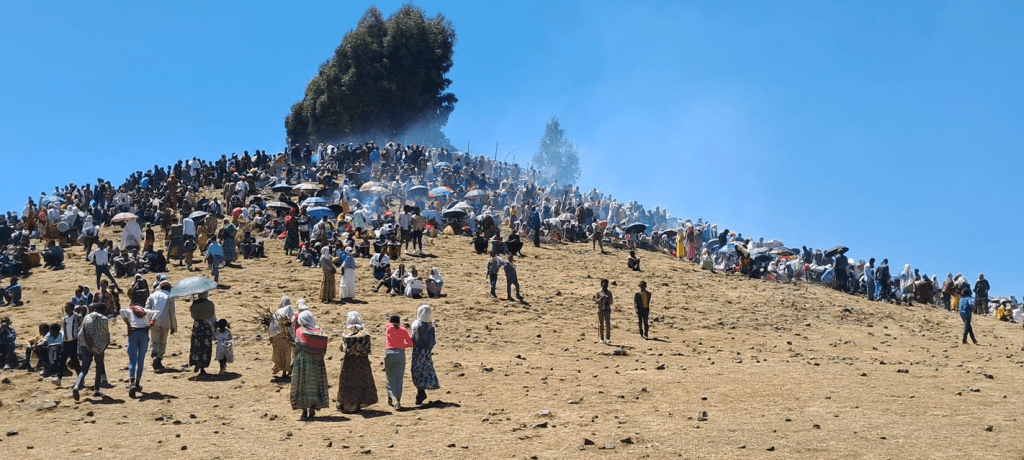
“This mountain is our church, our mosque, our most sacred space,” explained Elder Gammachuu Roba, pausing during the ascent. “When we climb together—young and old, from all walks—we are doing more than celebrating. We are reaffirming our bond with Waaqaa, with our ancestors, and with each other. We pray for nagaa (peace) because without peace in our hearts, our communities, and our environment, no prosperity can take root.”
Beyond its profound spiritual core, Irreechaa Tulluu is a vibrant celebration of Oromo identity. The mountain slopes become a living museum of culture. The air resonates with the rhythms of the kebero drum and the strings of the kirar. Young men engage in spirited waa’ee (verbal jousting), showcasing wit and wisdom, while circles form for traditional dance. It is a powerful, collective assertion of a culture that has endured, adapted, and thrived.
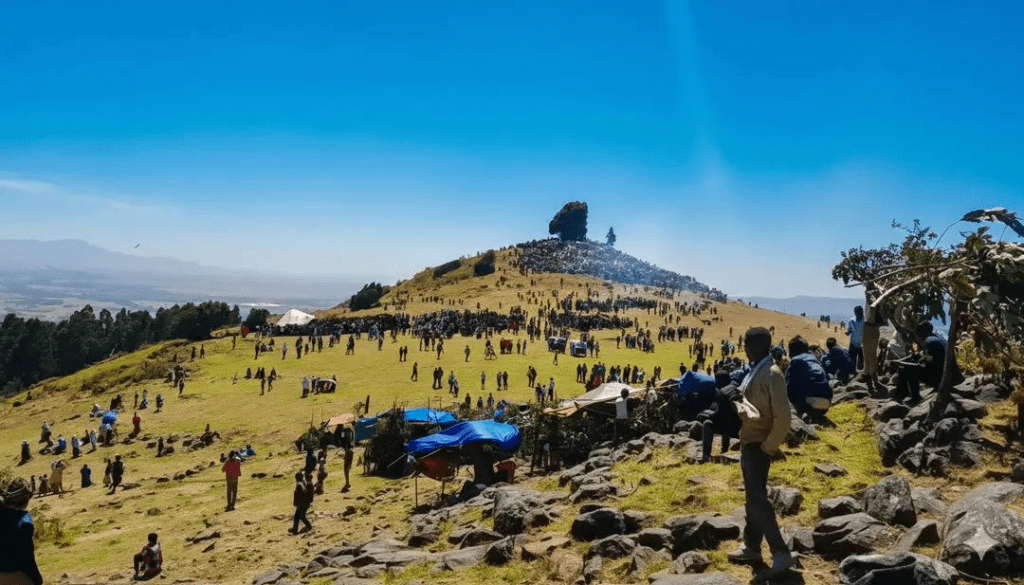
For observers and visitors, the festival offers an unparalleled immersion into the “timeless richness of Oromo culture,” as promoted by the Oromia Tourism Bureau. It is a chance to witness a living tradition where faith, ecology, and community are seamlessly woven together. As the sun sets on Barak Mountain, casting long shadows over the departing crowds, the feeling left behind is one of collective catharsis and renewed hope. The prayers for peace, whispered from the highlands, are carried on the wind, a timeless echo from a people forever rooted in their land and their gratitude.
#Irreechaa #IrreechaaTulluu #OromoCulture #BarakMountain #Oromia #LandOfOrigins #Ethiopia #CulturalHeritage

Oromia Peace Institute: Bridging Dialogue and Community Action
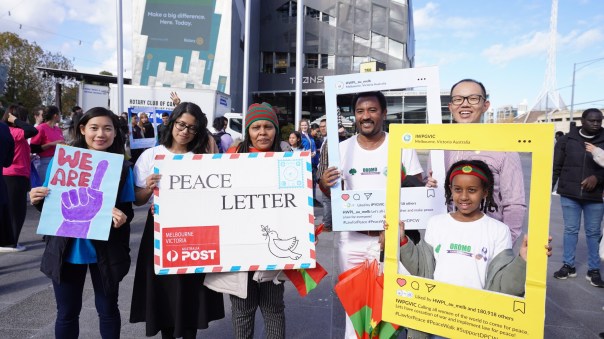
An Oromia Peace Institute is necessary to provide a permanent, professional, Oromo‑centered hub for conflict analysis, dialogue, and peace education that can guide political and community actors out of the current cycles of violence. It would connect Gadaa/Waaqeffannaa-based peace values, community experience, and modern peace-research methods into one institution that serves all of Oromia and contributes to Ethiopia-wide settlement efforts.
Current gaps in Oromia
Studies on Oromia’s security show there is no clear, comprehensive regional peacebuilding framework, and indigenous Oromo mechanisms like Gadaa, Abba Gadaa, and Siinqee are not systematically used in present peace processes. Existing initiatives are often short-term projects run by NGOs or ad‑hoc committees, so lessons are lost, coordination is weak, and there is no single reference body for evidence-based advice on the Oromia conflict.
What such an institute would do
An Oromia Peace Institute could systematically collect data on conflicts across zones and woredas, produce regular trend analyses, and advise government, parties, elders, and civic groups using rigorous and locally grounded research. It could design and support community-led dialogue processes that elevate elders, women, and youth, similar to participatory action research and dialogue models already piloted in Oromia by partner organisations.
Linking tradition and modern peacebuilding
Research highlights the relevance of Gadaa peace principles and Oromo customary institutions for conflict transformation, but these are not yet meaningfully integrated into formal policy and security structures. A dedicated institute could document Gadaa and Siinqee peace norms, train mediators and local officials in their use, and translate them into practical tools for modern governance and inter-ethnic conflict management.
Supporting political dialogue and long-term settlement
Recent calls for inclusive dialogue on Oromia’s crisis by Oromo political forces underline the need for neutral, credible technical support: mapping stakeholders, designing dialogue processes, and monitoring agreements. An Oromia Peace Institute can play this technical and moral support role, helping transform elite bargains into people-driven processes that include displaced communities, victims, women, and youth, and feeding Oromia’s experience into any broader Ethiopian peace architecture.

Inclusive Dialogue: A Path to Stability in Oromia
Dialogue for peace in Oromia is urgently necessary and important now due to the escalation of conflict, human suffering, political fragmentation, and the need for a sustainable solution that addresses the root causes of instability. Inclusive, genuine dialogue is widely regarded by local stakeholders and observers as the only viable path out of the region’s armed stalemate, offering practical hope for peace, stability, and a just social order in Oromia and how it impacts Ethiopia as a whole.
Ongoing Conflict and Humanitarian Crisis
Oromia has experienced years of sustained violence and insecurity, leading to widespread deaths, displacement, and destruction of livelihoods. The continuing armed conflict between government forces and various Oromo groups—including the Oromo Liberation Army (OLA), Oromo Liberation Front (OLF), and others—has created humanitarian emergencies that cannot be solved militarily. Dialogue is the best hope to stop violence, protect civilians, and facilitate humanitarian access.
Failure of Military Solutions
Attempts by both government and rebel groups to win militarily have failed, resulting in a costly stalemate. Neither side is able to impose full control, and the persistence of conflict only prolongs instability and lawlessness. This situation leaves ordinary people vulnerable to violence, displacement, economic hardship, and rights abuses—further underscoring the need for dialogue as the only realistic solution.
Addressing Root Causes for Lasting Peace
Dialogue allows stakeholders to negotiate on the fundamental grievances underlying the conflict, such as political marginalization, land and cultural rights, governance, and access to resources. Unlike purely military approaches or ad-hoc deals, a principled, inclusive dialogue can result in structured frameworks for ceasefire, demobilization, political inclusion, and justice—laying the groundwork for sustainable peace.
Building Oromo Political Unity and Legitimacy
The recent joint call for dialogue from major Oromo political actors (such as the OLF and OFC) signals rare unity and demonstrates political maturity. It strengthens the Oromo bargaining position, fosters legitimacy among communities, and creates credible partners for both national and international peace initiatives. Joint action also reassures the public that elites are willing to move beyond division for the common good.
Centrality to Ethiopia’s Stability and Development
With Oromia being Ethiopia’s most populous and politically strategic region, instability here has direct consequences for the country’s overall peace, governance, and development. Inclusively resolving issues in Oromia through dialogue helps promote national unity, prevent spillover to other regions, and address longstanding injustices that, if left unresolved, threaten wider state collapse or fragmentation.
Responding to Public and International Pressures
There is increasing demand from Oromo communities, civil society, and the international community for dialogue and peace. Public support for dialogue puts pressure on political leaders to prioritize negotiation over violence, further legitimizing peace efforts and expanding opportunities for accountability, truth-telling, and healing.
Conclusion
The necessity for dialogue in Oromia today is dictated by the urgent need to save lives, restore social trust, enable humanitarian relief, and build credible structures for democracy, justice, and lasting peace. Only through principled, inclusive discussions that address core grievances can Oromia—and by extension, Ethiopia—move beyond cyclical violence toward a future of stability and shared development.
Significance of the Gaammee Gurguddaa in Oromo Culture
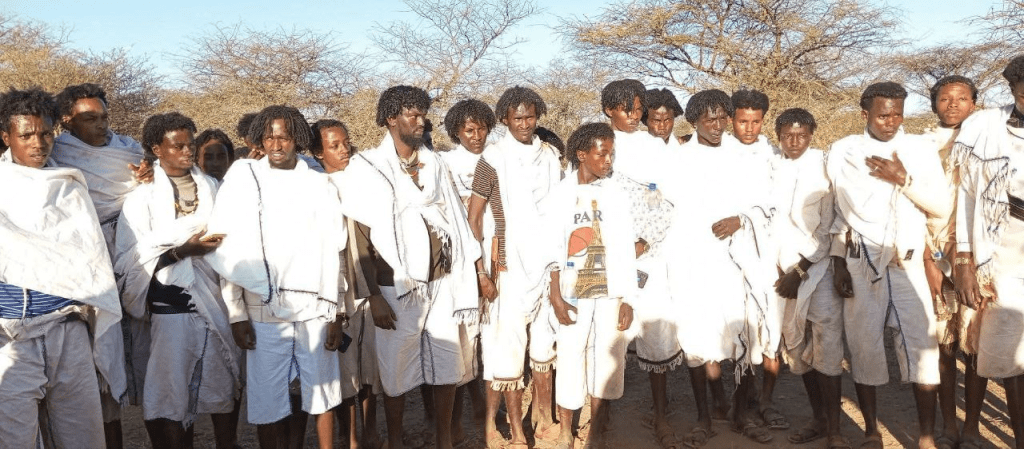
Borana Gaammee Gurguddaa Gather in Gayo Village for Traditional Rite of Passage
The Gadaa system, the foundation of Oromo culture, traditions, and governance, guides every Oromo child through distinct stages of development. This long-term process, known as Gadaa, is dedicated to acquiring, nurturing, and preparing successive generations for leadership.
A significant transition within the Borana Gadaa system is the progression from the Gaammee Gurguddaa stage to the Kuusaa. Before this advancement, children in the Gaammee Gurguddaa grade from various regions convene in a ceremony known as Walargii.
Bonayaa Diidoo, leader of the traditional Sona group at the Oromia Bureau of Culture and Tourism, explained to Fana Digital that Borana children of this age group, including those from Kenya, gather at Gumii Gaayyoo with their fathers’ support.
The primary purpose of the Walargii is for the Gaammee Gurguddaa of the same gogeessaa to meet, learn from one another, and build relationships. A further objective is to instill respect for the people’s laws, customs, and ethics, thereby strengthening communal unity. This gathering occurs once every eight years.
During the three-to-four-day ceremony, the community hosts and feeds the Gaammee Gurguddaa from the moment they begin their journey. At the Gayo Gumii, the Abbootii Gadaa and Abbootii Seeraa formally identify the children as being in the same leadership cohort and introduce them. The meeting takes place at the ancestral home of the former Abba Gadaa Guyyoo Gobba, where a ritual blessing is performed.
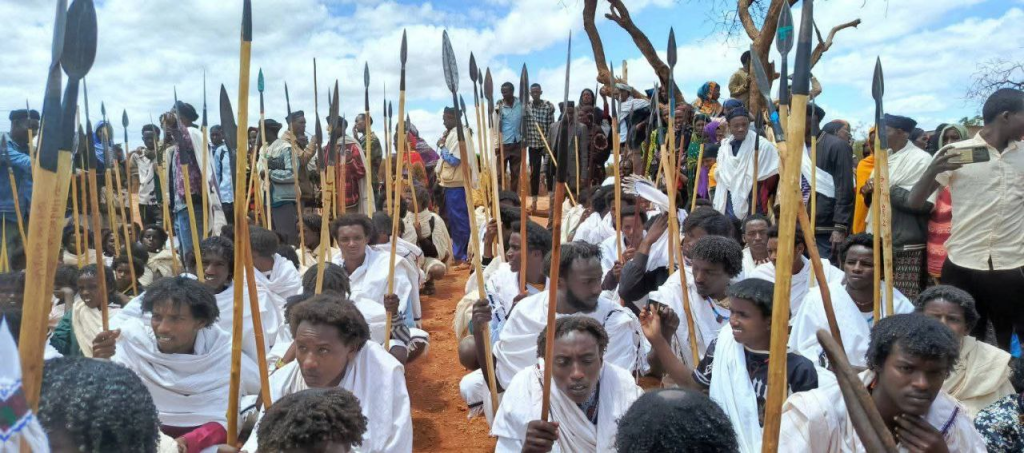
The Walargii ceremony serves as the first chapter in a major program, culminating in a second stage known as the “Feeding Ceremony” approximately ten months later.
For about five months following the Walargii, the Gaammee Gurguddaa undergo intensive training, refusing to return home. They immerse themselves in the people’s customs, traditions, and ethics. During this period, they sustain themselves solely on the meat and blood of animals, do not enter houses, and abstain from washing their bodies or clothes. They go barefoot, enduring these challenges to practice the rigors of traditional life.
When the time arrives according to the traditional calendar, the Gaammee Gurguddaa reunite with the Abbootii Gadaa, Luboota, and jaarrolee for the grand “Feeding” ceremony. While a feast is central to the event, it is also a forum for significant challenges and evaluations.
The trainees compete and are rigorously assessed on their physical strength, understanding of Gadaa rule, and public speaking skills. The most successful individual among the Gaammee Gurguddaa is selected by the elders and the public to be groomed as a future Adula Council Scholar. They are blessed and gains recognition throughout the tribe, and when he comes of age, he will become a Gadaa leader and receive the baallii (sceptre).
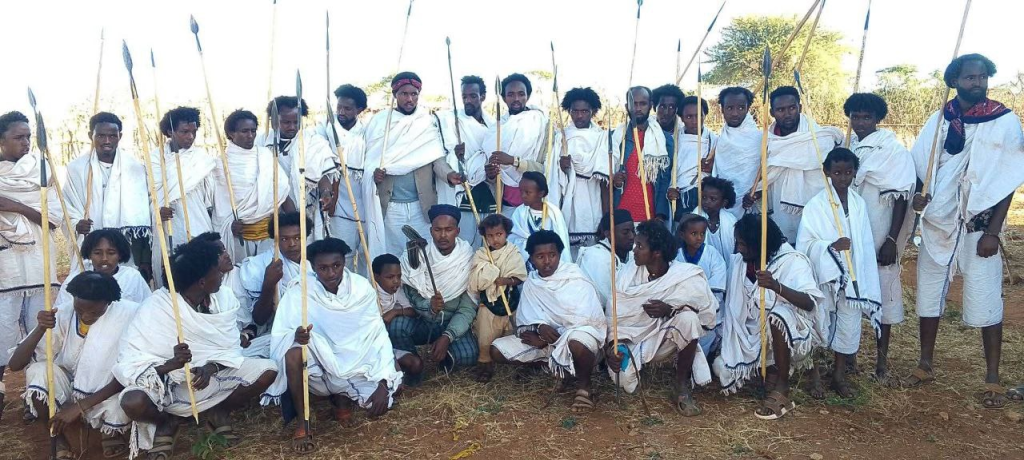
Recently, the Gaammee Gurguddaa of Borana Gayo convened for their Walargii in the Dhas District of the Eastern Borana Zone.

Commissioner Lelise Dhugaa: A Catalyst for Oromia’s Tourism

Commissioner Lelise Dhugaa is more than a leader; she is a transformative force. Her legacy in establishing and advancing Oromia’s tourism sector is a testament to her vision, intellect, and unwavering dedication.
Her Key Achievements Include:
- Founding a New Sector: She was the first to prepare and submit the proposal for the establishment of the Oromia Tourism Commission. Her idea was not only accepted but successfully realized.
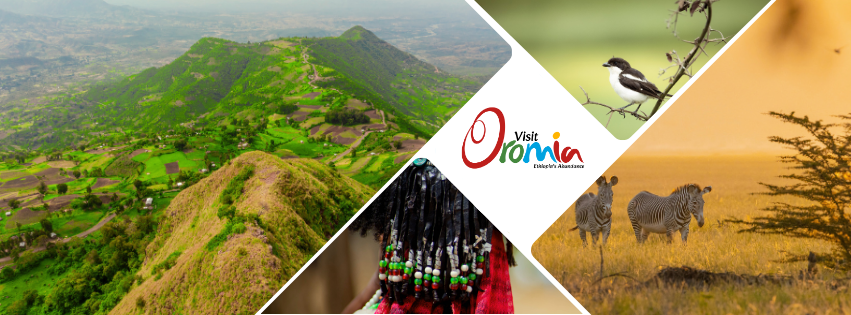
- Launching “Visit Oromia”: Under the new commission, she launched the “Visit Oromia” initiative. This platform brought unprecedented attention to natural wonders like the mountains of Bale, Salale, Arsi, and Iluu Abbaa Boor, as well as the Suba Forest.
- Unifying Professionals: She successfully mobilized a wide range of experienced professionals—including cameramen, media experts, artists, and models—from both public and private sectors to collectively promote Oromia.
- Creating a Cultural Symbol: She institutionalized “Oromia Tourism Week” to precede the annual festival, featuring panel discussions and promotional events. This initiative created new opportunities, encouraging Oromo girls to develop skills in beauty and modeling through a celebrated annual competition that promoted Oromia’s culture.
- Promoting Hidden Gems: Countless previously unknown natural and artificial parks across Oromia were identified and promoted to a wider audience.
- Recognizing Contributors: She ensured that the camera professionals, park guards, tour guides, drivers, and artists who played a crucial role in showcasing Oromia’s image and beauty were recognized and celebrated, setting a precedent for future generations.
- Elevating Oromia Globally: Through her work, the God-given heritage, tourist attractions, culture, and identity of the Oromo people have gained recognition on the world stage. The resulting tourism income has directly benefited our region.
- Driving Development: Her office identified, researched, and promoted hidden tourist attractions, linking tourism directly to infrastructure development.
- Securing UNESCO Recognition: She played a major, indispensable role in the UNESCO listings for the Bale Mountains, Irreecha, and the Gada System over the past five to six years.
Commissioner Lelise is not only a skilled leader but also a woman of profound wisdom. Academically, she is a formidable intellectual. In a country where establishing a new commission is a monumental challenge, she not only created a new sector but achieved 101% success.
Overall, Commissioner Lelise Dhugaa has firmly established Oromia as a center of tourism. She successfully redirected tourist traffic that once flocked only to the north, ensuring our region received its rightful share of attention. For this, this generation praises and thanks her.
She is a strong woman whose discipline and honor reflect the dignity of all Oromo mothers. Though I do not know her personally, she carries the grace and strength of my own mother—a person whom Allah has adorned with every virtue.
I was profoundly shocked to learn of her illness. Mom… we need you. You are more valuable to Oromo and Oromia than gold. We pray for your swift and complete recovery, so you may finish the vital work you have started. May no evil befall you. May God restore you to perfect health.
For further info visit: https://www.facebook.com/visitoromia

Oromo Graduation Day: Celebrating Academic Success in Australia
By Daandii Ragabaa
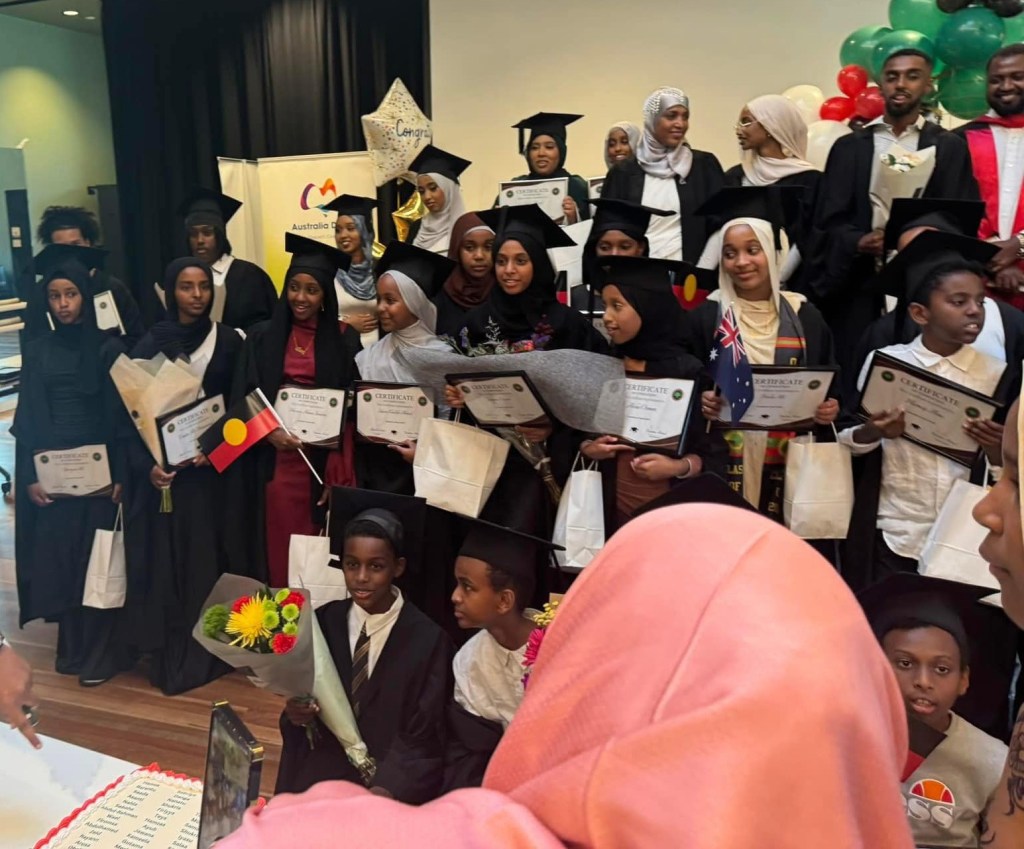
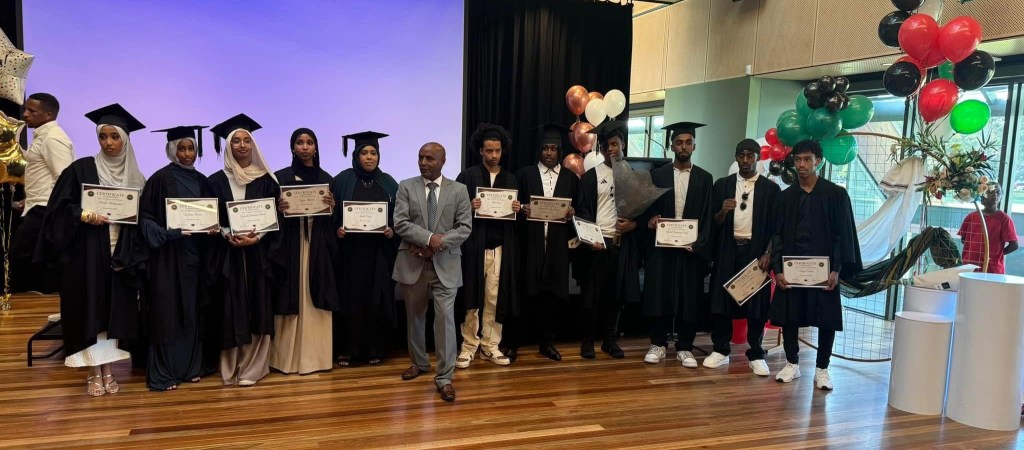
The Oromo Graduation Day is a significant event for the Oromo community in Australia, particularly for Oromo students. It serves as a platform to celebrate academic achievements, foster unity, and inspire the younger generation. Here are some ways it motivates and brings Oromo students together:
1. Celebration of Achievements: The event recognizes and honors the hard work and success of Oromo students, providing them with a sense of pride and accomplishment. This recognition can be a powerful motivator for both the graduates and their peers.
2. Community Support: It strengthens the sense of community among Oromo students, offering them a network of support. This camaraderie can be crucial for students who may feel isolated or face challenges in their academic journey.
3. Cultural Connection: The event often includes cultural elements, such as traditional music, dance, and food, which help students stay connected to their heritage. This cultural affirmation can boost their confidence and sense of identity.
4. Role Models: Graduates serve as role models for younger students, showing them that academic success is attainable. Hearing the stories and experiences of those who have succeeded can inspire others to pursue their educational goals.
5. Networking Opportunities: The event provides a platform for students to network with each other, as well as with professionals and community leaders. These connections can be valuable for future academic and career opportunities.
6. Encouragement and Motivation: Speeches and presentations during the event often focus on the importance of education, perseverance, and community involvement. These messages can motivate students to stay focused on their studies and strive for excellence.
7. Unity and Solidarity: By bringing together Oromo students from different universities and regions, the event fosters a sense of unity and solidarity. This collective spirit can be empowering and reassuring, especially in a foreign country.
Overall, the Oromo Graduation Day plays a crucial role in motivating Oromo students, celebrating their achievements, and strengthening their bonds as a community in Australia.




 Advocacy for Oromia