Category Archives: Sirna Oromo

Understanding the Gadaa System: Peaceful Power Transfer in Oromo Culture
By Daandii Ragabaa
WAXABAJJII 07, 2018 E.C. (June 2026 G.C.) – The cycle has turned. The baton has passed. A new chapter in the centuries-old democracy of the Oromo people has begun.
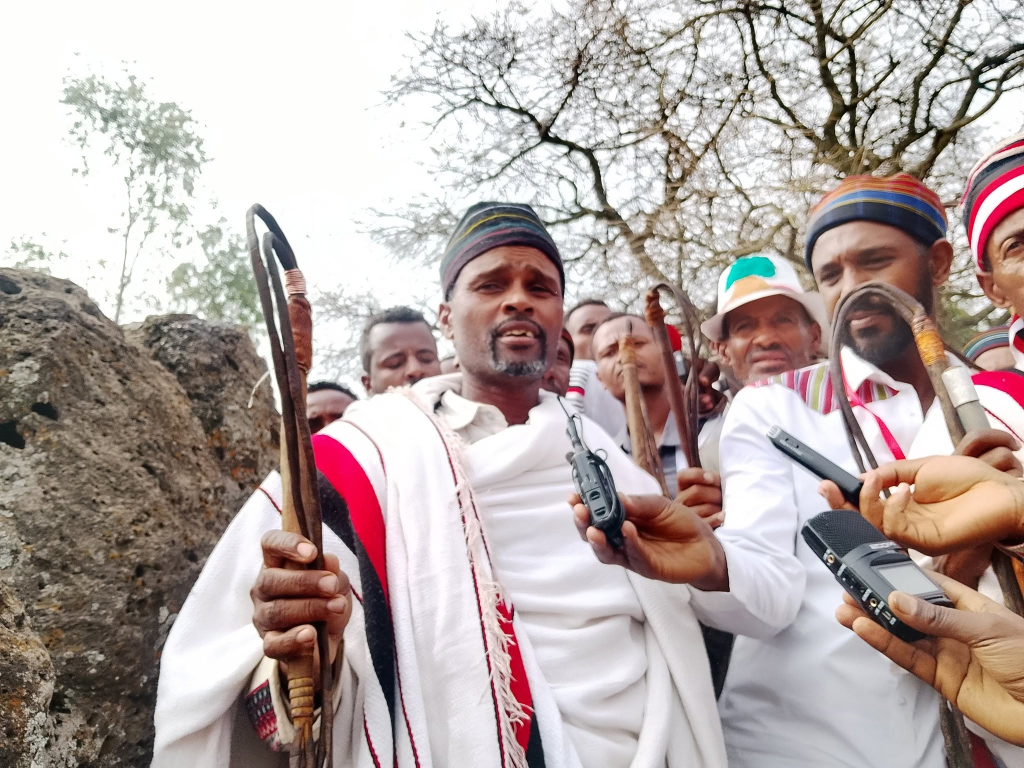
Today, at the sacred site of Ardaa Jilaa Dhaka Koraatti, the Walharkaa Fuudhinsa Alangee – the formal transfer of the Baallii (ceremonial baton of office) – was conducted for the 71st cycle of the Tuulama Gadaa. Power moved peacefully from the Gadaa Meelbaa grade to the Gadaa Muudanaa grade.
And at the heart of this ceremony stood one man: Abbaa Gadaa Geetuu Taliilaa Tufaa, who received the Alangee and was inaugurated as the new Abbaa Gadaa of the Tuulama Oromo.
The Sacred Transfer
The Gadaa system, recognized by UNESCO as an Intangible Cultural Heritage of Humanity, operates on an eight-year cycle. Each cycle has a name, a purpose, and a set of leaders who carry the responsibilities of governance, conflict resolution, ritual observance, and community welfare.
The 70th cycle, Gadaa Meelbaa, has now completed its term. The 71st cycle, Gadaa Muudanaa, has begun. And with this transition, the Alangee – the symbol of legitimate authority – has been placed into the hands of a new leader.
The ceremony at Ardaa Jilaa Dhaka Koraatti was not a political rally. There were no speeches attacking opponents, no promises that would be broken tomorrow, no expensive campaigns or negative advertisements. There was only ritual, tradition, blessing, and the quiet, solemn transfer of a baton that represents the collective will of the Tuulama Oromo.
Elders presided. The community witnessed. The Caffee assembly gave its consent. And Abbaa Gadaa Geetuu Taliilaa Tufaa stepped into his role – not as a conqueror, but as a servant. Not as a king, but as a caretaker.
Who Is Abbaa Gadaa Geetuu Taliilaa Tufaa?
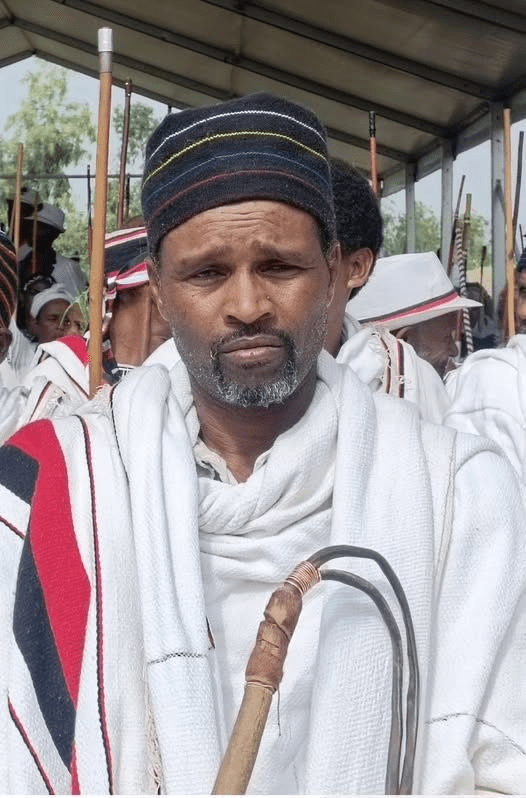
Little is known by the wider public about the new Abbaa Gadaa. This is not unusual. The Gadaa system does not produce celebrities. It produces leaders who are chosen not for their charisma or their wealth but for their wisdom, their integrity, and their commitment to the community.
Abbaa Gadaa Geetuu Taliilaa Tufaa emerges from within the Gadaa Muudanaa grade – a cohort of men who have been preparing for leadership for years, even decades. The Gadaa system does not allow anyone to simply declare themselves a leader. One must be born into a Gadaa grade, grow through its ranks, learn its laws, participate in its rituals, and be recognized by elders and community members as ready to lead.
The new Abbaa Gadaa has now received the Alangee. He has been blessed. He has been installed. And for the next eight years, he will carry the weight of the Tuulama Oromo on his shoulders.
The Significance of the 71st Cycle
Why does the 71st cycle matter? Why should anyone outside the Gadaa system care about the transfer of the Alangee?
The answer is simple: because the Gadaa system represents an alternative – a different way of organizing political life that does not depend on elections, parties, or constitutions. It depends on tradition, consensus, and the moral authority of elders.
In a world where democracy is in crisis – where trust in elections is collapsing, where leaders refuse to leave office, where political violence is normalized – the Gadaa system offers lessons. It shows that it is possible to transfer power peacefully. It shows that term limits can be respected without constitutional debates. It shows that leadership can be a burden to be carried, not a prize to be seized.
The 71st cycle of the Tuulama Gadaa begins at a moment of great challenge for the Oromo people. Displacement continues. Political repression persists. Economic hardships weigh heavily on ordinary families. The youth, the Qeerroo and Qarree, are restless. The diaspora watches from afar, hoping for change.
Abbaa Gadaa Geetuu Taliilaa Tufaa inherits all of this. His Alangee is not just a symbol of authority. It is a symbol of responsibility. He will be expected to mediate disputes, to speak for his people, to preserve the Safuu (moral code), and to ensure that the Gadaa cycle continues when his eight years are complete.
Ardaa Jilaa Dhaka Koraatti: The Sacred Ground
The ceremony took place at Ardaa Jilaa Dhaka Koraatti, a site of profound spiritual and political importance for the Tuulama Oromo. It is here that the Gadaa grades gather, that the Baallii is transferred, and that the community reaffirms its commitment to the Gadaa way of life.
To stand at Dhaka Koraatti is to stand on ground that has witnessed centuries of Oromo democracy. The same rituals performed today were performed by the 1st Abbaa Gadaa, and the 20th, and the 50th. The continuity is not broken. The cycle has never stopped – not during the expansion of the Ethiopian empire, not during the Derg years, not during the periods of greatest repression.
The Gadaa system survived because it is not a building that can be destroyed or a law that can be repealed. It is a living tradition, passed from father to son, from elder to youth, from grade to grade. And today, at Dhaka Koraatti, it survived again.
The Role of the New Abbaa Gadaa
What will Abbaa Gadaa Geetuu Taliilaa Tufaa do with his eight years?
He will preside over the Caffee assembly, where community decisions are made by consensus. He will mediate disputes – between families, between clans, between individuals – using Seera (customary law) and Safuu (moral principle). He will lead rituals, including the annual Irreecha thanksgiving ceremonies. He will represent the Tuulama Oromo in relations with other Gadaa groups – the Borana, the Gujii, the Karrayyuu, the Arsi, and others. He will ensure that the next grade, Gadaa [the following cycle], is properly trained and prepared to receive the Alangee when his term ends.
He will not have a palace. He will not have a salary. He will not have a security detail. He will walk among his people, listen to their concerns, and carry their burdens.
This is what the Gadaa system demands. This is what the Alangee represents.
The Meaning of “Alangee”
The word Alangee refers to the ceremonial baton or sceptre that symbolizes legitimate authority within the Gadaa system. It is not a weapon. It is not a scepter of domination. It is a symbol of responsibility – a reminder that authority is granted by the community and must be exercised for the community’s benefit.
When Abbaa Gadaa Geetuu Taliilaa Tufaa received the Alangee today, he did not receive a license to command. He received a charge to serve. The Alangee will accompany him to Caffee assemblies, to ritual ceremonies, and to community gatherings. And when his eight years are complete, he will pass it – peacefully, ceremonially, joyfully – to the next Abbaa Gadaa.
That is the Gadaa way. That is the Oromo way. That is the way of a people who understood democracy long before the word was invented.
Tagany Bafiqaadu: The Reporter
This report was brought to us by Tagany Bafiqaadu of AMN PLUS. Journalists who cover Gadaa ceremonies occupy a unique position – they are not merely observers but also participants in the preservation of Oromo heritage. Tagany’s presence at Ardaa Jilaa Dhaka Koraatti ensured that this moment was documented, that the names were recorded, and that the story will be told to future generations.
In an era of digital media and instant news, the Gadaa system might seem anachronistic. But as Tagany’s reporting reminds us, there is nothing outdated about peaceful transitions of power, community-based governance, and leaders who serve rather than rule.
Looking Ahead: Eight Years of Gadaa Muudanaa
The Gadaa Muudanaa cycle now begins. For the next eight years, Abbaa Gadaa Geetuu Taliilaa Tufaa will lead the Tuulama Oromo. He will face challenges – some predictable, some unimaginable. He will make decisions that will be debated and discussed. He will be praised by some and criticized by others.
But he will not be overthrown. He will not be assassinated. He will not cling to power when his term ends. When the eight years are complete, he will hand the Alangee to the next Abbaa Gadaa and step back into the community as an elder, watching as the cycle turns without him.
That is the promise of the Gadaa system. That is the guarantee written not in a constitution but in the hearts and minds of the Oromo people.
A Final Reflection
Today, at Ardaa Jilaa Dhaka Koraatti, the Walharkaa Fuudhinsa Alangee was conducted. The 70th cycle, Gadaa Meelbaa, stepped aside. The 71st cycle, Gadaa Muudanaa, stepped forward. And Abbaa Gadaa Geetuu Taliilaa Tufaa received the Alangee and became the new Abbaa Gadaa of the Tuulama Oromo.
It was a quiet ceremony, witnessed by those who understand its meaning. There were no television cameras broadcasting live to the world. There were no world leaders sending congratulations. There was only the community, the elders, the sacred ground, and the Alangee passing from one hand to another.
But sometimes the quietest ceremonies are the most profound. Sometimes the traditions that receive the least attention are the ones that matter most.
The Gadaa cycle has turned. The 71st Abbaa Gadaa has been installed. And the Oromo people, as they have for centuries, continue to govern themselves in their own way, on their own terms, under their own sacred trees.
Gadaatu Fala. The cycle continues. The Alangee is in good hands.
Daandii Ragabaa
Finfinne
Report Source: AMN PLUS, Waxabajjii 07, 2018 E.C.
Reporter: Tagany Bafiqaadu
Location: Ardaa Jilaa Dhaka Koraatti
Event: Walharkaa Fuudhinsa Alangee Gadaa Tuulamaa (71st Gadaa Cycle Transfer from Gadaa Meelbaa to Gadaa Muudanaa)
New Abbaa Gadaa: Abbaa Gadaa Geetuu Taliilaa Tufaa

Pilgrimage of the Sadeen Tuulamaa: Honoring Oromo Heritage
By Daandii Ragabaa
Finfinne
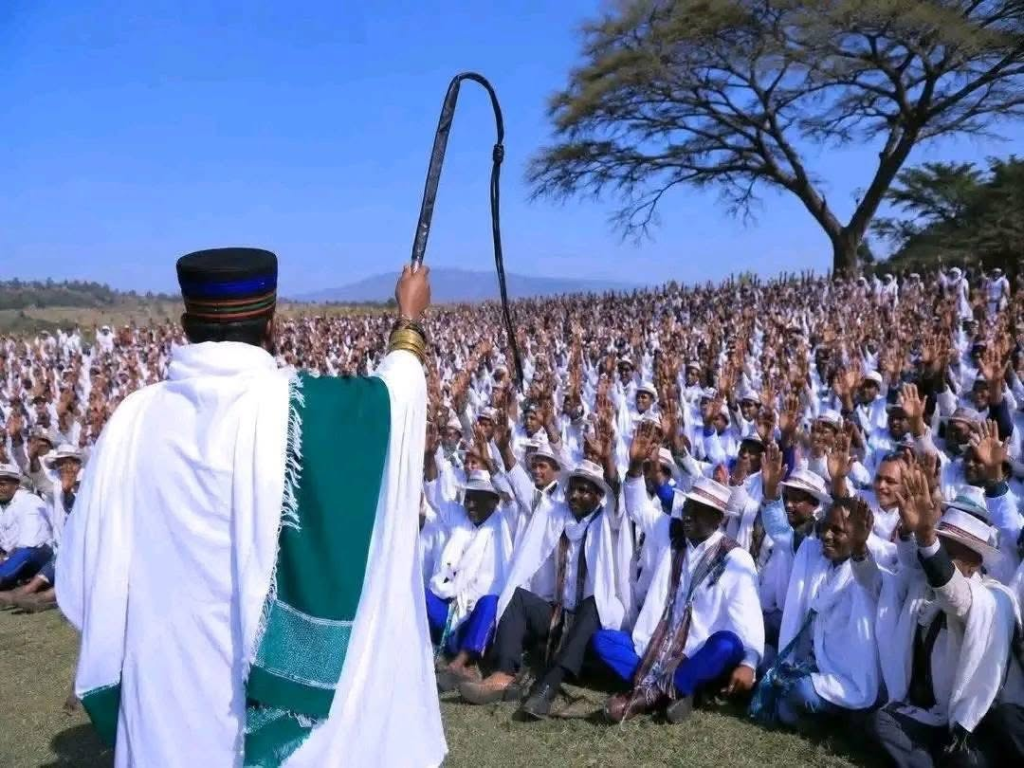
EAST SHEWA ZONE, DUGDA DISTRICT – Under the open sky, across rivers and valleys, through cold nights and burning sun, they walk. They are not tourists. They are not travelers seeking leisure. They are the bearers of a tradition older than most nations — the living embodiment of the Gadaa system.
Members of the Gadaa Meelbaa and Muudanaa Dhaka Koraatti grades have embarked on a pilgrimage to the Gafarsa Korma River. Their mission: to participate in the Wal Harkaa Fuudhiinsa Alangee — the ceremonial transfer of the Baallii (the ritual baton/symbol of office) — a sacred process that marks the continuation of Oromo democracy in its purest form.
Accompanied by blessings and songs that have echoed through generations, the procession moves with purpose. At the riverside, they perform irreecha (thanksgiving prayers), asking for safe passage, for successful completion of their journey, and for the endurance of the Gadaa system itself.
A Journey of Devotion
These are not men traveling on government expense. There are no pre-booked hotels, no catered meals, no paid leave. They walk on foot. They sleep under the stars or in makeshift shelters. They endure the heat of the day and the biting cold of the night. And they do so willingly — joyfully — because the Gadaa calls.
“Those who travel for money or comfort miss the point,” said an elder accompanying the group, his weathered face illuminated by the morning light. “We travel because the Gadaa demands it. We walk because our fathers walked. We endure because our ancestors endured. This is not a journey. This is a covenant.”
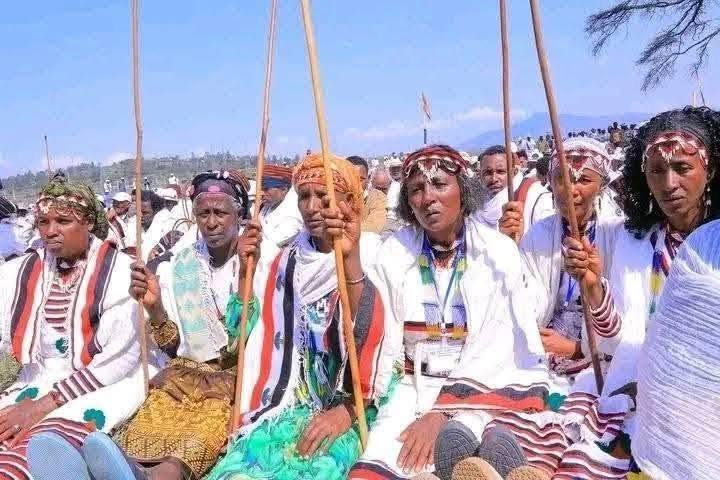
The group, known as the Tuulamni Sadeen (The Three Pillars), has gathered at the Ardaa Jilaa Dhaka Koraatti — a sacred site within the Galaan district of the Shaggar City Administration. Here, under the direction of the Oromia Culture and Tourism Bureau, the Baallii transfer ceremony is being prepared.
What is the Gadaa System?
For those unfamiliar, the Gadaa system is one of the most sophisticated indigenous governance structures ever developed by any civilization on earth. Recognized by UNESCO as an Intangible Cultural Heritage of Humanity, the Gadaa system is not merely a political framework — it is a complete way of life.
Every eight years, power cycles peacefully from one Gadaa grade to the next. There are no coups. There are no civil wars over succession. There are no life presidents. The system ensures that leaders serve their time and then step aside — voluntarily, ceremonially, and peacefully.
The Gadaa system encompasses:
- Political governance (Siyaasa) – How leaders are chosen, how decisions are made, and how power is transferred
- Economic management (Dinagdee) – How resources are distributed and how communities sustain themselves
- Social organization (Hawaasummaa) – How families, clans, and communities interact and resolve conflicts
- Cultural identity (Eenyummaa) – How language, history, and traditions are preserved and transmitted
- Moral code (Safuu) – How individuals relate to each other, to nature, and to the divine
The Baallii Transfer: Democracy in Action
The Wal Harkaa Fuudhiinsa Baallii Gadaa — the formal transfer of the Baallii (often described as a ritual baton, sceptre, or symbol of office) — is the climax of the Gadaa cycle. It represents the peaceful transition of authority from one generation to the next.
The current ceremony, involving the Tuulamni Sadeen (the Three Pillars) at the Ardaa Jilaa Dhaka Koraatti site, follows a tradition that has continued uninterrupted for centuries. The pilgrimage began in the early days of the month of Waxabajjii (roughly corresponding to June/July), with participants traveling from various directions to converge at the sacred site.
“The Baallii is not just a stick,” explained one elder who wished to remain unnamed. “It is the weight of our ancestors. It is the hope of our children. It is the promise that power will not corrupt, because power will not stay. When I hand the Baallii to the next grade, I am not losing anything. I am completing something.”
A Living Heritage
Unlike many ancient traditions that exist only in museums or history books, the Gadaa system remains fully operational among Oromo communities across Ethiopia and beyond. From Borana to Gujii, from Karrayyuu to Arsi, from Wallaga to Hararge — the Gadaa lives.
During the past eight years — the full term of the current Gadaa grade — observers have witnessed the system in action. They have seen disputes resolved not in courts but under Odaa trees. They have seen resources managed not by bureaucrats but by community consensus. They have seen leaders rise, serve, and prepare to step down.
“The Gadaa system is not a relic,” said a cultural officer with the Oromia Culture and Tourism Bureau. “It is a functioning alternative to the top-down governance models that have failed so many societies. The world has much to learn from what the Oromo have practiced for centuries.”
Lessons for Today’s Generation
As the pilgrims continue their journey, they carry with them the words of their teachers. One such teacher is Dagalee Abdiisaa Haamoo Galmoo, an Abbaa Gadaa (Gadaa father/leader), who offers a proverb that captures the essence of the system:
“Wanti ofii ni barra yoo jedhan nama dararti; barre yoo jedhan nama harkaa bararti; ni dhiisa yoo jedhanis nama mararti.”
Translation: “If they say ‘our thing is written,’ you will read it. If they say ‘our thing is drawn,’ you will trace it with your hand. If they say ‘our thing is left behind,’ you will wrap it up and carry it.”
The meaning is clear: Tradition is not something to be observed from a distance. It is something to be learned, to be touched, to be carried. It is not static. It is not decorative. It is alive — and it requires living hands to keep it so.
The Gathering of the Waters
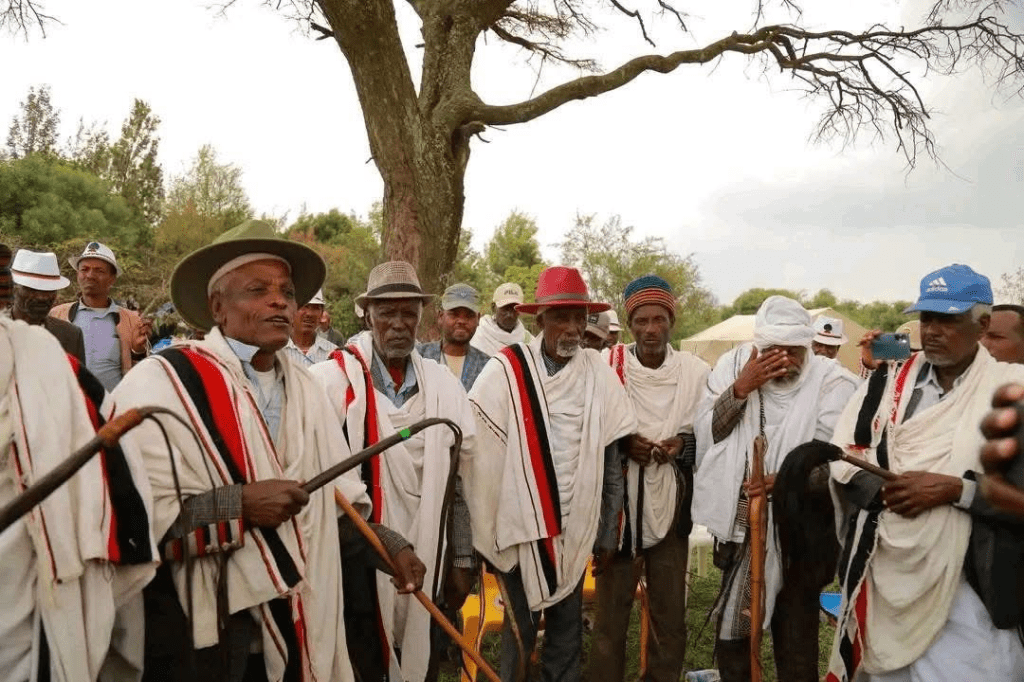
One elder, recalling the words of Haajii Roobalee Hulufee, offered another powerful image:
“Laggeen xixiqqaan walitti yaa’uun laga guddaa uumu.”
“Small streams that come together create a great river.”
The Tuulamni Sadeen — the Three Pillars — represent such a coming together. Different streams of the Gadaa tradition, from different regions and different clans, flowing into one great river. The Borana stream. The Gujii stream. The Karrayyuu stream. The Arsi stream. All of them converging at Dhaka Koraatti to perform the same ceremony, to honor the same ancestors, to ensure the same future.
A Message to the World
As the pilgrims rest by the Gafarsa Korma River, their songs echoing across the water, they send a message beyond Ethiopia’s borders. It is a message carried in the hashtags that accompany their posts: #oromoculture, #gada, #UNESCO.
The message is simple but profound:
“Falli Oromoo Gadaa qofa. Gadaatti deebinee sanaaf wal taliignan hunduu mishoomaa fi damboobina callaa himanna. Gadaatu Fala!”
“The solution for Oromo is only the Gadaa. Returning to the Gadaa, all of us who unite for it will overcome scarcity and the darkness of silence. Gadaa is the cure!”
These are not the words of radicals or separatists. They are the words of elders, of pilgrims, of men and women who believe that the best path forward is sometimes the path that goes backward — back to the Odaa tree, back to the Caffee assembly, back to the wisdom of ancestors who solved problems of governance without prisons, without armies, and without endless political campaigns.
What We Have Seen
Standing at the Ardaa Jilaa Dhaka Koraatti, watching the Tuulamni Sadeen prepare for the Baallii transfer, one cannot help but feel a sense of awe. This is not a performance for tourists. There are no souvenirs. There are no ticket booths. There are only men and women — old and young — moving with a sense of sacred purpose.
They have walked far. They have slept on the ground. They have crossed rivers and climbed hills. They have sung until their voices grew hoarse and prayed until their knees grew sore. And they smile. Not the smile of exhaustion, but the smile of fulfillment.
“We are doing what our fathers did,” said a young participant, barely old enough to be initiated into the lower Gadaa grades. “And one day, my children will do what I am doing. That is not repetition. That is continuity. That is immortality.”
The Road Ahead
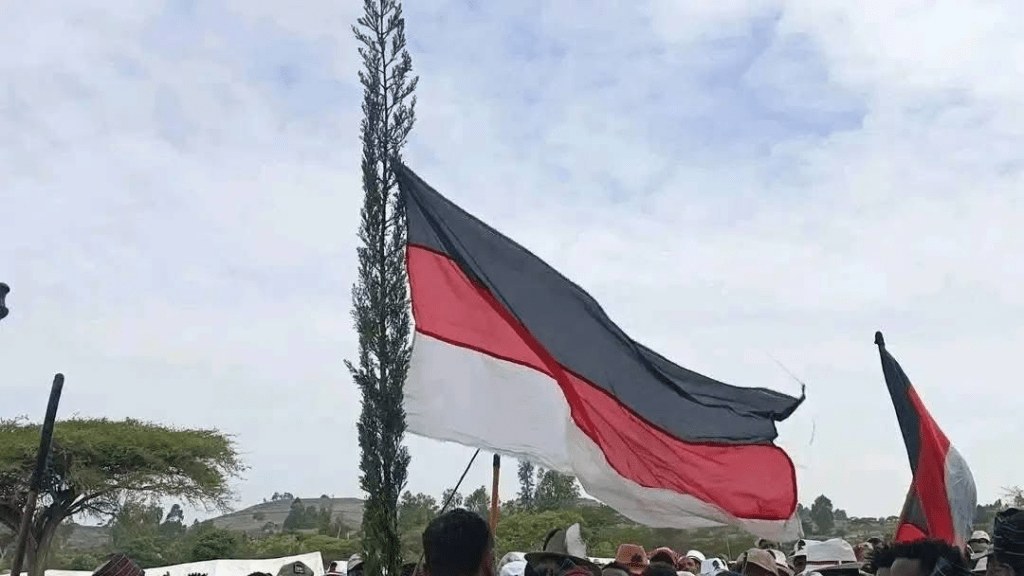
The Baallii transfer ceremony continues. The pilgrims will complete their journey. The ritual baton will pass from one set of hands to the next. And the Gadaa cycle — which has turned for centuries, which survived emperors and colonizers and dictators — will turn again.
For the Oromo people, the Gadaa system is not a museum piece. It is not a cultural festival staged for outsiders. It is governance. It is community. It is identity. It is a living, breathing democracy that has never needed a constitution because it carries its laws in its memory and its values in its heart.
As the sun sets over the Gafarsa Korma River, the pilgrims gather one last time. They raise their hands in prayer. They ask for safe return. They ask for strength. They ask for the Gadaa to endure.
And somewhere, under an Odaa tree that has stood for generations, an elder whispers the words that have closed every Gadaa ceremony since time immemorial:
“Gadaatu Fala.”
Gadaa is the cure.
Daandii Ragabaa is a journalist based in Finfinne covering cultural heritage, indigenous governance systems, and social affairs across Oromia and Ethiopia. Reporting from East Shewa Zone, Dugda District, and the Ardaa Jilaa Dhaka Koraatti sacred site.

Revitalizing the Oromo System: A Modern Approach
By Daandii Ragabaa
Finfinne
FINFINNE – There is a quiet conversation echoing across the highlands and lowlands of Oromia, spoken not in boardrooms but around hearth fires, under sycamore trees, and in the patient queues outside polling stations. It is a conversation about something ancient being made new again: Sirna Oromoo—the Oromo system.
For generations, the Gadaa system stood as one of Africa’s most sophisticated indigenous democracies, a cyclical governance framework that rotated power every eight years, long before the word “election” entered the colonial lexicon. But time, war, and the relentless press of modernity have frayed its fabric. Now, a quiet but determined movement is underway to do the unthinkable: to not merely preserve the Oromo system, but to revitalize it, rebuild it, strengthen it, and expand it for a new century.
“Revisiting our system is not about turning back the clock,” said a cultural elder who spoke on condition of anonymity, his voice carrying the weight of decades. “It is about remembering that we had answers before we were told we had none.”
Deebisanii Haaromsuu: Revitalizing the Roots
The first pillar of this vision is deebisanii haaromsuu—to revitalize. Across Oromia, from the bustling streets of Finfinne to the pastoral lands of Borana, young and old are gathering in Odaa trees, the sacred meeting places where consensus was once forged. But these are not nostalgia tours. They are resuscitation sessions.
Scholars at Odaa Bultum University have begun digitizing oral Gadaa laws that were never written down, afraid they would be lost to memory. Youth groups, once skeptical of what they called “grandfather’s politics,” are now undergoing training in Gadaa principles of conflict resolution. The language of Safuu—the moral-legal code that governs Oromo society—is being taught again in community schools.
“We are not archeologists,” said Hunde Fekadu, a 28-year-old community organizer in Jimma. “We are gardeners. We are pulling the weeds of neglect away from something that is still alive.”
Ijaaruu: Building the Scaffolding
Revitalization alone is hollow without structure. The second pillar—ijaaruu (building)—is perhaps the most ambitious. For decades, the Oromo system existed informally, a shadow government whispered about but rarely empowered. Now, community-led initiatives are constructing tangible institutions.
In Adama, a newly established Gadaa Center now mediates land disputes that formal courts have spent years failing to resolve. In Bale, a cooperative of farmers has adapted the Waaqeefannaa calendar—an indigenous timekeeping system based on lunar cycles—to coordinate planting seasons with climate resilience strategies.
“We are building bridges,” said Aynalem Tsegaye, a legal researcher focusing on customary law. “Not between the old and the new, but between the old and the now. The Sirna Oromoo never collapsed entirely. It bent. We are straightening it with new timber.”
Jabeessuu: Strengthening the Weave
A system rebuilt must also be fortified. Jabeessuu—strengthening—speaks to the internal work required to make the Oromo system durable against the forces that weakened it before.
This means confronting uncomfortable truths. The Gadaa system, for all its democratic brilliance, had gaps: the historical exclusion of certain clans, the uneven role of women in leadership, and the rigidity that sometimes accompanied tradition. Strengthening today means opening the Gadaa assembly to voices once left at the margins.
“We are not romantics,” said Fatuma Jara, a women’s rights advocate in Ambo. “Our ancestors built something remarkable, but they built it in their time. If we want this system to survive our time, women must sit at the Caffee [assembly] not as observers but as decision-makers. That is not breaking tradition. That is strengthening it.”
Pilot programs in three Gadaa “generation sets” have already integrated equal representation principles, with elders and youth councils sitting side by side.
Gabbisuu: Expanding the Vision
Finally, gabbisuu—to expand. This is the most forward-looking pillar, the one that dares to ask: Can the Oromo system offer something to the world?
Proponents argue yes. As Ethiopia and other African nations struggle with centralized, top-down governance models inherited from colonial powers, the Sirna Oromoo offers an alternative: power sharing, term limits (eight years, enforced by celestial cycles rather than constitutional amendments), and consensus-based decision-making.
“We are not asking to replace the modern state,” said a policy advisor close to cultural affairs in the Oromia regional government. “But why should our children learn only about Athenian democracy in school? Why not Gadaa? Why not Safuu? Expansion means taking our system out of the museum and putting it into the curriculum.”
Pilot expansions are already underway. In several districts, customary Oromo courts now operate alongside federal tribunals, with the blessing of both community elders and legal authorities. Cross-border initiatives with Oromo communities in Kenya’s Marsabit County are exploring how Gadaa principles can manage resource conflicts over water and grazing land—conflicts that modern borders have only worsened.
The Road Ahead
To witness these four movements in action—revitalizing, building, strengthening, expanding—is to watch a people refuse to let their civilizational inheritance dissolve. It is not without tension. Skeptics worry about romanticizing the past or creating parallel systems that clash with federal law. Traditionalists worry about diluting sacred customs. Modernists worry it is all nostalgia dressed in policy clothing.
But on a recent afternoon in Finfinne, inside a modest cultural center, a scene unfolded that offered a different kind of answer. An elder—his hair white with Gadaa grades—sat teaching a teenager how to recite the seera (laws) from memory. Beside them, a young woman typed the same laws into a laptop, translating them into three languages.
“See?” the elder said, noticing a visitor’s gaze. “The Sirna Oromoo is not dead. It is just changing clothes.”
Daandii Ragabaa is a journalist based in Finfinne covering cultural, political, and social affairs across Oromia and Ethiopia.

When the Bokkuu Blooms Again: The Oromo Quest to Revive a Native System
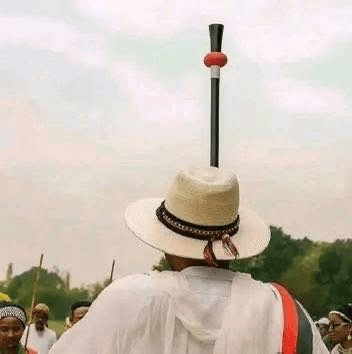
FINFINNE, OROMIA — The morning mist still clings to the highlands when Jaldessa Gammadaa, 74, raises the bokkuu—a curved wooden staff wrapped in leather and beads—toward the rising sun. His weathered hands tremble slightly, not from age, but from the weight of what this simple object represents.
“The bokkuu never died,” he says softly, his voice carried by the wind sweeping across the grassy plains of Mecha, in western Oromia. “It was only sleeping. Now, we are waking it up.”
For the Oromo people, Ethiopia’s largest ethnic group, the bokkuu is more than a ceremonial scepter. It is the embodiment of the Sirna Oromoo—the Oromo system of governance, law, spirituality, and social organization that once governed millions across the Horn of Africa. And after decades of suppression, forced assimilation, and state-sanctioned neglect, the Oromo are engaged in a quiet but determined revolution: not with guns, but with memory.
They are reviving. They are rebuilding. They are strengthening.
—
A System That Predates Modern Democracy
The Gadaa system—the beating heart of Sirna Oromoo—is a complex, age-grade-based democratic governance structure that has been recognized by UNESCO as an Intangible Cultural Heritage of Humanity. Every eight years, power transfers peacefully from one generation to the next, with elected leaders known as Abbaa Gadaa presiding over legislative, judicial, and ritual functions.
Political scientists have marveled at its checks and balances. Its separation of powers. Its regular succession mechanisms that prevent authoritarian drift—all developed centuries before many European nations had abolished absolute monarchy.
“People ask me if the Oromo had democracy before colonialism,” says Dr. Worku Tesfaye, a historian at Addis Ababa University who has studied Gadaa for three decades. “I tell them no. We had something more sophisticated. Colonialism never reached Oromia in the same way it reached the coast. The Gadaa system is indigenous, organic, and astonishingly modern in its core principles.”
Yet for much of the 20th century, successive Ethiopian regimes viewed the Gadaa system as a threat. Emperor Haile Selassie’s government sought to centralize power and absorb Oromo lands, sidelining Oromo institutions. The Marxist Derg regime (1974–1991) banned what it called “feudal and tribal structures.” And even after 1991, while ethnic federalism allowed some cultural expression, Gadaa was largely relegated to folklore—performed at tourist festivals, but stripped of its governance authority.
“The system was broken,” Jaldessa recalls. “When I was a boy, the elders still met in secret under the oda tree. But the meetings grew smaller every year. Young people laughed at us. They said we were ghosts telling old stories.”
—
The Revival: From Memory to Movement
Today, the ghosts are finding their voices again.
Across Oromia—and in diaspora communities from Minneapolis to Melbourne—a grassroots cultural renaissance is underway. Community elders known as hayyuus (wise ones) are holding intergenerational workshops. Local Gadaa councils, once dormant, are being reconstituted—not to replace modern government, but to complement it in matters of conflict resolution, environmental stewardship, and social welfare.
In the city of Adama, a youth group called “Dallachaa” (Growth) has documented over 200 oral histories from elders who remember the Gadaa system before its suppression. In Addis Ababa’s Oromo neighborhood of Bole, young professionals meet weekly to study the Seera (customary laws) and debate how they might apply to contemporary issues like land rights and gender equality.
“We’re not trying to turn back the clock,” says Hundaol Banti, 28, a software engineer who co-founded a digital platform cataloging Gadaa principles. “But there are things our ancestors got right—consensus-building, ecological balance, leadership rotation. Why would we throw that away just because it’s old?”
The revival has found unexpected allies. In 2016, the Oromo Protests—massive anti-government demonstrations rooted in land rights and political marginalization—took the bokkuu as their symbol. Young protesters, many of whom had never witnessed a full Gadaa ceremony, raised wooden staffs in defiance. The image of the bokkuu became a rallying cry.
“Those protests changed everything,” Worku says. “Suddenly, a new generation saw the bokkuu not as a relic of their grandparents, but as a weapon—a peaceful one—against injustice. The system was re-politicized in the best sense.”
—
The Challenges Ahead
Yet revival is not without its fractures.
Some women’s groups have pushed back against Gadaa’s traditionally male-dominated leadership structures. While the system includes ritual roles for women—the Siiqqee institution, named after a staff carried by women—critical governance positions were historically held by men. Contemporary reformers are debating how to reinterpret these traditions for an era that demands gender parity.
“The Siiqqee was not just symbolic,” insists Asha Boru, a women’s rights activist and Gadaa scholar from Borana zone. “Women could veto decisions, call assemblies, and protect other women from abuse. But yes, there is work to do. The beauty of Sirna Oromoo is that it is built on debate. We are debating now.”
There are also tensions between rural and urban practitioners. In rural areas, particularly among the Borana and Guji Oromo, the Gadaa system never fully disappeared; it operated underground. In cities, revival efforts sometimes risk romanticizing a complex system that also had hierarchies and rigidities.
And then there is the state. While the current Ethiopian government, led by Prime Minister Abiy Ahmed (himself Oromo), has made conciliatory gestures—declaring the Irreecha festival a national holiday, funding cultural centers—the legal authority of Gadaa councils remains unclear. Can customary courts sentence someone? Can Gadaa assemblies collect taxes? The boundaries remain contested.
“The government is comfortable with Irreecha and folklore,” says one Addis Ababa-based analyst who requested anonymity to speak freely. “But a fully autonomous Oromo governance system? That is a different conversation. The revival is cultural for now. Whether it becomes political again—that is the question.”
—
Under the Oda Tree
On a recent Friday afternoon, under a sprawling oda tree in the village of Odaa Nabee—a site of immense spiritual significance where Oromo oral tradition says the Gadaa system was formalized—Jaldessa oversees a ceremony. But this is no tourist performance.
Twenty-three young men and women sit in a semicircle, notebooks in hand. They are learning the Gadaa grades—the five eight-year stages through which every Oromo male (and now, in some communities, female) once passed. They memorize the names of the Abbaa Gadaas of the past. They practice the Jaarsummaa (eldership) protocols of conflict mediation.
“We will not all become elders overnight,” Jaldessa tells them. “But you cannot grow a tree from a dead root. We are watering the root.”
One of his students, 19-year-old Marge Waqjira, raises her hand. She wants to know whether a woman can one day hold the bokkuu as a full Abbaa Gadaa. The question hangs in the air.
Jaldessa smiles. “The law does not forbid it,” he says slowly. “The law says a leader must be wise, just, and chosen by the people. So I ask you: does wisdom have a gender?”
The students laugh. Marge writes something in her notebook. And under the oda tree, the Oromo system—rebuilt, revived, and strengthened—takes another small step into the future.
As the sun sets behind the highlands, Jaldessa plants the bokkuu into the earth. It stands upright, alone for a moment. Then he walks away, leaving it there—a promise that next time, it will be younger hands that lift it.
— Reported from Oromia




 Advocacy for Oromia