‘We Are Walking Door to Door’: Anti-Immigrant Vigilantes Escalate Campaign of Intimidation Across South Africa
With tens of thousands repatriated to Zimbabwe and Malawi, a nation confronts the dark tide of xenophobia as weekly marches promise more violence
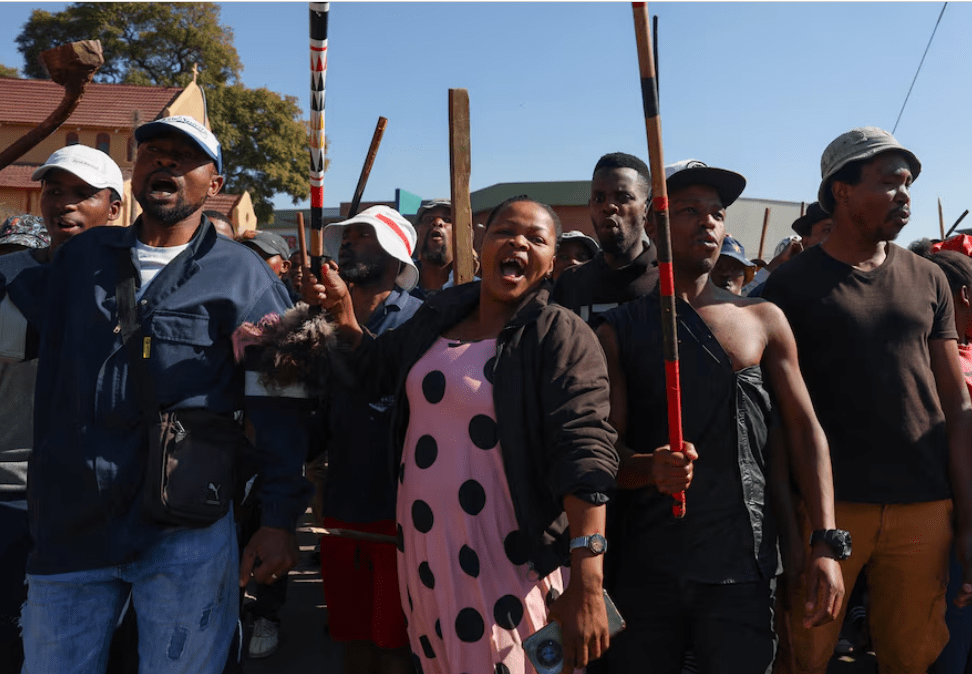
JOHANNESBURG, July 9 — The morning sun rose over Alexandra township, one of Johannesburg’s most densely populated communities, promising another day of uncertainty and fear. By midday, the streets echoed with the sound of splintering wood and desperate pleas as anti-immigrant vigilantes methodically moved from house to house, breaking down doors and dragging terrified residents into the open.
The scenes playing out across Alexandra, Soweto, and Durban represent a dangerous escalation in South Africa’s ongoing xenophobic crisis—one that has already forced tens of thousands of migrants to flee the country they once called home.
‘I Am a ZEP Holder’
Among those apprehended by the marchers was Total Mhlanga, a Zimbabwean national whose hands trembled as he was escorted toward a police van. “I am a ZEP holder,” he insisted, referring to the Zimbabwean Exemption Permit that legally allows tens of thousands of Zimbabweans to live and work in South Africa. His papers, however, seemed to matter little to those who had seized him.
In Alexandra, a Reuters reporter witnessed protesters breaking into homes where they believed undocumented immigrants were hiding. Among those forcibly removed was a woman clutching a small child—both citizens of Malawi, a country now grappling with the mass return of over 38,000 of its nationals who have fled South Africa in recent weeks.
A Zimbabwean mother of three, who asked not to be named for fear of retaliation, described watching from her window as neighbors were dragged from their homes. “I came here legally. My children were born here. This is the only home they know. Now I must decide whether to stay and risk everything or return to a country I left because there was no future there.”
‘Every Thursday Until Our Demands Are Met’
The movement driving this violence has found an unlikely and increasingly vocal leader: former radio presenter Jacinta Ngobese-Zuma. Her group, known as March and March (also referred to as “March 1 March”), has organized nationwide protests that have transitioned from street demonstrations to what community leaders describe as “door-to-door” operations targeting foreign nationals.
“Protests will take place every Thursday until our demands are met,” Ngobese-Zuma declared on June 30, an informal deadline her movement had set for undocumented immigrants to leave South Africa. The promise has become a terrifying reality for migrants across the country.
Her organization has painted undocumented immigrants as the source of South Africa’s deep-seated economic challenges—unemployment, housing shortages, and strained public services—demanding tighter border controls, mass deportation, and the prioritization of South African citizens in schools and healthcare facilities.
A Community Divided
At the march in Alexandra, community leader Bongani Msomi justified the tactics being employed. “We are walking around doing door to door removing foreigners,” he stated matter-of-factly, as behind him, protesters brandished sticks and flags.
Yet not all South Africans support the movement. In the same township, elderly residents watched with concern, some shaking their heads in silent disapproval. A local teacher, who also asked not to be named, expressed anguish over the situation: “We are destroying what Nelson Mandela built. Ubuntu is dead in these streets. These people are not our enemies—they are our neighbors, our customers, our children’s classmates.”
The Government’s Response—and Its Limits
President Cyril Ramaphosa has repeatedly warned against scapegoating immigrants for the country’s problems. His government has issued clear directives that citizens do not have the right to take immigration enforcement into their own hands.
Police have deployed officers to recent marches for safety and have stepped up arrests of undocumented migrants—yet the line between law enforcement and vigilantism has become dangerously blurred. At the scenes of Thursday’s protests, officers stood by as vigilantes dragged people from their homes. A spokesperson for Johannesburg police was not immediately available to explain the actions of officers at the scene.
Human rights organizations have raised urgent concerns about the complicity—or at minimum, inaction—of law enforcement in facilitating these “removals.” “When police receive citizens who have been unlawfully detained and physically removed from their homes, they are not acting as neutral enforcers of the law,” said a legal observer who requested anonymity. “They are, in effect, legitimizing extrajudicial actions.”
A Regional Humanitarian Crisis
The ripple effects of South Africa’s xenophobic violence are being felt across southern Africa. Malawi’s government confirmed Thursday that over 38,000 of its citizens had returned in recent weeks, part of a massive repatriation effort driven by safety concerns. Neighboring Zimbabwe has seen more than 60,000 of its nationals return—a staggering figure that represents not just a humanitarian crisis but an economic shock to both nations.
These returnees are arriving in countries that already struggle with their own economic challenges. Many had been sending remittances home, supporting extended families and local economies. Their forced return is creating new vulnerabilities while straining already limited resources in their countries of origin.
The Human Cost
Behind the statistics lie countless stories of shattered lives. A Malawian shopkeeper in Soweto watched his business—built over fifteen years—looted and destroyed. A Zimbabwean nurse who had served in a public hospital for a decade now sleeps in a shelter, uncertain if she will ever return to work. An Oromo refugee who fled political persecution in Ethiopia now faces violence in the country where he sought sanctuary.
“The pain is not just physical,” says Dr. Thabo Mbeki (not the former president), a community psychologist who has been providing counseling to affected families. “People are experiencing profound trauma. They have lost everything—their homes, their livelihoods, their sense of safety. Children are refusing to eat. Parents cannot sleep. The psychological wounds will last for generations.”
The Economic Fallacy
Economists have pushed back against the narrative that immigrants are the primary cause of South Africa’s economic woes. Studies have shown that immigrants often create jobs through entrepreneurship, fill critical skills gaps, and contribute to the tax base. The country’s unemployment crisis, they argue, has far deeper roots in systemic inequality, inadequate education, and stagnant economic growth.
“To blame immigrants for unemployment is not just inaccurate—it’s dangerous,” says economist Tendai Moyo. “It diverts attention from the real structural reforms that are needed. It gives people a scapegoat instead of solutions.”
A Nation at a Crossroads
South Africa stands at a defining moment. The post-apartheid constitution—one of the most progressive in the world—enshrines human dignity and equality. Yet the country’s actions are betraying these principles.
As Thursday’s marches conclude and communities brace for what next week may bring, a fundamental question remains: Will South Africa find the political will to protect the most vulnerable among its residents, or will it allow xenophobic violence to become normalized?
The international community is watching. The African Union has expressed concern. Human rights organizations have documented abuses. Diplomats from affected countries have raised the issue with their South African counterparts.
But for the families huddled behind locked doors—the legal permit holders who still fear arrest, the children too frightened to attend school, the business owners who have lost everything—the response so far has been insufficient.
A Plea for Humanity
As evening falls over Alexandra, the sound of broken glass crunches underfoot. Women sweep debris from their doorsteps. Men gather in small groups, their voices low with tension. Children peek through curtained windows, their games silenced.
“In a just world, this would not happen,” reflects one elderly South African woman who has lived in the township for seven decades. “We suffered under apartheid. We know what it is to be treated as less than human. How can we do this to others? How have we forgotten so quickly?”
Her question hangs in the air, unanswered.
The marches will continue, the groups have promised. And as long as they do, the fragile thread of pan-African solidarity—the very ideal that South Africa’s liberation struggle championed—grows thinner with each passing Thursday.
Reporting from Johannesburg, Alexandra township, and Soweto. Additional reporting from Lilongwe and Harare.

Posted on July 10, 2026, in Aadaa, Afaan, Aged Care, AOD, Asylum Seekers, Biography, Bokkkuu, Diaspora, Election, Events, Face of Injustice, family violence, Finfinne, freedom, Grief Support, Gumaa, Information, Language, Media, mental health, News, Oromia, Oromo diaspora, Press Release, Uncategorized. Bookmark the permalink. Leave a comment.






Leave a comment
Comments 0