The Sacred Journey of Gadaa: Oromo Community Gathers for Ancient ‘Wal-Argii’ Naming Ceremony
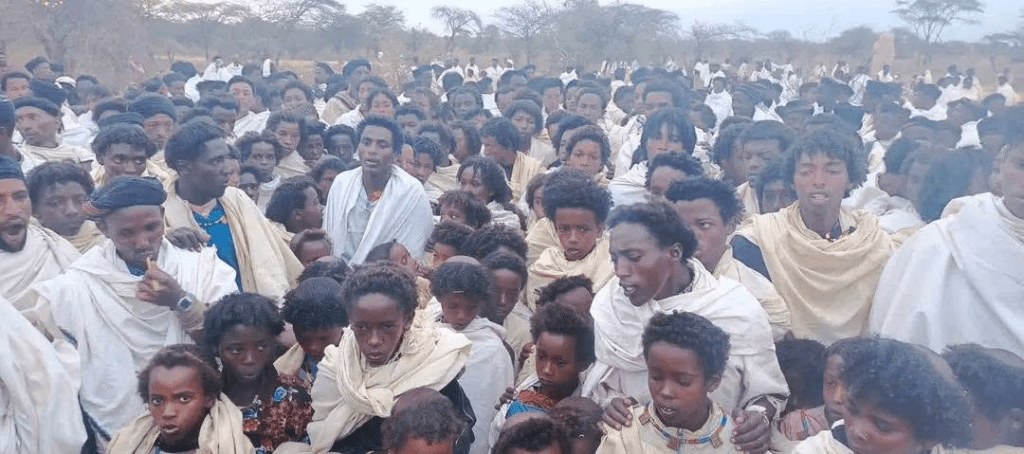
As the sun rises over Guyyoo Gobba, elders and youth come together to celebrate the timeless traditions that have guided Oromo society for generations
BORANA ZONE, OROMIA — In the heart of Oromia, where the ancient rhythms of tradition still pulse through the land, the community of Guyyoo Gobba is preparing for a ceremony that connects the present to centuries of ancestral wisdom. The occasion is the sacred “Wal-Argii” ritual—a ceremony of recognition and naming that marks a significant transition in the Gadaa system, the indigenous democratic governance structure that has guided Oromo society for over 500 years.
The Gadaa system, recognized by UNESCO as an Intangible Cultural Heritage of Humanity, is a complex and sophisticated framework that organizes Oromo society into distinct life stages. Each stage carries specific responsibilities, rituals, and ceremonies that prepare individuals for their roles within the community. At the heart of this system lies a profound truth: every child born into this tradition begins a journey of transformation, moving through carefully defined stages toward becoming a full participant in their society.
The Journey Begins: Dabballee
In the Gadaa system, when a male child is born, he enters the world as a Dabballee. This is the foundational stage of life, recognized without question—a male child is Dabballee, never female. The Dabballee period spans the first eight years of life. It is a time of innocence and learning, where the child is nurtured and prepared for the journey ahead.
On the eighth year, the child undergoes the Maqbaasa Ritual—the Ceremony for Naming. This is the child’s first formal recognition within the community, a moment when his identity is publicly acknowledged and celebrated.
The Second Stage: Gammee
Emerging from Dabballee, the child enters the Gammee stage. This period lasts for sixteen years and is divided into two parts: Gammee Gugurdoo and Gammee Didiqqoo. It is during this stage that the community gathers for the “Wal-Argii Ritual”—also known as the Nyaachisa Ritual, or the Ritual of Eating.
The Nyaachisa is sacred. As elders explain, “Without Nyaachisa, one cannot become Kuusa.” The ritual of eating together is not merely about consuming food—it is about entering into community, about sharing in the collective identity that binds Oromo society together.
During this stage, the community gathers to witness and celebrate the growth of their children. The foods prepared are not random; they carry deep cultural significance. Young people learn the importance of communal sharing and the responsibilities that come with becoming full members of society.
The Third Stage: Kuusa
After experiencing the Nyaachisa and emerging from Gammee, individuals enter the Kuusa stage, which lasts another eight years. The Kuusa stage is marked by a significant ritual: the Goodiyyaa Ritual, during which six officials are chosen from among the group. These six will take on leadership responsibilities within the community, learning the arts of governance and decision-making.
The selection of officials at this stage is critical—it identifies those who will carry forward the wisdom of their elders and guide their peers through the challenges ahead.
The Fourth Stage: Raaba
From Kuusa, individuals transition to Raaba, an eight-year period filled with important rituals that mark the transition to adulthood. During this stage, young men undergo the Muusoo Ritual and the Dhokhisuu Ritual—ceremonies that grant men permission to marry.
These rituals are about more than marriage; they signify readiness to take on adult responsibilities, to build families, and to contribute fully to the community. The Raaba stage teaches young men the importance of commitment, partnership, and the continuation of the Oromo lineage.
The Fifth Stage: Doorii
The Doorii stage is a five-year period marked by profound rituals, including the Buttaa Ritual and the Daannisa Ritual. The Daannisa is particularly significant—it is the ceremony that gives men permission to have children.
This stage represents the culmination of the reproductive and familial responsibilities that individuals will carry forward. It is during Doorii that men demonstrate their readiness to become fathers and to raise the next generation of Oromo society.
The Sixth Stage: Gadaa
The Gadaa stage itself lasts eight years and is perhaps the most recognized and celebrated period in the entire system. It is during this stage that leaders are inaugurated and governance structures are fully realized. The rituals of this period include:
- Baallii Ritual: The Inauguration Ceremony of the Leader of Gadaa
- Gindaa Ritual/Gumii Gaayoo: The assembly of the community
- Guutuu Ritual: A ceremony of completion and fulfillment
- Odaa Ritual: The dissolution of the Yaa’a Village and retirement of Gadaa officials
The Seventh Stage: Yuuba
Emerging from Gadaa, individuals enter the Yuuba stage, which lasts for twenty-seven years. This is a period of wisdom and mentorship, where elders guide the younger generations. The Yuuba are the custodians of knowledge, the keepers of the tradition, and the guides who ensure that the Gadaa system continues to thrive.
The Eighth Stage: Gadaammojjii
Finally, individuals enter the Gadaammojjii stage, an eight-year period that represents the final phase of the life cycle. The Gadaammojjii is the stage of elders—those who have passed through all previous stages and now serve as the ultimate authority. The Mataa Buufattu (the leader of the Gadaammojjii) presides over the Gadaammojjii Ritual, ensuring that the traditions are passed down correctly.
A Living Tradition
The journey from Dabballee through Gammee, Kuusa, Raaba, Doorii, Gadaa, Yuuba, and finally to Gadaammojjii represents the complete arc of human life in Oromo society. As elders say, “Ilmii Namaa Dabballee tahee Gammeetti dabra”—the child who was Dabballee has now passed through all stages.
None of these stages are bypassed; none are skipped. Each is essential to the formation of a complete person, a responsible community member, and a faithful steward of Oromo heritage.
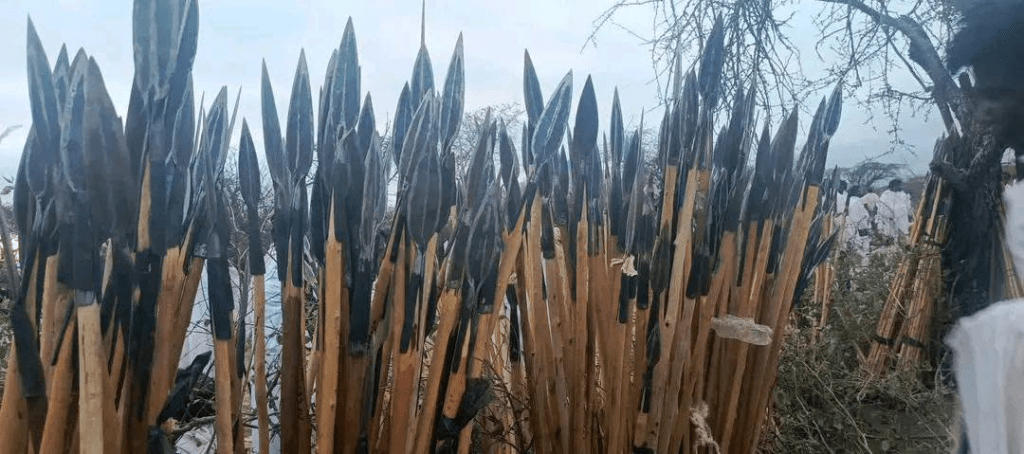
The Gathering at Guyyoo Gobba
Today, the community of Guyyoo Gobba in the Borana Zone, within the Dhaas Ardaa (district) at Gumii Gaayoo, has gathered to continue this sacred tradition. Under the guidance of Abba Gadaa Guyyoo Gobba Bulee, they are conducting the Wal-Argii ceremony—the ritual of recognition and naming.
The celebration is taking place in stages, each day marking a different aspect of the ceremony. Tomorrow, the community will gather on the eastern side, entering Ardaa Hiigootti to perform the traditional Miloo (community assembly). The following day, they will move to the western side, entering Ardaa Borborii, where they will prepare the ceremonial foods that the children will share and receive blessings.
In the month of Adoolleessa, as the community continues to gather at Gumii Gaayoo under the leadership of Abba Gadaa Guyyoo Gobba, the Wal-Argii ceremony will continue to unfold, connecting the present generation to the wisdom of their ancestors.
A Ceremony of Unity
As the gathering begins, elders lead the community in prayers and rituals. The air fills with the sounds of traditional songs, the rhythmic movement of dances, and the joyful laughter of children who understand—even at their young age—that something sacred is taking place.
“Nagaan Gooroo marmaaraa ga’aa gammee buufadha!” the elders proclaim. “Peace has arrived in our gathering; we have begun our ceremony!”
The food prepared during these celebrations is not merely nourishment—it is a symbol of community, of sharing, and of the bonds that tie Oromo society together. When the children eat together, they are not simply satisfying hunger; they are entering into a sacred covenant with their community, their ancestors, and their future.
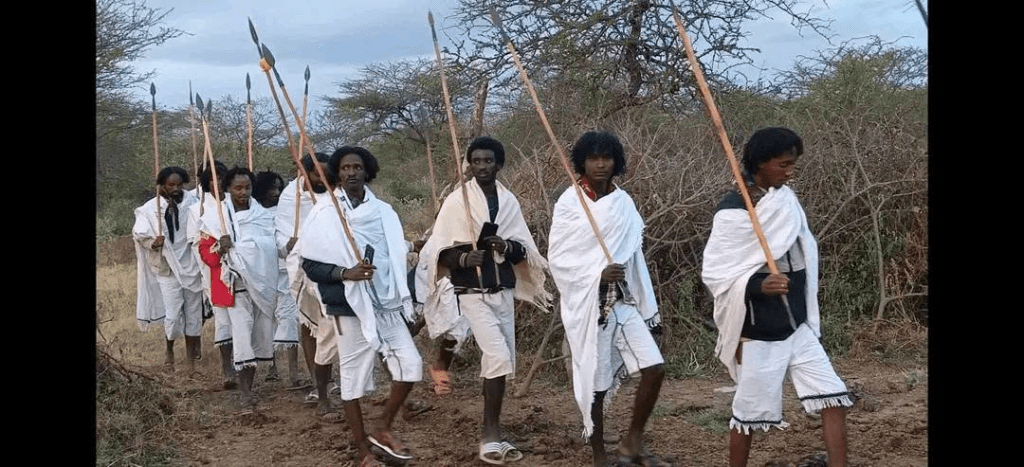
The Significance of Wal-Argii
The Wal-Argii ceremony represents the heart of Oromo identity. It is where children learn who they are, where families come together to celebrate their heritage, and where the community reaffirms its commitment to the values that have sustained Oromo society for centuries.
In a rapidly changing world, where globalization threatens to erase ancient traditions, the Oromo people hold fast to their Gadaa system. It is not merely a relic of the past—it is a living, breathing system of governance that continues to guide communities across Oromiya.
Looking to the Future
As the sun sets over Guyyoo Gobba and the families return to their homes, they carry with them the blessings of the ceremony. The children who have been named and recognized will remember this day—the songs, the dances, the foods, and the wisdom shared by their elders.
The Gadaa system teaches that each person has a role to play, a stage to fulfill, and a responsibility to the community. From the youngest Dabballee to the most respected Gadaammojjii, every individual matters. Every life has meaning. Every ritual connects the present to the past and prepares the way for the future.
A Message for the World
The Gadaa system offers a model of governance that the world might learn from—a system that values consensus, respects elders, nurtures youth, and recognizes the sacredness of life itself. It is a testament to the wisdom of the Oromo people and their contribution to the heritage of humanity.
As the community of Guyyoo Gobba continues its ceremonies, they invite all who would listen to witness and learn. The Wal-Argii is not just an Oromo celebration—it is a celebration of what it means to be human, to belong, and to carry forward the traditions of those who came before.
The journey continues. The ceremonies endure. And the Oromo people—their traditions, their wisdom, and their resilience—shine as a light in a world that desperately needs to remember the value of community, tradition, and shared humanity.


Posted on July 11, 2026, in Aadaa, Afaan, Bokkkuu, Daaniyaa, Events, freedom, gadaa, gender, Gumaa, health, Information, Language, Media, News, Oromia, Press Release, Promotion, Sirna Oromo. Bookmark the permalink. Leave a comment.






Leave a comment
Comments 0