Daily Archives: July 7, 2026

The Unconquerable Equal: What an Ancient Oromo Proverb Teaches Us About Power and Humanity
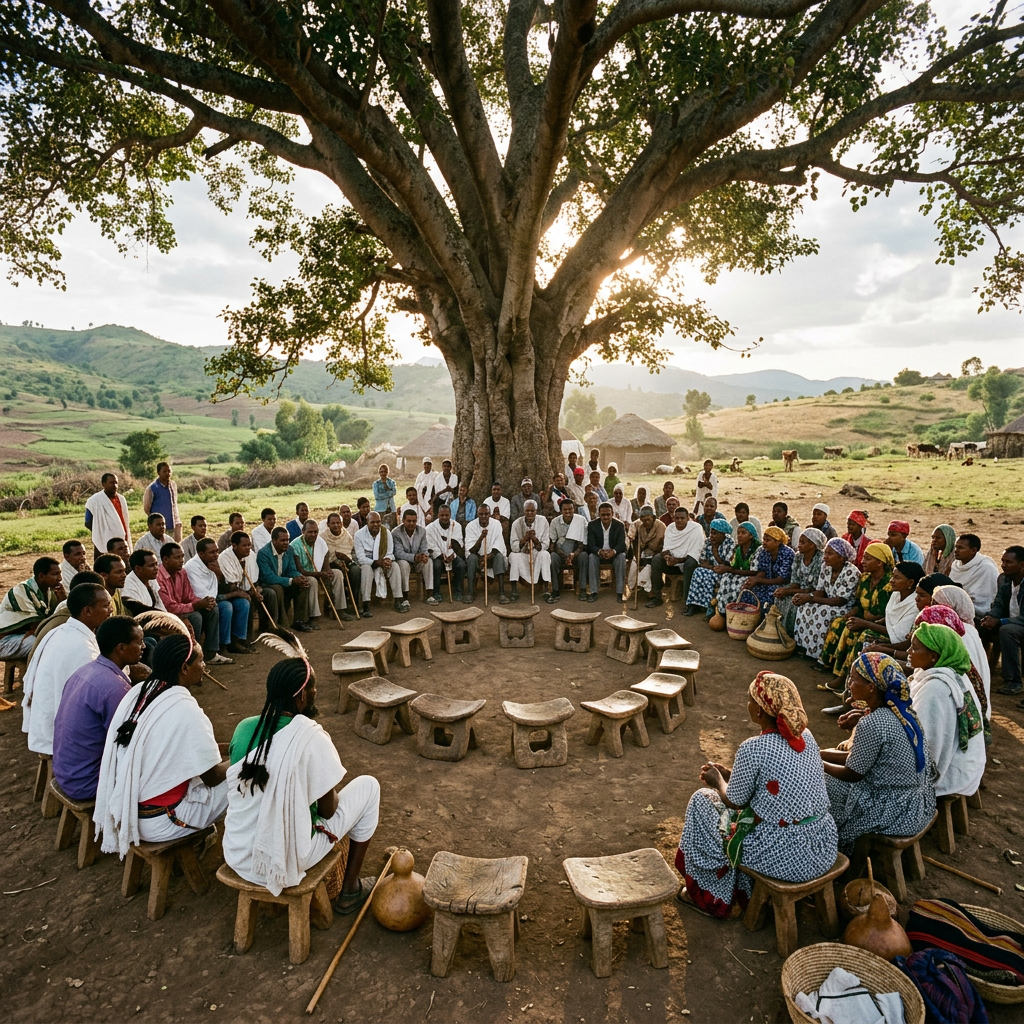
In the quiet rhythms of Oromo tradition, nestled within the democratic folds of the Gadaa system, lies a proverb of profound audacity:
“Akka sirna Gadaatti namni kamuu namummaan nama kaan hin caalu; namni hundi walqixxee dha.”
Translated, it declares: “In the Gadaa system, no one is superior to another by virtue of humanity; all people are equal.”
To the modern ear, it might sound like a simple platitude, a nod to a universal truth we all claim to hold. But to understand this saying is to discover a revolutionary blueprint for society that challenges the very foundations of power as we know it.
The Wellspring of Equality
The Gadaa system is not merely a historical relic; it is a living, breathing indigenous democratic practice of the Oromo people. For centuries, it has served as a socio-political and religious framework, organizing society not by brute force, inherited status, or accumulated wealth, but by age and demonstrated wisdom.
Every eight years, power transfers peacefully from one generation to the next. This is not a coup, not an election marred by mudslinging, but a ceremony. It is a ritualized passing of the baton that ensures no single individual, family, or clan can amass permanent control.
It is from this system that the proverb springs. It declares a foundational truth: your humanity is your only title. Not your lineage, not your cattle, not your military might. Your namummaa—your essential humanness—is the only metric that truly matters.
Beyond Hierarchy: The Oromo Challenge
In a world obsessed with hierarchies—the CEO above the intern, the president above the citizen, the celebrity above the fan—this Oromo worldview is a radical act of defiance. It suggests that all constructed pecking orders are fragile illusions.
The proverb is a shield against arrogance and a sword against oppression. If a leader believes themselves inherently superior, they have already violated the Gadaa principle. The system demands that leaders, the Abba Gadaa, are not tyrants but servants of the collective will. Their authority is functional, not intrinsic. It is a role, not a birthright.
This is where the proverb resonates deeply with modern democratic ideals. It prefigures the Enlightenment concept of equality by centuries. It echoes the words of revolutionaries and civil rights leaders who insisted that the color of skin, the gender of the body, or the nation of one’s birth do not define the worth of the soul.
The Unseen Thread of Connection
But perhaps the most profound implication of “all people are equal” is not political, but spiritual and social. It binds the community together with a thread of mutual responsibility.
If we are all equal, then the welfare of my neighbor is as important as my own. My success is not a victory over another, but a contribution to the collective whole. This is the bedrock of Gadaa governance—a system that relies on consensus, dialogue, and a shared sense of duty. It fosters a society where status is earned through service and character, not through aggression or accumulation.
A Lost Compass for a Troubled World
As we navigate the 21st century—beset by inequality, systemic injustice, and the cult of personality—the wisdom of the Oromo ancestors offers a compass. The proverb “Akka sirna Gadaatti…” is a challenge to the status quo.
It calls us to look beyond the titles on our business cards and the zeros in our bank accounts. It urges us to see the sacred, unassailable equality in the eyes of every stranger we meet.
Because in the end, the Gadaa system reminds us of a simple truth we so often forget: before we are kings, laborers, rich, or poor, we are simply human. And in that shared humanity, we are all—always and forever—equal.






