Daily Archives: July 13, 2026

The Weight of Struggle: Why We Must Honor, Not Diminish, the Oromo Journey

Those who have walked the long road—through displacement, persecution, and sacrifice—deserve our deepest respect, not our casual dismissal
There is a dangerous tendency in our time—a habit of diminishing the sacrifices of those who came before us. It is easy to dismiss the struggles of others when we have not walked in their shoes, easy to minimize their pain when we have not felt its weight, easy to judge their choices when we have not faced their impossible dilemmas.
The reflection before us offers a powerful corrective to this tendency. It calls us to recognize the immense journey that the Oromo people have traveled—the trials they have endured, the sacrifices they have made, and the dignity they have maintained despite everything.
A People on the Move
“Nama Oromoo bu’aa bahii hedduu keessa darbuun har’a gahe, xiqqeessuu fi salphisuun faayidaan argamu hin jiru; jiraatus yoo nutti hafe wayya.”
The Oromo person who has passed through many trials to reach today—there is no benefit in belittling or diminishing them. Even if something remains, it would be better if it were left to us.
This statement is a profound meditation on the relationship between generations. It recognizes that the Oromo people have endured extraordinary hardships—centuries of colonization, decades of cultural suppression, generations of displacement, and waves of brutal repression.
The Oromo who stand before us today are the products of that struggle. They carry the scars of battles fought long before we were born. They speak with voices that have known silence, cry with eyes that have seen too much, and hope with hearts that have been broken and rebuilt countless times.
To diminish them is to diminish ourselves. To belittle their achievements is to belittle the very foundation upon which we stand.
The Journey of Exile
“Oromoon hedduun imala godaansaa keessatti gidiraa hedduu keessa darban.”
Many Oromo have passed through great difficulties during their journey of displacement. The Oromo diaspora is not a story of voluntary migration—it is a story of flight, of seeking refuge from persecution, of leaving everything behind to preserve life itself.
The Oromo exile began long before the modern era. Generations of Oromo have been forced to flee their homeland—escaping war, famine, political repression, and the systematic destruction of their communities. They have crossed borders, oceans, and continents in search of safety.
This is not a journey of choice. It is a journey of survival. And every Oromo who has made this journey carries with them the weight of what they have lost and the hope of what they might yet find.
Trials by Fire
“Biyya baqannaa keessatti qormaata hedduuf saaxilanii darban.”
In the lands of refuge, they have faced countless trials. The experience of exile is not a simple escape from danger—it is an entry into new forms of struggle. Oromo refugees and migrants have faced xenophobia, discrimination, economic exploitation, cultural isolation, and the constant anxiety of uncertain legal status.
They have had to rebuild their lives from nothing—learning new languages, adapting to new cultures, accepting menial jobs that their education and skills should have surpassed. They have been separated from families, disconnected from communities, and forced to navigate systems that were never designed for them.
And yet they have persisted. They have built new communities in foreign lands. They have preserved their language, their culture, and their identity against all odds. They have sent remittances home to support the struggle. They have educated their children, established organizations, and kept the flame of Oromo identity burning bright.
The Danger of Diminishment
“Qormaata isaan mudatee fi keessa darban kan akka tasaa ykn beekaa nu harka gale baafnee ittiin isaan salphisuu fi xiqqeessuuf yaaluun akka naamusa hojiittis akka safuu hojiittis fudhatama hin qabu.”
To try to belittle and diminish the trials they have endured and passed through—by claiming that we have miraculously or knowingly achieved what they could not—is unacceptable as a matter of both professional ethics and moral decency.
The reflection speaks directly to a troubling phenomenon: the tendency of some to dismiss the struggles of earlier generations, to claim that they somehow would have done better, or to minimize the sacrifices that made current achievements possible.
This is not merely disrespectful—it is historically and morally wrong.
Those who walked the path before us faced challenges we cannot fully comprehend. They operated under conditions we have never experienced. They made choices with limited information and in impossible circumstances. Their achievements, whatever their limitations, are the foundation upon which our current position is built.
The Ethics of Respect
The reflection argues that belittling the struggles of others is unacceptable for two reasons:
First, as a matter of professional ethics—”naamusa hojii” —there is a standard of conduct that requires us to respect the work of those who came before. In any field, to dismiss the contributions of predecessors is to reject the very tradition that made our own work possible.
Second, as a matter of moral decency—”safuu hojii” —there is a basic human obligation to honor the sacrifices of others. To diminish someone’s suffering is a form of violence. To deny someone’s struggle is a form of erasure.
Those who have sacrificed for the Oromo cause deserve our gratitude, not our judgment. They deserve our respect, not our condescension. They deserve to be honored, not diminished.
Lessons for the Current Generation
The reflection offers several important lessons for those of us who inherit the legacy of the Oromo struggle:
1. Recognition: We must recognize that our current position—whatever it may be—is built upon the foundations laid by others. We did not create Oromo identity; we inherited it. We did not invent the Oromo struggle; we continue it.
2. Humility: We must approach the achievements of earlier generations with humility. We may have advantages they did not—better technology, more resources, greater international awareness—but we also face challenges they did not. Neither generation is superior; each has played its part.
3. Gratitude: We must be grateful for the sacrifices of those who came before. Every Oromo who can read and write in Afaan Oromo today owes a debt to those who risked imprisonment to publish in the language. Every Oromo who can express pride in their identity owes a debt to those who were tortured for doing the same.
4. Continuity: We must understand that we are part of a continuing story. The Oromo struggle did not begin with us, and it will not end with us. Our role is to carry forward the legacy, to build upon the foundations, and to pass on something better to those who will come after.
The Unfinished Journey
“Nama Oromoo bu’aa bahii hedduu keessa darbuun har’a gahe…”
The Oromo person who has passed through many trials to reach today—this is not a description of a completed journey. It is a description of a journey still underway.
The Oromo people are still struggling. They are still fighting for recognition, for rights, for self-determination. They are still facing oppression, discrimination, and violence. The fact that some have found refuge in other countries does not mean the struggle is over. The fact that some have achieved success in exile does not mean the homeland is free.
Each generation has its role to play. Each generation faces its own challenges. And each generation must honor the sacrifices of those who made its own achievements possible.
The Weight of Legacy
The reflection calls us to consider the weight of what we have inherited. The Oromo people have a long and painful history—a history of colonization, suppression, exile, and struggle. But it is also a history of resilience, resistance, cultural preservation, and hope.
When we diminish the struggles of those who came before, we diminish the entire Oromo story. When we belittle their achievements, we belittle the foundation upon which our own identity is built.
Instead, we should approach the Oromo journey with reverence—understanding that every scar tells a story, every sacrifice has meaning, and every achievement is a victory against overwhelming odds.
The Call to Unity
At its heart, this reflection is a call to unity—a call to recognize that we are all part of the same story, that we are all connected by the same struggle, that we all owe a debt to those who came before.
To dismiss the struggles of earlier generations is to divide the Oromo community. It is to create false hierarchies between generations. It is to claim that some are more authentic, more committed, or more deserving than others.
This is a dangerous path. It leads to fragmentation, resentment, and the weakening of the collective struggle. It serves only the interests of the oppressor, who benefits when the oppressed are divided.
Conclusion
“Nama Oromoo bu’aa bahii hedduu keessa darbuun har’a gahe, xiqqeessuu fi salphisuun faayidaan argamu hin jiru; jiraatus yoo nutti hafe wayya.”
The Oromo person who has passed through many trials to reach today—there is no benefit in belittling or diminishing them. Even if something remains, it would be better if it were left to us.
This is a statement of respect. It is a statement of gratitude. It is a statement of continuity.
We who inherit the Oromo legacy must approach it with humility. We must recognize that we stand on the shoulders of giants—of those who preserved the language when it was forbidden, who kept the culture alive when it was suppressed, who fought for justice when it was dangerous, and who maintained hope when all seemed lost.
Let us honor their sacrifices. Let us build upon their foundations. Let us continue their struggle. And let us never forget that we are part of a long and noble tradition—a tradition of resilience, resistance, and the unwavering pursuit of freedom.
“Nama Oromoo bu’aa bahii hedduu keessa darbuun har’a gahe…”
The Oromo person who has passed through many trials to reach today…
May we always honor that journey. May we always respect that struggle. And may we always remember that we are the inheritors of a legacy that demands our deepest gratitude and our most dedicated service.
The journey continues. The struggle endures. And the story of the Oromo people will be told with the dignity it deserves.
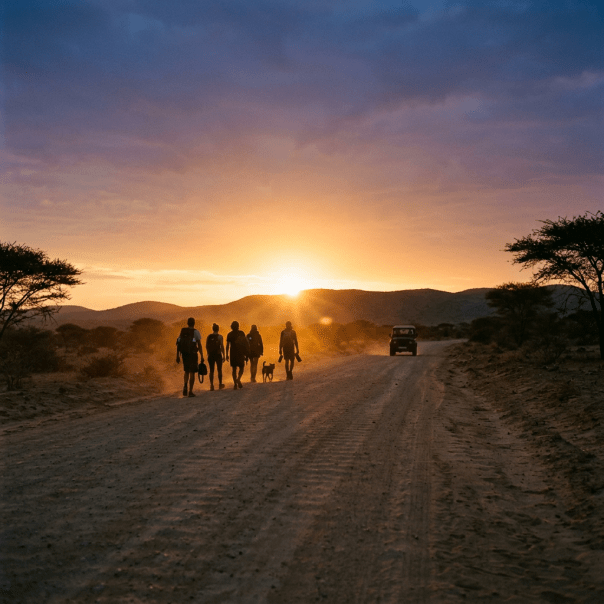

The Oromo Question: Beyond the Tongue and Into the Hands

By Daandii Ragabaa
There is a moment in the life of every nation when words are no longer enough. When the poetry of identity must translate into the prose of action. When the comfort of speaking like a people must give way to the discipline of living like that people.
The Oromo nation stands at that crossroads today.
A sharp and unsettling observation cuts through the community: “Amma illee namoonni hedduun akka Oromootti dubbatan, malee akka Oromootti hojjataa hin jiran. Namoota akka Oromootti yaadanii, akka Oromootti hojjatan hedduu nu barbaachisa. Waan Oromoof furmaata fidu hojjadha; Oromoo ta’a!”
Translated, it reads: “Even now, many people speak like Oromos, but they do not act like Oromos. We need many people who think like Oromos and act like Oromos. Do what brings a solution to Oromos; be Oromo!”
This is not a statement of despair. It is a declaration of accountability. It is the sound of a people waking from the dream of rhetoric and stepping into the reality of responsibility.
The Crisis of Performance
There is a dangerous phenomenon that plagues nations in struggle: the widening chasm between speech and action. It is easy to speak the language of resistance. It is fashionable to adopt the symbols of identity. It is comfortable to gather in crowds and chant the slogans of liberation.
But speaking like an Oromo is not the same as being an Oromo.
To speak like an Oromo is to know the words. To be an Oromo is to embody the values. To speak like an Oromo is to recite the grievances. To be an Oromo is to engineer the solutions.
The observation rings true across the Oromo world—from the villages of Wallo to the streets of Minneapolis, from the universities of Adama to the refugee camps of Kenya. There is no shortage of Oromo voices. There is a shortage of Oromo hands. There is no shortage of Oromo critics. There is a shortage of Oromo builders.
The Anatomy of Authentic Oromo Action
What does it mean to act like an Oromo? The answer lies not in grand gestures, but in the quiet architecture of daily life.
1. The Economics of Liberation
An Oromo who acts like an Oromo does not just lament economic marginalization—they build alternatives. They support Oromo-owned businesses. They create cooperative financial institutions. They invest in Oromo education. They understand that economic dependency is the leash of oppression, and they work tirelessly to break it.
2. The Politics of Organization
An Oromo who acts like an Oromo does not just attend rallies—they organize communities. They build institutions that outlast individuals. They develop systems of governance that reflect the principles of the Gadaa—consensus, accountability, and the rotation of power. They move from protest to program.
3. The Culture of Excellence
An Oromo who acts like an Oromo does not just celebrate Oromo culture—they excel in their chosen field. They become the finest doctors, engineers, lawyers, teachers, artists, and entrepreneurs. They understand that mediocrity is not a mark of authenticity; excellence is. They know that the world respects competence, and they refuse to give the world any reason to dismiss them.
4. The Discipline of Unity
An Oromo who acts like an Oromo does not just talk about unity—they practice it. They subordinate personal ambition to collective good. They reject the divisive whispers of clan, region, and religion. They recognize that the enemy’s greatest weapon is fragmentation, and they refuse to hand them that weapon.
Thinking Like an Oromo: The Intellectual Foundation
But action without thought is blind. The call is not just for action, but for Oromo thought—a philosophy that guides the hand.
To think like an Oromo is to recognize that the struggle is not a sprint but a marathon. It is to understand that liberation is not a single event but a process. It is to reject the false binary of “either/or” and embrace the Oromo genius of “both/and”—both culture and modernity, both tradition and innovation, both resistance and construction.
To think like an Oromo is to root oneself in the history of the ancestors while planting seeds for generations yet unborn. It is to understand that the Gadaa system was not just a political structure but a way of knowing—a methodology for solving problems, managing resources, and building consensus.
To think like an Oromo is to know that the enemy is not just outside the community but can also reside within. It is to be vigilant against the internal forces of corruption, greed, and short-term thinking that have crippled so many liberation movements.
The Urgent Need: Builders Over Talkers
The statement is clear: “Namoota akka Oromootti yaadanii, akka Oromootti hojjatan hedduu nu barbaachisa.” — “We need many people who think like Oromos and act like Oromos.”
This is not a call for blind nationalism. It is a call for strategic nationalism. It is a recognition that the Oromo nation has been blessed with orators but cursed with a shortage of engineers. We have been rich in poets but poor in planners. We have been abundant in critics but scarce in builders.
The time has come to recalibrate. The Oromo people do not need more voices—they need more hands. They do not need more slogans—they need more systems. They do not need more promises—they need more proof.
The Call to Action
The final charge is both a command and an invitation: “Waan Oromoof furmaata fidu hojjadha; Oromoo ta’a!” — “Do what brings a solution to Oromos; be Oromo!”
This is the ultimate definition of Oromo identity. It is not found in bloodline alone. It is not found in language alone. It is found in the relentless pursuit of solutions. It is found in the refusal to accept the status quo. It is found in the determination to build a future worthy of the ancestors and deserving of the children.
To be Oromo is to solve problems. To be Oromo is to build institutions. To be Oromo is to live the values of Gadaa—justice, peace, and collective well-being. To be Oromo is to act like an Oromo, not just speak like one.
The Unfinished Revolution
The Oromo nation stands at a pivotal moment in its history. The opportunities are immense. The challenges are immense. And the need for authentic, thinking, acting Oromos has never been greater.
The tongue is a gift. But the hand is a choice. The voice is a blessing. But the action is a legacy.
Let us not be a people of words alone. Let us be a people of works. Let us not be a nation of spectators. Let us be a nation of participants. Let us not wait for solutions to come from elsewhere. Let us be the solution.
“Namni of hin beekne, nama hin beeku” — “He who does not know himself, cannot know others.”
And those who know themselves—truly know themselves—do not just speak their identity. They live it. They build it. They become it.
Oromoo ta’aa! Be Oromo—not in word only, but in deed. Not in tongue only, but in truth.
—
The ink of identity is washed away by time. But the architecture of action stands forever.






