The Art of Becoming: Why the Oromo Embrace Change
By Daandii Ragabaa
—
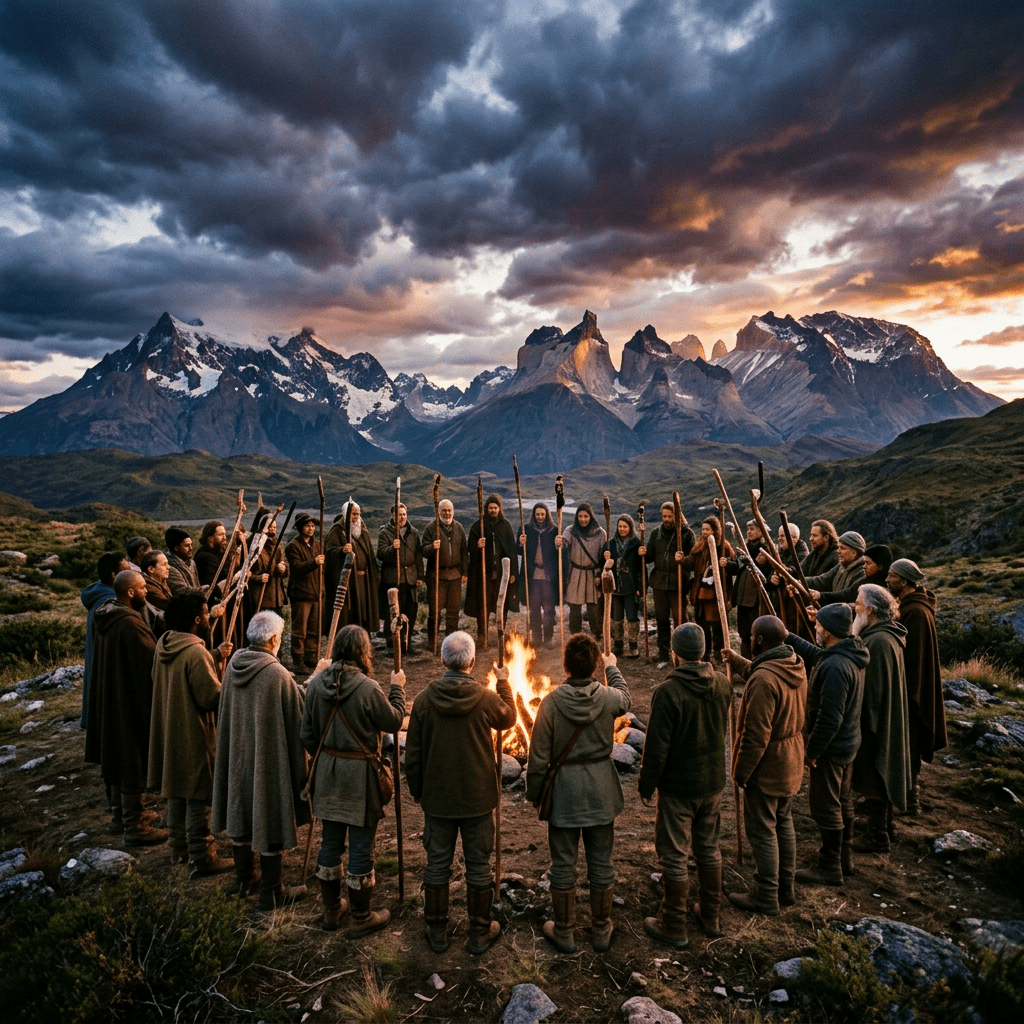
The old man sat beneath a sycamore tree, his weathered hands wrapped around a wooden staff. Before him, a group of children listened with wide eyes as he spoke. His voice was low, deliberate—the voice of one who had seen seasons turn and generations pass.
“Namni hin jijjiirramne, nama hin jiraanne,” he said. “One who does not change has not truly lived.”
The children frowned. They had been taught that their culture was eternal—that the ways of their ancestors were sacred and unchanging. How could change be a good thing?
The elder smiled. He had been young once, too. He had asked the same question. And now, after eighty harvests, he understood the answer.
—
The Gadaa: A System Built on Transformation
For the Oromo people, change is not an interruption of tradition—it is the very engine of tradition. Nowhere is this more evident than in the Gadaa system, the indigenous democratic governance structure that has organised Oromo society for centuries. Recognised by UNESCO as an Intangible Cultural Heritage of Humanity, the Gadaa system divides life into distinct stages, each carrying specific responsibilities, rituals, and ceremonies.
The Gadaa has eleven grades, each spanning eight years. From childhood to old age, every Oromo moves through these formal steps, each marked by a transition ceremony that defines what is permitted and what is forbidden. A boy becomes a warrior. A warrior becomes an elder. An elder steps aside to make way for the next generation.
This is change written into the very fabric of society.
Professor Gemetchu Megerssa, a scholar of Oromo philosophy, describes seven interconnected phases of social development: Guudina, gabbina, ballina, badhaadha, hoormata, dagaaga, and dagaa-hoora. Each phase represents a transformation—a shedding of the old self and an embrace of the new. The goal is not stability but wholeness: a state where there is no conflict, no poverty, no disease.
To be Oromo is to be in a constant state of becoming.
—
The Rites of Passage: Dying to Be Born
The Shinooyyee celebration marks the transition of young Oromo men and women into adulthood. It is not merely a party—it is a ritual death and rebirth. The child that entered the ceremony is gone. An adult emerges, ready to marry, to lead, to contribute.
The Muusoo and Dhokhisuu rituals grant young men permission to marry. These are not casual affairs. They are ordeals—tests of endurance, wisdom, and character. To pass through them is to be transformed.
Even the names of the Gadaa grades tell a story of change. From Gaammee Gurguddaa (childhood) to Kuusaa (youth) to Raaba (adulthood), each stage carries a new identity. The progression is marked by ceremonies like Walargii, a grand gathering where children from various regions convene before advancing. They do not simply grow older—they become something new.
As John Hinnant observed, the Gadaa divides the stages of life into a series of formal steps, each distinguished by a transition ceremony. Every eight years, the Oromo people change. Every eight years, they are reborn.
—
The Forces of External Change
But not all change is internal. The Oromo have also been shaped by forces beyond their control—sometimes violent, sometimes subtle.
For centuries, the Oromo faced dominance from neighbouring groups, which eroded aspects of their cultural identity. The Gadaa system itself has been weakened by modernisation and external political pressures. Missionaries brought Christianity, and traders brought Islam. Today, most Oromo practice one of these religions, often alongside elements of their ancestral Waaqeffanna faith. The indigenous belief in Waaqa (God) did not disappear—it adapted.
Even personal names have changed. In the post-1991 political landscape, many Oromo have adopted new naming practices—a reflection of shifting social values and a reclamation of identity. A name is not just a label. It is a story. And stories, like people, evolve.
—
The Philosophy of Jijjiiramuu
In Afaan Oromo, the word for change is jijjiiramuu. But it carries a weight that the English translation cannot capture.
Jijjiiramuu is not simply becoming different. It is growth. It is adaptation. It is the recognition that to remain the same is to stagnate, and to stagnate is to die.
Consider the Oromo proverb: “Akkuma bishaan yaa’uu qaba, namni jijjiiramuu qaba.” “Just as water must flow, a person must change.”
The Oromo understand that change is not a betrayal of tradition—it is the fulfilment of tradition. The Gadaa system itself undergoes transformation every 360 years, a cycle known as jaatama, when it rejuvenates itself. The system does not cling to the past. It renews.
—
The Continuity Within Change
Yet for all this transformation, something remains constant. The Oromo have not lost their identity. They have carried it forward—reshaped, reimagined, but never abandoned.
The Irreechaa festival, a thanksgiving ritual held at riversides and mountaintops, draws thousands of Oromo today. It is not a relic of the past—it is a living tradition, a symbol of Oromo identity and resilience.
Change, in Oromo culture, is not about discarding the old. It is about building upon it. The child who becomes an adult does not forget childhood—he carries its lessons forward. The elder who steps down from leadership does not disappear—he becomes a guide, a source of wisdom for the next generation.
—
A Final Reflection
The old man beneath the sycamore tree finished his story. The children sat in silence, their young minds wrestling with the paradox: how could change and tradition exist together?
He rose slowly, his joints creaking like old wood. He looked at the children—the future of his people—and spoke his final words.
“Jijjiiramuu hin sodaatinaa. Sodaan isa hin jijjiirramne.”
“Do not fear change. Fear only that which refuses to change.”
And with that, he walked away, his staff tapping against the earth—a sound as old as the hills, as steady as the seasons, and as constant as the Oromo spirit itself.
—
Because to be Oromo is not to be static. It is to be a river—always flowing, always becoming, always carrying the waters of the past toward the sea of the future.

Posted on July 18, 2026, in Aadaa, Afaan, Bokkkuu, Election, Events, Finfinne, freedom, gadaa, gender, Gumaa, health, Information, Kindness, Language, Media, mental health, News, Oromia, Oromo diaspora, Oromo truth telling, Press Release, Promotion, Siinqee, Sirna Oromo. Bookmark the permalink. Leave a comment.






Leave a comment
Comments 0