Category Archives: Census 2026

A Milestone Achieved: The ABO Diaspora Structure Council Successfully Concludes
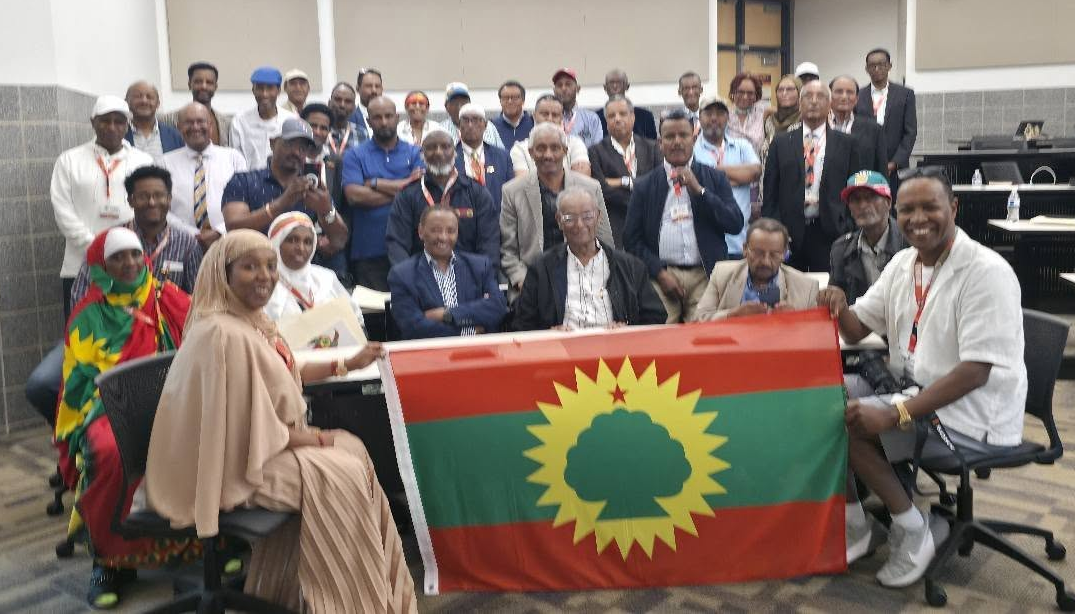
A Historic Gathering in Minneapolis Marks a New Chapter for the Oromo Liberation Front’s Global Organization
By Daandii Ragabaa
Minneapolis, MN — August 6, 2026
In a significant development for the Oromo liberation movement, the Korri Caasaa ABO Biyyoota Alaa —the Diaspora Structure Council of the Oromo Liberation Front (OLF/ABO)—has successfully concluded its proceedings. The event, held in Minneapolis, Minnesota, marks a pivotal moment in the organizational consolidation of the Oromo struggle beyond the borders of Oromia.
The council’s conclusion, announced on August 6, 2026, represents more than a routine organizational meeting. It signals the maturation of the diaspora as a structured, institutional pillar of the liberation movement—a recognition that the struggle for Oromo self-determination is not confined to the homeland but spans continents, uniting Oromo people wherever they reside.
Why Minneapolis? The Heart of the Oromo Diaspora
The choice of Minneapolis as the host city for this historic gathering is no accident. Over the past three decades, Minnesota has become a sanctuary and a springboard for Oromo activism, earning the affectionate title “Little Oromia” for hosting one of the largest Oromo populations outside of East Africa .
From the bustling neighborhoods of Minneapolis to the suburban cities of St. Paul, Oromo culture thrives—through language, music, faith, and political organization. Holding the Diaspora Structure Council here acknowledges the diaspora not as a distant bystander but as a vital pillar of the liberation project .
In this space, the past meets the present. Elders who witnessed the early days of the OLF sit alongside youth born in the West, forging an intergenerational bond that strengthens the movement’s resilience. It is a living classroom where history is taught, grievances are voiced, and hope is rekindled .
The Significance of Institutional Strength
The successful conclusion of the Diaspora Structure Council underscores a central theme that has emerged in the Oromo movement’s recent history: the strength of the institution.
As emphasized at the Oromo New Year celebrations in Edmonton, the focus is increasingly on “jabeenya jaarmiyaa”—the strength of the institution . This represents a mature evolution in diaspora political consciousness: the understanding that liberation requires not just passion or grievance, but organizational resilience, strategic continuity, and the mechanisms required to sustain a movement across decades and continents .
The Diaspora Structure Council’s work, meticulously prepared and executed, was itself a direct, tangible contribution to the struggle. It ensured that “deeggarsii fi tumsi qabsoo bilisummaa akka itti fufiinsa argatu”—that “support and sustenance for the freedom struggle continues to receive continuity” .
The OLF/ABO’s Vision: Building Oromia Without Borders
The successful conclusion of this council aligns with the broader vision of the OLF/ABO leadership, who have consistently emphasized that the work of building Oromia extends beyond Ethiopia’s borders.
As senior OLF leader Jaal Abdii Raggaasaa stated at a February 2026 consultative meeting in Gullallee: “Our foundational organizing must begin at the grassroots level, starting from the village” . This principle applies equally to the diaspora. Wherever Oromos reside—in the villages of Oromia, the refugee camps of Kenya, the community centers of North America and Europe—the work of building Oromo consciousness, organization, and national identity continues .
The council’s successful conclusion demonstrates that the diaspora is not merely a source of financial support or cultural preservation. It is an active, organized, and strategic component of the liberation project.
A Foundation of Truth and Integrity
Throughout its proceedings, the Diaspora Structure Council was guided by the principles that have defined the OLF/ABO’s decades-long struggle. As Abdii Raggaasaa declared: “If we are people of truth, our people will never abandon us under any circumstances. But if we are people of falsehood, even if we hold something, we will lose it” .
This commitment to truth and integrity was central to the council’s work. The diaspora structure is not built on empty rhetoric or political opportunism. It is built on the sacrifice of generations—on the “struggle of blood and bone” that has defined the Oromo liberation movement .
The Cry That Echoes: IUOf!
As the Diaspora Structure Council concluded its work, the hall undoubtedly echoed with the rallying cry that unites Oromo people across continents: “IUOf!” —Victory to the Oromo people .
The abbreviation, derived from the Oromo phrase for victory, resonates across generations, declaring the unshakable belief in the Oromo nation’s future . It is a cry that has been heard in the hidden clearings of Oromia, in the community halls of the diaspora, and now, in the organized structures of the OLF/ABO abroad.
A New Chapter: Consistency and Determination
The flyer circulating for the conclusion of the Diaspora Structure Council carried a powerful mantra: “As always, consistency and determination remain the foundation of lasting progress and success” .
These words are not empty rhetoric. In the long and often brutal struggle for Oromo self-determination, fads and fleeting passions have no place. What sustains the movement is the dogged, day-in and day-out commitment of a people who refuse to be erased. The successful conclusion of the Diaspora Structure Council is the embodiment of this ethic—a ritual of endurance, a moment to recalibrate, to reaffirm, and to recommit .
Consistency means showing up, year after year, regardless of the political winds. Determination means turning setbacks into stepping stones. The OLF/ABO has weathered imprisonment, exile, and state-sponsored repression, yet here it stands, its diaspora structure organized and functioning in the heart of America. That is the quiet power of persistence .
Looking Forward: The Seventh Round and Beyond
The successful conclusion of the Diaspora Structure Council arrives at a crucial moment. As the OLF/ABO prepares for the upcoming 7th round elections, the diaspora structure will play a vital role in mobilization, advocacy, and organizational strengthening .
The council’s work ensures that the diaspora is not a passive observer of political developments in Oromia but an active participant. As one OLF official stated: “OLF is the center of Oromo peace” . The diaspora structure, now successfully organized and concluded, extends that center across the globe.
Conclusion: A Milestone, Not an End
The conclusion of the Korri Caasaa ABO Biyyoota Alaa is not an end but a beginning. It marks the formalization of a structure that will continue to serve the Oromo people’s aspirations for self-determination, dignity, and democratic rights.
As participants departed Minneapolis, the message was clear: the diaspora is organized, the structure is in place, and the work continues. The struggle for Oromo liberation is not confined to the homeland—it is a global movement, sustained by a global community, guided by a global organization.
ABO haa waaru!
Injifannoon Ummata Oromoo!
Korri Caasaa ABO Biyyoota Alaa
Milkiin Xumurameera
Hag. 08/06/2026
Minneapolis, MN
This feature article is dedicated to all those who built the diaspora structures of the Oromo Liberation Front—from the founders to the newest members—and to the generations yet to come who will carry forward the torch of liberation.

Every Answer Matters: Australia’s 2026 Census Approaches
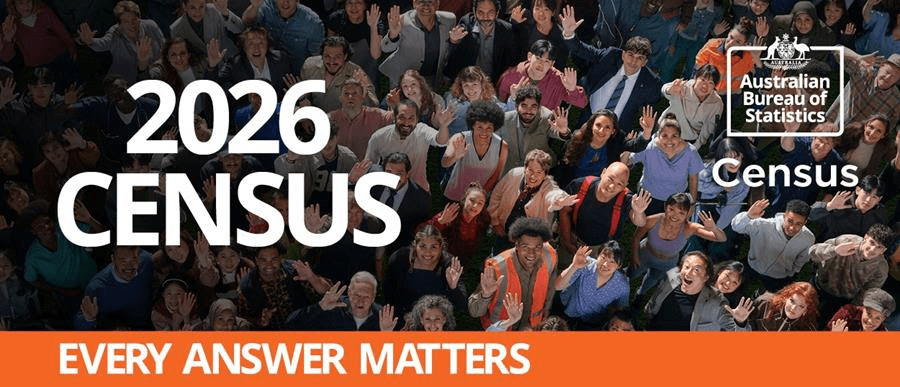
As Census night draws near, multicultural communities are being encouraged to participate and ensure their voices are heard and counted.
AUSTRALIA — On Tuesday 11 August, Australia will conduct its national Census, a vital exercise that captures a snapshot of the nation’s people and housing, telling the story of how we are changing. The data collected is used to shape services that people use every day, helping governments, community groups and businesses plan for healthcare, education, transport and infrastructure.
The Census is held every five years and is compulsory for everyone in Australia on Census night, including visitors, international students and visa holders .
Support for Multicultural Communities
The Australian Bureau of Statistics (ABS) has developed a range of support options to help people from culturally and linguistically diverse backgrounds participate. While the Census form is only available in English, information is available in multiple languages. Translated resources can be accessed through the ABS website, and help is available through the Translating and Interpreting Service (TIS National) on 131 450.
Census National Spokesperson Emily Walter said it’s important that Australia’s multicultural communities know what support is available to help them take part.
“Information is available in 25 languages to help the community better understand what the Census is, how it works and what you need to do,” according to the ABS.
Ancestry and Language Questions
For the 2026 Census, Australians will be able to nominate up to four ancestries, an increase from two in previous years, providing a more accurate reflection of the country’s multicultural population. This change has been welcomed by community organisations, who say it helps ensure people from diverse backgrounds are accurately represented.
Community leaders have encouraged people to pay close attention to the ancestry and language questions, as this data helps organisations advocate for the needs of their communities.
“If we want our community to be accurately represented, we need to be accurately counted,” community leaders have said.
How to Complete the Census
Most households will receive a letter in the mail containing a unique 16-digit Census number and temporary password to complete the Census online. Some households will receive a paper form instead.
Once you receive your instructions, you can complete the Census immediately if you know where you will be on Census night.
If you need help, you can:
- Call the Census Contact Centre on 1800 181 227 for assistance in English
- Call TIS National on 131 450 for help in your preferred language
- Visit the ABS website to find in-person support locations near you
Protecting Your Information
The ABS has reassured Australians that personal Census information is protected by law and cannot be shared with agencies such as the Australian Taxation Office, police, landlords or private companies.
“Every answer helps us understand what Australia needs now, and in the future,” the ABS states.
The 2026 Census is on Tuesday 11 August. For more information, visit census.abs.gov.au/language-support.

Beyond the Pitch: The One Powerful Move Every Community Can Make This Year

By Dabessa Wakjira
The roar of the crowd, the electric atmosphere, the shared chants echoing through stadiums and living rooms—the FIFA World Cup 2026™ has once again proven that when people unite around a common passion, magic happens. On the pitch, players execute perfect passes; in the stands, strangers embrace like lifelong friends. Across SBS platforms and community gatherings, Australians from every conceivable background have dissolved their differences in favor of a single, unifying language: the beautiful game.
Yet, as the final whistle blows and the stadium lights dim, a new opportunity is kicking off—one that requires the same level of energy, teamwork, and civic participation to ensure the future of our multicultural nation.
Participation is one of the most powerful ways we contribute to our communities. And right now, the Census 2026 is calling on all of us to get on the field.
The Lineup for Our Future
Just as every player has a role in a winning team, every individual has a part to play in building a representative Australia. The Census 2026 is more than just a bureaucratic formality; it is a powerful snapshot of our nation’s diverse fabric. The data collected within its pages influences decisions that impact our daily lives—where hospitals are built, how schools are funded, where public transport routes run, and how future planning unfolds.
David Hua, Director of Audio and Language Content at the Special Broadcasting Service (SBS), emphasizes the necessity of communal engagement. “Participation is one of the most powerful ways we contribute to our communities,” Hua states. “By taking part and encouraging others to do the same, we help ensure Australia’s diverse communities are represented, recognized and supported.”
Why “Showing Up” Matters
When communities actively participate in the Census, they do more than just check a box. They build the evidence needed for better services and stronger advocacy. Data translates into dollars and policy. It determines whether your suburb gets a new aged-care facility, whether your language group receives translation services at local hospitals, and whether your cultural events receive government support.
Every voice matters. Every response counts. Every community deserves to be seen.
But what if you’re hesitant?
Tackling the Fears
It is completely normal—and understandable—for individuals to feel uncomfortable sharing personal information. This sentiment is particularly prevalent in communities that might have had varied or difficult experiences dealing with governments in the past. Concerns about data security, privacy breaches, and how information will be used are legitimate and should not be dismissed.
This is where community leaders and organizations step in as the ultimate referees.
SBS, through its trusted platforms, is working to ensure that no one is left in the dark. Initiatives like SBS Learn English are designed to equip people with practical ways to talk about the Census. They provide clarity on data security measures, offer step-by-step guides on protecting personal information, and help demystify the process for those who feel excluded by language barriers.
Your Call to Action
This year, we invite you to channel the same spirit that fills the World Cup stadiums into completing your Census form. But don’t stop there—become a champion for your community. Encourage your neighbors, your sports club, your faith group, and your extended family to participate as well.
The 2026 Census isn’t just about counting numbers; it’s about ensuring every story is heard.
By taking part and sharing this vital information with your networks, you are helping to build a stronger, fairer, and more inclusive Australia. Let’s make sure everyone has the opportunity to be counted, supported, and recognized.
The game doesn’t end on the pitch. It continues with us, in our homes, and in our communities.
—
For more information and resources, including support for data security and language assistance, visit the official Census 2026 website or tune into SBS.






